R:ETRO webinar - Structural injustices, social connection, and corporate political responsibility
Skills:
AI Alignment Basics80%
Key Takeaways
Explores the topics of structural injustices, social connection, and corporate political responsibility in the context of reputation, ethics, and trust
Full Transcript
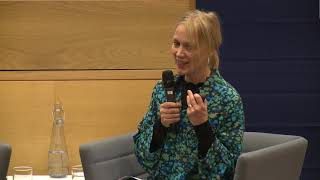
good afternoon welcome and thank you for joining us for this term's second virtual retro seminar my name is rita mota and i'm dean teza sao paulo research fellow at the oxford university center for corporate reputation with me today is alan morrison professor of law and finance here at the syed business school in oxford who co-convenes these seminars with me and our guest speaker judith shrimp sterling judith is associate professor of responsible management at the geneva school of economics and management where she is also director of the executive mba program and co-director of the msc in responsible management judith is an expert on business and human rights corporate social responsibility and responsible consumption and she's recently authored important work on corporations responsibility along their value chain as a former member of the global citizenship department at hewlett packard she brings both practical and intellectual expertise to her work we are extremely lucky to have her with us today and i'll turn the floor over to judith in a moment but before we start i'd like to say a few quick words about the seminar retro that is reputation ethics trust and relationships at oxford is a seminar series that is concerned with the ethical and normative content of trust and reputation in organizational life the series is generously supported by the center for corporate reputation which is an interdisciplinary research center here at the syed business school in oxford directed by rupert younger i can see that many of you have already joined us for previous retro seminars and so you know how we got here but for those of you joining us for the first time here's a quick overview retro used to be an oxford based seminar series and we decided to move it online because of the coronavirus pandemic despite the challenges that naturally come with such a change we've been delighted to see that the virtual seminars generate conversations that are as intellectually stimulating as the ones we had in person not only that but we quickly discovered that we now had an opportunity to involve people from all over the world in these events and so as in previous retro seminars today we have an incredibly diverse audience with us again spending more time zones than i can easily count bringing retro online has only been possible because of excellent teamwork and so i'd like to thank a few people for their precious contribution to this series i want to thank rupert younger director of the ccr and also sarah livingstone chris page and mark hughes morgan who have worked tirelessly behind the scenes and i am particularly grateful to alan whose experience expertise and wisdom have been absolutely crucial to the existence and success of this seminar series today's seminar addresses a matter of fundamental importance that directly speaks to our center's mission judith is going to talk about business and human trafficking with a focus on structural injustices social connection and corporate political responsibility human trafficking is of course one of the most appalling yet lucrative international criminal activities and it is much more pervasive in global supply chains than many would like to admit as judith and her colleagues point out any business involved with modern slavery and human trafficking faces significant reproach from the public and therefore risks substantial reputational damage more importantly judith will demonstrate that business involvement with human trafficking contributes to the perpetuation of structural injustices as the world struggles to cope with the coronavirus pandemic this topic becomes even more important ngos civil society and international organizations have also sounded the alarm as to the increased risk that vulnerable people everywhere are facing on the one hand victims of human trafficking are mostly left with limited or non-existent access to health care they live in conditions that increase the risk of infection and they may not even access covet-19 testing because of a lack of information or fear of deportation on the other hand the economic effects of lockdowns and restrictions rising unemployment and even travel bans inevitably increase the number of people worldwide who are the most vulnerable to exploitation and so the pathway that judith is going to present today is not just morally desirable but also practically indispensable and above all one that requires urgent attention judith will speak for around 30 minutes during which time she will respond to clarification questions only after that we will have some time for questions and answers please enter your questions and comments into the q a box and either alan or i will relay them to judith you can find the q a button either at the top or the bottom of your screen depending on the device that you are using and we're going to finish promptly at 5 pm judith thank you so much for being here today the floor is yours all right thank you very much let me share my screen and you shout out if you cannot see it so i take silence as a passive approval or passive yes all right all right thank you so much first of all um thank you rita thank you alan and thank you to the center for corporate reputation to have me here today virtually so i'm very delighted to be with you um at least virtually in the zoom world as rita was already alluding to i'm talking about human trafficking and the role and responsibility of business and i have been working on on this topic for already several years and i would like to give credit to two of my co-authors with whom i've been working on this for quite some time michelle westerman halo and harry from buren i know harry is there um in this webinar and maybe michelle as well so if you are high and thank you so let me give you a one minute elevator pitch of the whole talk so if you have to leave early then you have at least the domain pitch although retelled it already a very good job at that as well so in our work what we are proposing um in our work is a holistic approach to corporate responsibility for human trafficking so we position human trafficking as a structural injustice and i will talk more about it what it exactly is our approach highlights the social connection of business to human trafficking and from this connection derives what we call a political responsibility of business to eradicate human trafficking in the global supply chains more specifically our social connection and political responsibility model is based on iris marin young's analysis on structural injustice and social connections so those of you in academia who are working on this or in philosophy you might be familiar with the iron iris marin yang's work what we do in our work is we differentiate between business with a strong connection to human trafficking and businesses with a weak connection to human trafficking and then also the likelihood of businesses being able to collectively join with others to do something about human trafficking and as a result from this you know strong weak connection or the ability to do something collectively we discuss different corporate responses to human trafficking and we show that the genuine ethical commitment to eradicate human trafficking and global value chains is possible and how that is possible but let's start let's take one step at a time and start with a couple of of the definitions so what is human trafficking broadly speaking human trafficking describes a recruitment or refers to the recruitment transportation of persons by use of force fraud or coercion to then obtain from those people some type of labor basically labor exploitation forced labor or forced marriage and for that effect and it goes without saying and rita mentioned it as well human trafficking is one of the most tragic human rights issues of our time if you just think about this idea that a human being is treated as a pure input into the production process a prior commodity that's just traded used exploited it's just extremely tragic and horrifying and horrible unfortunately human trafficking is big business and basically in two senses first of all human trafficking is a business in and of itself um here are some numbers to refer to so the yearly profits that are made from human trafficking are 150 billion dollars a year human trafficking involves over 40 million people that are victims of human trafficking and as a side note the numbers because human trafficking is also most often hidden getting the exact numbers is quite uh quite difficult so these are estimates from the ilo and other institutions and then one in four of those human trafficking victims are children so it is big business besides human trafficking can occur in all kinds of sectors and industries of course some are more prone to it in terms of you know if you think about seasonal work like in agriculture and farming or construction but honestly human trafficking can be found anywhere in any type of industry and sector so what is done about human trafficking there are two main responses and i don't want to spend too much time on regulation because the focus for today is on corporations and the corporate responses but still it's important to notice that especially in the last 10 years we have seen the development of a couple of new regulations trying to um to get a a grasp excuse me um to get a grasp on on human trafficking we have for example the uk modern slavery act from 2015. australia just a few years ago also introduced a modern slavery bill so all those regulations that we see slowly popping up basically require companies that meet certain conditions to publicly state what they are doing in terms of eradicating human trafficking however those regulations do not specify how companies are supposed to do it so how detailed their statement is however it forces them to publicly state what they are doing in terms of eradicating or addressing human trafficking in their supply chains um from a corporate side how corporations have responded to um to the rise rising concerns of human trafficking particularly in their supply chains the response of corporations basically translates into what's referred to as corporate due diligence which broadly speaking consists of a couple of steps or a couple of stages first of all corporations are expected to assess the risk of having human rights violations or particular human trafficking in their supply chain so they're doing a risk assessment and how far their supply chains are more prone to human trafficking then accordingly they adopt policies which they might also have to do based on the regulation in their country and then what most companies are doing is they engage in auditing and monitoring of their supply chain so firms have been increasingly doing this they try to then through those audits and monitoring of their suppliers try to identify human trafficking and also remind their suppliers of their particular policies in regards to human trafficking however however research and maybe some of my colleagues who are doing tremendous research on this have actually found that those due diligence processes particularly the ethical auditing of the suppliers is not very effectful or the effects that we see or the results of those audits are rather sobering supply chain auditing is criticized for focusing too much on the first-year suppliers however human trafficking actually occurs way lower in the supply chain so if you imagine you have the supply chain there are only a few moments in those product supply chain where human trafficking enters and if you audit before or after those entry points you're simply missing the human trafficking um so the existing auditing system is just simply criticized for not doing you know not auditing at the right at the right spots um besides um the auditing system or approaches by corporations are also criticized for focusing too much on ticking the box and thereby creating what some have coined cosmetic compliance so they're basically just engaging in auditing for the sake of auditing just because they have to it's expected and they check the box and they feel the responsibility is done however by just taking the box it doesn't mean you solved the problem especially again if you look at the wrong part of your of your supply chain so um so overall there are um the current approach that corporations are taking is simply not cutting it it's simply not um successfully addressing human trafficking and given this ex criticism the existing scholarship in global value chains in human rights is increasingly calling for a more holistic and incremental approach to human trafficking and um this is what my co-authors harry and michelle and i have been doing over the last couple of years by trying to figure out or thinking about what a holistic and incremental approach to human trafficking could look like and we start our perspective on the issue of corporate responsibility for human trafficking by really thinking about why do we have human trafficking and we phrase it more as a structural injustice so how do we end up having human trafficking what are the structural conditions on the supply as well as the demand side that make human trafficking exist in the first place so from the supply side we can think of many factors that contribute to why people are willing almost then willing to become victims of human trafficking unknowingly obviously so there are numerous political social and economic factors that foster the supply of human trafficking if you imagine you know victims of human trafficking their original position is very desperate they might come from areas of extreme poverty and of areas with extreme overpopulation where there is simply no no place for them no options no economic options no um no no other kind of options available they might live in in zones of conflict in conflict zones or in war zones and they're simply so vulnerable that they would do anything possible to get out of this desperate situation and then if they um hear somebody talking about you know oh i know somebody who can get you somewhere you can get you over the border here and there and there you have a job they just you know they just pick up any opportunity they can to do it and without knowing falling victim of human traffickers who take away their passports or charge them lots of money and that they then have to repay in the poor jobs that they you know were not expecting they were expected or promised something else so this is the supply side however even though we have supply the question is of course there has always to be demand for it as well and the demand for human trafficking is linked in large part to practices of multinational corporations who want the cheapest production of their goods possible in the most efficient way so in this respect human trafficking is a foreseeable but yet unintended result of business practices now talk a little bit about intent a bit later but companies are focusing so much on cost cutting and efficiency that they simply do not see how the human supply chain you know makes all of this possible so human trafficking as a result is the outcome of a large-scale social structures that are created by and consists of multiple actors including business and i mean i'm singling out business here now because that's the focus of my research but it applies to lots of other actors who through their innocent decisions contribute to the structural conditions that make human trafficking possible and that's why we think it's very helpful to think about human trafficking as a structural injustice so now i kind of the term of what is you know structural injustice so what is structural injustice structural injustices exist when social processes put large categories of persons under a systematic threat of domination or deprivation of the means to develop and exercise their capacities at the same time as these processes enable others to dominate or have a wide range of opportunities for developing and exercising their capacities this is a one-on-one definition from iris younger for 2006 work so in other words structural injustices exist because of the many individually taken decisions by many different actors that sort of maintain the status quo and maintain those structures and they create simply as a ripple effect create injustices that no one intends to it's not the cause of relationship it's just simply the joint effect of all those different decisions if i'm a consumer and i want to buy a cheap product if i'm a business who just you know wants to produce a product extremely cheap and i put pressure on my suppliers and expect flexibility and expect um you know the lowest cost then that all leads eventually to the demand for cheap labor and you know actually companies have now successfully managed to almost put the cost of labor to zero which you know equates human trafficking so it can't get get cheaper than that and thinking of human trafficking also really in terms of structural injustices that kind of are the result of independent innocent or unintended you know consequences kind of shows that using a concept of responsibility based on blame is not really working in this regard to really address the problem of human trafficking instead what we are proposing is to really think about analyzing why human trafficking exists or persists as a structural injustice and then developing concrete responses for each party that is linked to it so it's basically framing human trafficking as a structure injustice really reminds all of us to think and then especially corporations as that's the focus of the talk for corporations to really think about how the ordinary day-to-day operations and decisions contribute to the maintenance of those structures that make human trafficking more more likely to exist so um let me say a few words why businesses so i already said you know the talk is about corporate responsibility for human trafficking so why do businesses have this ethical responsibility or in our papers we also call it a political responsibility to human trafficking it is fair to assume that businesses do not intend to be you know complicit in any way in human trafficking but intent does not really matter with regard to what businesses should do when it comes to human trafficking if there is a potential for either if there is a potential either for avoiding complicity with human trafficking or for making a positive difference and alleviating it we propose that businesses simply have this ethical obligation to do so so it is also at the core of iris marin sang theory or model of responsibility and i'll say a few more ads in a minute um also what's important when we think about why companies have a responsibility or particular ethical responsibility to eradicate human trafficking and it's important to think about agency and choice and think about yeah agency and choice off of business because with agency comes responsibility and it's i think we can all agree that businesses can choose through various supply chain relationships and their management techniques whether or not they are exposed to risks of human trafficking in their supply chain and further have the capacity to influence at least in part the behavior of their supply chain participants well businesses of course they face competitive pressures but still they make choices every day about the strategies and that turn that in turn has effects on whether they are exposed to more risk to have human trafficking in the supply chain or not just thinking about the contracts the terms and conditions that businesses give their suppliers the time pressure the cost pressure and and all of that that does create a higher risk for human trafficking in the supply chain and it's this choice from this choice from this agency develops a responsibility to to address it and finally business might undertake actions designed to give them the appearance of distance from possible exposure to human trafficking so say through outsourcing so as i mentioned already human trafficking oftentimes occurs way down in the supply chain far away from the lead firm far away from the nestles and and and all of that um all of those companies at the top of the supply chain however the appearance of distance does not mean that businesses have actual distance from human trafficking and can therefore disclaim any responsibility if human trafficking occurs because at the end of the day it's a product and it's a business decisions that connects them to human trafficking no matter what the actual or perceived distance is so um what does this holistic approach that you know i alluded to at the beginning of my talk what does this look like so a holistic approach to addressing human trafficking rests on the assumption that the parts of something are interlinked so that one cannot address one part without considering the whole right so because it's all interconnected it's a systemic systemic issue so holistic approach to human trafficking builds really on the connectedness of actors components and actions within global value chains and again i'm you know focusing here on business but it also involves you know other actors it involves governments it involves us as consumers as well so part of the social connection approach is then an obligation for businesses to understand how their contacts their industry that strategies their business models create the potential for a nexus to human trafficking so firms have a responsibility to go deeper than adapting their existing practices and firms must interrogate whether those practices themselves are proximate causes for human trafficking and then change those practices if this is the case um let me go a bit more more deeper so those of you marita said it might be a slight diverse audience so those of you who are more in academia you know when you write articles and do some work you have to have a theoretical academic contribution so um i have a one slide on that as well where we kind of move the the conversation on on young's model a bit further from an academic point of view so let me highlight maybe three components of our our model here so first of all our social connection and political responsibility model calls upon firms to go beyond the expectation of due diligence so what i start with at the beginning and to take affirmative responsibility for the ways in which their business practices contribute potentially to human trafficking so social connection and political responsibility model takes responsibility not just for what a firm has done but actually for what it has not done and what positive contribution it could make so really rethinking its business model or really think about how its ordinary business day-to-day decisions contribute to the structural injustices of human trafficking so if firms have not interrogated whether their business models make involvement in human trafficking more likely they simply have not fully taken responsibility for preventing such involvement more specifically political responsibility means questioning you know the status quo questioning what's currently normal and unacceptable and the second point in our model is that our model address that our model is forward rather than backward looking rather than focusing on blame and i mentioned that before when you have a structural injustice like human trafficking blame doesn't get you get you any you know very far so we encourage to look at the results so really start focusing on the results which is also linked to the third bullet point and one's contribution to the results so political responsibility emphasizes the future more than the past and the goal of business actions in this domain should therefore be to contribute to the kinds of structural reforms that then ameliorate the likelihood of future harm or the likelihood of of having um human trafficking in the supply chain so i'm linking those two first to bullet points it's our model or political responsibility again it's not about what you have done but not but it's about what you have not done in terms of it's about you have to think about what can you do to improve those situations and undo those societal or structural injustices finally our social connection and political responsibility model allows for greater openness with regards to what sorts of actions are consistent with assuming responsibility so i mentioned already we are drawing on young's work we are equally also drawing here on work from godin who differentiates between duties and responsibilities so a duty refers to rule to be followed in the case of human trafficking that you know undertaking due diligence for example is you know the duty and once the actions are associated with the rule have been performed the duty has been decharged and this is what companies are currently doing they are engaging in the supply chain audits and their due diligence and then they tick the box and the duty is done however the responsibility is not done unless human trafficking has disappeared or is at least on the virtue of disappearing so in other words carrying out a responsibility consists in seeking to bring about a required outcome so in this line of analysis a firm could fulfill its duties so you know as i already said with um engaging in due diligence but failed to really discharge fully its responsibilities associated with human trafficking so we therefore really want to reorientate the conversation about business and human trafficking to focus on the outcomes rather than the processes and on responsibilities rather than duties and we currently see that companies rather focus on the process and then just kind of discharge their responsibility by saying but you know what else can we do we just you know did the audit so our hands are clean but it's really about we need to think about the outcome and the outcome is um to have no human trafficking in your supply chain so what would it look like if a firm follows this holistic approach you know the social connection political responsibility model to address human trafficking as a result we think if a company follows this it kind of then really starts to engaging in a genuine ethical commitment to eradicate um human trafficking um so ethical commitment represents a stance taken by businesses in which they take responsibility for not only complying with the technical requirements the duties but also to do so with acknowledgement of their contribution to conditions that make human trafficking likely throughout their supply chain so the end result is that ethical commitment leads businesses to take responsibility for possible complicity in human trafficking even if they had every preventative mechanism in place and in so doing better discharge their ethical responsibility related to such structural injustices so it's really kind of you don't really care about the process or you know you just you know you do it because you genuinely want to do the right thing and and and address the structural injustice um more concretely exercising ethical commitment means ensuring effective remedy for human trafficking that has occurred and preventing the future reoccurring obviously an ethical commitment shifts the perspective from a focus again as i mentioned from a focus on processes and the activity of due diligence to the ultimate impact outcome which is eradicating human trafficking and thus goes beyond minimal compliance to an external standard ethical commitment also strives for an integrity oriented approach in which businesses takes its commitments to abolishing human trafficking seriously and businesses with an ethical commitment stance take a proactive role um even if it means going beyond what is legally required so going beyond also this taking the box and really thinking about what else can be done and finally ethical commitment shifts the perspective from denying responsibility to actually really taking responsibility in practical terms ethical commitment as a leadership oriented stance on human trafficking requires managers to think about the business models to think about the practices and strategies just in a completely different different way so what would it look like let's say in in practice really so um i will not stick into this metrics um for the time being um however what we've done in our work is also looking into and how far companies and whether companies are strongly or deep or weakly connected to human trafficking and then if they can work with others to address human trafficking and then we really thought about how can companies respond to addressing human trafficking and we kind of have you know i like matrixes i know some something is wrong with me here but i like them so we had a two by two matrix so i'm not going into detail in all of them but i give you a snapshot of it so there are different types of possible responses that are consistent with ethical commitment one response might be that we think about a company really wants to take a general in genuine ethical commitment and one way you can kind of address human trafficking is try to control as much as you can so a company might just decide to vertically integrate so trying to i mentioned it earlier if you think about those entry points into the product supply chain where human trafficking comes in if you control as a company those entry points you might be in a better position to to ensure that those entry points are closed and you have no human trafficking so one of course extreme way would be to actually integra engage in vertical integration um besides businesses could also ally with other businesses in their supply chain or with within their industry or even across industries to kind of in a partnership approach address human trafficking or businesses can try to or seek ways to make their own employers or customers aware of human trafficking and and raise flags when um when when they encounter it so an example could be if you're a bank teller and in a bank um you know human traffickers they need bank accounts um so do victims of human trafficking that oftentimes have bank accounts um so some banks abe and amro in the netherlands for example is training its tellers at the front office to kind of pick up on cues if they might have either you know an account of a trafficker but also maybe an account of of a victim of human trafficking so certain cues and they go through training and and all of that so a lot of different ways what companies can can do and also industries that you might not have at first on the radar that might be connected with human trafficking so um i know it's a kind of a serious serious topic and i'm often told to to end on a high note so i would like to um to highlight one company that we feel at least kind of resembles most our social connection and political responsibility approach to human trafficking and um this is tony colonies i don't know if if you heard about about the company it's a dutch-based chocolate company and it is strongly committed to closing the entry point of human trafficking into its supply chain its journey started i think around 10 to 15 years ago with the owner being so committed to saying it is it must be possible to have slave free chocolate and he made it possible and he showed it to nestle and the other big companies that still haven't um haven't done so successfully so tony colony isn't is an industry with a high risk of human trafficking and forced labor especially at the at the bottom of the supply chain if you think about the harvesting of the chocolate beans so the firm has a strong connection to human trafficking and tony chacaloni's approach is to work very closely with its suppliers but actually particularly with the farmer so it goes really to the very bottom of the supply chain where it would be most likely to have human trafficking and they take a strong partnership approach they engage in long-term partnerships with their farmers and the co-ops they provide them and they ask for traceable cocoa beans for the operations and they work at least five years with with their suppliers or even then longer tony chacalonies employees and staff go regularly to those farms to really kind of keep this relationship going provide them also with training of you know how to um you know harvest in a more sustainable way in general but with a particular focus on on eradicating human trafficking and so the personnel of tony colony you know engages with the cooperatives and engages with the farmers and visits them regularly and they really strive for those long-term partnership and really open and transparent relationship between them and as a result tony scherkelerni regularly um receives the prices of being you know slave free chocolate and actually also very tasty chocolate um um i might i might add so um tony colony really has evaluated every ingredient in its product line to ensure that it has eliminated all risks of human trafficking in its operations and um it really touts its ability to make slave free chocolate and be commercially successful as a side note you know this is not a chocolate you know that you get in only like a rare luxury special store you get it in the regular supermarkets in in the netherlands like it's just a normal sized chocolate bar they also now started expanding a bit more globally i think i even read that they made it to the uk um but some of you might might know this but it hasn't made it to switzerland yet but they are expanding more and more so um i think that's just a great example from from what we looked at when we tried to find good examples which you know is sometimes not so easy um tony tony cicaloni really kind of resembles what we would describe as genuine ethical commitment to eradicate human trafficking and with this bright red slide that actually resembles my my bracelet my my necklace um i'll um stop sharing my screen and thank you for listening and i'm looking forward to your questions and discussions thank you thank you judith for the excellent presentation and for making such a complex topic sound uh much more accessible to everyone i would just like to remind all of our participants to type their questions and comments into the q a box allen will then relay your questions and comments to judith um we will try to go over as many questions as possible um if we cannot reach yours then we will make sure that judith gets it anyway uh so so you you will still be hurt um so i'd like to start with um a question about um one of these forms of ethical commitment that you mentioned um vertical integration because in in the face of it it it sounds absolutely perfect right because um if if a business controls everything that happens throughout the entire value chain then chances are it will be able to to eradicate the possibility of human trafficking but in in your paper um you point out the risk that this will just generate a displacement of the problem of human trafficking to other firms and so the the the injustice will still uh remain in in that industry and so i guess my question is if i understood your approach correctly if this displacement happens then you will consider the firm that integrated vertically to have failed to discharge its responsibility and so my question is given that it might be completely impossible to predict whether that displacement will occur or not how how can a firm decide what to do in a situation such as this one um and and you know discharge the type of political responsibility that you've been advocating that's a good question and it actually reminds me of a situation we had at euler packard many years ago that hp was very strong and also you know having a supplier could have conduct and one one point where hp was very adamant about was overtime so they had a very strict clause and i think it was 50 so 50 hours in total eight or so hours in total over time per week and they monitored the suppliers and what happened was that people in those hp factories resigned went next door to the factory that did not have this requirement or this reduced overtime possibility because they needed the money so it's really exactly this kind of displacement of you know you kind of hp could say at least my our hands are clean but the problem persists i think this is where where young's model is is really helpful but very hard to put in practice because if you let's say now vertically integrate so if you take this out you're on this up left box as a company you virtually integrate and then um human trafficking still kind of basically gets you to displays to to your next company this and really involves that you engage in collective ability um so in our two by two metrics that um you know i briefly only showed you on the slide the vertical integration actually really means you're kind of acting a bit alone which is not really the sense that young would advocate for because young is very strong on this political responsibility and collective ability the way i think i see it and you know you never have time to write all of it in the paper is that the virtual integration might be a first step but then as a next step you really have to see what is the the ripple effect of that the unintended consequences and what you know how does now your decision to vertically integrate due to the structural injustices or conditions and then go from there and i think ultimately in order to address issues like human trafficking or any structural injustice you need to work together as an industry or even cross-industries so i think then to your point i think the matrix must also be understood as a complete like dynamic model that you start maybe with a vertical integration but then you try to really work with others to see then how you then get rid of human trafficking wherever it then move to thank you okay alan do you want to ask your question next time yes sorry just on meeting myself um we have a few great questions from the audience coming in so i'm going to combine the question i was planning to ask with one of those questions um and it sort of leads on from what you said in your conclusion uh in your response to rita's question um i guess the point about structural anythings and structural injustices in particular is that they're structural so um it's very hard for an individual actor faced with a structural injustice to do very much about it um you have example you know apparently um uh taylor chocolatini successfully does this but um if the structure and justice you face is that people will buy any item of clothing provided it's a couple of a couple of dollars cheaper than another item of clothing and there are people who don't care um it seems hard for a single actor to cope with this and i wonder if that's true is it necessary that we have multi-industry partnerships and is it is there a role is there a necessary role here for the state so a sort of related question is coming from robert mccorkadale in the q a who says actually in order to make this sort of thing work do you need do you need legislation um even if it's quite light legislation is there some need to have a coordinating device that comes from a state actor um good good question maybe take the the regulation for us because i have a couple of other articles and opinions on the regulation yes we do need the state um i don't know those of you who know about my background i'm you know did my phd with guido palazzo dashes who supported political corporate social responsibility kind of the retreat of the state um i wrote a couple of years ago in article you know the state has to come back in so um so to robert's point yes we need i think we definitely need regulation because you know history has shown us that companies don't kind of thrive for you know just out of blue air and goodwill to up to and take responsibility for everything i think the regulation has an important point to lift the floor for all companies a little bit so kind of really create a movement that you know at least from the from the bottom at least up so regulation is needed and we see we have regulation for modern slavery human trafficking that you know does already its part and we'll see i think the the uk modern slavery act is about to be kind of a bit updated so we also see what happens in the future but yes i think regulation you would need because again coming also to to young's model it is about collective ability um of different actors and you need the the push and pull from different corners and also maybe as a consumer you need to be nudged sometimes from the companies that maybe tell you or remind you to maybe not buy necessarily you know the cheap product or the state um so all actors have to play its part which is why it's so hard because you know we um still have uh you know the you know i find myself sometimes you know seeing oh this is a few bucks cheaper maybe you know i can't afford it this month so maybe i buy the cheaper product so i mean i find myself um in that situation in a similar sense um remind me the first question was about do we need msi's necessarily was that it ellen or what was um well it was in general the extents to which organizations can act alone um so yeah it might be that regulation is necessary to compel collective action so you know um we can find tony's chocoloney successfully doing something roughly on its own but in the apparel industry it seems to me implausible that a single organization could accomplish anything yeah and also i mean tony shakoloni is also you know a different beast and let's say the nest lace right i mean it's like it's a smaller company it can kind of try to handle it a bit better than you know others can do with you know some of them you know have thousands of suppliers right so there's also a skating thing if you're smaller you are maybe more likely to control certain things and then the industry place and plays a big role as well good point perfect thank you um i guess i'll i'll pick up on another question that um robert mccorkadale had in his uh message and then link it to another one that is popping up in here that i find very interesting so robert is also interested in knowing um how you can determine how effective a business has been in acting in accordance with its responsibility and then there's another related question here from um forgive me if i pronounce your name wrong but alicia shivji um and alicia is um asking if you are concerned that a forward-looking model that encourages corporations would would encourage corporations to avoid designing and implementing effective remedial systems to correct abuses such as human trafficking that have already occurred i think you have to reform you have to repeat that one yeah sure so are you worried that the fact that this approach is forward-looking actually mean that companies don't have the incentive to design and implement remedies for human trafficking problems that they've been involved with in the past okay okay okay all right um let me let me take this then let me take roberts again first let me write this forward looking if that's a concern okay all right um the um how do we know that m actions are effective i mean i could not give a very blunt and arrogant answer like because nobody finds human trafficking anymore and then you know it is right if the ngos you know no one sees it but of course um yeah that would be you know the arrogant answer but i think part of it is true that you know if if you don't see it anymore but you are looking right so that might be the the you know but you are looking because that's you know what we see often that firms might not really be looking um so i think the the effective way would be you know that you you really have an eagle eye on those entry points um and and if if if you don't see it and more importantly if um civil um society organizations do not see it then that might be one one at least indicator that you know it might have um you know you might have solved the issue or reduced the likelihood of human trafficking for the time time being um now the second question about whether i'm because it's forward-looking whether i'm worried that firms wouldn't do it um i'm not because what you see what also happens is firms are criticized for not doing something so unless you know not doing something is also because you know you are looking forward um i'm not i don't i would like to i don't know yeah i i hope i get a chance maybe to talk to alicia a bit more why she thinks i should be worried about it because i don't i don't see why the forward looking would necessarily um be be a problem with that but yeah i obviously can't read alicia's mind but i'm guessing that a firm could hypothetically for instance say well i'm expending all of these resources all of this attention all this time trying to make sure that it doesn't happen again um then why why should i spend an equal amount of time or effort or resources trying to fix something that's already happened when in reality it's even it's it's actually debatable whether you can fix something as horrible as human do beings actually remedy something like that yeah no okay yeah i can see it or there's also be a resource problem there but i think it comes down to i mean corporations like to and i've worked for one as well so um companies always like to take you know the first step like oh we can't we can't do that when when you know it in in the electronics industry when the co when the problem of uh conflict minerals came up the first response from all companies was you know oh we can't you know we can't do anything about we can't trace it and now you have those traceability you know those different kind of mechanisms how they suddenly can phrase it so i think and that's still for me partially you know it's forward-looking because the problem was it was not about particular that they of course they caused human rights violations then in the past but it was the demand was moving forward we don't want to have conflict minerals how can you make this happen so in that sense they are doing it but i think it's it's a bigger black box that i think needs time for companies to to figure out so the challenge is bigger but i don't think it's necessarily impossible but it is it's less concrete because as you said you know you kind of can't you have to figure out your own limits or the best approach to it thank you okay i'm going to roll one of my questions up with two questions that have come from our audience um i was concerned as i thought about structural injustices and the organizational responsibility to deal with them that it this responsibility places a massive epistemic burden on firms right so um for sure you can trace the minerals that you're using in your supply chain but if the problem is really structural and very macroscopic it may be very hard for an organization to understand exactly what structural problems cause injustices and i wonder if that places some firms at a relative disadvantage in dealing with this so i had originally thought that small firms would be at a disadvantage karen kripp says well if tony's chocolate can do it why can't the big chocolate companies maybe it's the other way around maybe the big chocolate companies have a massive epistemic disadvantage and a related question at least i think it's a related question it's coming from matt caulfield who says that one way you could deal with the risk of human trafficking is just to avoid dealing with certain parts of the world so a u.s company might hire largely in the u.s it doesn't eliminate the risk but it perhaps mitigates it but um that could have all sorts of deleterious macroeconomic effects for workers in the areas you avoid and i think how big those problems are um seems to me part of the epistemic problem matt's specific question is whether this sort of avoidance strategy is appropriate in your model okay avoiding strategy yeah we haven't we haven't discussed it in our paper or you know yeah i mean i get yeah all right so one one at a time um the burden on firms to to understand um the issue the structure adjusts i think you're totally right i think the problem is that businesses as we all know you know be i mean those of my colleagues that are in business schools or even in law schools or um that comp uh those from the audience that work in companies i mean companies think in economic terms in money terms and i think that kind of really puts sometimes a blind um eye or particular frame on on issues so um then i think you simply do not understand that if you put your supplier contract into place and put certain clauses in it i think you as a company don't understand the ripple effects of that because you think in the business terms you think i want to have this product at that time at that price because that's what dominates you know your mindset this is what you're evaluated on so i think that's the first barrier and i think one of the biggest challenge is for companies even this first step to understand how their day-to-day decisions kind of how they translate into those structural injustices um so let's and ellen and i don't know who who had said it i think that i'm on on you this is the biggest challenge to kind of understand get an idea of how your day-to-day positions your day-to-day decisions your contracts as you're writing how that creates this um those injustices and feed into them and that's why i i really that's why i really like young's model to really start thinking about those really innocent innocent decisions that that companies are making or even we as consumers right when i now go to the supermarket to buy the fair trade chocolate or different chocolate or i think this is what i like about about her model that it really starts making you think um so maybe giving companies a iris marion young seminar i don't know it might be one way i just because that's also what i like about her model because it's not about blame it's really not about blame it's about just rethinking the way you are you know how your individual decisions kind of contribute to something bigger but um biggest big challenge then um matt's question i quickly have to look at my notes here again matt always has good questions i presented the paper two three years ago and before we we got it accepted um and he also had always good questions but you're pushing me i think what would young do or you know how does that fit in and the avoidance strategy i think it's related to to reader's first comment also when you go with the vertical integration because again it's it's young's ideas whatever you are doing you know you have to think about the structural consequences of this so if you vertically integrate your hands might be you know clean but the problem persists and you as a global citizen have the responsibility still for that issue even if it's not in your own front yard but it's still there and similar to the avoidance strategy i think um young would not approve of the avoidance strategy um we wouldn't wouldn't either but it could be a short term it could be just a short-term way of getting to something bigger similar to the vertical integration that you maybe first try to get a handle of your own business and then think about how maybe this can translate to you know how tony charcolone's maybe approach how can this not translate to nestle right so because apparently something is not quite right there because tony colony seems to be able to do it and they they are doing it but nestle is not doing it so um maybe this avoidance strategy well i'm not saying this is what you should do it might be just the first step to get a handle on it especially with a vertical integration as well and then try to think about how this could be replicated thank you well we're quickly approaching the end of the hour so we won't have time for a lot more questions um i guess i'll just pick a couple of ones that are very direct and that hopefully you will be able to answer it quickly um so we have a question here from matthew mangul and matt asks um well he says we see approaches to deal with structural issues in freedom of association and supply chains so for example the act program the global framework agreements and matt's question is do you see this in forced labor and the other very practical question is actually in the chat uh it's by lisa francis chandings and lisa says i've heard that it is impossible to buy any type of fish that has not been touched by slave labor is that true and i guess i would just add on top of that very quickly what would be your advice for consumers who are worried about human trafficking yeah with a fish i fear it's probably right what advice would i give to consumers i mean i'm i'm a consumer too and i'm i'm overwhelmed by all the certificates i think all you can do is try to you know do your homework and look at the different labels or at the certifications that we have out there um you know and what really makes my heart warm is you know my for my now six-year-old daughter has this in school i mean they start the five years they have a sustainability week and they talk about the stuff and she now knows about palm oil and she didn't learn it from me i was i wanted to get my presentation out when she started talking about it um no so what advice would i give to consumers is ask questions and i think there are some some good apps and i'm now blanking on um on on the name of the one app always when you kind of think about it it's um code as a coach i try to remember what the name is there a couple of apps out there if you google you will find maybe some that might might help you um yeah and then what was matt's question that was a trick that was if that something exists for forced labor yeah so a bit like act or the global framework agreements my first answer would be no but i'm also not you know i might just simply not know about it yeah thank you right so we're almost out of time so unfortunately we won't be able to ask uh the remaining questions in the q a but uh rest assured that judith will receive all of your questions and comments um so judith thank you so much again for uh giving this talk today it has been absolutely wonderful um thank you all for coming for joining us and i'd just like to uh to advertise our next seminar very quickly the next one will be in a couple weeks but it will be on a friday so on the 20th of november at the exact same time uh jeffrey moriarty professor of philosophy at bentley university will be talking about personalizing prices in e-commerce the ethics of a kind of new pricing practice so please do join us register for the event and i look forward to seeing you all in a couple of weeks again thank you thank you so much bye
Original Description
The second in our Michaelmas term 2020 R:ETRO webinars - Reputation: Ethics, Trust, and Relationships at Oxford, hosted by Intesa Sanpaolo Research Fellow Rita Mota, Professor Alan Morrison, and the Oxford University Centre for Corporate Reputation at Oxford Saïd.
Judith Schrempf-Stirling, Associate Professor of Responsible Management, Geneva School of Economics and Management spoke on Structural injustices, social connection, and corporate political responsibility.
Abstract:
Human trafficking is one of the most lucrative international criminal activities and is widespread across a variety of industries. The outsourcing and sub-contracting model provides incentives throughout the global supply chain to sub-contract further to reduce the cost of labor, which has led to human trafficking remaining a pervasive problem. Business responsibility for human trafficking derives from the fact that business decisions and strategies enable the conditions that allow for human trafficking to occur within their supply chains. In this talk, I will discuss a social connection and political responsibility model to address human trafficking in corporate supply chains. The model, based on Iris Marion Young’s analysis of social connection and structural injustice, is holistic, forward-looking, and outcomes-oriented. I will differentiate between businesses with a strong connection to human trafficking and businesses with a weak connection, and within this distinction delineate different pathways that firms can take to meet their political responsibilities to address human trafficking. Meeting their political responsibilities, corporations will embrace an ethical commitment – a leadership-oriented stance on human trafficking where managers think about business models, practices, and strategies differently.
Subscribe to our channel ➤ https://www.youtube.com/channel/UCHIqMEje_NFJ2u24CVaNQvg
Visit our website ➤ https://www.sbs.ox.ac.uk/?utm_source=Youtube&utm_medium=SubscribeEndSlate
Watch on YouTube ↗
(saves to browser)
Sign in to unlock AI tutor explanation · ⚡30
Playlist
Uploads from Saïd Business School, University of Oxford · Saïd Business School, University of Oxford · 46 of 60
1
 2
2
 3
3
 4
4
 5
5
 6
6
 7
7
 8
8
 9
9
 10
10
 11
11
 12
12
 13
13
 14
14
 15
15
 16
16
 17
17
 18
18
 19
19
 20
20
 21
21
 22
22
 23
23
 24
24
 25
25
 26
26
 27
27
 28
28
 29
29
 30
30
 31
31
 32
32
 33
33
 34
34
 35
35
 36
36
 37
37
 38
38
 39
39
 40
40
 41
41
 42
42
 43
43
 44
44
 45
45
 ▶
▶
 47
47
 48
48
 49
49
 50
50
 51
51
 52
52
 53
53
 54
54
 55
55
 56
56
 57
57
 58
58
 59
59
 60
60

Oxford Impact Investing Webinar - Ask the Expert
Saïd Business School, University of Oxford
Alice Kettle: Telling stories through stitches
Saïd Business School, University of Oxford
Webinar - Private Equity’s Roaring 20s - A Peek Around the Corner
Saïd Business School, University of Oxford
Peter Drobac
Saïd Business School, University of Oxford
Becoming a more effective and impactful leader | Women Transforming Leadership Programme
Saïd Business School, University of Oxford
The Oxford Chicago Valuation Programme - Subtitles
Saïd Business School, University of Oxford
Ideas in Motion with Dr. Judy Dlamini and Moderated by Shukri Toefy.
Saïd Business School, University of Oxford
Oxford Impact Measurement Programme - The Landscape of Impact Measurement for Impact Investing
Saïd Business School, University of Oxford
Leadership in extraordinary times
Saïd Business School, University of Oxford
Personal and professional wellbeing and mental health during Covid-19
Saïd Business School, University of Oxford
Oxford Saïd Entrepreneurship Forum 2020, 7 March 2020
Saïd Business School, University of Oxford
Covid-19: Preparedness, resilience and the future of public health
Saïd Business School, University of Oxford
Oxford Chicago Valuation Webinar - The Rise of Private Debt
Saïd Business School, University of Oxford
Peter Tufano in conversation with Hiro Mizuno
Saïd Business School, University of Oxford
Webinar - The Macro Effects of Covid-19 | Oxford Real Estate Programme
Saïd Business School, University of Oxford
Leading and organising for impact in times of crisis
Saïd Business School, University of Oxford
Misinformation, media and trust
Saïd Business School, University of Oxford
Oxford Social Impact Webinar - What is the New Normal for Impact Investing During Covid-19
Saïd Business School, University of Oxford
COVID-19: The view from Mexico
Saïd Business School, University of Oxford
How can entrepreneurs not just recover from the crisis but actually rejuvenate the economy?
Saïd Business School, University of Oxford
Leadership in a New Retail Landscape
Saïd Business School, University of Oxford
The future of advertising
Saïd Business School, University of Oxford
R:ETRO webinar - Transformation in networked whistleblowing
Saïd Business School, University of Oxford
R:ETRO webinar - Shaping the new sustainability agenda online
Saïd Business School, University of Oxford
Post-covid-19 scenarios for the real estate industry
Saïd Business School, University of Oxford
R:ETRO webinar - Circular economy and the social
Saïd Business School, University of Oxford
Financing the COVID Crisis
Saïd Business School, University of Oxford
Keeping the sparkle: a global perspective on luxury retail
Saïd Business School, University of Oxford
Oxford Saïd and the Education & Training Foundation's portfolio of leadership programmes
Saïd Business School, University of Oxford
R:ETRO webinar - Beyond COVID-19: the case for human rights in business
Saïd Business School, University of Oxford
Capitalism The Great Debate - Stakeholder v Shareholder
Saïd Business School, University of Oxford
An Inconvenient Fact: Private Equity Returns vs The Billionaire Factory
Saïd Business School, University of Oxford
Marketing leaders, crisis management and future growth plans
Saïd Business School, University of Oxford
The future of banking - opportunities and challenges for banks in a post Covid-19 world
Saïd Business School, University of Oxford
Designing and Measuring Impact Investing Portfolios
Saïd Business School, University of Oxford
What does it take to get a job in Private Equity?
Saïd Business School, University of Oxford
A call to action from the MBA class of 2020 to the Oxford Saïd community #BlackLivesMatter
Saïd Business School, University of Oxford
After hours case study sessions - ENEL
Saïd Business School, University of Oxford
After hours case study sessions - Welsh Water
Saïd Business School, University of Oxford
After hours case study sessions - The Motley Fool
Saïd Business School, University of Oxford
After hours case study sessions - Royal Canin
Saïd Business School, University of Oxford
Reputation Symposium Series 2020 – Covid-19 and Global Business
Saïd Business School, University of Oxford
Can social impact survive the crisis?
Saïd Business School, University of Oxford
Executive Coaching | Oxford Advanced Management & Leadership Programme
Saïd Business School, University of Oxford
R:ETRO webinar - #NoMorePage3 and the Replenishment of Emotional Energy
Saïd Business School, University of Oxford
R:ETRO webinar - Structural injustices, social connection, and corporate political responsibility
Saïd Business School, University of Oxford
Covid19 Economics: Myths, Markets and Policy
Saïd Business School, University of Oxford
The future of the office
Saïd Business School, University of Oxford
The Challenges of Bank ESG Investment Strategy (webinar)
Saïd Business School, University of Oxford
Intersectionality and Inclusion
Saïd Business School, University of Oxford
Investing in Procurement Builds Resilience
Saïd Business School, University of Oxford
Youth setting the agenda - Transport and Fossil Fuels
Saïd Business School, University of Oxford
Intersectionality and Inclusion - Vodcast with Jim Carrick-Birtwell
Saïd Business School, University of Oxford
Investing in Procurement Builds Resilience
Saïd Business School, University of Oxford
Banking on Failure: Cum-Ex and Why and How Banks Game the System
Saïd Business School, University of Oxford
The Entrepreneurship Project at Saïd Business School
Saïd Business School, University of Oxford
Trailblazer Chronicles. A conversation with Yancey Strickler
Saïd Business School, University of Oxford
Pillars 1 & 2: Are We Close to a Deal? Views from the Inclusive Framework Steering Group
Saïd Business School, University of Oxford
Pillars 1 & 2: Are We Close to a Deal? Other Views
Saïd Business School, University of Oxford
Intersectionality and Inclusion - Women Entrepreneurs
Saïd Business School, University of Oxford
More on: AI Alignment Basics
View skill →





🎓
Tutor Explanation

 DeepCamp AI