R:ETRO webinar - Circular economy and the social
Skills:
Reading ML Papers90%AI Alignment Basics80%Research Methods80%AI Ethics & Policy70%AI Safety Engineering60%
Key Takeaways
The webinar discusses the importance of trust and social connections in industrial symbiosis and the circular economy, with a focus on the Danish model and its applications, as well as the challenges and complexities of measuring and implementing these concepts, with references to various research papers and concepts such as relational contracting and governance of the Commons, highlighting the need for a rigorous theorization of trust and its cultural and ethical components, and the role of tru
Full Transcript
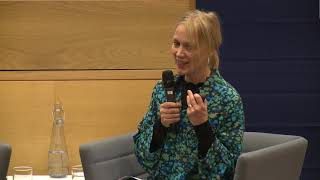
good afternoon and welcome to the third virtual retro seminar my name is Ella Morrison I'm professor of law and finance at the slide Business School at the University of Oxford I'm joined on your screen by two other people Pete da matta is the entire sample research fellow at the Oxford University Center for corporate reputation and she co convenes the seminar series with me and Steen Valentin is associate professor at Copenhagen Business School he's an expert on corporate social responsibility sustainable developments the politics ideology and governance of responsibility on the circular economy and critically for today's talk on industrial symbiosis and trust based leadership I'm going to turn the floor over to Steen in a moment but first as we have a number of new seminar attendees today I'll just make a few brief remarks about the seminar series retro or reputation ethics trust and relationships an Oxford is a seminar series that is very generously sponsored by the University of Oxford Centre for corporate reputation the seminar series is concerned with the ethical and normative content of trust and reputation in organizational life before the corona virus pandemic retro was an Oxford based series but moving a lot online has at least allow us to including the conversation quite a lot of people from around the world whom we otherwise wouldn't be lucky enough to meet say today I'm very happy to be able to welcome people from the United Kingdom from all over Europe from India from the United States from Africa from China and from several countries I haven't mentioned a number of people have helped meter and myself make these seminars happen we're grateful to rupert younger who's director of the center for corporate reputation and to Marie Watson Chris page Matthew Morgan developers to Clara's helped us to clear a number of unexpected hurdles I'm personally very grateful to Peter for the exception hard work she devotes to these seminars today's seminar addresses questions that are at the heart of the work we perform at the Center for corporate reputation Steve's going to discuss industrial symbiosis and in particular what we studying the way that industrial symbiosis occurs it appears to be more successful when it's self-directed and organic than when it's planned but organic symbiosis doesn't just spring up in arm's length markets it requires trust and stings going to provide is the fascinating new theorization of that trust this works clearly profoundly important as we address increasingly complex and important environmental problems then steam stalks gonna give us plenty of food for food steam will speak for about 30 minutes during which time he'll respond only to clarification questions and after that we have some time for Q&A please enter questions and comments for steam into Q&A box but either meter or I will relay them to steam you can find the Q&A button either at the bottom or at the top of your screen depending on the device that you're using we're gonna finish the seminar promptly at five o'clock this afternoon so steam thank you thank you very much John I'll just keep my slides up and running yeah we are thank you very much for this opportunity to present and discuss my work as mentioned my name is steam Bevin C I'm an associate professor in the Department of Management Society in communication at Copenhagen Business School I'm also the academic co-director of RCBS sustainability Center I will get right into the swing of things as I don't have that much time for the presentations thirty minutes I would be basing my present presentation on a paper that I've submitted for this year's IGAs conference it is a work in progress so please feel free to challenge and come with all kinds of questions to anything you see or hear within the next 30 minutes or so as reflected in the title and and also in Ellen's very clear introduction I will be focusing on relations between self organization planning and Trust in the making of if you will industrial symbiosis and certainly at the end of my presentation I will focus in particular on the need for more if you will rigorous theorization more rigorous understanding of the functions of trust and industrial sim uses its integrative symptomatic of research in this field that is we often point to trust as being very important but more theorizing is often lacking as a starting point I mean I I will not deny that in my life and in the work that I do I'm in many ways formed by if you will the Danish experience I'm sitting here in Copenhagen right now and that talking about the Danish experience in regard to sustainable development circular economy and industrial symbiosis there will be my starting point so let's say I come abroad say what about the Danish case how it is how is it interesting well one of the reasons why is that supposedly Denmark is nothing less than number one among all countries in the world when it comes to delivering on sustainable development goals that seems pretty amazing and perhaps also somewhat perplexing or surprising considering our level of consumption in Denmark and certainly also a very intense agriculture and animal production certainly mum talk about environments this placement can seem somewhat misleading but it's a kind of a typical part of the way that the Danish experience is being framed as you know top of the line world class since the ones of them and I should say obviously we do have a very ambitious climate policy in Denmark now climate law the commitments that other countries have made perhaps more is more loosely has has been made into law in Denmark the going rates lately and climate law office of December 2019 is aiming to reduce greenhouse gas emissions by 70 percent in 2030 and to achieve climate neutrality in 2050 and very much aligned with the Danish tradition of cross sector dialogue and collaboration and Trust government has set up 13 climate partnerships to help with this extremely difficult process where we know that there's so many things we don't know in terms of technological know-how and solutions and so on so forth why do I mention this I mentioned this has already indicated because certainly parts of the literature on industrial symbiosis seems to contradict this you might save this picture the Danish model and the Danish developments here are very much indicative of the fact that we live in a time where there seems to be at least in some corners almost like unprecedented belief in plant sustainable development the head of the European Commission the lioness even talked about the green transition being Europe's man on the moon moment we are entering a phase way government's is supposed to have a lot of say in how to do this and sit and vicious goals and so on so forth however industrial symbiosis the way that we have talked about it as often can be considered SS evan also mentioned Trevor more of a self-organizing thing happening from the ground up more bottom-up and and the leader shows strong inflicting this and in essentially closing the question to what extent can plant sustainable development be effective part of the reason why the discourse has been twisted in this way can be found in the the the case the template of the benchmark at the very heart at the very center of the whole literature and and discussion of his industrial symbiosis and that case is there the kalambaka case this is a picture of the greater Kallenbach area as you can see it looks nice and green and rural and it certainly is both these things it is certainly also much more in kalampore you find the largest industrial park in denmark it is also the largest buyer to production site in scandinavia and supposedly the total economic activity in this area amounts something like 15 percent of Danish GDP it's industrial claim to fame certainly in this area is the symbols and basis which is laid out like this maybe you get a sense it's actually not a very big thing and it doesn't bother a lot of axes perhaps that is part of its its success that is sort of a miniature laughs compared to many you might say industrial parks or efforts at making eco industrial parks happening like certainly China and South Korea this is actually almost like a miniature you might say certainly it is the number one symbiosis of its kind and the world the first one that was discovered it is ubiquitous you might say it's the benchmark and exemplar that has been used endlessly in literature as an again as a benchmark for the development of eco industrial parks and and similar initiatives in other countries it has also also so true an inspiration for government programs supporting industrial abuses in the UK for instance where the first one and the NIS P was set up I think in two thousand five or six and in France is China and then South Korea for those of you who are not extremely painfully familiar with with what industrial industrial symbiosis is and the point is about people who also interest in sustainability more broadly perhaps have not really gotten around to understanding what is taking place in this particular realm certainly I didn't know much about this and be able to say five or six seven years ago and this has to do with kind of silo mentality and Indian research that I will get back to you later but the most recent you might say graphic depiction of what this iconic symbol is all about is you can see it here even with moving you might say streams makes exchanges here industrial symbiosis is the very you might say essence of companies coming to industrial companies coming together collaborating to make waste into value to make waste streams into resource streams whether we're talking about energy water or material we've talked about physical exchanges here as you can see here in the heading I've called the complex adaptive system of bilateral contracts and that is just meant to indicate that in come back to the whole issue of planning this was and is again an industry initiative and each and every one of those streams that you see here and each exchange is a product of a lateral contract entered into by two companies or organizations in this network this partnership it's not something even if there is a bone it's not something that it's decided in some centralized location you have different actors here most of them privates some of them again local government important for instance we have fastest in the middle the power plant that has recently made the transition from from coal to to burning the wood chips it has been a recurrent critique of many industrial uses around the world that at the heart they had fossil fuel providing energy that has also been the case in Kalibak until very very recently this transition only happened within the last year or so have the local utilities as a lot of water involved in this you have renowned Danish industrial companies novo nordisk in markets one of the market increasing insulin well watch Nova science magazine enzymes you have it you know the former state oil and oil refineries so on so forth again this is the iconic supposes that's a lot of awareness among the different companies as this is a very dynamic thing each time they make a graphic depiction like this it's kind of almost like obsolete the day after because again resource streams that exchanges the pattern is changing all the time well that's a keen awareness the second it's not just a technical endeavor it's very much social one it's the people that make things happen and and of course we use technology and so on so forth couple of collaboration values of trust are very very important in this importantly again this is not a new thing as already alluded to by Elham of self-organization here and I will get back to exactly when and how the sadducees was discovered or uncovered like I said it's not a new thing it had its humble beginnings actually back in the 60s they have decided on the year 1972 as the official launch year but so it's been with us for quite a while it's not big as you've seen this is not a case of you know impressive scaling of sustainability it is quite small and has remained small it's not extremely a very fancy thing it's getting a lot of credit information but if you go there it's not very friend humble place in Denmark and what we find here is production people in engineers not people who talk fancy about strategy and so on so forth so it's very much probably called production then not what has happened over the last five to ten years is so bad with jubilation of it apart bit from it being there and being mentioned in not countless better but a lot of research articles and the different parties industrial parties with Novo Nordisk at the helm has kind of rejuvenated so as to make you might say more out of its because with the climate crisis and we kind of urgency around that becoming even clearer that this kind of model seems to be what the world cries out for and needs more of so they have kind of amped up the storytelling the branding and again Trust has played an absolutely crucial part in that and and the story tank got these two formulations from their 30th anniversary publication of just two examples of how they now describe their own accomplishments certainly also I mean the campus abuses for better or worse has also provided the template for how industrials of uses as such has been defined in academia maryanne shirts are there's been one of the dominating forces I'm sure she has visited the campus countless times her definition is widely used the notion of in traditional separate industries that's in itself very challenging and one point about the campus is there are no companies the purpose as part of that direct competition with each other that can certainly be an impediment to the kind of trust and the kind of reciprocity you can put into this traditional several industries engaging some collective approach to also the games competitive advantage it's not only environmental advantages in physical exchanges yet very much about collaboration as has this element of geographic proximity to it that where we often related to industrial parks and so on so forth so certainly Ellen pork has been again it's a small thing not face I had a couple of work and a student say I took their basic said this is so underwhelming this is so small and the people at kelpo do recognize that kind of feedback from from visitors but again perhaps part of its charm is exactly you you can gain an overview it's not like some of the prestigious projects in China that are yeah almost the size of small cities in themselves again the way that again the thing came into being is interesting also because it goes back to you might say the very beginning of the modern debate about sustainable development as most of you will know we have the Portland in 1987 our coming future and then kind of ushering the modern era of sustainable development also has promoted but un various initiatives and so on till two years after and this is kind of the standard story of how you might say the whole discipline of industrial ecology came into being to people high-ranking people from the research department at General Motors of all things produced a paper and I think it was Scientific American suggesting a new model of an industrial eco system that was able to do exactly what they were doing in kalampore however these two Americans did not know that there was such a thing in the world already when they when they wrote it they kind of provided an idea this is what needs to be done and then the very same year almost suggest in the kind of humble mentality in kalampore the great discovery took place and it was actually related to the fact that a couple of a group of high school students came to Campo and in Fountain something with the pipes that a lace out open in the area that something special was going on and then they made a small model of it and then the people there understood that something special was taking place and the news spread if you will so it was only something like 17 years after the thing was of officially launched that came into being that it was actually discovered or uncovered and from there on of course it has taken on different significance and meaning before the discovery nobody talked about it in the environmental sustainability terms or in responsibility in a lot of focus on these people just doing their job and trying to optimize their business I would get back to that these are conservative elements moments in you might say the the emergence of industrial ecology as a discipline that can be found among other disciplines that sustained the whole field of circular economy and I guess I've taken these depends from a paper back on and then they strongly focused on the elements of disciplines of certain economy that relates to industry and take little engineering and so on and so forth but industrial ecology has established itself as a strong you might say discipline within that fields is often criticized for being perhaps providing ideal solutions are not being probably rooted and in practice and so and so forth we can perhaps get back to that discussion but within industry ecology we talk about industrial symbiosis solutions and we talk about the creation of the eco industrial parks smallest interchange of this via the notion of geographic proximity I think these two terms are almost interchangeable again in terms of providing ideas versus practices I saw a paper where a researcher said in France there's no such thing as equal just really box and another research to find out there's no such thing as an equinox that actually delivers on you might say the goals of creating a truly circular economy but again there are deals that are trying to push developments in that direction then about the social that are used in the heading what is the problem with existing research well I'm not real criticizing assisting research such it's doing a good job and there is kind of an extensive I think the nuance literature on industrial CEOs is compared to many parts of the CSR debate for instance however there has certainly been a tendency again for for some kind of silo building that you know papers about this is published in journals like you know Athena production and you know the destroyed ecology and has a strong kind of engineering a dimension to it whereas mainstream journals in for instance to the organizational field that I know very well general slack organization op stories even general business ethics hockey has anything on this and the problem you might say with the fact that the the mainstream research on industrial symbiosis has not connected with those disciplines to simply also perhaps something to do with that there's something missing in terms of making their technical you might say in models connect with the real world of practice and and deeper cleaner understanding of the social and relational determinants and and causes of success and failure and this I was a very very small small part in a failed research application at one point where some of our British colleagues did of the view of the see economy the future and came up with a heading the missing social they talked about saying in all the researchers they reviewed more than a thousand papers only in 14% of these papers was mention of the social of the organization even made animation was an invention main which we kind of indicated over emphasis on the technical and that provides us with some answers but certainly not all answers in terms of defining what a success and failure in this field and that means I tap into with this paper and with a lot of the critical stuff that I do try to go up against the stream saying that there's certainly as Angie Hoffman has said in the paper on very critical paper between a climate science ideological wars you save their this there is this tendency for for the stainless sustainability picture more generally to be dominated by the physical sciences and to find the problem and by economics and defying the solutions and I would certainly give you the examples of that and we got to industrials and users we need to kind of move beyond that while also recognizing and acknowledging the important contributions that have been made under those conditions but I should also emphasize that I'm not being a complete original here and also proposing a completely in novel you might say contribution people are actually delayed at work on Rosenthal and and others have very strongly emphasized how we need to look at industrial ecology as he put it front 'mentally social and organizational construct and there are a number of papers also or the one spontaneous researchers that strongly emphasize social property social properties and embeddedness if you will the broader societal embeddedness off or some peer of industrial symbiosis so there certainly love there to draw on but again when it comes to trust for instance it tends to get a little safer in terms of an advantage point for for theorizing this a problematizing theorization in this field a very obvious question can be posed and it was posed actually more than 10 years ago by again marianne church elf who asked if industrial symbiosis is so advantageous why are we not seeing a lot more of it and i would argue that it's certainly still relevant to ask that question and the answer again has a lot to do with this interplay between social organization and planning and it kind of goes back to the current income book case you might even be here of the account book paradox i mean how can you make a benchmark out of something that is unique how can you generalize you might the experiences of something organizing itself building from the ground up that is certainly something that has been continued conundrum here and it's been pointed out in a number of research contributions by Chatsworth and others and as has been pointed out a plant Kallenbach has yet to develop in spite of its inception again in a sense the tempo is not very big it's necessarily a very fancy experience if you go there but a plant version like that can I can perform some of the same stuff that count pocus has simply not emerged and a lot of people say that's because you know you cannot just claim this social environmental plan will not necessarily get us there and of course that has a lot to do the more general problem we got knowledge transfers and stuff like that and how you cannot just make that happen Chacho has also provided an interesting analysis where she's been talking about looking at developments in school in terms of different faces and she talked about sprouting in the people with Ehrenfeld sprouting uncovering and embedded there's an institutionalization again this is very much based on the current experience the idea is that in the sprouting face things was just happening of their own volition then the uncovering took place and after that we've seen a lot of you know explicit institutional work impaired and storytelling branding and so on and so forth taking place arguably you might say are they three phases or is it more like you know uncovering being an event define your kind of at before and then after that is certainly something was discussing but importantly I mean the kind of argument that there was made here was that again talking about the humility you might say of parts of Danish industry the idea was that before the uncovering and the cirrhosis was something very implicit as a former site manager in in the 40th anniversary complication suggests it involved quietly and anonymously it wasn't noticed by anyone he suggests it was just about optimizing the processes there was no special environmental awareness or anything like that it was just you know smart business people engineers their job basically and and trying to optimize and this has then been translated into you you might say a theory suggesting that actually understanding this in purely economic terms as a market model is it's actually smaller than over emphasis on economic social responsibility a sustainable development and all that kind of who it was basically you know just people doing their jobs and they argument by shots of an infant is then also that the more robust systems that's what experience shows again become more closely follow this model of spontaneous order or serendipitous development companies and systems rather than any notion of central conscious planned development and again part of that conclusion is based on the fact that actually we others have not been able to reproduce the current work experience again there's some theoretical front lines involved in this I've tried to illustrate this what we have done is inspiring face it has very much been explained in terms of kind of a confirmation of market logic saying this is a realm of economic self-organization you can use standard market models to explain why this works and actually other models seem to miss the point it's surely and simple you know something that can be explained most effectively by modern economic theory neoclassical economic theory whereas you might say in the embeddedness and institutionalization the reason why I put an trust in brags and Kirsten markets it's not quite clear to an extent they also allow for trust to be partners because Trust is basically not a part of the neoclassical model of competition somebody relevant didn't work out there and then you have the realm of social economic planning and Trust and and you might say the manufacturer of trust facilitation you might all the different roles that can be played by different actors and that comes on as being you might say somewhat inferior to the most of career model of self-organization spontaneous all the killing how a green house suggested that me in regards to the former we can we can talk about serendipitous development as opposed to goal directed development and these have to in some a neutral kind of been juxtaposed I would argue that perhaps this is kind of a redundant way of looking at it these days beat maybe need to go beyond that because to accept this model of a before and after in these times where there's such an urgent awareness of environmental issues it's like hoping against hope perhaps that we can find another camp or they can just has just developed by itself maybe this kind of crude before and after needs to be replaced by something else a more keen awareness that of the here and now and the fact that we need to look at different models and different ways of working with with you might say industrial symbiosis we need to consider them on the same sort of day and I'm not the only one that have come up come with that come to that conclusion for instance I can on how green we'll talk about facilitation at some kind of middle point between serendipity and goal-directed development and actually fools adele and this is a paper by all the big stars in this field from 2016 has also suggested something along those lines and instead of this cardigan crew before and after idealizing that before where things were just happening and perhaps be explained world by economic models we need to realize that a lot of different things are happening now that self-organization is service facilitation by third party public access services and other actors and and also government planning considering again government mandated programs in UK China South Korea love countries actually musicals take a kind of all this rather than just looking at this before and after so in that paper from 2016 they're suggesting different pathways and let's kind of cover all the different ways in which we can we can promote and further developments in this field and this is the same kind of roads that I'm going down with my should be finished in how to then theorize trust in this as I mentioned and this goes for a lot of different areas I'm also doing work on trust based leadership in the public sector and there again a lot of people talk about trust as being important but they're not really integrating into the theoretical models in a recent paper by one of some of our colleagues from Auburn University in Denmark I suggested that actually still the article showing in this field lacks framework and a research agenda that's kind of that very conventional ways for academics to make their work seem relevant but that's something too that there's certainly a lack of a more rigorous background is it is in this infancy as they suggest they then proceed to focus on how individuals firms can develop trust and you must have a nice a little perspective we want to do something else going back to also trying to cover all the difference you might say mechanisms that make or break developments in this field we want to theorize Trust as part of the social Constitution of industrials abuses as more at more of a macro level if you will and we take two different cues the notion of trust as an organizing principle that again cannot be seen in isolation but needs to be considered alongside market and hierarchy you might say price and authority mechanisms we can then see trust as a very distinct mechanism that kind of orient enable a constrained economic behavior that works through the structuring as a mobilization of interaction patterns makes changes as put by much heavily and more importantly perhaps we we also build on the work of Paulette ler who's famous for his work on social capital but also for his work on trust he talks about markets hierarchy and community as identical forms of organization modern capitalism again works to price Authority and and Trust as coordinating mechanisms and we were very much in want to then focus on understanding better how Trust works as a coordinating nakedness alongside the other truth we're not just interesting in then trying some kind of idealized view saying that Trust is good and control is not so good it's more like what as one of those if one of the functions how can we understand this I don't have a lot of time to explain this but what we try to do what I try to do with them fills and adapt the typology provided by Adler in his paper of 2001 away he kind of distinguishes between again hurricane Margit high and low determinants and as you might say trust as the third variable but high and low trust modes forms of trust and very briefly to get to to the point where we are there some open indefinitely but like I said it's a work in progress and you are welcome to ask questions the idea of applying you might say Atlas model to to this field is to say that again we need to understand developments in this field different pathways the different modes of organization as you might say an interaction of a market hierarchy and and and trust here we have cut out you might say the lower quadrant saying if there was no you might say hierarchical support of industrial symbiosis and no market support is really a note though so we don't need to consider that quadrant but on the combination of high market and and low hierarchy we then have what people call informal synthesis which is very much akin to the situation we have I've described scribal really where you know things are happening with a very low in a level of you might say government involvement important however instead reducing that into a matter of you know this being about you know just economic contracts park contracts on the market we get a different vocabulary talking about relational contracting if you allow suspects to step into and challenge these conventional notions that in this sphere in this kind of sphere we can just rely on economic theory maybe there's something to the concept of relational contracting that is useful and action relational contracting as a concept where the notion is that contracts also build on something rely on trust relational contracting has been has not been mentioned in this field that also perhaps is a way to kind of build a more nuanced understanding of how Trust actually makes a difference even in under the conditions of more informal organization then there is the what we've called formal some peace abuse it was again in any case both corporate involvement high market concern high market determinant determinant and high authority but still with a focus on you might say particular market access and here we can tap into the experience without different ways for companies arguably to to take part in modern explicit you might say government-supported symbiosis both those who do it very proactively and have - a drunk the kool-aid and see a big thing in this and others that might be laying low and basically engaged in a much more low trust kind of way they are part of it but they don't necessarily commit very highly - to the very notion and concept and project of abuse and then finally and I should probably add that you might say headless model was thought of as you might say very much located within the tradition of market hierarchy and network going back to coast and William summoned transaction cost economics it was all about capturing different forms of corporate agency you might say sorry what we do here is to say that this mark can also encompass all other types of agency and then we move down to what we call embedding which suggests it's an ongoing effort something that is accomplished we can talk about enabling bureaucracy very much associated in the facilitating function saying that again rather than you might say on the coercive bureaucracy talking about rules and mandating certain you might say current selection of behaviors enabling facilitating function can play a huge role and again in facilitating relations and setting up these things it's a way of kind of synthesizing these different in science and and how that's facilitation can work and course with bureaucracy that becomes a - saying what happens if we start experimenting with a trying you know - we place you might say social trust promoted to enabling bureaucracy where you might say systems trust or basically rules to one extent can you further the development of industrial symbiosis through if you will more coercive forms of authority and so on so forth the idea here is is again going back to the different pathways here is that using this model it's a way to then try to make explicit the different functioning of trust they the high trust forms over the easily then the low trust forms and to capture again how Trust functions within among the different parties to this different actors with their particular forms of agency so this is how far I we we've gotten with this and like I said I hope this inspires some some questions and thoughts whatever this is the final slide for me so let's take it from there thank you so much for sharing your work with us this is fascinating and gives us so much to think about i before we go into more detailed questions I'd like to just start by zooming out a little bit and I was wondering could this this analysis teach us lessons for other areas where market and hierarchy and their associated coordination mechanisms are coming short and where a society would benefit from concerted organizational actions such as human rights issues and supply chains for instance I definitely think so I mean one of the problems would some say for instance the way that the sustainable development those are being approached is that there seems to be an outspoken willingness to kind of go straight Stricker's they're very directly to kind of a weak version of sustainability and talk about in terms of business case and you know you just have to redefine your corporate strategy the business case still applies and so on and so forth and certainly focusing on untrust as a value and as a coordinate you can enable co-coordinating making this mix one way to kind of challenge this you might say also the the tense the tendency to reduce is to to kind of either you might say the market of a government and and and and and see some ways in which it can the community argument can play a role since you can mediate limitations of both so I haven't thought this through but there are certainly a lot of stuff in the way that this is has been talked about and the belief and disbelief in planned developments that has relevancy thank you question here steam from Bruce guy here who is asking how one could understand your typology of trust you're afraid my clandestine trust in terms of cultural background and cultural backdrop so presumably the cultural surroundings both organizationally and within a society affect the extent to which Trust can be formed an extent in fact the extent to which things like hierarchy might grind it out because there's something been analyzed and studies of it I guess the short answer maybe I'm not doing quite justice to some of the very smart people in this area but I guess I can't answer is yes or no because many years ago I mean it has been acknowledged that actually when you look closer I was what's happening here the regulatory context and again social norms norms of trust knobs are contributing to the local community has placed a considerable role and in actually as Co determining you might say causes of action of these companies you can not ultimately reduce it to kind of optimization in terms of you know how can we do this without this is that process it has been acknowledged but again perhaps there's a need for a more rigorous theorization and I like to think that the framework of Adler at least as I'm trying to adapt it and I'm aware that certainly some things about this apparently this one that is open to you might say taking into account those cultural differences because one of the points one of the reasons why for instance you might say the camp or model has not traveled better than it has a lot of people will say is exactly because of the Danish model the high trust model that can be taken for granted here and not you might in in many other places not actually we also have experiences from other parts and Denmark closes Copenhagen where it didn't work so that's a huge cultural again as part of the research agenda that I'm talking about I mean if you just reduce this to a natural science and engineering you tend to completely bypass the cultural dimension of the equation here and we need to take that into account also in terms of understanding and not only success but also failure so we have a question here that I think is related to what you've just been talking about Subhadra is asking about the influence of nationalistic tendencies in the the potential that there is for this type of industrial symbiosis to arise cross-border so the question is can can trust play a big role between countries across borders to enable industrial symbiosis well I mean industrious abuses again we severe the notion of geographical proximity has very much been related to local you know areas rather than perhaps being something that is very cross-border but I think the question as such is extremely relevant and actually reminds me of I mean responses to Atlas paper back in 2001 the paper has been inside of things thousands of times but if you read the commentaries and civil was printed one of the arguments that Adler makes and he's now you know kind of a it was always kind of a post Marxist now he's a democratic socialist guy I mean he book recently the 99% economy he's very ideological extremely bright I like him a lot but basically they were saying they were talking about the myth of the ideology of trust and that's a certain concern here I mean we in Denmark can take trust somehow for granted as part of our social fabric and tapestry how does trust travel be living in a world and a lot of people say that I mean president got to work relationships cake economy and whatever is does trust clay a loom large and large and that was the argument actually made by by by by Adler in newspaper 2001 trust plays larger larger role in the knowledge economy in in modern capitalism is it true I mean we are not so sure about this we mean there's a lot of things happening with the polarization in the world that seems to point in other directions and unfortunately I don't have have the answer to that it's just a matter of saying we need to be careful we need to be nuanced we need to not idealize or idealize trust we need to be very smart and be culturally attuned to what the circumstances are I think that's what I want to say about that okay a related question tries to link what you're saying about trust in social contexts position with ethical stories about trust so much parameters send us questions saying well people think about trust in two ways it has an ethical component but it's to be able to trust you and it has it also operates as an organizing principle when they can trust you we can do things we have always couldn't do and he's trying get up the way that those two ways of thinking about trust connect and maybe he says one way to do this is to say well the ethical claim bomb is part of the ethical structure of persons and relationships to each other so does that's just a real sense of thinking about how these symbiotic relationships work more efficiently it's a little hard for me to hear you now I think I got most of it I can say from my own preferences and like I said I've been working with the notion of trust in God to leadership in particularly in the public sector and I've tried to approach it in sort of a pragmatic sort of way saying I mean there's a very very strong ethical component in this but I'm very much I mean indebted to sociological trust theory that do not see trust as you might say I'm that different takes ethical it takes goosed hope that the Danish philosopher has one of the famous takes on you might say ethical views of Trust has some kind of unconditional values to the sociological view of trust and here I'm among others among others very indebted to the German sociologist and systems theorist Niklas Luhmann is it's very much about again understanding trust as conditional and relational and always at stake and being built up and broken down and so on so to speak so in a sense we are we are we are recognizing the value of the ethical component but approaching it fundamentally has kind of a sociological phenomenon it can be if you will approach in a in a more pragmatic sort of way so that you are not also you might say just accused of providing you might say some kind of ethical discourse but I'm also able to have to argue that actually this makes pragmatic good business sense this is actually a smarter way into engage without thinking resorting to the kind of argument you find in the kind of airport literature on trust which talks about smart trust and your fast trust enabling the wheels to turn very very fast I think that's a that's that's in between there so in terms of the ethical component I think there is something there but for instance in the camp okay they have been not been very aware of it but they've kept their eyes perhaps some of these people to march on the price and haven't seen the bigger picture but there are some strong values that are very much ingrained in danger society and that you can see has been a part of framing their ways to go about this I don't know if there's a clear answer at all but yes we have a question here from Missha and Kathuria I hope i pronouncing that incorrectly about how we objectively assess industrial symbiosis and Nishant is asking if there is any type of measure in the literature that we could use to do precisely that that is a very very good question and it's a an issue that I didn't touch upon maybe I kind of alluded to it in my presentation that you might if you go to Tumbo you might expect something very fancy you know and you know high level in every respect and it's actually something much more humble and and small and so and kind of almost like cine professional in the ways facilitators sometimes there is this great recent paper by kish here it L on barriers to the development of this circular economy they strongly emphasize said that it's the interesting part of the paper how developments in this area is it's often according to their expert respondents did a lot of interviews often the barriers cultural as we just talked about culture is about mindsets it's not about the technology the technology perhaps it's there but it's about mindsets a lot but however under technological barriers they talk about the lack of proper data and documentation in kpi's and actually because it's a small thing because it has worked the way it has actually the numbers the KPI is the business case the documentation for for the benefits of the compulsion users I would say distinctly weak they have some numbers I think they were produced by a guy very cool guy young guy did not have a PhD yet so they are rough estimates and the companies in the area has not have not really invested in you know coming up with a more elaborate you might say more elaborate numbers and misha's so I mean this is a huge challenge here also I'm told about trust can be difficult to measure social capital can be difficult to mission and certainly the effects also of the difference in the OSHA's can be difficult to measure also involved companies have the camera very much kind of if you will narrow business mindset they're just basically once you're in most of the time optimize you know their business you need to invest you might say in in being able to to measure the kind of difference it makes and it's very difficult also i mean ii ii ii ii can be to come up with concrete mazes measures of what would be the alternative greenhouse gas emissions of co2 emissions and so on so forth they have a take on its they have a sense of it they have published some of it my general sense is its relatively weak it's it's and i guess one of the numbers they have in terms of monetary benefits per year something like that in the city of 100 million Danish kroner like and two hundred it seems like chump change so in terms of the objective measures here there's so much work to be done in this field and this goes for circular economy life cycle assessments and stuff like that overall that I mean so much work to be done we have a couple of interesting questions that relate their work to other literature's so I'll take I think one of them Theresa horror is asking the question about how you relates to another let's chill which ties into the question I had telling you later another issue so let me love them together she points to a paper in the journal of operations management by G cow and Fabrice aluminum enclose this correctly that paper looks at when contractual and relation governments complement and supplement each other and she's asking how that stuff might connects to what you're doing I had a similar question about work by Chuck sable who's a sociologist now working the last school so Chuck um talks about what he called studies trust so in situations where trust between organizations is important you build it by making very small contractual relationships and leaving space for trust to form which i think is the sort of thing that this survey paper talks about and then slowly building it up um as that sort of thing been studied in this context I mean sable and his coffers have looked at supply chains for example industrial symbiosis nope I would laugh I mean it'd be fairly if you can make sure that I get both references I would be very grateful like I said I mean I should not pretend to be an expert on relational contracting versus as mentioned in the Adler framework but I think it could tie into the first one about contractual relational dominance things I think that's a potential there for spring when companies under the cultural conditions that we've seen encounter engage into these contractual relations with each other there's something more at stake than just you might say they can spar contracting that is assumed in economic theory and again you have people like was he called this this osseous in this you're saying this is just a normal case that's nothing particular party it was never apart sustainability was your standard market model I don't think necessarily it was and when you look closer we can get a keen sense of that and but like I said for instance relational contracting as far as I know as far as my searching abilities has allowed them to see has not been mentioned at all in this literature so perhaps that's a potential density we come up with a better understanding so as not to again surrender to this kind of market fundamentalist view ultimately the market is its superior and you know all efforts to plan this is failing and ultimately we should just leave things so all types of literature's I'm sure there are quite a few and I would love to have a look at these two both stable and the other one I didn't quite get the author name so if you could give them to me it's concerning beauty realm and an understanding I mean what is happening in this contracting thing because this is again it's all about understanding the intricacies of how these different parties contract there is a question here that is quite different from Mark Elliott mark is asking what what is out there about the effects of government incentives in investment decisions irrespective of ethics or trust how does what type of role does this government play here I don't think I have an extremely concrete answer to that because I simply my memory does not serve me that well but there are quite a few papers that focus on I mean for instance I saw an overview of where the countries the whole literature on industrials abuses rule what countries that cover less for instance a lot of stuff on the Chinese experience that's that's the most prominent one so that's a lot of literature on the two friend ways in which this has been translated into the government programs and promoters and barriers and successes I think the the clean-cut the business case that's a difficult one because the great successes are not that many and I guess that's part of the the critique of this I mean that there's been perhaps a lot of talk in industrial ecology circles about all that could be possible here and an ideal notions but in terms of delivering in terms of creating the the truly a you might say eco industrial park or the one that lives up to all our dreams of what social economy can be or and perhaps we just need to let go increasingly have to come Paul gets a template but certainly it's been extremely difficult to come up with a recipe for making something similar so Kallenbach happen so I think it's rather than the clear-cut business case for what can you get out of it that's quite a lot of literature if you do the searches that that tap into I mean different governmental initiatives and also in a nuanced way talk about I mean how have they succeeded how if they fail I mean I just thought there was a great paper on the Chinese experience this has been part of Chinese law for at least since 2006 or something like that and a lot of these projects have failed simply because the capacity is not there and because a lot of it turns out to be voluntary and so on so forth so a lot of unfulfilled promises certainly a large part of the you know so the picture that you're seeing it because it's difficult because it's damn difficult and it's certainly not at all institutes you can look at the count Bob and see a recipe and making it happen and I said one of the points made by chef ecology said you shouldn't overestimate I mean a company's commitment to sustainability agendas and so on so forth in where did you understand this and whether we like that or not that certainly rhymes with a lot of experiences that I guess many of us we have a lot of questions here so we return for at least one more Sonique Ballmer is asking a question that I think is very interesting and that's the because the the Danish experience in kallenberg is relatively small and scale um she wonders if you could think about this in terms of Eleanor's from his work on governing the Commons um and if you could I guess a supplementary question I would have is if that's the case this presumably works and you know one way to design this might be to think about which industries you want to co-locate so if you put enough of them there so that between them they would internalize everything maybe that's enough then you can expect them to do an illinois on strong and govern the commies commons for you is that fair was it like i should i can't say too much about her work so i won't even pretend to be able to come up with something very qualified on that but i think that the general point that can be made is i mean new industrial areas that are being planned I mean it's obvious to to put this on the agenda and the question is then do we only want to invite particularly sustainable companies do we want to keep certain things out for instance big butchery factories for instance you know that they pose a huge problem is it about for instance inviting you know only the good guys the do-gooders to begin with or is it about something much more ambitious again in terms of saying we can also have polluting companies in it but they need to be you know what collaborating with others I was thinking but the pollutants but invite people who rely upon clean environment as well you might expect interrogations in small ways but I mean the whole problem of the trust issue and the ethical component and we know I mean we shouldn't be of course idealistic about how decisions are made at the very highest table faces there was an example in camp pork of a decision and exchange or a new exchange a new stream that was being debated and they saw a potential decision decision was kicked out to headquarters around Copenhagen and it died because locally they knew how to do this if we got a little further away now they couldn't really see any kind of real value in it so it is an ongoing challenge to make companies commit long-term to to engagement with others and and we know that that is difficult also because of the volatile environments that companies operate in and so on and so forth so that is certainly also important part of this I mean what they're saying in count Bach is the whole point is this is count Bach is only 100 kilometers away from a small country like that's alone actually quite a long mental distance if you will it's difficult to actually just retract and retain people there and they're saying how the reason why Trust works is because that's kind of an agreed assumption we are here together we've got to be together here for a long time and therefore we can commit to ourselves more long term whereas you might say if you get closer to the big metropolis I mean if me it may be a little more hustle and a little more short-term so there are kinds of ways in which this plays into it and the big challenges again also going back to the paper bag I'm schibetta on individual companies motivations and I can certainly recommend that paper where they I think they start with the kind of more instrumental thin trust calculative trust and and and take it all the way to the more moral take and what it takes to get the companies to get there but but that's certainly a challenge in making companies commit with with the uncertainties involved and also the lack of three you might say documentation with regard to ultimately the business case both environmental and profit terms okay I'm just about out of time that's a pretty good place to leave it you've raised a lot of difficult and challenging questions and that's some great questions if you're one of the peoples questions we didn't get to I'm very sorry we need to commit to to finish on time and we're going to do so so I'm gonna close by doing two things first of all let me advertise the next of these seminars which will take place in two weeks Dorothy barman Polly is going to speak to us giving the talk inside will be Lancome in 19 the case for human rights in business and let me the final word is all of those things thank you very much steam for really late and talking for response well to such a extraordinarily collected collection questions thank you thank you thank you very much thanks for the questions thanks for this opportunity thank you very much
Original Description
The third in our Trinity term R:ETRO webinars - Reputation: Ethics, Trust, and Relationships at Oxford, hosted by Intesa Sanpaolo Research Fellow Rita Mota, Professor Alan Morrison, and the Oxford University Centre for Corporate Reputation at Oxford Saïd.
Steen Vallentin, Associate Professor in Corporate Social Responsibility at Copenhagen Business School, Academic Co-Director of CBS Sustainability, spoke on ‘Circular economy and the social: self-organisation, planning and trust in industrial symbiosis’.
For more information on all the seminars, see https://www.sbs.ox.ac.uk/research/centres-and-initiatives/oxford-university-centre-corporate-reputation/retro-seminars.
Abstract:
A key insight of industrial symbiosis is that it is difficult to reduce the environmental impact of industrial activities if one considers a company in isolation from other companies. Hence, industrial symbiosis engages companies in collective exchange structures enabling development towards a more circular and eco-efficient industrial system – through physical exchanges of materials, energy, water and/or by-products that turn waste streams into resources. The present study is centred on the notion of trust and its functions in industrial symbiosis. Although the need of trust in establishing industrial symbiosis is widely acknowledged in extant research, there is a lack of elaborate theorising about trust in this context.
We consider trust as part of the social constitution of industrial symbiosis and focus on how trust is woven into (economic) self-organisation and (political) planning in the development of industrial symbioses. More specifically, we approach trust as an organising principle alongside market (prize) and hierarchy (authority). The theoretical starting point is that trust orients, enables, and constrains economic behaviour and is able to mitigate limitations or weaknesses of market and hierarchy. Building on the work of Adler (2001), we propose a conceptual framework f
Watch on YouTube ↗
(saves to browser)
Sign in to unlock AI tutor explanation · ⚡30
Playlist
Uploads from Saïd Business School, University of Oxford · Saïd Business School, University of Oxford · 26 of 60
1
 2
2
 3
3
 4
4
 5
5
 6
6
 7
7
 8
8
 9
9
 10
10
 11
11
 12
12
 13
13
 14
14
 15
15
 16
16
 17
17
 18
18
 19
19
 20
20
 21
21
 22
22
 23
23
 24
24
 25
25
 ▶
▶
 27
27
 28
28
 29
29
 30
30
 31
31
 32
32
 33
33
 34
34
 35
35
 36
36
 37
37
 38
38
 39
39
 40
40
 41
41
 42
42
 43
43
 44
44
 45
45
 46
46
 47
47
 48
48
 49
49
 50
50
 51
51
 52
52
 53
53
 54
54
 55
55
 56
56
 57
57
 58
58
 59
59
 60
60

Oxford Impact Investing Webinar - Ask the Expert
Saïd Business School, University of Oxford
Alice Kettle: Telling stories through stitches
Saïd Business School, University of Oxford
Webinar - Private Equity’s Roaring 20s - A Peek Around the Corner
Saïd Business School, University of Oxford
Peter Drobac
Saïd Business School, University of Oxford
Becoming a more effective and impactful leader | Women Transforming Leadership Programme
Saïd Business School, University of Oxford
The Oxford Chicago Valuation Programme - Subtitles
Saïd Business School, University of Oxford
Ideas in Motion with Dr. Judy Dlamini and Moderated by Shukri Toefy.
Saïd Business School, University of Oxford
Oxford Impact Measurement Programme - The Landscape of Impact Measurement for Impact Investing
Saïd Business School, University of Oxford
Leadership in extraordinary times
Saïd Business School, University of Oxford
Personal and professional wellbeing and mental health during Covid-19
Saïd Business School, University of Oxford
Oxford Saïd Entrepreneurship Forum 2020, 7 March 2020
Saïd Business School, University of Oxford
Covid-19: Preparedness, resilience and the future of public health
Saïd Business School, University of Oxford
Oxford Chicago Valuation Webinar - The Rise of Private Debt
Saïd Business School, University of Oxford
Peter Tufano in conversation with Hiro Mizuno
Saïd Business School, University of Oxford
Webinar - The Macro Effects of Covid-19 | Oxford Real Estate Programme
Saïd Business School, University of Oxford
Leading and organising for impact in times of crisis
Saïd Business School, University of Oxford
Misinformation, media and trust
Saïd Business School, University of Oxford
Oxford Social Impact Webinar - What is the New Normal for Impact Investing During Covid-19
Saïd Business School, University of Oxford
COVID-19: The view from Mexico
Saïd Business School, University of Oxford
How can entrepreneurs not just recover from the crisis but actually rejuvenate the economy?
Saïd Business School, University of Oxford
Leadership in a New Retail Landscape
Saïd Business School, University of Oxford
The future of advertising
Saïd Business School, University of Oxford
R:ETRO webinar - Transformation in networked whistleblowing
Saïd Business School, University of Oxford
R:ETRO webinar - Shaping the new sustainability agenda online
Saïd Business School, University of Oxford
Post-covid-19 scenarios for the real estate industry
Saïd Business School, University of Oxford
R:ETRO webinar - Circular economy and the social
Saïd Business School, University of Oxford
Financing the COVID Crisis
Saïd Business School, University of Oxford
Keeping the sparkle: a global perspective on luxury retail
Saïd Business School, University of Oxford
Oxford Saïd and the Education & Training Foundation's portfolio of leadership programmes
Saïd Business School, University of Oxford
R:ETRO webinar - Beyond COVID-19: the case for human rights in business
Saïd Business School, University of Oxford
Capitalism The Great Debate - Stakeholder v Shareholder
Saïd Business School, University of Oxford
An Inconvenient Fact: Private Equity Returns vs The Billionaire Factory
Saïd Business School, University of Oxford
Marketing leaders, crisis management and future growth plans
Saïd Business School, University of Oxford
The future of banking - opportunities and challenges for banks in a post Covid-19 world
Saïd Business School, University of Oxford
Designing and Measuring Impact Investing Portfolios
Saïd Business School, University of Oxford
What does it take to get a job in Private Equity?
Saïd Business School, University of Oxford
A call to action from the MBA class of 2020 to the Oxford Saïd community #BlackLivesMatter
Saïd Business School, University of Oxford
After hours case study sessions - ENEL
Saïd Business School, University of Oxford
After hours case study sessions - Welsh Water
Saïd Business School, University of Oxford
After hours case study sessions - The Motley Fool
Saïd Business School, University of Oxford
After hours case study sessions - Royal Canin
Saïd Business School, University of Oxford
Reputation Symposium Series 2020 – Covid-19 and Global Business
Saïd Business School, University of Oxford
Can social impact survive the crisis?
Saïd Business School, University of Oxford
Executive Coaching | Oxford Advanced Management & Leadership Programme
Saïd Business School, University of Oxford
R:ETRO webinar - #NoMorePage3 and the Replenishment of Emotional Energy
Saïd Business School, University of Oxford
R:ETRO webinar - Structural injustices, social connection, and corporate political responsibility
Saïd Business School, University of Oxford
Covid19 Economics: Myths, Markets and Policy
Saïd Business School, University of Oxford
The future of the office
Saïd Business School, University of Oxford
The Challenges of Bank ESG Investment Strategy (webinar)
Saïd Business School, University of Oxford
Intersectionality and Inclusion
Saïd Business School, University of Oxford
Investing in Procurement Builds Resilience
Saïd Business School, University of Oxford
Youth setting the agenda - Transport and Fossil Fuels
Saïd Business School, University of Oxford
Intersectionality and Inclusion - Vodcast with Jim Carrick-Birtwell
Saïd Business School, University of Oxford
Investing in Procurement Builds Resilience
Saïd Business School, University of Oxford
Banking on Failure: Cum-Ex and Why and How Banks Game the System
Saïd Business School, University of Oxford
The Entrepreneurship Project at Saïd Business School
Saïd Business School, University of Oxford
Trailblazer Chronicles. A conversation with Yancey Strickler
Saïd Business School, University of Oxford
Pillars 1 & 2: Are We Close to a Deal? Views from the Inclusive Framework Steering Group
Saïd Business School, University of Oxford
Pillars 1 & 2: Are We Close to a Deal? Other Views
Saïd Business School, University of Oxford
Intersectionality and Inclusion - Women Entrepreneurs
Saïd Business School, University of Oxford
More on: Reading ML Papers
View skill →







Related Reads
📰
📰
📰
📰
GuardFall: When Decades-Old Shell Injection Tricks Beat Modern AI Safety Guardrails
Dev.to · Cor E
What 116 court judgments taught me about the limits of AI
Medium · AI
Your ChatGPT History Is a Liability. I Fixed That With a $80 Chip and a Pi5.
Medium · AI
Your Skepticism About AI Is an Asset. Here’s How to Use It.
Medium · Programming
🎓
Tutor Explanation

 DeepCamp AI