R:ETRO webinar - Beyond COVID-19: the case for human rights in business
Key Takeaways
The R:ETRO webinar discusses the importance of human rights in business, particularly in the context of the COVID-19 pandemic, and explores how companies can integrate human rights into their core business processes, with a focus on supply chain management, transparency, and accountability. The webinar features examples of companies such as Decathlon and H&M, and touches on the role of AI safety in human rights due diligence.
Full Transcript
good afternoon welcome and thank you for joining us for the 4th and last virtual retro seminar of this term my name is Rita Mota and I'm Dean taser San Paolo Research Fellow at the Oxford University Centre for corporate reputation with me today is my co-host Alan Morrison who's professor of law and Finance here at the site Business School in Oxford and our fantastic guest speaker Dorothy Bowman Polly Dorothy is the director of the Geneva Centre for business and human rights and the research director at the NYU Stern Centre for business and human rights Dorothy is an expert on business ethics and she's authored very important work on corporate responsibility private governance mechanisms and human rights she also has vast practical experience in the implementation of human rights standards in the context of multi-stakeholder initiatives we are very lucky indeed to have her with us today and I'll turn the floor over to her in a moment but before we start I would like to say a few words about the seminar retro stands for reputation ethics trust and relationships at Oxford as many of you know retro used to be an Oxford based seminar series and we decided to move it online because of the coronavirus dynamic among the many implications of exchange the very best one was the opportunity that we had to involve people from all over the world in the conversation today we have an incredibly diverse audience with us from Europe Africa Asia North America and South America I cannot tell you how happy this makes me and it also makes me even more grateful to the people that made it possible including Rupert Chandler director of the Center for Education which is generously hosting the seminar series Marie Watson Chris Page and Marquis Morgan who have tirelessly worked behind the scenes to enable us to run to seminars online and of course Alan Morrison my co-host colleague and mentor without whom none of the retro seminars would have seen the light of day today's seminar addresses important questions that directly speak to our centers mission Dorothy is going to talk about business and human rights in the context of the covert 19 pandemic she's going to make the case that when corporations develop business models that meaningfully integrate respect for human rights they are more resilient and better able to respond in times of crisis trust and relationships are of course absolutely crucial in this regard as Dorothy will demonstrate she will speak for around 30 minutes during which time she will respond to clarification questions only after that we will have some time for Q&A please enter your questions and comments into the Q&A box and either Ellen or I will relay them to Dorothy you can find the Q&A button either at the bottom or the top of your screen depending on the device that you are using we're going to finish promptly at 5:00 p.m. Dorothy thank you so much for being here today the floor is yours Rita thank you so much for this very kind introduction and thanks for including me in this exceptional series that has been prepared in a truly exceptional way I'm very happy to be joining you and I'm happy about the diversity of the audience this is one of the big opportunities that come with this crisis that we can make such lecture series accessible to a much broader audience and I'll be sharing my slides with you so and so that title of my talk today is beyond Kovach 19 the case for human rights and business and I well understand that on a global level we're not post Corbett 19 yet I'm based in Switzerland here and the statistics are looking very good right now but globally of course we're still right in the middle of this pandemic yet I'd like to invite you this afternoon to imagine the role of business in a global economy and beyond this exceptional times during this pandemic so the hypothesis that I want to share with you is that companies with business models that integrate human rights in core business processes will be better prepared for post COBIT 19 time they will have an easier recovery and a business sustainability guaranteed longer term of course I won't be testing this hypothesis in any way it's it would be truly premature however I want to give you indications and hopefully inspire and research on this that ensures that the role of human rights in businesses particularly analyzed during this time so let me get to what drives human rights in business operations and let me highlight three drivers they're more but those three drivers have become particularly relevant during the past weeks during this pandemic regulation investors in trusts let me get it one by one so first regulation I think it's important to highlight that the needs to integrate human rights in business is not new it actually started at least two decades ago to understand that business has a role to play for human rights and many of you will be familiar with the Young Global Compact that was launched in 2000 more concretely in 2011 the UN guiding principles for business human rights assigned an explicit role company is to respect human rights and through their business operations and I would have never predicted in 2011 that these soft la initiatives would become hard law so quickly there has been a clear legislation trend in the past years that has resulted in actual hard law in France already it's called the LA divisions which requires companies of a certain size to conduct so-called mandatory Human Rights due diligence there's a similar initiative underway in Switzerland the so called responsible business initiative which will actually come to a referendum amongst Swiss citizens and this fall and here I have a map of Europe where you can see all the legislative initiatives that are currently underway in different European countries that would require companies to conduct Human Rights due diligence so companies are always looking what is on the legislative horizon and clearly in Switzerland many are currently very carefully following the conversations in the Swiss Parliament about the responsible business initiative that would make human rights due diligence mandatory in the Swiss context and it's not isolated as you can see this is clearly a trend in Europe all around the second important driver for bringing human rights into business and operations are investors in the past weeks I think I've I've never ever read so much about sustainable investing than in the past weeks and this has been a trend prior to the pandemic already in the past year as we've seen an impressive increase of so-called investments under sustainable management and you see here on this overview that currently over 30 trillion dollars are under so-called sustainable investment which is a 34% increase in just two years from 2016 and from a human rights perspective this is interesting but because what it means to engage in sustainable investment to rely on so-called ESG data that gives you information about the environmental social and governance risk that an investment has and the S component of ESG the social dimension of that data is supposed to capture human rights but as we have seen in a study that we conducted in the context of the in values Stern Center for Business Human Rights the s in ESG currently unfortunately doesn't fully capture human rights and certainly it doesn't capture human rights performance it currently captures it was based on data that is convenient together but not necessarily data that is meaningful for assessing human rights performance or human rights risks so unfortunately investors right now are not very well prepared to assess the human rights performance of companies and this is unfortunate because with the rise of ESG and the demand to look into ESG performance we really need better metrics to capture human rights in the S component of ESG and the increased interest of investors to use ESG data we believe that certainly and this will set incentives for companies to look harder into their human rights impacts third driver I think is trust and here I'll be preaching to the choir I'm considering this context in this audience but during the pandemic I've closely followed the element Trust parametres reports during the kovat crisis and their first report made clear that the private sector has an essential role to play to address this crisis in an effective way the second update of the Ilyn Trust Barometer was particularly interesting because while they say well the private sector has a profound role to place will the effect of for effectively addressing the crisis they found that only about 30 percent of the respondents agree that CEOs to date do an outstanding job in addressing the crisis so there was not much excitement about the role that companies actually played during the crisis and only 30 percent thought they do an outstanding job and as a result I agree with the conclusion of this article which says business will be looked at very closely in the months ahead we can expect greater scrutiny and I see that already happening first of all I'm might be guilty for also coining the term Corona washing I think a lot of companies engaged in activities that were well-meaning but not so substantial and that became a term that was picked up by multiple media outlets and you may have seen that company responses to coded are being tracked so this is just one example from just capital and that look at what are companies doing to address the crisis from philanthropic activities to providing sick leaves to their employees etc so this is um a tracking overview from the US but very specifically even in certain industries civil society organizations have tracked kovetz 19 company responses and here you see a list that was put together by the and workers rights consortium a civil society organization focused on labor rights and in this case labor rights in the fashion supply chain and they have made a list of companies that are in this crisis cutting and running meaning they canceled existing orders that their suppliers and basically leave them stranded that the goods that they have already produced and sometimes already for shipment and brands that behave very differently and of course honor the contracts and do not evoke the force majeure contract will detail but they say of course you've already invested in buying the raw materials you have put the labor in the understand you need to pay your workers so of course whatever we ordered will also pay for and you see those two columns and it probably doesn't look so great to be on the right side with companies that made no commitments to pay for orders um I try to cluster sort of the type of responses of it and the company response is to Cove it and I think many initially said oh of course we would want to help and we want to give money and they're impressive amounts have come together yeah the Gates Foundation etc and companies made those charitable contributions to those relief funds others have immediately figured out that they can adjust their operations and provide essential goods such as face masks and hand sanitizers and so they've reoriented their operations to the goods that are needed that we needed the most immediately others have highlighted that they are good employers that they provide sick leaves for their own employees that they're flexible with working hours considering family commitments etc and these different response strategies I think are not mutually exclusive some have provided philanthropic and charitable funds and have given their employees a lot of flexibility and then two more response strategies I think now play out particularly in the in the fashion industry and we've seen those transactional responses where company said our shops are closed in the markets where we sell our goods so we are also stuffing all orders and we're cutting off our suppliers versus what I would call a relational response where of course brand said the honour our will and ships with our suppliers and understand that they need us more than ever I'm during these tough times so we will do our best to honor our contracts instead of canceling orders so these are just different responses and some clearly worked in parallel but most importantly I would like to tease out from those different responses the impacts on post Corbett 19 how do those different responses impact or affect the recovery and the long-term business success of those companies and of course at this point these are largely speculations I have some anecdotal evidence that I'll tell you about in a minute but I'm keen for someone to do research on this also because I've invested many years and identifying business models that allow profits and principles to coexist and I want to give you one example from the garment industry and that we've identified prior it's you Cove it but in Ave Cove it is a good test case to see does this alternative business model actually hold during a crisis so as I mentioned before I'm in the in the fashion industry context there are different brands that have different types of relationships with their suppliers one model I would call rather transactional and we're often orders are given to the supplier and with the lowest bid so the cheapest price versus a different model of where brands commit to sourcing from the same suppliers over a longer period of time invest in those suppliers in terms of training management training improving them helping to improve the productivity of the production facility but also providing training for compliance with labor rights and it is we have seen that in the context of Bangladesh garment industry for Human Rights and there was longer term business commitments make a huge difference it's it's a it's an entirely different way of engaging with your supplier and I wanted to know during this crisis the brands that have established those so-called strategic partnerships with certain suppliers if those strategic suppliers I actually also treated differently and hopefully favorably during these very tough times here you see a table that compares the different types of business models in the fashion industry and the purchasing practices with suppliers so on the left side you have the typical transactional sourcing model which I think is the dominance and sourcing model on the right side you see characteristics of the partnership model and in this case I've used the decathlon as an example to get from the french sports retail company currently the fastest growing sports retailer in globally i believe but definitely in europe and you can see that some of the differences are already highlighted clearly apply to decathlon and that they're probably on the extreme end of forming partnerships I've now interacted with a lot of fashion brands that claim to have partnerships but it still means a lot of different things to different people but Decathlon I would say have has is very committed to true partnerships and that they actually make business plans with their suppliers at last at a minimum 5 years they don't want to engage with suppliers unless they have a five-year commitment to grow together as they say they say ideally we want to work with our suppliers for more than 20 years but they start out with a five-year business plan where they never negotiate prices which is very which is the common way of interacting in that industry they don't negotiate prices because they say it doesn't add value we want to instead to transparent costing of every order we want to understand your business and help you to become more productive at the same time also engaged with you so frequently often they actually have Decathlon stock in the factories to also make sure in parallel that workers rights are systematically respected not just at the Dame and maybe an auditor shows up it's for them a condition of engaging in a condition of doing business together and I've seen this as I visited Decathlon factories in Ethiopia last spring so I've seen this in action and I've seen that compared to the many other garment factories around the turnover rates were significantly lower in the decathlon factories which i think is a strong indication that also workers where I'm happier and more satisfied with their jobs often batches are a sticky point in those relationships and in Ethiopia there's not even a legal minimum wage just a common entry wage level which is at $26 a month right now it's the lowest in the world and wage that no one can survive on and in the case of decathlon I've seen the business plan where rising wage levels were built into that business plan understanding that of course this entry level wage is not sustainable it will go up and decathlon also engages with the ILO in in conversations around how to set a more realistic and legal minimum wage so the results from the decathlon case are really encouraging and I think they show that you may know decathlon they have very competitive prices they're growing fast but the way how they engage with their suppliers is very different and from what I've seen elsewhere I think there are not many other companies that are so focused on this relationship model which as they say it reduces risks for them reduces risks that as a branded company probably don't want to take any more at a time that is increasingly during times where transparency is just a fact of life we were current as a cellphone and human rights violations just don't look good for your corporate reputation and Decathlon clearly says they also believes that um if labor rights are respected these are just better running companies they were dealing with so they're keen to improve productivity and labor rights in parallel because they've had those good experiences with them so now during the crisis I reached out to Decathlon said so how is it going with the suppliers and how have you reacted to your suppliers it may have noticed on the list earlier Decathlon doesn't appear Decathlon is a family-run company that is notoriously bad at communicating and I think it's a strategic decision that they just want to stay out of the limelight for the time being but they were very openly shared become mutations they sent to their suppliers during this time a French company often those messages weren't polished English but the tone was right in that they reinforced the interest in going through this crisis together they made clear this is a challenge for both sides and they highlighted that exceptional times require exceptional decisions they gave suppliers a lot more leeway in ensuring that they can pay their workers that they can sell the goods that were produced elsewhere but assuring that of course they would pay for existing orders they give them an outlook on when they could reinstall production that clearly reinforcing a commitment to continue in business together as soon as the situation improves again and it's a of course a way of it's a way of communicating between allies rather than just distant business partners that truly impressed me I also engaged with H&M over this H&M in a similar way and says that they would restart business with so-called strategic suppliers first H&M says didn't I mean I have to take their information sorta for face value they say they have around 70% of their suppliers in their supply chain or so-called strategic suppliers and they would be prioritized as soon as they can give out orders again they've also committed to pay for existing orders and to me these are early indications that the trusted relationships in this supply chain model and through those purchasing practices are more robust during a crisis and those companies that are treating those relationships well during a crisis will also be ready much quicker again to pick up as soon as shops open again as soon as consumption levels rise again so I think for the recovery and this will truly facilitate and thinks in a major way I don't want to sugarcoat however that the fashion industry was one of the industries probably hit the hardest I'm during this crisis this is a McKinsey report that highlights that there had been a dip of almost 30% I'm due to the crisis and they estimate that by the end of the year probably a large number of those fashion brands might be in serious financial trouble and might even go bankrupt so I don't want to under yeah under I don't want here's the audience or underestimate the immense economic pressure that those companies are under yet even in those tough economic times some companies stick to their business model because they believe it's better business they don't only do that because they think it's the right thing to do they clearly also do that because they believe this is the way to do better business so um I just want to conclude with um you know another notion of why I believe these type of business models we need to investigate further and explore further I'm not saying that Decathlon is the perfect company I just think they have built in human rights into the way how they do business in a way as systematic better than I've seen anywhere else before um the the notion that I think is becoming louder and louder at least my Twitter feed is that civil society organizations are keen to push for building back better um here um I have the link for the so called principles for a chest recovery from Cove 819 I think these are things that mostly civil society organizations are putting forward them next to it you see the theme of the next World Economic Forum in Davos 20 21 in January which is called the great reset one could argue this is sort of division of largely business oriented audience and then on the right you have the quote of an EU commissioner I did hear Reinders the new commissioner for justice and he thinks that responsible business should become the norm and he already committed to creating regulation at the EU level that would make human rights due dilligence mandatory for every company operating in the EU we're not quite there yet but I think these are sort of the landmarks or the mark host for which business now needs to navigate and I have I'm under the impression that the world works in favor of companies that anticipate those developments that are ready irrespective of whether the regulation comes through and how strict it will be irrespective of that companies that are ready to meet potential regulatory requirements companies that are meeting expectations from civil society there will be better positioned in a post covent global economy to recover from this crisis but also to ensure a longer-term business success so this I hope I've given some food for thought for the academics and in the audience I hope that here will be inspired to investigate further as this as time moves on it's clearly premature and I only have anecdotal evidence for the needs to integrate human rights for the sake of better business and I invite questions I'm looking forward to interacting with you if you want to and stay in touch with me I have a Twitter account as well and some feel free to also email me but I think I'll hand back to Rita to facilitate the Q&A part of this session thank you very much thank you Alan would you like to start with some questions sure Thank You Dorothy fascinating talk and questions are starting to appear in the Q&A box so if you have them please type them in in Monroe has a question which relates to the sort of business case for human rights that you're promulgating so I read it out he says many firms whose business models have benefited the most from covered like Amazon and Facebook have got business models with a questionable relationship with important Human Rights particularly the rights to privacy and the rights to unionize given up those are rather important rather influential business models what issues and problems does this observation post the sort of win-win approach that you appear to be advocating mmm there's a fantastic question and so first of all I'm not propagating Evan bin approach um after all we're talking about human rights these are universal norms I don't think it needs this business case to justify by human rights should respect human rights but and in corporate practice I think it's very helpful if conditions can be created that allow profits and principles to coexist so it's just a pragmatic um position that I have here where I think we need to do more research on how to facilitate that business case and again it's not for the justification of human rights it's not needed but in corporate practice and having a I've seen and worked in corporate practice for long enough I know that to make sustainability claims of companies truly sustainable ideally there is also a business case at least in most cases it's not always there might be situation where tough trade-offs are necessary but building human rights into business models I think is a way to make the respect for human rights truly sustainable the companies that were mentioned Amazon and koa I have clearly our winners of this crisis and they do have business models that are not aligned for the commitment to human rights but I think exactly now is the time I mean you notice the fact that these companies are not aligned with any systematic respect of human rights through the way how they do business so that fact alone shows to me that now there is greater scrutiny on companies that haven't aligned yet and now is the time to ask them to do so and to do better I think we have momentum here the civil society asking for just recovery with a business community that understands that the new normal may not be the old normal and also regulators that are responding to an ever louder demand to rethink the role of business in the global economy so I think it it's there's momentum for a more fundamental reflection on the role of business and you should use that to ask companies that cannot in any systematic way show yet that they are respecting human rights to do stuff so the next question is actually related was my malik is asking about amazon again and the question here is whether amazon and companies like amazon can act as a catalyst for a change especially in light of the increasing increasing increasingly prominent role that they're playing and in the context of the current of our current of our dynamic and guzman is suggesting that perhaps these companies could implement some sort of mechanism to to sort the types of sellers that were allowed to sell in the global north so that only those those sellers that respect human rights are allowed to sell in this context and whose man I like the suggestion I think you did if a company like Amazon would create a model that prioritizes or sex incentives for companies to systematically look into working conditions for example and that would be a game changer I mean I think compared to GDP the revenue of Amazon is probably now it's among the top 20 economic entities in the world so they have incredible power and leverage and if if they would take this on this would be a major game changer they could develop a model and set incentives for a different way of sourcing from developing countries where governments are not protecting basic human rights as they should I think that would that would be huge yes I'd love to work with in case someone from Amazon's own car I'd love to work with them and help them to get them to get there okay thank you um I'm I'm the guy who keeps asking questions from former speakers at the same seminars here so we have one from Laura Spence who is that our own hallway hey Laura she can't speak tripping talking thank you see she also wants to ask you about your thinking on being bad at communication and asks whether you thought about the value and even the suitability of different kinds of communication so she says if the business is clear with its direct business partners isn't that good and do we really need them to communicate to more distant stakeholders it might be useful for others but asking whether is necessary that the external communication is is less important most important clearly is doing it in your business operations and communicating with your suppliers the right way however I do believe that if you operate in contacts like if your Pia or Bangladesh no actor can alone can address those systemic challenges in that supply chain so a certain level of transparency and also exchange with your peers I think is absolutely necessary I think what Decathlon has developed is an insular approach I think they have built wonderful relationship with individual factories that provide slightly better conditions or more admirable conditions to workers but they're not addressing the systemic issues in that business environment so I think it's important that in such environments companies engage in what I would call multi-stakeholder initiatives that jointly want to address those systemic issues for example the fact then if you okay there's no legal minimum wage I'm happy that Decathlon is now engaging in those conversations but they're fairly new to that in in Bangladesh as you know since Rana Plaza in 2013 many brands have come together to address Factory and building safety and I think it's important that brands understand that they need to work together in and tool resources to address these systemic issues alone they will only be able to create islands of compliance and even that is a major pool so I think collective action is necessary and for that a certain level of external communication and collaboration is necessary that Decathlon currently is one of the worst companies in the transparency and in the that's called the transparency index transparency fashion transparency index I think it's less concerning this is that the only measures sort of the cloth CCS are reports that I think are less meaningful than the actual relationships that I've described great so I have another question here from Yuri machinae and Yuri is asking to what extent might these reactions be based on purely rational calculations so Yuri is wondering if the ones that behaved in a very mercenary manner might have done so because they have a lot of power over their suppliers and their customer and their customers don't care about how they treat their suppliers well the ones who have tried to have a win-win with their suppliers were we're more susceptible to the sites of concerns no sir if I perfectly understand the question but I I think the questions about motivations like why do companies behave in a certain way and I'm not I don't want to dissect those motivations I think they are always mixed there is sort of a notion that you want to do the right thing but you also want to do the right thing because it's probably better business so clearly in the case of Decathlon the motivations are mixed they're driven by an interest in growing their business and they just understand that growing their business requires delivery reliability with their suppliers they it requires certain quality off the products it requires also the right prices clearly so it requires certain skill sets from the workers that produced the goods and taken together I think it's a it's a composite calculation that those companies make but there are certain companies like Decathlon that have arrived at the conclusion that it's actually better business to engage with suppliers on an equal I level rather than top-down just sending them what they're supposed to be doing because just the business doesn't work so well and also longer-term they invest more time recruiting suppliers figuring out where orders have gone lost or why the quality wasn't right and all this experience has sort of led certain companies to say we want to rearrange our purchasing practices I think for that run a classic also was a wake up call because it was one of the largest industrial accidents in history over 1,100 workers lost their lives as this factory complex collapsed and it has shown that transparency into your supply chain is a condition for managing the risks and that supply chain and for that if you want to know where your stuff is being produced you need to have closer relationships I guess a related question could be what what role do customers play in motivating corporations to adopt adopt this type of model yeah indeed I'm that's the favorite question of my students typically says I want to know what can I do as a consumer to set those incentives um I think the conscious consumption niche is growing but it's still a niche and unfortunately the attention span of consumers is rather short even after Rana Plaza the brands that were whose labels were found and the ruble weren't hurt longer terms although briefly they got really bad press but I think just way for consumers it's a very heterogeneous mass to make the right decisions is not targeted enough for me the investors as drivers are more focused on human rights performance and that's why I think it's so urgent to figure out the s in ESG because that's what they base their decisions on and with this new or accelerated interest thanks to covered in ESG data I think now it's also the time to figure out better metrics for assessing the s and I think this needs to be done in an industry specific way and the mi use during context we piloted better metrics specifically for the fashion industry what constitutes good purchasing practices and so we have started thinking about ya better assessing human-rights performance rather than just procedural aspects of human rights to diligence we have a question from Donna Brown who's kind of picking up on the S&T SG main question she says that we don't all necessarily know exactly what we mean by human right it's quite a specialized subject no you know it might be the right to be paid for labor the right to my family life the right to bargain collectively and so on she would like to know I guess this relates to the question of how one measures the s in ESG these things respected equally cost the employers you've been looking at in the garment sector and if they're not how do we weigh them up one against another it's an excellent question because unfortunately this concept of human rights due diligence it's not an end in itself in fact I think it requires further operationalization to truly understand what kind of human rights expectations do we have of companies that operate in very specific industry contacts so that's why I believe those metrics need to be as specific for industries in in the garment industry clearly labor ides and global supply chains may be the most prominent human rights issues to address for a company operating in that industry but as a company in the tech sector an ICT company a social media company the human the greatest human rights risks are very different they relate to right to privacy a right to freedom of expression that need to be addressed primarily and so that's why I believe it's important to not UM stop the human rights due diligence concept which still leaves a lot of room of interpretation and I'm actually very uncomfortable that company is filling the substance of human rights due diligence individually I'd like to have industry standards by which we can then also hold corporations to account and so for me the human rights due diligence is to get together and maybe in a multi-stakeholder initiative to then define those concrete industry standards and the metrics by which we can measure Human Rights performance because indeed as donna has pointed out human rights um play out very differently in different industry contacts and I'm not comfortable with companies picking and choosing what they would like to work on under the label of Human Rights due diligence great thank you we have a question here from and it mics firms I eat and she's asking about ok so she's saying that in her work when she talks to firms about climate risk for instance she often hears companies saying that the law precludes them from accepting lower returns and so they cannot invest in sustainability because they're worried about the bottom line and companies that do this need to have ownership structures that allowed us and it says so she's asking is the fact that Decathlon is a family-owned firm important to to make the business model work in terms of sustained ability and Human Rights yes a very good observation I do think the ownership structure matters and in a case of Decathlon helps because it's a family-owned business and if the family decides to do things differently they can they are not accountable to shareholders like others and they have from the outset a longer-term business definition perspective but um you may be familiar with the decisions that Paul Polman made while he was the CEO at Unilever he abandoned quarterly reporting because he argued for the long-term sustainability plans that he has for the company it's counterproductive to report on a quarterly basis because he cannot show on a quarterly basis the financial bottom line results for this he's been harshly criticized for doing that but I think abolishing short termism is necessary to implement a longer-term business objectives and I would say sustainability broadly is clearly a longer term business objective there's a question here which comes from someone who is attending anonymously which is actually very personal in the light of the black lives matter movement which is on our screens they're asking to what extent you consider diversity and inclusion of basic human right and if that's the case how should corporates and institutions address institutional racism particularly in Europe where it's more subtle and less overt than it is for example in the United States bands like business and human rights that I would like to see become fully integrated in the way how businesses work I'm not a fan of company responses that now again use their charitable arms and for let's say anti-racism campaigns or or or organizations instead I would like to see companies adopting a diversity strategy that is real with clear commitments to diversity in their own government structure so instead of again just outsourcing it to others I think they can make change themselves by a diversified board or diversity stakeholder engagement and I think companies haven't done enough yet to to get there um in Europe I think there are major issues this gender inequality to start with in the US only very few and fortune 500 companies actually have black CEOs so there's still a long way to go where companies themselves can actually change inside out in engaging in in issues that's now being put in the spotlight against pandemic that I think has these problems existed before but they've really pulled back the curtain on inequalities that have become visible like never before Thank You Dorothy we have another question here an excellent question from maureen Kilgore and Maureen's question is about the firm as a political actor and she's wondering what your thoughts are on the relationships between governments and businesses as many governments have used the pandemic as a chance to violate human rights for example by suppressing collective bargaining rights rights to privacy and movement and Maureen is wondering if as far as you're aware there are any examples of businesses that have expressed concern for these types of threats to human rights that come from governments the observation is spot-on I couldn't agree more can I think of good examples where companies that sort of stepped and say we're not supporting this in the context of some pandemic no but in the context of let's say tech companies that have advanced facial recognition technology that they could sell to regressive governments but decide not to I know of cases that where that has happened where actually big money was left on the table because out of principle they said no we cannot engage with governments that would use our technology and to suppress their own citizens for example so in in some parts of the world indeed the government is not protecting human rights that's part of the problem or maybe the biggest problem and I think multinational companies also have a chance to use their leverage to not facilitate regression ok a related question comes from somebody doesn't identify him or herself but whoever it is thank you for enlightening talk and says makes an interesting point they point out it in the wake of the 2008 nine financial crisis we heard talk about banks and financial institutions are reforming themselves and the extent of reform arguably has not been profound and the question is whether this is likely to be the same and when we're going to see business as usual after a year or two so is there any reason to believe that we will actually see substantial changes post coalbed or we just cover clearly we have momentum right now and we should use this momentum to ask for fundamental change in ways that you probably haven't seen after other crises before I think the pandemic is different and that it's it's global to start with it affects everyone and it'll probably last longer and I can't imagine that companies companies made bow under the economic pressure and go back to a very narrow understanding of their business but for longer-term business success I believe companies are a better position to put in place forward-looking business models which include respect for human rights the environment and all the societal demands that have been made in the past years because this is what's going to be expected from them I'm also soon legally so it's just becoming a new frame in which business needs to operate I believe of course it's still speculation I think the more persistent we are the greater our chances are they have a question here from Enrico Fontana and he thanks you for the enlightening presentation and says he has a very brief and practical question about suppliers in the fashion industry and legal things that the case of Decathlon is fascinating but he's worried about the fact that these suppliers such as the ones in Bangladesh generally sell to multiple brands at the same time and he's currently speaking with local executives in Bangladesh who say that half of their buyers are committing to maintain their orders like H&M but another large half has not committed to doing that yet and because of that second half these suppliers are struggling to pay their workers especially after Ramadan and so how would you account for the variability of buyers behaviors and how does that affect the bigger scenario yes so clearly and recruit as an expert yeah that's fantastic so I would say that in decathlon's case it's a bit different because to is to commit to those five-year business plans requires that Decathlon is by far the biggest buyer in those facilities it also comes with risks clearly so but typically as strategic partner of decathlon means that Decathlon sources 80 to 90% of the production capacity is filled by decathlon that gives them the leverage to also truly influence the conditions clearly there's a risk because the supplier becomes almost a hundred percent dependent on decathlon so there is an understanding that either we grow together or we fail together in in the context of family - and other companies yes H&M doesn't always have more than 50% of fields of production capacity and there are many other buyers in the mix and not all are as committed as H&M or some others that is indeed a problem and brands like H&M have done so for the sake of diversifying their own risks but now I think they can see that this is not beneficial if it's if they actually want to support their suppliers to survive in such a crisis umm-hmm told me that they have increased the order volumes and certain facilities for the sake of filling projection decks that others left to make sure that the supplier survives and can pay their workers so they do have sort of the economic situation of the supplier in focus when they make those decisions and they try to balance things out and probably increase the engagement with certain suppliers for the sake of making them so much that's whatever almost out of time Dorothy I'm gonna ask you one more question we're gonna have to ask you answer it briefly and it's quite a big question it comes from madam and well who says nice to see you again hope sits in person next time and his question is what's your view of the ILO lead for core fraction joint you with unions and large brands while softly while soft on commitments from brands it recognized the structural response that is needed to respond to this crisis well the statement wasn't mainly about rice but rather about politics advocating for specific in actions from international organizations do you have me brief thoughts in the last five minutes on that brief thoughts yes um I think it's there they have the right instincts to get together it's a bit like after mana Plaza in an unprecedented move the industry came together and created joint initiatives to address building and fire safety in Bangladesh now in this crisis again I think it's great that there is an interest in coming together to address the crisis but of course in under the framework of the ILO nothing is ever easy often complicated it takes times I'm watching closely and I wonder if they actually get to real action and are able to raise funds and agree on a way forward because of course with the unions in the mix and this compromises and consensus will be particularly difficult so I'm watching it closely and I hope that they arrive at something that is actionable yes the instincts are good coming together and addressing systemic issues yeah perfect thank you for being so brief I think it's probably time for us to say goodbye thank you so much Dorothy this has been absolutely wonderful we've all learned so much and I have a strong feeling that many of us are going to leave here today inspired to keep learning about human rights in business I have to say that it's a huge personal privilege for me to be here today you're working for in my pieces I've been a fan for a very long time so thank you again for coming and I would like to apologize to everyone whose questions we didn't have time to to ask but we'll make sure that Dorothy gets all of them so that she she has an idea of what was in your minds while we were having this seminar and Rita thank you Ellen thank you and the team thank you this was really fun I've done a number of webinars but these were all excellent questions and I enjoyed the exchange thank you very much um thank you from me to is a really fascinating lighting end to our seminar series for this term and for this academic year let me just close the couple of remarks firstly I'd like to thank Peter Thank You Rita for all the hard work and energy you devoted to the seminar series since this inauguration it wouldn't have happened if you hadn't done all that and secondly thank you to our audience for coming along every two weeks to participate in the webinar they're really in even though it's been typed into the question and answer box the questions are really enliven the series we will resume the retro series in the autumn but we don't know yet whether it's going to happen in Oxford or in cyberspace in other case I hope to welcome a lot of you back but that's it for today thank you thank you
Original Description
The fourth in our Trinity term 2020 R:ETRO webinars - Reputation: Ethics, Trust, and Relationships at Oxford, hosted by Intesa Sanpaolo Research Fellow Rita Mota, Professor Alan Morrison, and the Oxford University Centre for Corporate Reputation at Oxford Saïd.
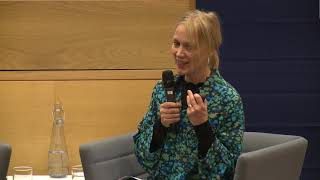
Dorothée Baumann-Pauly, Director of the Geneva Center for Business and Human Rights (Geneva School of Economics and Management), Research Director of the Center for Business and Human Rights (NYU Stern School of Business), spoke on ‘Beyond Covid-19: the case for human rights in business’.
For more information on all the seminars, see https://www.sbs.ox.ac.uk/research/cen....
Abstract:
The COVID-19 crisis illustrates that no actor alone can effectively address global challenges. Corporations play a profound role to support governments and a recent update of the Edelman Trust Barometer even showed that employers are trusted more than governments. This puts a particular responsibility on the private sector. How companies deal with the crisis will determine their business sustainability. In this talk I will make the case that companies with a business model that integrates respect for human rights are more robustly prepared to respond and manage the crisis.
Watch on YouTube ↗
(saves to browser)
Sign in to unlock AI tutor explanation · ⚡30
Playlist
Uploads from Saïd Business School, University of Oxford · Saïd Business School, University of Oxford · 30 of 60
1
 2
2
 3
3
 4
4
 5
5
 6
6
 7
7
 8
8
 9
9
 10
10
 11
11
 12
12
 13
13
 14
14
 15
15
 16
16
 17
17
 18
18
 19
19
 20
20
 21
21
 22
22
 23
23
 24
24
 25
25
 26
26
 27
27
 28
28
 29
29
 ▶
▶
 31
31
 32
32
 33
33
 34
34
 35
35
 36
36
 37
37
 38
38
 39
39
 40
40
 41
41
 42
42
 43
43
 44
44
 45
45
 46
46
 47
47
 48
48
 49
49
 50
50
 51
51
 52
52
 53
53
 54
54
 55
55
 56
56
 57
57
 58
58
 59
59
 60
60

Oxford Impact Investing Webinar - Ask the Expert
Saïd Business School, University of Oxford
Alice Kettle: Telling stories through stitches
Saïd Business School, University of Oxford
Webinar - Private Equity’s Roaring 20s - A Peek Around the Corner
Saïd Business School, University of Oxford
Peter Drobac
Saïd Business School, University of Oxford
Becoming a more effective and impactful leader | Women Transforming Leadership Programme
Saïd Business School, University of Oxford
The Oxford Chicago Valuation Programme - Subtitles
Saïd Business School, University of Oxford
Ideas in Motion with Dr. Judy Dlamini and Moderated by Shukri Toefy.
Saïd Business School, University of Oxford
Oxford Impact Measurement Programme - The Landscape of Impact Measurement for Impact Investing
Saïd Business School, University of Oxford
Leadership in extraordinary times
Saïd Business School, University of Oxford
Personal and professional wellbeing and mental health during Covid-19
Saïd Business School, University of Oxford
Oxford Saïd Entrepreneurship Forum 2020, 7 March 2020
Saïd Business School, University of Oxford
Covid-19: Preparedness, resilience and the future of public health
Saïd Business School, University of Oxford
Oxford Chicago Valuation Webinar - The Rise of Private Debt
Saïd Business School, University of Oxford
Peter Tufano in conversation with Hiro Mizuno
Saïd Business School, University of Oxford
Webinar - The Macro Effects of Covid-19 | Oxford Real Estate Programme
Saïd Business School, University of Oxford
Leading and organising for impact in times of crisis
Saïd Business School, University of Oxford
Misinformation, media and trust
Saïd Business School, University of Oxford
Oxford Social Impact Webinar - What is the New Normal for Impact Investing During Covid-19
Saïd Business School, University of Oxford
COVID-19: The view from Mexico
Saïd Business School, University of Oxford
How can entrepreneurs not just recover from the crisis but actually rejuvenate the economy?
Saïd Business School, University of Oxford
Leadership in a New Retail Landscape
Saïd Business School, University of Oxford
The future of advertising
Saïd Business School, University of Oxford
R:ETRO webinar - Transformation in networked whistleblowing
Saïd Business School, University of Oxford
R:ETRO webinar - Shaping the new sustainability agenda online
Saïd Business School, University of Oxford
Post-covid-19 scenarios for the real estate industry
Saïd Business School, University of Oxford
R:ETRO webinar - Circular economy and the social
Saïd Business School, University of Oxford
Financing the COVID Crisis
Saïd Business School, University of Oxford
Keeping the sparkle: a global perspective on luxury retail
Saïd Business School, University of Oxford
Oxford Saïd and the Education & Training Foundation's portfolio of leadership programmes
Saïd Business School, University of Oxford
R:ETRO webinar - Beyond COVID-19: the case for human rights in business
Saïd Business School, University of Oxford
Capitalism The Great Debate - Stakeholder v Shareholder
Saïd Business School, University of Oxford
An Inconvenient Fact: Private Equity Returns vs The Billionaire Factory
Saïd Business School, University of Oxford
Marketing leaders, crisis management and future growth plans
Saïd Business School, University of Oxford
The future of banking - opportunities and challenges for banks in a post Covid-19 world
Saïd Business School, University of Oxford
Designing and Measuring Impact Investing Portfolios
Saïd Business School, University of Oxford
What does it take to get a job in Private Equity?
Saïd Business School, University of Oxford
A call to action from the MBA class of 2020 to the Oxford Saïd community #BlackLivesMatter
Saïd Business School, University of Oxford
After hours case study sessions - ENEL
Saïd Business School, University of Oxford
After hours case study sessions - Welsh Water
Saïd Business School, University of Oxford
After hours case study sessions - The Motley Fool
Saïd Business School, University of Oxford
After hours case study sessions - Royal Canin
Saïd Business School, University of Oxford
Reputation Symposium Series 2020 – Covid-19 and Global Business
Saïd Business School, University of Oxford
Can social impact survive the crisis?
Saïd Business School, University of Oxford
Executive Coaching | Oxford Advanced Management & Leadership Programme
Saïd Business School, University of Oxford
R:ETRO webinar - #NoMorePage3 and the Replenishment of Emotional Energy
Saïd Business School, University of Oxford
R:ETRO webinar - Structural injustices, social connection, and corporate political responsibility
Saïd Business School, University of Oxford
Covid19 Economics: Myths, Markets and Policy
Saïd Business School, University of Oxford
The future of the office
Saïd Business School, University of Oxford
The Challenges of Bank ESG Investment Strategy (webinar)
Saïd Business School, University of Oxford
Intersectionality and Inclusion
Saïd Business School, University of Oxford
Investing in Procurement Builds Resilience
Saïd Business School, University of Oxford
Youth setting the agenda - Transport and Fossil Fuels
Saïd Business School, University of Oxford
Intersectionality and Inclusion - Vodcast with Jim Carrick-Birtwell
Saïd Business School, University of Oxford
Investing in Procurement Builds Resilience
Saïd Business School, University of Oxford
Banking on Failure: Cum-Ex and Why and How Banks Game the System
Saïd Business School, University of Oxford
The Entrepreneurship Project at Saïd Business School
Saïd Business School, University of Oxford
Trailblazer Chronicles. A conversation with Yancey Strickler
Saïd Business School, University of Oxford
Pillars 1 & 2: Are We Close to a Deal? Views from the Inclusive Framework Steering Group
Saïd Business School, University of Oxford
Pillars 1 & 2: Are We Close to a Deal? Other Views
Saïd Business School, University of Oxford
Intersectionality and Inclusion - Women Entrepreneurs
Saïd Business School, University of Oxford
More on: AI Ethics & Policy
View skill →








🎓
Tutor Explanation

 DeepCamp AI