After hours case study sessions - The Motley Fool
Key Takeaways
The Motley Fool's approach to conscious capitalism and economics of mutuality, prioritizing human capital, trust, and autonomy in the workplace, with tools like FoolWorks, Kazoo, and Google Forms, and concepts like employee engagement, performance evaluation, and company culture.
Full Transcript
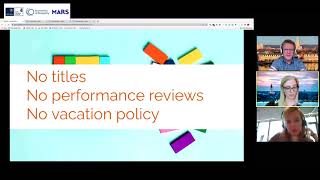
good well hi everyone thank you so much for uh joining us today i'm very excited to present to you kara chambers and lee burbish from the motley fool so i personally heard of the motley fool first when i was a teenager my father would send me over articles to instill some early type of financial literacy in me uh he'd say you know look please have a read at this and don't worry it's it's not boring or complicated any fool could read it uh i really didn't expect that 15 years later i would actually meet the people behind the motley fool so um very thrilled to introduce you to our speakers today short bios cara chambers is the vp of people insights at the motley fool in this role she drills into the data to keep fools engaged and happy at their job so before joining the motley fool in 2005 she received her ba in journalism from loyola and her mba from pitt and second we have lee vervich who leads people and culture him and his team are behind some of the innovative workplace practices that we'll be learning about in our session today so more broadly and cara will be giving us their view on how human capital and trust can be managed differently amidst the financial industry after their presentation we'll be having a q a session so please submit your questions as we go along currently when you're ready please take it away great well thank you so much for having us um this is super fun uh i wish we were there um but we'll do this over zoom beautifully karen and i have provided our backgrounds of alexandria virginia where we are um based and actually both live and uh it has a little english flair to it it's a nice colonial town so i feel like we we fit in um we fit in nicely so yeah thanks thanks so much for having us um we're going to just talk through um a bit of of the ways that we run our people and culture at the motley fool and where we've had successes it's always important to note that we've been doing this for a while so i've been with the fool over 20 years cara has been here 13 14 years so we're lucky enough to work with two incredible co-founders who care deeply about the people that work at the company and give karen and i great autonomy and testing and learning into new ideas and we absolutely love talking with other people going to conferences like this and learning what other companies are doing and benchmarking and using others ideas as well so don't think that this was all cooked up overnight don't think that it's all perfect or that we invented it all ourselves but this is what works for us and and our hope is that others can learn and have some takeaways that would work in your own businesses um or lives or wherever you are where you're trying to make difference in change i think some of these sort of principles and approaches are widely applicable so um you'll hear us talk a lot about the word trust and it is paramount in the way that we operate at the motley fool we have a great amount of autonomy and deep caring and those two things combine we believe fairly beautifully to create a culture where people can succeed when i meet people for the first time when they first join the company i like to tell them how excited we are for them to be with us that our hope is this is the last job they'll ever have that we want them to come and to stay with us for the rest of their entire career and we want them to be sure that they're going through our orientation not to become assimilated into the way that we do things but to bring who they are so we believe in hiring great people and letting them do great things and they're sort of wrapped around in this culture of caring and trust all right i'm going to jump in on the second bullet and talk a little bit about we are a financial company you'll hear me talking today a lot about metrics and how we measure it and and we believe it's not mutually exclusive to have a financially successful company uh and to have a very caring and supportive culture um and and so we measure two things on our team uh on the people team one is our engagement which you'll hear a little bit more about the other one is our revenue per employee so we keep our financial mentors top of mind for our hr team as well that's a metric we use in our team it's a measure of efficiency making sure we're hiring people and they're performing at that level yeah so not unlike some of the things that you heard earlier in in earlier presentations we have great balance we believe we can have a loving and caring um and successful culture um financially and in terms of happiness and so um karen i would like to use our time today to talk about some of the ways that we do that and a big part about that is what we call curating signals so kara and i have spent some time trying to really understand what it is that people want and need from their employer and how we can provide those things in ways that are accessible not scary we like to say that our programs are compelling and not mandatory and so we we work really hard to to build programs that people want that they are looking forward to so what you'll hear about a little bit later but a good example is think about the last time that you got some feedback or you were sitting down with your boss and maybe the anxiety that you had and instead think about um looking forward to that meeting i can't wait to go get my feedback it's not something that you hear often and um that's sort of the way that we operate yes and speaking of statistics this is one of my favorites we asked this question um every year in our surveys we've been surveying for over 10 years and we ask people do you feel like someone cares about you at work and this score has been consistently in the mid 90s um throughout all the economic times the reorgs whatever's going on in our company if we're having a down year the score is always very high during covid um it really is just a signal that our culture is extremely resilient so we've been watching this um and that's we feel like this is a foundation of our culture this very caring approach in here yeah and i mean it's um it's important to think about and maybe unique that hey i'm at work and someone here truly cares about me as a person and it's that connectivity it's that getting to know the individual and not having sort of universal programs that just address everyone but instead setting things up for us to have that personal connection that is very important to us and again we've been doing this for a while so tom and david started this company over 27 years ago and um we are based in two co-founders that are two of the most caring people that you would ever meet uh two incredible leaders for a company and so we're very lucky in that way and you can see their dna and everything that we do so some of the things that they um embedded in the company in those very early years of working with their friends and caring for one another still exists today in our company of over 500 people and again to care a second point earlier we're finding great success so we're private company we don't share a ton of our individual business statistics but we are serving over a million customers globally and i can tell you there's no better company doing what we do in the world our success ties in we believe just beautifully with how much people care how invested they are in their work those smiles that you see in that photo there are very real i even at a company of 500 care can tell you individually about each one of those people where they want to go with their career what they care about their strengths what areas maybe that they're working on and that's a big part of who we are right and you'll see i've added on here again our team one of our team's goals is to keep our engagement above 90 percent um and so we're currently in 92 we're very proud of that over the past year and i'm going to talk a little bit more about how we measure that but again it isn't just going out there and telling the world you have a great culture it's about measuring it and adapting as you go and helping make it better every single year i had to laugh when we first started and danielle did such a good job of introducing us and and throwing out titles we sort of giggle at that because we typically only use those externally um so we find people really need those to have some sense of like what do you do so and titles do a good job of communicating that externally but internally we really don't have a lot of the usual trappings of of a company in terms of lots of policies we try to shy away from strict policies and instead as i said get to know the individual give them great autonomy to do amazing things and so we've never had serious titles we've never tracked time off the complexities of the world today we don't find lend themselves well to really strict policies and strong micromanagement of employees and so you won't find any of those things at the full we do have some guidelines in place and for a few areas of the business we do have strict policies in terms of you know um things that are are in the legal world but um we really do try to just get to know those people as an individual and make the best decisions we can uh given that whatever situation that we're in all righty okay so uh this all sounds great but these are some questions we've gotten from our employees and people externally that are challenging and i think for us to we want to just share with you a little bit of kind of the naughty problems we have to unravel in our jobs um we like we can't say have no titles have no policies just do whatever and hope things are fine right so it comes with some interesting complexity which is how we spend our time so things like pay and progress is very important um we're all very much trained i'm speaking to a lot of people on academia about um where do i stand what's my score what's my number right so so getting people kind of out from under that is a little bit too so we're talking today about we have set up systems of having signals for our employees and our job is to make sure that they're consistent um the thing speaking from a compassion standpoint we mention this but people can feel anxious if they don't know where they stand um they can feel it just makes people nervous and that's not we would get feedback from our employees saying but i want a performance review um and and things like that or i want some policies because i want to be told right and so we we have look at the signals and most companies use maybe two or three of these um and we use all six to make sure we're taking care of everybody from all sides flip the next one okay first one is surveys uh again that's how we measure where we're going it's how fools give us direction how to help us prioritize and really quickly these are the three standard industry survey questions we check again we're very proud to see these scores continuing to go up um i believe that this is very much a conscious capitalism golden rule one if our employees still that they are proud to work here then we feel like we're doing right by a lot of our stakeholders because our employees very much care about our stakeholders in there um and we keep an eye on turnover which we keep low but this is a great question to ask if you are trying to predict turnover it's usually pretty accurate um in there too and sometimes you'll see people talk about life changes in that last one here so it's almost never at like a hundred but we try to keep that as high as possible too uh and again today we're talking about the things that we did it we've always had good scores but we really wanted to make them better so we've spent the past four years really working to approve these numbers and diving in and looking at what our employees concerns where as i mentioned before they're looking for some consistency and direction and guidance about where they stood and making sure they didn't have any mixed signals and again those are just the last four years but we've been doing pretty heavy surveying at least twice a year for the last 10 years and so we have a lot of data we really we we got excited when google first started talking about um people analytics about 10 or 11 years ago and we we've definitely been totally bought into trying to use data to make a difference we also uh use automation and so karen and i designed and built a tool that we use uh called foolworks that powers some of the pieces of this puzzle of signals and what we found was when karen and i first looked out at the tools in the industry there was a lot of heavy hris human resources performance management systems but what we needed was really more of a project so i mentioned before we want people to a project management system what we realized was we want people to come to work at the motley fool and stay forever and by the way they typically do and so we think about your career your long career as kind of a long project and so we built this tool to allow employees to have different touch points that would manage their happiness their career growth where they're headed and sort of create the story of their career at the maui fool so you'll hear us mention full works maybe a few times during the presentation here and just know that that's sort of a back end project management tool that we designed to help us facilitate but our approach is typically to marry technology and automation still with a human touch so each thing that's built into full works facilitates a discussion or the signal as kara mentioned and i always like to say that the survey tells us the macro story and the coaching um tells us the micro story so there are we have a lot of volunteer coaches around our company that are out there kind of just hearing every single person's individual story we used to do it ourselves or we did it all himself when we were small but as we got bigger uh this is kind of how we've scaled that but preserve that individual piece in there yeah when we were smaller i was able to go out and meet with every individual and ask them questions and take some notes and sort of manage it myself and then as we've gotten bigger we needed a system to help us take in all of that information and what we find is every person needs something and so with every person we check in we're asking simple questions like how happy are you what do you need how can we support you better and there's a takeaway from every meeting some people need about one percent change in their work life some people need 99 change in their work life and as kara mentioned we've empowered employee coaches to help us manage those checkpoints um and as we go through the um the uh the bullets here the different signals you'll see they're they're just all kinds of different places where we feel like an employee can look to get a signal about um how they're doing or to send us a signal about what they need or where they need help um pov is a great example cara do you want to talk to this one a little bit sure so pov again came from where we wanted to help managers have these more direct career conversations with their employees um what you find a lot of people even when they're having one-on-ones it tends to be very operational and you have to really even your highest performing employees you really have to like push them to have a career conversation especially as you grow so we our tool kind of gives the manager and the employee of you'll see on both sides of this pair notes ask some questions about how you're doing um what signals are you really getting is the person hearing them uh just kind of helping them drive towards a better conversation and and it's informative for the manager and we gently bring them in there right without giving them a performance rating system we just kind of help them have a really good conversation about the career and make sure they're not hearing anything um anything mixed in there right so maybe this person they're having a conversation with their manager but maybe their other co-workers um you see the red in there saying um you know i'm feeling my other coerced don't value my work or something like that it's a great prompt for a manager to have so what we try to do is set it up and make it easier for our managers to to have those conversations um what we found is that if if you're getting mixed signals that is a real problem so we're we're coaching people to have consistency in the whether you're going through our feedback whether you're having your pov you're having a coaching session um are are those signals all consistent and so you can see here in the slide we're highlighting where there may be some inconsistencies and that's a great talking point for a manager an employee to say hey why did you answer this differently than i did let's let's have a chat about it and especially for those of you that are in an agile world or the really day-to-day task management what we found was those manager discussions are often very very daily focused and so this is a good chance to step back and say let's have a broader discussion about the signals i'm sending and the signals you're getting and let's make sure we're aligned absolutely and then i'm not going to spend too much time on this but what it also does is it guides the manager we've written kind of five different ways uh pieces for managers to have the theme of their conversation what they might see and i'll just talk briefly about one all hr people love to talk about like the bad conversations they have to have right and so in every company and at any time there might be a time where things just aren't working out so one thing i like to call is we deliberately use the word worry to say if someone is struggling and my definition is it means neither the effort nor the results are there um we really coach the manager to say i'm worried about you um and again coming from a place of compassion not you've gotten a one out of five on your performance rating you need to turn it around it's very much i'm worried and that kind of can relax somebody and opening up again a lot of times what we found out in the world is people just don't know right and and um and they just don't know what signals they're getting and so opening that conversation up making it less scary um you're not coming in with a clipboard and an envelope with some documents in this meeting you're just starting that and saying i'm worried about you right sometimes it's all you need uh and again there's lots of other ways there's unleash you could be telling the person like hey we want to encourage you to do more take on more you're ready right where can we unleash you those are fun conversations too um but we have five different types on there but i think i think thinking about when you're in hr you hear a lot about like how to have the bad conversation and you do that with compassion you can do that um so we don't like to say our culture is all optimism no one ever has a tough conversation what we're saying is when we do we we come come at it from a very caring approach here a lot of these too you can see that if you're having a very long-term view if if you're going to work here like i have for over 20 years the chances that you're in each one of those are having each one of those types of conversations at some point is very high right most people's careers aren't straight up into the right for 21 years and by stepping back and realizing like well i don't have the pressure of like i'm gonna get fired tomorrow um we want you to we work hard to hire great people and and by wanting them to stay it opens up our opportunities to say hey where are we right now let's have a discussion about that um if you heard david's introduction earlier you heard that you know he is an investor we are an investing company we have the same approach to our investing buy great companies and hold them for a really long time and we use that same in philosophy internally and so you know just because a company you love is maybe having a downturn doesn't mean you should immediately sell we feel the same thing about our employees so we're fairly famous for giving second third fourth chances continuing to work with people to get them into into the right place one of the things when we did notice was though that people really do want feedback and karen and i like to read a decent amount in this area and i mentioned earlier wanting to go to your feedback session that's typically not going to happen if you know it's going to be a negative experience human nature is you just tend to shut down and not react well to um you know hey danielle here's all the stuff that i need you to do better here's where you're struggling um she's like oh god i gotta go meet with lee again and talk about where i'm not doing great but think about if if i said to danielle hey i wanna want you to come to a meeting and i want to tell you about where you're just doing incredible work and where you um can double down on that and do even more so we tend to focus in on the zones where you're doing well and try to get you to do even more of that so our feedback is fairly straightforward we only ask these three questions where have you seen my strengths in play what future value could my strengths unlock like where could i use that in even more places and then what's one thing i can do to make your life easier we feel like these are really accessible questions powerful questions that really help people understand how to play to their strengths i won't go through our entire feedback process but another thing that we've done is this feedback is curated and delivered by your coach not your manager and you choose whether to share it with your manager or not taking the manager employee dynamic out of things like feedback we have found are also key to making it an easier more accessible conversation that you're not stressed out about right and so if instead daniel and i work in two different departments i'm not her boss i'm just here to help her understand um what the people that she's chosen around her are saying that she does really well that's a pretty fun conversation we hope that she's looking forward to like oh good i get to hear where i'm awesome i'll be there yep yep all right and then speaking of doing what you do best i think one of our other favorite perks of the fool is something we call golds a lot of companies might do a peer-to-peer bonus program um this is a public feed in our company where people are tagging each other with our core values they are giving positive feedback um when you give points it means you get a little bit of money it might be just a nominal amount every employee from every at every level has a budget to give out every month and it really helps again signal what's important other people how are you driving value and so when you're a coach or a manager you're looking at the people that work for you and saying where are their where are what are my shining stars doing right and and this has uncovered a lot of hidden talent um and and again this really it drives performance people when they're feeling valued i heard this quote about purpose you feel like capital p purpose is like your big statement you put on the wall but small p purpose is things that you're doing that makes other people's lives easier that makes someone else's day better right so you've been just told that you are contributing um even if you're just having an off day and you have no idea what your company's big mission statement is someone hannah has told me something that i've done right i've done well today and i will continue to do that that will be motivating i'll go out in the world a little happier uh a little smarter and a little richer it's also public so you see what other employees are doing and they learn from each other they learn each other's names this year we've hired a hundred people and so that signal out there um about who is doing what in this company uh who are the great people who can teach me this is where you're getting it uh and so this is a platform we use called kazoo but there are a couple other um platforms out there for peer-to-peer bonuses but i can't stress enough that public very frequent recognition it's reset every month so everybody has to use it every month um and that has really been a nice signal for people and i'm going to close it a little bit by just talking about overall rewards right you can't talk about performance without rewards um we do um when we look at compensation we do a couple things differently but um we've done a case uh with oxford recently talking about this concept we just did called ask for a raise day uh it was about two years ago no we didn't just do it um and we took and again this is an example of doing something kind of bold and crazy to just test the waters out there so again we kept hearing from our employees this kind of concern about where they stood or how they know they're achieving and what we really wound up doing is we paid we gave everybody the option ask for a raise we put it in our normal compensation cycle and if you just went through the trouble of asking um your manager and have it and again you had to open up that conversation um you got 200 so a lot of people uh who would normally use a lot of women a lot of introverts people who just don't normally just run in and ask for money they would show up kind of hiding behind the 200 well i you know i can't give up 200 i feel like i should do this right but you wound up having these very fruitful conversations about performance and scope and in a company without title if there was a lot of unraveling to be done about what's the true scope of your job what are you really working on uh do we have alignment about what your level of responsibility is um it hopefully made our company more open about having these conversations we give this presentation um a version of this presentation the first week to new hires saying don't be afraid to come talk about it um again we also had to coach up our managers quite a bit about how to have this conversation because we said you know um your best employee could come to you any day of the year and say i'm ready to go i need a raise um so we forced it to give everybody kind of that dress rehearsal stress practice um so that helped us test all the other signals so we say how do you know if um how do you get a raise we say by outperforming how do you know if i'm out performing well you're looking at all those other signals and and when i wear my compensation hat i always pay attention are you telling this person the same thing you told them through all your other communications um the other thing we talk about is we do compensation reviews three times a year and so that way there's not a ton of recency effect um going on around that once a year one chance as we said if you're having an off quarter i i feel better saying to a manager why don't you just wait four months right and let's readdress this or someone's kind of in a weird spot it really helps to lower the pressure um there's also opportunities we don't give raises every four months to the same person but maybe we do um and those are examples of when we um we can piece out a raise over time and until as the person is getting uh easing into a job we do with our low turnover we do a lot of internal promotions and so how you help pay for them and pace people's pay fairly has been important to us so this was a test we did two years ago and it really helped us watch for are we going to be losing anybody we have to go out in the world we wanted to remove the impression that people thought our culture's so great we were willing to underpay people and we said we don't underpay people and so we did some research and we helped them with that as well so that's been kind of our ways to kind of tackle compensation head-on by making it almost a little fun if you can and getting away with it so even our employees that we said we did the research you're being paid fairly but thank you for asking here's 200 that's better than nothing right so so people came away uh slightly less disappointed if they didn't get a raise when they asked but at least they had the conversation and this is this is a a good example of really all of these zones which is the kind of work that kara and i love to do and love working with david and tom on which is taking very traditional things or we've always done it that way and trying to find a new and innovative way to attack it so um not having performance reviews or not having a culture where you're not allowed to ask for a raise um we love to break that stuff down so i see we're at time love to take any questions that anybody has danielle i think you're queuing those up yeah thank you so much lee and kara um thank you for these very concrete initiatives i think they give a very tangible value to uh all the values we've discussed in past sessions today including in the last session the value of compassion was so so much highlighted and i think you guys have really done a great job at translating that to the um the the day-to-day um so thank you so much um my first question today is um you know after 25 plus years we understand that the motley fool has experienced or is experiencing very steep growth um your co-founder david gardner who was in the previous panel session and i think he's he's still on the call with us today um he called it a late hockey sticking in one of our reviews um could you share your perspective on how the motley fools culture has impacted this business performance sure i mean i i can start um [Music] i think there's some some um conscious capitalist models here of um care for your employees and um they recount they will care for your members who will care for your state share shareholders who will also care for your employees right it's a beautiful circle of caring and compassion and and i think that goes all around i think if you're a member of ours you have a pretty similar experience than if you're an employee or even our board members so we hear from our board members that they love coming to our board meetings which i think is also a rarity in the world that they're like oh i so look forward to your board meetings they're so fun informative so forth so i think we carry through our approach with um deep caring and understanding and long-term view of the individual we also have the same approach with our members the same approach um with our shareholders so i think there's a tone karen and i've been talking about it recently with this move to remote work we had some remote work before but right now we're all working from home like a lot of people in the world and so we've been dissecting a little bit our culture translating from more of an office culture to remote and it's funny it's not about the physical tangible things it's about the tone it's about the caring it's about how we treat each other and i think you experience that with our with our members as well and make no mistake uh we have high performance culture uh people here are they work very hard um they want to do very well and it's the same with our stock piping stock picking and members so our members are they're they're having success with our products that helps too i would just add that we are laying we've been laying the foundation to be um to have be an employer of choice so hopefully one we have a wonderful recruiting team but they can tell you their jobs are more fun when they're not constantly having to replace the same positions right they're hiring when we're hiring it's for growth when we have new positions hiring it's more fun and interesting and there's more opportunities and so when we can be an employer of choice we don't have to run a separate pr campaign we are getting people coming to us because their friends and their family uh are telling each other out in the world so those networks are better um and that that can help us uh grow and in fact i joke almost all of our all hands i always see some question like as we grow how are we gonna preserve our culture and to me that means our culture is very self-policing right saying our employees very much want to preserve it they're asking me they're putting me on the spot in front of everybody saying but what about our culture say well we measure it so that's where it's come in thank you so much another question we had is uh how would you describe uh the motley fools culture in relation to the finance industry more broadly uh we're a little different um so those of you who are familiar with the geography of the united states were in alexandria virginia outside of washington dc uh we are not in new york and wall street and i think that speaks a lot to kind of our irreverence and how different we are we tend to get people who um that sort of culture is not as interesting to them or maybe they've tried it and it wasn't um who they were or what they were about and and don't get me wrong there's some companies there that have been highly successful but i would say if you were to draw some broad strokes that would be a little bit more um cutthroat uh long hours and we make up for it with what i'll steal kara's answer which i know she's going to give that typically when you're making a whole lot of money in a job that's battle pay right and so we we tend to find the the roles that pay the most they're trying to make up for something right so you could go to wall street and work in a more traditional finance firm and maybe make more money um but they're trying to mask some things that just aren't present there which i think are a lot of the things that we've described so i would say irreverent maybe if there was a word that i would choose thank you um so we've had some great questions come in from our audience and i'll start with the first one from elson thank you so much so i love seeing all these all these tangible tools for building such effective culture thank you for sharing question is how do you manage the hiring process um how do you find people who are compatible with this environment and also carry the culture i yeah i would just say that we add them we try to be an employer of choice and um we have panels of internal employees that take it extremely seriously pulling people from other groups and bringing them in and we we do try to drive the conversation towards culture ad versus culture fit one of our recruiters and i were just talking about in psychology there's a concept called orchids and dandelions at humans and so dandelions grow anywhere and so you can find dandelions and they'll thrive whatever environment you put them in but orchids um they don't thrive anywhere and so we try to have a mix of people who would only thrive in our culture and and they do incredibly well and and so we've been talking about that concept of um finding unique types of people with different backgrounds not being particularly uh obsessed with what what background do you have and having them join in and again putting them in that right supportive environment has made people blossom if i'm going to torture this metaphor any further i would i would add that build it and they will come is a little bit so to be a recruiter at our company is to be someone weeding through a lot of incredible applicants who hopefully have an idea of what they're trying to sign up for so um karen and i try to be over just like we're doing right now with talking about what it's like to work at the motley fool we spend the bulk of our budget and time on making the workplace an incredible place for the people that are already there and then getting the word out about that so the people that are applying hopefully they've already know what they're signing up for so if you're looking for more buttoned up if you're someone that needs more structure in your life you're probably not even going to apply to start out with and the other thing i would say is we have kind of a long interview process um i mentioned google before google is a company that disagrees with that um i think they studied cara probably knows better than me it's like two or three interviews is all it takes to find out if someone's gonna work or not and they have all this great data to support that and uh we don't believe it so we just we like to take a long time we like to have a lot of interviews um and that's as much for us as it is the person who's looking for a job we want them to talk to everybody that they can and really make sure that they they are making the right choice because hopefully it's for the long haul great so next question is from viera aren't you worried that by using so many gamification tricks you end up with people that have learned to play the game maybe better and not actually have their experience as yeah and they might still experience the company in a stressful way i'm not sure i completely understand the question but i think what i would say is that um as i started with these programs and initiatives are iterative iterative we're always making changes and improving we're surveying frequently and so um you know what our culture looks like today is not how it's going to look like um necessarily in the future the programs that work today may not work in the future obviously the world's changing people change so that's kind of the fun part actually part of it is just paying attention to what's working and what's not and tweaking and reinventing things um karen and i were just talking today about our 360 feedback and some new ways that we could approach that so yeah i guess i think we just would pay attention what do you think cara yeah i would just add you know in terms of like are they gaming it we kind of joke every time we set something up we'll say someone going to game this um they might if you can game all six uh all that's why with multiple signals if you're really gaming all of them i don't know more power do you i guess but i think uh we we try to make sure that again it's not um it's not any one thing like you're gaming your performance reviews or something like that oh you're brand your answer is better than mine let's go with karis all right now they were both great thank you i see the next um yeah so irene is curious about pay transparency so have you looked into if and how employees know how much different employees are earning and whether this is a positive or not i have been looking at it i think our company is still a little too small without feeling like it's invasive of privacy to do something like a complete pay transparency i mean i think lee would agree and we have so many different titles um and types of jobs again it's a little too close to start like looking uh at someone you'll be able to see someone individuals pay um so we've stepped away fully but it is a continuum we've worked on i think what we really talk about is the question behind the question is how did you figure out my pay as my pay fare and i think once people are comfortable with that it's the first thing i teach managers and manager training is get your own pay out of your head before you start thinking about the people who report to you right because it's still a psychological component no matter what um and i've seen and and this could be a whole other topic but there's some studies that show it it's dry it pay transparency drives median salaries down because people get uncomfortable um so i've been looking at that but again there's a continuum out there for us it just hasn't worked but i'm interested in how it's applied elsewhere it just might not be for us all right okay our next question is from lionel how do you play a role as a thought leader and reward the companies in the stock market that are putting eom principles in practice in the way that they do business i really like this question follow-up is would you be ready to have a special index and push your clients to play more with the companies that are doing the right things for the planet people and society i don't know if david is on the line he would definitely be the better person to answer this question but i can give a general answer of yes um so uh all of those things are important um to us and for a lot of our um investing advice we're looking at places like glassdoor for instance to see how companies are performing as a culture what their employees think about them i don't think that we have a specific product tied to that but it's certain it's something that we have talked about and that is definitely a big part of the discussion for probably all of the stock picks that our team is making but um i mean sure i'll add something right there's david yeah thanks yeah it's a great question lionel and thank you um i i believe that you have to give people kind of a purpose statement for their own money and then let them figure things out i prefer that rather than a a club an index that has the the good companies the esg companies and not the bad ones um so you know my watchword has been make your portfolio reflect your best vision for our future that's what we tell our members that's what we put out there all the time to anybody hearing me right now i really believe that your money should be following your beliefs uh the the problem with in-depth indices is that we believe different things we may all want a better world but you have a different idea than i do so i would be the first to encourage you not to buy the stock i'm buying but to buy the stock that you're buying i think the more important point that lionel underlines is that we are a thought leader and we're conscious of that and we try to help people toward a conscious awakening around their money after all most people didn't receive any real financial literacy from their schooling or sometimes even their parents and so they're left not understanding the stock market or what's going on in the world of business so we we find that part of what we do is kind of remedial to get people just thinking that all these things matter and that you are included and you can be part of it and of course many of our best member stories are people who came from a place of very little and they've ended up in a place of very much so i like the question because i do think it's the right question and we try to give that answer that i just provided now i'm going silent again because i'm just enjoying lee and cara and danielle thank you for these questions all the ones that are coming in thank you david um yeah the next one a question by amy it's one we also teased out in the case study that we wrote together um it's whether you could share some of the um more difficult human dynamics that you have experienced and how you were able to turn that around yeah i was reading that question wondering like what's been our most difficult human dynamics but you know the one that i've been thinking about is like when if you'll hear any of what we said we talk a lot about optimism and defaulting to trust and assuming positive intent sometimes people spend a little too long in an environment that is not ours and they come in with their armor up right and their assumption is that they can't win unless someone else loses um and really just helping people unravel that we may not be successful but that you know i was looking at that question thinking what are the most difficult human dynamics but i think just gen if i say broadly when i have someone who really is approaching it they need to someone else to lose in order for them to win that's really kind of almost intractable like they usually end up not succeeding at our company what do you think yeah i think yeah i i totally agree with you um but sometimes people talk to us and and they realize the things that we're doing are harder than maybe some traditional practices out there and so i think that can be a confusion that you know we're for instance not tracking vacation and you're like oh that you're doing that because it's easier it's actually more difficult it's more difficult to have a personal connection with someone it's more difficult to try to take individual situations and make the best decision you can given all the information it's easier just to have policies and to enforce them um and so having people come in from other business environments more traditional environments that mostly dominate the world and adjust that that that can be something that some people do quickly some people not as fast but realizing that yeah the things that we're doing the approaches we're taking we're not doing them because it seems more simple and karen and i can take more vacations it's because we believe it's the right thing to do and and and because we found success as a company right uh next question is from the customers perspective um by robert um writes i've used motley fool before and didn't know anything about your culture and values do you use uh your values and culture to attract customers if so i'm not aware of it and it seems like a missed opportunity i mean it's definitely something we talk about um a lot and especially as we get bigger and we have over a million customers and and um so many products and services so i think i would say thank you for that feedback and um there's probably all of the extremes depending on uh what customer you are and what product you're experiencing and so you know if you're um deeply involved with uh david gardner's rule breaker product and you're watching him on motley fool live and you're on our discussion boards i think you're probably feeling it there if you're fairly new customer and you've just joined um i think that's where we're focusing a lot so we're talking about those first few days of a member and are they getting the fun and excitement and all the things so um yes i think and and and some of the cases of our members you're absolutely right but just know that we do talk about that and and i think we're i think we're self-aware but no one has as much fun as kara and i so that's sorry um i'm just looking at another question or comment coming in from lionel um okay i have a question too that i might throw out um for you to consider lee and kara yeah hi amanda hello uh so the uh you know i'm quite familiar with a lot of the aspects of your culture and the presentation that you gave provided um insights into the platform that you guys use and all of the specifics so if there's someone out there that's listening um inside of their own company where they don't do any of these things that can seem like a very overwhelming process to kind of go through so what would be your advice to business leaders that have kind of this entrepreneurial spirit that wants to start to bring some of these things into their company what would you recommend that they might start with do you have any specific tools or tips or specific things that are first steps they could take i mean surveying is a great place to start karen and i when we did our first survey we were scared to death of like you know when the results came in like oh no what are they gonna say and now uh with each survey that comes through i know david and karen myself and others are so excited to read the results and then that sort of sets out the path for what we're gonna focus on the next six months so simply starting with surveying it's a really easy thing to do and then a lot of the work that you'll need to do or where you have pockets where you can double down should be revealed we work with a great company out of australia called culture amp um but yeah that's where i might start how about you cara uh you know i going back even further we did our first surveys in google docs or google forms and so it's free so we did that and i always remember a question about recognition and it sent me down this path of um really understanding why recognition was so important and the tip i took away and we again operationalized it they said set yourself a reminder every day for 21 days write two sentences to someone on your team and telling them what a great job they did um and you will be happier and they will be happier and so you don't need permission like every every single person listening to this can do that um and you know that that's my go-to it's free and you're going to feel better at the end too bonus i think that's great i have one other one danielle if you don't mind please please david since you're you're still on the line this might be one that you want to jump in on but i saw a question in the earlier part of the program uh on the panel that you and i were on together where folks were asking about uh the similarities and the distinctions between economics and mutuality and conscious capitalism and i know that the team at motley fool is quite familiar with both and so that might be something that would be interesting for you to speak to for a few minutes to the folks that are listening here sure um well i came across conscious capitalism first john mackey the founder of whole foods market which is an amazing company that jeff bezos bought a few years ago he came to our office and just shared a stump speech in front of our employees and talked about conscious capitalism i was like i've not heard that phrase before i like a lot of the concepts and i feel like we've been doing that in some ways and and i've been picking stocks of companies that do that but it really gave a framework higher purpose stakeholder capitalism satisfy all your stakeholders conscious leadership and john mackey is writing a wonderful book that comes out in a couple weeks with that as a title i highly recommend it because i'm reading proofs and it's great and then conscious culture and boy if lee and cara don't do a beautiful job not just presenting as authentically as we can today but also of course they've built these things up over time they've they've learned what's worked and what isn't and we love sharing it so so that was conscious capitalism then when i met jay jacob who came to speak amanda at a conscious capitalism conference i believe you may have invited jay to speak uh two years ago my eyes were further open to the economics of mutuality which i think is a great framework i would say in contrast to conscious capitalism it's a little bit deeper richer and wider i mean um i love what john mackey's built and those four foundations which any of us can trot off higher purpose satisfy your stakeholders conscious leadership conscious culture you can build so many great organizations off of those foundations but the concept from eom that there are actually four forms of capital not just financial capital which the world is so good at these days for the most part but what about natural capital how we're treating the environment what about social capital the critical factor of trust and human interactions and then of course human capital which i do think that even though we're small we are a world-class company at and i think i hope everybody's enjoyed lean care as much as i have so so to to measure each of those independently and uh there's a critique of the triple bottom line movement coming from eom which resonates with me because triple bottom line companies ultimately are translating all of those uh other forms of capital back into dollars it's all getting translated back to financial capital so i really appreciate about eom that we learned that no you actually should just measure trust on its own ground you're not just converting that to dollars somehow and you should measure how you're treating the environment with inputs uh that matter now for some companies like ours that's not as relevant but for others it's very deeply relevant anyway the final message that i love from eom is that it's all additive i love the truism i believe it is that if you get better at one of those it helps the other three so many people in my experience operate with a trade-off mentality where they think you can't possibly be a compassionate caring culture in the financial services industry and we're actually that's the best way to be a company is to be that in any industry or you can innovate off of a small r d budget you can do both you you innovate off a shoestring that's we've home brewed a lot of the things we're sharing with you there's not any outside capital in our company here in year 27. so i i think the message that if you just get better at social capital it's going to help your financial capital and also your human capital and maybe your natural i mean that is such a great message so anyway i'm a big fan of both of these frameworks i love all the people who are involved they've really opened my eyes and and continue to remind us the power of listening and learning from the world and i want to just kick it back to to you all but let you know that kara and lee as you you're hearing are frequently reading the latest research they're challenging their own assumptions and so it's that lifelong learning that's becoming almost a cliche but it is true uh it's not just about the mba class it's about every year after that and always having a mind awake thank you thank you david uh we have another question coming in from martin around usual practices in compensation and benefits uh which are normally pegged to one one's role department or profession now the question is how do you create a culture of responsible equity with this i guess also in the context of there not being any titles at the fool could you speak to that yeah i'd say it's something that we continue to work on um but one of the purposes of ask for a race day is to bring the employee into that conversation um so it isn't just their manager pegging this is what your title is right it's an open conversation about here's what i think my title is or or what my job i try to tell people what is your job out in the outside world right and so uh we we've spent a lot of time helping people articulate their job not as uh i was just having a conversation with other person we don't throw around titles as currency we joke like when we recruit for a job you have to call it something right and so we like we can't avoid them all together but i think just making sure that um we do layer it in but we make sure that we are um we're open as open as we can be about how we benchmark people and and i think that was a lot of the conversations we learned through oscar ray's day okay well we have one last question already uh coming up and it's a great final question um by robert uh who's saying you're doing a great job of leading in this area question is how uh where do you see the future i mean hopefully with a lot more trust and autonomy from every company around the world right so unleash i've enjoyed it and we have found great success so um it used to be that we were kind of apologetic almost like well this is kind of the way we do things we're a little sorry for how you know hopefully it works for you and i think after doing it for so long we're like actually we're pretty excited about what we do and you should do it too so um i think we're unapologetic about the way we approach things and we hope other companies will do that as well anything to add cara any final words no i think i think that that's about right of just saying it's not uh it's not a trade-off right you can do both i think that's that's where kind of we've been telling people and that's how you win all right good well we are coming uh at the the end of our slot today um thank you so much this has been a really insightful showcase of uh how we can build and sustain a culture for people um and to really give meaning to the values that uh are often discussed in the context of conscious capitalism and the economics of mutuality um so thank you so much for uh making that so concrete so tangible um cara you mentioned the case study that we've been writing together um that hones in on the ask for a raise day we also tease out some of the ques other questions that were asked today including the question by amanda on how other organizations could start their journey um so everyone please look out for it and um last i'd just like to thank the motley fool team again um you know karen lee but also allison who's worked who's helped us out a great deal on our work together and of course david uh thank you so much for uh for your time and for being here today as well um and uh yeah all the best to you all have a wonderful evening hope to see you all back at the forum tomorrow bye bye bye thanks everybody
Original Description
The Oxford Economics of Mutuality Virtual Forum was presented by Saïd Business School, University of Oxford, Mars and the Economics of Mutuality.
This online event offered business leaders the opportunity to explore the critically important question of how we can put purpose into practice, and engage with other purposeful business movements.
www.eomforum.org
#OxfordEoMForum #OxfordSBS #Mars #EconomicsofMutuality #TomorrowStartsToday #OxfordMBA #ResponsibleBusiness #Sustainability #ClimateChange #Leadership #SDGS #SocialImpact
Subscribe to our channel ➤ https://www.youtube.com/channel/UCHIqMEje_NFJ2u24CVaNQvg
Visit our website ➤ https://www.sbs.ox.ac.uk/?utm_source=Youtube&utm_medium=SubscribeEndSlate
Follow us on social media:
LinkedIn: https://www.linkedin.com/school/oxfordsbs | https://www.linkedin.com/showcase/oxford-answers/
Twitter: https://twitter.com/OxfordSBS | https://twitter.com/Oxford_Answers
Instagram: https://www.instagram.com/oxfordsbs/
Facebook: https://www.facebook.com/OxfordSBS
#OxfordSBS #LifeAtSBS #OxfordAnswers
Watch on YouTube ↗
(saves to browser)
Sign in to unlock AI tutor explanation · ⚡30
Playlist
Uploads from Saïd Business School, University of Oxford · Saïd Business School, University of Oxford · 40 of 60
1
 2
2
 3
3
 4
4
 5
5
 6
6
 7
7
 8
8
 9
9
 10
10
 11
11
 12
12
 13
13
 14
14
 15
15
 16
16
 17
17
 18
18
 19
19
 20
20
 21
21
 22
22
 23
23
 24
24
 25
25
 26
26
 27
27
 28
28
 29
29
 30
30
 31
31
 32
32
 33
33
 34
34
 35
35
 36
36
 37
37
 38
38
 39
39
 ▶
▶
 41
41
 42
42
 43
43
 44
44
 45
45
 46
46
 47
47
 48
48
 49
49
 50
50
 51
51
 52
52
 53
53
 54
54
 55
55
 56
56
 57
57
 58
58
 59
59
 60
60

Oxford Impact Investing Webinar - Ask the Expert
Saïd Business School, University of Oxford
Alice Kettle: Telling stories through stitches
Saïd Business School, University of Oxford
Webinar - Private Equity’s Roaring 20s - A Peek Around the Corner
Saïd Business School, University of Oxford
Peter Drobac
Saïd Business School, University of Oxford
Becoming a more effective and impactful leader | Women Transforming Leadership Programme
Saïd Business School, University of Oxford
The Oxford Chicago Valuation Programme - Subtitles
Saïd Business School, University of Oxford
Ideas in Motion with Dr. Judy Dlamini and Moderated by Shukri Toefy.
Saïd Business School, University of Oxford
Oxford Impact Measurement Programme - The Landscape of Impact Measurement for Impact Investing
Saïd Business School, University of Oxford
Leadership in extraordinary times
Saïd Business School, University of Oxford
Personal and professional wellbeing and mental health during Covid-19
Saïd Business School, University of Oxford
Oxford Saïd Entrepreneurship Forum 2020, 7 March 2020
Saïd Business School, University of Oxford
Covid-19: Preparedness, resilience and the future of public health
Saïd Business School, University of Oxford
Oxford Chicago Valuation Webinar - The Rise of Private Debt
Saïd Business School, University of Oxford
Peter Tufano in conversation with Hiro Mizuno
Saïd Business School, University of Oxford
Webinar - The Macro Effects of Covid-19 | Oxford Real Estate Programme
Saïd Business School, University of Oxford
Leading and organising for impact in times of crisis
Saïd Business School, University of Oxford
Misinformation, media and trust
Saïd Business School, University of Oxford
Oxford Social Impact Webinar - What is the New Normal for Impact Investing During Covid-19
Saïd Business School, University of Oxford
COVID-19: The view from Mexico
Saïd Business School, University of Oxford
How can entrepreneurs not just recover from the crisis but actually rejuvenate the economy?
Saïd Business School, University of Oxford
Leadership in a New Retail Landscape
Saïd Business School, University of Oxford
The future of advertising
Saïd Business School, University of Oxford
R:ETRO webinar - Transformation in networked whistleblowing
Saïd Business School, University of Oxford
R:ETRO webinar - Shaping the new sustainability agenda online
Saïd Business School, University of Oxford
Post-covid-19 scenarios for the real estate industry
Saïd Business School, University of Oxford
R:ETRO webinar - Circular economy and the social
Saïd Business School, University of Oxford
Financing the COVID Crisis
Saïd Business School, University of Oxford
Keeping the sparkle: a global perspective on luxury retail
Saïd Business School, University of Oxford
Oxford Saïd and the Education & Training Foundation's portfolio of leadership programmes
Saïd Business School, University of Oxford
R:ETRO webinar - Beyond COVID-19: the case for human rights in business
Saïd Business School, University of Oxford
Capitalism The Great Debate - Stakeholder v Shareholder
Saïd Business School, University of Oxford
An Inconvenient Fact: Private Equity Returns vs The Billionaire Factory
Saïd Business School, University of Oxford
Marketing leaders, crisis management and future growth plans
Saïd Business School, University of Oxford
The future of banking - opportunities and challenges for banks in a post Covid-19 world
Saïd Business School, University of Oxford
Designing and Measuring Impact Investing Portfolios
Saïd Business School, University of Oxford
What does it take to get a job in Private Equity?
Saïd Business School, University of Oxford
A call to action from the MBA class of 2020 to the Oxford Saïd community #BlackLivesMatter
Saïd Business School, University of Oxford
After hours case study sessions - ENEL
Saïd Business School, University of Oxford
After hours case study sessions - Welsh Water
Saïd Business School, University of Oxford
After hours case study sessions - The Motley Fool
Saïd Business School, University of Oxford
After hours case study sessions - Royal Canin
Saïd Business School, University of Oxford
Reputation Symposium Series 2020 – Covid-19 and Global Business
Saïd Business School, University of Oxford
Can social impact survive the crisis?
Saïd Business School, University of Oxford
Executive Coaching | Oxford Advanced Management & Leadership Programme
Saïd Business School, University of Oxford
R:ETRO webinar - #NoMorePage3 and the Replenishment of Emotional Energy
Saïd Business School, University of Oxford
R:ETRO webinar - Structural injustices, social connection, and corporate political responsibility
Saïd Business School, University of Oxford
Covid19 Economics: Myths, Markets and Policy
Saïd Business School, University of Oxford
The future of the office
Saïd Business School, University of Oxford
The Challenges of Bank ESG Investment Strategy (webinar)
Saïd Business School, University of Oxford
Intersectionality and Inclusion
Saïd Business School, University of Oxford
Investing in Procurement Builds Resilience
Saïd Business School, University of Oxford
Youth setting the agenda - Transport and Fossil Fuels
Saïd Business School, University of Oxford
Intersectionality and Inclusion - Vodcast with Jim Carrick-Birtwell
Saïd Business School, University of Oxford
Investing in Procurement Builds Resilience
Saïd Business School, University of Oxford
Banking on Failure: Cum-Ex and Why and How Banks Game the System
Saïd Business School, University of Oxford
The Entrepreneurship Project at Saïd Business School
Saïd Business School, University of Oxford
Trailblazer Chronicles. A conversation with Yancey Strickler
Saïd Business School, University of Oxford
Pillars 1 & 2: Are We Close to a Deal? Views from the Inclusive Framework Steering Group
Saïd Business School, University of Oxford
Pillars 1 & 2: Are We Close to a Deal? Other Views
Saïd Business School, University of Oxford
Intersectionality and Inclusion - Women Entrepreneurs
Saïd Business School, University of Oxford
Related AI Lessons
⚡
⚡
⚡
⚡
The Python Dictionary Trick That Makes Interviewers Smile
Dev.to · Ameer Abdullah
I Compared 50 Python Courses. Here Are My Top 5 Recommendations for 2026
Medium · Python
Machine learning for beginners #5
Medium · AI
Beyond the Elephant: On Manifolds, Projections, and the Hidden Assumptions of Neural Geometry
Medium · AI
🎓
Tutor Explanation

 DeepCamp AI