Oxford Impact Measurement Programme - The Landscape of Impact Measurement for Impact Investing
Key Takeaways
The Oxford Impact Measurement Programme discusses the landscape of impact measurement for impact investing, highlighting the growth of the industry, the importance of impact measurement and management, and the use of common tools and frameworks such as the Iris catalog of metrics and the Sustainable Development Goals.
Full Transcript
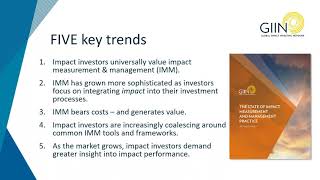
you good morning good afternoon or good evening depending on where you are in the world welcome to our webinar on the landscape of impact measurement for impact investing I'm Kareem from the Oxford impact measurement program were thrilled to see so many of you signed up for this webinar and look forward to an engaging discussion on this topic just top of mind for a lot of you and since many of you are also now in you know at home and trying to understand what's out there in terms of this whole evolving landscape we hope to be able to provide you with some new information around the broader field and reflect on what it means for your practice and take on some of your questions around your day to day depending on where you situate yourself in the impact investing or impact measurement space so we've got two great guest speakers who are going to be presenting on some of their work and I'm going to introduce them but just wanted to provide a little bit of context also around both the topic and also to acknowledge these challenging circumstances that we find ourselves in the world has changed in the last month or so for many of us all over the world and you know this these questions around what is the current state of the system how would we think about people's social environmental economic situations how is that going to change over the next few months weeks and years these are all top of mind for many of us but there's also still a lot of questions around how we're building the next generation of things that maybe will come out of this in a positive way but also how do we value things differently how do we value for example very practically health and health care and health workers etc so there's a lot of big questions around how we think about social and environmental value what we value and how do we think about implementing those practically in the ways that we work in how capital is allocated and in what we think really matters to people communities and the planet we're going to take on a subset of some of those question through the lens of impact measurement and management specifically looking at the impact investing industry as many of you know impact investing industry has grown significantly over the last decade there now a lot of questions around you know we've got a lot of capital flowing in this direction what about the measurement questions how do we know that we're making a difference what does making a difference actually look like from different perspectives so today we're going to talk a little bit about some new research that has been commissioned by the djinn just on the state of impact measurement and management so just on the next slide I'm going to introduce our speakers and we'll be starting with some introductory remarks and the overview of the study that the Jim has conducted which was led by Rachel bass was the senior research manager at the djinn she's gonna take us through the study and the research which really uncover some new data points and new evidence and what impact investors are doing around impact measurement many of you know that the djinn is the industry association that is working with different investor members across the world and this is one of the contributions it's the second edition of this IMM survey and rachel is going to take us through what they found in terms of the big trends questions issues progress around impact measurement and management and then we have Veronica Eliza Bell from the Rockefeller Foundation who's the senior adviser and director of measurement evaluation organizational performance veronica has been working in this space of impact measurement and management for a long time both as an evaluator as well as a field builder in supporting a lot of work not only in how impact measurement is being defined i started out for evaluators but also in terms of practically how can investors harness some of the tools approaches etc from evaluation but also how we build new capabilities evidence and research in the space and so what we're going to do today just on the next slide is to begin with some of the key theme and trends from the survey and then both Veronica and I will provide some examples reflections and resources to translate again some of the overall findings into specific examples and implications for evaluators investors and field builders and then we're going to take on some of your questions you've got a good number of questions that were sent in advance by many of you we're also happy to take additional ones on so please send those in the chat box and we'll pick them up as we go along and so now I just want to turn it over to Rachel who's going to give us a quick summary of the overall survey and its findings and is then going to get into some specific themes what we've done is to just highlight five specific themes and issues that we think are important to discuss and then we'll provide some initial reactions to that over the next little while and then the last third of our webinar are going to pick up on all of your questions so with that I'll turn it over to Rachel to take us through the initial set of findings from the research great thank you so much Kareem and thanks to all of you on the line for taking an hour out of your day to join us for this really important conversation I I did want to share first just these five key trends that have emerged from our research as Kareem mentioned this is the second edition of this state of impact measurement and management practice survey and so we see from this research a number of insights on the current state of practice for the market but also we're able to elevate some trends and changes since the first edition was published two years ago these five trends include this Universal value of impact measurement or and management or IMM also seeing that that practice IMM has grown much more sophisticated as we also see a shift towards integrating impacts away from focusing on building consensus and buy an item of course has costs but also generates value the fourth trend is that investors are increasingly coalescing around some common tools and frameworks and lastly as the market is continuing to grow and evolve and with that comes greater investor demand for insight into impacts performance I'll walk through each of these five trends in a little bit more detail but first wanted to share with you a little overview of the sample that these insights are coming from this is a large comprehensive survey including responses from 278 impact investing organizations around the world as you can see here they represent a very diverse array of perspectives nearly two-thirds are fund managers we see a foundations development finance institutions family offices a lot of different organizational structures represented in our sample additionally they come from a variety of locations a large sample of this is based in the US and Canada as well as Europe and others are based across emerging markets one thing I'll also acknowledge is that these investors are allocating capital globally about half of their capital is typically allocated to emerging and about half to developed markets which reinforces that diversity of perspectives they also target a broad range of tarr of financial returns roughly 2/3 primarily target risk adjusted market rate returns and the remaining third deliberately target blue market returns so I share this in the hopes that this adds a little bit of color about who these insights are coming from and helps position some of the content within this broad global market with that I'll move to the first of our key findings and share just a little bit of background data on where this comes from first impact investors universally value impact measurement and management hopefully this isn't too surprising of course impact investing is is is contingent on impact that's what differentiates it from investing but we see that there's a broad range of reasons that impact investors choose to measure and manage their impact of course these include reasons related to impact itself being able to understand progress towards one goals as well as being able to improve impact performance this this third bar here improving impact performance is one that we see being particularly critical in the world today as we think about today's global pandemic and what that means for investors there's a real opportunity to use impact data to identify where the need is who is facing critical needs and then to shape products and services accordingly and implement solutions that can help drive capital to address that need this is just one of the many motivations for impact investors to collect and utilize their impact data and one that we see it just being especially pressing in today's context we also see a number of reasons related to business value being able to capture business insights and generate additional value from impacts data communicating impacts for both marketing and fundraising purposes and addressing pretty widespread client demand for these insights and lastly there are some reasons for measuring and managing impact related to compliance being able to report impact and to adhere to government regulations and yet from all of these what you can see is that there is this broad shared understanding that impacts data are important for impact investors to collect in to manage that's how they do again these these investors do again represent a broad sample and a diverse array of perspectives you'll see here that there's a little over a third that primarily targets social impact objectives 7% that primarily target environmental impact objectives and nearly six and ten respondents target both social and environmental objectives of those that target environmental impacts we see a focus on terrestrial eco regions and of those that target primarily social impact we see a focus on groups that are often quite vulnerable those same groups that tend to be disproportionately affected by crises like the one facing the world today and which just again reinforces the critical role that impacts data plays in the current climate among these most commonly targeted social groups are individuals within a given socio-economic bracket women and girls and unemployed so so you'll see that this along with the variety of target ecoregions reinforces that diversity of perspectives and yet also feeds into that shared commitment to impact measurement and management um so I'll pause now and pass back to Kareem who will share a few of his reflections on this takeaway thanks Rachel and so from this first theme think you know there's a couple of highlights maybe for those of you both that have been on prior webinars where you've talked about this subject but also who've been monitoring and viewing this evolution of the landscape just wanted to highlight a couple of points I think one is that you know we're moving beyond thinking about impact measurement and management as simply proving your impact even though that's particularly important but also around the process of actively managing towards improving your impact and maximizing impact and we'll talk more about that later on and we talk about impact management I think a second highlight is also two from Rachel's slide there around the interrelationship and the codependence of social environmental impact increasingly again we're seeing investors acknowledge the fact that social environmental considerations have to be looked at together even though some investors obviously focus somatically or in specific verticals on one or the other depending on how they deploy their capital and which regions as well and then I would just say finally to look at specifically on this slide initially you know when we built out this field of impact investing in particular intentionality was a core feature of the work and it was still quite loosely defined in some ways an intentionality in many ways was was driven by what an investor's thought and framed as their intention think over time we've now seen an evolution that is being I think paralleled in the data that we're getting from this survey as well to move from just intentionality to thinking about more deep integration of impact and impact measurement across the lifecycle and across different parts of processes and portfolios but also in service of trying to understand this concept of impact integrity so really it's not enough to just have an intention it's also important to be able to demonstrate from the processes that you are thinking about impact considerations in how you work and then increasingly as we'll talk about later is to understand the integrity of that information and that evidence and these are just a few also publications and snapshots where the initial work from the GA task force really tried to lay out a bit of a an aspiration for where the field could go to the June updated its own kind of definitions as well around what impact investing and impact investors do by adding new characteristics that very explicitly call out impact measurement and impact performance and then report from the GSG last year talked about how we ensure that as we brought in the space of impact investing to ensure that we're deepening impact integrity and so there's a lot more to say on each of these but I'll hand it over to Rachel now to take us through our second team thanks Kareem and you've set me up so well for the second takeaway which is that we are within the data seeing this same shift to deeper integration of impact into investors investment processes this is this is a really interesting area where we've seen a lot of movement and development since the first edition one place where investors often begin with us is by setting impacts targets clear objectives that they're seeking to achieve through their investments which nearly four out of every five impact investors do today this is a market increase from the roughly 60% or so that did this and two years ago so already we're seeing a sharp rise target setting is is achieved by leveraging a range of resources to help shape the approach and its influence aside factors such as the scale of the problem that investors are seeking to address in a given market the global development agenda set forward by the sustainable development goals or Paris climate Accord for example and also inputs from investors or LPS as well as investees and third party consultants once those targets are set they can then be used to guide choices across the full investment process so as you can see here there's some consideration of impact data at each stage of the investment process even later stages where this is historically less common unsurprisingly there's a particular focus on using impact data in earlier stages of the investment process of screening and due diligence but I also want to call attention to the very first bar here which is particularly important in today's context as you'll see 75 percent of investors in our sample use impact data significantly when they're looking for the environmental or social needs that they can addressed best through investment this is really critical when trying to address a pressing issue identifying who is is most affected by that issue determining an appropriate solution and then driving capital to where it's needed most so in today's crisis using impact data to make decisions is more important than ever before with that I'll pass back to Kareem who will share a little bit more great thanks Rachel so as Rachel mentioned you know we're seeing again the shift over the last few years to try and look at deeper integration across investment processes across the investment lifecycle certainly as investors both GPS and lp's get more educated around what are the right things to measure how do we translate intention into practice how do we think about the different ways in which we're considering these impact issues across the lifecycle not only at the front end in terms of defining for example a thesis or a theory of change but really thinking about integration there are some new tools processes and features and I'm just highlighting one that's a set of guides that came from Pacific community ventures last year that lis walks through how you bring impact considerations into due diligence so for example many funds in particular but also asset owners are thinking about processes by which they make the impact goals quite explicit at the front end they think about how they bring those into practice when they review the different opportunities either looking at alignment how aligned are opportunities with our impact thesis or theory of change how might they wait certain impact considerations over others how do they then think about building capacity or supporting for example fund managers or investees post investment and what are really the kind of impact that they want to emphasize or highlight across different parts of their portfolio and so this guide in particular I think does a really good job at walking through each of those steps the they have a complimentary guide around looking at also areas emerging areas of best practice and so we'll pick up on some of those themes later around for example the SDGs how we think about the relationship between different stakeholders and and their views on impact etc so this is just meant to provide for some of you that are looking for the you know what do I do next or how do I think about bringing these considerations in across the lifecycle there's at least a good set of starting points to be able to work through that so hand it over now to Rachel back to take us through theme three alright theme number three moving right along the impact measurement management of course does have some costs associated with it but we also see that it generates tangible value I'm understanding costs is is a really interesting area for this and so in our survey we've looked at that's through the lens of both time and and staffing implications as well as from a budget perspective in terms of time on average among impact investor organizations about a third of staff are directly involved in impact measurement and management and this includes staff across levels and across functions as you'll see on the right there's certainly a majority of investors that leverage their investment teams to conduct impact measurement and management which we found was often driven by the belief that this is more effective those investment teams often do have a lot of ongoing engagement with their investees and tend to have a lot of really rich insight into what their impact measurement and management progress and objectives can and should look like and also strategies to help improve that impact another thing here that's really interesting is this third bullet nearly 40 percent of impact investors senior leadership are involved in impact measurement and management which really does reinforce for us that there's a high level of buy-in for the value of IMM at many of these organizations I'm flipping to the budget side and we found that at the median impact investing organizations spent about 6% of their organizational budgets on impact measurement and management related costs these costs are spread spread across the different phases of impact measurement and management with a bit of a concentration in data collection and reporting although as you can see here it's a relatively even distribution across these phases um one additional bit of all tative insight that I do want to share was really interesting for us in this research process where we did speak with quite a number of these investor organizations about how they reflect impacts measurement and management through their organizational budgets and many of them noted that as they've moved towards a really deep integration of impact measurement within their process and their activities they found it challenging to disaggregate this as a line item from the budget and to disaggregate it from staffing responsibilities for us is actually really exciting finding because it does show that there's that deeper integration and that impact measurement and management is now among some organizations considered a really important essential element of day-to-day business operations of course these these costs also are associated with different types of value impact value being one of as as we spoke about a little bit earlier knowing what impact has occurred and what gaps remain and also using these insights to strengthen impact management and enhance impact performance but additionally impacts data can have real business value on the previous slide about motivations for impact measurement and management you saw that about 90% of impact investors felt that there was real business value to be gained from that data and so shown here are a few examples of what that looks like at the investi level identifying opportunities for non-financial support designing and refining products and services strengthening marketing and pricing strategies and so on these are just a few kind of high-level examples but I did want to point to an additional study that the Jin produced a couple of years ago that remains equally relevant today which share there's additional color and detail on what these different types of value may look like and provides dozens of illustrative examples and this study is called the business value of impact measurement and it's publicly available through the research page of our website so if this topic is of interest I would definitely encourage taking a look at that piece online um with that I'll again pass over to Kareem to share a little bit of his reflections all right thanks Rachel and we'll link to the business value publication when we send our follow-up or in the video um there's a lot there those of you that are working directly with investees as well as think about how some of this work can actually add value across the different ways in which industries could think about designing products or services how they raise capital how they engage with different customer groups etc so there's a lot of think pathways around making this valuable in a multitude of ways and so I wanted to just provide very quickly just a tiny couple of themes from these slides and the ones before to bring a practical example of a fund that I earned some colleagues have been working with the working capital fund which was incubated by humanity United which is trying to use impact investing as a tool to create more ethical and responsible supply chains through supporting technologies that prevent exploitation of workers within those supply chains as many of us know and we've talked about on previous webinars there's some really interesting demands now from customers from regulators just even from civil society around how we value different notions of what it means to pay workers well to treat workers well what does environmental stewardship look like and what we expect corporations to do in how they produce the goods and services that we all buy or or consume and so this fund has been trying to then you know understand how to bring aidil these impact considerations directly into their due diligence process for each of the slides here where we've highlighted some examples at the bottom you'll see there's a link to the full blog post here I just want to highlight a couple of points one is that there are ways to think about how you bring in mmm capacity to a find to your teams even if you're an asset owner letter could be either internal/external or a combination and here we've been working with the fun team in a developmental evaluation format supporting both the fund as a depends it's integration of impact considerations across the lifecycle but also working to build investi capacity I think what's important here is that even within a fairly complex domain like the one we have here we've highlighted for example two of the verticals that the fund works in around worker engagement and product traceability these are trying to promote how workers can get treated better how can they provide feedback on those things and how do you provide technologies that allow workers to engage while protecting their privacy and job security and product traceability how do you actually unpack the different steps in the value chain of how products get converted from raw materials to and make their way to consumers and how to ensure that there aren't any risks to workers these are some fairly complex issues however even within impacted audience you can try and bring out the different stakeholder perspectives around solutions around impact on workers around how corporate behaviors might be changing and how to bring out improvements or strengthening investi capabilities around impact measurement and management so just wanted to highlight this and point to the blog because we spend this stump sometimes does take time it does cost money there's also the flip side which is when asking the question of how do you bring new value to different kinds of actors and organizations and also society as a whole and I think some of the findings that Rachel highlighted are pointing to trends that are moving in the right direction certainly we don't have full integration certainly there's always still questions around cost but I think it's a marked shift from a couple of years ago where impact measurement and management was primarily talked about maybe as a cost issue when right now we are thinking about a better balance between cost and value now I'll hand it over to Rachel to take us through the next theme all right so our fourth of our five themes is that impact investors are increasingly coalescing around common impact measurement and management tools and frameworks this is an area where the market has seen a tremendous amount of development over the past decade a number of different tools have emerged and increasingly there's some cohesion around a more common set of of resources so shown here on the side is some data that looks at a segment of respondents that participated in the most recent edition of our survey as well as in the first edition two years ago so their responses are directly comparable and what we've seen is a really market shift in the uptake of the sustainable development goals and perhaps unsurprisingly this was they were first ratified in 2015 so there's been a bit more time behind them but the share of respondents that use them as an overarching framework has nearly doubled to 80% we also see widespread use of the iris catalog of metrics which is a catalog managed by the djinn of over 500 social environmental and financial performance metrics but but additionally one thing I do want to spotlight is that in May of last year we launched iris Plus which reimagines this catalog into a system that's publicly available online and is designed to enable investors to measure manage and optimize impact so the system builds on a robust evidence base of primarily academic research to demonstrate how various indicators of impacts are linked to real long-term outcomes and impacts the system is also integrated with other frameworks including the sustainable development goals and the impact management project and I mention this because it's one example where we see these different tools and frameworks coming together in an increasingly coherent way when selecting specific metrics we find that impact investors use a range of resources to inform their choices and these include the existing evidence base such as the evidence that underpins iris plus or the evidence that feeds into a given logic model or theory of change this these choices are also based on some of these common tools and frameworks as well as impacts targets and inputs from investees and investors the selection of metrics is also shaped by a number of different considerations about the data themselves with a specific focus on finding metrics and indicators that are reliable useful and standardized with that once again I will pass the cream to share some illustrative examples thanks Rachel and just wanted to highlight very quickly that you know one of the big questions that you know we see an impact measurement and management there's this positive trend around coalescing around specific tools and frameworks and principles as Rachel pointed out the impact management project has done a lot of work I think to advance the broader field around that this is one example of a guide that came out last year and we actually have a whole webinar that we did with many of the folks behind this you can begin to see organizations like 60 decibels Keystone MIDI or network social value international coming together and trying to bring in two different perspectives which include investees investors civil society users etc and there's always questions around how you get for example user feedback data that combines both qualitative information and quantitative information something we'll pick up on in our discussion as well but just to say from any of you when you're looking at some of these tools now also to be able to to think about who are the organizations behind them and the extent to which they are aligning which others and certainly many of the newer tools and approaches that we're seeing have done the work for us and this is an example of one of the guides that the impact management project has put out in conjunction with other groups so that it's aligned with the SDGs or at least that framework it's aligned with other organizations in their view of how you manage for impact not just report on it and I think that's a really positive sign because one of the big challenges still remains around fragmentation and confusion in the space you know where do I start how do all these things fit together and I would just say that you know the data shows that we're moving and trending in the right direction though there's still some gaps and and issues and with that maybe I'll hand over to Rachel to take us through some of those broad themes ok our fifth and final key trend um the the impact investing market continues to grow mature and develop and with that comes increasing investor demand for insight into impacts performance um one of the questions that we asked investors in the survey is how they perceive the markets development over time so asking them to reflect a little bit on progress to date as well as the challenges that remain and what we found was this perception of pretty significant progress in the availability of information and guidance and tools all of which are really important part of getting started and so it suggests that the industry has moved a bit from some of these basics and is now facing a new set of challenges um and specifically those include a lack of transparency on impact performance including both targets and results as well as limited integration of impact and financial management decisions I'm and at the June we believe that these two these two items are closely linked you you have to have comparable data to be able to fully integrate and make that part of decision-making as as Kareem was describing we do also see some ongoing fragmentation and approaches to impacts measurement and management but we're excited to see these these different tools and frameworks are increasingly trying to address this proactively at the organizational level and we see some of the same trends and themes reflected and there's really two two broad categories here I'm shown an orange is is especially pressing challenges related to understanding and using impacts data there's a noticeable inability to compare one's own impact results with market performance as well as interpreting data and using that data in decision-making in blue a slightly lesser challenge overall is a lot of these different areas related to getting started identifying metrics growing by in building an impact strategy although as you can see here collecting quality data continues to be a challenge as well and then lastly we asked players across the market what types of resources would be especially helpful for them looking forward and the most commonly cited was impact benchmarks and perhaps unsurprisingly this definitely reflects some of the themes that we saw in the past couple of slides as well around transparency and and performance management this is also an area where the djinns doing a lot of work which I'll be happy to speak about later in the QA and with that um I'm gonna pass back to Kareem to carry us out thanks Rachel and so as Rachel mentioned you know we've had some good advances overall as a field in collecting and analyzing data and making impact management and measurement a priority for much all impact investors because that is really part of the definition we still have some questions around benchmarking comparability the use of this data to make decisions and just want to highlight I think a really good example that comes from the Cal felicitous Foundation and NPC where they lay out their overall approach to thinking about many of the issues we discussed how do you move you know from theory of change different sectors to them thinking about impact to diligence then also trying to actively look at it at a portfolio level as well as four sub segments of your portfolio so I think as we highlight where investors have come to in terms of trying to get clear about their impact theses and theories of change being able to collect and analyze data we're now beginning to see a little bit more progress but still some gaps around portfolio level approaches and trying to think about aggregation and comparability in service of optimizing portfolios for impact and not just for financial returns or at least being able to understand more clearly the relationship between them that also implies that we have to pay more attention to issues of impact risk and it's something I MP and others have also helped us advance over the last few years and so just want to highlight this publication because I think it provides a really good set of tools and starting points for those of you that have questions around portfolio level approaches and how to think about these issues of impact risk and impact management so we've covered a lot of ground which was done a really great overview of some of the findings and you can begin to see some of the implications for what it means in practice now we want to hand it over to veronika to just give us some initial reflections talk about the Rockefeller Foundation's own field building efforts and work in this area veronica has been spending a lot of time over the last few years thinking about how to build up evidence capabilities better practice and also think about where the next generation of all this work goes so we're gonna give her some time to reflect on some of these themes and by starting out by also just reflecting on what does she get asked around these questions and and how does she respond to and reflect on some of the themes that we've just discussed so Veronica over to you you hello everyone and many of you know as many of you know the Rockefeller Foundation has had a long history in the impact investing space both as a field builder and as an investor and because of that we typically get the usual many of the same questions which is as Corinne mentioned how you know what are the impact measurement and management must-haves and so I thought that I take a moment to round up a lot of what Rachel said with those three things for those of you who are thinking about where to start and these three trends very much reinforce much of the insights and data that have emerged from the djinn study so that's nice to see that the practitioner perspective is reinforced by the actual evidence and so the three things are number one as Rachel mentioned the adoption of impact management and when we say impact management there's a couple of questions that have come in we are speaking both as a philosophy of managing impact alongside managing financial performance as well as very concretely an approach that can be laid out that can be approached from various different ways and Leia are the Rockefeller Foundation's approach to it in the next slide the second piece that I think has been alluded to is the shift between outputs to outcomes and that's a trend that is very much embodied in the evolution of IRS plus which is many of you who have been in the space for some time know that iris started as a catalog of metrics mostly at the output level and today has matured into the end-to-end system that offers much of the guidance and the tools that are needed throughout the impact management lifecycle and I'll take a moment to also say that many of the practices and tools including how we define outputs outcomes and impacts are common practice commonly known the more traditional government finance development assistance perspective that is usually characterized as monitoring an evaluation for those of you in the M&E space and so that is not new but what is new is this embedding of those practices into the investment decision-making lifecycle and the third piece which was also alluded to is the SDGs the alignment to the SDGs one of the challenges that's as you probably are experiencing in your work and also trying to make heads or tails of which of the frameworks which of the tools and which of the approaches the approaches should be used is the question around well what is the framework that I should be using and there isn't an easy answer to that but the SDGs which air the United Nations sustainable development goals as many of you know allows us to think about our approach in a little bit of a standard way so that when I'm speaking to another investor or you're speaking to your stakeholders investors companies there is a common taxonomy that feels as if you're speaking about apples to apples when in reality we're all running around speaking about apples and bananas and so the SDGs gives us that codified common taxonomy so if we can move to the next slide quickly this is one example that I wanted to share because when we really think about impact management and the impact management project that was alluded to earlier we're talking about one very specific tool that I think is very useful to all of you in terms of where to start and so that's who it is the five dimensions of impact impact is actually quite multi-dimensional there isn't one impact indicator that can tell you many things it's actually many different dimensions and the five dimensions that the InP has been leading really codifies that in a way that's really helpful and so this is one example of the Rockefeller ground breakdown of what those dimensions are to one of our investors leapfrog that many you probably know and as you can see the dimensions are on the left side at the impact frame in terms of how the the we are constructing the impacts who address the question is in the middle and that results in to the concrete indicators that can then be integrated into many of your own processes and systems we tend to talk about the prioritization of indicators because too many indicators is not useful to anyone and so this is a tool that we use to prioritize what those indicators are and to have conversations with our investees around the trade-offs and the cost associated to actually getting those indicators next slide so when we talk really concretely about integrating impact management into our investment lifecycle that could mean many things for many people for the Rockefeller Foundation what we've done is we've actually mapped out our investment lifecycle and we've mapped out all the various different impact management types of activities that go in those particular that are tied to those particular points in time and as you there's a couple of things here that I want to call attention to is number one you can never start too early we talked about we talked about the due diligence work earlier with Krim and you know when we think about it we're really talking about pre pre due diligence if you're really thinking about how are you aligning your impact to your financial performance and what that relationship looks like you have to start really early on and code design those strategies together and so our for example our conversation start right at the pipeline development phase and then goes throughout the the various different points of conversation and negotiation that has to happen and you can see those are steps one two three and then when we get to step four that's when we really are actually doing the work we're adaptively managing to the data and the information that's being generated through our various investees and then we get to a conversation that is one of the trending topics right now and this work which is impact assurance and that we can spend a little bit of time talking about that the last thing that I'll say here is that we focus at the DL level because that feels most concrete I know that there are questions about portfolio level management and analysis we've started at the DL level because we need the information to rise to some type of aggregate level and if you don't have that Bottoms Up approach you actually don't have any data and and finally there as you as Rachel alluded to earlier there are various different people that are involved in this work I think getting clarity on the roles of who's actually doing the top bar for example and then who are do is actually doing the various negotiations at the investment lifecycle is really important because what's something that we've observed is that impact management can be so many things to so many people and in order to do it you really have to codify and be really explicit about roles and responsibilities so I'm gonna stop there and hand it back over to Corinne who will carry us forward great thanks Veronica and appreciate I think the both the overview as well as the specifics on how the foundation itself is is thinking about these issues and and you know we can also in the follow up provide some links to other publications and work that you've done that would be helpful for others as they think about and reflect on some of the themes you highlighted so we've already got a ton of questions that have come in and so we'll try and get through as many of these in our remaining time you want to pick up on a couple to start with it get get us kicked off so we all pose the first question to you Veronica which comes from Christo is one of our alumni so he's asking that in a current business climate there's been a shift away from this growth that all means model towards thinking about we sustain financial resiliency you know some of these concepts that might incorporate social environmental cultural considerations you know for portfolio companies as well as across portfolios so when we think about the role of impact measurement and metrics just when we think about what water society businesses etc are shifting towards what are some of the implications perhaps for some of the themes and and IMM practice that we've talked about earlier sure so in brief I am here to a couple of different things one of them is that I touched upon earlier is the portfolio versus company level and what are those implications and and I would say that really thinking about you know well let me start with at the proximal foundation we think about our theory of change at that very high level portfolio level and then we measure at the very very tangible company level partially it's because you have more control at that level and at the portfolio level you're you sometimes end up thinking about apples to bananas as I talked about and it makes it really difficult to actually make decisions at that level and so I would say very much start at the portfolio level and then the other piece is you know a time timing is really important and as we start to think about some of these broader shifts that are happening in the world issues and questions around resilience has come up we started to think about the fact that there are these long term measures of success and then there's the shorter term measures of success and being really clear about what those measures are is important because at one level you have to be able to say something about progress now and at the end of the year or quarterly or whatever that the cadence is for you and then but at the end of the day change happens really slow you want to be able to ensure that you're being you have that impact integrity mentality and are following the story across a longer period of time to really ensure that you are in fact managing both the positives and the negative impacts that might result from that work great thanks I think some good themes and reminders there so just moving us along this is a question for Rachel from Tancredi who's in one of our other programs or think is about to enter one of our programs so he looked at the full report and has highlighted I'm a specific chart around reasons for measuring and managing impact where he said looking at the chart seems that I'm M tends to lose its importance when coming to marketing or showing results to those that are providing funding to clients or governments and said that it perhaps seems counterintuitive so maybe just Rachel if you could help provide a bit more context around both that those numbers and also around you know what specifically it may imply around how investors respond to these questions around why they measure and why they manage for impact sure thanks um thanks Kareem and and to whomever posed the question this sum this chart I believe was one of the first ones in this slide deck as well I'm looking at the different motivations for impact measurement and management and and and as I mentioned one of the the most top-line takeaways from that is that there's this real commitment to measuring impact to understand impact and to improve impact um and and that's that's in many ways a really exciting finding it shows that real commitment to genuinely creating impact through investment on reporting to stakeholders was slightly lower but but actually in the report we found that 99 percent of respondents do report their impact in some way or another there meaning one percent all acknowledge that they are working on it so happy to share that as well and and the reporting can take a lot of different structures there's public reporting there's integrating this into annual reports as well as standalone impact reports there's reporting specifically to to specific stakeholder so donors or investors are among the more common and there's also sharing impacts reports with one's own staff so it takes a lot of different forms a little bit lesser was reporting to adhere to government regulations and this is simply just a reflection that many governments don't currently require such reporting so there's less uptake there because there's less incentive but that said our takeaway is actually that the the focus on impact measurement for the objectives of understanding and improving in practice is really inspiring to see great thanks Rachel um just a question for Veronica and comes from Kenny who asked around we know about any specific standards or frameworks to guide impact assurance or verification and how could we further improve on some of the consistency and approaches and transparency challenges I think this whole movement around you know impact assurance a verification has come up on the radar more recently for impact investors so maybe help situate some of this you hosted an event a few weeks ago at the foundation precisely on this topic and also maybe just speak briefly around the role of the IFC's principles in helping to drive some of that Veronica sure so if you haven't seen the webinar that Kareem just mentioned please do reach out to us it's recorded and it's available for everyone as mentioned impact assurance is a bit of a hot theme these days and part of it is because it's driven I think by the IFC sled operating principles for impact management which has a principle number nine around independent verification and so please do feel free to go to the IFC's website and seek guidance around what that is it's very much a process that articulates impact management and codifies it in a very large way but separate from that there are several approaches and methodologies that are out there the tide line skyline which is the one that we talked about a couple of weeks ago svt social venture technology also has a protein approach PCB Pacific community ventures has an approach and so more and more we're going to see more of these emergence in these approaches and methodologies emerging and I think this is also driven by the maturity of the space and as Rachel mentioned earlier the sophistication of the market at this moment in time in in thinking beyond proving impact as I mentioned to one in which it's a more holistic impact integrity approach wait yeah and as veronica mentioned there's going to be a lot more coming out around this topic so again moving into fist occation beyond just self reporting and Disclosure she's really thinking about how we make judgments and on what basis and what are the rules are different kinds of valid validation including how those that are the most affected are providing judgments not just those that are commissioning or funding this work so moving us right along let's try and pick up a couple more before we wrap up so Rachel maybe next question to you if you can elaborate on some of the themes you mentioned earlier in fact benchmarking performance fragmentations again this comes from Ken
Original Description
Oxford Impact Measurement Programme Director Karim Harji is joined by Rachel Bass, Senior Manager at The GIIN and Veronica Olazabal, Senior Advisor at The Rockefeller Foundation to discuss the landscape of impact measurement.
Subscribe to our channel ➤ https://www.youtube.com/channel/UCHIqMEje_NFJ2u24CVaNQvg
Visit our website ➤ https://www.sbs.ox.ac.uk/?utm_source=Youtube&utm_medium=SubscribeEndSlate
Follow us on social media:
LinkedIn: https://www.linkedin.com/school/oxfordsbs | https://www.linkedin.com/showcase/oxford-answers/
Twitter: https://twitter.com/OxfordSBS | https://twitter.com/Oxford_Answers
Instagram: https://www.instagram.com/oxfordsbs/
Facebook: https://www.facebook.com/OxfordSBS
#OxfordSBS #LifeAtSBS #OxfordAnswers
Watch on YouTube ↗
(saves to browser)
Sign in to unlock AI tutor explanation · ⚡30
Playlist
Uploads from Saïd Business School, University of Oxford · Saïd Business School, University of Oxford · 8 of 60
1
 2
2
 3
3
 4
4
 5
5
 6
6
 7
7
 ▶
▶
 9
9
 10
10
 11
11
 12
12
 13
13
 14
14
 15
15
 16
16
 17
17
 18
18
 19
19
 20
20
 21
21
 22
22
 23
23
 24
24
 25
25
 26
26
 27
27
 28
28
 29
29
 30
30
 31
31
 32
32
 33
33
 34
34
 35
35
 36
36
 37
37
 38
38
 39
39
 40
40
 41
41
 42
42
 43
43
 44
44
 45
45
 46
46
 47
47
 48
48
 49
49
 50
50
 51
51
 52
52
 53
53
 54
54
 55
55
 56
56
 57
57
 58
58
 59
59
 60
60

Oxford Impact Investing Webinar - Ask the Expert
Saïd Business School, University of Oxford
Alice Kettle: Telling stories through stitches
Saïd Business School, University of Oxford
Webinar - Private Equity’s Roaring 20s - A Peek Around the Corner
Saïd Business School, University of Oxford
Peter Drobac
Saïd Business School, University of Oxford
Becoming a more effective and impactful leader | Women Transforming Leadership Programme
Saïd Business School, University of Oxford
The Oxford Chicago Valuation Programme - Subtitles
Saïd Business School, University of Oxford
Ideas in Motion with Dr. Judy Dlamini and Moderated by Shukri Toefy.
Saïd Business School, University of Oxford
Oxford Impact Measurement Programme - The Landscape of Impact Measurement for Impact Investing
Saïd Business School, University of Oxford
Leadership in extraordinary times
Saïd Business School, University of Oxford
Personal and professional wellbeing and mental health during Covid-19
Saïd Business School, University of Oxford
Oxford Saïd Entrepreneurship Forum 2020, 7 March 2020
Saïd Business School, University of Oxford
Covid-19: Preparedness, resilience and the future of public health
Saïd Business School, University of Oxford
Oxford Chicago Valuation Webinar - The Rise of Private Debt
Saïd Business School, University of Oxford
Peter Tufano in conversation with Hiro Mizuno
Saïd Business School, University of Oxford
Webinar - The Macro Effects of Covid-19 | Oxford Real Estate Programme
Saïd Business School, University of Oxford
Leading and organising for impact in times of crisis
Saïd Business School, University of Oxford
Misinformation, media and trust
Saïd Business School, University of Oxford
Oxford Social Impact Webinar - What is the New Normal for Impact Investing During Covid-19
Saïd Business School, University of Oxford
COVID-19: The view from Mexico
Saïd Business School, University of Oxford
How can entrepreneurs not just recover from the crisis but actually rejuvenate the economy?
Saïd Business School, University of Oxford
Leadership in a New Retail Landscape
Saïd Business School, University of Oxford
The future of advertising
Saïd Business School, University of Oxford
R:ETRO webinar - Transformation in networked whistleblowing
Saïd Business School, University of Oxford
R:ETRO webinar - Shaping the new sustainability agenda online
Saïd Business School, University of Oxford
Post-covid-19 scenarios for the real estate industry
Saïd Business School, University of Oxford
R:ETRO webinar - Circular economy and the social
Saïd Business School, University of Oxford
Financing the COVID Crisis
Saïd Business School, University of Oxford
Keeping the sparkle: a global perspective on luxury retail
Saïd Business School, University of Oxford
Oxford Saïd and the Education & Training Foundation's portfolio of leadership programmes
Saïd Business School, University of Oxford
R:ETRO webinar - Beyond COVID-19: the case for human rights in business
Saïd Business School, University of Oxford
Capitalism The Great Debate - Stakeholder v Shareholder
Saïd Business School, University of Oxford
An Inconvenient Fact: Private Equity Returns vs The Billionaire Factory
Saïd Business School, University of Oxford
Marketing leaders, crisis management and future growth plans
Saïd Business School, University of Oxford
The future of banking - opportunities and challenges for banks in a post Covid-19 world
Saïd Business School, University of Oxford
Designing and Measuring Impact Investing Portfolios
Saïd Business School, University of Oxford
What does it take to get a job in Private Equity?
Saïd Business School, University of Oxford
A call to action from the MBA class of 2020 to the Oxford Saïd community #BlackLivesMatter
Saïd Business School, University of Oxford
After hours case study sessions - ENEL
Saïd Business School, University of Oxford
After hours case study sessions - Welsh Water
Saïd Business School, University of Oxford
After hours case study sessions - The Motley Fool
Saïd Business School, University of Oxford
After hours case study sessions - Royal Canin
Saïd Business School, University of Oxford
Reputation Symposium Series 2020 – Covid-19 and Global Business
Saïd Business School, University of Oxford
Can social impact survive the crisis?
Saïd Business School, University of Oxford
Executive Coaching | Oxford Advanced Management & Leadership Programme
Saïd Business School, University of Oxford
R:ETRO webinar - #NoMorePage3 and the Replenishment of Emotional Energy
Saïd Business School, University of Oxford
R:ETRO webinar - Structural injustices, social connection, and corporate political responsibility
Saïd Business School, University of Oxford
Covid19 Economics: Myths, Markets and Policy
Saïd Business School, University of Oxford
The future of the office
Saïd Business School, University of Oxford
The Challenges of Bank ESG Investment Strategy (webinar)
Saïd Business School, University of Oxford
Intersectionality and Inclusion
Saïd Business School, University of Oxford
Investing in Procurement Builds Resilience
Saïd Business School, University of Oxford
Youth setting the agenda - Transport and Fossil Fuels
Saïd Business School, University of Oxford
Intersectionality and Inclusion - Vodcast with Jim Carrick-Birtwell
Saïd Business School, University of Oxford
Investing in Procurement Builds Resilience
Saïd Business School, University of Oxford
Banking on Failure: Cum-Ex and Why and How Banks Game the System
Saïd Business School, University of Oxford
The Entrepreneurship Project at Saïd Business School
Saïd Business School, University of Oxford
Trailblazer Chronicles. A conversation with Yancey Strickler
Saïd Business School, University of Oxford
Pillars 1 & 2: Are We Close to a Deal? Views from the Inclusive Framework Steering Group
Saïd Business School, University of Oxford
Pillars 1 & 2: Are We Close to a Deal? Other Views
Saïd Business School, University of Oxford
Intersectionality and Inclusion - Women Entrepreneurs
Saïd Business School, University of Oxford
🎓
Tutor Explanation

 DeepCamp AI