GNS3 Talks: ESXi, GNS3 VM and KVM support Part 1: leverage servers and the cloud
Skills:
RAG Basics80%
Key Takeaways
This video demonstrates how to configure GNS3 on a VMware ESXi server and enable KVM support, allowing users to leverage powerful servers and cloud resources for network simulations.
Full Transcript
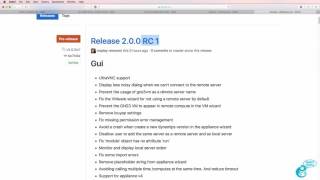
in this video I'm going to show you how to configure gns3 on a VMware ESXi now one of the best places to go as always for information is the documentation page on the gns3 website so click on documentation and then do a search for ESXi there's a link to installing the gns3 VM on ESXi which is very good as well as information about how to troubleshoot KVM on ESXi so the documentation provides a good information on how to set this up so let's start with installing the jr. 3 VM on ESXi we told that ESXi and VMware Workstation are two separate products ESXi is a lighter-weight hypervisor that you typically install on a bare metal server in this example I'm actually nesting ESXi within VMware Workstation just to make the video recording easier but in the real world you would install ESXi directly on a server so VMware ESXi is the operating system that's installed on a physical server rather than running Windows and then the VMware Workstation and then genus 3 within VMware Workstation what you are doing is installing ESXi directly on a bare metal or physical server so ESX I shall like to wait operating system that hosts the VMS so in this example my ESXi server has an IP address of 192 168 1 1 1 4 and I have a genus 3 VM configured on the ESXi server you can also use a web browser to access the ESXi server rather than using the VMware client so once again here's my ESXi server and we could upload or deploy an OVF or OVA file to the ESXi server that's what we're going to download from gns3 and upload to the ESXi server now the reason for doing this is that you can use a very powerful server to host your gns3 VM you run the client on your Windows or Mac as an example and have the journey 3 VM running on your ESXi server so that you can leverage the memory and processing power of that server Jinna 3 provides a VM for ESXi it has a booted pre-installed and geney's 3 is pre-configured on the VM however note that genus 3 does not control ESXi and by default ESX I will limit what genus 3 can do so you need to configure ESXi to allow the industry to run properly basically we need to enable nested virtualization on ESXi it's also recommended that you know how to use genus three using a local gns3 vm before you attempt to use genus 3 with ESXi this is a more complicated installation now in this document ESXi 6.5 is covered and julien explains how to upload and configure ESXi using the web interface the genus 3 VM is known to work with ESXi 5.5 and 6.0 but the way that you configure the server's is different so you need to look at the documentation for your individual release of ESXi to determine how to configure what is demonstrated here in this example i'm also using ESXi 6 2 5 which is the latest release that I could download to the time of this recording now here's a warning the VMware fixed of the bug related to gns3 after the official release of 6.5 so make sure to apply all updates you especially need to have the last version of the web interface installed that's shown here on the VMware website so the first thing you need to do is download the gns3 VM we told it to go to this document for the download links this gives us a various links to download in the genus 3vm and specifically we're going to go to github to get the genus 3vm at the time of this recording the latest release of gns3 is version 2.0 2.0 release candidate 1 so i'm going to go to my Windows PC and I'm going to download the genus 3 VM for ESXi so note in this version I'm not downloading the workstation version or the VirtualBox version I'm specifically downloading the ESXi version which is about 300 Meg in size so while that's downloading I'll go back to the documentation the next step is to import the VM into ESXi and you can do that by using the web interface so julian has shown the steps here where you open up the web interface and create a new vm and then you'd apply the virtual machine using an OVF or OVA file you need to call the VM gns3 VM and upload the files using your web browser you then select the data store choose whether you want to use thin or thick provisioning and then the disks are uploaded in this example I'm going to do the same steps but to use the vSphere client I've already got an older version of the GSE VM running on my ESXi server so I'm going to rename this old and what I'll do now is go to my downloads directory so here's the ESXi the father was downloaded I'm going to extract all the files and we can see that the zip file contains an ova so through the vSphere client I'm going to deploy an OVF template I'm going to browse to where I downloaded to the OVA and click open and then click Next the OVF template states that the VM will be called gns3 I'm going to click Next I'm going to keep the name as gns3 and in my example I'm going to use some provisioning to save on disk space and click Next we told that the OVF is ready to be deployed I'm going to click finish so at this point the OVA is being uploaded to ESXi you simply need to wait for that process to complete that's now successfully uploaded so I'm going to click close I'm going to select the genus 3 VM and then go to edit settings and here's an example we could increase the amount of RAM that we're going to allocate to the VM also increase the number of CPUs this is the advantage of using ESXi and a very powerful server rather than trying to run everything on your local computer this could also be used in the cloud as an example if you want to leverage cloud-based resources I'm going to click OK and I'm going to power on the Virtual Machine the genus 3vm will boot up and as you can see here I'm using genus 3 version 2.00 RC 1 the IP address of the server is 192 168 1.8 and notice she has a problem KVM support is not available I can also view that kind of information through the web browser so as an example if I click the genus 3 VM and open up a monitor I see similar kind of information version is 2 0 0 KVM support is not available that is a problem we want to enable KVM support on the genus 3 vm so that we can run cube based appliances such as iOS v iOS v layer 2 and das a so fortunately in the documentation Julien tells us that this is a problem and we need to enable nested virtualization and the instructions to enable this are available in this document we told her that we should stop at a VM and then edit the settings so through the VMware web interface I'm going to shut down the jr. 3 VM that's now shut it down and I'm going to click Edit to edit to the settings select a CPU and then I'm going to select this option expose hardware-assisted virtualization to the guest OS that's once again shown in the gns3 documentation I'm going to click Save and then I'm going to start up the VM again so the junus 3vm is now booting and now notice the difference KVM support is available that's what we want we want KVM support once again because we wanted to support nested virtualization to allow qmu devices to run on this JUnit 3 vm such as iOS v and iOS and v layer 2 so now we've configured the server-side we now need to configure the gns3 GUI hope you found this video useful if it's been of benefit to you please like it and please subscribe to my youtube channel I wish you all the very best
Original Description
In this video I show you how to configure GNS3 on ESXi - plus how to enable KVM support. Free software worth $200: https://goo.gl/613TUF
GNS3 Support (Go here if you need help): https://gns3.com/community
Playlist
Uploads from David Bombal · David Bombal · 51 of 60
1
 2
2
 3
3
 4
4
 5
5
 6
6
 7
7
 8
8
 9
9
 10
10
 11
11
 12
12
 13
13
 14
14
 15
15
 16
16
 17
17
 18
18
 19
19
 20
20
 21
21
 22
22
 23
23
 24
24
 25
25
 26
26
 27
27
 28
28
 29
29
 30
30
 31
31
 32
32
 33
33
 34
34
 35
35
 36
36
 37
37
 38
38
 39
39
 40
40
 41
41
 42
42
 43
43
 44
44
 45
45
 46
46
 47
47
 48
48
 49
49
 50
50
 ▶
▶
 52
52
 53
53
 54
54
 55
55
 56
56
 57
57
 58
58
 59
59
 60
60

RYU SDN Controller Part 4: Graphical User Interface (GUI): Practical GNS3 SDN and OpenFlow
David Bombal
HPE Network Protector SDN Application Part 1 - Introduction
David Bombal
HPE Network Protector SDN Application Part 2 : DNS Interception using OpenFlow
David Bombal
HPE Network Protector SDN Application Part 3 - Lab Setup using Physical Switches
David Bombal
HPE Network Protector SDN Application Part 4 - Demo of malicious websites blocked
David Bombal
HPE Network Protector SDN Application Part 5 - Demo OpenFlow table interception flows
David Bombal
HPE Network Protector SDN Application Part 6 - Demo of Physical Switch configuration
David Bombal
HPE Network Protector SDN Application Part 7 - Demo Service Insertion Tunnel / GRE Tunnel
David Bombal
HPE Network Protector SDN Application Part 8 - Demo SDN OpenFlow Reporting
David Bombal
HPE Network Protector SDN Application Part 9 - Demo switches interception of DNS traffic
David Bombal
GNS3 Talks: GNS3 version 1.5.X Appliance Tips
David Bombal
CCNA 200-125 Exam: AAA demo: TACACS+ with GNS3
David Bombal
GNS3 2.0.0 beta 2 install
David Bombal
CCNA #012: Learn SNMP with GNS3, Wireshark and Solarwinds NPM - CCNA 200-125 exam
David Bombal
CCNA #013: Spanning Tree CCNA Exam Questions: Know the answer? CCNA 200-125 exam
David Bombal
GNS3 2.0.0 beta : GNS3 VM integration with GNS3 GUI
David Bombal
CCNA #018: Routing exam questions: Who wins? OSPF, EIGRP or RIP? Sure? CCNA 200-125 exam
David Bombal
CCNA #019: Spanning Tree CCNA Exam Questions: Root Bridge, Root Port and more: CCNA 200-125 exam
David Bombal
GNS3 Download, installation and configuration - GNS3 1.5.3 and Windows 10
David Bombal
CCNA #023 EIGRP Neighbor Troubleshooting (DUAL Issues) for the CCNA 200-125 Exam
David Bombal
GNS3 2.0 Architecture and schema Part 1: What is the GNS3 Controller?
David Bombal
GNS3 2.0 Architecture and schema Part 2: Emulators and virtualization
David Bombal
CCNA #028 VTP Troubleshooting for the CCNA 200-125 Exam
David Bombal
CCNA #029 VTP & DTP Troubleshooting for the CCNA 200-125 Exam
David Bombal
CCNA #030 VTP Troubleshooting for the CCNA 200-125 Exam
David Bombal
GNS3 : How to download Cisco IOS images and VIRL images. Which is the best? How do you get them?
David Bombal
GNS3 ASA setup: Import and configure Cisco ASAv with GNS3
David Bombal
GNS3 switching setup and options: Cisco and other switching options in GNS3
David Bombal
GNS3 switching setup and options Part 2: GNS3 unmanaged built-in switch
David Bombal
GNS3 switching setup and options Part 3: Router on a sick with GNS3 unmanaged built-in switch
David Bombal
GNS3 switching setup and options Part 4: Etherswitch Router for Cisco Dynamips Part 1
David Bombal
GNS3 switching setup and options Part 5: Etherswitch Router for Cisco Dynamips Part 2
David Bombal
GNS3 switching setup and options Part 6: Etherswitch, Wireshark, 802.1Q, InterVLAN routing
David Bombal
GNS3 Talks: Docker, Open vSwitch, SDN and OpenFlow Part 1: GNS3 Switching Part 7
David Bombal
GNS3 Talks: Docker, Open vSwitch, SDN and OpenFlow Part 2: GNS3 Switching Part 8
David Bombal
GNS3 Talks: Docker, Open vSwitch, SDN and OpenFlow Part 3: GNS3 Switching Part 9
David Bombal
GNS3 Talks: Docker, Open vSwitch, SDN and OpenFlow Part 4: GNS3 Switching Part 10
David Bombal
GNS3 Talks: Docker, Open vSwitch, SDN and OpenFlow Part 5: GNS3 Switching Part 11
David Bombal
GNS3 Nexus (NX-OSv) switch setup and configuration Part 1: GNS3 switching options Part 12
David Bombal
GNS3 Nexus (NX-OSv) switch setup and configuration Part 2: GNS3 switching options Part 13
David Bombal
GNS3 Talks: Docker, Open vSwitch, SDN and OpenFlow Part 6: GNS3 Switching Part 14
David Bombal
GNS3 Talks: Docker, Open vSwitch, SDN and OpenFlow Part 7: GNS3 Switching Part 15
David Bombal
GNS3 Cisco CSR 1000v setup and configuration Part 1: GNS3 NFV
David Bombal
GNS3 Cisco CSR 1000v setup and configuration Part 2: GNS3 NFV
David Bombal
GNS3 Talks: Use the NAT node to connect GNS3 to the Internet easily!
David Bombal
GNS3 Talks: GNS3 2.0 RC1 is now available
David Bombal
GNS3 Talks: GNS3 2.0 Portable Projects - easily export and import GNS3 projects
David Bombal
GNS3 Talks: Multiple clients sharing projects in real time, plus console session shadowing!
David Bombal
CCNA #035 NAT Troubleshooting Scenario 1 - Can you find the issue? CCNA Exam 200-125 troubleshooting
David Bombal
CCNA #036 NAT Troubleshooting Scenario 2 - Can you find the issue? CCNA Exam 200-125 troubleshooting
David Bombal
GNS3 Talks: ESXi, GNS3 VM and KVM support Part 1: leverage servers and the cloud
David Bombal
CCNA #037 OSPF Troubleshooting - can you find the issue? CCNA Exam 200-125 troubleshooting
David Bombal
GNS3 Talks: ESXi, GNS3 VM and KVM support Part 2: leverage servers and the cloud
David Bombal
CCNA #038 NAT Troubleshooting Scenario 3 - Can you find the issue? CCNA Exam 200-125 troubleshooting
David Bombal
CCNA #039 - OSPF DR, BR and DROTHER Election - do you know the answers?
David Bombal
CCNA #040 NAT Troubleshooting Scenario 4 - Can you find the issue? CCNA Exam 200-125 troubleshooting
David Bombal
GNS3 Talks: Arista vEOS GNS3 import and configuration Part 1
David Bombal
CCNA #041 - OSPF DR, BR and DROTHER Election - do you know the answers?
David Bombal
GNS3 Talks: Arista vEOS GNS3 import and configuration Part 2
David Bombal
GNS3 Talks: ipterm: Linux, Docker, Python, SDN and more! Part 1
David Bombal
More on: RAG Basics
View skill →

![Build a RAG Agent in n8n | Vector DB Pinecone + WhatsApp + Gmail [2026]](https://i.ytimg.com/vi/4eJsZBgwFJ4/mqdefault.jpg)





🎓
Tutor Explanation

 DeepCamp AI