Why Going Serverless Doesn't Mean 'No Ops'
Key Takeaways
The video discusses the benefits and challenges of serverless architectures, highlighting their potential for 100% utilization and real-time event-driven systems, while also addressing the need for operational simplicity and cost auditing in serverless adoption, using tools like AWS Lambda, Microsoft Azure, and Google Cloud.
Full Transcript
good [Music] hey is Alex Williams of the new stack here today we're discussion about serverless architectures joining us our kyle mcdonald of the new stock and a colleague here who we work with on a daily basis hey Kyle Alex cream and kapila funk available hey Camille how are you great else I think if you left it yeah great to have you and Camille is with capital one and as a developer better and we just wanted to sit down for half hour so and talk about surveillance and he seemed you have some knowledge of the space and thought it might be a fun conversation so while we just get started I would love to just start off by getting your context about the server which market what is it that you have found about the surrealist markets that provides context for you as a developer at Capital One so I just got back from the server with conference in the UK and a couple hundred developers they're talking broadly about some of your experiences at the startups and enterprises it is clear that the stimulus paradigm has struck a nerve across the ganji organization and it's very much Nathan thing it is transformative both been in sort of how it enables one hundred percent utilization which is you know a game-changer from a cost perspective and how it will enable real-time event driven systems for data processing and applications both of those have are truly game-changing i would say in the sense of a namely entirely new business models on top of syphilis sort of looking at the general enterprise space i see a couple of different initial utilizations of server list I think we're still very much to be before this is a branch of rapidly evolving equation we have a couple different platforms that are several services but the chilling is sort of sort of immature in work and that's rapidly evolving the looking somewhat under the enterprise's data these cases that we see in the initial adoption curve you see the sort of data processing uses you see Sir that some automatic debt off usages and some of tility computing there's a couple things as a whole the enterprise back pretty sure going in full edge and they also succumb to the API usage is uneven no hands on the API gateway and lend us to deliver applications with much greater utilization and less waste but looking at some of the issues is a reason why do these points become very interesting on the day across the weak side we see Randy's Tunes us for real-time data processing you see for movement within Akkad storage to construct workflows pipelines around how getting a Content pipelines of transformation pipelines on the developer side you might see through hiding provisioning behind some of these service functions a blend of functions to put a TV in john's technology that can enable teams to move faster some of the issues that I see that it sort of preventing some of the broader adoption in more widespread that you receives on the server when that sort of hurting the enterprise with a Garcia platform itself is especially the lack of pcie certification for for some of these services plantations and then some of the issues around cost accounting you know in the end project lobster from developers / lost different apps and one of the issues currently around glenda implementation of server list is that it is doesn't really reflect doesn't allow for hardback models to the applications of require sort of looking at structuring structuring the infrastructure different late to take advantage of for that purpose and then of course the audit is sort of a key aspect which is also you know typically within Nemeton space you would use cloud trail for your audit log of workers during wataniya cow are using which api's and unfortunately the circle is the limitation has some distant efficiencies there and looking more broadly at some of the other providers in space you know there's their lives in vast bottling you know these platforms represent significant amounts of walk in to dental on cloud providers you know they integrate well with the post in yoakum services they're you know they're very much the glue factor between the different services of a provider and that leads to a lot of sort of blocking capabilities so you know and what Microsoft and Google has been tough followers in the space of announcing their first offerings earlier this year they're still sort of an immaturity question you seem sort of the framework tooling evolved from frame-ups that were doing basic provisioning last year to sort of things that are looking at more proposition and more discovery components aggregation frame up so to speak for service to encompass the entire stack and then that's really that's been interesting sort of we evolved up the tears but there's still a lot of immaturity around and run look space but you know looking at blogger enterprises with the premise and value chains clear around production as well as this capitalization enough that's really i think what drives both go start up to me on prices to interesting ah i like that question about the utilization and the adventure of and architectures what you're talking about those tend to be two major transformative aspects of the turbulence nation right now can you come on sorry good I was going to ask about that one hundred percent utilization in particular how's that transformative pick us through that no example of the value of it in terms of one hundred percent utilization how does that I compared to like more traditional you know models that you had to depend on sure so I mean it's a little more general trend in the industry we have sort of a commitment towards microservices and containers all of which is sort of driving smaller components professor prefer developer productivity and sort of service or as some have to call it functions as a service allows for that thin decomposition of want to go to be smaller independently reusable units the Delta and the thing that if you go into this microscopes world remember coming to provisional outboards tough physically provisioning in the complexity of the infrastructure and get higher and heavier you have service discovery components you have to have various orchestration techniques and services of simplifying that while giving you the benefit of the micro services and encompasses microservices will become unnecessary the same amount of baggage and part of it driving let what that is a not bring with it well you know I I don't necessarily have to set up dr. on a thousand nodes and deal with any of the bugs on an orchestration continued runtime whatever that may be there's many out there but you know the operations around that it takes time and to production eyes a service the Mesa source form or nomads or pippin at ease there you know there's a learning curve there and some of that can be sort of bypass to spy in the servos world because it's effectively a managed platform and you can get straight to you sort of building out here you're application and business project as opposed to focusing on the infrastructure to learn yes is there an element of this I mean we we look you know if we go back two or three years we should talk about BM sprawl right we thought about virtualization and when companies first moved fertilization is there something different here with the idea that you know an event-driven architecture with you know sort of decomposed having everything be decomposed into either functions or land of s but you don't have to really worry about the problems with BM sprawl because it's only being executed as it actually needs to be executed these things aren't always running and that that changes the economics and sort of dynamic so that is that absolutely I mean so coming back to surly cost equation the utilization like having code that is only functional as it's being used is what drives that a done based system drive that hunch civilization the opening for exactly the data mounted a deeper cause if you go on texture to the Persian on a cluster or so node and then I'd fitted web personalization tabulation represents 10x20 an sculptures that your pen Boris overhead that you don't meet and so that very much drive and you know service is relatively cheap both on the utilization but on the actual amount of data bottle the actual data cost processing hopefully there's exceptions around big data premium switcher we think they're running effectively surge at a higher temp utilization they are message for service but some of the application workloads as well as from the data processing workloads that are you know much more sort of record or event-driven can have extreme value capture what circle is technologies and so you know you've had a chance to sort of talk to a lot of people I see you out in the community you just kept on talking and London at the server was conference in terms of the you know you look company to her now doing this you know sort of in the server with space or starting to actually put it to work how is it you know how are you managing that I mean the amount of artifacts that come when you start to decompose things into function how are you managing that growth have we seen the you know changing the problems that right when we were talking about vm sprawl was how do you manage a bunch of operating VMS the VM images and that sort of thing when we think about it in the functions in sort of serverless world you know there's now a lot more code element artifact just in terms of quantity right and those are you know very large quantities as grow an application is that a new problem area is that you know is just a concern for the paranoid and crazy it's absolutely certain I mean you know we we've traded off course at a problem you need higher per second now I have a deficit of management problems and it's very much a space where sort of chilling is still emerging and where providers are coming out new capabilities or people or the ecosystem inventing them and last year or liable to various frameworks for survival psychology they were basically focused on sort of basic provisioning and individual function now we're sort of moving up the stack where we're seeing sort of sandwich set and its entire api's can post hundreds of function you know but it still very much in working space I've been one for myself around some of these of our relationship as far as doing doing account level and resource lead management of resources in the cloud provider but they're both the circles framework was a pie framework this is very much sort of an emerging technology space where that problem I don't think has a sort of definitive go to solution for a lot of companies that is it's really sort of finding what works for them and sort of taking it best of work expedia Wall Street in a corner go ahead calm I was just saying that so I look at this and what I've talked to enterprises you talk to enterprise because right we're all sort of looking at how this is being implemented yeah we talked about one hundred percent of utilization that's definitely got to get the attention of some CIOs and hopefully some CFOs sitting in the room from a developer's standpoint you know when you think about the CIO it sort of some of the executive management you're talking to influence enterprises or maybe closely is it a hundred percent utilization that's perhaps the most interesting to them about serverless is it the new design patterns they can sort of get from it is it the idea of decomposing things sort of having the chance to think it says minister of unique independent kind of a micro services approach what will try you know what's think we mean both of the top of line at the bottom of the line you know sorry Louisville limited upper level biz they're sorting the drawing package of Center you develop a prototype city you'd be able to take advantage of something which is relatively simple relatively easy is operationally simple if you develop operation simple to maintain as well as the cost factor both of those enable businesses senior pastor and that appeal to the top and the bottom and you know when you service you know sort of from an enterprise context is a little bit of a new thing right and you know we're sort of starting to consume it on lambda and some of the other clouds now very stops falling we're seeing it you know sort of growing up in a private and on prem you know various circumstances how do you think the ecosystem starts to form around this right this has you know you talked about hundred percent utilization as dramatic impact for companies you know like vmware right we're in Microsoft where server you know be able to get the maximum utilization out of the enterprise servers has been you know the theme of the last 10 years right circle was introduced like you know that theme is a very different theme and server list so how does how do you see that ecosystem growing around that right how do those companies did they get it do they see that opportunity you know if they're not really I mean so the you know we've got that perspective revolution in the last ten years have gone from you know they're metal to two VMs to clouds to containers to passers and back to their bill and those I get back to bare metal and the the movement Pulitzer server lives in where does other players a sort of an open-ended question you see some players like the am pursuing you know open with as far as a name of the server lists framework for the am FM client you have other providers like iron io to provide similar services but then you look at the groups like the am aware which are very much still focusing on the past world and you see you a nice kitty continued good option to run docker and there's one of the challenges is sort of how do we you rethink some of the problem set it's because service engenders a different pattern of developing looks right then doing so in the pure katina world right and so that that require some sort of rethinking but the benefits are clear um and I think that they're still your name in dark or not good she switched out a lot of the apps to sort of what's overnight so there's a long tail there but the question is how do they how they evolve them with this new feature yeah and I think what I think you were mentioned before is that what I'm curious about is you know all the other uses for for server list so and this is to make its to the heart of the question about how was the effect on the organization right so you talked about data you know data processing automating get mops utilities meeting computing an API usages one of the one of the impacts of those know different benefits of server was computing on the overall organization when you think about the overall you know one hundred percent utilization that you get out of surprise so I think they're you know they're put the overalls and quickly towards the operation the transfer make their sort of getting several different emails and they're still if you still focus on getting operations are having that common app only means if organizations have to get some days and after going to shore there a business applications rather than text and structure and within the enterprisers you might see even on a common calculator you'd like to assist and that's enough working instruction provisioning and mashes and having that common base platform that it open-ended too many different services as many different application uses really create a lot of sort of four-dimensional activity because the teams are now focusing on with their core logic and a framework like gives an operation of operation simplicity but a lot of flexibility and speed from a on the application side as far as the registrations and that's one of the key factors I'd like looking at foremost is you know em guns emplaced it is very much like Ljubica all their services between dynamo GD even canisius and all the others are family of services and those connection points are really working these platforms their power there's be able to subscribe today with us from from from resources systems to be able to process in real time in some papers we don't necessarily have dragon logs and a non-service we will have some of the compliance or similar to an end on the there's a facility called called watch of evidence which allows us such a big toes are our own business semantics and business world on top of the AWS API in real time and that's sort of an immigration that that you try to do it without whichever those would be very hard to do you talk stroppy something that you can actually server based framework but mccann effort so I think the new in England evening applications and these operations including any cop Williams's and so were kind of take us forward and on the provider side it's a question of what what they offer is Farley being the integrations with these events dreams ok address the future of that so see if I and I've had the chance to work with you for a number of years you've been a leader in the industry with your work at canonical around juju and sort of thinking about how to deploy do large applications yeah so you've seen kind of a little bit of the evolution of sort of how we ended up here in the cloud world of them private and public and how you know if your experience doing to geo and some of the other work you've done you've seen how people are deploying those applications and really getting them up on the cloud based on that and based on sort of what you've seen around server list sort of how fast the service ecosystem has sort of coalesced in the last couple of years we've sort of efforts what do you think the next two years sort of look like white what are the kind of next big things they use developer would really like to see sort of show up in the ecosystem that you think could do you know what what takes it to the next level for you and now based on some of your historical context you know what what looks different now you have to but I come to that question uh I didn't want this once more on sort of thinking about going to the enterprise adoption of server list and getting the benefits that Bish's be stateless an event-driven is really helpful in content programmer I think sort of the ability to get out of get out of their own way Google guard service there some of the activities would pay they have to enforce some business sense be able to sort of a way that get to look your computing facilities is really quite enabling and empowering looking to the future of service level and what we what I can you know crystal ball out you know but we'll see I see a lot of composition in sort of the we we're service Hadley natural analog commuter services into the ability to get our composition point and better sort of discovery within the server stuff iacono presented last week after a sterile compounding I had had one foot out of the coop for things wish this the features and the phone is about that are two wings that are spec bility that our costs chanting or art ability boom sort of on their sort of course I'd hmm going beyond that it's going to be moving to how do we deploy this set of functions in a way that is a reasonable component within an order system and as a dress or discoverable that's interesting yeah and I can think that's one of the questions I wanted to get to was about that cooling in the cost auditing and what are some of the deficiencies there that you're seeing I mean I know that there's people think of service is that there's been the stereotype of surveillance architectures is like oh yeah like just really simple stuff and I behind the changes a lot of complexities for instance with the API integrations for example and making sure you know everything is working and accordingly so I'm curious thing you're you know what what are some of those deficiencies you see in the tooling in the cost out of being another example yeah it's absolutely and usually these platforms are depending on the platform providers to assault amuse needs the guards to basic things around attaching not ability and we have to work with our partners to tiffany's platform providers to be able to a name of those for the things that are sort of above the line it's really question about because of empathy because if we can tell it in this context you know this is very much still there early day service when there's several frameworks out there that provide various points that can help automate sort of a complex API gateway deployment napping all the FBI's and all these components being able to do Bluegreen deployments as you do a rolling upgrade through three order service infrastructure another interesting point and I did say that there's some operational simplicity around server list and you know maybe but isn't quite fair infants that i would say at least a third of the talk last week we're about operations and how do we do the operations up I'm server was there is there still very much a book that exists but the platform side as well as the chilling side and sort of how do we do how do you do air aggregation and monitoring on things that live for fractions of a second and being able to deal that well is sort of what's going to is needed in me system to help additional adoption of the platforms cool so you know ah you're saying earlier you weren't sure what you know you're looking at crystal ball I'm pretty sure every product manager for every service platform and is going to be listening to this podcast to figure out kind of what enterprises see is sort of future opportunity or use develop who lives in that enterprise world see is kind of a future of service um how do you see you know cook the current developer community sort of your pure developers embracing serverless how do you know what's the fastest sort of on-ramp to to using it and then you know what's the fastest on-ramp you peak to sort of getting it more prevalent and more widely adopted yeah well the easiest ways simply saying Alessa tell me you do it I mean we have it all right um what IIT buttons still we have joshs we it is extremely accessible and extremely easy to take you know teenagers and teach them how to build some of these things that they can see that they can build and show their friends and get engaged with technology from from essence there's definitely a lot of interesting things that were seen as being done both on alexa or on IOT side that is she's sort of the counterpart to services how do we engage with it in the real world and the api's and the and the data processing ones like but there's a whole different world in addition to that when the Empress is are engaging their capital one has a fantastic Alexa at where I can check by balances and pay my bills and that isn't necessarily a service application but its counterpoint a platform that is enable we've never had Alexa on the show so that's that's a first appeal and it's inspiring because we have a pancake robot that we bring around to different events and have pancake breakfast and its really in case printer and we rewind to figure out how to set it up with a fitted up on Alexa and having an automated fake cake pops no this is inspiring bagel I like it ready talked last week by the iRobot people that do the rim bows on some of their usage or cheerless how far their platform so there's very much in the one wonderful things about about the plots of these platforms is that they think England more approachable to both start up to this level we're engaging and learning so great well listen kapila so just a little bit about yourself what's next for you I where you to be speaking and I'm just curious you know when you're out of the road you know what are you hearing people asked about it's an awesome opportunity to be out there and to talking to people all the time you're one of those people who really get an opportunity to be on the you know to really be able to hear what's happening you know in the communities so where you be seeing this and speaking action what were the kind of thing that you're hearing about these days um well next week I will be out not speaking community conference in tallassee you're there and then shortly thereafter later this month all the three events will all be talking about women would cap wound open source projects that i developed kolkata stadium which we used to help manage our accounts and has direct service integration but none that and your plans for us beer well we would love to have you join our pancake breakfast at a cube con appear there so that's sounds fantastic come to have a chance to meet our pancake robot now I and um anything of interest that you're what but you're going to be following up on in your conversations maybe and like if you're hoping maybe to hear if you're what you're what you're wanting to learn from other people as you we head on the out on the road over the next this is last part of the year I'm very interested at Cabrera conference when the counter points to services using their effectively stateless and we still have stayed in our applications and in all cases it's not always something that we can directly defer the masqueraders looking at some of the pets that capability interpretation some of the schedule storages stores that can be placed there is sort of a the core counterpoint sort of us and how we can build some of these managed platforms for first racial services as a counterpoint to our state list also the lips components so that can apply as our cake and eat it too so to speak excellent look appeal thank you so much for taking the time to speak with us today we really appreciate it Kyle thanks for joining me as a co-host on this episode of the new tech analyst appeal we'll see you next week at rubicon and reinvent and look forward to keeping in touch and having a get on the show so thanks for joining me thank you [Music]
Original Description
The continued transition of enterprises away from legacy infrastructures over to microservices has seen increasing growth in serverless infrastructures as a way to help businesses not only manage their costs, but to improve developer productivity and time to production.
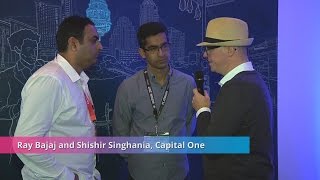
On today’s episode of The New Stack Makers, TNS Founder Alex Williams and co-host TNS Advisor Kyle MacDonald sat down with Capital One developer Kapil Thangavelu to get some additional insight into the buzz behind serverless technologies, its benefits to the enterprise, and to speculate on what the future of serverless may hold over the next few years.
Listen on SoundCloud: https://soundcloud.com/thenewstackmakers/going-serverless-doesnt-mean-no-ops
Watch on YouTube ↗
(saves to browser)
Sign in to unlock AI tutor explanation · ⚡30
Playlist
Uploads from The New Stack · The New Stack · 31 of 60
1
 2
2
 3
3
 4
4
 5
5
 6
6
 7
7
 8
8
 9
9
 10
10
 11
11
 12
12
 13
13
 14
14
 15
15
 16
16
 17
17
 18
18
 19
19
 20
20
 21
21
 22
22
 23
23
 24
24
 25
25
 26
26
 27
27
 28
28
 29
29
 30
30
 ▶
▶
 32
32
 33
33
 34
34
 35
35
 36
36
 37
37
 38
38
 39
39
 40
40
 41
41
 42
42
 43
43
 44
44
 45
45
 46
46
 47
47
 48
48
 49
49
 50
50
 51
51
 52
52
 53
53
 54
54
 55
55
 56
56
 57
57
 58
58
 59
59
 60
60

What's Next for the Cloud Foundry Foundation in 2017 with Executive Director Abby Kearns
The New Stack
How Unikernels Can Better Defend against DDoS Attacks
The New Stack
Weaveworks is Bringing Horizontal Scaling to Prometheus
The New Stack
TNS Analysts Thanksgiving Special: The Evolution of Kubernetes and the Container Ecosystem
The New Stack
How Rancher Labs is Seeing Kubernetes Put to Work in Production
The New Stack
SAP Tests Kubernetes for Cloud-Native Enterprise Software Deployments
The New Stack
Event Marketing for Today's Developer Evangelists and Community Managers
The New Stack
NodeSource Introduces Certified Modules to Improve Node.js Security
The New Stack
How Lightstep is Illuminating the Case for Distributed Tracing
The New Stack
How OpenStack Aims to be More Inclusive without being Exclusive
The New Stack
How Shuttlecloud Saves Time and Money by Monitoring with Prometheus
The New Stack
Creating Analytics-Driven Solutions for Operational Visibility
The New Stack
Understanding the Application Pattern for Effective Monitoring
The New Stack
Building On Docker's Native Monitoring Functionality
The New Stack
The Importance of Having Visibility Into Containers
The New Stack
How Getting Your Project in the CNCF Just Got Easier
The New Stack
Tectonic Summit Pancake Breakfast: How to Sell Kubernetes to the Hypervisor-Minded
The New Stack
The Buzz at Tectonic Summit 2016 in New York City
The New Stack
Bringing Clarity to the Future of Node.js Modules
The New Stack
How FluentD Can Help Monitor Microservice Architectures Through Unified Logging
The New Stack
Reshaping Front End Development with Warehouse.ai
The New Stack
2016 Year End Wrap-Up: Discussing Docker, OpenStack, and Open Source
The New Stack
Here's Why You Should Build a Robot Using Node.JS: Because You Can
The New Stack
How the Node.js Foundation is Utilizing Participatory Governance Models
The New Stack
Set Up an MongoDB Replica Set in Less Than an Hour Using Bitnami Packages
The New Stack
Determining Who Bears the Burden of Ensuring NPM Module Security
The New Stack
How Intel Snap uses Telemetry and Kubernetes to Drive Enterprise Efficiency
The New Stack
How the NFL Scored a Touchdown with its Open Source React Framework Wildcat
The New Stack
Aporeto CEO Dimitri Stiliadis: When it Comes to Security, Context is King
The New Stack
The Buzz at Node.JS Interactive
The New Stack
Why Going Serverless Doesn't Mean 'No Ops'
The New Stack
How Node.js is Transforming Today's Enterprises
The New Stack
JJ Asghar Interview
The New Stack
How Capital One is Using APIs to Streamline Auto Financing
The New Stack
SXSW 2017: How Machine Learning Differs From Regular Programming
The New Stack
SXSW 2017: Data-Driven Applications with Capital One DevExchange's Hydrograph
The New Stack
SXSW 2017: How Good Engineers Make Bad Business Decisions
The New Stack
CloudNativeCon & KubeCon EU Pancake Breakfast 2017: Kubernetes and the Multi-Cloud
The New Stack
CNCF Executive Director Dan Kohn: What's Next for CNCF in 2017
The New Stack
Exploring the Latest Container Runtime Projects in the CNCF
The New Stack
Exploring the Future of the Kubernetes Ecosystem
The New Stack
Kubernetes and Continuous Deployment
The New Stack
Kris Nova of Deis at CouldNativecon/Kubecon in Berlin
The New Stack
Docker's Quest for Simplicity with the Evolution of Containerd
The New Stack
Developers First: The Cloud Foundry Service Broker API and Kubernetes
The New Stack
Mapping the Future of CoreOS's rkt in the CNCF
The New Stack
Red Hat and Dell EMC: Two Perspectives from DockerCon
The New Stack
Capital One Opened its APIs to Third-Party Developers — Here’s What They Learned
The New Stack
SUSE Joins the CNCF, Brings Kubernetes to OpenStack Cloud 7
The New Stack
How Capital One Brings Open Source To The Banking Industry
The New Stack
OSCON Is Coming Back To Portland, A Show Wrapup With Co-Chair Kelsey Hightower
The New Stack
Dev Or Ops Doesn’t Matter, You Need Observability
The New Stack
Taking The Next Steps In Developing An Open Source Culture
The New Stack
SXSW 2017: How Capital One Became Technology-First With Open Source
The New Stack
Apcera Old Apps Spanning New Clouds
The New Stack
Provenance: The Peace of Mind Chef Habitat Seeks to Deliver
The New Stack
InSpec: Human Readable, Automated Compliance
The New Stack
The Evolution of SAP HANA Express
The New Stack
Women Engineers Who Inspire And Never Give Up
The New Stack
Three Perspectives on the Evolution of Container Security
The New Stack
More on: AI Systems Design
View skill →



Related Reads
📰
📰
📰
📰
7 Apache Kafka Design Patterns Every Backend Engineer Should Know
Medium · Machine Learning
The Most Dangerous Failure In Distributed Systems Is The One Nobody Notices
Medium · Programming
Fat Controllers No More: Architecting Clean Laravel Apps with Services and Repositories
Medium · Programming
I Finally Read Designing Data-Intensive Applications (2nd Edition) - Here's Why Every Backend Engineer Should
Dev.to · Stack Overflowed
🎓
Tutor Explanation

 DeepCamp AI