Apcera Old Apps Spanning New Clouds
Key Takeaways
Explains how Apcera's platform enables app modernization and supports legacy applications in the cloud
Full Transcript
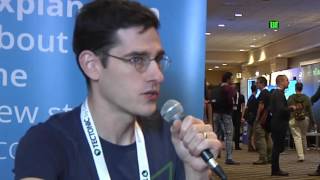
a little welcome to the new stack makers a podcast where we talk about at scale application development deployment and management [Music] [Music] hey I'm Alex leaves the new stack and we're here at Gawker con and Austin Texas bond and punky Austin decas and we got a whole bunch of podcast this week that we're going to be presenting to you and since we're in Austin we're in Austin the music capital great to be here as always yes hey Alex Williams the new sack here on the show floor at dr. Cohn and Austin and here at the of sarahbooth here with Henry stop and Austin Austin of Austin now you're not from on on soon you're born here all right well Austin of Austin is born from Austin so let's look at the upstairs lat form just quickly we're going to get a little quick demo yes so after a platform is a full stack container management platform for enterprise and it's really designed both for developers and IT ops folks one of the things that makes us different is that we support hybrid side we're a true hybrid cloud platform so when you set up an Apsara cluster you can have it span multiple different cloud provider environments this cluster we have here for the demo is spanning three different environments you divided them into three different data centers we have our headquarters the VMware cluster it's on Amazon as well and on Google so it's one logical control plane over three different cloud providers if you jump into the instance managers tab you see we have 18 different virtual machine hosts that can run your instances and then with just a scheduling tag you can change just like policy change where your application is run and you don't need to have different products or different clusters set up to run containers on those different cloud providers so tell us about the you know the connection to you know the connection to containers and how they really apply to the customers these days how are you seeing how do you see there is modernization of enterprise applications really relating to container technology well so we're seeing two different kinds of customers there are a lot of enterprises out there that have legacy applications and they're hearing about the world of containers and micro services and they want to do out modernization but they're kind of stuck with their legacy applications and they want to be able to migrate those to cloud and then also have a way to support those modern container rights applications with Apps era you can basically shrink-wrap your legacy applications we modernize the environment around them so that legacy application doesn't even realize it's been containerized and we're actually seeing a lot of customers that like that idea like being able to take their legacy applications not make any changes to it wrap it in a container and then drop it on a platform where they can run that anywhere they can run it still on-premise or they can move it to Amazon or Google and they get all the benefits of containerization how knowledgeable are these people about containers it depends it depends a lot of folks are hearing about containers now you know docker is really helping kind of publicize the idea of containers and so we're seeing a lot of traction out there in terms of mindshare but when it actually comes to having fully containerized applications and moving with micro services or next-generation architectures a lot of customers are feeling like ok that's down the road we want to be able to support that but what do I do about all of my existing applications and that's something we're really focused on is there what's through building requirement you know when you have you're modernizing these applications with containers are you are you putting this on top of a virtual machine is this you know tell us about that architecture itself so we're really a platform that sits on top of your virtual machine so here in this cluster we've got 18 virtual machines that were created when you installed the cluster and you can you know scale up and down your cluster based on what you need but then once you've set up the infrastructure the containers just can drop on top and we offer a management layer that manages this different kinds of policy around how those containers can be networked what their quotas are where they run and what kind of contents those containers can have as well as who has permission to do what where how about when you need to rebuild the container yeah so we can ingest you containers you're already building with an external CIA CD system or we have a built-in staging pipeline they can ingest your code and then run it through our extensible build process so whether you want to bring in code or whether you want to bring in containers you've already built once you rebuild them then you can just restart them on the upstair platform at it it just restarts them immediately next one so what are the new developments that will be seeing coming out of this what are some of the things you're looking ahead to doing with this modernization and I don't form even more and better support for legacy app modernization we have customers that are running increasingly large workloads so huge containers huge workload things like s AP applications that you just want to say look I had this big s ap application I want to bring it and be able to containerize it so I can make it much more agile so support for very very large enterprise workloads and improve tooling support WebLogic WebSphere and JBoss workloads that you want really moving into that enterprise level yeah environment so if you want to modernize those and also have a platform that supports your 12 factor modern kind of web style workloads oh your micro service workloads this can do can do all of it so you can run this on premise and through a cloud service yeah it it covers both on Prem and off Prem with one logical control plane so you don't have to have different products or different clusters you know one for on Prem one for off you have the distinction that logical control plane yes that's one of the big distinctions is a single control plane over multiple clouds and the other is this idea of being able to modernize and containerize the environment that your app runs in so it doesn't even realize it's been containerized and we can dynamically template out all the static and fig files and everything else when that container gets you set it up now CIF CD platforms and notorious for requiring a lot of management right and control plans require their own set of management what are the management responsibilities of the user so well they're different kinds of users right the developer user the idea is to minimize their management and configuration work we wanted to just work from the perspective other developer we want to let them go fast but going fast isn't enough if you're not safe so on the policy side we offer this ability to kind of split out and segment out the duties in an organization so you have policy administrators who are at the policy for quotas or the policy for network maybe your network administrators get permission to write network policy and then when your developer just deploys the workload into production all those policies get applied immediately and without any interference from developer or any responsibilities on the developers side so the then on the config management side we you know we've used a lot of open source tools I think like Tara forms will allow you to automate the infrastructure spin up so that it's very easy to kind of install this cluster that's one of the things we spend a lot of time on over the last year is making this platform really easy to to get started with this is a compilation yeah but it can be deterred if achill yeah so then that's one of the things that distinguishes this from you know if you wanted to get started with okay I want to do containers I want to do a hybrid cloud I wanted to modernize my legacy apps how do I do that I don't want to spend a year and hire entire teams at custom build a platform out of six different open source projects I want something that just works and EPS era is something that you can just install and get started with kind of in a day well Henry thank you very much for taking some time off and good to see you here thank you very much Joe good talk to [Music] listen to more episodes of the new stack makers at the nice takeo slash podcast please rate and review us on iTunes like us on YouTube and follow us on soundcloud thanks for listening and see you next [Music] Oh
Original Description
“There are a lot of enterprises out there… and they want to do app modernization, but they’re kinda stuck with their legacy applications,” explained Apcera director of product management Henry Stapp, speaking with Alex Williams at DockerCon 2017 in Austin, Texas. “They want to be able to migrate those to cloud, and then also have a way to support those modern, containerized applications.
So although Apcera didn’t have to reinvent the wheel, it did have to repurpose the wheels and gears of application networking to make programs for the old environment sustainable within a hosting platform that’s two or three generations newer. The result is what Stapp explained to us as a single platform across multiple clouds.
Check out Apcera’s demo from the DockerCon show floor in Apcera: Old Apps Spanning New Clouds, the latest edition of The New Stack Makers podcast.
Listen on SoundCloud:
https://soundcloud.com/thenewstackmakers/apcera-old-apps-spanning-new-clouds
Watch on YouTube ↗
(saves to browser)
Sign in to unlock AI tutor explanation · ⚡30
Playlist
Uploads from The New Stack · The New Stack · 55 of 60
1
 2
2
 3
3
 4
4
 5
5
 6
6
 7
7
 8
8
 9
9
 10
10
 11
11
 12
12
 13
13
 14
14
 15
15
 16
16
 17
17
 18
18
 19
19
 20
20
 21
21
 22
22
 23
23
 24
24
 25
25
 26
26
 27
27
 28
28
 29
29
 30
30
 31
31
 32
32
 33
33
 34
34
 35
35
 36
36
 37
37
 38
38
 39
39
 40
40
 41
41
 42
42
 43
43
 44
44
 45
45
 46
46
 47
47
 48
48
 49
49
 50
50
 51
51
 52
52
 53
53
 54
54
 ▶
▶
 56
56
 57
57
 58
58
 59
59
 60
60

What's Next for the Cloud Foundry Foundation in 2017 with Executive Director Abby Kearns
The New Stack
How Unikernels Can Better Defend against DDoS Attacks
The New Stack
Weaveworks is Bringing Horizontal Scaling to Prometheus
The New Stack
TNS Analysts Thanksgiving Special: The Evolution of Kubernetes and the Container Ecosystem
The New Stack
How Rancher Labs is Seeing Kubernetes Put to Work in Production
The New Stack
SAP Tests Kubernetes for Cloud-Native Enterprise Software Deployments
The New Stack
Event Marketing for Today's Developer Evangelists and Community Managers
The New Stack
NodeSource Introduces Certified Modules to Improve Node.js Security
The New Stack
How Lightstep is Illuminating the Case for Distributed Tracing
The New Stack
How OpenStack Aims to be More Inclusive without being Exclusive
The New Stack
How Shuttlecloud Saves Time and Money by Monitoring with Prometheus
The New Stack
Creating Analytics-Driven Solutions for Operational Visibility
The New Stack
Understanding the Application Pattern for Effective Monitoring
The New Stack
Building On Docker's Native Monitoring Functionality
The New Stack
The Importance of Having Visibility Into Containers
The New Stack
How Getting Your Project in the CNCF Just Got Easier
The New Stack
Tectonic Summit Pancake Breakfast: How to Sell Kubernetes to the Hypervisor-Minded
The New Stack
The Buzz at Tectonic Summit 2016 in New York City
The New Stack
Bringing Clarity to the Future of Node.js Modules
The New Stack
How FluentD Can Help Monitor Microservice Architectures Through Unified Logging
The New Stack
Reshaping Front End Development with Warehouse.ai
The New Stack
2016 Year End Wrap-Up: Discussing Docker, OpenStack, and Open Source
The New Stack
Here's Why You Should Build a Robot Using Node.JS: Because You Can
The New Stack
How the Node.js Foundation is Utilizing Participatory Governance Models
The New Stack
Set Up an MongoDB Replica Set in Less Than an Hour Using Bitnami Packages
The New Stack
Determining Who Bears the Burden of Ensuring NPM Module Security
The New Stack
How Intel Snap uses Telemetry and Kubernetes to Drive Enterprise Efficiency
The New Stack
How the NFL Scored a Touchdown with its Open Source React Framework Wildcat
The New Stack
Aporeto CEO Dimitri Stiliadis: When it Comes to Security, Context is King
The New Stack
The Buzz at Node.JS Interactive
The New Stack
Why Going Serverless Doesn't Mean 'No Ops'
The New Stack
How Node.js is Transforming Today's Enterprises
The New Stack
JJ Asghar Interview
The New Stack
How Capital One is Using APIs to Streamline Auto Financing
The New Stack
SXSW 2017: How Machine Learning Differs From Regular Programming
The New Stack
SXSW 2017: Data-Driven Applications with Capital One DevExchange's Hydrograph
The New Stack
SXSW 2017: How Good Engineers Make Bad Business Decisions
The New Stack
CloudNativeCon & KubeCon EU Pancake Breakfast 2017: Kubernetes and the Multi-Cloud
The New Stack
CNCF Executive Director Dan Kohn: What's Next for CNCF in 2017
The New Stack
Exploring the Latest Container Runtime Projects in the CNCF
The New Stack
Exploring the Future of the Kubernetes Ecosystem
The New Stack
Kubernetes and Continuous Deployment
The New Stack
Kris Nova of Deis at CouldNativecon/Kubecon in Berlin
The New Stack
Docker's Quest for Simplicity with the Evolution of Containerd
The New Stack
Developers First: The Cloud Foundry Service Broker API and Kubernetes
The New Stack
Mapping the Future of CoreOS's rkt in the CNCF
The New Stack
Red Hat and Dell EMC: Two Perspectives from DockerCon
The New Stack
Capital One Opened its APIs to Third-Party Developers — Here’s What They Learned
The New Stack
SUSE Joins the CNCF, Brings Kubernetes to OpenStack Cloud 7
The New Stack
How Capital One Brings Open Source To The Banking Industry
The New Stack
OSCON Is Coming Back To Portland, A Show Wrapup With Co-Chair Kelsey Hightower
The New Stack
Dev Or Ops Doesn’t Matter, You Need Observability
The New Stack
Taking The Next Steps In Developing An Open Source Culture
The New Stack
SXSW 2017: How Capital One Became Technology-First With Open Source
The New Stack
Apcera Old Apps Spanning New Clouds
The New Stack
Provenance: The Peace of Mind Chef Habitat Seeks to Deliver
The New Stack
InSpec: Human Readable, Automated Compliance
The New Stack
The Evolution of SAP HANA Express
The New Stack
Women Engineers Who Inspire And Never Give Up
The New Stack
Three Perspectives on the Evolution of Container Security
The New Stack
Related Reads
📰
📰
📰
📰
What Is an MCP Registry? (And the NxM Problem It Solves)
Dev.to · Sahajmeet Kaur
Built a suite of client-side dev tools to fix the "production data" privacy gap
Dev.to · Rayan Ahmad
5 Best BrowserStack Alternatives to Optimize Your Testing Infrastructure
Medium · DevOps
️ The Lifecycle Symphony: A Senior SRE’s Deep Dive into Init and Sidecar Containers
Medium · DevOps
🎓
Tutor Explanation
 DeepCamp AI