Capital One Opened its APIs to Third-Party Developers — Here’s What They Learned
Key Takeaways
Capital One's API platform, Capital One Dev Exchange, was launched in beta to engage with external developers and improve the platform based on community feedback, with a focus on small and iterative development, cross-functional collaboration, and API lifecycle management.
Full Transcript
hello welcome to the new stack makers a podcast where we talk about at scale application development deployment and management [Music] thanks to capital one our sponsor here at South by Southwest where we're doing podcasts live from the capital one house at Antone's [Music] a challenge with a new stack here at Capital One house South by Southwest the famous aunt owns and I'm here at the famous aiming higher spot how are you I'm great Alex how you doing today good and we met last year at this event and I wanted to talk with you what really is happened between last year and now in Capital One's journey you know on it you know really I think if it is like its mission really to work with developers to find way to connect with developers how to solve the problems of developers the booth developers have so perhaps you can like tell us a little bit about what where we were last year and how it compares now than perhaps and we can talk through the year absolutely so this time last year we launched Capital One dev exchange so we're celebrating our first anniversary here at Antone's and what is that exactly Capital One dev exchanges our external API platform which now also is the way to find out about our open source project uh-huh so that's been one of the developments right we launched last year last year we launched in beta you know with three public api's and I think a recognition that rather than go out with what other companies have launched as a big splash API platform right they kind of know the answers right we took a very different approach and said you know what we want to launch in beta we want to have the external community engage with us and and help us get it right for them you know I think that's really important when you're working with developers and partners and it definitely gives you a sense of the humility and approach we've taken to go to market with dev exchange in general it's such a critical lesson and I attended the open the Linux Foundation is open source leadership conference a few weeks ago and there was a conversation I was having with some technologies about a really large open store project that has been going on for several years and they talked about how it just started off too big and they were expected to do everything at scale immediately right and that led to real problems because they couldn't actually do those big things because they had to start very very small right you know I think one of the things that I've learned working with developers in the developer community now for eight plus years is you know it's hard to get a second chance you're so out of respect and out of this notion that we're co-creating the future together which is you know a big part of why we chose dev exchange is our name we do see it as very much a given thing and so you know that that really informed our thinking about how we wanted to show up last year when we launched and now that we're in GA and have released some new features of our API s have introduced new api's have started really engaging the community with hackathons and co-created playlist on Spotify and just a lot of fun but all yeah valuable things for deaf community you know we are very comfortable with going slow to help developers succeed and go fast into the future to get the products right to get the documentation the support model right and to be able not only to scale ourselves but to help them scale because that's what they're really looking for that is what they're looking for and so so tell me about what you've done in the past year you know to improve upon what dev exchange does by by focusing on keeping it small and iterative and that feedback loop continuing to like help you you know get to the next place right so out of the gate when we launched that exchange we were less interested in a big you know marketing campaign and really more interested in things like the sandbox experience the API documentation reference app the support systems that we had in place and getting feedback on what was working and what wasn't so we spent a lot of time in conversations going through feedback getting into our documentation building better reference apps making sure that that was really right and working in a high-touch way with our first set of integration partners to learn as they go through the process what we could improve so you know when you go when you really pay attention to that and we're not a huge team it takes several months to go through beta and feel like you can move into general availability from a platform perspective so how do you then measure validation validation you know with the community how do we measure it how do you think about you know how how do you think about how do you know you're getting the feedback and how do you know what to improve upon you know so when you're like going to those external developers and like getting there you know so like it's all a cycle yeah yeah well I mean every single piece of feedback was actions and we had service level agreements of how quickly we'd get back to the community you know at where it was on our roadmap so we tracked all of that so you know nothing was so small or too unimportant to us everything was looked at was actions was addressed even if it was not put in a high priority you know maybe we deprioritize it but we knew where it was on the product roadmap and we addressed every single bit of feedback that's Chris does that requires a lot of discipline hit the hose and again you know it's easy to underestimate the value of that yeah but you know again you know it's it's easy to launch api's and put them on a website and say we have them and miss the important things about documentation support feedback to the community when they're giving you their important time and energy to give you that feedback in the first place yeah and so again you know Capital One dev exchange came out of the gate thinking high-touch thinking respect and co-creation with our community and I think that's really served as well we aren't scaling as fast as you know other API platforms that I've worked on or that you see in the marketplace have scaled but the feedback and the quality of our integrations and the feedback from our developer community has been really positive so we feel like we're on the right track with the intention to push out more awesome API is on our roadmap and and grow and grow and grow this is also about understanding the nuances the strengths of weaknesses of your own teams right that's true because it's because these teams as I understand are very cross-functional absolutely a big part of the way that we work at Capital One right yeah so we really believe in the power of product tech and design right we are ourselves very cross functionally organized right so you can imagine you know we have hundreds thousands of api's that we work with internally right across a company of 50,000 employees right so when you go out back into those businesses to look to which api's we want to externalize right that's not a quick or easy conversation it's not just one person who's making that decision you have to really work across the organization in a collaborative way and sometimes depending upon whether or not they innately understand the value of externalizing an API you might have to bring them along on the journey I think a lot of companies who maybe didn't start digitally or start as a platform business have to go through that change like what is the value of externalizing api's what are the risks what are all the considerations so a lot of our team's job is bringing those internal partners along and really helping them understand the value of spending their time externalizing an API versus doing something else that's on the roadmap yeah interesting interesting process that must be when you're considering just in those that internal API infrastructure that I know Capital One is developed right and built according to an API lifecycle management process true that you then have to consider across lots of different you know groups inside the organization I think I think of in terms of a company like Capital One and how regulated it is you know just the ability of the attorneys who really need to you know to have be comfortable with what you're doing as well absolutely you know at the same time that we value what developers are trying to do and we want to help them solve problems and reach goals that they've identified whether it's learning or building a new product or starting a new business yeah we have to protect our end customers and you know we have our risk partners our legal partners our finance partners our business partners to all help us with that it is a complicated much more complicated than other businesses that I've worked in because you know this is my first bank job right and and it's complicated but you know I'm at Capital One because they are absolutely committed to it we were the first bank to do this in the US and we're not stopping that's our rule it it also reminds me of a conversation I had last night with one of your engineers and we were talking about the challenges that you have when you're developing those api's and thinking about you know how they're going to be used and such issues come into play such as well you know we need to think about how we present that in a manner that actually keeps us in compliance with the law right so that forms a lot of interesting challenges for instance for the you know UI designers and the UX designers right and then the application developers so it has this cascading effect and that book has become part of that loop doesn't it then because then you got to be able to then present it to the developers to say hey does this solve your problems does it solve your problems and are you then able to help us validate that what we hold true for our end customers that now we're sharing with those developers is something that they can you know that that's risk that they can assume right and report back to us by Allah date as well right so yeah it's a it's that loop is you know was hard enough to figure out internally three years ago three and a half years ago when we started on this journey right now that we're working with the external development community to both deliver value but also make sure that those requirements and you know trust security standards are met in another experience that we're not delivering in our own four walls you know that's a that's a whole new right what are they a whole new ball Act right and you know I think about you know the api's in platforms that you really worked on this year you you guys it made a lot of announcements around we're not a lot but you actually knew you you really invested in Alexa right in the bit you know right conversational interfaces voice activation you have your rewards API right right you also have your your your bank account starter API we introduced that in November right right and within 24 hours we had a production access request from a partner of ours in DC so you know we were surprised at how valuable that was right out of the gate but we we have really started with things that Capital One does well you know innately in our business and really making the process of discovering the right credit offers for you with our credit offers API and working with our existing affiliate businesses like credit Sesame who was here with us at South by this year and creditcards.com who launched with us last year making sure it works for them let's learn with them and the metrics are great you know early on creating more acquisition for them more card holders for us right you know it's a it's a great channel and people learn in a safe environment about multiple products not just venture or Quicksilver or another you know so it's a it's a great experience going through affiliates and we're hoping to build that program as our current affiliates integrate our API and deliver a better experience for their customers so looking at the year ahead I guess the plan is just to continue offering open API is that today you know I think we see fully open we see kind of partner only yeah the various levels of social is becoming a business but you know I mean I think we aspire to be open in public with as many api's as we can you see with the Netflix example that we're starting sometimes with a point-to-point integration with a large partner to learn but more api's around Bank capabilities card offering capabilities identity and security the things that we already do well a graphical one and I think that's what you can expect well Amy thank you very much for taking some time to talk here at Capital One house at South by Southwest it's so much fun to be here again and and the progress you guys have made in a year is is commendable and look forward to keeping in touch and following her you're continuing your efforts in this and leadership it's great to have you here Alex thank you for being a fan and and you know just asking tough questions yeah but also helping to get the word out about capital endemic change right appreciate it well thank you Thanks good [Music] thanks to counter one our sponsor for our podcast from South by Southwest at the Capital One house thanks for joining you [Music]
Original Description
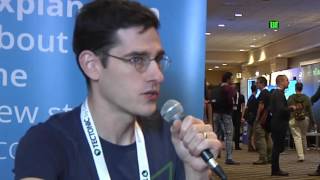
One year ago, Capital One exposed APIs to some of its internal services, such as credit checking and identity management, so they could be used by third parties to augment their own products. APIs, in effect, have become a way that the banking company could expand its business. The company is quickly becoming just as much of a technology company as a financial one In the year since. They have learned a lot about working with APIs and the open source technology, explained Amy Heidersbach, Capital One vice president of developer marketing and platforms, in this TNS Makers interview during SXSW 2017 from the Capital One House at Antone's.
Listen on SoundCloud:
https://soundcloud.com/thenewstackmakers/why-capital-one-opened-its-apis-to-third-party-developers
Watch on YouTube ↗
(saves to browser)
Sign in to unlock AI tutor explanation · ⚡30
Playlist
Uploads from The New Stack · The New Stack · 48 of 60
1
 2
2
 3
3
 4
4
 5
5
 6
6
 7
7
 8
8
 9
9
 10
10
 11
11
 12
12
 13
13
 14
14
 15
15
 16
16
 17
17
 18
18
 19
19
 20
20
 21
21
 22
22
 23
23
 24
24
 25
25
 26
26
 27
27
 28
28
 29
29
 30
30
 31
31
 32
32
 33
33
 34
34
 35
35
 36
36
 37
37
 38
38
 39
39
 40
40
 41
41
 42
42
 43
43
 44
44
 45
45
 46
46
 47
47
 ▶
▶
 49
49
 50
50
 51
51
 52
52
 53
53
 54
54
 55
55
 56
56
 57
57
 58
58
 59
59
 60
60

What's Next for the Cloud Foundry Foundation in 2017 with Executive Director Abby Kearns
The New Stack
How Unikernels Can Better Defend against DDoS Attacks
The New Stack
Weaveworks is Bringing Horizontal Scaling to Prometheus
The New Stack
TNS Analysts Thanksgiving Special: The Evolution of Kubernetes and the Container Ecosystem
The New Stack
How Rancher Labs is Seeing Kubernetes Put to Work in Production
The New Stack
SAP Tests Kubernetes for Cloud-Native Enterprise Software Deployments
The New Stack
Event Marketing for Today's Developer Evangelists and Community Managers
The New Stack
NodeSource Introduces Certified Modules to Improve Node.js Security
The New Stack
How Lightstep is Illuminating the Case for Distributed Tracing
The New Stack
How OpenStack Aims to be More Inclusive without being Exclusive
The New Stack
How Shuttlecloud Saves Time and Money by Monitoring with Prometheus
The New Stack
Creating Analytics-Driven Solutions for Operational Visibility
The New Stack
Understanding the Application Pattern for Effective Monitoring
The New Stack
Building On Docker's Native Monitoring Functionality
The New Stack
The Importance of Having Visibility Into Containers
The New Stack
How Getting Your Project in the CNCF Just Got Easier
The New Stack
Tectonic Summit Pancake Breakfast: How to Sell Kubernetes to the Hypervisor-Minded
The New Stack
The Buzz at Tectonic Summit 2016 in New York City
The New Stack
Bringing Clarity to the Future of Node.js Modules
The New Stack
How FluentD Can Help Monitor Microservice Architectures Through Unified Logging
The New Stack
Reshaping Front End Development with Warehouse.ai
The New Stack
2016 Year End Wrap-Up: Discussing Docker, OpenStack, and Open Source
The New Stack
Here's Why You Should Build a Robot Using Node.JS: Because You Can
The New Stack
How the Node.js Foundation is Utilizing Participatory Governance Models
The New Stack
Set Up an MongoDB Replica Set in Less Than an Hour Using Bitnami Packages
The New Stack
Determining Who Bears the Burden of Ensuring NPM Module Security
The New Stack
How Intel Snap uses Telemetry and Kubernetes to Drive Enterprise Efficiency
The New Stack
How the NFL Scored a Touchdown with its Open Source React Framework Wildcat
The New Stack
Aporeto CEO Dimitri Stiliadis: When it Comes to Security, Context is King
The New Stack
The Buzz at Node.JS Interactive
The New Stack
Why Going Serverless Doesn't Mean 'No Ops'
The New Stack
How Node.js is Transforming Today's Enterprises
The New Stack
JJ Asghar Interview
The New Stack
How Capital One is Using APIs to Streamline Auto Financing
The New Stack
SXSW 2017: How Machine Learning Differs From Regular Programming
The New Stack
SXSW 2017: Data-Driven Applications with Capital One DevExchange's Hydrograph
The New Stack
SXSW 2017: How Good Engineers Make Bad Business Decisions
The New Stack
CloudNativeCon & KubeCon EU Pancake Breakfast 2017: Kubernetes and the Multi-Cloud
The New Stack
CNCF Executive Director Dan Kohn: What's Next for CNCF in 2017
The New Stack
Exploring the Latest Container Runtime Projects in the CNCF
The New Stack
Exploring the Future of the Kubernetes Ecosystem
The New Stack
Kubernetes and Continuous Deployment
The New Stack
Kris Nova of Deis at CouldNativecon/Kubecon in Berlin
The New Stack
Docker's Quest for Simplicity with the Evolution of Containerd
The New Stack
Developers First: The Cloud Foundry Service Broker API and Kubernetes
The New Stack
Mapping the Future of CoreOS's rkt in the CNCF
The New Stack
Red Hat and Dell EMC: Two Perspectives from DockerCon
The New Stack
Capital One Opened its APIs to Third-Party Developers — Here’s What They Learned
The New Stack
SUSE Joins the CNCF, Brings Kubernetes to OpenStack Cloud 7
The New Stack
How Capital One Brings Open Source To The Banking Industry
The New Stack
OSCON Is Coming Back To Portland, A Show Wrapup With Co-Chair Kelsey Hightower
The New Stack
Dev Or Ops Doesn’t Matter, You Need Observability
The New Stack
Taking The Next Steps In Developing An Open Source Culture
The New Stack
SXSW 2017: How Capital One Became Technology-First With Open Source
The New Stack
Apcera Old Apps Spanning New Clouds
The New Stack
Provenance: The Peace of Mind Chef Habitat Seeks to Deliver
The New Stack
InSpec: Human Readable, Automated Compliance
The New Stack
The Evolution of SAP HANA Express
The New Stack
Women Engineers Who Inspire And Never Give Up
The New Stack
Three Perspectives on the Evolution of Container Security
The New Stack
More on: Research Methods
View skill →








Related Reads
📰
📰
📰
📰
On July 1, 2026, arXiv will spin out from Cornell University, its home for the past 25 years, to become an independent nonprofit organization. Major funding support from Simons Foundation and Schmidt Sciences. Ditching the red for their website. [N]
Reddit r/MachineLearning
CS-NRRM™ Official Publications: Paper 1 and Paper 2 Are Now Available
Medium · Data Science
Found a potential mistake in an ICLR 2026 blogpost [D]
Reddit r/MachineLearning
Rebuttals Move Peer-Review Scores, but Initial-Review Structure Bounds the Movement
ArXiv cs.AI
🎓
Tutor Explanation

 DeepCamp AI