Exploring the Future of the Kubernetes Ecosystem
Key Takeaways
The video discusses the future of the Kubernetes ecosystem, highlighting the need for continuous learning, user-centered design, and trade-offs in technology development, with experts Kelsey Hightower and Michelle Noorali sharing their insights on the current state and innovations in the Kubernetes community, including tooling, federation, and operator development, with tools such as Kubernetes, Cooper Nettie, and Helm being utilized.
Full Transcript
Oh hello welcome to the new stack makers a podcast where we talk about at scale application development deployment and management [Music] we'd like to thank cloud native computing foundation for sponsoring our podcast from cloud native Khan Kubek on Berlin thanks very much for the support here we've had a great show [Music] aah Alex Williams was a new stack here at cloud native con Kubek com Berlin here with the two co-chairs of this event here why'd you guys did you do it yourself I'm Kelsey I work on Cooper Nettie's and I'm still learning like everyone here at the conference excellent hi I'm Michelle I'm a developer at jayus and I work on the home project for Cooper Nettie I like that you're still learning always still learning you can't master anything what are you learning I'm learning how to emphasize for people who use the platform right there's technology and then there's people that use it and really matching it to actual real-life workflows versus just saying everyone should just use it real live workflows Michelle what does that mean to you I mean it just means like how and users use the use the tool and and what they need out of it and how they choose to empower their develop the development cycle what are you learning that they're needing now so for example if you're a developer you write an application all you're trying to do is figure out how to get that app in front of the customer right if I show you a bunch of covering any yamo files and trying to teach you all things about Cooper Nettie's you could care less and rightfully so you got things to do so things start to make sense like a day's work flow open shift from Red Hat tectonic from core OS these things that simply trying to put a little bit more on top to get you quicker to your app to running in front of the customer so not just technology but what does the workflow that someone needs to take on it and or the organization itself then right now there is zero on the end of visual you just want to get stuff done how do I make sure that I'm always talking in terms of getting things done versus geeking out on technology so yy-you got why do y'all find their relevant here I mean as that always been true is it is there something about what you you're learning from this event that relevant Michelle Michelle gave a really good keynote about cabernets is still hard for developers and I'll let her explain that in detail yeah I think it's been an incredible journey to just like the two brandies explode people love geeking out over to tribute systems and honestly I love taking out over distributed system but that's a that's a lower level concept that's really interesting and I remember brendan byrne staying at like the first at the very first heat keynote 4tube pine in San Francisco that he envisioned making distributed systems a cs101 problem which means it should be a solved problem that everyone can understand and the thing is if everybody can if this is the soft problem and if we not only just like like geek out over the technology itself if we make it usable for other people then we can empower higher-level users to do things we couldn't even imagine and I think what I just wanted to get across yesterday in the talk that I gave was that you may not know what somebody's thinking or what somebody's idea is or what some of these dreams are but this is so this is what's so great about technology is that you can you don't know who you're going to empower but if you make your technology useful if you empathize with like the next level then you can empower people and be really surprised what is is that also then the trappings isn't that a trap to where you're you're trying to like trade you're making a trade off there right I mean you're you're trying to like make it easier to use but there's trade-offs in like then being able to then understand the underlying complexities isn't there I think when it comes to trade offs this is why there's so many people here from the community vendors sponsors all these people will operate at different levels of that so for some customers easy is a pad and they're going to want open shift right or dais workflow some people easy means a well-documented API so they can build their own integration that's easy for them so for me when I'm talking to people I'm asking them what are you trying to do and some people say hey we're trying to build a machine learning platform on top of Cooper Nettie so they may not necessarily want a task like open they may say I want it easy to build my own custom tools on top of Coober Nettie what would help me is better client libraries and documentation zhan the API so are you finding a lot of people are rolling their own versions of you know like building their own distributed systems and kind of building their own systems we actually talk about people like building when they build tools on top for example to do machine learning for you know you know for instance is that is that something that you are all either you all are seeing Michelle you've seen people really trying to build things themselves here I'm seeing people really get on board with two brunetti is because it so well supported and wonderful platform that a lot of people are really passionate about I think that people just want to take that to the next level so I do see people building tooling and I hear about it all the time in a fig that I lead we see demos every single day of incredible tools that people people fill just to just to understand or use to burn a tease for their particular use case I do see a lot of that yeah so I think the reason why people are building tools is the real question like if you have a Linux system I'm going to write a bunch of shell scripts to make it usable for you in Cooper Nettie's when you get it for the first time you're like wow how do I manage TLS certificate with less than 50 so then either a you're going to go build that on top of to renee's yourself or go find some project on github that does and it's kind of early days so we haven't solved every use case right we have some tools that are starting to emerge some patterns that are starting to emerge but I'm getting people here they're trying to do high-performance computing on Cooper Nettie so these are people coming from a different set of tools coming into our community and seeing gaps because that is not the typical target customer so now they'll telling you hey we're building these things to fill the gaps that we had before that's why they're building some of these things and it makes sense for now okay so so because it strikes me is interesting that there's this build your own tool you know culture really around Cooper Nettie's right where it makes sense right you need to build things that's fix your specific infrastructure demons right but is that is that also a that also creates a whole nother level of complexity doesn't it I mean if you're trying to like you know we're able to build your own tools now and now now it's like you know I think of it this way actually is having this conversation last night so if you look at like the early days of distributed systems and you saw the Twitter's of the world and the face up to the world and they had to find way to scale out their technology so they had to build their own right there was nothing out there for them they couldn't buy this up off the shelf right so now we're getting that now we're going to place where there's more there's more catered there's more people more we working with more companies who are building out scale-out systems right and so does that mean that the tooling do they have to build is similar to the process that the Twitter the years path had to go through or is it or are we at this point now where the tooling is just a little bit easier to do because all that hard work is done before yeah I think we got to get really clear about what people are building so if you take an iphone you're not going to build libraries to do graphics processing you're not going to build Liberia and you touch sensors right that's what the iphone four hottie and John where are you just going to build an app that can take your finger out of a new payment because that's a platform that's Givens right Kerber Nettie's also brings developer way up here yes and the thing you will build is like you know a couple hundred lines allow crew bearnaise to talk to some new system to do something internally so that's the distinction there's a there's a there's a difference in scale here and Greek base so it's not necessary difference of scale all those people in our community that built those systems that like Twitter they're also contributing you know from various companies to give us all on new library set and this is this is how it works like you get a programming language a new programming language you go back to see not a lot of standard library so you built your own json parser XML parser HTTP server golang comes out there's an included HTTP server this included JSON parser so now you start to import those and then you'll build things on top of that so we just see the foundation keep moving up as things progress so when you say it's early days Michelle what do you how do you think of these as early days what is your you know how do you clarified in your own mind that these are early days so it's actually something that healthy just mentioned people are building components and tools that that don't exist yet that other people will need and then they're sharing them and so I think these are early days because you don't see a lot of opinion in these tools it's like oh I just need to like fill the gap you know for much to deploy our particular application like what gaps for example well I work on home cooper a nice package manager and the idea is with kubernetes you can install yellow files and then you have to like keep track of those yellow files and that's really tedious so we just make that whole thing easier and so you can think of your yellow files working together as a logical application and install that all together and manage the lifecycle of your application so that's a such a pretty pretty simple thing that that people need and then people build tools around that for their particular pipeline mm-hmm how do you see these as early days like what you like what questions are you getting that that dead that leads you to believe that these early then there's no best practices people come to me that Kelsey where's the best practice I was like there is nothing there's not enough practice for there to be a best so we're learning from you like my talk today around Federation we have an idea the idea is a proposal it wasn't based necessary on people using Cooper Nettie's that way for 10 years so it's not a best practice right most of this stuff is a proposal here's what I'm thinking and you're going to try it out for a while and time will tell was that a mistake that it caused more pain than it's all so that's how you know in the early days but there's an obvious thing to do you read well I think there's a few things like if you have a stateless application you can run three commands and that will be available for people but when it comes to like a database what is the best practice for running postgres onto burnetii you have ten different people you can get 15 different answers exactly right right right so what are some of the the hard problem you see people are trying to solve right now out of a you know out of this show how does this show different than the last troop economy you attended in terms of those hard problems that people are trying to solve this is a date to conference if you look at most of the talks just centered around not necessarily Cooper Nettie but the day to things like Korra was talking about operators how do you build these smart things that manage things like clothes dress helm showing off how do you package these applications for reusability how do you secure your cluster for the long term so it's not just about oh I have a proven a cluster let me show it to you it's more like I've been running coverage for a year and here's how we solve the things that eventually come up in that situation yeah Chelsea hit it husband L right on the head as i think that metaphor but yeah exactly k 2 is the conversation we're seeing now at the first 2 chron in san francisco people are asking what is a tuber Nettie's and what is the pod and and now we're having conversations about what are best practices you know how what are the patterns and that I think that is really telling that's an interesting point I I think that you bring up it's like you know often what you need to understand first is how you know what is the language right you know and how how do you think about the language right and how do you think about the different ways that the technology is described right how do you think about that it sounds like that what we're past that point right now people understand pause they understand these know a little bit better now we're getting into like this is next phase or we're starting to understand try to understand what the patterns are what are those patterns that you that you find interesting are you starting to see that strike you as maybe not outliers but more in a bit more about actually what you reflect the direction of the of the overall ecosystem itself I think one of the most clear patterns we have right now is around building like this concept of an operator like if you want to add functionality to cover Nettie's let's not try to integrate it into core anymore we don't need to make core any bigger than it is now we need to make that bulletproof and the eco system do its thing and that pattern is starting to take shape now there's a name for it we call it an operator right Korres corn the term but it's really the way Cooper days works internally right it has these control loop so now when people say hey let's encrypt will allow you to have a certificate for every app how do you integrate it oh I know a config map third-party resource and a control loop there you go and everyone is using that pattern to give new functionality to occur benetti's cluster and that's how you see people adopting new ideas and I think that is a very clear way of extending to burnet are you seeing any specific patterns I strike you as you know as a thematic that you know the related like the direction of Cooper Nettie's ecosystem overall yeah I think again Chelsea really hit the nail on the head that's the phrase right yeah okay yeah you're seeing that internally with the urban oddities as well with the aggregated API servers proposal so if you want to add functionality to pernetti's yourself at runtime you can do that too they're giving you the ability to do that instead of adding it through brunetti to make to make it your own if you need that that's that's really interesting to me particularly but it's the same pattern that a extra Brandy's is talking about that kelsey is talking about excellent okay I'm so looking forward so you know for you know beyond the conference what are going to be some of the things that you're going to go away with and you want to you know have conversations people about you know to spend kind of the discussions that you had here I took notes on the new people to our community that have read previous blog clothes from other people so starting to learn they're starting to come in at a higher level than what is a pot mm-hmm so they're kicking the tires and getting success a little quicker and they're interesting day to problems like hey my company has this and I'm asking them why are you asking the same questions over and over again we have a communication problem right now right we have slack as a communication mechanism is it serving people correctly do people in the community that have experienced that they have the right platform to communicate out so what can we do as kind of leaders in that community to give them the right platform whether they're speaking at coop calm weather we highlight their blog post or we help them get their contributions into cabernets incubated project so what can we do to give voices to other people in the community who are solving problems closer to our users Michelle when girion you're gonna you're going to leave here you're gonna get on that plane and you're gonna fly on home what are you going to be thinking about what are you going to be what are you going to be thinking about the conversations you want to have going for I'm really passionate about developer experiences in particular i had my histories in application development in web development and the talk that I gave was about empowering developers and so the call to action from there was to join the cig and have discussions on how we can create these best practices and what kind of schooling's we want to see and how we make that happen so I think that's not something my focus and empowering New Year's accusers I've had a lot of people come up to me asking me how they can get involved and I've pointing point of them in the right direction I think to sig and that's that's kind of the entry point in the two brand new community so I'm going to follow along with their journey and see how that goes for them and we can iterate on that process welcome LC Michelle thank you so much for taking some time to talk in a great conference you know I think people really got a lot out of it so a great job awesome thank you [Music] we'd like to thank cloud native computing foundation for sponsoring our podcast from cloud native Khan Kubek on Berlin [Music] you
Original Description
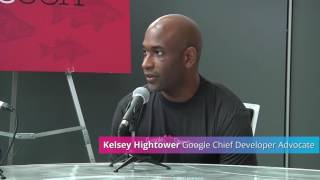
On today's episode of The New Stack Makers, TNS founder Alex Williams caught up with Kelsey Hightower, Google developer advocate, and Michelle Noorali, Deis Software engineer, at CloudNativeCon/KubeCon EU. Hightower discussed the need to, "Never stop learning," adding that he is currently focused on learning how to empathize with people using the Kubernetes platform. In stark contrast to last year's event, both Hightower and Noorali noted that the 2017 CloudNativeCon/KubeCon EU conference was less about the newness of running a Kubernetes cluster, but more about day two issues such as managing long-term cluster security, building one's own toolkit for working with Kubernetes, and operators.
Listen on SoundCloud: https://soundcloud.com/thenewstackmakers/exploring-future-kubernetes-ecosystem
Watch on YouTube ↗
(saves to browser)
Sign in to unlock AI tutor explanation · ⚡30
Playlist
Uploads from The New Stack · The New Stack · 41 of 60
1
 2
2
 3
3
 4
4
 5
5
 6
6
 7
7
 8
8
 9
9
 10
10
 11
11
 12
12
 13
13
 14
14
 15
15
 16
16
 17
17
 18
18
 19
19
 20
20
 21
21
 22
22
 23
23
 24
24
 25
25
 26
26
 27
27
 28
28
 29
29
 30
30
 31
31
 32
32
 33
33
 34
34
 35
35
 36
36
 37
37
 38
38
 39
39
 40
40
 ▶
▶
 42
42
 43
43
 44
44
 45
45
 46
46
 47
47
 48
48
 49
49
 50
50
 51
51
 52
52
 53
53
 54
54
 55
55
 56
56
 57
57
 58
58
 59
59
 60
60

What's Next for the Cloud Foundry Foundation in 2017 with Executive Director Abby Kearns
The New Stack
How Unikernels Can Better Defend against DDoS Attacks
The New Stack
Weaveworks is Bringing Horizontal Scaling to Prometheus
The New Stack
TNS Analysts Thanksgiving Special: The Evolution of Kubernetes and the Container Ecosystem
The New Stack
How Rancher Labs is Seeing Kubernetes Put to Work in Production
The New Stack
SAP Tests Kubernetes for Cloud-Native Enterprise Software Deployments
The New Stack
Event Marketing for Today's Developer Evangelists and Community Managers
The New Stack
NodeSource Introduces Certified Modules to Improve Node.js Security
The New Stack
How Lightstep is Illuminating the Case for Distributed Tracing
The New Stack
How OpenStack Aims to be More Inclusive without being Exclusive
The New Stack
How Shuttlecloud Saves Time and Money by Monitoring with Prometheus
The New Stack
Creating Analytics-Driven Solutions for Operational Visibility
The New Stack
Understanding the Application Pattern for Effective Monitoring
The New Stack
Building On Docker's Native Monitoring Functionality
The New Stack
The Importance of Having Visibility Into Containers
The New Stack
How Getting Your Project in the CNCF Just Got Easier
The New Stack
Tectonic Summit Pancake Breakfast: How to Sell Kubernetes to the Hypervisor-Minded
The New Stack
The Buzz at Tectonic Summit 2016 in New York City
The New Stack
Bringing Clarity to the Future of Node.js Modules
The New Stack
How FluentD Can Help Monitor Microservice Architectures Through Unified Logging
The New Stack
Reshaping Front End Development with Warehouse.ai
The New Stack
2016 Year End Wrap-Up: Discussing Docker, OpenStack, and Open Source
The New Stack
Here's Why You Should Build a Robot Using Node.JS: Because You Can
The New Stack
How the Node.js Foundation is Utilizing Participatory Governance Models
The New Stack
Set Up an MongoDB Replica Set in Less Than an Hour Using Bitnami Packages
The New Stack
Determining Who Bears the Burden of Ensuring NPM Module Security
The New Stack
How Intel Snap uses Telemetry and Kubernetes to Drive Enterprise Efficiency
The New Stack
How the NFL Scored a Touchdown with its Open Source React Framework Wildcat
The New Stack
Aporeto CEO Dimitri Stiliadis: When it Comes to Security, Context is King
The New Stack
The Buzz at Node.JS Interactive
The New Stack
Why Going Serverless Doesn't Mean 'No Ops'
The New Stack
How Node.js is Transforming Today's Enterprises
The New Stack
JJ Asghar Interview
The New Stack
How Capital One is Using APIs to Streamline Auto Financing
The New Stack
SXSW 2017: How Machine Learning Differs From Regular Programming
The New Stack
SXSW 2017: Data-Driven Applications with Capital One DevExchange's Hydrograph
The New Stack
SXSW 2017: How Good Engineers Make Bad Business Decisions
The New Stack
CloudNativeCon & KubeCon EU Pancake Breakfast 2017: Kubernetes and the Multi-Cloud
The New Stack
CNCF Executive Director Dan Kohn: What's Next for CNCF in 2017
The New Stack
Exploring the Latest Container Runtime Projects in the CNCF
The New Stack
Exploring the Future of the Kubernetes Ecosystem
The New Stack
Kubernetes and Continuous Deployment
The New Stack
Kris Nova of Deis at CouldNativecon/Kubecon in Berlin
The New Stack
Docker's Quest for Simplicity with the Evolution of Containerd
The New Stack
Developers First: The Cloud Foundry Service Broker API and Kubernetes
The New Stack
Mapping the Future of CoreOS's rkt in the CNCF
The New Stack
Red Hat and Dell EMC: Two Perspectives from DockerCon
The New Stack
Capital One Opened its APIs to Third-Party Developers — Here’s What They Learned
The New Stack
SUSE Joins the CNCF, Brings Kubernetes to OpenStack Cloud 7
The New Stack
How Capital One Brings Open Source To The Banking Industry
The New Stack
OSCON Is Coming Back To Portland, A Show Wrapup With Co-Chair Kelsey Hightower
The New Stack
Dev Or Ops Doesn’t Matter, You Need Observability
The New Stack
Taking The Next Steps In Developing An Open Source Culture
The New Stack
SXSW 2017: How Capital One Became Technology-First With Open Source
The New Stack
Apcera Old Apps Spanning New Clouds
The New Stack
Provenance: The Peace of Mind Chef Habitat Seeks to Deliver
The New Stack
InSpec: Human Readable, Automated Compliance
The New Stack
The Evolution of SAP HANA Express
The New Stack
Women Engineers Who Inspire And Never Give Up
The New Stack
Three Perspectives on the Evolution of Container Security
The New Stack
More on: Kubernetes
View skill →









Related AI Lessons
⚡
⚡
⚡
⚡
The AI Moat Paradox: The Better Models Become, the Less Models Matter
Medium · AI
170,927 AI Papers Reveal the Biggest Research Shifts of the First Half of 2026
Medium · Machine Learning
170,927 AI Papers Reveal the Biggest Research Shifts of the First Half of 2026
Medium · Data Science
[PoV] When Everyone Is Smart, No One Is
Medium · AI
🎓
Tutor Explanation

 DeepCamp AI