The Buzz at Tectonic Summit 2016 in New York City
Skills:
Staying Current in AI80%
Key Takeaways
The video discusses the latest news and trends in the container and orchestration communities, including Docker's donation of Containerd, CoreOS's shift from containers to Linux, and AWS's open sourcing of software, with a focus on the impact of these developments on the industry.
Full Transcript
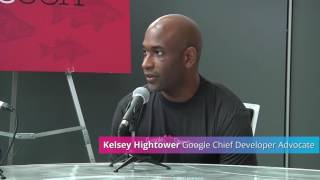
[Music] hi my name is alex williams founder of the new staff and you're listening to the new stock analyst podcast a show about application development and management at scale thanks for joining us it's alex williams of the new staff here for a gear end show at tectonic summit in New York City and here with one of the original co-anchors of the show co-host Donnybrook holes up 451 research hey Donnie hey good to be here and Joe Jackson managing editor at the new stack and now a frequent host on this show as well and comic Donald who is an advisor to the new stack and you know someone who's been in this world a long time thanks for joining us Kyle free from me you bet so we're going to do things a little bit differently today we're going to we're going to actually discuss three different themes and just kind of have a general conversation about it so we're here at tectonic someone and core Wes announced that they are no longer using the term core OS Linux but they're going to instead use container linux as a subject as the description of their service docker has announced that they are going to be donating container d which is their new runtimes we're going to discuss that and then we're going to discuss AWS and open source so the first topic container Linux go ahead well just write off the box it strikes me that core OS with that move is seemingly may be shifting its emphasis a bit from being an alternative darker to be to being alternative to red hat so different laughs cuz the last last summer right at summit basically they made the redhead made the argument that you know containers are really part of a smaller part of a much larger strategy and that strategy it's a feature of Linux so to speak rather than its own sort of ecosystem and so that's kind of what i read into the dis announcement but i've been hearing similar themes from other parties that were allies with korres kelsey Hightower talk about linux right and saying thank you know there's always going to be a different kind of a container out there right in Red Hat has a similar kind of a story to it seemed like there seems to be some concerted effort to drive the discussion almost away from containers and more to making it about Linux yeah I mean you've clearly got a lot of vested interests here and companies trying to say hey this isn't anything revolutionary this is really just what we've been doing all along and so you know whether it's a red hat or whether it's you know the devil EMC Federation companies or anybody else in the mix they all very much interested in saying hey a container is just a vm with a different twist right you maintain this group of container is just like you maintain a linux distro and we've got all this expertise over here we can fly over there right it's all about trying to build Enterprise enterprise credibility and you know for the big folks trying to keep up with with little startups that are moving a lot faster than they typically can I think there's a couple of different takes on right so that's one angle I think you know the rename to container Linux there's a lot of subtleties in it when is you've got one which is saying this is the standard right this is how you do it is a very definitive title I smart oh you know prepare to attack occurred to you know who bought to you compared to everybody else out there saying no this is how you do it right um and I think it's also interesting like putting linux into it is i gotta kind of interesting right because it is pulling that that particular part of the core OS you know product Roger climb back down the stack the very definitively label that is like this is the OS this particular project about right right before you could have in like all core OS on windows okay all right why not but if its container Linux that's clearly not going to happen I mean I think the shift out of containers and into linux for core OS on this product is an interesting this an interesting signal I think this year we watched the you know when you thought of how you were going to deploy containers as an enterprise we might have had one plan starting in January might have had a different plan come end of August you might have looked that plan very differently you know today right and when you think about an enterprise market you can't have your customers right it's a developer as manager right as an enterprise buyer you can't be changing your mind or looking at your strategy and having them change so much three times right so come back to the Linux world seems fairly straightforward and then the other piece but I find really interesting and a little bit concerning is you know it's been a long time in around open source software open source foundations and one of the frequent issues that comes up when you're talking about things like what was the foundation do it handles money it also handles copyrights a trademarks Tanner Linux is a very weak trademark and I think there's going to be a lot of trouble in defending that kind of trademark like the kind of challenges that Mozilla has run into over the years where you get downloads that are being sold of Firefox and some shady third-party making money off of it you know there's the potential for the same kind of thing here but it's much less defensible because I have the container linux as a generic term right it's not a term that core OS can come up with and say oh we're the only company that could possibly do this if not unique so there's I think some legal concerns here I'm let you know have implications that I think haven't really been thought about at this point now is there any sort of significance or not to the I know Microsoft has recently really got into the whole container getting a bandwagon in particular I know uh apprentice working on a version of Cooper Nettie's eventually get to communities to control containers on windows server though it's in itself it's so in around on linux and then its recent connect conference microsoft was all about rolling containers into its own CIC to pipeline it's there a kind of state is core OS putting a stake in the ground by saying no this is containers are about linux or is it just everybody's working on cooper Nettie's right now it's all happening at the same time that's a good question i mean there's a lot of different perspectives on the sort of containers or about infrastructure containers or about applications thing oh my lord on the panel this morning the committee's panel where you had you know Jonathan Donaldson from 10-12 saying containers are an applica KU Nettie's is an application layer thing OpenStack is an infrastructure layer thing right a container is kind of the meeting point and I think that's going to be the case for a lot of different groups on as this whole sort of DevOps thing is hitting the mainstream now right you've got to figure out what is the meeting point for all of these different groups involved application infrastructure security QA across the business and I think from a technological perspective on the meeting point is containers all right and that's increasingly the way going forward and right now it tends to be a lot of forklifted apps but it's moving toward you know cloud native applications microservices whatever you want to call them and i think there's going to be a lot of you know vendera participation coming from different angles to handle different aspects of that problem right in core OS is I think very as you say very purposefully positioning to say we're going to handle the infrastructure that problem as with you know container Linux and then the question is so what about the rest of it hmm and there's a lot of different lenders trying to address trip apartheid whether it's you know security scanning of containers container networking we've got my tag area here who's pushing things like calcio and final and so on is this a common way for both developer knobs to better understand you know what this means that summers back is there some subtlety there and the you know in the description yes I mean I think if you if you are a developer and you've been trying to figure out how to put containers to work and what exactly containers look like in your in your development workflow and and let's face it that outside of Silicon Valley in sort of a couple of bleeding edge cases what we're really talking about is you know 2017 that market finally becoming mature enough that they can really start to put those to work container Linux might be the first tangible way to associate those two things that you know starts to become mainstream that's really interesting is this self-driving container Linux what we're talking about here you know that we also heard this term unsettled right it wasn't self-driving inner self osten so to slightly slowly different things but uh yeah one of the announcements that coral s made me this week is you know their their version of coover Nettie's can now update itself basically using the tools within cooper Nettie's which makes it easier to for admins who previously had to write scripts or do this stuff manually now they can apply their cooper Nettie's expertise and automating the cumin a nice update and you know Cooper Nettie's s gets up table oh yeah there's no down time either again like chorus original or us now container Linux it can update itself with no downtime so yeah that seems to be the direction that is this technology's headed in I guess we'll have to find out whether this is actually no just a name or you know what this actually means let's uh move on to our next topic and that's container d and docker as spun out its core container runtime component and we are just starting to understand what this story is all about but Joe can you give us a brief on what this is yeah I can tell you what little I know I'm supposed to talk with talker later on today but basically container d is is Dockers new it's their current or container runtime component and it's already open source but what they want to do is release it to a vendor what kind of mutual standards body they specifically didn't call out oci specifically but they will use the oci standard and when ocio 10 the runtime that's available I guess early next year it will be 0 CI compliant now uh when I understand that the container d is built on run c which is the oci standard I'm not like I says supposed to talk to them later on today uh but I'm still not there making a big deal with this i'm still understand fully understand the significance of this announcement i don't know Donnie and he's thought about it at all so what what they're trying to do here yeah I think there's a few important trends involve rights and I talked to them there two ago and the story i got was basically what this is a continuation of the ongoing work we've been doing toward increasingly modular rising all of Dochart write the entire software stack for containers all the way up and down right Runcie was the start of it which in many ways was driven by vendor pressure from core OS and others since we're at the core OS tectonic summit here and you know in some ways like we've seen that continuing of docker the company trying to ensure that it can keep up with the broader ecosystem optics are a little law to startups everything to move wood faster he's trying to add value on top of it and so you saw a couple months ago you know Red Hat kind of pushing the idea can we pull in just run c indyk urban eighties all right as sort of a response do you hungered bundling swarm into the core talker release mmm and now in many ways this helps address some of the bundling challenges there and some of the concerns that we heard from the community which are one on your bundling too much stuff right right to you are adding brand new stuff into what's being branded as a stable release and both of those things created a lot of complaints concerns from enterprise users of saying look we need something stable but the facebook logo or motto from you no fears back was move fast and break things and now it's good fast with stable in front yeah i think there's an interesting if you think about this right going back to you know what we were just talking about with container linux and sort of that evolution this the sort of fits into that into that area right we're starting to see how you know we had a container runtime you know at the beginning of the year that lasted through the air container g really is at least from the docker perspective things it gives them the vmware like capabilities that they like to tout and a lot of their enterprise plays things like live migration right and so to have those that set of functionality that they've been providing as part of their enterprise story now in sync with oci or OCC that's really interesting like that's that's setting up 2017 to be a great year for a developer because it means that those two things are back to being in sync and that there's a model for keeping them in sync right so frankly that's a that's a really strong move I think on the docker you know front and I think that also sets up a very interesting dynamic change in the container market where these are now no wonder opposing forces but frankly it's going to be a story about how to get them on track together it's just going to quote talk of a darker fork I'm certainly going to do a lot to address that oh and there's always concerns coming up but we're gonna for Curt we're going to for Kate we're going to fork it right and it's I was hard to nail down did these talks happen or what's going on is this something that's reelers it's just you know the ongoing concerns of you know unspoken interest in the community or whatever it happens to be right it was really interesting Donnie when you talked about docker in their approach you know kind of being around modularizing docker right and and I hear that word modularizing and I think of a lot of different things but one of the things that is coming very clear out of this right is that that modularity is giving them the flexibility the question is what do you fork now right are you forking a specific module all right that's a very frank upfront discussion that's a very different thing than sort of having to fork the large blob that we were you know when you talk about it six to twelve months ago this is what what effect this is having oci does it have any impact on us yet I think it's largely a good thing right like container Diaz is consuming Runcie internally at those high standard and so it's going to help perpetuate that like the more container d gets out there the more Ron sigas out there uh-huh I'm the to work and their art I think some interesting potential threats in there in that if the standard becomes something that's let's say only internally facing it's no longer an interesting standard right if container d is the unit of modularity but who cares about how container detox to itself alright and so now you let you start to wonder are lots not the standard that matters anymore the standard that matters now is to container dapi right and what does not look like and where does that live right and then they've talked about you know finding the right home for this it's not us yea though we are doing I know well when I spoke to them they basically said look we're trying to get community input on this we've got a lot of ideas but we don't want to do community about Yeah right we're trying to do this right and understand where the community wants to end up which kinds of foundations it might be whether it's a new one or one of the many existing ones you know a cloud native compute foundation is a potential any of the large ones you know apache linux foundation and so on so is this an effort did do an end run around oci in some respect yeah i think so mm-hmm because you know standards I mean they inevitably slow things down and so it's always a little bit nicer to control your own standard well I think things change when you go from defining the standard to having to match the standard right and build to a standard right great well let's it I think that settles in special for now Elise on container d our third topic is AWS and open source we're following a aw screen event which just happened just a few weeks ago and AWS is talking more about open source is it real is it not what do you guys think i think is it's very real as far as i can tell at this point i mean we've seen amazon let's say two years ago you would say they are very inimical to open source right they hate the stuff they're not going to answer any of their own stuff they won't talk about whether they even pulled in service projects in house to build their own their products but things have gradually started to change all right and it started with as it often does you know SDKs integrations that kind of stuff but it's that road is gradually much changing right they open source machine learning software they've open sourced some TLS software right and that was actually what I think the first example was a piece of TLS software they open sourced a while back and now they've got box right which is very interesting the context of this discussion because you know what's happening here is everybody I think assumed Oh amazon is going to go in on kerbin 80s right because everybody else has in the past year so of course that's going to be the way they did they go but instead that it's only totally different they built out their own project right or series of projects to provide you know coolant functionality so that's a zit equivalent because it will be it's not there yet like right now it's minimal scheduling it's not the whole drum so it's a scheduler but I take it they want input at for additional functionality from the outside or they'll put up the scaffolding and no other still in what they eat or is that a general idea blocks like uh yeah I think so and I mean they've got you know they hired a drink on crop recently right who was that battery ventures and previously chief architect on Netflix so he's got deep credibility and cloud and just a week ago they hired Zita Borat who's got a deep history and open source from Salesforce Google open source office back to Sunday she was one of the key people behind open office Oh Karen so they're seriously investing in doing this right and not doing you know throw it over the fence style open source and instead doing in a very community driven participatory that's out yeah you familiar with the kind of like the the chain of command here at AWS and like who does agent report to you know that's a really good question i'm not sure yeah a bit curious on that because i mean one of the things i've heard is that yes they are very very serious about it and you know but i I'm just trying to you know do we really have any idea what that actually means that you know how song we are they are hundred percent i would say dependent on open source right they have built open source into so many different parts of the AWS infrastructure at least that we've from the outside world can see right things as simple as amazon linux right which is powering a lot of their you know data stuff um a lot of their services like though they offer my sequel equivalent service they offer our postgres equivalent service be even they offer open source software and various guises yeah that they're heavily reliant on it yeah so Davina to the extent that internally within a business at amazon i looked you know if you were to look at this as a manager of amazon and say you know what are the biggest risks to my business right any slowdown in the open source ecosystem could have a massive impact right or change frankly and investment patterns on who's developing and where they're developing in that open source ecosystem right because you as Amazon it you know you're offering this is a service now you're reliant on that developer pool to continue advancing fixing and patching it and if not then you're going to be doing it yourself right and so for them you know i would say open source has got to be probably you know square on the agenda staring them in the face whether that comes in the form of we need to add investment to help development happen in certain projects and so we need to work with certain companies to get that done right the mechanisms by which they're they're managing that open source that I think we're seeing change I think that's what blocks looks like to the outside world it's funny though that dumb well it's funny but it same time it's obvious that take why they didn't go Cooper Nettie's is because no it's google's as Google's born at Google anyway but also Cooper Nettie's is actually as the threat of commoditizing cloud services it's right now there's no way of sharing doing the work load across your different cloud services Coover Nettie's might be an easy way of doing that and so blocks seems to be well you know it's an answer that well this yeah this is not goober Nettie's it's something else I don't know how you could use blocks outside of aw so I've been asking myself wire or you know why are they doing this and one that beers I have is like they've built up enough of a market right down or there that's strong enough or they this is they can do this right and now they can offer this as kind of this supplemental is this supplemental thing you know you know to make them more amenable I'm wondering you know though do we have any idea to what extent they're going to do this I mean you know as lambs are going to be open sourced is it you know are they going to like you know does this mean new things for you know no 44 how they view you know their whole book you know their whole offerings I mean you have any clue and you know how how far they're going to take this I think it's hard to have a clue but you can think about like file pointed out about what's the rationale for all this stuff and kind of speculate based on that which is how do they get more people running more stuff more basic infrastructure and data services on their file right because that's that's what they're making money off of right now is data and compute right on probably data more so than anything else I mean everything else is pull through right like you look at new software like x-ray or stuck functions all the stuff is try and figure out how do we get more core we're close or more brand new work clothes there well so entire truck fill up the truck full of data well yeah yeah and so now they've got um you know lambda edge right you can run line to function to CN you can get the the suitcase the snowball and stuff on there in your own data center if you want to but at the end of the day it's all about how do you get that stuff gradually migrating into the public cloud and so would an open source lambeth do that I don't think so because they've already now got on something that you can run on Prime and that was that's the same benefit an open source language ride mm-hmm and the challenge if that were to happen is well now any service provider out there it could provide not just a lambda like functionality but lambda itself and I don't think that's something that would be in their best interests how this is that how does this affect the open source community overall does it have any kind of larger impact that you know that way that we can see and I'm also curious about the existing AWS ecosystem that seems to you know get a little you know well such as seems it did get you know you got piece by piece by you know by AWS every time it comes around to this time of year when we hear Werner on be Theory event talking about what you know what to do stuff right we're sets of startups are now obsolete yeah yeah I think so with a particular it's definitely introducing addition fragmentation into the container registration of management system which is going to create more confusion right on the part of end users all right which is going to cut market share of everybody and so you know how does that boil down well it it looks like wow this is so confusing we'll just go to our cloud provider right or we'll lose get some trust offender and so I think that those who are most affected are probably the startups and not so much established vendors is the more confusion there is the more people are gonna look at somebody that trust well I think that about sums up our discussion for today we discussed core OS Linux which is now container Linux we discussed Dockers a container d and what they are the implications of that and AWS and open-source great discussion guide and why I like this format this is a lot of fun Donnie Burke holes thank you very much for joining us have a have a great holidays and we'll see in the new year job as usual you know thanks for being part of all this whole new stack thing we're doing and these podcasts been a lot of fun and Kyle always love to have you on the show so hope to see you again soon so that that's a wrap from here at tectonics of it I'm Alex Williams will we got to them soon that's again my name is Alex Williams founder of the new stack and you're listening to the new stack analyst podcast a show about application development and management at scale thanks again and I hope to see you back at the show bye-bye [Music]
Original Description
The D in ContainerD stands for daemon and a whole new shift in the ever subtle and not so subtle mechanics the container and orchestration communities. This news from Docker is one of three topics we explore in The New Stack Analysts. We start with a conversation about CoreoOS and Container Linux, Docker's major news about its shift in strategy and plans to donate ContainerD to what it calls a neutral standards body. We finish with thoughts about AWS and the questions surfacing about its forays into the open source world.
Listen on SoundCloud: https://soundcloud.com/thenewstackanalysts/tns-analysts-show-115-the-buzz-at-tectonic-summit-2016
Learn more at: https://thenewstack.io/tns-analysts-show-115-buzz-tectonic-summit-2016/
Watch on YouTube ↗
(saves to browser)
Sign in to unlock AI tutor explanation · ⚡30
Playlist
Uploads from The New Stack · The New Stack · 18 of 60
1
 2
2
 3
3
 4
4
 5
5
 6
6
 7
7
 8
8
 9
9
 10
10
 11
11
 12
12
 13
13
 14
14
 15
15
 16
16
 17
17
 ▶
▶
 19
19
 20
20
 21
21
 22
22
 23
23
 24
24
 25
25
 26
26
 27
27
 28
28
 29
29
 30
30
 31
31
 32
32
 33
33
 34
34
 35
35
 36
36
 37
37
 38
38
 39
39
 40
40
 41
41
 42
42
 43
43
 44
44
 45
45
 46
46
 47
47
 48
48
 49
49
 50
50
 51
51
 52
52
 53
53
 54
54
 55
55
 56
56
 57
57
 58
58
 59
59
 60
60

What's Next for the Cloud Foundry Foundation in 2017 with Executive Director Abby Kearns
The New Stack
How Unikernels Can Better Defend against DDoS Attacks
The New Stack
Weaveworks is Bringing Horizontal Scaling to Prometheus
The New Stack
TNS Analysts Thanksgiving Special: The Evolution of Kubernetes and the Container Ecosystem
The New Stack
How Rancher Labs is Seeing Kubernetes Put to Work in Production
The New Stack
SAP Tests Kubernetes for Cloud-Native Enterprise Software Deployments
The New Stack
Event Marketing for Today's Developer Evangelists and Community Managers
The New Stack
NodeSource Introduces Certified Modules to Improve Node.js Security
The New Stack
How Lightstep is Illuminating the Case for Distributed Tracing
The New Stack
How OpenStack Aims to be More Inclusive without being Exclusive
The New Stack
How Shuttlecloud Saves Time and Money by Monitoring with Prometheus
The New Stack
Creating Analytics-Driven Solutions for Operational Visibility
The New Stack
Understanding the Application Pattern for Effective Monitoring
The New Stack
Building On Docker's Native Monitoring Functionality
The New Stack
The Importance of Having Visibility Into Containers
The New Stack
How Getting Your Project in the CNCF Just Got Easier
The New Stack
Tectonic Summit Pancake Breakfast: How to Sell Kubernetes to the Hypervisor-Minded
The New Stack
The Buzz at Tectonic Summit 2016 in New York City
The New Stack
Bringing Clarity to the Future of Node.js Modules
The New Stack
How FluentD Can Help Monitor Microservice Architectures Through Unified Logging
The New Stack
Reshaping Front End Development with Warehouse.ai
The New Stack
2016 Year End Wrap-Up: Discussing Docker, OpenStack, and Open Source
The New Stack
Here's Why You Should Build a Robot Using Node.JS: Because You Can
The New Stack
How the Node.js Foundation is Utilizing Participatory Governance Models
The New Stack
Set Up an MongoDB Replica Set in Less Than an Hour Using Bitnami Packages
The New Stack
Determining Who Bears the Burden of Ensuring NPM Module Security
The New Stack
How Intel Snap uses Telemetry and Kubernetes to Drive Enterprise Efficiency
The New Stack
How the NFL Scored a Touchdown with its Open Source React Framework Wildcat
The New Stack
Aporeto CEO Dimitri Stiliadis: When it Comes to Security, Context is King
The New Stack
The Buzz at Node.JS Interactive
The New Stack
Why Going Serverless Doesn't Mean 'No Ops'
The New Stack
How Node.js is Transforming Today's Enterprises
The New Stack
JJ Asghar Interview
The New Stack
How Capital One is Using APIs to Streamline Auto Financing
The New Stack
SXSW 2017: How Machine Learning Differs From Regular Programming
The New Stack
SXSW 2017: Data-Driven Applications with Capital One DevExchange's Hydrograph
The New Stack
SXSW 2017: How Good Engineers Make Bad Business Decisions
The New Stack
CloudNativeCon & KubeCon EU Pancake Breakfast 2017: Kubernetes and the Multi-Cloud
The New Stack
CNCF Executive Director Dan Kohn: What's Next for CNCF in 2017
The New Stack
Exploring the Latest Container Runtime Projects in the CNCF
The New Stack
Exploring the Future of the Kubernetes Ecosystem
The New Stack
Kubernetes and Continuous Deployment
The New Stack
Kris Nova of Deis at CouldNativecon/Kubecon in Berlin
The New Stack
Docker's Quest for Simplicity with the Evolution of Containerd
The New Stack
Developers First: The Cloud Foundry Service Broker API and Kubernetes
The New Stack
Mapping the Future of CoreOS's rkt in the CNCF
The New Stack
Red Hat and Dell EMC: Two Perspectives from DockerCon
The New Stack
Capital One Opened its APIs to Third-Party Developers — Here’s What They Learned
The New Stack
SUSE Joins the CNCF, Brings Kubernetes to OpenStack Cloud 7
The New Stack
How Capital One Brings Open Source To The Banking Industry
The New Stack
OSCON Is Coming Back To Portland, A Show Wrapup With Co-Chair Kelsey Hightower
The New Stack
Dev Or Ops Doesn’t Matter, You Need Observability
The New Stack
Taking The Next Steps In Developing An Open Source Culture
The New Stack
SXSW 2017: How Capital One Became Technology-First With Open Source
The New Stack
Apcera Old Apps Spanning New Clouds
The New Stack
Provenance: The Peace of Mind Chef Habitat Seeks to Deliver
The New Stack
InSpec: Human Readable, Automated Compliance
The New Stack
The Evolution of SAP HANA Express
The New Stack
Women Engineers Who Inspire And Never Give Up
The New Stack
Three Perspectives on the Evolution of Container Security
The New Stack
More on: Staying Current in AI
View skill →





Related AI Lessons
⚡
⚡
⚡
⚡
Docker Explained: From “What Even Is This” to Deploying a Full-Stack App
Medium · DevOps
I Used to Pay for Cloud Servers. Then I Found a Way to Run One Free, 24/7
Medium · AI
KEDA 2026: Event-Driven Autoscaling Patterns That Shrank Our AWS Bill by 40%
Medium · DevOps
AWS CloudFormation and CDK Explained: Infrastructure as Code on AWS
Medium · DevOps
🎓
Tutor Explanation
 DeepCamp AI