Why #GitHub Embraces Competitor Integrations | #SoftwareDevelopment #Coding #Developer #Shorts
Key Takeaways
GitHub's COO Kyle Daigle discusses the importance of encouraging tool integrations, even with competitors, to drive better products and reinforce GitHub's vision as a home for all developers.
Full Transcript
throughout like modern software development, more people building more tools is only a good thing for software developers. And I know sometimes that comes off as like a throwaway, but it's true. I don't use the same coding editor that I used when I started. Things change, things evolve, you know, and that gets us to a better place where I'm able to write better code or I get to solve problems I couldn't solve before. And I think, you know, every time we're able to like open up more or allow integration or partner with other companies and teams to integrate, you know, their products in or push them to continue to open and integrate. It's only a net positive for software devs. And so, when we say, you know, GitHub's the home for all developers, there's something really meaningful to that in what could just be a throwaway tagline. It's that to be the home you have to invite everyone in. And there's moments and discussions and strategy where that's scary, right? Where, you know, you realize, well, if we do that, then ultimately we're allowing for folks to actually have developer choice, something we care about, but it can be scary when you're running a product business, you know? At the end of the day, it drives us to, you know, figure out, okay, well, who exactly are we trying to serve? How can we make that better? And how do we make it so that we're choosing to use our tool, not that you have to use the tool because, you know, it was purchased or like, you know, whatever. But developer first means when your employer buys GitHub, you, the developer, have to love to use GitHub, not just the person who made the decision to buy it, you know? And so, when there's other, you know, IDEs, other AI tools, other coding agents, that's all fine because, I mean, ultimately, as we've done many, many times now, we create APIs and we, you know, let you use your data how you'd like. We let you, you know, you're going to use whatever observability tools, CI tools, etc. And, you know, slowly but surely, that will continue to be the way we kind of write the next chapter of GitHub. We figure it out and we open it up and developers will always choose, and fighting that is a losing battle because then, you know, there's moments where you are the only tool, you're the best tool, you're the tool du jour, you know, but you have to let, you know, devs are going to devs have to choose. I don't want anyone telling me what terminal to use or what IDE to use, what computer to use, what operating system to use. Like, there's different reasons for different people, and that's I think what makes our, you know, kind of career so unique.
Original Description
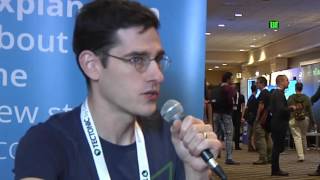
GitHub's COO Kyle Daigle explains to The New Stack's Frederic Lardinois why encouraging more tools and integrations — even with competitors — is a net positive for software developers. He discusses how this philosophy drives better products and reinforces the "home for all developers" vision.
Watch on YouTube ↗
(saves to browser)
Sign in to unlock AI tutor explanation · ⚡30
Playlist
Uploads from The New Stack · The New Stack · 0 of 60
← Previous
Next →
1
 2
2
 3
3
 4
4
 5
5
 6
6
 7
7
 8
8
 9
9
 10
10
 11
11
 12
12
 13
13
 14
14
 15
15
 16
16
 17
17
 18
18
 19
19
 20
20
 21
21
 22
22
 23
23
 24
24
 25
25
 26
26
 27
27
 28
28
 29
29
 30
30
 31
31
 32
32
 33
33
 34
34
 35
35
 36
36
 37
37
 38
38
 39
39
 40
40
 41
41
 42
42
 43
43
 44
44
 45
45
 46
46
 47
47
 48
48
 49
49
 50
50
 51
51
 52
52
 53
53
 54
54
 55
55
 56
56
 57
57
 58
58
 59
59
 60
60

What's Next for the Cloud Foundry Foundation in 2017 with Executive Director Abby Kearns
The New Stack
How Unikernels Can Better Defend against DDoS Attacks
The New Stack
Weaveworks is Bringing Horizontal Scaling to Prometheus
The New Stack
TNS Analysts Thanksgiving Special: The Evolution of Kubernetes and the Container Ecosystem
The New Stack
How Rancher Labs is Seeing Kubernetes Put to Work in Production
The New Stack
SAP Tests Kubernetes for Cloud-Native Enterprise Software Deployments
The New Stack
Event Marketing for Today's Developer Evangelists and Community Managers
The New Stack
NodeSource Introduces Certified Modules to Improve Node.js Security
The New Stack
How Lightstep is Illuminating the Case for Distributed Tracing
The New Stack
How OpenStack Aims to be More Inclusive without being Exclusive
The New Stack
How Shuttlecloud Saves Time and Money by Monitoring with Prometheus
The New Stack
Creating Analytics-Driven Solutions for Operational Visibility
The New Stack
Understanding the Application Pattern for Effective Monitoring
The New Stack
Building On Docker's Native Monitoring Functionality
The New Stack
The Importance of Having Visibility Into Containers
The New Stack
How Getting Your Project in the CNCF Just Got Easier
The New Stack
Tectonic Summit Pancake Breakfast: How to Sell Kubernetes to the Hypervisor-Minded
The New Stack
The Buzz at Tectonic Summit 2016 in New York City
The New Stack
Bringing Clarity to the Future of Node.js Modules
The New Stack
How FluentD Can Help Monitor Microservice Architectures Through Unified Logging
The New Stack
Reshaping Front End Development with Warehouse.ai
The New Stack
2016 Year End Wrap-Up: Discussing Docker, OpenStack, and Open Source
The New Stack
Here's Why You Should Build a Robot Using Node.JS: Because You Can
The New Stack
How the Node.js Foundation is Utilizing Participatory Governance Models
The New Stack
Set Up an MongoDB Replica Set in Less Than an Hour Using Bitnami Packages
The New Stack
Determining Who Bears the Burden of Ensuring NPM Module Security
The New Stack
How Intel Snap uses Telemetry and Kubernetes to Drive Enterprise Efficiency
The New Stack
How the NFL Scored a Touchdown with its Open Source React Framework Wildcat
The New Stack
Aporeto CEO Dimitri Stiliadis: When it Comes to Security, Context is King
The New Stack
The Buzz at Node.JS Interactive
The New Stack
Why Going Serverless Doesn't Mean 'No Ops'
The New Stack
How Node.js is Transforming Today's Enterprises
The New Stack
JJ Asghar Interview
The New Stack
How Capital One is Using APIs to Streamline Auto Financing
The New Stack
SXSW 2017: How Machine Learning Differs From Regular Programming
The New Stack
SXSW 2017: Data-Driven Applications with Capital One DevExchange's Hydrograph
The New Stack
SXSW 2017: How Good Engineers Make Bad Business Decisions
The New Stack
CloudNativeCon & KubeCon EU Pancake Breakfast 2017: Kubernetes and the Multi-Cloud
The New Stack
CNCF Executive Director Dan Kohn: What's Next for CNCF in 2017
The New Stack
Exploring the Latest Container Runtime Projects in the CNCF
The New Stack
Exploring the Future of the Kubernetes Ecosystem
The New Stack
Kubernetes and Continuous Deployment
The New Stack
Kris Nova of Deis at CouldNativecon/Kubecon in Berlin
The New Stack
Docker's Quest for Simplicity with the Evolution of Containerd
The New Stack
Developers First: The Cloud Foundry Service Broker API and Kubernetes
The New Stack
Mapping the Future of CoreOS's rkt in the CNCF
The New Stack
Red Hat and Dell EMC: Two Perspectives from DockerCon
The New Stack
Capital One Opened its APIs to Third-Party Developers — Here’s What They Learned
The New Stack
SUSE Joins the CNCF, Brings Kubernetes to OpenStack Cloud 7
The New Stack
How Capital One Brings Open Source To The Banking Industry
The New Stack
OSCON Is Coming Back To Portland, A Show Wrapup With Co-Chair Kelsey Hightower
The New Stack
Dev Or Ops Doesn’t Matter, You Need Observability
The New Stack
Taking The Next Steps In Developing An Open Source Culture
The New Stack
SXSW 2017: How Capital One Became Technology-First With Open Source
The New Stack
Apcera Old Apps Spanning New Clouds
The New Stack
Provenance: The Peace of Mind Chef Habitat Seeks to Deliver
The New Stack
InSpec: Human Readable, Automated Compliance
The New Stack
The Evolution of SAP HANA Express
The New Stack
Women Engineers Who Inspire And Never Give Up
The New Stack
Three Perspectives on the Evolution of Container Security
The New Stack
More on: AI Systems Design
View skill →



Related AI Lessons
⚡
⚡
⚡
⚡
What 116 court judgments taught me about the limits of AI
Medium · AI
Your ChatGPT History Is a Liability. I Fixed That With a $80 Chip and a Pi5.
Medium · AI
Your Skepticism About AI Is an Asset. Here’s How to Use It.
Medium · Programming
The Dark Side of AI: What We Lose When We Stop Thinking
Medium · AI
🎓
Tutor Explanation

 DeepCamp AI