A Paradigm Shift in App Delivery
Key Takeaways
The video discusses the paradigm shift in app delivery, focusing on Citrix's new application delivery and security service, Epic, and its intent-based approach to simplify application deployment and security. The service utilizes technologies like Citrix IPM and GSLB to provide internet state visibility and optimize application hosting.
Full Transcript
hey everyone hope all is well out there in the land of developers operations pros and the rest hope you're finding your application delivery working up to snuff and if not you might want to listen to our speaker today pankaj gupta senior director of product marketing at citrix hello pankaj how are you i'm doing wonderful alex and glad to be here with you great so our topic is application delivery and you're describing it as this shift in application delivery that we're seeing and we're going to go through a presentation so why don't we just get right into it thank you alex it is the time to relook at it application delivery and security infrastructure to really modernize it we see two things as a huge market transition happening as we speak first is that application experience is evolving as a new currency for differentiation new currency for customer intimacy engagement employee productivity and i think recently the pandemic has made every digital business a experienced delivery company for that and if you talked about transition to cloud and sas few years back everybody was going towards it but the question now is that how fast i can move and how confidently and reducing the risk i can achieve with transition to cloud and science it's opening lot of new opportunities and challenges for each one of you one of them is that it seems to be in a perpetual catch-up mode with the business i.t complexity continue to increase and id has a feeling that they are not in their locker staff with business and internet has evolved as a new enterprise the application experiences the businesses are delivered over internet but internet status still remains a big blind spot for application delivery even today when you are watching the podcast this application this experience is being delivered over the internet experience depends on internet of state which is continuously dynamic and the third challenges which we hear from our customers is the fragmented application and api security so this is the time to look at your application delivery infrastructure and take a new radical approach to build new ide new application delivery and security infrastructure and that's the reason citrix is introducing a new application delivery and security service which is a radical shift how applications are delivered for your users for that just a quick question we're going to get into kind of this topic around in being intent driven the history of low balancers go back to the 90s and back in the 90s they were pretty much hardware based and so uh and so is this is this approach you're taking software based or could you to help us understand kind of the the premise behind it yes so load balancers has been here for two decades and they have become a fundamental uh requirement for application delivery but market has seen a huge transition moving from uh hardware capacity constraint boxes to more software form factors with citrix has brought it like the vpx and then they evolved into add more functionalities like integrating the security application uh protection api protection bot management into that and then they also evolved to available in a container form factor so they are as well as the bare metal versions but now where the market is moving is towards services because everybody is looking for a very simple way to deploy and consume the application delivery infrastructure for that and that's where we are this new service is a pure fast service which we call it epic citrix application delivery and security service and more importantly this is also industry's first intel driven application delivery and security service and it is a paradigm shift not just for today but it is also a platform for the next decade how applications will be delivered from the cloud now when we talk about intent based environments that's more declarative environment as i understand in the history of low balancers back in the day it was a little bit like uh you know it's all manually done you know you had to like configure the servers one by one and you had to get them you know um you know working uh in concert that way and so we have seen you know in in the overall market the advent of of declarative infrastructure and so the intent then is to have an outcome uh you know that is really driven by automation you know and so what what makes the intent-based approach that you're doing different than than other uh declarative approaches you are absolutely right uh alex intern based networking has been in market for a couple of years and they have touched intern based on decorative intent in routing switching and wireless other infrastructure but the benefits and implementation of internet based infrastructure hasn't come to the application delivery uh until recently biocitrics is introducing and i'm going to answer the question in two parts what makes a difference and and the second part is that giving you a real life example this new citrix interim driven application delivery and security service is built on four human principles and the biggest human principle is intent driven as a human we identify intent and translate into a discrete actions like when i want to go on a vacation i book my flights i book my hotel book recreational activities and when i come back i review everything the video went to the plan did i exceeded the visit and then helps me to plan the next vacation back exactly like this this service takes the intent or kpis which you define into this new uh gui for this service and this service automatically takes that intent and translates into the policies and those policies are translated into the discrete configurations across the whole infrastructure so it radically simplifies but intent is not a one-time activity intent has to be continuously enforced over a period of time and that's where the three remaining human principles coming the first one is always loving as human we learn all the time what is new happening or what is changing around our environment similarly this service constantly monitors with lot of telemetry end to end that what is changing or what states are changing or is there any disruptions or outages in applications the servers adc as well as internet and cyber title but as a human we evolved not just by learning we evolved as a human by always adopting things and that's exactly this service does is that when it learns that so many changes happening your end-to-end service it continuously does the optimization automatically and if you want to do that automation or for continuous optimization this service it also has a built-in capabilities of self-feeling the many of the outages which may happen in the infrastructure we can take care of that maybe we can discuss a little bit later into uh this discussion forum and the third is the as a human we protect our most valuable assets it could be our life of our family or the watch which your mom gave you similarly this service protects the any digital enterprises most valuable assets which is applications and api so when you combine these four things together as a human principle the internet human always learning always adopting always protecting we believe this is a paradigm a shift which we are bringing with a singular goal to simplify when we talk about simplified let's take a real life example here today when you want to deploy applications in let's say in any public cloud that configuration or deployment is manual most of it it's error-prone and most important issue is it includes a lot of gas work let's take an example of in a public cloud like aws you want to build the application delivery infrastructure you have to select the ec2 instance type there are 200 of them and you have to guess the right one you have to select the adc instance type configure application servers to add map dns and the primary reason for the customers to move to the cloud-based deployment is that take a benefit of auto scale but the challenge with auto scale is that again you have to do a lot of gas work of cpu memory throughput thresholds into that and if your intent or requirement change you go back to the square one and repeat that cycle multiple times all those manual and guess work which happens today you can now say no to that gas work you can say no to that slow manual error from configuration so we take out the complexity almost every step of application delivery on day zero and day two in this and we believe that with this kind of a awesome automation we can improve the operational efficiency up to 60 percent because you define the intent and this service does best of it by translating that intent into policies and to the configuration and if your intent changes just go and change it and we do rest then your intent could be as simple as that i want to offer this kind of a latency that i should demand for these x number of application in this why number of geographies or countries so we are super excited about it because this is built for i t to focus on business rather than on the syntax what is it so is the data being pulled from the application itself and seeing its stress loads yes abs absolutely because we have a strong inherent uh a lot of telemetry capabilities all the way from uh servers from the where the applications are uh hosted to the adc's looking at their utilization the internet visibility let me give you one example of that as i said this is a continuously learning and adapting to the changes or degradation or the outages that are happening in your end-to-end infrastructure because we believe that it is humanly impossible to monitor the global network and fix problems uh real time manually to meet those slas which you want to deliver a best experience for that we want to help our customers to optimize continuously with less id intervention what customers tell us is that three different places where we see these uh biggest state changes happening one is application server degradation over the period of time because of some outages or hardware or software issues performance goes down this service continuously monitors all the time all the application servers and then if there are any performance issues it can remove that server from load balancing automatically so the sre or iit need not to get a call in the middle of the mind for that but if they're not ready yet for this full self-driving mode we can still send a message to the admin with the prescription that this server is seeing performance issues you would like to remove that from the load balancing server pool for that so there's the degradation there's that exhaustion that comes when the man fluctuate the fluctuations and then there's the internet state changes that come where latency increases and this is a much bigger issue now with distributed architectures isn't it yes yes and that's the reason uh we bring more value to the customer to get the end-to-end uh closed-loop automation for that and it's a combination of continuous optimization feeling but that liver is in the customer's hand how much they want the service to do it for them or they just want a notification and they want to do it themselves so but our whole goal is to help it to optimize continuously with less and less i.t intervention great there's a lot of good slides here so why don't we move on to the next one where you're talking about uh internet state visibility yes this is the huge huge pain point for every customer which we talked and i think this is a huge transformational shift which you are bringing how application delivery infrastructure surveyed as you know that internet estate is dynamic it is changing frequently what changes latency changes availability changes the throughput uh changes and it has no control because internet is not built by one company it is a collective but your application experience depends on this always changing dynamically internet state and that impacts user experience in turn it impacts user engagement business growth and gslvs which have been here for last two decades are still remain internet state blind for that and that is changing completely now citrix had a great technology called citrix ipm technology which monitors internet on almost real-time basis this service monitors up to 10 billion data points per day one billion user session 50 000 networks across all kinds of cdn isps public cloud providers across 200 plus countries we are bringing that crystal ball to look into internet and then that crystal ball of that insight helps you to not just better plan design and optimize for that let me show you some of the examples of that it's not about what you know it's about what you can do with it first thing which we hear from our customers that when they want to deploy is a application delivery the most difficult and controversial question comes into that where what locations i deploy these application servers and today it is a completely guess what most of the time customers say okay i have a customer base in europe and america and certain countries maybe i put one hosting location there that's a guesswork there what we are giving now our customers is a crystal ball a data driven decision making tool for that where they can come and decide to play around with this student to run the scenarios that what if i put my application servers in aws london and tokyo and how the latency heat map really looks like that's what you see in the left hand side scenario one the green means lower latency the red means higher latency for that and then you can see that which markets you are in and then also also understand the average global latency in scenario you want to say okay what if i had a u.s west in sydney and you see that u.s becomes much cleaner of course australia becomes much greener certain parts of asia becomes much cleaner and of course north america is super super green here so that gives you uh simulation tuned with the real-time data of 10 billion data but also having historical data into that and then you bring the sequence of that with what if i enable an internet aware gslb which we are introducing and included in this new service so with this it now can simulate various scenarios to choose the right optimal location for their application host and also optimized with two very conflicting internet one is the better user experience and second one is the investment needed for uh so many places to host the applications for that so now it has a data driven decision making tools even before they deploy anything and they can run this simulation anytime they want to do it and this is not about just 0-1 this is also about a day two environment also because citrix continuously makes the recommendations for the best sites to application hosting even after deployment has been done have been running for some time for that so this is the real real insightful data driven crystal ball tool which we are giving our customers to do this nothing like this exists in the market so that's a huge value proposition which we are bringing with planning design the next value proposition is another huge outstanding as i said before that gslv have been here for two decades but they don't have internet state visibility the current model of gsmb is very very primitive it is primitive because it only selects the pop or replication server with a geographical distance let me give you a scenario here let's say you rolled out a new application in japan but in japan you have not put the application servers yet but you have application servers in seon which is much physically closer to that so it may pick up the cl servers to deliver application in japan but cl servers may not have enough bandwidth isp maybe having some problems maybe serving that content from seattle server would have been far far better for them the current gslvs cannot do that today because of the very basic geoproxy now with this citrix itm technology integration with that gsmb has become not internet state aware but also make it very actionable now it can select the pops or the application hosting location which delivers the lowest latency for each user and of course once you are inside that it selects the best application server which might have the fewest effective connections you can optimize another beauty of this is that this helps you to optimize for each and every individual user that's the mass specialization which we are bringing that intelligence into that we believe that when you bring this industry's first gslv which has an actionable internet state visibility i team can feel more confident to deliver much better experience at global scale for that so this is a software-based approach correct absolutely customer doesn't have to buy any hardware this is delivered from cloud this is a service it will be available to start with in aws and azure and we will be adding more uh public cloud support as we move forward this is in public review which you can try and it will be available for uh commercial deployment or general availability in early january 20 20. we have about 10 minutes left pankaj so let's let's uh let's find some slides that really tell the story here is there the next one or do you see something else there yes so intent is not just about application delivery we are extending that intent to application security also and our primary goal is for i.t and our devops team to focus more on the business rather than keeping the lights on so we are also integrating three very strong application and api security built into this which is also an option which customer can add on to the service so we bring a state-of-the-art web application firewall which we bring the api protection also into that and also the bot management all three pieces together into that so this is all integrated giving you a suite of application and api protection for simplicity they are built through a single pass architecture so it gives you a better performance and lower latency so that option is available to our we are more customers about is that how we extending that same intel based networking to application and api security what we hear from our customers is that they want to have a ssl certification quality slabs for a plus ssl certification today's implementation methodology for a plus certification is very manual first you have to understand what is a plus certification requirements are you have to keep track of them then you have to translate that certification requirement into that your environment that requires a skill set then you have to manual configuration can be error from repetitive time consuming and most importantly boring for it to be honest and then you have to manually monitor the compliance function yeah so now you can configure it automatically right and that's defining the ssl policies that means uh what else we are giving the easy button so in the ui of this new service there is a simple button and you say that i want ssl certification to be deployed press yes and once you do that it automatically does the rest of it it defines the right ssl uh policies translate those policies into configuration pushes that configuration to each and every nac then continuously also monitor on the ssl transactions and reports any ssl mismatch from that i think this is a quantum shift how the next generation application in api security infrastructure but it is a small step but a big step for application in api security and we continue to add more and more functionality we have very vibrant roadmap to bring more functionalities into that but out of the gate it is still a fundamental shift how it and devops team have to think about application delivery and security for that all right we got a few minutes left what what what are the big points you want to hit before we before we go i just wanted to uh summarize with the very simple slide which we call it a bullet slide which binds all the pieces together this service comes with a single dashboard to help you design you saw how helps you to design what is the right server location helps you to deploy with internet based and it gives you the amazing insights because we had as a huge telemetry all across you define intent best stuff is done by the service by translating into policies and those policies are translated into configuration which goes to the adc it is a very expansive self-learning capabilities from applications to application servers adc internet as well as the use of devices so we continuously learning about the baselines trends anomalies estate changes uh cyber threats and always adopting with all those changes in the not just international uh changes or infrastructure species but also changes into demand and intent and the cyber threats and for cyber threats is always protecting with a comprehensive solution of web application firewall api protection and bot management because with that you can continuously optimize and self heal forward and we believe it is a hugely hugely differentiated solution in the market places intern driven awesomely automated does a continuous optimization self-feeling it is the industry's only service which has an actionable internet state awareness for application delivery and helps you across the whole life cycle of design deploying optimize and also have a pretty holistic application in api protection built into that i strongly encourage the viewers to try this service so it is available for public preview now and it will be available in ga in january 2020. thank you so much for this demo today i'm loving the descriptions and the the approach you've taken i want all our listeners to and viewers to take a look if they're interested in application delivery and we're always interested in your feedback on topics such as load balancing there's a lot of new innovation in this space with uh with with application delivery as we started thinking more about what is the application what is the services that compose the application and so these application delivery mechanisms i expect will be changing and all kinds of good things i expect from citrix in the coming months and years ahead thank you alex so thank you so much monkaj and we'll be back again soon [Music] you
Original Description
https://thenewstack.io/
The challenges associated with optimizing application delivery and security infrastructure in today’s increasingly cloud-centric world are especially palpable among DevOps teams.
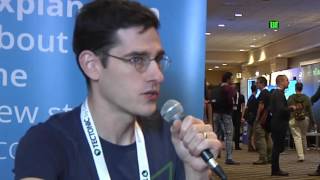
In this The New Stack Maker podcast, Pankaj Gupta, senior director of product marketing at Citrix, discusses why a radical change for application delivery is necessary with Alex Williams, founder of The New Stack.
Watch on YouTube ↗
(saves to browser)
Sign in to unlock AI tutor explanation · ⚡30
Playlist
Uploads from The New Stack · The New Stack · 0 of 60
← Previous
Next →
1
 2
2
 3
3
 4
4
 5
5
 6
6
 7
7
 8
8
 9
9
 10
10
 11
11
 12
12
 13
13
 14
14
 15
15
 16
16
 17
17
 18
18
 19
19
 20
20
 21
21
 22
22
 23
23
 24
24
 25
25
 26
26
 27
27
 28
28
 29
29
 30
30
 31
31
 32
32
 33
33
 34
34
 35
35
 36
36
 37
37
 38
38
 39
39
 40
40
 41
41
 42
42
 43
43
 44
44
 45
45
 46
46
 47
47
 48
48
 49
49
 50
50
 51
51
 52
52
 53
53
 54
54
 55
55
 56
56
 57
57
 58
58
 59
59
 60
60

What's Next for the Cloud Foundry Foundation in 2017 with Executive Director Abby Kearns
The New Stack
How Unikernels Can Better Defend against DDoS Attacks
The New Stack
Weaveworks is Bringing Horizontal Scaling to Prometheus
The New Stack
TNS Analysts Thanksgiving Special: The Evolution of Kubernetes and the Container Ecosystem
The New Stack
How Rancher Labs is Seeing Kubernetes Put to Work in Production
The New Stack
SAP Tests Kubernetes for Cloud-Native Enterprise Software Deployments
The New Stack
Event Marketing for Today's Developer Evangelists and Community Managers
The New Stack
NodeSource Introduces Certified Modules to Improve Node.js Security
The New Stack
How Lightstep is Illuminating the Case for Distributed Tracing
The New Stack
How OpenStack Aims to be More Inclusive without being Exclusive
The New Stack
How Shuttlecloud Saves Time and Money by Monitoring with Prometheus
The New Stack
Creating Analytics-Driven Solutions for Operational Visibility
The New Stack
Understanding the Application Pattern for Effective Monitoring
The New Stack
Building On Docker's Native Monitoring Functionality
The New Stack
The Importance of Having Visibility Into Containers
The New Stack
How Getting Your Project in the CNCF Just Got Easier
The New Stack
Tectonic Summit Pancake Breakfast: How to Sell Kubernetes to the Hypervisor-Minded
The New Stack
The Buzz at Tectonic Summit 2016 in New York City
The New Stack
Bringing Clarity to the Future of Node.js Modules
The New Stack
How FluentD Can Help Monitor Microservice Architectures Through Unified Logging
The New Stack
Reshaping Front End Development with Warehouse.ai
The New Stack
2016 Year End Wrap-Up: Discussing Docker, OpenStack, and Open Source
The New Stack
Here's Why You Should Build a Robot Using Node.JS: Because You Can
The New Stack
How the Node.js Foundation is Utilizing Participatory Governance Models
The New Stack
Set Up an MongoDB Replica Set in Less Than an Hour Using Bitnami Packages
The New Stack
Determining Who Bears the Burden of Ensuring NPM Module Security
The New Stack
How Intel Snap uses Telemetry and Kubernetes to Drive Enterprise Efficiency
The New Stack
How the NFL Scored a Touchdown with its Open Source React Framework Wildcat
The New Stack
Aporeto CEO Dimitri Stiliadis: When it Comes to Security, Context is King
The New Stack
The Buzz at Node.JS Interactive
The New Stack
Why Going Serverless Doesn't Mean 'No Ops'
The New Stack
How Node.js is Transforming Today's Enterprises
The New Stack
JJ Asghar Interview
The New Stack
How Capital One is Using APIs to Streamline Auto Financing
The New Stack
SXSW 2017: How Machine Learning Differs From Regular Programming
The New Stack
SXSW 2017: Data-Driven Applications with Capital One DevExchange's Hydrograph
The New Stack
SXSW 2017: How Good Engineers Make Bad Business Decisions
The New Stack
CloudNativeCon & KubeCon EU Pancake Breakfast 2017: Kubernetes and the Multi-Cloud
The New Stack
CNCF Executive Director Dan Kohn: What's Next for CNCF in 2017
The New Stack
Exploring the Latest Container Runtime Projects in the CNCF
The New Stack
Exploring the Future of the Kubernetes Ecosystem
The New Stack
Kubernetes and Continuous Deployment
The New Stack
Kris Nova of Deis at CouldNativecon/Kubecon in Berlin
The New Stack
Docker's Quest for Simplicity with the Evolution of Containerd
The New Stack
Developers First: The Cloud Foundry Service Broker API and Kubernetes
The New Stack
Mapping the Future of CoreOS's rkt in the CNCF
The New Stack
Red Hat and Dell EMC: Two Perspectives from DockerCon
The New Stack
Capital One Opened its APIs to Third-Party Developers — Here’s What They Learned
The New Stack
SUSE Joins the CNCF, Brings Kubernetes to OpenStack Cloud 7
The New Stack
How Capital One Brings Open Source To The Banking Industry
The New Stack
OSCON Is Coming Back To Portland, A Show Wrapup With Co-Chair Kelsey Hightower
The New Stack
Dev Or Ops Doesn’t Matter, You Need Observability
The New Stack
Taking The Next Steps In Developing An Open Source Culture
The New Stack
SXSW 2017: How Capital One Became Technology-First With Open Source
The New Stack
Apcera Old Apps Spanning New Clouds
The New Stack
Provenance: The Peace of Mind Chef Habitat Seeks to Deliver
The New Stack
InSpec: Human Readable, Automated Compliance
The New Stack
The Evolution of SAP HANA Express
The New Stack
Women Engineers Who Inspire And Never Give Up
The New Stack
Three Perspectives on the Evolution of Container Security
The New Stack
More on: AI Systems Design
View skill →



Related Reads
📰
📰
📰
📰
Why I Built a Trading Marketplace for Monopoly GO Players
Medium · Startup
How to Launch Your Own Custom Headwear Line in Europe
Medium · Startup
Why Kenya’s revived golden visa matters for venture investors and founders
TechCabal
How I Went From Employee to Founder — What Nobody Tells You
Medium · Startup
🎓
Tutor Explanation

 DeepCamp AI