Vinod Khosla on AI’s High Costs, Circular Financing, and Massive Energy Needs | Oct 22, 2025
Skills:
AI Systems Design80%
Key Takeaways
Vinod Khosla discusses AI's high costs, circular financing, and massive energy needs
Full Transcript
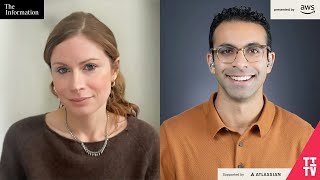
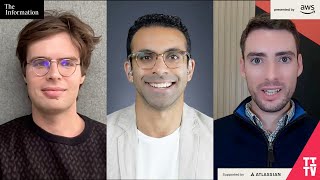
Welcome everyone to the information ti. My name is Akash Pasicha. It is Wednesday October 22nd. We have got a great show planned for you today. We have got Benode Kosla coming on the show for a discussion about what he thinks of all of these circular financing deals in AI and who is best positioned to challenge Nvidia. We're then going to talk about our new story out today about what creators think of Tik Tok and Tik Tok Shop's new advertising strategy. Plus, we've got a great opinion piece up on the site today about how AI can improve the shopping experience. I'll be joined by the author Lee Hassla Chen, founder and CEO of Howell. And finally, we'll end with a conversation with the leaders of Campus, a fully online for-profit college backed by the likes of Sam Alman and Shaquille O'Neal. We've got a busy show to get to, so let's get right on into things. Benode Kosla is one of the best known venture capitalists in Silicon Valley. His firm Kla Ventures is of course an early investor in OpenAI but really it has become one of the broadest portfolios in venture capital having backed fintech companies like Stripe, consumer companies like Door Dash, space companies like Varta and several companies in the energy and biotech sectors. Last night, I sat down with Venote to ask him about how he sees AI companies grappling with high costs and what he thinks of all of these circular financing deals and also how we're going to satisfy all the power that AI is going to need. It was a great conversation and I'm excited to play it for you. Here is my interview with Benode Kosla. >> Benode, welcome to TITV. It's great to have you here. >> Well, it's always exciting to be here. So before we get started, I just want to set the stage a little bit because our subscribers at the information know your career very well. Uh they will know that you don't consider yourself as much of a venture capitalist as you do a venture assistant. Uh they will know that you believe that AI is going to replace 80% of jobs in the long run. And they will also know that you are a steadfast optimist and one of the guiding mantras in your career has been that skeptics never did the impossible. And so with all that in mind, I want to zoom in on that third point because it feels like right now even for people who are very bullish on AI the technology, there is enough reason to be at least somewhat skeptical on AI the business. And so where I want to start the conversation is Veno, is there anything that you are skeptical about right now? >> Well, to start with, I think if you're going to do something significant, you're going to have to be an optimist, but not only just an optimist, a knowledgeable optimist. U there's too many skeptics who live in the past and we'll extrapolate the past to invent the future. that's a bad thing to do. Inventing the future you want is the right way and optimism is key to that. Having said that, I think the one thing I don't know and there's things I can reasonably project and things I can be uncertain about. The thing I'm uncertain about is timing of various breakthroughs that we expect to see in the next two years, 5 years, 10 years. Almost certainly it's easier to predict predict AI in 2035 and pos probably 2030 than it is to predict it today and what will happen next year. >> Right? So I'm I'm not skeptical but I'm less certain >> about the pace of development of certain capabilities that are essential to expanding use of AI. >> Right. Well, let's talk about the the current state of play. I want to get a little bit more granular here for a moment. One of the topics that has been talked about a lot in our coverage are the margins that a lot of these companies have on their AI products, whether it's cloud services or even AI application companies. And one of the challenges that we've highlighted in our coverage is that margins are slim right now and companies are finding ways to expand them. How do you think this goes in the long run? I think the way to look at margins is when AI is a substantial business. Yes, it's large business, tens of billions of dollars, but it's not hundreds of billions of dollars. And so the question to ask is where will margins stabilize? Uh I think some of it depends on R&D breakthroughs by the various companies and uh knowing who gets what breakthrough which is as I said uncertain with respect to who and timing. Uh I'm pretty optimistic about what OpenAI is doing. I do think if you provide value and you have differentiated models uh you will have good margins. Look at the pace at which pricing is declining both in supplying inferencing to the AI companies and the price at which things are sold. Uh it's hard to predict the dynamics but it will settle down. and >> good returns on capital uh invested. So I'd be surprised if we don't have healthy increasing margins well into the into the early 2030s and and and and which of the two levers do you think is more likely to get pulled on most? The idea that will costs go down for these chips that are very expensive right now or on the flip side we had one of your founders on the show Amjad Masat from Replet. He talked about this idea that the models might not get cheaper, but rather he's looking to actually increase his prices to widen his margin. So if you think about what people are willing to pay and then the cost of the chips, which one of those two levers do you think is most likely to widen margin in the next couple years? >> So there's a number of ways in which cost of supplying inference will go down. One, chips will become more economical in per inference. I do think the algorithms will get much better which means the software will get better in the amount of compute needed uh per inference. So there's two vectors you can make the algorithms 10x more more efficient over time. I think that will happen. The cost of chips will go down uh for a given number of inferences. Uh so both those are vectors for cost reduction. The question of pricing uh on the input side what customers will pay uh will be a function of value. If Amjad and I'm I love that company and what Amjad is doing if he keeps adding more and more value he will be able to charge more. So that's a question of value addition and that's where there's lots of headroom. >> You know when you're taking something that costs say a professional an accounting professional for example or um or a design product designer and you're paying them$100 to $300 an hour and your cost is $1 to $3 an hour. You have lots of pricing room. if you can complete provide more complete solutions. So I do think a price per hour of worker time equivalent will increase pretty dramatically also as will uh as will the decline in costs per in so this model this business will be healthy starting let's say 2030 and beyond when scale data centers will be in operation how do you square that with this matter of enterprise software companies for example uh buyers of enterprise software I'm talking about businesses in general they are struggling to find the value right now at least on an ROI basis for much of this AI software I mean the reason I'm asking the question is because we're talking about raising prices they're not seeing the value right now they're much they're very slow to adopt this AI software so how do you square those two realities right now So you have to look at a couple of factors. One, where is value being provided? Great. In software development, it's absolutely great value. So companies like Replet and Cognition, which we are both investors in, cursor included, all growing very very rapidly, >> uh because they're adding real value. Uh so there are functions in which the product isn't complete or mature and so you need almost so much handholding the economics break down. I would say another factor that most people haven't considered. Most enterprises who are executing AI are doing it with their people who are not qualified to execute. H >> it's like saying hey we have a race car and Joe Blow can go drive it and he's not going to get most of that race car. >> So they need to hire different people. >> I think they need to take a very different approach. They take a line IT software person say build an agent for me and hope it works great. >> It's not the way it's working. So generally if you take a company like distill which is in our portfolio >> if they execute a project for a large fortune 500 company it goes swimmingly well if in-house people in the same company execute it goes very poorly. So uh and each of these even the in-house people will get better over time. So the third or fourth generation of execution will do better because their people will get trained but they're really not qualified to operate in this area. Uh while the AI native companies are able to do get real value and they even able to pick the projects that will be valuable and the projects that are more experimental. I I I want to pivot to talking a little bit about um some of these circular deals that we've seen happening in the AI sector. I mean, Nvidia, for instance, has been at the center of some of these circular financing arrangements. Do these concern you at all? Well, they don't. They do and they don't. Uh it's hard to tell what the details are behind each of these debt. If Nvidia is financing customers uh to buy their chips, that could be perfectly reasonable. Um the question so many many industries you look General Motors finances its car still right >> when a consumer buys it. It's just a regularized business. The question is hidden in the contracts that are mostly not publicly available. Who's taking on what part of the risk? Is it an enterprise? Are you saying a customer you're financing is viable or not? Are you saying the risk is the customers or their customers if they've done a contract with somebody else to buy X million dollars of inferencing? So where's the risk hidden? >> Well, contracts is the key question before one can opine and frankly most of those risks and who takes what risk is in the fine print and not visible to almost anybody outside. I I take your point on the fine print. I I guess what I'm sort of trying to assess here is the is the uh systemic risk in the circular financing at large. And of course, I take your point about about, for example, General Motors financing the purchase of a car. But, you know, in a world where you have a chip company financing um the investing in OpenAI, OpenAI buying uh cloud compute from Oracle, Oracle buying chips from Nvidia. I mean, that is a sort of circular loop that I think a lot of people have sort of raised flags about. Does that whole cycle not uh raise any flags for you or cause any concern? >> Well, I would say I don't care. I don't care for the following reason. If Nvidia is taking a bad credit risk, that's their problem, right? But if Nvidia loses 50 or hundred billion dollars, does it kill the company? Probably not. Uh and I suspect Jensen pretty smart about what credit risks he's taking with which customer. Is Oracle taking a lot larger risk? Possibly. It depends on the details of the contract between Nvidia and Oracle and Oracle and OpenAI or other people buying their their cloud service. Uh so you have to think of it as traditional business and say where does the risk lie? >> Um if Oracle goes under for example because they they took the risk of a hundred billion dollar spend and didn't get that back um then it's their problem. If Oracle disappears from the scene do I care? No. Uh I hope they don't. I think the ecosystem will be healthier but people are selectively taking risk. Corv is taking a lot of risks you with the money that belongs to certain lenders to corenders have risk I don't know does cor have risk and Oracle is doing the same thing it's taking risk but I don't know the details of these contracts so >> but but but broadly speaking the the the level of risk that that this has uh has become sort of ubiquitous uh throughout this AI ecosystem And that doesn't concern you at all. >> I would say the fundamental notion of will there be more demand for API inference calls doesn't concern me at all. >> Right? >> Will there be the fundamental is how many how many inferencing calls we'll see in 2030 and 2035. That generally doesn't concern me because I believe AI will add a lot of value. Look, the US economy is $15 trillion of labor alone. Just labor costs in the US economy, 15 trillion. If you could replace 5 trillion of that, there's plenty of room for inferencing to be paid for. If you can do that, uh so again, I say the fundamental is is there a demand for AI inferencing the next 5 years, the next 10 years, the I'm not worried about that. >> Right. Who do you think how clever a contract and who takes on risk if demand is slower or faster to emerge? You know, that's for individual companies. If they did a bad deal, they'll go under. If they didn't, great. If everybody does great, which is possible that AI just grows so fast that nobody has any risk, great. But I'm not responsible for a lender financing a data center. If they fail, their problem, not mine, >> right? >> I care about the innovation ecosystem that drives more API calls in AI. >> Who do you think has the best chance of challenging Nvidia? >> Well, obviously AMD is trying things. Uh, ARM is trying things. Broadcom is are trying things. Nvidia is an unviable unenviable position. uh because they have so many different things they can do in parallel because the cash flow they have >> right >> now. Do I know all of Jensen's plans inside and how many different things he's trying? No. In fact, nobody outside really knows when he's going to announce what. My bet is he has a pretty precise road map to 2030 and beyond. Uh so hard to say but uh >> so there's no there's no one company that you that you are really sort of putting your eggs in here in terms I I think this company is closest on Nvidia's tail right now. >> Well AMD is doing pretty well by signing looking at their deals. Broadcom's doing pretty well but are they going to grab majority share and be larger than Nvidia? I wouldn't expect that today. Can they take reasonable shares especially at slightly lower margins? Yes. >> And what about all these chip startups that are popping up? >> Well, I haven't I've seen a lot of specialized chip chip startups that do one thing. You can run your whole model locally in your shop. Well, that's that's a market. It's not as large as the data center inferencing market. Mhm. >> So there's many submarkets that the chip startups can do okay in uh but I haven't seen the chip startup that would completely blow everybody away. Now if you have a sudden breakthrough in photonic chips that can do multiply accumulate inferencing functions uh and cut the power consumption by 70% for inferencing. Um, that's entirely possible, even likely sometime in the next five years. And I hope some of those show up because it'll it change the power equation, how much power we need for AI. Um, in uh, frankly, most of the data center investment can be repurposed with a new kind of chip that gets slotted in. >> I want to say is actually pretty promising. Uh I suspect digital semiconductor chips are going to be hard to beat Nvidia at in a massive way. In specialized segments of the market, you can't beat them, >> right? >> Um but generally you'd have to have a radical breakthrough in technology. Photonix is one of them. There's a few others. Uh but I see the most promising candidate for an alternative to Nvidia be coming from Photonix. which one can scale it and photonix typically is hard to scale. Now we were builders of one of our portfolio companies a long time ago. Infinera was built the first photonic chips ever. So I think we understand that space a little bit but we'll see what comes along. >> Right. I want to close by talking about the energy side of of the AI equation. You of course have been in energy for a long time. uh you've made big bets on fusion uh among many other technologies and the the question that I want to help get your perspective on is this idea that a lot of these energy bets are going to still take years to scale meanwhile the energy demands that AI will need uh to to sort of satisfy I mean those demands are right now and so help us reconcile this idea that we need power now and it's going to still take several years for many of these new energy technologies to scale. >> So the simplest way very very short term to address electricity demand in the country is pricing. Now look it's this is why the economics of marketplaces work. Prices will go up some as we consume more pricing for data centers. Data centers themselves can get to be aggressive sources of power management. You can consume at certain times of the day for training runs and other times of the day for inferencing. You can dial up the performance or dial down the performance. So data center input of electricity itself is a variable. That'll probably be part of electricity trading. There's some good startups in that area. U I think there's a short-term solution which I think is super hot geothermal. I think we can get to gigawatt scale. If you imagine a couple of extra gigawatts of demand emerging every year some of it will be met met through pricing energy appropriately. Some of it will be met through uh shorter term projects. Geothermal is one that's much shorter term than say fusion. >> Fision's a possibility, but I I think fision to me will take the longest even compared to fusion. >> U but we'll have an array of factors. We'll have more natural gas turbines coming on. We do have companies where you can start with natural gas and switch to hydrogen whenever the economics warrant it. U so there's a number of ways to adjust but it is a non-trivial problem I would >> and and so all these data centers that companies like open AI are springing up very quickly. I mean the the simple question I wanted to get your take on is do do we have enough power for these facilities? Well, first thing to keep in mind, it takes a couple years to build a data center. You're building a >> but many many of them are coming up much faster than that, right? >> Uh there's a few hacks, but ultimately if you're trying to add a gigawatt of data center, which is about $30 billion of spend, uh it'll take a couple of years. I don't think that's a 6 month or 12 month or even a 18month project. uh then there's demand based electricity consumption as a tool and then I think things like geothermal and other technologies will come along. Some of them will be natural gas uh fired. Uh I hope there's no more coal facilities. Um you know mainspring installs capacity for data centers that can switch seamlessly from natural gas to hydrogen when you want to go clean. So you can decide how much you want to pay for power and what carbon reduction you want and increase the carbon reduction over time. So that's one solution. All I'm saying is there's an array of tool tools >> not not non-trivial. This will be a serious issue uh and policy is trying to address it but I do think there's many solutions. >> Last question for you. you know, you wrote this op-ed for us a couple months ago in the information. It was called uh well, it was about the bonkers valuations in AI right now. And one of the things that you mentioned in the piece was that you think that venture capital as an asset class is likely to shrink over over the coming 10 years. And I wanted to ask you what the repercussions of that are in your mind. The the obvious one that I thought was perhaps startups might actually get better because there's less capital to go around and the better ones will get picked. Is that the main repercussion of this or what are the other repercussions that you you see happening? >> Let me suggest a you know I think that oped was misinterpreted a little bit. What I said was a uh AI valuations in general are bonkers for the best companies. They're not bonkers. And if as a venture capitalist you have access to those 2 three 4% of the startups that'll be huge wins you will do well. You will have great returns. the people who are plowing money in uh without having special access to these opportunities for whatever reason uh will suffer and venture capital as a class. I think broadly for funds raised in 24 and 25 will have decreasing returns. Returns will lower >> because they're not getting access to good deals early. They're paying higher prices much later. >> Some of the robotics valuations are getting bonkers. I >> I would venture to guess 95% of those startups will lose money. >> So, so the takehome here is we need special access to deals essentially to be successful. >> It's more than that. I I think I like to say most AI startups will lose money but more money will be made than lost. That means it'll be highly asymmetric 2 3% of the startups will account for 85 90% of the valuation by 2035 of market cap companies. So that asymmetry which has generally been true in venture capital but we will be significantly more asymmetric in AI because of this valuation wave I think is the reason we will see average returns decline and the best returns for the top firms will do okay will do well in fact because AI is such a large opportunity >> right great well I think that's a good place to end it but thank you so much for being here That is Venode Kosla here on TITV. We will have you on the show again very soon. >> Thank you. >> That was Venode Kosla here on TITV. Okay. Tik Tok is taking a new ad approach as it gears up for a sale of its US business. In recent weeks, Tik Tok shop has been pushing sellers towards a new ad buying tool that promotes videos linking only to Tik Tok shop. But lots of merchants are saying that they have had issues with it. I want to bring on our e-commerce reporter Ann Gillian to talk about her story on that topic today. An welcome to the show. It's great to have you back. >> Hi Akos, great to see you. >> So, let's talk about this this thing. GMV Max is something that Tik Tok has rolled out for its Tik Tok shop initiative. It's it's a heck of a name. And so, why don't you tell us what GMV Max is and and what the idea was here for Tik Tok when it rolled it out? >> Sure. Well, the name is pretty self-evident. The thinking behind the new GMV Max ad tool is to allow Tik Tok shop sellers to maximize the GMV uh or their total sales through Tik Tok shop >> the gross merchandise value volume. Is that right? >> Yes. Um, and so the uh what this tool does is it takes videos uh that other creators are already making that are featuring products uh through Tik Tok's affiliate program where creators can promote products on Tik Tok shop and get a cut of any sales that uh result from their video. So this ad tool is basically identifying videos that are already out there on Tik Tok that are performing well made by creators uh that are promoting these products and then kind of repurposing them as ads. And the pitch to merchants is really that this is an automated easy way uh to take content that's already performing well on Tik Tok and just boost the reach of it as an ad. And so the the pitch to merchants is really that it's supposed to be kind of this low lift way for them to maximize their sales on Tik Tok shop. >> And this was mostly targeted towards smaller merchants that were starting out on the platform. >> Yes. Well, Tik Tok likes to highlight that a lot of the their shop sellers are small businesses, small sellers that don't necessarily work with an outside ad agency or have in-house marketers. So, I think it seems like that is kind of who this tool was geared towards. Uh, but just in talking to merchants, you know, a lot of the biggest sellers on Tik Tok shop are big brands. they are companies that are working with outside marketing agencies and so they've kind of run up against what they feel are like the limitations of this tool um just because maximizing sales on Tik Tok shop isn't always you know the most important goal for a brand that's already a little bit more established. So, so I I I want to talk about about the bigger brands here in a second, but broadly speaking, has this helped with with smaller brands or I mean, what what do the the little guys think of this? >> I mean, I think that that from Tik Tok's perspective, you know, like you mentioned, they're gearing up to spin off their US business. We're also heading into the holiday shopping season, which, you know, is important for every retailer, but especially for Tik Tok Shop. over the past few years, it's really been a make orb breakak time of year for them. So, I think the I think it seems like the reasoning behind pushing this tool now is especially just going into a time when a lot of people on Tik Tok are primed to be buying things uh to have more videos in in the feed that are kind of explicitly tied to Tik Tok shop products. And I guess for for the bigger brands that are that that have access to advertising agencies like you mentioned and you pointed this out in the story. I guess part of the idea here is they actually have budget to create their own ads. They they don't really need to make need of all the you know smaller creators that are pointing to their products. They I mean they want control o over over how their product is actually uh displayed. >> Right. I I spoke to one brand in particular who they've had a lot of success with Tik Tok's affiliate program in the past. They've worked with a really wide range of creators uh and basically allowed pretty much anyone regardless of the size of their following to promote their product. And they saw a lot of success from creators that didn't have a big following or hadn't really ever gone viral before going viral with their product. And so that was a lot of the appeal of Tik Tok's platform originally for them. But this brand says that since the introduction of GMV Max, the pool of creators that are able to really have videos that break out and reach a lot of people, that pool of creators has been greatly reduced. And I think for this brand, it feels like, you know, their thinking was the original appeal of Tik Tok was access to this really large pool of creators and, you know, all different kinds of people who could promote their product. And now they feel like that reach has been pretty limited. >> And and they've actually seen their their revenue decline in some cases. >> Yes, they have. And so it's interesting because this brand they they saw a lot of success on Tik Tok in the past and they're actually considering moving some of their budget that they were spending on Tik Tok either on ads or on sending products to creators to promote. They're potentially move they're potentially weighing moving some of that budget to other creator platforms like ShopMai. >> If you sort of compare this to other platforms and how they approach the creator brand platform alliance and and relationship. It's it's kind of a it's a complicated triangle to to to navigate. you know, if you compare what Tik Tok is doing to other platforms and then you sort of zoom out a bit and think about what this says about brands strategy themselves, how do you sort of think about those two things? >> It's interesting because creators and and influencers have become such a powerful marketing tool that every brand wants to leverage in some way. Um, and I think the introduction of some of these new automated advertising tools sometimes feels like it's kind of at odds with, you know, how brands want to market themselves. And so, I mean, you've seen Google and Meta roll out uh, automated advertising tools. Mark Zuckerberg told Meta investors earlier this year that he envisions a world very soon where you as an advertiser can come to Meta basically with your credit card and a budget and describe to them you know what you want to get out of an ad campaign and they can spin up and run and manage an ad campaign for you all using AI. So, I think it will be really interesting to watch going forward how brands and marketers kind of balance that need for control and wanting to be disciplined in their spending and be creative in their marketing with these tech platforms wanting to grow their ad business and kind of make it easier than ever to sell more ads. >> Okay. Well, Ann, it's a fascinating story. Thank you so much for coming on and explaining to us. That is an Guian, our e-commerce reporter here at the information. Okay, continuing with our e-commerce coverage. The retail landscape is shifting with the growing adoption of AI. Recently, OpenAI announced that you can now shop through the platform with merchants like Etsy, Shopify, and Walmart. My next guest wrote an opinion piece for the information out today about where AI can really transform the shopping experience. You can read that on our website. Joining me now is Lee Hassla Chen, founder and CEO of Howell. Lee, welcome to the welcome to TIV. It's great to have you. >> Hey Kosh, it is great to be here. >> So, I'm excited to talk about this piece that you wrote. What made you want to write it in the first place? >> I've spent the last 10 years as a founder in the technology and commerce space. And this is a really fantastic time to be in this industry. So, AI has the promise to make things easier for shoppers. And I think the movement, the momentum, the sense of change is really tangible. So as you said at the very beginning, there's been a bevy of really significant announcements by open AI in commerce over the past few weeks. And I see a huge push from other AI companies and startups to use AI to change how consumers find products. I felt very personally inspired to sit down and actually play with these tools, >> right? >> And my tech nerd self was like, great, there are some interesting features and buying is more convenient, but my consumer self actually was like, wait, I don't feel satisfied. >> So, so let's let's get into it. I mean, one of the great parts about your your piece here was basically what shopping could look like down the road. And so the question I wanted to ask you is what do you imagine shopping looking like 5 years down the road now that we have these AI inspired tools coming about. >> Yeah. I think the biggest opportunity is returns. >> Okay. >> So I'm actually staring at a return file right now. Okay. >> And it makes me feel kind of bad about myself. [laughter] >> Why? Because I think as a consumer we're told that returning products is our fault, right? There's almost like a moral deficiency because we have to return something, >> right? And then you you got to go through the whole process, too. You got to find the code. You got to print out the slip in some cases, figure out which which depot to drop it off at. >> It's terrible. And then I looked it up. The National Retail Federation reported that there's $890 billion of returns in 2024. >> Okay, >> that is a huge headache for a lot of people. But it also speaks to me that returns are a feature of today's commerce ecosystem. It's not a bug. Let's not pretend like returns are the actual problem. The issue is that nothing is making it easier for shoppers. And I think AI can solve this. And and this this I I was interested in this because this sort of connects to another discussion we've been having on the show which is that some of the lowest hanging fruit in terms of tasks uh stuff you know I'm thinking about the boring tasks in our life like companies dealing with documents or even writing drafts. I mean that it's the boring stuff really that AI is going to take over and really offer significant ROI for in in the early cases. It's not the the most complicated things like AI will find an entire outfit for me or something like that. >> We are impressed by AI, significantly impressed, but now please solve some of our boring problems, [laughter] right? Um and I think like normalizing returns, it's a win for consumers and what's not discussed is that it's a win for businesses as well, right? So like every return starts with the desire to buy something. >> Now you have a chance to fix that. you can come back with a better recommendation like actually create a repeat business and repeat purchase model that drives loyalty. >> The economy will benefit from that. >> Now you you talked also about recommendations in in your piece which I thought was interesting. We've heard a little bit more about that but I kind of want to get a little bit into what you are doing at your company Howell. What exactly is Howell as a business right now and how are you using AI yourself? >> Yeah, great question. So how is a creator commerce platform? We are the market leader in consumer tech, in gaming and sporting goods. So through partnerships with folks like Sony and Samsung, Nintendo, Walmart, we've driven over a billion dollars in retail sales. >> Okay. >> And when I look at brands, creators, social, AI, we're actually already in the same ecosystem. And that's because to power commerce, AI companies need product reviews. They need information. They need recommendations and not just from anyone, from experts. So, we like to say that, you know, creators are the PhDs of commerce. They make viral content. They make the types of reviews that already sell billions of dollars of products. So, if you're building out AI today and commerce, you must have a creator strategy. >> Let me ask you this. We we just had a segment. We just had our e-commerce reporter Ann on the show talking about a new uh effort that Tik Tok have been rolling out with Tik Tok shop to to to help smaller brands um you know find find traction for their products on the platform. Um you know as it relates to helping some of these brands use AI to make more money do you see an opportunity there or h how do you see that playing out? >> Absolutely. I think there are a lot of sluck on companies as we think about AI and commerce. So there are big plays right now right like the browser wars that launched yesterday let's say with Atlas and open AI perplexities comet but there are also companies that are enabling marketers brands and designers to be more successful using AI so these are not companies you actually know >> who who who are we sleeping on tell us tell us the names of some of these companies >> yeah it's Canva right it's Figma it's Shopify these are the companies that are giving AI tools, storytelling tools, product design tools, technology tools to the actual marketers and brands making these products as well as to creators who are making this content. So I think of it as if there's infrastructure and there's research and there's consumer, there's a whole B2B ecosystem that also supports that and this is that ecosystem of companies who drive innovation. >> Well, Lee, it was a great oped again to remind people you can read that on our website right now. I appreciate you coming on to chat with us about it. That is Lee Hasslichen, the founder of Howell and author of a new opinion piece at the information.com live right now. Okay. Earlier this month, online education company Campus bought Sizzle AI. It's a deal that will see Sizzle AI founder Jerome Pacenti joined Campus as CTO. I want to bring on campus founder TAD Oerende and Jerome to talk about what they've got cooking. Tad and Jerome, welcome to the show. It's great to have you. >> Let's go for Yeah. [laughter] Uh, so look, Tony, I want to start with you. What does campus do? Let's talk about that and we'll talk about the partnership in a second. >> Yeah, look, we we bought a two-year college a few years ago and we're rebuilding college for the AI era from the ground up. I think that um if you look at look at the country today, a lot of young people, you know, with $2 trillion of student loan debt, they don't think that there's any great life that they can build in America. They don't think they can, you know, afford to, you know, get a great job and then then sort of sort of buy a home, live in a great neighborhood. None of that feels like it's on the table. And a big part of it is the student loan debt. So we wanted to buy a new college to buy a college and sort of redesign the model from the ground up. And so campus today is a two-year college um where all the classes are taught live online. Uh we're not teaching sort of theoretical nonsense. It's all sort of practical skills that'll make you employable. Um and the classes are taught by a distributed network of professors from top 50 universities. Think UCLA, think Princeton, think NYU. Um, and then after two years, students get to transfer into the four-year university of their dreams, uh, with basically having paid nothing for the first two years because what's called the Pell Grant. So, our tuition is less than the Pell Grant. So, students pay nothing out of pocket 86% of the time. >> So, Jerome, there's there's a lot going on here. What was the vision for the the partnership here between Sizzle AI and you coming on board and and and then uh how that plugs into campus? Well, I've been in technology all my career, you know, but today, you know, we have some pretty fundamental problem in society, right? Housing is unaffordable, healthcare is unaffordable, higher education is unaffordable. So, I want to use technology to make a difference in people's lives, right? I want to tackle some of this fundamental problem with campus with the opportunity to really tackle one of these problem which is making you know elite higher education available to everybody and that's what we're planning to do with AI and with the best teaching professors today do when you think about this question here will AI replace teachers what do you think uh is the answer to that 10 years from now I mean you know we've had uh folks actually Venode Koso was on the show just just before you guys earlier in in the segment and he has talked about the idea that uh AI can can empower people with their own personalized tutors in the long run. I mean that that is one way of looking at it. The other way of looking at it is hey AI can just teach you everything entirely. Where do you think education sits 10 years from now with AI? >> Yeah just said it teachers aren't going away. Professors aren't going going away. Actually on the contrary they're they're going become a lot more important. I think the professors and the teachers they're going to inspire students. It's all about relationships. students actually need to get excited about, motivated um to actually be successful in these courses. Um the thing that AI is really good at and Jerome's tech and the team he's built is actually number one in the world at is the intersection between AI and actually understanding learning. So the tech basically assesses every student and then creates a real definition of what they understand, what they don't understand down to the atomic units of understanding and then creates a personalized pathway through the curriculum until they get to success. So it's not every student that's starting every class at the exact same starting point. Um and our attack now actually deeply understands what specific deficiency students have and then helps them plug it and achieve mastery. No one else is doing this. >> So so so basically every student is I mean they come to you they say hey these are my goals. This is what I want to learn and every student gets sort of a different course load. Every class is is different and depends on what they learned the day before. >> Within the context of each individual class you're taking calculus one for example. Do you understand all of the building blocks that you needed from algebra to even start really understanding the basics of calculus? And if you don't, right now in the every other college in the country, every student still goes through the exact same exercises, the exact same lessons, the exact same homework assignments. That makes no sense. In reality, what you want is to customize based on a student's starting point in Calculus 1, a personalized pathway through the curriculum to get them to actually succeed that deeply understands what they know and what they don't. It's kind of like what my mother did for me and my siblings when we were homeschooled. >> Got it. Got it. So, so Jerome, I guess what I'm hearing is it's it's it's less about sort of, you know, what a chatbot can do and it's more about how we can actually deliver a a customized course load. That's where you see the potential. >> I mean, the goal is twofold, right? Uh one is to um make the the education more personalized. So before the class, during the class, after the class, how do we offer to each student something that's going to put them back to level? You know, how do we adapt uh the exercise and the practice to them? The second is how do we assist, you know, the teaching professors and TA so that they're more effective. They focus on the things that matter. For example, spending time with the student, answering their question, coaching them, reacting to them, and less on things that can be automated like grading or creating exercises. So, our goal is really to make the one-on-one interaction with the staff a lot more effective and personalized. >> Tada. You guys have been around for a while. You also have venture backing. Where is the company at right now in terms of revenue and profitability? >> Yeah, look, I think it's obviously a big mission. I think a lot of people who care about this country uh gotten involved. Sam Alton led our seed round. Uh Trey and Peter at Founders Fund led our A and Ken Chenalt and um Nirage uh from General Catalyst led our B. We've raised over $100 million. We're growing really quickly. uh we don't uh break out uh revenue and report that. Uh but you could probably sort of back into it. You look our tuition is about $10,000 a year and we have about 3,000 active students. So you could do the math, I'm sure. >> And I should say that that along with being uh the head of the company, chancellor is is your official title, which I'm sure is is it's perhaps a title that that everyone wants at some point in their life if they if they want to get into education. >> Look, I'm a big Star Wars guy, so maybe that's maybe that's some reason why we did this whole thing. >> There there you go. Well, Tad and Jerome, thank you for coming on the show. I I appreciate it. Uh we'll have to have you back on again. That is TAD and Jerome from Campus here on TITV. >> And with that, that does it for today's show. A reminder that we are on this stream Monday through Friday at 10:00 a.m. Pacific, 1:00 p.m. Eastern. I want to thank Amazon Web Services, who is our presenting sponsor for this production. And I want to thank you for tuning in. We really do appreciate your viewership. I am already excited for our next show tomorrow. Have a great rest of your Wednesday. Bye-bye for now.
Original Description
Khosla Ventures' Vinod Khosla talks with TITV Host Akash Pasricha about AI's high costs, the risks in circular financing deals like those involving NVIDIA and Oracle, and the energy solutions to AI. We also talk with The Information's Ann Gehan about creator reaction to TikTok Shop's new advertising tool. Li Haslett Chen, Founder of Howl, discusses where AI can transform the shopping experience, noting returns as the biggest opportunity. Lastly, we get into rebuilding college for the AI era with Tade Oyerinde, Founder & Chancellor, and Jerome Pesenti, CTO, of Campus.
Articles discussed on this episode:
https://www.theinformation.com/articles/tiktok-shops-new-ad-policy-risks-alienating-merchants
https://www.theinformation.com/articles/can-ai-deliver-shoppers-want
TITV airs on YouTube, X and LinkedIn at 10AM PT / 1PM ET. Or check us out wherever you get your podcasts.
Subscribe to:
- The Information on YouTube: https://www.youtube.com/@theinformation/?sub_confirmation=1
- The Information: https://www.theinformation.com/subscribe_h
Sign up for the AI Agenda newsletter: https://www.theinformation.com/features/ai-agenda
Watch on YouTube ↗
(saves to browser)
Sign in to unlock AI tutor explanation · ⚡30
Playlist
Uploads from The Information · The Information · 57 of 60
1
 2
2
 3
3
 4
4
 5
5
 6
6
 7
7
 8
8
 9
9
 10
10
 11
11
 12
12
 13
13
 14
14
 15
15
 16
16
 17
17
 18
18
 19
19
 20
20
 21
21
 22
22
 23
23
 24
24
 25
25
 26
26
 27
27
 28
28
 29
29
 30
30
 31
31
 32
32
 33
33
 34
34
 35
35
 36
36
 37
37
 38
38
 39
39
 40
40
 41
41
 42
42
 43
43
 44
44
 45
45
 46
46
 47
47
 48
48
 49
49
 50
50
 51
51
 52
52
 53
53
 54
54
 55
55
 56
56
 ▶
▶
 58
58
 59
59
 60
60

Will OpenAI's Agent Tools Kill Startups?
The Information
Oracle’s Shockingly Small Cloud Margins, OpenAI ‘Super App’ Goal, AI Copyright | Oct 7, 2025
The Information
AI Startups: Get Market Share Now, Profit Later
The Information
How to Cut AI Agent Costs
The Information
The Problem with Longevity
The Information
Why Longevity Hype is a Serious Problem
The Information
The 'Imposter Syndrome' of Tech Founders
The Information
The Future of Hiring is Not Your Resume
The Information
AI Profitability Problem, Silicon Valley Longevity Boom, MeritFirst’s Hiring Strategy | Oct 8, 2025
The Information
How Base Power is Solving the Energy Crisis
The Information
Brex vs. Ramp: What's Next for the Fintech Rivalry?
The Information
Big Tech Cozy Up to Trump
The Information
AI Umpires in the MLB, Base Power Updating American Power, Trump & Big Tech | Oct 9, 2025
The Information
Why Qualtrics is Making a Multi-Billion Dollar Bet on AI
The Information
How to Build A Successful Open-source AI Company
The Information
What Caused This AI Startup to Fail?
The Information
E-commerce is Back and Stronger Than Ever
The Information
Lessons from a Failed AI Startup Founder
The Information
How to Build a Successful Open-source AI Company
The Information
Qualtrics’ $6.75B Acquisition, E-comm Startup Revival, Reflection AI Raises $2B | Oct 10, 2025
The Information
Amazon’s AI Enterprise Strategy: The Trainium Chip
The Information
OpenAI’s Announces Major Chip Deal with Broadcom
The Information
Tokenization: The Future of Crypto?
The Information
What Top AI Researchers Look for in a New Job
The Information
AWS’ New Enterprise AI Push, OpenAI Deal with Broadcom, Big Tech AI Ad Planning | Oct 13, 2025
The Information
Why Oura is Raising $900M to Invest in AI
The Information
"Jensen Can't Be Happy About That" | OpenAI Broadcom Deal
The Information
Why US Fintech “Hasn’t Happened Yet”
The Information
AI is Changing What a PhD Does in the Lab
The Information
Oura CEO on Future of Health, Brex CEO on Fintech’s Growth, AI for Science Discovery | Oct 14, 2025
The Information
Oura CEO on the Future of AI in Healthcare
The Information
Are AI Coding Assistants a Threat to Engineers?
The Information
Dreamforce 2025: Major Learnings
The Information
Dreamforce 2025, AI Challenges in Healthcare, Pushback on AI Coding Tools | Oct 15, 2025
The Information
Microsoft’s 24/7 AI: The Future of Team Productivity
The Information
XAI's Colossus 2: The World's First Gigawatt-Scale AI Data Center
The Information
Anthropic Is Shopping for Startups
The Information
Microsoft CPO on AI Strategy, Anthropic’s Acquisition Plans, Gaming Startup Trains AI | Oct 16, 2025
The Information
Oracle’s Stock Movement Amidst AI Margin Concerns
The Information
"The Traditional SaaS Business Model is Dead"
The Information
How Brex Is Preparing for the Next Phase of Fintech
The Information
Apple-F1 Media Deal, Moneyball for Minors, Oracle's AI Margin Worries, AI Rollup Boom | Oct 17, 2025
The Information
Is Tech Ruining Youth Sports?
The Information
Crypto’s Hottest Startup, Upgrade CEO on Future IPO, Questions Ahead of Nvidia GTC | Oct 20, 2025
The Information
The Unknown Crypto Exchange With Major Market Impact | Hyperliquid
The Information
Nvidia's Next-Gen AI Chips: Vera Rubin and Kyber Revealed | Tech Analyst Breakdown
The Information
Full Suite Banking: How Fintech Companies Differentiate
The Information
Personalized AI Baby Health Data?
The Information
How AI Chatbots are Changing the Web
The Information
Baby Wellness AI, Turo CEO on Car Ownership Crisis, The AI Search & Revenue Enigma | Oct 21, 2025
The Information
Vinod Khosla on AI’s Credit Risks, High Costs, and Energy Demands
The Information
Vinod Khosla on AI's Circular Financing Deals
The Information
“Creators are the PhDs of Commerce” — Li Haslett Chen, CEO of Howl
The Information
Why Enterprise AI is Failing: Vinod Khosla Explains the Problem
The Information
How Campus’ AI Creates a Personalized College Curriculum
The Information
The AI-powered Education Startup Tackling Tuition Affordability
The Information
Vinod Khosla on AI’s High Costs, Circular Financing, and Massive Energy Needs | Oct 22, 2025
The Information
AI is Fixing the $130 Billion Staffing Problem
The Information
The CEO Voice Beats the Corporate Brand
The Information
SEO is Dying: The New Goal is Generative Engine Optimization (GEO)
The Information
More on: AI Systems Design
View skill →



Related AI Lessons
⚡
⚡
⚡
⚡
The AI Moat Paradox: The Better Models Become, the Less Models Matter
Medium · AI
170,927 AI Papers Reveal the Biggest Research Shifts of the First Half of 2026
Medium · Machine Learning
170,927 AI Papers Reveal the Biggest Research Shifts of the First Half of 2026
Medium · Data Science
[PoV] When Everyone Is Smart, No One Is
Medium · AI
🎓
Tutor Explanation

 DeepCamp AI