Oracle’s Shockingly Small Cloud Margins, OpenAI ‘Super App’ Goal, AI Copyright | Oct 7, 2025
Key Takeaways
The video discusses OpenAI's plans to become a super app, Oracle's low cloud margins, and AI copyright issues, with topics ranging from retrieval augmented generation to AI-generated content and transformative use.
Full Transcript
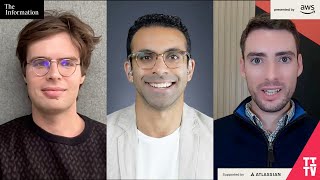
[Applause] [Applause] Welcome everyone to the informations TI TV. My name is Akash Pasicha. It is Tuesday, October 7th. We have got a great show planned for you today. We are breaking down everything we learned yesterday from OpenAI's developer day with an expert panel. We are also talking about a big scoop that we have about the gross margins behind Oracle's AI cloud business. We're then pivot pivoting to talk about AI copyright with the CEO of Runway. And we are also talking with Whoop about the fitness tracking company's newest product. And finally, we have got our very own Elon Musk reporter coming on to talk about the challenges facing Tesla's big robot ambitions for Optimus. We've got a lot going on, so let's get right into our first guest today, folks. OpenAI put on a big show for its demo day yesterday, unveiling new ways it is vying to be a super app among other new tools that it launched. It was an event that all of Silicon Valley was closely watching given the power that OpenAI has amassed in the technology sector. And so to break it all down, I want to bring on an all-star panel. Stephanie Palazolo is our AI reporter at the information and Matt Schumer is the CEO of Other Side AI. Welcome to you both. It's great to have you. >> Thanks. It's great to be here. >> Thanks for having me. >> All right. So Steph, let's let's start with you. What was the headline coming out of yesterday's developer de developer day for you? >> Yeah. I think for you know for for us the biggest headline is OpenAI uh continuing to kind of try to make ChatBT this this super app where you know you're not just going this to help you write emails for work or um to write funny little stories for but you know you're looking you're going to chatt to look at new new houses. you might want to buy using Zillow or ordering your groceries or going shopping. Um, and so that was really seen with their new uh apps in Chat GBT launch which basically lets you um access a lot of external apps like like Zillow, Spotify, Door Dash, there's a number of them um through Chat GBT. >> Matt, that was Steph's headline. What was your headline? >> Pretty similar. I think a lot of what was announced is technically for developers and there is a lot of developer specific stuff but it really is going to enable new use cases, new ways of using this technology for consumers. Some of it probably will work, some of it probably won't work as we've seen in the past. I think that pattern is going to happen again. Uh it's exciting. I'm excited to see what actually sticks. >> And Steph, one of the things you talked about in your AI agenda newsletter this morning was that we have seen flavors of this in the past. I mean this is not a net new idea for open AI. Yeah, totally. I mean, I think that was one of the most interesting takeaways from from yesterday. Um, I think sometimes you go into these events expecting, you know, huge like tech breakthroughs or crazy announcements, but a lot of this did feel similar to some other announcements we've heard in the past. Um, for instance, apps and chat GBT. There's some similarities with chat GBT plugins, which the company um actually announced in March 2023. And you know, we also saw other similarities between some of their um announcements around agents and making agents easier to build. This is a thing that they've been talking about for a very long time. And so Zinder's idea yesterday kind of felt like OpenAI basically saying, "Hey, we've been talking about these ideas like like agents and chatbt as a super app for a very long time. Like this year, let's let's try to make that a reality." >> Right. So Matt, yesterday we were all watching the the demos that they had and the agent tools, the ability for developers to know make their own agents much more easily. I mean, this sparked a whole parade of of tweets uh and or posts on X saying, "Hey, you know, OpenAI just killed all of these startups that that were trying to make agents a lot easier." What's your take on that? >> I think it's a very cool product. I think it shows what's possible, but I don't think it kills the agent startups. If anything, it's going to boost them, right? The agent startups have sort of a niche where they sit between providers. OpenAI just serves OpenAI models. You can email other models in their platform, but when you're actually deploying with agent kit, from what it seems like, you can just use OpenAI models. I've been building agents and I know many other people have been building agents for for years now. Uh I guess decades in AI time and very few people that have built agents at a high level are using just open AI models or just anthropic models or just Google models. It's usually a mix using the best model for what it needs to be used for for each specific thing. Right? You don't want to use OpenAI for everything because OpenAI models aren't the strongest in everything, right? There's sort of like difference in cost, difference in capabilities, difference in just their strong suits. So, I think some companies will use this because they don't really care about the difference. You know, they don't need the frontier performance for everything. But when you're talking about this killing all these agent startups, I I don't think so. I think if anything, it's going to boost them because you need to have startups that allow you to use, you know, OpenAI, Anthropic, Google. >> You don't think OpenAI will open things up at all later on to allow people to use other models at all? >> I don't see the incentive uh which makes me think it's not going to happen. and there hasn't been much uh that we've seen from them that would indicate that that would be the case. Maybe I'm wrong, >> but that's why companies like Open Router exist. >> Okay, Steph, do the people in your orbit agree? I mean, do the agent startups still have a chance here? >> No, I think overall I definitely agree with with Matt. Um, I mean, I think a lot of these agent announcements are in some ways targeted at non-developers or people that are maybe not super technical. um you know we saw this kind of uh very easy to use like drag and drop interface where you know without typing a line of code you're able to make these these agents work and so I think that is a little bit more targeted at you know business users or just typical everyday uh consumers that want to make agents um not necessarily the really technical developers that might be using some of these other agent tools that Matt was just talking about. >> Right. Matt, I want to ask you, let's go back to the the super app part of this because that that is I think one of the most interesting sort of parts of yesterday's announcement. You know, I'm sort of trying to think about it from the perspective of the the companies that are allowing their apps to sort of now be accessed through chat GPT. And I'm and our co-executive editor Martin Pierce made a good point in his newsletter last night about what is the incentive for something like a Zillow to participate in this. And you know, I'm sort of thinking about the same thing, which is that, hey, you know, it allows people a wider audience to access my my tool. I I get that. But you're sort of losing control over the entry point as to how people actually start navigating your software. What is the incentive for them? I mean, do we know anything about the economics here about is is OpenAI getting a cut of of these subscriptions? What do you think of all that? >> I can't personally speak to the economics. I'm sure there is some information out there. I'm sure we'll learn more. The way that I think about it is there are going to be two phases. The first phase is proving out if this is even a thing, right? We saw GPTs, we saw chat GPT plugins, right? Neither of those really took off. This may take off. This may not. In the initial phase, it's going to be about distribution. Can this get more users to my developers are going to explore? Can we find new interfaces that work better in this way? Then the question is, does this actually stick? Are people using this? Is this getting distribution to the use? If it keeps going and keeps going and keeps going, eventually this is going to be the common way in which people access apps. I don't know if that's going to be the case. I'm actually somewhat skeptical. Let's say we actually do get there and this is the way that people access. >> So skeptical why though? Skeptical why? >> I don't know. The interface doesn't feel as perfect as it needs to feel for something like this to truly work. Like this is threading a very very tricky needle. Um and I think it needs to be just utterly incredible. Like so much better than anything else. You said the UI for you wasn't it wasn't I mean you saw the demos yesterday. You it's it's not there for you. >> It didn't blow me away. It didn't feel like it was perfect and maybe it's good enough. >> But my feeling is once something like this works if we get to that point at that point it's going to be like you know not having an iPhone app. You need to do you need to do that to keep your business going because that's where the people are. But we're not there yet. The first phase is just distribution and then does this thing even work? And Steph, what's your take on the incentives piece? I mean, these companies, what is their incentive to participate in this other than, hey, I am attaching myself to Jack GBT? Why not? >> Yeah, I mean, I think Matt just kind of started to touch on it at the very end there. I think there is a sense for some of these companies of, you know, what else am I supposed to do, right? Or going to TAPBT to make playlists on Spotify or to look up information about local restaurants and to book dinner reservations. like you either meet them where they are or one of your competitors does and >> I think companies would rather like be in the conversation than you know let one of their rivals take that opportunity away from them >> right >> I do agree with Matt where you know it's a bit early to really say for sure so for them I think this is a way for them to get in the conversation without you know immediately having to deal with potential bad consequences of you know losing advertising Right. Right. Right. And I mean, look, the economics of this is is certainly what's most interesting to us and what we know least about. Matt, I want to finish with you. There were so much other things that were announced yesterday, not the least of which were new APIs. You had the new GPD5 Pro model that they launched. Uh, just give us your your sort of uh highlight reel here. What was what were your uh big takes on on some of those other announcements that they I know we could spend three hours on this. I'll run down the list. >> But but give us your hot takes about the rest of it. >> Uh voice one's pretty simple. It's a nice upgrade. It's not a game changer. It's slightly cheaper. It's uh going to be a slightly better model. That's great, but it's not going to enable any new use cases. Sora is quite interesting. Having that in API is fantastic. There are going to be a new breed of videogen rapper uh startups that uh pop up that will find opportunities. Whether they last, that's an open question, but it's definitely going to be interesting to watch. And the pricing is actually really good for what it is. It's in many ways cheaper than VO for a better model. Uh not the case for the pro model, but for the regular model at 720p it is. Um that's going to open up some new use cases. GPD5 Pro in the API is very interesting. Most people this won't matter for this won't be in the consumer app. It's expensive. It's expensive. >> It's super expensive. >> But for the blank check, you know, enterprise buyers that will pay anything for something better, it's fantastic. And I'm going to be using it some uh sometimes to get better outputs. I I love the pro model. It's fantastic. Uh the sleeper of the day actually is GPT5 fine-tuning in private beta. I haven't seen much on this but that is going to be super exciting when you get a GP5 class model and you can actually fine-tune on top of it using reinforcement fine-tuning or similar techniques right that is powerful. >> Uh that being said as I always say you know your GPT6 model will beat a fine-tuned GPT5 but we have some time before that so that's going to enable some very interesting applications at lower cost. >> Great. Well Matt and Stephanie thank you so much for coming on. It was a jam-packed day and we look forward to having you on again as we see some of these tools start to get used and what more and more people are thinking about it. Thank you again for coming on. That is Matt Schumer from Other Side AI and Stephanie Palazolo, our AI reporter at the information. Oracle has turned into one of the hottest stocks of 2025 after executives projected 381 billion in revenue that will come from renting out cloud servers to AI giants like OpenAI over the next 5 years. But today, the information published a story that has some pretty staggering findings about the profitability margins that cloud that that cloud cloud business has. I should say that Oracle stock is sliding this morning on the news. And so I'm very excited to have two of the reporters on who wrote that story. Ana Gardez is our cloud and comput reporter here at the information and Anita Ramaswami is our financial analysis columnist. Big news today, folks. Oh my goodness. Where do we start? Anita, tell us what you learned. Hey Kosh. Um, so yeah, we we had this story this morning that um hopefully will help readers really understand the profitability around Oracle's new GPU cloud business, which is really where executives have said the future growth is grow is going. And what we found is that in the last couple of quarters, the gross profit margin on this business um fluctuated between 8, 20, and 14%. And you know, we're sort of shedding some new light on what it's really like for the companies pivoting to this business. Um, you know, software companies are used to much higher margins, but as Oracle makes the pivot into GPU cloud, um, investors should expect, you know, lower and potentially lumpy margins, at least as they get going, >> right? And we should make clear, I mean, for people who don't know the margins landscape that well, this is low, okay? Software margins are typically 70 80%. I mean these gross margins are are I I mean you know they they are razor thin as we outlined in the story. Ana do we know anything about why these margins are so thin right now? Was this expected? >> Yeah, I think one thing I'd point out is that um you know we we have oracles but um you know the other cloud providers don't actually publicly release these numbers and so it's very hard to find apples to apples comparisons. Companies like Amazon, which traditionally has a net grip margin, you know, in the 30s, that's across its whole entire cloud business, inclusive of GPUs, but also more traditional workloads and other services. So, we have the benefit of seeing Oracle's numbers, but you know, not exactly the full picture on what the entire GPU landscape looks like. Um I think investors thought that you know GPUs were going to be lower margin for Oracle but based on our conversations these were lower than expected. >> Okay so Anita talk to us about why these margins are so low. What are they spending money right now on? I mean I know the chips are expensive. >> Yeah absolutely. So the chips like you said are the biggest cost and the data center is really expensive in general. There's not only the chips from Nvidia that um Oracle has to buy but there's also all of the networking equipment, there's servers. There's a lot of stuff that goes into the data center in terms of hardware. And the interesting thing about this is that it suggests to me that Oracle is actually pricing their offering um really low and that's why they're incurring a low margin on this business. They have signed up a bunch of customers with discounts. They've been offering their GPU rentals at a lower cost typically than other providers and that's a big factor as to why the margins are as low as they are. But like Anita said, we don't really know um exactly the apples to apples comparison here because we don't have Google cloud financial results broken out. AWS doesn't report their gross profit margin um separately. So we can only really look at the operating margins. Another you know example here is core which is kind of an interesting one. Um, and so I think as we see more and more of these GPU cloud firms that are doing server rentals come out and go public and you know there's more reporting hopefully from our newsroom about their financials, we'll have more more insight into what is driving the pricing discrepancies. >> But I mean I I kind of want to get into some of the the uh line items here. You know, you're our financial analysis columnist. You study these statements all day, right? I mean, you have these expensive chips. One aspect is the depreciation expense on how quickly these chips do depreciate, how much that expense actually is. Is that in their control? I mean, is this something we can expect to get better? How do we think about how this number might improve over time? >> Yeah, it's a great question, Akos. So, the depreciation for the chips is probably the largest category here. There's depreciation involved with all of the equipment in the data center. And you know the depreciation schedule in terms of how long you take a time period over I suppose is one form of control that companies have but it's really only some extent of control because when you buy an asset you take it and then you kind of split the useful life over a certain number of years and you're incurring that cost in different um in different years and so I think you know we might be able to see these costs come down over time but it's really in the hands of Nvidia and that's what it's going to come down to. So some of the older chips actually Oracle is able to um incur a higher margin on those because the older chips aren't as costly. But you know with some of the newer generations of chips I just think if Oracle and if other cloud providers want to stay at the cutting edge they probably will have to take this margin hit. >> Right. An I want to come to you to close this out. Does Oracle really have a choice here? I mean it has to compete. We know the direction this technology is going. Is there an alternative or do they kind of just have to accept it? I think executives are are pretty certain that they want to pivot into this business and they're just sort of getting getting people used to to what profitability might look like. And so I and I I don't I think when Oracle is negotiating, you know, a massive multi-year deal deal with a company like OpenAI, you know, they're going to, you know, maybe lower the price to to get that big deal because overall that's going to generate them lots of of revenue over those years. you know, more revenue than they would generate without the AI data center business. So, um I think partly, you know, they're just, you know, pivoting into this space and this is what Margy's gonna are going to look like. But I think they're going to be working pretty hard to improve them. And one thing that we noticed was that as Nvidia's latest chips come out and Oracle installs them in their data centers, there's sort of a gap and a ramp up pip period where you know it takes customers a little bit of time to actually start using those chips and for so my guess is that that's going to be a key area that they try to shorten so that they can you know improve these numbers. >> Right. And and Anita, I should say one thing that you mentioned in the story, you you mentioned some of the older chips that that Oracle can use to sort of boost its profitability. This was something that that that you pointed out in the story. You know, it's kind of goes against uh you know, what Jensen Hong has sort of thought about these chips and the idea that the newer chips will sort of make the older chips obsolete. Clearly Oracle is saying, "Well, we can still get some some usefulness out of the old ones." And in fact, we have to because you know, otherwise our gross margins might be negative. You know, in some cases, >> they're still selling. So, >> yeah. Yeah. Great. Well, Ana and Anita, thank you so much for coming on the show. It was a great story and like we said, sharers are sliding on the report and so we look forward to having you on more to discuss how this story develops. That is Ana and Anita from our newsroom here at the information. Copyright has been a hot topic in AI. And now that AI generated multimedia content has become the focus of even the biggest companies like OpenAI and Google, copyright is becoming all the more important to think about carefully. Today, Crisal Valenuela, the CEO of AI video company Runway, published an exclusive oped in the information about this topic, arguing that policymakers should treat AI generated art just like they do any other art. And so I want to bring on Chris to talk more about what he meant in that piece. Chris, welcome back to the show. It's great to have you. >> Hey, thank you for having me. >> So what a great piece you published today in the information. I do want to get to what your the crux of your argument is, but I thought maybe a good place to start is give us sort of copyright 101. I mean, how do copyright standards work right now for traditional artists? Talking about musicians, filmmakers. Let's put AI aside for a second. We'll get there. How does it work? generally. >> Sure. Yeah. Um, look, it all based it's based on on this idea of human authorship, right? So, if you as a human and an author can create and can express and can prove that what you've created was inherently human, then like you can you can you can copyright it. And I think that the medium on which it happens, it's kind of like a second uh uh uh aspect of that creation process. And so for photography, for jazz, for for any form of expression, that's how we've evaluated and thought about copyright for forever. And so what we're kind of like advocating here, and we go go deeper into it, is basically AI rel that formula and it should be hold in the same standard as any other art form basically. >> Got it. And so so you're saying that hey, copyright standards, the way they've traditionally worked is that you have to be able to prove that you made it. And the argument that you're making is that it doesn't really matter what technology you use to make it. This is just the latest tool essentially. >> Correct. Correct. And I think part of it is really understanding what AI is at its core. Um I think a lot of the assumptions and decisions as to how we interpret AI when it comes to copyright have been based on what we've seen AI do over the last I would say three years, two years. Now, it's really important to understand that when you think about media and AI, think about video generated with with AI models and images and music and multimedia formats, you're seeing highly creative forms of expression, right? These are not machines that just create on their own. They're people behind the systems. The systems are there for advocating for artists. They're there to augment a specific creative process, but the ones initializing, starting that creative process are artists first and foremost. And so if artists are the ones communicating via this medium, then artists should hold their rights to anything they create. >> Right. So I I do want to get into some of the nuances here, but very quickly, I mean, you have tons of users using your platform right now to using AI to generate multimedia content. Has this been a big issue for them? >> Um, it it has. Um, I think it's and it's important to recognize as well that it's going to expand as use cases and usage continues to grow. We have uh tens of millions of users. We expect to get to hundreds of millions of users. I think broadly AI video will become probably the most important uh modality of AI over the next couple of months. I mean you're seeing this everyone is is really betting a lot in in video as a both a reasoning kind of engine but also as an art and a creative kind of system. >> And so we should expect even more pressure on how we understand uh and um think about copyright in the age of AI. And so really we want to make sure we can um help u guide and understand and and and have a bit of nuance in terms of thinking of of this technology as a very powerful medium of expression and make sure that discussions don't get lost in in simplifications or generalizations. >> So the interesting part here is you're talking about the the content that's the output of people using AI to create this art. Question I have for you is what about all the data and all the content that goes in to training these models? I mean, how do you sort of square your argument that, hey, you should be able to copyright the output with the fact that there's a lot of, you know, potentially copyrighted work that is being used uh, you know, I'm not talking about your company specifically, but I'm just generally speaking, right? There is a lot of this content that's used to train these models in the first place, right? Yeah. So, those are two different totally different kind of like questions. One has to do with the argument of for use and I think the the the courts are going to be basically deciding very soon. I think there's there's arguments on both sides. I'm I'm very optimistic on the for use because I think this is transformative at its core. What people are using and creating with AI is totally new and different from anything we've seen in the past and these models are learning patterns around the world. Now on the copyright on the output side that's the question I think that's most important and and I'll give you I'll give you a basically a good example of how this conversation has moved now and the focus has moved to outputs. the studios that we work with, the production companies that we work with, the Hollywood companies that uh we collaborate with, uh the argument what they care the most about the outputs. It's about how do you make sure that you can make something and then like have the rights to either copyright it or or use it in perpetuity and and that's really important and that has no change whatsoever with the technology itself. It's just you should be the one owning that because you as a human created it. And one question I did want to ask is you talked a lot about video content that is the business that you're in in your piece. What about stuff like, you know, I don't know, spoken word poetry that you can just use an LLM for, you know, with Chat GPT. I mean, does your argument extend to that and saying, "Hey, I I I use this tool to write a poem, but I I want to copyright that." Like, is is that as as far as we're going with it? >> Yeah, you know, that's a very interesting question. uh in a way we have artists um using chance sur realism has been experimenting with non-concious ways of creating for years. Um and so if if you take away the kind of like method of creation and just focus on what was the intention, what was the control of the person or the human created it, you can still create it. Like this conversation has in a way nothing really to do with AI but also everything to do with AI because like uh we've forgotten that some of the core ideas of how you create with systems are autonomous. I mean John Cage uh uh one of the greatest artists of the last century um embraced chance uh for all of their like most of his work. Of course he owns the copyright for that. He didn't control every aspect of the process of creation and in the same way that if you do that in LM you might feel similar, right? But you were the one picking up and selecting and inputting specific parts to get the outputs that you need. And so in a way it's a it's kind of a um a reminder of to go back to like I think how we always look at the world and in terms of copyright. >> Right. Well Chris it was a great piece and I encourage everyone to read it in the information. The part that we didn't get to discussing that I encourage people to read about is you do go into detail about how other countries around the world are treating this issue. And so I do recommend everyone go check out the oped again. That is runway CEO Christo Venuela the CEO of Runway which I just said twice. CEO of Runway Runway. Anyway, we're we're we're keeping on going, folks. Uh, okay. Elon Musk has put a ton of stock into his plans for Optimus, the humanoid robot that Tesla is working on. And in fact, Elon has said that he wants the Optimus to get to Mars on a spaceship by 2027. Understandably, there are a ton of challenges with that plan. And so to give us an inside look not just at the hurdles with the Mars plan, but the hurdles that are facing Optimus at large, we've got Theo Wade here, our Elon Musk reporter. Thank you so much, Theo, for being here. It's great to have you again. >> Good to be back. >> Let us talk about humanoids. Okay, so I mean Tesla has their shareholder meeting coming up next month. I think everyone is very eager to find out what, you know, what new details we get about Elon's plan for Optimus. We got to start with Mars, though. I mean, so he wants to send the Optimus to Mars. I didn't even SpaceX is going to Mars. There's a plan for that. >> SpaceX has said they're going to Mars in late 2026 to land in early 2027, but that's probably going to get pushed back. Uh they keep they keep kind of moving the deadline there. Um so could not happen, but >> okay, >> you go to the SpaceX website, they still say it's happening. >> Okay. And and so what is the plan here to send Optimus to Mars on the SpaceX? >> That's literally all that they've said. Uh you know, Elon has described it as a mission crewed by Optimus. Um so, you know, it could be that Optimus uh walks out of the spaceship and then immediately falls over and technically that would still uh you know, fulfill what he has said will happen. Um so very unclear. Very >> okay. All right. So, let's put the Mars thing aside for a second. I mean, Elon's plan, you know, you go through it in the story. There have been plans to produce thousands of of Optimus robots on certain timelines. We've sort of cut that down a bit. What are the challenges that Optimus is facing right now? And how does that sort of contradict his his sort of grand plans for for what account of revenue, for example, is going to account for Tesla in the long run? >> Yeah. So the the long-term timeline here is Elon has this new compensation package that he's asking shareholders to approve that requires among a bunch of different product product uh goals Tesla to deploy 1 million Optimus robots over the next 10 years. Um they're obviously that's you know a very long-term goal and in the near term they wanted to build 5,000 robots this year. um is what Elon publicly said in the spring. Um but that is not happening. Um we understand that there are a bunch of issues primarily with the hand. >> The hands, right? We've we've talked about the hands on this show. >> They're very complicated. The hands, they're amazing. Appreciate your hands more. There's so much crazy stuff that goes into moving them. Um but basically, this this goal of uh you know, getting the hands uh perfected has has taken a lot longer than they expected it would. And so they decided to push out production and spend more time refining uh Optimus before building thousands of them. >> Right. Tell me what you know as you were reporting this story again every every great story comes with with more questions about you know the future of these businesses. Elon has put so much stock into this plan. I mean what kind of questions did you come out here thinking? because in in my mind it's it's it's sort of the reality of this plan, right? But it's also what are investors thinking about? I mean, this is also tied to his his pay package a bit, right? Yeah. So, you know, it's in his pay package alongside other stuff like robo taxi and vehicle sales and profitability and market cap. Like there there's a bunch of of goals in there, but Optimus is one of the biggest ones. Um, you know, I think that when you think about Tesla investors, you have to kind of put them in two categories. And and one is the fanboys who are loving it. You know, they've had demos of Optimus uh, you know, in public that people fawn over and you can go to the Tesla diner in uh, LA and have the Optimus that's there serve you. Like >> I didn't know there was a Have you been there? >> I have not. I have not. I need to expense a trip there soon. Good idea. >> Keep going. Sorry interrupt, >> but the um you know the the other the other aspect of of Tesla investors is obviously kind of traditional investors that care about things like profitability and and revenue. Um and for them the biggest considerations are still kind of by far the core electric vehicle business and Optimus is a bit of a a bit of a sideshow despite um how much Elon talks about it. >> Got it. Well, Theo, it was an interesting story. I can't, you know, we glossed over this one detail, but you know, the idea here with sending Optimus to Mars is that, correct me if I'm wrong, you would have to put a robot in an astronaut's suit. Is is is that what this is going to end up being? That's my understanding of it. At least if you were trying to send the current version. So, >> okay. >> You know, this thing is designed for indoor use on planet Earth, and Mars is a dusty planet where the average temperature is like80° F. Um, so it's a very different environment and you know there there would have to be elements of the design that that are quite different to make it do anything there. >> Right. Well, Theo, thank you so much for coming on. We we really appreciate the updates on on Musk's moonshot bets to Mars. Uh we look forward to having you on more as we hear more about how the story develops. That is Theo Wait, our Elon Musk reporter here at the information. Well, we have all seen how consumer health tech and longevity has become a big craze across the tech world. Whoop is one company that has become central to that story. And last week, the company launched a new product called Advanced Labs that helps members make sense of blood test results and also book blood tests. I want to bring on Alex Venoni, who led the team responsible for rolling out that product at WOO. Alex, welcome to TIV. It's great to have you. >> My gosh, it's great to be here. Thanks so much for having me. So tell us about what Advanced Labs is and then we'll get into sort of what the direction of the business is going broadly. >> Sure. Yeah, it's it's a new exciting product. Uh like you said, we launched it last week. Um what's been great is, you know, we announced this back in May when we had our big product launch uh of our new hardware and a lot of new software features. From that over the course of the summer, we've seen incredible demand on our weight list. Um and we're really excited to actually release it uh on Tuesday last week. So, we've been live now pulling people off the wait list for the last days. >> Um, and conversion and uptick has been really really positive. In terms of the offering itself, uh, there's two primary components. So, one is, uh, all of our members, uh, have the ability for free to upload any past lab tests that they've gotten. Um, we'll ingest that into our system, map it against the panel that we've created, and it allows our members to see how their biomarkers have trended over time. they can interact with our coach to really get some uh some really great insights on how their Whoop data uh looks and is impacted by those blood markers alongside of it. And then the other piece of it is the actual test itself. So like you had mentioned, we've partnered with Quest. >> We've assembled a really comprehensive and clinically rigorous panel of 65 plus biomarkers. Um, and the idea is really for years here at Whoop, we've been able to give people some really rich insights about the behaviors they engage with on a day-to-day basis and how they their sleep and their performance and their recovery. This is that next step in the evolution. Uh, this is really about understanding what's happening inside of your body, what's happening with those biological systems and how that impacts those same behaviors that we've been measuring for years. Right. >> And and tell me what is it that they would get from this blood test that they wouldn't get from just say uploading their blood test results to chat GPT or even just going to the local clinic and getting it done. >> Yeah, there's there's kind of a couple of big important differences here. So one is if you were to go to sort of a traditional um physician's visit or annual physical often times the panels that you get there are restrictive uh sometimes in the order of 10 to 20 biomarkers and a lot of those are based on you know different indications that your doctor might observe. Um what we do is we test a lot more than that. There's a lot more that goes into your overall health and wellness uh and understanding of what's happening in your body that you would typically not get at your annual physical. So, we wanted to make sure that this initial panel um really speaks to the comprehensive nature of everything that's happening in your body from your heart health to your hormonal health to your status, cognitive performance. >> Um and so that's really where this test starts to come alive and differentiate itself from others in the market. Now, you asked a really good question, which is, you know, what's the >> GPT? Chat GPT. I mean, people people are doing it. People are doing it. >> Everyone's doing it. Um and and to their credit, chat GPT does a really good job at helping people understand really complex associations like biomarkers and daily behaviors. Um we sort of take that to the next level in two important ways. One similarly we have in our system our whoop coach um that's AIdriven and it is built on top of our Whoop data. So the ability to actually look across your historical Whoop data years and years and years hopefully for members that have been with us for and then basically attach attach the two data sets >> and then attach the two data sets. >> The other piece of this is when you order a lab test through us, you get a licensed clinician who's reviewing all of those biomarkers and they've been trained alongside to to interpret Whoop data as well. So they're going through all of your biomarkers, all of your historic Whoop data and pulling out some really rich insights and then associated personalized recommended actions for you to actually take action on the areas for improvement that you need >> and also think about, you know, what are some of the things that um I should be doing that I'm maybe not today. And I' I'd say one really interesting thing, we've done a lot of testing over the last few months, and for everybody who's gone through testing, despite how young and healthy they may be on paper or even with their Whoop data, they're getting their blood work back and they're learning something completely new that they idea about. And so those level of insights have been really, really fascinating to see. >> One of the one of the broader questions I wanted to ask you though is so Whoop for those who don't know it, right? It's it's a wristband. You wear it on your wrist and the whole point is that you get a lot of data. There you go. You get a lot of data just from having it on your wrist. I mean, this is the first step for the company to sort of venture into something that is invasive, right? It's something that you can't just get from the wrist itself. And so, are we sort of at the limit of what we can get from non-invasive tests? I mean, you know, do we Yeah, that's the question. >> Yeah, I would say not yet. I I think more about this as an expansion of what we can collect on the wrist. Um, obviously like you said, this is invasive. Uh, it involves going to, you know, a lab clinic and and getting blood drawn, but the level of insight that you get from that is sort of, you know, pales in comparison to just what we see on the wrist. That being said, we're constantly working on, you know, what's coming next and what we can measure from the wrist. And I'd say there's still an entire portfolio of features and insights that we can pull from the wrist that are are noninvasive in nature. And even >> like like what like like what like what what's coming? Well, I I won't say exactly what's coming on our road map, but you can look out into the the ecosystem. I think a good example is, you know, CGMs, right? People are looking into the wellness impact. >> Well, I I but I had I had asked Will about Will is the CEO of the company, but we I did a profile on him. I had asked him about CGM. He didn't seem too too ecstatic about that. I mean well actually when you think about it uh you look at the portfolio of just health information generally and on the one hand you have what we have on the wrist 247 data um and that real time nature of what's happening how my behavior is impacting that on the other end of the spectrum is what we just introduced last week with blood work where it's less frequent in terms of cadence with which people are getting those those biomarkers and those data points. So you could think depending on the individual every 3 months, every 6 months, every 12 months. >> There is a whole set of important data that exists on the in between and that's um things like CGM data where it's less invasive than a blood test but is not as frequent or real-time as what we have on the wrist. And so as you think about sort of the ecosystem that a company like Whoop could build, filling in all of those gaps across the cadence of invasive versus non-invasive frequency of the data points, we really want to dig into as many of those as possible and aggregate them for for our members to get a full picture of what's happening with their bodies. >> Right. Great. Well, Alex, it was it was a great new product that the company launched. I was excited to see it. And of course, I do have to plug a story that I wrote I think it was more than a year ago now that we're going to link in the show notes. It was my profile of Whoop CEO Will Ahmed. And you know what? Just read the intro cuz I took an ice bath with Will. It's a great read. Um, and Alex, next time I come to the office, I'll have to take one with you as well. Uh, thank you so much for coming on the show. Uh, it's a it's it's a very exciting new product. That is Alex Venoni, who runs the healthcare product group at Whoop. >> Okay. Well, that does it for today's show. A reminder that we are on this stream Monday through Friday at 10 a.m. Pacific, 1:00 p.m. Eastern. I want to thank Amazon Web Services who is our presenting sponsor for this production. And I want to thank you for tuning in. We really do appreciate your viewership. I'm already excited for our next show tomorrow. And so until then, thanks for tuning. Bye-bye for now.
Original Description
Otherside AI CEO Matt Shumer and The Information’s AI Reporter Stephanie Palazzolo talk with TITV Host Akash Pasricha about OpenAI's developer day and its plans to become a “super app.” We also talk with The Information’s Anissa Gardizy and Anita Ramaswamy about the new reporting on Oracle's razor-thin cloud margins. Runway CEO Cristobal Valenzuela joins to discuss AI copyright, and The Information's Theo Wayt talks about the challenges facing Tesla's Optimus robot. Lastly, we get into WHOOP's new blood test product with Head of Healthcare Product Alex Vannoni.
Articles discussed on this episode:
https://www.theinformation.com/articles/ai-creates-art-need-rethink-copyright-protects-artists
https://www.theinformation.com/articles/internal-oracle-data-show-financial-challenge-renting-nvidia-chips
https://www.theinformation.com/articles/how-whoop-made-its-wearables-a-hit-among-athletes-and-survived-a-race-against-the-apple-watch
https://www.theinformation.com/articles/elon-musk-preps-teslas-optimus-prime-time-big-hurdles-remain
TITV airs on YouTube, X and LinkedIn at 10AM PT / 1PM ET. Or check us out wherever you get your podcasts.
Subscribe to:
- The Information on YouTube: https://www.youtube.com/@theinformation/?sub_confirmation=1
- The Information: https://www.theinformation.com/subscribe_h
Sign up for the AI Agenda newsletter: https://www.theinformation.com/features/ai-agenda
Watch on YouTube ↗
(saves to browser)
Sign in to unlock AI tutor explanation · ⚡30
Playlist
Uploads from The Information · The Information · 2 of 60
1
 ▶
▶
 3
3
 4
4
 5
5
 6
6
 7
7
 8
8
 9
9
 10
10
 11
11
 12
12
 13
13
 14
14
 15
15
 16
16
 17
17
 18
18
 19
19
 20
20
 21
21
 22
22
 23
23
 24
24
 25
25
 26
26
 27
27
 28
28
 29
29
 30
30
 31
31
 32
32
 33
33
 34
34
 35
35
 36
36
 37
37
 38
38
 39
39
 40
40
 41
41
 42
42
 43
43
 44
44
 45
45
 46
46
 47
47
 48
48
 49
49
 50
50
 51
51
 52
52
 53
53
 54
54
 55
55
 56
56
 57
57
 58
58
 59
59
 60
60
Will OpenAI's Agent Tools Kill Startups?
The Information
Oracle’s Shockingly Small Cloud Margins, OpenAI ‘Super App’ Goal, AI Copyright | Oct 7, 2025
The Information
AI Startups: Get Market Share Now, Profit Later
The Information
How to Cut AI Agent Costs
The Information
The Problem with Longevity
The Information
Why Longevity Hype is a Serious Problem
The Information
The 'Imposter Syndrome' of Tech Founders
The Information
The Future of Hiring is Not Your Resume
The Information
AI Profitability Problem, Silicon Valley Longevity Boom, MeritFirst’s Hiring Strategy | Oct 8, 2025
The Information
How Base Power is Solving the Energy Crisis
The Information
Brex vs. Ramp: What's Next for the Fintech Rivalry?
The Information
Big Tech Cozy Up to Trump
The Information
AI Umpires in the MLB, Base Power Updating American Power, Trump & Big Tech | Oct 9, 2025
The Information
Why Qualtrics is Making a Multi-Billion Dollar Bet on AI
The Information
How to Build A Successful Open-source AI Company
The Information
What Caused This AI Startup to Fail?
The Information
E-commerce is Back and Stronger Than Ever
The Information
Lessons from a Failed AI Startup Founder
The Information
How to Build a Successful Open-source AI Company
The Information
Qualtrics’ $6.75B Acquisition, E-comm Startup Revival, Reflection AI Raises $2B | Oct 10, 2025
The Information
Amazon’s AI Enterprise Strategy: The Trainium Chip
The Information
OpenAI’s Announces Major Chip Deal with Broadcom
The Information
Tokenization: The Future of Crypto?
The Information
What Top AI Researchers Look for in a New Job
The Information
AWS’ New Enterprise AI Push, OpenAI Deal with Broadcom, Big Tech AI Ad Planning | Oct 13, 2025
The Information
Why Oura is Raising $900M to Invest in AI
The Information
"Jensen Can't Be Happy About That" | OpenAI Broadcom Deal
The Information
Why US Fintech “Hasn’t Happened Yet”
The Information
AI is Changing What a PhD Does in the Lab
The Information
Oura CEO on Future of Health, Brex CEO on Fintech’s Growth, AI for Science Discovery | Oct 14, 2025
The Information
Oura CEO on the Future of AI in Healthcare
The Information
Are AI Coding Assistants a Threat to Engineers?
The Information
Dreamforce 2025: Major Learnings
The Information
Dreamforce 2025, AI Challenges in Healthcare, Pushback on AI Coding Tools | Oct 15, 2025
The Information
Microsoft’s 24/7 AI: The Future of Team Productivity
The Information
XAI's Colossus 2: The World's First Gigawatt-Scale AI Data Center
The Information
Anthropic Is Shopping for Startups
The Information
Microsoft CPO on AI Strategy, Anthropic’s Acquisition Plans, Gaming Startup Trains AI | Oct 16, 2025
The Information
Oracle’s Stock Movement Amidst AI Margin Concerns
The Information
"The Traditional SaaS Business Model is Dead"
The Information
How Brex Is Preparing for the Next Phase of Fintech
The Information
Apple-F1 Media Deal, Moneyball for Minors, Oracle's AI Margin Worries, AI Rollup Boom | Oct 17, 2025
The Information
Is Tech Ruining Youth Sports?
The Information
Crypto’s Hottest Startup, Upgrade CEO on Future IPO, Questions Ahead of Nvidia GTC | Oct 20, 2025
The Information
The Unknown Crypto Exchange With Major Market Impact | Hyperliquid
The Information
Nvidia's Next-Gen AI Chips: Vera Rubin and Kyber Revealed | Tech Analyst Breakdown
The Information
Full Suite Banking: How Fintech Companies Differentiate
The Information
Personalized AI Baby Health Data?
The Information
How AI Chatbots are Changing the Web
The Information
Baby Wellness AI, Turo CEO on Car Ownership Crisis, The AI Search & Revenue Enigma | Oct 21, 2025
The Information
Vinod Khosla on AI’s Credit Risks, High Costs, and Energy Demands
The Information
Vinod Khosla on AI's Circular Financing Deals
The Information
“Creators are the PhDs of Commerce” — Li Haslett Chen, CEO of Howl
The Information
Why Enterprise AI is Failing: Vinod Khosla Explains the Problem
The Information
How Campus’ AI Creates a Personalized College Curriculum
The Information
The AI-powered Education Startup Tackling Tuition Affordability
The Information
Vinod Khosla on AI’s High Costs, Circular Financing, and Massive Energy Needs | Oct 22, 2025
The Information
AI is Fixing the $130 Billion Staffing Problem
The Information
The CEO Voice Beats the Corporate Brand
The Information
SEO is Dying: The New Goal is Generative Engine Optimization (GEO)
The Information
More on: AI Ethics & Policy
View skill →





Related AI Lessons
⚡
⚡
⚡
⚡
The AI Moat Paradox: The Better Models Become, the Less Models Matter
Medium · AI
170,927 AI Papers Reveal the Biggest Research Shifts of the First Half of 2026
Medium · Machine Learning
170,927 AI Papers Reveal the Biggest Research Shifts of the First Half of 2026
Medium · Data Science
[PoV] When Everyone Is Smart, No One Is
Medium · AI
🎓
Tutor Explanation

 DeepCamp AI