Qualtrics’ $6.75B Acquisition, E-comm Startup Revival, Reflection AI Raises $2B | Oct 10, 2025
Key Takeaways
Qualtrics CEO Zig Serafin discusses the company's acquisition of Press Ganey Forsta and Reflection AI's $2B funding round
Full Transcript
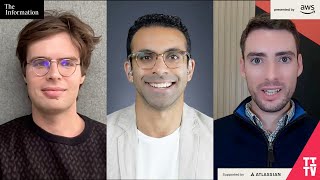
[Applause] [Applause] Welcome everyone to the information ti. My name is Akash Pasicha. It is Friday, October 10th. We have got a jam-packed show for you today. We are bringing on the CEO of Qualrix, the CEO of Reflection AI. Both those companies have made big news this week with acquisitions and with funding rounds. We're also going to talk about the profitability of stablecoin businesses and a quiet revival in the e-commerce sector. And finally, we are bringing on the founder of an AI startup who has decided to wind down his operations for what I know is going to be a great conversation about his reflections on the current startup landscape. Qualrix made a big acquisition this week, buying press gainy fora for $6.75 billion. These aren't two names that we've talked about too much on this show just yet, but Qualrix is a software giant that helps companies collect feedback from their customers and their employees. And Prescy Forsta helps health care companies collect similar feedback from doctors and from patients. I want to bring on Zigg Sarafin, the CEO of Qualrix to talk more about this deal. Zigg, welcome to TITV. It's great to have you. Nice to be here, Akashan. You have a nice jam-packed show today. So, thanks for having me. Nice to be here. >> Well, we are happy to have you leading us off here and starting us off strong. Look, I want to talk about this deal. It's it's one of the biggest biggest deals in the software market that we've seen as of the past few weeks. Um, why did you do it? >> Well, I think in understanding it more clearly, I think it's uh important just to just to give you some background context. you know, we're a critical cutting edge partner to to market leaders, especially uh some of the best of brands and companies that are leading with experience. So, ones that are focused on their customers or employees or if you step back and say, okay, what's powering that brand technology-wise and how they connect with their customers, it's often it's Qualrix that's there in the middle. And uh we have significant impact on how we help companies get closer to their customers. And over the last year, we have seen an extraordinary level of adoption in the AI capabilities that we put into our product suites. Uh since the launch, we've had more than a third of our customers, so a gosh, more than a third of 17,000 customers we have around the world have adopted capabilities >> onto the market around AI. About 90% of our top 50 customers have adopted. And so what we found and what we've learned is um when you have AI that is purposebuilt for the people that it's designed to serve, >> right? >> Uh it delivers better experiences. It actually drives greater business impact. It drives real returns on the investment that they're making, >> right? And what we're finding is people want business that's you know ultimately want technology that's backed by focusing on the expertise within that industry and understanding the domain specific things that they're trying to do. So this clearly demonstrates the opportunity that we saw in making the $6.7 billion investment. >> Right. So let I want to talk about sort of the strategy here. Press Guinea Forest. I mean, this is a company that has really centered itself around health care and learning from doctors and and patients that are in the many healthcare companies that it serves. From your end, was this a tech was this an acquisition that you made to acquire the the the customer base and sort of expand into healthcare more broadly? Was this a deal that gave you technology that you didn't have? What exactly was the strategic logic here behind the acquisition? Yeah, I mean first off PG Foresta is um uh very credible and has a wonderful track record in healthcare. They've also expanded uh into other areas and have been enabling market research capabilities as well. But in healthcare, uh they've got decades of of experience uh in uh understanding how to drive predictive and analytics uh being able to um provide expertise to healthcare organizations to drive better healthcare outcomes for patients and how providers serve patients. >> And for several years now, we've had uh customers uh in the health care community that have come to us and said, why don't you actually put the best of the best together? St. Qualric's proven technology and AI platform more recently uh and combine that if there were a way with the expertise predictive analytics uh that Presi has had uh in the healthcare space and so at the end of the day the focus is on outcomes you know purpose-built for their industry for their customers for their employees uh ultimately makes a lot of sense for what we're trying to enable in the market and it's been driven by what customers have been asking for us >> so so from From what I'm hearing, it was more for the products and and not so much the customer base. So, it wasn't so much of a of a hey, you know, we we want to gain market share in the healthcare segment. It was that they have products that we needed. >> Expertise, predictive analytics, data that when you put it together with Qualrix actually helps to create a 1 plus 1 plus, you know, equals 5 equation for customers, >> right? It was a it was a big deal. It was a $6.7 billion deal. Qual of course went went private a couple years ago um for I think it was just north of $12 billion was was the the takeout valuation. What was the multiple on this deal? >> You know I'll let our finance guys speak to that. Uh but but you know we felt like it's a very healthy acquisition that makes sense you know and I think a lot of it has to do with just the the right next way in which we can actually provide value to the marketplace. And I do want to talk to you about Qualrix has had a really fascinating uh history, right? It was it was once a public company. It was uh it's it's gone through many different ownership structures, but you you are a private company now with Silverlake and with CPPIB. I wonder, you know, what is it that you've been able to do perhaps as a private company over the past two years that you may not have been able to do as a public company? And how has has being owned by a private equity firms, how has that sort of changed the the way in which you've been able to operate? >> Well, I think first off, just the mission of this company. I've been with Qualrix for 9 years, left you after Microsoft, being at Microsoft for almost 18 years. And uh you know, we're we're a very mission purpose company. Our focus is around helping to um heighten or elevate the human experience by partnering with organizations around the world to help them understand how to better support uh and care for their own customers in a more proactive and personal way. And uh every chapter of this company we filed to go public we were acquired by SAP. We then went public after that within SAP and then we went private. >> Every single one of those milestones which by the way akash as you know is an extraordinary story. you don't see that typically has been guided by people who are allin on that purpose and that mission in the organization. So when uh Silverlake uh and the investment groups came to uh want to partner with us, the goal was to go and create an extraordinary company that actually helps to enable more organizations uh to innovate around experiences to get closer to their customers in real time to build an AI platform that uh uh helps to be able to innovate on these relationships and these partnerships that we have. So since we went private, we've actually been able to double down. we become more effective. We've been able to scale on a global level and it's actually given us the opportunity to make these types of investments such as the one that we just announced. >> And and and so what sort of changes have those been? Because we we sort of know the private equity playbook traditionally has been to make companies more efficient, reduce costs, you know, uh optimize headcount as they say. So what what has been happening at Qualri as a private company that has that has enabled it to make this this acquisition financially? All of it's been on a focus on a customer. So speed in which we actually are able to operate the company on a global level uh to connect with customers making sure that uh the cash flow of the company is dedicated to what we're doing in R&D. Uh advancing some of the core core investments we're making in AI. Um, you know, one of the unique things about Silverlake Partners and the other investors, BDTMSD, uh, the board of directors, CPPIB, who are also investors in the company is they're playing the long game. They, you know, they're they take pride of ownership in building a company that will be a legacy to live on for right >> long term. And they built, you know, they had amazing investments over the years. you know example Dell VMware work with Broadcom uh you know and and and and more recently some of the other investments have been talked about in the marketplace. So we have a group of partners who have you know sincere interest in building an amazing company that actually provides a lot of value to the marketplace and especially at a time where you know you know the market's changing technolog is going to change and we're seeing >> software companies >> right I mean AI AI has certainly you know it certainly changes the game for software companies uh and I'm I'm excited to see how it's changing how you operate Qualrix in the marketplace. Thank you so much, Zigg, for coming on and talking about this this big acquisition you've done. Uh I'm excited to see how it evolves and we'll have to have you back again to talk more about uh how you're pushing even further into the healthcare market. That is Zigg Sarapin, the CEO of Qualrix. Okay. Well, a few months ago, the information reported that Reflection AI was in talks to do a major funding round. And this week, the company announced that it has raised $2 billion at an $8 billion valuation. The company is backed by a number of big names including Nvidia, Lightseed, and Sequoia. I want to bring on Miesa Laskin, the CEO of the company to talk more about what he has in store for Reflection AI. Misha, welcome to the show. It's great to have you. >> Hi, Kosh. Thanks for having me. >> Well, it's uh it's an exciting week for you. There are some some some really uh big numbers that that are sort of coming to light about about Reflection. Um I do want to talk about the business model broadly. you sort of positioned Reflection AI to be the Deep Seek of the US. What is the vision for the company? Let's start there. >> Well, it's a great question. I mean, I think that what happened with Deepseek in December 2024 when it was launched is that it was a massive wakeup call for us in the US in the ability to produce Frontier open models and export them to the rest of the world. So we are building the frontier open model intelligence um that will punch with the best of them and it will be the kind of model that both the states and the world externally uh can build on top of for their intelligence needs. Uh now from a commercial perspective uh the kinds of customers that gravitate most towards this are the ones who have the largest AI workloads and so this would be large enterprise customers or large startups that um are consuming a lot of intelligence and want to own some of their own destiny and post train their own models. Uh that's kind of the commercial territory where we operate. >> And so Misha is the idea here that open-source models are cheaper to use or what is the advantage there financially? I think the advantage is that once you become a big consumer of intelligence and you're a large enterprise, you want to own your intelligence, you want to run it on your infrastructure, you want to have access to the weights so you can customize it for various applications. So you want control over your intelligence to drive both higher performance on tasks where it might not be working as well for you or drive down costs where things are working but you want them to be more performance. So it's really about uh control, customizability and full ownership of the model. So, so it's it's not about it being cheaper then and it's not because I mean you know the whole idea with deepseat that came up was the idea that oh they might not have had to use as much compute but then there were some more findings that hey well maybe that wasn't really true and and the question really I'm trying to get at is a big problem for application layer companies for example or enterprise software companies that are using AI is that the models are expensive to use right and and so we've talked about this the cost of the models hasn't seemed to come down the way people thought and and I you know my thought was maybe open source uh open source AI could be the solution to that. >> Yes. So you're definitely right that it is about cost performance. Um it's about when you have control over the model then you're able to customize it for various tasks and so there is a cost performance argument for maybe you're able to train the model more efficiently and like DeepSeek it's more cost performant out of the box. That's one thing. Um but the other part is you being able to take that model and customize it for your various workloads, right? And that enables it to be more cost performant as well, >> right? >> And so on top of that, then there's ownership and security and compliance and all these other things that enterprises care about in addition that make it the default way in which they want to consume intelligence, >> right? Why couldn't you have built this at a meta for example or at a you were previously at Google Meta is working on their own open source models. Why not go to a company like I don't maybe Mark Zuckerberg called you up and said hey just just build what you're building here I mean you ever think about that u well it's a it's a really good question Akos and I think the fundamental thing here is that you need to be in a position where the commercial incentives are aligned with the research incentives of staying open without such a thing when they're misaligned then you're in a tail wagging dog situation where there's nothing about being an open company that actually correlates with your commercial objectives. And so what I think has happened with previous iteration of companies is that they've had different commercial objectives than what's required to build out an open intelligence company. And so the reason to do this in a standalone is that to have those two things be entirely aligned so that you can continue see your miss seeing your mission through and being an open model company rather than starting off as an open model company and then having to pull the rug at some point because your product is taking you in a different direction. >> I want to talk about the fundraising round that you just did. Nvidia was a big part of it. Who was the lead investor for this funding round? >> So obviously Nvidia played a very big role. We've had um a number of uh major investors come in. Uh disruptive played a big role. DSV did 1789, DAP. Uh our existing investors, Lightseed, Sequoia, right? CRV. So we've had a number of uh you know investors support us in in the mission here. There's obviously a large round. >> Well, I I just want to understand so because I mean lead investor conceivably means they put in the the most money and I mean it's been reported that Nvidia put $800 million into the round. 800 out of two billion is a pretty big chunk. So does that imply that one of those other investors put in more money than Nvidia? Uh it's not so much about uh right the like other investors putting in more money. Um it's more around um right in order for a round like this to materialize you have to have multiple points of support right it's not just all coming from one place and many right several investors came in in a big way >> okay but there was no lead no lead investor >> well as I said right a number of investors came in a big way >> uh I last question I do I just want to talk about sort of the the chip element to building these models Nvidia of course um you know is a company that everyone relies on as you develop your models. Are you only using Nvidia's chips? Are you using AMD's chips as well? What does your sort of portfolio of compute look like? So, you know, we are um going to be using the best chips on the market and uh right for you know, the cluster that we're setting up now uh the best chips on the market that are going to be coming out right are the next generation of black wells that are coming from Nvidia. So uh we are working closely with Nvidia. We will be partnering with them um you know on uh you know on getting the compute required for us to do our large scale training runs. But fundamentally what drives this company is uh right working is building a thriving AI ecosystem and working with the best uh chips to do so. >> Right. Great. Well thank you Misha for coming on the show. It is an exciting week for you and I I trust you uh are going to find some time at least to rest this weekend. Uh we appreciate you coming on. That is Misha Laskin, the CEO of Reflection AI here on TITV. Okay, it's been just over two months since the passage of a new stable coin law called the Genius Act, and it's already having a big impact on crypto markets, giving rise to new competitors looking to seize control from stable coin giants Tether and Circle. I want to bring on Yui Yang, our crypto reporter, who published some great reporting on the topic this week. UI, welcome to the show. It's great to have you back. Hey Akash, thanks for having me. >> So, let's talk about stable coins. Um, the Genius Act. So, look, it it was passed, okay? There was a couple months ago. There was a big song and dance about it. And the message was, I mean, the floodgates are going to open for startups, companies being able to dive deeper into stable coins. What have we seen over the past few months to that respect? >> Um, yes. So, we immediately saw a lot more companies uh launching stable coins. I will say that the first movers are definitely crypto companies and these are crypto exchanges, wallets and even blockchains uh that are launching their own stable coins and the reason for that is that they already have a lot of uh users that are currently using stable coins like tether and circle. Um so they're highly motivated to uh reduce their own dependency on outside stable coins and they can do so by launching their own so that they themselves or their users can benefit uh from the revenue generated from uh the reserve assets from stable coins. And who are some of the major companies that have started to wade deeper into the stable coin space over the past few months whether it be issuing them or you know even starting to talk about uh supporting the ecosystem. >> Sure. Um, so the new players I would say include Stripe, uh, which is issuing stable coins for other companies using Bridge, a startup that they acquired this year for $1.1 billion. And Anchorage is another player that's making moves in the market. They are the only crypto company with a national trust charter at the moment and they most notably got a partnership with Tedar to issue the new stable coin for Tedar in the US market and I think one thing that's different for these new generation of players um is that they are in the business of what they call stable coin issuance as a service. So, Shribe is not launching its own stable coin. It is launching stable coins on behalf of their clients and they make it very easy and quick uh for other companies to do so and they only charge a small fee for doing that. >> And what about the companies that the stable coin as a service companies is a very interesting uh category of startups. What about the the the companies I guess their customers you know who are the people that are the companies that are issuing the coins themselves? Uh so Stripesbridge is launching stable coins for a few crypto companies and that includes crypto wallets MetaMask and Phantom both are very highly popular crypto wallets that have a lot of users and they're also launching stable coins for native markets which is a partner for Hyperlquid um um which is currently the fastest growing um perpetual exchange and they also have a lot of users uh that could potentially use uh these new stable coins. And so all these companies that have their own stable coins now, do they not pose competition to one another? >> Yes, they do. And that's what we expect. And um but all the new launches are still very early. Um a lot of them are in the tens of millions of dollars of market cap right now. Uh so that's quite small at the moment comparing to Tether and Circles stable coins. So we'll need to see how quickly they can gain ground. And for all these companies that are deciding that they want to issue stable coins, how profitable is the business of issuing stable coins because I know companies like Circle for example have a very um big partnership with with Coinbase where you know you have to pay for distribution essentially of these stable coins. Are is this a challenge that that these newer companies are starting to sort of realize as they move into the space? >> Yes. um it is not a problem business for them at the m at the moment and I think that naturally raises the question how sustainable the business model is uh if you consider it only as a standalone service and obviously Stripe and Anchorage they could uh make money through other add-on services that they provide for their clients when they issue their stable coins u but what we see is that the stable coin market is quickly becoming a commodity business with very low margin uh Stripe says uh they will pass along all the revenue uh from the stable coin businesses to their partners uh minus a very small fee of 50 uh basis point and we also saw the same trend with bigo which is issuing the stable coin or the Trump family's world liberty um project and from their financial record showed that they made about 15.7 million revenue in the first half of this year from this service but they paid out the majority of them $15.2 million uh to their partner. >> And so last question for you, if it's not a profitable operation, why do it? >> Well, it is a race uh at the moment and and I think the priority for these companies to is to gain market share first and then figure out how they can make money from it later. And a lot of these startups are uh funded by VC money. So, they do have quite a a lot of uh cash to >> I mean I I I more just think about sort of the long-term profitability prospects of this business and how reliant they are on the exchanges to sort of facilitate the the transactions here. It's it's kind of interesting to think about if they could become profitable in the long run because so far it feels like we haven't quite decided on the business model uh that that actually works. Um anyway, Yui, thank you so much for coming on the show. We really appreciate it. I encourage everyone to read that story that we published this week. Um I'm sure there's more news to come, so we look forward to having you on again. That is Yui Yang, our c crypto reporter here at the information. On this show, we talk a lot about the companies that are really thriving, but the reality of startups, of course, is that they are really hard and not every company pans out the way founders initially expected they would. And so today we're bringing on one founder who had to make the difficult decision to wind down operations at his company. Aaron Dignitan co-founded a company called Plum. It was an AI company that he's been working on for 5 years. And as you can imagine, Aaron has a ton of reflections on why things may not have worked out the way he initially expected. Erin, welcome to TITV. It's great to have you. >> Hey, thanks. It's good to be here. >> So, you've had a a big week. I mean, it's it's been a big week of decisions for you, it looks like. >> Yeah. Or a half decade, depending on how you count. >> There you go. Yeah. Well, that's true. It was all it's all part of the big story. Um, look, before we talk about the week that you just had and the decision, what was the original vision for PL? Yeah, the the core vision here is you see tools like NADN, the open AI agent builder that just came out, uh you know, Gum Loop and others automating processes and tasks and and work with AI. And our thesis was while there are many people in the world that will take the time to learn how to do that, it's quite technical no matter how no code it is. And it would be amazing if there were kind of a substack for AI workflows where you could subscribe to someone else's creation that would then automate and customize something in your business life. And so that's kind of the the mission that we ran against. >> Got it. And so you you had that mission. Why did you decide ultimately to wind things down this week? >> I think we have decided that we're either early or wrong and probably early. Uh but the the reality is the the number of people who can actually automate like full agentic workflows in work that actually work right because there's a lot of hype and then there's the reality is a small number and of those a lot of those people benefit greatly by charging a lot of money to customize and consult and and kind of go inside organizations and fix that. So we really had an inability to build a creator economy side of this equation. Lots of people want to subscribe to solutions, but there weren't enough people that were willing to create something that they share at a at a low enough price point to create a whole marketplace uh effect right now. So, I think we're just uh still in the early innings of what agents and agentic workflows are going to do. And we think that that marketplace may may come to fruition later down the road. And so from from your end as you reflect on this, was this more of a of a technical challenge that that really dominated or was it a business model challenge? >> I think it's a business model challenge. We we were able to invent the technology. I mean things like metad schema that allow you to actually share a workflow with thousands of other people. But the but the challenge was more, you know, is the market there? Is the business model right? How do you kind of optimize those those lines? and and while we felt like we were very close, it you know, from a from a like line of sight to venture scale perspective, we just couldn't quite see it. And so we're we're still really committed to the space. We're still really interested in AI automation as a valuable place to play. We just felt like we needed to like wipe the slate clean and think about it fresh. >> How many employees did you did you have at the company? >> Seven people. Really like a lean kind of zero to one team. Yep. >> Okay. and and what's what's in store for the team now? Are you guys going to try to start a a new startup? I mean, have you started talking about who's going to hire these people? What's the response been? >> It's been a very weird week. So, I I tweeted about our lessons learned and about the shutdown uh you know, day before yesterday and we've had over a hundred inbound AI companies looking after the team. >> Um so, like basically everybody but Sam has DM'd me and been like, "Hey, what's next?" So, we're filtering and sifting through all that and and we we hope to to find a good place to keep this band together because it's an incredible team. Um, so that's that's job one. And then, you know, job two might be to to hang a shingle and and try again. >> And so, are you going to take your hand again at an AI star? Are you going to start something new? >> I think we will. Yeah. The question is whether we do that right away or if we if we find a place to kind of uh rest and exercise some of the skills that we learn before we do that. But I'm I'm a multigenerational entrepreneur and this is my fourth or fifth thing. So I'm definitely going to get the itch again soon. >> Right. I do want to talk to you broadly. I mean you you've you've been in this ecosystem for a while here. You know you have made the difficult decision to wind things down and maybe start fresh. This is something that we don't hear a lot about in Silicon Valley because not because it doesn't happen but because when it does happen few people want to talk about it and it's an emotional decision. Yeah. >> You know, I I wonder we have all of these AI startups. Not all of them are going to work out. >> Most Exactly. And and we're not going to hear about the times when they don't work out because they'll sort of quietly fizzle out. You know, >> I guess what I'm trying to get is, have you seen a paradigm shift at all? You know, is it becoming more sort of accepted to sort of talk openly about the times when things don't work out? um you know, how does that bode for the next opportunity people look for at at big tech companies? I mean, has the stigma kind of gone away if there was one? >> I think that the market is ahead of people's mental models on this one. So, you you know, you would think shutting down, you know, struggling to succeed in what you set out to do would come with some judgment. I have heard nothing but support from the broader community. I mean, it's, you know, hundreds of comments and they're all supportive. So, that's unusual on X just in general. Um, and and I feel like a lot of entrepreneurs, especially if they're younger and this is their first or second swing, they they feel like somehow there's something, you know, wrong and that they need to hide from it. And I would just encourage people like this is a really supportive community as as as hard as it can be in competition, it's supportive otherwise. Every single competitor of ours has DM'd me and with supportive words. And so I would say like the the value of the learning far exceeds the the problem of the stigma and and is worth getting out there. >> And last question for you, you know, we talked about how most of these AI startups won't pan out the way people hope. >> What are you concerned about as you sort of watch these startups proliferate? We have these big funding rounds that are coming in. Let's put valuations aside for a second. And I mean, you know, we'll put the sheer amount of money on the side for a second, but you know, you've sort of you've obviously taken apart your strategy that you've been working on the last 5 years. What concerns you um or what's a bit of a red flag for you in the way that some of these AI startups are going about building their technology or building their business model even? I think there are two big concerns that we have and one of them we spent a lot of time on which is just the overall reliability and security of these platforms. There's a lot of excitement in the category about things like MCP that represent real security gaps we we believe. So I think there's going to be some stories of both technology failure like just not living up to the hype, but also like pretty critical gaps in in you know getting information or or uh even money moving around that shouldn't be moving around. So we'll see how that plays out. I think we'll see some some negative you know stuff there. And then the other one is just the underlying economy of AI right now runs on kind of token arbitrage. And and there are a lot a lot a lot of startups that are selling a dollar for 90 cents right now. And sometimes that pans out if you can achieve enough scale and you can be the biggest planet in the solar system. But for a lot of folks, the math eventually just isn't going to pencil. And I think we'll even see that play out in the public markets as well. >> Great. Well, Aaron, thank you so much for coming on the show. We really appreciate it. We appreciate you being candid with us here. It's obvious. It's a difficult decision and uh I'm I'm sorry that things didn't work out the way you wanted, but I I I really I'm I'm excited to hear that you have um a lot of enthusiasm for what's coming next. So, thank you for coming on the show. That's Aaron Dignon, the co-founder and the CEO of Plum here on TITV. >> Okay. E-commerce is seeing a quiet revival and it is the subject of our weekend magazine that publishes today. And the most interesting part of this revival is that the crop of companies carrying the sector now looks very different to the e-commerce companies that were booming as of a few years ago. I want to bring on an Gian, our e-commerce reporter, and Michael Duda, managing partner at Bullish. Not the crypto company Bullish, but rather bullish, the investing and marketing company that focuses on consumer. They are backers of companies like Warby Parker and Pelaton and Harry's. Welcome, Michael and Michael. And welcome, Ann. It's so great to have you both and you wrote this great story and it sort of took us a little bit through the history of e-commerce over the past 5 years. Give us a very brief sort of overview of that and then we'll talk about where the sector is today. >> Sure. I mean e-commerce has been on a very wild ride over the past 5 years or so. Uh so if you think back to 2020 when everyone was stuck at home spending time on their phones, laptops, Tik Tok, uh online shopping really boomed during that time. Uh and then as things kind of opened back up, uh people pulled back on spending a little bit, VCs pulled back on investing. The sector went through a really tough period for uh the past couple of years and saw a lot of companies either have to really aggressively cut costs. Uh we wrote a lot of layoff stories during that time. Uh wrote a lot of CEO change stories during that time. Uh you saw a lot of companies file for bankruptcy. Uh or >> but we're back now. I seems like we're back. >> We're back. Yeah. Um, and there's been kind of this new crop of companies that has come up in the past year or so where they're fast growing. They in many cases are already profitable or very close to it. They're expanding in retail very aggressively. And I think investors are really excited again about the category, which is great because a lot of people kind of turned their back on consumer over the past couple of years, but a lot of these new brands have people excited again. So Mike, one of the most interesting parts of the story here is how the evolution of DTOC has sort of panned out. I remember a couple years ago it was all DTOC. I mean this was the big business model change that these companies were making. And one of the things that Ann's story got into is we've sort of come back a bit to sort of the old ways of thinking about how we leverage sites like Amazon and actually approach brick and mortar. How has that thinking changed? >> Yeah. What it all starts is consumers. This this nation loves to consume. I mean 69% of our economy is driven by consumer spending. So they're going to find a way. So anything that gets a dip tends to come back. But uh there was a punch in the face in 2021 to a lot of DTC when Apple unleashed iOS 14 which was a declaration war on on Facebook and Meta. and all those lovely Silicon Valley investors that that read the information were pumping stuff into DTC because of CAC and that well that came halt um and there was a standing a count and so companies had to relearn the basic truth if you serve your customer and know what the consumer journey is to follow that and not everything has to be online >> I mean during the pandemic I think 27% of all sales were online that was when stuff was shut down >> right >> and now it's on the way back up I think it's gone up three or four points I think It's 19% of all sales >> right >> on that side. So things are coming back and e-commerce is a powerful weapon to be part of that consumer journey. >> But what what about the the advertising costs? I mean we saw so many of these companies rely on Instagram marketing for example to be their main way of connecting with customers. Mike, has that become too expensive now for them or how has the thinking around that changed? >> Spending on meta has become too expensive and too erratic. We'll talk to growth people saying like something that didn't work on Sunday works on Thursday. And it can be effective part of digital acquisition. So I'm not anti I don't have anti Mark Zuckerberg posters in my room or anything, but a lot of businesses have learned it's like we have to have more of a fullfunnel approach. The consumer isn't spending all her time on Google and Facebook. She's out >> and that's what we're seeing. I mean even Shopify who wants to get everyone on the internet and selling most of their marketing efforts are doing things IRL and and a number of our businesses have done popups with that that do that a lot of engagement to drive it. So ecom isn't just digital only world. I don't want to say omni channel but that consumer experience and ecom where you actually get data and a lot of people flowing from Tik Tok and uh other means. It's uh ecom is definitely in vogue without a doubt is a part of the overall >> and what what about the the uh types of startups that are really proliferating during this era. I mean you know if I think about this is one of the things you mentioned in in the story. It seems like the purchase sizes are maybe a little bit smaller, but maybe that might be core to the reason why beverage companies, for example, are getting so much attention from from venture capitalists. >> Yeah, exactly. I think uh you know if you think about it in the grand scheme of things a you know2 or $3 can of prebiotic soda is maybe expensive compared to a can of Coca-Cola but it's a lot cheaper than a $89 cashmere sweater or a $129 pair of running shoes. So, I think you've seen a lot of founders really smartly focus on these more consumable categories and move away from these bigger ticket purchases. Uh, and so I think part of that has been kind of following where the consumer is going, but also realizing that it's much easier to build a business when you do have customers coming back every week or every month to make a purchase versus uh, you know, just every once in a while. >> Right. Mike, I want to end with you here and I I want to focus on how it has affected your life as a as a venture capitalist. We've talked about the quiet revival of e-commerce. How are you seeing competition for these deals change in this environment? You know, are you seeing a lot more VCs coming back to the space? Are you seeing deals become more competitive? Uh what what are you seeing? Yeah, a lot of venture capitalists kind of like uh got out of dodge, so to speak, and went from crypto to AI on that side of it. So, um competition hasn't gone up as much across other funds. Family offices are stepping in others. The interesting thing is we're seeing a lot of consumer businesses start up in Enid, Oklahoma, Madison, Wisconsin, Minneapolis. So, it's all not New York, New York, San Francisco. Like, there's 340 million Americans uh in this in this country. And most of them don't live where three of us are right now. >> It's like between the pandemic and people moving back home and >> listen, Shark Tank being America's Game Show, it's entrepreneurship is cool, right? >> But but let's go back to the unit economics of of these businesses. I mean, what gives you confidence that these businesses are going to last longer than some of those e-commerce start businesses that started or or got traction back in the during the pandemic? I mean, we've seen a lot of those businesses go public and their businesses haven't been able to scale the way they thought. What's different about this crop economically? >> No, it's and pairing off a little bit of what Ann said, it's like we're seeing smarter uh entrepreneurs that have like learned from the past mistakes over the past five or six years. We're seeing businesses focus on stronger gross margins, repeat purchases. So, not like the DTC CAC like acquisition dollars and go up to the right. It's like leaky buckets. get a customer, keep the customer, and instead of drop shipping, like we talked about beverages, kind of hard to drop ship beverages in ecom that might weigh 20 pounds and need cold refrigeration. So, we're seeing ecom playing some smarter areas of non-p perishable vitamins and supplements and that, but it's the unit economics are absolutely viable businesses are are there. It just, you know, unfortunately, the steroid effect of the uh the meta era, uh I think that's a bad name for for a few years, but we're back. We are back. bullish bullish wants you to know that we are back. I think that's a great place to leave it. Ann and Mike, thank you so much for coming on the show. It's an exciting topic and like I like I always tell Ann, I mean it is it's always a treat to to read her stories because these are brands that we can actually use just by going uh to our local grocery store. Um and it's also names that don't have the the words infrastructure and coding agents in them. It's a little more down to earth. Thank you to the both of you for coming on. That is Mike and an here on TITV. Well, that does it for today's show. A reminder that we are on this stream Monday through Friday at 10:00 a.m. Pacific, 1:00 p.m. Eastern. I want to thank Amazon Web Services, who is our presenting sponsor for this production. And I want to thank you for tuning in. We really do appreciate your viewership. I am already excited for our next show on Monday. And so until then, have a great weekend. Bye-bye for now.
Original Description
Qualtrics CEO Zig Serafin talks with TITV Host Akash Pasricha about the company's recent acquisition of Press Ganey Forsta. We also talk with Reflection AI CEO Misha Laskin about their $2B funding round from NVIDIA and the founder of Plumb Aaron Dignan about winding down his AI startup. Lastly, we get into the revival of the e-commerce sector with our Reporter Ann Gehan and investor Michael Duda.
Articles discussed on this episode:
https://www.theinformation.com/articles/e-commerce-startups-back-dead
TITV airs on YouTube, X and LinkedIn at 10AM PT / 1PM ET. Or check us out wherever you get your podcasts.
Subscribe to:
- The Information on YouTube: https://www.youtube.com/@theinformation/?sub_confirmation=1
- The Information: https://www.theinformation.com/subscribe_h
Sign up for the AI Agenda newsletter: https://www.theinformation.com/features/ai-agenda
Watch on YouTube ↗
(saves to browser)
Sign in to unlock AI tutor explanation · ⚡30
Playlist
Uploads from The Information · The Information · 20 of 60
1
 2
2
 3
3
 4
4
 5
5
 6
6
 7
7
 8
8
 9
9
 10
10
 11
11
 12
12
 13
13
 14
14
 15
15
 16
16
 17
17
 18
18
 19
19
 ▶
▶
 21
21
 22
22
 23
23
 24
24
 25
25
 26
26
 27
27
 28
28
 29
29
 30
30
 31
31
 32
32
 33
33
 34
34
 35
35
 36
36
 37
37
 38
38
 39
39
 40
40
 41
41
 42
42
 43
43
 44
44
 45
45
 46
46
 47
47
 48
48
 49
49
 50
50
 51
51
 52
52
 53
53
 54
54
 55
55
 56
56
 57
57
 58
58
 59
59
 60
60

Will OpenAI's Agent Tools Kill Startups?
The Information
Oracle’s Shockingly Small Cloud Margins, OpenAI ‘Super App’ Goal, AI Copyright | Oct 7, 2025
The Information
AI Startups: Get Market Share Now, Profit Later
The Information
How to Cut AI Agent Costs
The Information
The Problem with Longevity
The Information
Why Longevity Hype is a Serious Problem
The Information
The 'Imposter Syndrome' of Tech Founders
The Information
The Future of Hiring is Not Your Resume
The Information
AI Profitability Problem, Silicon Valley Longevity Boom, MeritFirst’s Hiring Strategy | Oct 8, 2025
The Information
How Base Power is Solving the Energy Crisis
The Information
Brex vs. Ramp: What's Next for the Fintech Rivalry?
The Information
Big Tech Cozy Up to Trump
The Information
AI Umpires in the MLB, Base Power Updating American Power, Trump & Big Tech | Oct 9, 2025
The Information
Why Qualtrics is Making a Multi-Billion Dollar Bet on AI
The Information
How to Build A Successful Open-source AI Company
The Information
What Caused This AI Startup to Fail?
The Information
E-commerce is Back and Stronger Than Ever
The Information
Lessons from a Failed AI Startup Founder
The Information
How to Build a Successful Open-source AI Company
The Information
Qualtrics’ $6.75B Acquisition, E-comm Startup Revival, Reflection AI Raises $2B | Oct 10, 2025
The Information
Amazon’s AI Enterprise Strategy: The Trainium Chip
The Information
OpenAI’s Announces Major Chip Deal with Broadcom
The Information
Tokenization: The Future of Crypto?
The Information
What Top AI Researchers Look for in a New Job
The Information
AWS’ New Enterprise AI Push, OpenAI Deal with Broadcom, Big Tech AI Ad Planning | Oct 13, 2025
The Information
Why Oura is Raising $900M to Invest in AI
The Information
"Jensen Can't Be Happy About That" | OpenAI Broadcom Deal
The Information
Why US Fintech “Hasn’t Happened Yet”
The Information
AI is Changing What a PhD Does in the Lab
The Information
Oura CEO on Future of Health, Brex CEO on Fintech’s Growth, AI for Science Discovery | Oct 14, 2025
The Information
Oura CEO on the Future of AI in Healthcare
The Information
Are AI Coding Assistants a Threat to Engineers?
The Information
Dreamforce 2025: Major Learnings
The Information
Dreamforce 2025, AI Challenges in Healthcare, Pushback on AI Coding Tools | Oct 15, 2025
The Information
Microsoft’s 24/7 AI: The Future of Team Productivity
The Information
XAI's Colossus 2: The World's First Gigawatt-Scale AI Data Center
The Information
Anthropic Is Shopping for Startups
The Information
Microsoft CPO on AI Strategy, Anthropic’s Acquisition Plans, Gaming Startup Trains AI | Oct 16, 2025
The Information
Oracle’s Stock Movement Amidst AI Margin Concerns
The Information
"The Traditional SaaS Business Model is Dead"
The Information
How Brex Is Preparing for the Next Phase of Fintech
The Information
Apple-F1 Media Deal, Moneyball for Minors, Oracle's AI Margin Worries, AI Rollup Boom | Oct 17, 2025
The Information
Is Tech Ruining Youth Sports?
The Information
Crypto’s Hottest Startup, Upgrade CEO on Future IPO, Questions Ahead of Nvidia GTC | Oct 20, 2025
The Information
The Unknown Crypto Exchange With Major Market Impact | Hyperliquid
The Information
Nvidia's Next-Gen AI Chips: Vera Rubin and Kyber Revealed | Tech Analyst Breakdown
The Information
Full Suite Banking: How Fintech Companies Differentiate
The Information
Personalized AI Baby Health Data?
The Information
How AI Chatbots are Changing the Web
The Information
Baby Wellness AI, Turo CEO on Car Ownership Crisis, The AI Search & Revenue Enigma | Oct 21, 2025
The Information
Vinod Khosla on AI’s Credit Risks, High Costs, and Energy Demands
The Information
Vinod Khosla on AI's Circular Financing Deals
The Information
“Creators are the PhDs of Commerce” — Li Haslett Chen, CEO of Howl
The Information
Why Enterprise AI is Failing: Vinod Khosla Explains the Problem
The Information
How Campus’ AI Creates a Personalized College Curriculum
The Information
The AI-powered Education Startup Tackling Tuition Affordability
The Information
Vinod Khosla on AI’s High Costs, Circular Financing, and Massive Energy Needs | Oct 22, 2025
The Information
AI is Fixing the $130 Billion Staffing Problem
The Information
The CEO Voice Beats the Corporate Brand
The Information
SEO is Dying: The New Goal is Generative Engine Optimization (GEO)
The Information
Related AI Lessons
⚡
⚡
⚡
⚡
Why the Best Companies Are Built with the Right People Around the Table
Medium · Startup
The AI House of Cards: Why Revolutionary Tech Breeds the Best Ponzis
Medium · Startup
The New Geography Of Entrepreneurship—How Founders Are Rethinking Where To Build
Forbes Innovation
Esports Company BLAST Reports Record Growth Following US Expansion
Forbes Innovation
🎓
Tutor Explanation

 DeepCamp AI