The Most Expensive Mistake in AI (And How to Avoid It)
Skills:
AI Systems Design70%
Key Takeaways
Marcus Oliver discusses the most expensive mistake in AI, which is rushing to code without a strategy, and provides tips on how to avoid it
Full Transcript
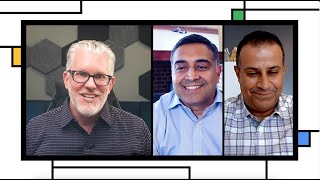
The most expensive mistake in AI isn't the compute cost, it's solving the wrong problem. Too many companies are rushing to write code before they've defined value. Today, we'll hear from Marcus Oliver, who leads Google Delta, our crack professional services team focused on AI transformation. He's here to explain why you need to put down the keyboard and pick up the whiteboard marker. We're talking about how to avoid the bill trap and focus on business outcomes. I'm Salem Hasham and welcome to the AI vantage. Beyond the AI hype lies your next big opportunity. I'm Salem Hasham, director of AI transformation at Google Cloud, where I bring more than two decades of working with CEOs and their leadership teams to deliver business impact. Join me as I sit down with the brightest minds from Google, our partners, and customers to share real world stories and proven strategies for AI success. This is your seat at the table. Welcome to the AI Vantage. Marcus, thanks for joining us. Before we begin, I'd love to maybe delve into your history. So, the more I've gotten to know you, I think you've done some really interesting stuff. Uh, our audience, maybe just give us a sense of, you know, where you came from, your journey, and how that brings you to doing what you do now. >> Uh, uh, so thank you. Yeah. So, I've been in the US 25 years now. Uh, originally England. Uh, you may have sensed the accent being a fellow Brit. >> Um, and, uh, pretty soon after I I was working in advertising actually at the time, but pretty soon after arriving, I started to get more fascinated by innovation. Um, and uh, together with some partners built a firm called Fahrenheit 212 um, in the innovation strategy space. Um so we for maybe 10 years had built that till 2016 we sold that to Capgeemini where we then you know were part of the team that kind of helped develop their consultancy business that became invent. Um I left uh 2022 to join Google and have been uh building this team delta for um you know just over three and a half years now. Um, and uh, yeah, it's been a wonderful experience being part of Google. >> Yeah. What I've had the team behind the the Frame TV, the the endless combination Coke Fountain. So, I mean, innovation is in your DNA. >> I think it's sort of in English people's DNA actually. there there's a uh you know we have more patents I think than uh um you know per head than most countries and and very much you know it was a passion to try and like be creative find a new way of developing products and yeah I've been fortunate enough to work on some great projects over the years with some good companies and um you know no more than now being you know in Google with all of the technology that we have um that we can bring to bear for our you know customers. Um so yeah that's particularly kind of interesting toolkit to be to be innovating with uh right now. So yeah that's uh that's sort of been the the the journey. >> So before we dive I think into the big question of of what is Delta and and your role can you maybe help us set the scene. So there's a lot of noise in the market today when we think about AI. There are those who are still scratching their head saying, you know, what what is AI and how do I deploy it? There are others that are actively deploying it, maybe doing interesting things. But how much of the noise in the marketplace today is reality? Um, and then how do we help our audience dispel, you know, the hype to say, look, here's how you should think about what is effectively a groundbreaking technology in practical terms. >> Yeah. So I mean even within the three years that I've been you know within Google the narrative has changed around AI a lot right um and it's been you know tremendous to to see uh the excitement around that um and I think there have been a few kind of [snorts] not false dawns exactly but there have been a few areas of um you know maybe overhype um overbelief what what we've done at Google. If you uh look to the ROI uh of AI report from 2025 that we put out, I think what we're seeing is um I think this was 3 and a half thousand executive CEOs that we interviewed around that. We're seeing 74% of of of that group say within 12 months they're starting to see return on AI. Um, and that's very much what we're seeing in in Delta with our customer uh um relationships and and projects. Obviously, we're very focused on making sure that we're delivering the right value. And I think that's kind of the the the change of perspective. it it beyond the hype there's a lot more conversation around value returns and and how to measure the value and how to you know think through what that um you know those metrics need to be for success in the business. So that's been the shift I think recently from maybe a little bit let's just put our toe in the water and see what AI can do to how can AI change our business. So from I think experimentation that we saw over the last couple of years, what I'm hearing is >> 75% of those who are taking an active role in really thinking about AI are seeing a 12-month ROI. Is that correct? >> Yes. Uh so that was what the survey said. 74% I think was the uh the precise uh uh number. So the the they are within that time starting to see the return on that investment um or see the possibility from the investment in in technology. So you know these days you can you know within 12 months you should be able to get a fairly good understanding as to what uh uh possibilities can be um in these projects. You know the the innovation life cycle has gone from you know sometimes multiple years to to sort of minutes in some places right. So uh yeah, we're certainly seeing uh the possibility of seeing those returns >> and that's part of the challenge. AI is developing so quickly. We seem to be releasing models, I guess, every 3 months on a clip, which just means the innovation cycle is much faster now. And so let's pull a thread on that. But before we we sort of get to the details, I'd love to explore Delta. So I'm sure our audience understand that Google uh is a foundation model builder. Google as a technology service provider >> but there is a part of Google uh that really thinks about working with our customers and you know driving towards impact and Delta's core to that. So help us understand what Delta is and specifically you know the DNA of transformation and innovation that you bring how is that being realized in a world of AI. Um, so yeah, we're focused on uh creating, you know, the first, the new, the moments that matter, the the areas that haven't been built before, working with our customers to kind of be at the frontier. um not just AI but predominantly AI and in uh you know we're we're very much trying to use um the Google processes, methodologies um uh products, tools uh to bring to our customers and and work with them either with great partners like McKenzie or you know directly with uh the customer not for the customer. So we're not outsourced development. We're there to bring the uh approaches and the the knowledge that Google have of building these systems. As one of the first AI first companies, we have a lot of experience in this in this in this world. So how we think about uh development, how we uh organize our our our our businesses, how we develop product, how we execute at scale. All of those kind of uh perspectives are places we have knowledge and can bring that to an engagement and hopefully enable the great working relationship that's going to drive impact and outcome. >> So let's double click. I mean I I think you know in the preAI world around large scale technology change there was a standardized approach as a well understood methodology it feels like AI is different and if we think about AI and particularly agentic what makes it different and then how do you bring innovation to the business is it a case of working with technology to work out what to do is it the business that takes the lead in these conversations >> yeah I think well one major shift is that it it has conversations and and almost ownership of of these projects has shifted from often the technology arm of businesses to a more um businessoriented conversation. Um that's been good for me. uh you know I I love technology but but my background is is more speaking to the seauite and the CEOs and the strategic advisers uh you know strategic advice that we can provide to those companies. So what what I think we are are are seeing is is is a is a is a shift to not just a a desire to to try technology but to make sure that it's built on core business needs, core consumer and user needs um and prioritizing those kind of strategic initiatives and and and goals that will enable um the the kind of shift. So we're moving from kind of yeah testing our waters with individual use cases and and singular projects to a much more how can this technology underpin the kind of business process change that is going to uh you know enable the kind of you know long-term success and uh and gains that these businesses are looking for. >> And I think it's fascinating. So what I'm hearing and I I see it in my own work is now this >> this shift away from experimentation to actually looking at implementations and in many cases you know the experimentation has given great ideas but it's about the realization >> uh you know conversations you and I have had >> about the pivot there seems to me I think another shift happening is I'd love to bring these two together away from the rolebased you know process the chat or the uh augmented email towards more of a a business value chain and that's sort of I think the underpinnings of Agentic. So if you can help our audience understand what Agentic is and what that shift represents. >> Yeah. So I think that uh you know the first wave of building agents was you know quite personadriven right. So we would see uh you know potentially driven from these businesses around productivity gains and and and uh efficiencies. But you know we were maybe going after a particular role within a company where you thought that if you built an agent providing that role you would be able to you know save some uh and increase some efficiency around that business. Um what we have uh evolved to is is not just thinking about individual personas but thinking much more around kind of the processes that underpin multiple personas and multiple >> a persona is that for example an HR manager. What do we mean by a person? >> Yeah. So uh I I think you know a good way to describe this the shift maybe is that instead of thinking of a gentic building an agent that replaces an analyst building a system of agents that does the analyzing. So getting into the more long-term, you know, uh, you know, structure of how these, you know, journeys might work through a business and and optimizing that with AI, >> right? >> And this is what we commonly hear is reimagining a value chain. >> So what does it take to become one of these reimagineers? Because to me, it sounds like a, you know, a complex process. Just help demystify. >> Yeah. I mean, you know, it's interesting you sort of talked about kind of, you know, there was a lot of experimentation and >> that is is a good thing. We want to be testing, we want to be trying, we want to be experimenting, but but it shouldn't be without the strategic thinking that goes into it. And I think that um you know we've had uh you know potentially in these businesses a little bit too uh you know because it's so easy to build agents we have so many uh opportunities for these different agents to be built. you kind of get into the problem of agent sprawl. And I think what we really need to do is come and think strategically of these business value chains. H do the right planning and and and and thinking in advance of of of always kind of running in at coding and and in doing so make sure that we're aimed at strategic goals, aimed at at at the right um you know long-term impact uh aimed at the right um you know logical uh multi- aent systems. uh all of those um all of that planning can be incredibly helpful and effective um in advance of of of of experimentation or in parallel to experimentation. um you know we're you know Google as a uh you know a process design sprints all of these things experimentation is a great part of that just don't only do that do it with a strategic lens do it with a a good understanding of uh of of the importance that it can provide >> let's pull a thread on that and I think you brought up something in our past conversations that that's always stuck with me and this concept called the coding trap and so let's maybe begin with what what is the coding rap and why do we think that's not the right approach? Um but given a lot of our audience are either partners who are thinking how do you know how do we start developing the capabilities we need or their potential and actual customers who are saying how do we actually drive the adoption? How do we mobilize? >> How should we think about an agentic transformation? What is like what is the DNA? What is the sequence of events? Um and maybe just help us frame that. >> Yeah. Well, so you know, I think the the when I talk about the coding trap, I think it's it's more to do with um companies will be excited about working with Google and the engineers because we have an amazing set of engineers. Um but but what I feel is is a much better way to turn up to be effective with our customers is not just to provide an engineer who can be interesting to to the company to work on certain projects and understand the coding but to turn up with a more forward deployed squad >> where we can uh you know understand uh you know the the the governance that's going to have to be placed in in in in the business to be effective where we can you know make sure that we have the right um product managers that can drive these activities where we have the right strategists and thinkers that make sure that it's aligned to OKRs and strategic business goals. It is only when you have a a much broader view that you're going to be successful. Otherwise, you have that agent sprawl where you have multiple parts of the company building multiple agents with no structure and no governance. And what we want to make sure that our customers are doing for the long-term success is making sure that that they have a a a framework, a governance, a set of the right security protocols that allow areas of the business to do that development, but all for the same end uh opportunity on the same core platform and the same structure because then you can build multi- aent systems around those. then you can get the benefit of of the the oneplus 1 equaling 11 rather than all of these separate um you know agents brawl examples. So the danger of of running at coding without strategic thinking is you're running at the wrong problem and and coding is in you know incredibly expensive. Coding something wrong is incredibly expensive and frustrating and and all of the downsides. So what I think we've seen is in some of the cases where we haven't had success, it wasn't aimed at the right problem. >> And so that's really the core like making sure that we've got, you know, the right, you know, structure and thought around that. Um, and so we can turn up as a holistic team who understand user needs uh and and the creativity and and development and and view as to what that needs to have. um business needs and structure and value that we're going to be aimed at and the right you know technology um uh team that can work with a customer and enable that to be uh long term underpinned by the right governance let's bring that to life um and so without necessarily naming uh any particular client if you can't can you take us through this journey what does it look like what does it feel like and how do we want to think about for for our audience the lessons that they should take away Firstly, I think it it's good to to spend, you know, good time up front understanding and speaking with our customers and you know, making sure that we're um engaged in the right way that this is a a good business problem. Um no I if I you know take a recent example uh in insurance um I we've been working with a a mortgage provider um who uh was hoping to provide their human agents with a set of information that could better um service their customers and uh provide a better customer experience and and uh long-term user value and and all of those kind of uh you know important uh uh key metrics. um what if you know you know kind of some of the mortgage insurance world there's it's incredibly complicated with information in so many different silos. So what was happening with a number of these human agents is they would have four or five different pages open trying to get all of that information to hand and and skip across these different pieces. This is a great job for AI. It's a great job for for a multi- aent system where you can start to think about you know the um you know the analyst a agent the uh you know different parts of information whether that's policies whether that's customer legacy information whether that's uh calculating different uh um uh pricing options for customers. So, if a customer was to call in um uh to understand uh you know that their escrow amount has changed, they want to understand why that's changed, they want to understand what that new bill looks like. There's several parts to that question that an orchestrator agent can support pulling all of the different information from the separate agents >> in order to then facilitate the human uh you know customer experience person to to have that conversation in the right way. So they've got the what they've got the why that can pull together into a you know a simple conversation and then be provided with the right empathy. Right. So um you know depending on the insurance area some of those conversations need to be very much handled by a human with certain empathy. So we we're either supporting some of those human people sometimes in in cases we're replacing um you know the the need for for that completely. So you know just depending on on on the industry and the and and the need. So what I'm hearing is focus on the problem at hand. Really think long and hard strategically about the value chain. What are the things in the process? >> Yeah. >> And how should they run as opposed to augmenting what happens today? >> Don't think of individual personas, but ultimately I love this notion of the orchestrator. >> Yeah. >> Have an orchestrator that can draw on different personas as needed and really focus on the outcome. >> Yes. >> Fantastic. And so let's end perhaps with with with a really hard question. And so if AI could solve any mystery, what would that be? >> What is great is to start to see how Google is applying itself on some of these big world problems as well. obviously like AlphaFold, but we're starting to believe that within the next 10 years, we may see um such advances in um you know, medical uh uh knowledge and and knowledge around diseases that we can start to eradicate a large percentage of of of what has been, you know, interfering in in uh in in daily lives with people. And and so I'm I'm very excited about the bigger problems like that that uh you know AI will tackle. Um whether that's climate change or disease like we're going to start to see massive advances in the next few years. Um so that's kind of I think some of the bigger picture items. Yeah, >> that's fantastic. Really is the next evolution. >> It really will be. Yeah. >> Marcus, it's been a real pleasure. Thank you very much. >> Excellent. Very nice. >> And thank you for joining us. We look forward to having you on the next episode of the AI Vantage. Thank you for tuning in to the AI Vantage. Be sure to follow us on social. If you're interested in learning more about the Google partner ecosystem, visit the address on the screen below. Remember, the best way to predict the future is to build it. See you next time.
Original Description
Watch more episodes of The AI Vantage → https://goo.gle/3MjlPvE
Explore Google Cloud → https://goo.gle/45LktAv
What’s the most expensive mistake in AI? (Hint: It isn’t related to computing costs.) Marcus Oliver, lead of Google delta – our professional services team –, joins us to discuss why the most expensive mistake in AI is rushing to code without a strategy. He details how businesses can escape the "coding trap" by focusing on reimagining value chains and deploying multi-agent systems to drive real business outcomes.
Watch on YouTube ↗
(saves to browser)
Sign in to unlock AI tutor explanation · ⚡30
Playlist
Uploads from Google Cloud · Google Cloud · 0 of 60
← Previous
Next →
1
 2
2
 3
3
 4
4
 5
5
 6
6
 7
7
 8
8
 9
9
 10
10
 11
11
 12
12
 13
13
 14
14
 15
15
 16
16
 17
17
 18
18
 19
19
 20
20
 21
21
 22
22
 23
23
 24
24
 25
25
 26
26
 27
27
 28
28
 29
29
 30
30
 31
31
 32
32
 33
33
 34
34
 35
35
 36
36
 37
37
 38
38
 39
39
 40
40
 41
41
 42
42
 43
43
 44
44
 45
45
 46
46
 47
47
 48
48
 49
49
 50
50
 51
51
 52
52
 53
53
 54
54
 55
55
 56
56
 57
57
 58
58
 59
59
 60
60

Top 3 ways organizations are adjusting their cloud strategies to prepare for economic uncertainty
Google Cloud
Google Cloud Retail Search and Browse Console deep dive
Google Cloud
Google Cloud Backup and DR - How to mount, clone or restore a VMware VM
Google Cloud
Google Cloud Backup and DR - VMware vSphere Backup Overview
Google Cloud
Google Cloud Backup and DR - Creating backup Plans for VMware VM backups
Google Cloud
Google Cloud Backup and DR - Compute Engine Instance Backups and Sole Tenant Nodes
Google Cloud
Google Cloud Backup and DR - Managing Service Accounts
Google Cloud
Let’s solve for what’s next
Google Cloud
Google Cloud Executive Briefing Center | Cloud Space | Silicon Valley
Google Cloud
Tinyclues with Google Cloud offers CRM Intelligence to maximize conversions
Google Cloud
Aible partners with Google Cloud helping customers build predictive models within minutes
Google Cloud
TELUS streamlines big data ingestion with help from Google Cloud and Accenture
Google Cloud
Getting started with Apigee API Management
Google Cloud
Google Cloud Retail Search
Google Cloud
Building your first API proxy with Apigee
Google Cloud
Brands and agencies develop dynamic video ads with Connected-Stories NEXT and Google Cloud
Google Cloud
Redefining the transportation industry
Google Cloud
Google Cloud Project Katalyst
Google Cloud
Israel's Family Court: Creating more compelling experiences for its citizens
Google Cloud
Tausight partners with Google Cloud to help healthcare industry protect PHI activity & take action
Google Cloud
Google Cloud Retail Browse
Google Cloud
Verifying API keys and debugging your API proxy flow
Google Cloud
Getting started with Apigee API Management
Google Cloud
Adding policies to your APIs
Google Cloud
Google Cloud Backup and DR - Configuring Google Cloud VMware Engine to work with Backup and DR
Google Cloud
Topaz Subsea Cable
Google Cloud
Episode 29: Building a culture of data literacy with Latin America’s biggest ecommerce platform
Google Cloud
Weshalb Datananalysten die Sparringspartner von Produktmanagern sein sollten
Google Cloud
Warum und wie METRO eine Machine Learning-Pipeline implementiert hat
Google Cloud
Wie nutzt METRO Data Science, um geschäftliche Herausforderungen zu meistern?
Google Cloud
Google Cloud in Qatar. Let's get solving.
Google Cloud
Google Cloud for Qatar
Google Cloud
Doha has a new Google Cloud region
Google Cloud
The new Google Cloud region in Qatar
Google Cloud
Build, tune, and deploy foundation models with Vertex AI
Google Cloud
Generative AI on Google Cloud
Google Cloud
Who will be coming to Google Cloud Day Tel Aviv? #Shorts
Google Cloud
Protect your organization at the edge
Google Cloud
Google Cloud Backup and DR Alert Notifications setup
Google Cloud
Build, tune, and deploy foundation models with Generative AI Support in Vertex AI
Google Cloud
Where the Internet Lives: Data center on the prairie
Google Cloud
Which developer program are you joining?
Google Cloud
Lufthansa Group baut intelligente Systeme zur Vereinfachung des Flugbetriebs
Google Cloud
How ASML revived Moore's Law and remade chipmaking
Google Cloud
CMO of Unity celebrates Women's History Month
Google Cloud
Vint Cerf on Google Cloud Digital Leader
Google Cloud
Mobile World Congress 2023
Google Cloud
Topaz - Canada
Google Cloud
Google Data Cloud & AI Summit 2023: Reveal opportunities to transform your business
Google Cloud
Building a conversational bot with Google Cloud Gen App Builder
Google Cloud
Elisa Polystar and Google Cloud partner to bring the power of analytics and automation to CSPs
Google Cloud
Network modernization - how can CSPs start now?
Google Cloud
How Semios uses imported and remote models for inference with BigQuery ML
Google Cloud
Deliver your AI solutions up to 100 times faster with Google Cloud partner, Snorkel AI
Google Cloud
Capture consumer perspectives for CPG using NLP and analytics with Harmonya and Google Cloud
Google Cloud
Delivering Cloud-Native Network Transformation
Google Cloud
Proactively detect & investigate anomalies & data quality issues in BigQuery with Telmai
Google Cloud
Introducing AlloyDB Omni
Google Cloud
Episode 30: How Auto Trader transitioned to the cloud to analyze tricky customer data
Google Cloud
MongoDB Atlas on Google Cloud
Google Cloud
More on: AI Systems Design
View skill →



Related Reads
📰
📰
📰
📰
Building Vendor-Neutral AI Agents in .NET: A Complete Enterprise Architecture Guide
Medium · Programming
The envelope everyone is building for AI agents — and why I'm not shipping it
Dev.to AI
How We Built a Self-Hosted AI Interviewer with Next.js, Supabase, and WebSockets
Dev.to AI
Stack Overflow Is Dying. The AI That Killed It Could Be Next.
Dev.to AI
🎓
Tutor Explanation
 DeepCamp AI