Getting Started with Microsoft Expressive Pixels (2 of 9)
Key Takeaways
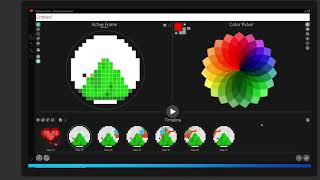
This video covers the basics of getting started with Microsoft Expressive Pixels, including downloading the app, connecting a device, and previewing menu options. The video demonstrates how to use the Expressive Pixels app on Windows 10 with the May 2019 update or higher, and how to connect LED displays using USB or Bluetooth.
Full Transcript
[Music] hi there welcome to the expressive pixels community i'm stacy and today i'm going to help you get started so you can begin to express connect and share with expressive pixels first there are a few things we need to do number one make sure you're running windows 10 operating system with the may 2019 update or higher you can check that in your system settings next in order to bring your animations to life you may want a device in addition to your pc to show your animations on like the sparklet i have here you can connect these to your pc with either a usb connection or wireless bluetooth connection there are many available led displays you can get from third-party such as adafruit sparkfun and silicon squared or you can even create your own led display and now we'll want to download the app let's go into the microsoft store and in the search bar at the top we'll search for expressive pixels okay there it is select that and this is where it will have you download the app and install it we can see that mine is already installed so let's go ahead and launch and our expressive pixels app will open up great now with the app open and an led device ready to go we can get started i'm going to walk you through the interface and show you how to connect your device so you can begin creating your own expressions from there you can check out our other tutorials for more detailed instructions you'll notice when you open the app there are quite a few samples already installed and if i hover over them i can see how they will animate when shown on a device let's take a look at our menu bar i'll select the menu icon at the top left to expand our menu descriptions first we have devices this is where you will connect your device if you hover over the device you will see a button that says connect you'll notice it's also giving me the option to connect by bluetooth now if you have more than one device here this is where you can choose which one to display your animations on and you can also name each of your devices so you'll know which is which i'm calling this one mysparklet now you'll want to be sure to be connected if you want your animations to show up on your device and you'll need to reconnect each time you open expressive pixels once connected you'll see some of the settings preferences that can be adjusted like specifying how you want to preview your animations on your device and setting the brightness level as well as easily updating the firmware if you've been notified there's an update we will cover more on the device in a later tutorial next we have our cloud account here you'll want to sign in to a personal microsoft account in order to share your animations this would be a personal email address that you would use for public microsoft services such as skype xbox and the microsoft store you'll type in your display name here and you can choose any name that you want associated with your animations and save your name next we have three types of animation galleries first one is my animations and this is where all of your own animations will be stored as well as the installed sample animations next is our community gallery where you'll find animations shared from others in the community and where you can share yours you'll need to connect to your personal online account in order to share your own animations and the third gallery is our device animations and these are the ones stored on your connected led device and the last item is the developer console for all of our developers and maker community you can find more information on this in our other tutorials when ready to begin make sure you're in the my animation screen and you'll want to select new animation from the top right over here okay now you're ready to make your own masterpiece watch the creating images tutorial to help jump start the process be sure to check out the other tutorial videos for more detailed instructions on creating editing and managing your animations and sharing them with others and for our developers and maker community you can find instructions on how to create your own display device thanks for watching try the app and let us know what you think visit us at aka dot ms whack expressive pixels to find out more [Music] you
Original Description
Learn what you need to get started with Expressive Pixels, including downloading the app, connecting your device and previewing the menu options.
More at https://aka.ms/expressivepixels
Watch on YouTube ↗
(saves to browser)
Sign in to unlock AI tutor explanation · ⚡30
Playlist
Uploads from Microsoft Research · Microsoft Research · 29 of 60
1
 2
2
 3
3
 4
4
 5
5
 6
6
 7
7
 8
8
 9
9
 10
10
 11
11
 12
12
 13
13
 14
14
![Microsoft Urban Futures Summer Workshop | Data Driven Urban Transformation [Day 1]](https://i.ytimg.com/vi/-5Cx8cUQRfY/mqdefault.jpg) 15
15
![Microsoft Urban Futures Summer Workshop | Sensors and Data [Day 2]](https://i.ytimg.com/vi/Q5HBThuj4bY/mqdefault.jpg) 16
16
![Microsoft Urban Futures Summer Workshop | Policy and Social Impact [Day 3]](https://i.ytimg.com/vi/zMmsXTcuYlQ/mqdefault.jpg) 17
17
 18
18
 19
19
 20
20
 21
21
 22
22
 23
23
 24
24
 25
25
 26
26
 27
27
 28
28
 ▶
▶
 30
30
 31
31
 32
32
 33
33
 34
34
 35
35
 36
36
 37
37
 38
38
 39
39
 40
40
 41
41
 42
42
 43
43
 44
44
 45
45
 46
46
 47
47
 48
48
 49
49
 50
50
 51
51
 52
52
 53
53
 54
54
 55
55
 56
56
 57
57
 58
58
 59
59
 60
60

Frontiers in ML: Learning from Limited Labeled Data: Challenges and Opportunities for NLP
Microsoft Research
Frontiers in Machine Learning: Climate Impact of Machine Learning
Microsoft Research
Frontiers in Machine Learning: Security and Machine Learning
Microsoft Research
Hope Speech and Help Speech: Surfacing Positivity Amidst Hate
Microsoft Research
Early Indicators of the Effect of the Global Shift to Remote Work on People with Disabilities
Microsoft Research
Remote Work and Well-Being
Microsoft Research
Challenges and Gratitude of Software Developers During COVID-19 Working From Home
Microsoft Research
Towards a Practical Virtual Office for Mobile Knowledge Workers
Microsoft Research
Impact of COVID-19 crisis on the future of work in India
Microsoft Research
Empowering and Supporting Remote Software Development Team Members through a Culture of Allyship
Microsoft Research
How Work From Home Affects Collaboration: Information Workers in a Natural Experiment During COVID19
Microsoft Research
Phong Surface: Efficient 3D Model Fitting using Lifted Optimization
Microsoft Research
Managing Tasks Across the Work-Life Boundary: Opportunities, Challenges, and Directions
Microsoft Research
Microsoft Urban Futures Summer Workshop | Data Driven Urban Transformation [Day 1]
Microsoft Research
Microsoft Urban Futures Summer Workshop | Sensors and Data [Day 2]
Microsoft Research
Microsoft Urban Futures Summer Workshop | Policy and Social Impact [Day 3]
Microsoft Research
Directions in ML: Algorithmic foundations of neural architecture search
Microsoft Research
MineRL Competition 2020
Microsoft Research
Can we make better software by using ML and AI techniques? With Chandra Maddila and Chetan Bansal
Microsoft Research
From Paper to Product
Microsoft Research
SkinnerDB: Regret Bounded Query Evaluation using RL
Microsoft Research
From SqueezeNet to SqueezeBERT: Developing Efficient Deep Neural Networks
Microsoft Research
Programming with Proofs for High-assurance Software
Microsoft Research
Platform for Situated Intelligence Overview
Microsoft Research
Directional Sources & Listeners in Interactive Sound Propagation using Reciprocal Wave Field Coding
Microsoft Research
Galactic Bell Star Music Demo
Microsoft Research
Importing Animations in Microsoft Expressive Pixels (9 of 9)
Microsoft Research
Welcome to Microsoft Expressive Pixels (1 of 9)
Microsoft Research
Getting Started with Microsoft Expressive Pixels (2 of 9)
Microsoft Research
Creating an Image in Microsoft Expressive Pixels (3 of 9)
Microsoft Research
Creating Animations in Microsoft Expressive Pixels (4 of 9)
Microsoft Research
Managing Animation Galleries in Microsoft Expressive Pixels (5 of 9)
Microsoft Research
Creating Fragments in Microsoft Expressive Pixels (6 of 9)
Microsoft Research
Using Layers in Microsoft Expressive Pixels (7 of 9)
Microsoft Research
Exporting Animations with Microsoft Expressive Pixels (8 of 9)
Microsoft Research
What Kind of Computation is Human Cognition? A Brief History of Thought (Episode 2/2)
Microsoft Research
What Kind of Computation is Human Cognition? A Brief History of Thought (Episode 1/2)
Microsoft Research
Planeverb: Interactive sound propagation for dynamic scenes using 2D wave simulation
Microsoft Research
Making cryptography accessible, efficient, and scalable with Dr. Divya Gupta and Dr. Rahul Sharma
Microsoft Research
Beyond the mega-data center: networking multi-data center regions (SIGCOMM 2020 Talk)
Microsoft Research
Optics for the cloud – Light at the end of the tunnel? (SIGCOMM 2020 Workshop)
Microsoft Research
Beyond the mega-data center: networking multi-data center regions (SIGCOMM 2020 short talk)
Microsoft Research
Sirius: A Flat Datacenter Network with Nanosecond Optical Switching (SIGCOMM 2020 short talk)
Microsoft Research
Novel Image Captioning
Microsoft Research
Forest Sound Scene Simulation and Bird Localization with Distributed Microphone Arrays
Microsoft Research
Decoding Music Attention from “EEG headphones”: a User-friendly Auditory Brain-computer Interface
Microsoft Research
How does holographic storage work?
Microsoft Research
The physics of hologram formation in iron doped lithium niobate
Microsoft Research
Introduction to coax: A Modular RL Package
Microsoft Research
Directions in ML: "Neural architecture search: Coming of age"
Microsoft Research
Microsoft Research AI Breakthroughs 2020: 20 minute research talks + Q&A panel
Microsoft Research
Fireside Chat with Johannes Gehrke during Microsoft Research AI Breakthroughs 2020
Microsoft Research
Fireside Chat with Susan Dumais during Microsoft Research AI Breakthroughs 2020
Microsoft Research
Microsoft Research AI Breakthroughs 2020: 20 minute research talks, Q&A panel, and event wrap-up
Microsoft Research
Clinical Research with FHIR
Microsoft Research
Soundscape Street Preview
Microsoft Research
Tilt-Responsive Techniques for Digital Drawing Boards
Microsoft Research
SurfaceFleet: Exploring Distributed Interactions Unbounded from Device, Application, User, and Time
Microsoft Research
Haptic PIVOT: On-Demand Handhelds in VR
Microsoft Research
SurfaceFleet Supplemental Video Demonstration (UIST 2020)
Microsoft Research
🎓
Tutor Explanation

 DeepCamp AI