Why democracy matters - Rory Stewart
Key Takeaways
Rory Stewart argues for the importance of democracy in spite of its current challenges
Full Transcript
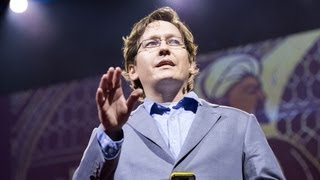
[Music] [Music] [Applause] So, little Billy goes to school and he sits down and the teacher says, "What does your father do?" And little Billy says, "My father plays the piano in an opium den." So teacher rings up the parents and says, "Very shocking story from little Billy today. Just heard that he claimed that you play the piano in an opium den." And the father says, "I'm very sorry. Yes, it's true. I lied. But how can I tell an 8-year-old boy that his father is a politician? Now, as a politician myself, standing in front of you or indeed meeting any stranger anywhere in the world, when I eventually reveal the nature of my profession, they look at me as though I'm somewhere between a snake, a monkey, and an iguana. And through all of this, I feel strongly that something is going wrong. 400 years of maturing democracy, colleagues in parliament who seem to me as individuals reasonably impressive, an increasingly educated, energetic, informed population, and yet a deep, deep sense of disappointment. My colleagues in parliament include in my new intake family doctors, business people, professors, distinguished economists, historians, writers, army officers ranging from colonels down to regimental sergeant majors. All of them, however, including myself, as we walk underneath those strange stone gargoyles just down the road, feel that we become less than the sum of our parts. Feel as though we have become profoundly diminished. And this isn't just a problem in Britain. It's a problem across the developing world and in middle inome countries too. In Jamaica, for example, look at Jamaican members of parliament. You meet them and they're often people who are road scholars who've studied at Harvard or at Princeton. And yet you go down to Downtown Kingston and you are looking at one of the most depressing sites that you can see in any middle-income country in the world. a dismal, depressing landscape of burnt and half-abandoned buildings. And this has been true for 30 years. And the handover in 1979, 1980, between one Jamaican leader who was the son of a road scholar and a QC to another who done a economics doctorate at Harvard, over 800 people were killed in the streets in drugreated violence. 10 years ago, however, the promise of democracy seemed to be extraordinary. George W. Bush stood up in his State of the Union address in 2003 and said that democracy was the force that would beat most of the ills of the world. He said, "Because democratic governments respect their own people and respect their neighbors, freedom will bring peace." Distinguished academics at the same time argued that democracies had these incredible range of side benefits. They would bring prosperity, security, overcome sectarian violence, ensure that states would never again harbor terrorists. Since then, what's happened? Well, what we've seen is the creation in places like Iraq and Afghanistan of democratic systems of government which haven't had any of those side benefits. In Afghanistan, for example, we haven't just had one election or two elections. We've gone through three elections, presidential and parliamentary. And what do we find? Do we find a flourishing civil society, a vigorous rule of law and good security? No. What we find in Afghanistan is a judiciary that is weak and corrupt, a very limited civil society which is largely ineffective. A media which is beginning to get onto its feet, but a government that's deeply unpopular, perceived as being deeply corrupt and security that is shocking, security that's terrible. in Pakistan, in lots of subsaharan Africa. Again, you can see democracy and elections are compatible with corrupt governments, with states that are unstable and dangerous. And when I have conversations with people, I remember having a conversation for example in Iraq with a community that asked me whether the riot we were seeing in front of us. This was a huge mob rans sacking a provincial council building was a sign of the new democracy. The same I felt was true in almost every single one of the middle and developing countries that I went to. And to some extent the same is true of us. Well, what is the answer to this? Is the answer to just give up on the idea of democracy? Well, obviously not. It would be absurd if we were to engage again in the kind of operations we were engaged in in Iraq and Afghanistan. If we were to suddenly find ourselves in a situation in which we were imposing anything other than the democratic system, anything else would run contrary to our values. It would run contrary to the wishes of the people on the ground. It would run contrary to our interests. I remember in Iraq, for example, that we went through a period of feeling that we should delay democracy. We went through a period of feeling that the lesson learned from Bosnia was that elections held too early enshrined sectarian violence enshrined extremist parties. So in Iraq in 2003 decision was made let's not have elections for two years. Let's invest in voter education. Let's invest in democratization. The result was that I found stuck outside my office. A huge crowd of people. This actually a photograph taken in Libya. But I saw the same scene in Iraq of people standing outside screaming for the elections. And when I went out and said, "What is wrong with the interim provincial council? What is wrong with the people that we have chosen? There is the Sunni Sheh. There's the Shia Sheh. There's the seven leaders of the seven major tribes. There's a Christian. There's a Sabian. There are female representatives. There's every political party in this council. What's wrong with the people that we chose? The answer came, the problem isn't the people that you chose. The problem is that you chose them. I have not met in Afghanistan in even the most remote community anybody who does not want a say in who governs them. Most remote community. I've never met a villager who does not want a vote. So we need to acknowledge that despite the dubious statistics, despite the fact that 84% of people in Britain feel politics is broken, despite the fact that when I was in Iraq, we did an opinion poll in 2003 and asked people what political systems they preferred. And the answer came back that 7% wanted the United States, 5% wanted France, 3% wanted Britain, and nearly 40% wanted Dubai, which is after all not a democratic state at all, but a relatively prosperous minor monarchy. Democracy is a thing of value for which we should be fighting. But in order to do so, we need to get away from instrumental arguments. We need to get away from saying democracy matters because of the other things it brings. We need to get away from feeling in the same way human rights matters because of the other things it brings or women's rights matters for the other things it brings. Why should we get away from those arguments? Because they're very dangerous. If we set about saying for example torture is wrong because it doesn't extract good information or we say you need women's rights because it stimulates economic growth by doubling the size of the workforce. you leave yourself open to position where the government of North Korea can turn around and say, "Well, actually, we're having a lot of success extracting good information with our torture at the moment." Or the government of Saudi Arabia to say, "Our economic growth's okay. Thank you very much. Considerably better than yours. So maybe we don't need to go ahead with this program on women's rights." The point about democracy is not instrumental. It's not about the things that it brings. The point about democracy is not that it delivers legitimate, effective, prosperous rule of law. It's not that it guarantees peace with itself or with its neighbors. The point about democracy is intrinsic. Democracy matters because it reflects an idea of equality and an idea of liberty. Reflects an idea of dignity. The dignity of the individual. the idea that each individual should have an equal vote, an equal say in the formation of their government. But if we're really to make democracy vigorous again, if we're really to revivify it, we need to get involved in a new project of the citizens and the politicians. Democracy is not simply a question of structures. It is a state of mind. It is an activity. And part of that activity is honesty. After I speak to you today, I'm going on a radio program called Any Questions. And the thing you will have noticed about politicians on these kind of radio programs is that they never ever say that they don't know the answer to a question. Doesn't matter what it is. They asked about child tax credits, the future of the penguins and the South Antarctic. asked to hold forth on whether or not the developments in Chungqing contribute to sustainable development and carbon capture and we will have an answer for you. We need to stop that to stop pretending to be omnisient beings. Politicians also need to learn occasionally to say that certain things that voters want, certain things that voters have been promised may be things that we cannot deliver or perhaps that we feel we should not deliver. And the second thing we should do is understand the genius of our societies. Our societies have never been so educated, had never been so energized, have never been so healthy, have never known so much, cared so much or wanted to do so much. And it is a genius of the local. One of the reasons why we're moving away from banqueting halls such as the one in which we stand, banqueting halls with extraordinary images on the ceiling of kings enthroned. The entire drama played out here on this space where the king of England had his head lpped off. Why we've moved from spaces like this, thrones like that towards the town hall is we're moving more and more towards the energies of our people and we need to tap that. That can mean different things in different countries. In Britain, it could mean looking to the French, learning from the French, getting directly elected mayors in place in a French commune system. In Afghanistan, it could have mean instead of concentrating on the big presidential and parliamentary elections, we should have done what was in the Afghan constitution from the very beginning, which is to get direct local elections going at a district level and elect people's provincial governors. But for any of these things to work, the honesty and language, the local democracy, it's not just a question of what politicians do, it's question of what the citizens do. For politicians to be honest, the public needs to allow them to be honest. And the media, which mediates between the politicians and the public, needs to allow those politicians to be honest. If local democracy is to flourish, it is about the active and informed engagement of every citizen. In other words, if democracy is to be rebuilt, is to become again vigorous and vibrant, it is necessary not just for the public to learn to trust their politicians, but for the politicians to learn to trust the public. Thank you very much indeed.
Original Description
The public is losing faith in democracy, says British MP Rory Stewart. Iraq and Afghanistan's new democracies are deeply corrupt; meanwhile, 84 percent of people in Britain say politics is broken. In this important talk, Stewart sounds a call to action to rebuild democracy, starting with recognizing why democracy is important -- not as a tool, but as an ideal.
Talk by Rory Stewart.
Watch on YouTube ↗
(saves to browser)
Sign in to unlock AI tutor explanation · ⚡30
Playlist
Uploads from TED-Ed · TED-Ed · 31 of 60
1
 2
2
 3
3
 4
4
 5
5
 6
6
 7
7
 8
8
 9
9
 10
10
 11
11
 12
12
 13
13
 14
14
 15
15
 16
16
 17
17
 18
18
 19
19
 20
20
 21
21
 22
22
 23
23
 24
24
 25
25
 26
26
 27
27
 28
28
 29
29
 30
30
 ▶
▶
 32
32
 33
33
 34
34
 35
35
 36
36
 37
37
 38
38
 39
39
 40
40
 41
41
 42
42
 43
43
 44
44
 45
45
 46
46
 47
47
 48
48
 49
49
 50
50
 51
51
 52
52
 53
53
 54
54
 55
55
 56
56
 57
57
 58
58
 59
59
 60
60

Weaving narratives in museum galleries - Thomas P. Campbell
TED-Ed
Your brain is more than a bag of chemicals - David Anderson
TED-Ed
Biofuels and bioprospecting for beginners - Craig A. Kohn
TED-Ed
Four sisters in Ancient Rome - Ray Laurence
TED-Ed
The brilliance of bioluminescence - Leslie Kenna
TED-Ed
Animation basics: Homemade special effects - TED-Ed
TED-Ed
Pros and cons of public opinion polls - Jason Robert Jaffe
TED-Ed
Excuse me, may I rent your car? - Robin Chase
TED-Ed
Could tissue engineering mean personalized medicine? - Nina Tandon
TED-Ed
The arts festival revolution - David Binder
TED-Ed
What's an algorithm? - David J. Malan
TED-Ed
Why do fingers become pruney? - Mark Changizi
TED-Ed
What is fat? - George Zaidan
TED-Ed
Reasons for the seasons - Rebecca Kaplan
TED-Ed
Mysteries of vernacular: Inaugurate - Jessica Oreck
TED-Ed
Let's pool our medical data - John Wilbanks
TED-Ed
Science is for everyone, kids included - Beau Lotto and Amy O'Toole
TED-Ed
Making a TED-Ed Lesson: Concept and design
TED-Ed
Making a TED-Ed Lesson: Creative process
TED-Ed
Making a TED-Ed Lesson: Animation
TED-Ed
Is space trying to kill us? - Ron Shaneyfelt
TED-Ed
Put those smartphones away: Great tips for making your job interview count - Anna Post
TED-Ed
What on Earth is spin? - Brian Jones
TED-Ed
Gyotaku: The ancient Japanese art of printing fish - K. Erica Dodge
TED-Ed
Mining literature for deeper meanings - Amy E. Harter
TED-Ed
What doctors don't know about the drugs they prescribe - Ben Goldacre
TED-Ed
Why architects need to use their ears - Julian Treasure
TED-Ed
How do you decide where to go in a zombie apocalypse? - David Hunter
TED-Ed
Tracking grizzly bears from space - David Laskin
TED-Ed
The emergence of drama as a literary art - Mindy Ploeckelmann
TED-Ed
Why democracy matters - Rory Stewart
TED-Ed
Ethical riddles in HIV research - Boghuma Kabisen Titanji
TED-Ed
Mysteries of vernacular: Venom - Jessica Oreck and Rachael Teel
TED-Ed
Mysteries of vernacular: Dynamite - Jessica Oreck and Rachael Teel
TED-Ed
The promise of research with stem cells - Susan Solomon
TED-Ed
What color is Tuesday? Exploring synesthesia - Richard E. Cytowic
TED-Ed
How do we experience time? - Matt Danzico
TED-Ed
The contributions of female explorers - Courtney Stephens
TED-Ed
The security mirage - Bruce Schneier
TED-Ed
Mysteries of vernacular: Window - Jessica Oreck and Rachael Teel
TED-Ed
The punishable perils of plagiarism - Melissa Huseman D'Annunzio
TED-Ed
Dare to disagree - Margaret Heffernan
TED-Ed
What we're learning from online education - Daphne Koller
TED-Ed
The rise of human-computer cooperation - Shyam Sankar
TED-Ed
The happy secret to better work - Shawn Achor
TED-Ed
Dissecting Botticelli's Adoration of the Magi - James Earle
TED-Ed
The game-changing amniotic egg - April Tucker
TED-Ed
Equality, sports, and Title IX - Erin Buzuvis and Kristine Newhall
TED-Ed
Neuroscience, game theory, monkeys - Colin Camerer
TED-Ed
Why global jihad is losing - Bobby Ghosh
TED-Ed
Want to help someone? Shut up and listen! - Ernesto Sirolli
TED-Ed
Fighting with non-violence - Scilla Elworthy
TED-Ed
Mysteries of vernacular: Gorgeous - Jessica Oreck and Rachael Teel
TED-Ed
Building unimaginable shapes - Michael Hansmeyer
TED-Ed
Behind the Great Firewall of China - Michael Anti
TED-Ed
How big is the ocean? - Scott Gass
TED-Ed
Is there a center of the universe? - Marjee Chmiel and Trevor Owens
TED-Ed
Vermicomposting: How worms can reduce our waste - Matthew Ross
TED-Ed
How to set the table - Anna Post
TED-Ed
How to fool a GPS - Todd Humphreys
TED-Ed
Related AI Lessons
⚡
⚡
⚡
⚡
5 Copywriting Tricks Hidden Inside Warren Buffett’s Shareholder Letters
Medium · Programming
I Thought Everyone Had Better Ideas Than Me. Then I Learned How Writers Actually Think.
Medium · AI
How to Write Persuasive Content That Builds Trust and Boosts Sales
Medium · SEO
6 Copywriting Formulas That Silently Print Money
Medium · Programming
🎓
Tutor Explanation
 DeepCamp AI