The promise of research with stem cells - Susan Solomon
Key Takeaways
Susan Solomon discusses the potential of research with lab-grown stem cells, highlighting their potential to accelerate disease research and lead to individualized treatment. She advocates for the use of pluripotent stem cell lines as testbeds for curing diseases.
Full Transcript
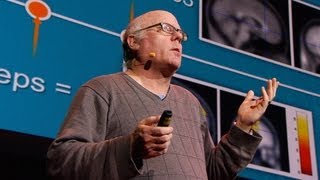
so embryonic stem cells are really incredible cells they're our body's own repair kits and they're pluripotent which means they can morph into all of the cells in our bodies soon we actually will be able to use stem cells to replace cells that are damaged or diseased but that's not what I want to talk to you about because right now there are some really extraordinary things that we are doing with stem cells that are completely changing the way we look and model disease our ability to understand why we get sick and even develop drugs I truly believe that stem cell research is going to allow our children to look at Alzheimer's and diabetes and other major diseases the way we view polio today which is as a preventable disease so here we have this incredible field which has enormous hope for humanity but much like IVF over 35 years ago until the birth of a healthy baby Louise this field has been under siege politically and financially critical research is being challenged instead of supported and we saw that it was really essential to have private safe haven laboratories where this work could be advanced without interference and so in 2005 we started the New York stem cell foundation laboratory so that we would have a small organization that could do this work and and support it what we saw very quickly is the world of both medical research but also developing drugs and treatments is dominated by as you would expect large organizations but in a new field sometimes large organizations really have trouble getting out of their own way and sometimes they can't ask the right questions and there is an enormous gap that's just gotten larger between academic research on the one hand and pharmaceutical companies and biotechs that are responsible for delivering all of our drugs and many of our treatments and so we knew that to really accelerate cures and therapies we were going to have to address this with two things new technologies and also a new research model because if you don't close that gap you really are exactly where we are today and that's what I want to focus on we spent the last couple of years pondering this making a list of the different things that we had to do and so we developed a new technology its software and hardware that actually can generate thousands and thousands of genetically diverse stem cell lines to create a global array essentially avatars of ourselves and we did this because we think that it's actually going to allow us to realize the potential the promise of all of the sequencing of the human genome but it's going to allow us in doing that to actually do clinical trials in a dish with human cells not animal cells to generate drugs and treatments that are much more effective much safer much faster and at a much lower cost so let me put that in perspective for you and give you some context this is an extremely new field in 1998 human embryonic stem cells were first identified and just nine years later a group of scientists in Japan were able to take skin cells and reprogram them with very powerful viruses to create a kind of pluripotent stem cell called an induced pluripotent stem cell or what we refer to as an IPS cell this was really an extraordinary advance because although these cells are not human embryonic stem cells which still remain the gold standard they are terrific to use for modeling disease and potentially for drug discovery so a few months later in 2008 one of our scientists built on that research it took skin biopsies this time from people who had a disease ALS or as you call it in the UK motor neuron disease he turned them into the IPS cells that I've just told you about and then he turned those IPS cells into the motor neurons that actually were dying in the disease so basically what he did was to take a healthy cell and turn it into a six cell and he recapitulated the disease over and over again in the dish and this was extraordinary because it was the first time that we had a model of a disease from a living patient in living human self and as he watched the disease unfold he was able to discover that actually the motor neurons were dying in the disease in a different way than the field had previously thought there was another kind of cell that actually was sending out a toxin and contributing to the death of these motor neurons and he simply couldn't see it until you have a human model so you could really say that researchers trying to understand the cause of disease without being able to have human stem cell models we're much like investigators trying to figure out what had gone terribly wrong in a plane crash without having a black box or a flight recorder they could hypothesize about what had gone wrong but they really had no way of knowing what led to the terrible events and stem cells really have given us the black box for diseases and it's an unprecedented window it really is extraordinary because you can recapitulate many many diseases in a dish you can see what begins to go wrong in the cellular conversation well before you would ever see symptoms appear in a patient and this opens up the ability which hopefully will will become something that is routine in the near term of using human cells to test for drugs right now the way we test for drugs is pretty problematic to bring a successful drug to market it takes on average 13 years that's one drug with a sunk cost of four billion dollars and only 1% of the drugs that start down that road or actually going to get there you can't imagine other businesses that you would think of going into that have these kind of it's a terrible business model but it is really a worst social model because of you know what's involved and and the cost to all of us so the way we develop drugs now are by testing promising compounds on we didn't have disease modeling with human cells so we've been testing them on cells of mice or other creatures or cells that that we engineer but they don't have the characteristics of the diseases that were actually trying to cure you know we're not mice and you can't go into a living person with an illness and just pull out a few brain cells or cardiac cells and then start fooling around in the lab to test for you know promising drug but what you can do with human stem cells now is actually create avatars and you can create the cells whether it's the live motor neurons or the beating cardiac cells or liver cells or other kinds of cells and you can test for drugs promising compounds on the actual cells that you're trying to affect and this is now and it's absolutely extraordinary and you're going to know at the beginning the very early stages of doing your assay development and your testing you're not gonna have to wait 13 years until you've brought a drug to market only to find out that actually it doesn't work or even worse harms people but it isn't really enough just to look at the cells from a few people or a small group of people because we have to step back we've got to look at the big picture look around this room we are all different and a disease that I might have if I had Alzheimer's disease or Parkinson's disease it probably would affect me differently than if one of you had that disease and if we both had Parkinson's disease and we took the same medication but we had different genetic makeup we probably would have a different result and it could well be that a drug that worked wonderfully for me with actually ineffective for you and similarly it could be that a drug that is harmful for you is safe for me and you know this seems totally obvious but unfortunately it is not the way that the pharmaceutical industry has been developing drugs because until now it hasn't had the tools and so we need to move away from this one-size-fits-all model the way we've been developing drugs is essentially like going into a shoe store no one asks you what size you are or you know if you're going dancing or hiking they just say well you have feet here are your shoes it doesn't work with shoes and our bodies are you know many times more complicated than just our feet so we really have to change this there was a very sad example of this in the last decade there's a wonderful drug and a class of drugs actually but the particular drug was Vioxx and for people who were suffering from severe arthritis pain the drug was an absolute lifesaver but unfortunately for another subset of those people they suffered pretty severe heart side effects and for a subset of those people the side effects were so severe the cardiac side effects than they were fatal but imagine a different scenario where we could have had an array of genetically diverse array of cardiac cells and we could have actually tested that drug Vioxx in petri dishes and figured out well okay people with this genetic type are going to have cardiac side effects people with these genetics subgroups or our genetic shoe sizes about 25,000 of them are not going to have any problems the people for whom it was a lifesaver could have still taken their medicine the people for whom it was a disaster or fatal would never have been given it and you can imagine a very different outcome for the company who had to withdraw the drug so that is terrific and we thought all right as we're trying to solve this problem clearly we have to think about genetics we have to think about human testing but there's a fundamental problem because right now stem cell lines as extraordinary as they are and lines are just groups of cells they're made by hand one at a time and it takes a couple of months this is not scalable and also when you do things by hand even in the best laboratories you have variations in techniques and you need to know if you're making a drug that the aspirin you're going to take out of the bottle on Monday is the same as the aspirin that's going to come out of the bottle on Wednesday so we looked at this and we thought okay our T's '''l is wonderful in you know your clothing and your bread and crafts but artisanal really isn't going to work in stem cells so we have to deal with this but even with that there still was another big hurdle and that actually brings us back to the mapping of the human genome because we are all different we know from the sequencing of the human genome that it's shown us all of the AC GS and T's that make up our genetic code but that code by itself or DNA is like looking at the ones and zeros of the computer code without having a computer that can read it it's like having an app without having a smartphone we needed to have a way of bringing the biology to that incredible data and the way to do that was to find a stand in a biological stand-in that could contain all of the genetic information but have it be arrayed in such a way as it could be read together and actually create this incredible avatar we need to have stem cells from all the genetic subtypes that represent who we are so this is what we've built it's an automated robotic technology it has the capacity to produce thousands and thousands of stem cell lines it's genetically arrayed it has massively parallel processing capability and it's going to change the way drugs are discovered we hope and I think eventually what's going to happen is that we're going to want to re-screen drugs on arrays like this that already exist all of the drugs that currently exist and in the future you're going to be taking drugs and treatments that have been tested for side-effects on all of the relevant cells on brain cells and heart cells and liver cells it really has brought us to the threshold of personalized medicine it's here now and in in our family my son has type 1 diabetes which is still an incurable disease and I lost my parents to heart disease and cancer but I think that my story probably sounds familiar to you because probably a version of it is your story at some point in our lives all of us or people we care about become patients and that's why I think that stem-cell research is incredibly important for all of us you
Original Description
Calling them "our bodies' own repair kits," Susan Solomon advocates research using lab-grown stem cells. By growing individual pluripotent stem cell lines, her team creates testbeds that could accelerate research into curing diseases -- and perhaps lead to individualized treatment, targeted not just to a particular disease but a particular person.
Talk by Susan Solomon.
Playlist
Uploads from TED-Ed · TED-Ed · 35 of 60
1
 2
2
 3
3
 4
4
 5
5
 6
6
 7
7
 8
8
 9
9
 10
10
 11
11
 12
12
 13
13
 14
14
 15
15
 16
16
 17
17
 18
18
 19
19
 20
20
 21
21
 22
22
 23
23
 24
24
 25
25
 26
26
 27
27
 28
28
 29
29
 30
30
 31
31
 32
32
 33
33
 34
34
 ▶
▶
 36
36
 37
37
 38
38
 39
39
 40
40
 41
41
 42
42
 43
43
 44
44
 45
45
 46
46
 47
47
 48
48
 49
49
 50
50
 51
51
 52
52
 53
53
 54
54
 55
55
 56
56
 57
57
 58
58
 59
59
 60
60

Weaving narratives in museum galleries - Thomas P. Campbell
TED-Ed
Your brain is more than a bag of chemicals - David Anderson
TED-Ed
Biofuels and bioprospecting for beginners - Craig A. Kohn
TED-Ed
Four sisters in Ancient Rome - Ray Laurence
TED-Ed
The brilliance of bioluminescence - Leslie Kenna
TED-Ed
Animation basics: Homemade special effects - TED-Ed
TED-Ed
Pros and cons of public opinion polls - Jason Robert Jaffe
TED-Ed
Excuse me, may I rent your car? - Robin Chase
TED-Ed
Could tissue engineering mean personalized medicine? - Nina Tandon
TED-Ed
The arts festival revolution - David Binder
TED-Ed
What's an algorithm? - David J. Malan
TED-Ed
Why do fingers become pruney? - Mark Changizi
TED-Ed
What is fat? - George Zaidan
TED-Ed
Reasons for the seasons - Rebecca Kaplan
TED-Ed
Mysteries of vernacular: Inaugurate - Jessica Oreck
TED-Ed
Let's pool our medical data - John Wilbanks
TED-Ed
Science is for everyone, kids included - Beau Lotto and Amy O'Toole
TED-Ed
Making a TED-Ed Lesson: Concept and design
TED-Ed
Making a TED-Ed Lesson: Creative process
TED-Ed
Making a TED-Ed Lesson: Animation
TED-Ed
Is space trying to kill us? - Ron Shaneyfelt
TED-Ed
Put those smartphones away: Great tips for making your job interview count - Anna Post
TED-Ed
What on Earth is spin? - Brian Jones
TED-Ed
Gyotaku: The ancient Japanese art of printing fish - K. Erica Dodge
TED-Ed
Mining literature for deeper meanings - Amy E. Harter
TED-Ed
What doctors don't know about the drugs they prescribe - Ben Goldacre
TED-Ed
Why architects need to use their ears - Julian Treasure
TED-Ed
How do you decide where to go in a zombie apocalypse? - David Hunter
TED-Ed
Tracking grizzly bears from space - David Laskin
TED-Ed
The emergence of drama as a literary art - Mindy Ploeckelmann
TED-Ed
Why democracy matters - Rory Stewart
TED-Ed
Ethical riddles in HIV research - Boghuma Kabisen Titanji
TED-Ed
Mysteries of vernacular: Venom - Jessica Oreck and Rachael Teel
TED-Ed
Mysteries of vernacular: Dynamite - Jessica Oreck and Rachael Teel
TED-Ed
The promise of research with stem cells - Susan Solomon
TED-Ed
What color is Tuesday? Exploring synesthesia - Richard E. Cytowic
TED-Ed
How do we experience time? - Matt Danzico
TED-Ed
The contributions of female explorers - Courtney Stephens
TED-Ed
The security mirage - Bruce Schneier
TED-Ed
Mysteries of vernacular: Window - Jessica Oreck and Rachael Teel
TED-Ed
The punishable perils of plagiarism - Melissa Huseman D'Annunzio
TED-Ed
Dare to disagree - Margaret Heffernan
TED-Ed
What we're learning from online education - Daphne Koller
TED-Ed
The rise of human-computer cooperation - Shyam Sankar
TED-Ed
The happy secret to better work - Shawn Achor
TED-Ed
Dissecting Botticelli's Adoration of the Magi - James Earle
TED-Ed
The game-changing amniotic egg - April Tucker
TED-Ed
Equality, sports, and Title IX - Erin Buzuvis and Kristine Newhall
TED-Ed
Neuroscience, game theory, monkeys - Colin Camerer
TED-Ed
Why global jihad is losing - Bobby Ghosh
TED-Ed
Want to help someone? Shut up and listen! - Ernesto Sirolli
TED-Ed
Fighting with non-violence - Scilla Elworthy
TED-Ed
Mysteries of vernacular: Gorgeous - Jessica Oreck and Rachael Teel
TED-Ed
Building unimaginable shapes - Michael Hansmeyer
TED-Ed
Behind the Great Firewall of China - Michael Anti
TED-Ed
How big is the ocean? - Scott Gass
TED-Ed
Is there a center of the universe? - Marjee Chmiel and Trevor Owens
TED-Ed
Vermicomposting: How worms can reduce our waste - Matthew Ross
TED-Ed
How to set the table - Anna Post
TED-Ed
How to fool a GPS - Todd Humphreys
TED-Ed
More on: Reading ML Papers
View skill →






Related Reads
📰
📰
📰
📰
Meet the innovators under 35 shaping climate tech
MIT Technology Review
Teaching AI, Robotics, & Community: A Hubs-Based K-12 Education Framework for Reaching Rural Schools
ArXiv cs.AI
The Uneven Impact of Generative AI on Student Learning: Examining the Roles of Reliance, Evaluation Literacy, and Course Policy in AI-related Courses
ArXiv cs.AI
This road map could help us decide whether to deploy solar geoengineering
MIT Technology Review
🎓
Tutor Explanation

 DeepCamp AI