Your brain is more than a bag of chemicals - David Anderson
Key Takeaways
Neurobiologist David Anderson discusses the limitations of modern psychiatric drugs in treating the chemistry of the whole brain
Full Transcript
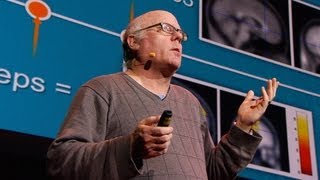
[Music] [Applause] so raise your hand if you know someone in your immediate family or circle of friends who suffers from some form of mental illness I thought so not surprised and raise your hand if you think that basic research on fruit flies has anything to do with understanding mental illness in humans yeah I thought so I'm also not surprised I can see I got my work cut out for me here as we heard from Dr Insel this morning psychiatric disorders like autism depression and schizophrenia take a terrible toll on human suffering we know much less about their treatment and the understanding of their basic mechanisms than we do about diseases of the body think about it in 2013 the second decade of the Millennium if you're concerned about a cancer diagnosis and you go to your doctor you get bone scans biopsies and blood tests in 2013 if you're concerned about a depression diagnosis you go to your doctor and what do you get a questionnaire part of the reason for this is that we have an oversimplified and increasingly outmoded view of the biological basis of psychiatric disorders we tend to view them and the popular press AIDS and abets this view as chemical imbalances in the brain as if the brain were some kind of bag of chemical soup full of dopamine serotonin and neopine phrine this view is conditioned by the fact that many of the drugs that are prescribed to treat these disorders like Prozac act by globally changing brain chemistry as if the brain were indeed a bag of chemical soup but that can't be the answer because these drugs actually don't work all that well a lot of people won't take them or stop taking them because of their unpleasant side effects these drugs have so many side effects because using them to treat a complex psychiatric disorder is a bit like trying to change your engine oil by opening a can and pouring it all over the engine block some of it will dribble into the right place but a lot of it will do more harm than good now an emerging view that you also heard about from Dr Insel this morning is that psychiatric disorders are actually disturbances of neural circuits that mediate emotion mood and affect when we think about cognition we analogize the brain to a computer that's no problem well it turns out that the computer analogy is just as valid for emotion it's just that we don't tend to think about it that way but we know we know much much less about the circuit basis of psychiatric disorders because of the overwhelming dominance of this chemical imbalance hypothesis now it's not that chemicals are not important in psychiatric disorders it's just that they don't bathe the brain like soup rather they're released in very specific locations and they act on specific synapses to change the flow of information in the brain so if we ever really want to understand the biological basis of psychiatric disorders we need to pinpoint these locations in the brain where these chemicals act otherwise we're going to keep pouring oil all over our mental engines and suffering the consequences now to begin to overcome our ignorance of the role of brain chemistry and brain circuitry it's helpful to work on what we biologists call model organisms animals like fruit flies and laboratory mice in which we can apply powerful genetic techniques to molecularly identify and pinpoint specific classes of neurons as you heard about an Alan Jones's talk this morning moreover once we can do that we can actually activate specific neurons or we can destroy or inhibit the activity of those neurons so if we inhibit a particular type of neuron and we find that a behavior is blocked we can conclude that those neurons are necessary for that behavior on the other hand if we activate a group of neurons and we find that that produces the behavior we can conclude that those neurons are sufficient for the behavior so in this way by doing this kind of test we can draw cause and effect relationships between the activity of specific neurons in particular circuits and particular behaviors something that is extremely difficult if not impossible to do right now in humans but can an organism like a fruit fly which is it's a great model organism because it's got a small brain it's capable of complex and sophisticated behaviors it breeds quickly and it's cheap but can an organism like this teach us anything about emotion likee states do these organisms even have emotion likee States or are they just little digital robots Charles Darwin believed that insects had emotion and expressed them in their behaviors as he wrote in his 1872 monograph on the expression of the emotions in man and animals and my aonomus colleague Seymour benzer believed it as well Seymour is the man that introduced the use of dropa here at Caltech in the 60s as a model organism to study the connection between genes and behavior Seymour recruited me to Caltech in the late 1980s he was my Jedi and my Rabbi while he was here and Seymour taught me both to love flies and also to play with science so how do we how do we ask this question it's one thing to believe that flies have emotion likee States but how do we actually find out whether that's true or not now in humans we often infer emotional states as you'll hear later today from facial expressions however it's a little difficult to do that in fruit flies it's kind of like landing on Mars and looking out the window of your spaceship at all the little green men who are surrounding it and trying to figure out how do I find out if they have emotions or not what what can we do it's not so easy well one of the ways that we can start is to try to come up with some general characteristics or properties of emotion likee states such as arousal and see if we can identify any fly behaviors that might exhibit some of those properties so three important ones that I can think of are persistence gradations in intensity and veilance persistence means longlasting we all know that the stimulus that triggers an emotion Causes That Emotion to last long after the stimulus is gone gradations of intensity means what it sounds like you can dial up the intensity or dial down the intensity of emot of an emotion if you're a little bit unhappy the corners of your mouth turn down and you sniffle and if you're very unhappy tears pour down your face and you might SOB veilance means good or bad positive or negative so we decided to see if flies could be provoked into showing the kind of behavior that you see by the proverbial wasp at the picnic table you know the one that keeps coming back to your hamburger the more vigorously you try to swat it away and seems to keep getting irritated so we built a device which we call a puffo mat in which we could deliver little brief air Puffs to fruit flies in these plastic tubes in our laboratory bench and blow them away and what we found is that if we gave these flies in the puff ofat several Puffs in a row they became somewhat hyperactive and continue to run around for some time after the air Puffs actually stopped and took a while to come calm down so we Quantified this Behavior using custom Locomotive Tracking software developed with my collaborator Petro perona who's in the electrical engineering division here at Caltech and what this quantification showed us is that upon experiencing a train of these air Puffs the Flies appear to enter a kind of state of hyperactivity which is persistent longlasting and also appears to be graded more puffs or more intense Puffs make the state last for a longer period of time so now we wanted to try to understand something about what controls the duration of this state so we decided to use our puff aat and our automated tracking software to Screen through hundreds of lines of mutant fruit flies to see if we could find any that showed abnormal responses to the air Puffs and this is one of the great things about fruit flies there are repositories where you can just pick up the phone and order hundreds of vials of flies of different mutants and Screen them in your assay and then find out what Gene is affected in the mutation so doing this screen we discovered one mutant that took much longer than normal to calm down after the air Puffs and when We examined the gene that was affected in this mutation it turned out to encode a dopamine receptor that's right flies like people have dopamine and it acts on their brain brains and on their synapses through the same dopamine receptor molecules that you and I have dopamine plays a number of important functions in the brain including in attention arousal reward and disorders of the dopamine system have been linked to a number of mental disorders including drug abuse Parkinson's disease and ADHD now in genetics it's a little counterintuitive we tend to infer the normal function of something by what doesn't happen when we take it away by the opposite of what we see when we take it away so when we take away the dopamine receptor and the Flies take longer to calm down from that we infer that the normal function of this receptor and dopamine is to cause the Flies to calm down faster after the puff and that's a bit reminiscent of ADHD which has been linked to disorders of the dopamine system in humans indeed if we increase the levels of dopamine in normal flies by feeding them cocaine after getting the appropriate DEA license oh my God we find indeed that these cocaine fed flies calm down faster than normal flies do and that's also reminiscent of ADHD which is often treated with drugs like rlin that act similarly to cocaine so slowly I began to realize that what started out as a rather playful attempt to try to annoy fruit flies might actually have some relevance to a human psychiatric disorder now how far does this analogy go as many of you know individuals Afflicted with ADHD also have learning disabilities is that true of our dopamine receptor mutant flies remarkably the answer is yes as Seymour showed back in the 1970s flies like song birds as you just heard are capable of learning you can train a fly to avoid an odor shown here in blue if you pair that odor with a shock then when you give those trained flies the chance to choose between a tube with the shock paired odor and another odor it avoids the tube containing the blue odor that was paired with shock well if you do this test on dopamine receptor mutant flies they don't learn their learning score is zero they flunk out of Caltech now so that means that these flies have two abnormalities or phenotypes as we geneticists call them that one finds an ADHD hyperactivity and learning disability now what's the causal relationship if anything between these phenotypes in ADHD it's often assumed that the hyperactivity causes the learning disability the kids can't sit still long enough to focus so they don't learn but it could equally be the case that it's the learning disabilities that cause the hyperactivity because the C kids can't learn they look for other things to distract their attention and a final possibility is that there's no relationship at all between learning disabilities and hyperactivity but that they are caused by a common underlying mechanism in ADHD now people have been wondering about this for a long time in humans but in flies we can actually test this and the way that we do this is to delve deeply into the mind of the fly and begin to untangle its circuitry using genetics we take our dopamine receptor mutant flies and we genetically restore or cure the dopamine receptor by putting a good copy of the dopamine receptor Gene back into the fly brain but in each fly we put it back only into certain neurons and not in others and then we test each of their these flies for their ability to learn and for hyperactivity remarkably we find we can completely dissociate these two abnormalities if we put a good copy of the dopamine receptor back in this elliptical structure called the central complex the Flies are no longer are hyperactive but they still can't learn on the other hand if we put the receptor back in a different structure called the mushroom body the learning deficit is rescued the Flies learn well but they're still hyperactive what that tells us is that dopamine is not bathing the brain of these flies like soup rather it's acting to control two different functions on two different circuits so the reason there are two things wrong with our dopamine receptor fly is that the same receptor is controlling two different functions in two different regions of the brain whether the same thing is true in ADHD and humans we don't know but these kinds of results should at least cause us to consider that possibility so these results make me and my colleagues more convinced than ever that the brain is not a bag of chemical soup and it's a mistake to try to treat complex psychiatric disorders just by changing the flavor of the soup what we need to do is to use our Ingenuity and our scientific knowledge know to try to design a new generation of treatments that are targeted to specific neurons and specific regions of the brain that are affected in particular psychiatric disorders if we can do that we may be able to cure these disorders without the unpleasant side effects putting the oil back in our metal engines just where it's needed thank you very much
Original Description
View full lesson: http://ed.ted.com/lessons/your-brain-is-more-than-a-bag-of-chemicals-david-anderson
Modern psychiatric drugs treat the chemistry of the whole brain, but neurobiologist David Anderson believes in a more nuanced view of how the brain functions. He illuminates new research that could lead to targeted psychiatric medications -- that work better and avoid side effects. How's he doing it? For a start, by making a bunch of fruit flies angry. (Filmed at TEDxCaltech.)
Talk by David Anderson.
Watch on YouTube ↗
(saves to browser)
Sign in to unlock AI tutor explanation · ⚡30
Playlist
Uploads from TED-Ed · TED-Ed · 2 of 60
1
 ▶
▶
 3
3
 4
4
 5
5
 6
6
 7
7
 8
8
 9
9
 10
10
 11
11
 12
12
 13
13
 14
14
 15
15
 16
16
 17
17
 18
18
 19
19
 20
20
 21
21
 22
22
 23
23
 24
24
 25
25
 26
26
 27
27
 28
28
 29
29
 30
30
 31
31
 32
32
 33
33
 34
34
 35
35
 36
36
 37
37
 38
38
 39
39
 40
40
 41
41
 42
42
 43
43
 44
44
 45
45
 46
46
 47
47
 48
48
 49
49
 50
50
 51
51
 52
52
 53
53
 54
54
 55
55
 56
56
 57
57
 58
58
 59
59
 60
60

Weaving narratives in museum galleries - Thomas P. Campbell
TED-Ed
Your brain is more than a bag of chemicals - David Anderson
TED-Ed
Biofuels and bioprospecting for beginners - Craig A. Kohn
TED-Ed
Four sisters in Ancient Rome - Ray Laurence
TED-Ed
The brilliance of bioluminescence - Leslie Kenna
TED-Ed
Animation basics: Homemade special effects - TED-Ed
TED-Ed
Pros and cons of public opinion polls - Jason Robert Jaffe
TED-Ed
Excuse me, may I rent your car? - Robin Chase
TED-Ed
Could tissue engineering mean personalized medicine? - Nina Tandon
TED-Ed
The arts festival revolution - David Binder
TED-Ed
What's an algorithm? - David J. Malan
TED-Ed
Why do fingers become pruney? - Mark Changizi
TED-Ed
What is fat? - George Zaidan
TED-Ed
Reasons for the seasons - Rebecca Kaplan
TED-Ed
Mysteries of vernacular: Inaugurate - Jessica Oreck
TED-Ed
Let's pool our medical data - John Wilbanks
TED-Ed
Science is for everyone, kids included - Beau Lotto and Amy O'Toole
TED-Ed
Making a TED-Ed Lesson: Concept and design
TED-Ed
Making a TED-Ed Lesson: Creative process
TED-Ed
Making a TED-Ed Lesson: Animation
TED-Ed
Is space trying to kill us? - Ron Shaneyfelt
TED-Ed
Put those smartphones away: Great tips for making your job interview count - Anna Post
TED-Ed
What on Earth is spin? - Brian Jones
TED-Ed
Gyotaku: The ancient Japanese art of printing fish - K. Erica Dodge
TED-Ed
Mining literature for deeper meanings - Amy E. Harter
TED-Ed
What doctors don't know about the drugs they prescribe - Ben Goldacre
TED-Ed
Why architects need to use their ears - Julian Treasure
TED-Ed
How do you decide where to go in a zombie apocalypse? - David Hunter
TED-Ed
Tracking grizzly bears from space - David Laskin
TED-Ed
The emergence of drama as a literary art - Mindy Ploeckelmann
TED-Ed
Why democracy matters - Rory Stewart
TED-Ed
Ethical riddles in HIV research - Boghuma Kabisen Titanji
TED-Ed
Mysteries of vernacular: Venom - Jessica Oreck and Rachael Teel
TED-Ed
Mysteries of vernacular: Dynamite - Jessica Oreck and Rachael Teel
TED-Ed
The promise of research with stem cells - Susan Solomon
TED-Ed
What color is Tuesday? Exploring synesthesia - Richard E. Cytowic
TED-Ed
How do we experience time? - Matt Danzico
TED-Ed
The contributions of female explorers - Courtney Stephens
TED-Ed
The security mirage - Bruce Schneier
TED-Ed
Mysteries of vernacular: Window - Jessica Oreck and Rachael Teel
TED-Ed
The punishable perils of plagiarism - Melissa Huseman D'Annunzio
TED-Ed
Dare to disagree - Margaret Heffernan
TED-Ed
What we're learning from online education - Daphne Koller
TED-Ed
The rise of human-computer cooperation - Shyam Sankar
TED-Ed
The happy secret to better work - Shawn Achor
TED-Ed
Dissecting Botticelli's Adoration of the Magi - James Earle
TED-Ed
The game-changing amniotic egg - April Tucker
TED-Ed
Equality, sports, and Title IX - Erin Buzuvis and Kristine Newhall
TED-Ed
Neuroscience, game theory, monkeys - Colin Camerer
TED-Ed
Why global jihad is losing - Bobby Ghosh
TED-Ed
Want to help someone? Shut up and listen! - Ernesto Sirolli
TED-Ed
Fighting with non-violence - Scilla Elworthy
TED-Ed
Mysteries of vernacular: Gorgeous - Jessica Oreck and Rachael Teel
TED-Ed
Building unimaginable shapes - Michael Hansmeyer
TED-Ed
Behind the Great Firewall of China - Michael Anti
TED-Ed
How big is the ocean? - Scott Gass
TED-Ed
Is there a center of the universe? - Marjee Chmiel and Trevor Owens
TED-Ed
Vermicomposting: How worms can reduce our waste - Matthew Ross
TED-Ed
How to set the table - Anna Post
TED-Ed
How to fool a GPS - Todd Humphreys
TED-Ed
Related AI Lessons
⚡
⚡
⚡
⚡
I Spent Weeks Looking for a Research Gap Before I Realized I Was Searching the Wrong Way
Medium · AI
ICMI 2026 Reviews [D]
Reddit r/MachineLearning
Workshop submission for main conference paper under review [D]
Reddit r/MachineLearning
Kept context-switching between arxiv, OpenReview, GitHub, and HuggingFace for every paper, so I built this. Chrome extension + website with everything inline, plus citation graph + SPECTER2 neighbors. 3M papers, free, feedback welcome [P]
Reddit r/MachineLearning
🎓
Tutor Explanation

 DeepCamp AI