How Startup Equity REALLY Works
Key Takeaways
The video explains how startup equity works, using real-life examples such as Facebook's early funding rounds, and covers key concepts like valuation, stock options, and share types, including common and preferred shares.
Full Transcript
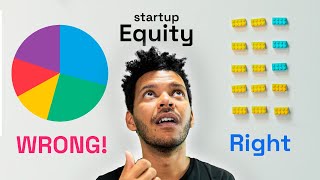
this is how startup Founders usually think about their shares and it's wrong that's not how it works at all but that percentage of the company that chunk of the py is important it's what matters for control and voting rights and for profit sharing and to figure out what you get if you sell the company isn't it not really companies don't really work like pies bricks would be a much better way to represent a company but it's just a lot harder to grasp but if you're building a startup or if you're looking for investors or if you're giving Equity to your employees this is going to be part of your daily life and getting it wrong can get really expensive so let me show you how it works this is our new series start with [Music] explained okay so pies versus bricks llc's are pies and LLC limited liability Corporation is a partnership and it's usually split in percentages but that makes it really hard to bring multiple rounds of investors so most startups are C corporations and those are bricks and so here's a one minute explainer in case you're in a hurry or in case one minute videos take over the world why don't you explain this to me like I am an 8-year-old this is what starter Founders imagine when they think of their share of their startup but in reality startup Equity looks more like this let me explain if Walt and Jesse get together to build I don't know a math lab and they want to split this equally they'll each get 10 shares 50/50 Walt's shares will never change hands or be sold to investors nor will jesses and if they ever decide to bring an investor to their startup what will happen is the company will create new shares for them Walt will still have 10 shares Jesse will still have 10 shares and the new investors will get the new shares in their name and by doing that the company's total shares will change Walt's 10 shares will no longer be 50% of the total so that percentages have Chang changed but not the shares that each one of them owns now how many shares does the investor get for that we need to talk about valuations start valuations are a mess and they're probably the most confusing part of this whole for example Adam Newman the founder of wework raised $350 million for his stealth startup on a$1 billion valuation which sounds made up but it's not and we made a whole bit about it but let's look at a less crazy scenario when Mark Zuckerberg and Eduardo Savin first started Facebook they famously agreed on the 7030 split on their founder Equity those Shares are called common shares and we'll get to that in a sec but then they brought in Peter teal as an investor who agreed to give them $500,000 for what would eventually become about 10% of the company hey guys my back but remember we're not dealing in percentages we're dealing in shares now this investment by Peter te was meant to buy some shares from Facebook shares that the company would issue for him but how many of these OG Facebook shares do $500,000 spot in normal company valuation in the US that's called a 49a valuation that's the stuff that our team would look at to determine how much the company is worth and in this case a company with no Revenue just expenses one could have said that this business is worth nothing but you'd be wrong of course because Facebook today objectively is worth like $900 billion so valuations relate to the Future right to the potential of this company but you still have to agree on what the company is worth now so how do you go about that how do a company Val valtion work in startups at its score a start valuation is like betting odds agreeing on how much to risk and what reward to get if the investor is right but a bunch of things come into play in a startup it's likely that more investors will come in the future so the chunk of the pie left to Founders needs to be enough to keep them motivated and working hard for years or decades to come so going back to that Facebook case Mark and Peter teal agreed that 10% of the company in exchange for $500,000 would be fair so if $500,000 are 10% of the company that means the entire company is worth $5 million that's the post money valuation because assumes the money is already part of the business but that also means that before the money came in the business was valued at $4.5 million that was the pre-money valuation so now let's think of that in bricks let's assume that Mark and Eduardo and all the other guys who were part of Facebook had established the company with a total of 100 shares again if the company is worth $4.5 million then each share is worth $445,000 beer teals $500 ,000 would then be enough to buy about 11 shares of the business which adds up to $495,000 so the company creates those shares and sells them to Peter so we end up with 111 shares Peter has 11 out of 111 which is about 99.9% also for example it orders 30 shares got diluted they're no longer 30% of the company they are now 27% of the total now I caught a lot of Corners to make that explainer easy in reality Peter's investment was a convertible note and we have a whole video of explaining how those work and also since you can't divide a share in half companies aren't established with 100 shares but rather with a million shares or 10 million shares each worth fractions of a dollar so that it's much easier to split the equity also Eduardo was famely screwed out of his own shares I made a spreadsheet with the actual number of shares and the actual distribution of those shares through all these funding rounds if you want to check it out now you'll see that for the most part the shares a founder or an employee got don't change through time but as more shares get created the percentage they represent gets smaller that's very much the case for startup stock options so let's talk about those now in the startup world it's quite common to offer stock options to key employees especially during early stages of the business the idea here is that these early employees are key to the success of the company and since startups don't usually have a lot of money to pay them these are people who are going to work really hard for a not so great salary it's more than I made last year after taxes well we did an IPO last year dude now stock options are a great way to compensate the extra effort and to reward them if the company does succeed now you might think that stock options means giving employees shares of the business and you'd be wrong about that so how do they work let's take the example of an early Facebook it just got its check from Peter teal the company's valued at $5 million and now wants to give stock options to a new employee say the company gave that employee say 30,000 stocks 30 ,000 shares which would be just over 0.5% of the company for tax purposes that employee would be getting would be receiving an income worth about $27,000 and they would have to pay taxes on that regardless of what happens to Facebook later so instead what happens is they get an option to buy it a legal guarantee that says they can purchase those 30,000 shares at the current fair market Price that's called a strike price when Facebook went public price per share was $38 per share so stock option owners would be able to buy them then immediately sell them for $38 so our imaginary employee would have net $1.1 million stock options are a very useful compensation because they're only valuable if the company increases in value if it doesn't then they're not really worth it in wework's case for example employees with stock options stood to make a fortune when the company was valued at $47 billion but we know how that story ended the last point I'll touch on is common versus preferred shares a common share is a normal share which usually entitles the owner to one vote out of the total number of shares and one share of the profits of the business in our Facebook example Mark and Eduardo had both common shares but different investors might want other things or special treatment so Mark famously retained more control of Facebook through the years because he was able to negotiate investor shares with nonone voting rights so if the share has an exception to a rule if it doesn't behave normally then it becomes a preferred share preferred shares might be better or worse than common shares depending on its rules and a company might have different generations of preferred shares with different rules stacked on top of each other and it can get messy really quickly many investors for example want Protections in case the company goes bankrupt for example when bankruptcy happens the company has to liquidate it has to sell everything it owns and whatever money is left gets distributed between the shareholders but liquidation preference would allow those shareholders to get their money back before other shareholders maybe because they were the last invest also most shares can't be sold to third parties Mark couldn't just go off and sell half his shares for profit the rules usually require shareholders to offer them to existing shareholders first remember you can't sell shares usually companies create new shares okay so to recap think blocks not pies don't assume that shares are going to change hands new Shares are going to be created all the time valuations for fundraising are the odds for risk versus reward which are not to be confused with official 409a valuations check out our video on convertible notes if you want to get a grip on how those work grab a free copy of our cap T template which includes the Facebook case study on all the shares and what percentages and what stuff exchange hands and for more startups explained you want to hit that subscribe button and join our by-weekly start CL news we'll see [Music] next
Original Description
Use our Cap Table → https://yt.slidebean.com/la0
We help you navigate Fundraising → https://yt.slidebean.com/uza
--
If you liked this video, check out:
Decoding Convertible Notes → https://youtu.be/njx09wXb9o0
Join the Startup Club newsletter, startup news for busy founders 🕶️ → https://yt.slidebean.com/u7e
–
Help with your Equity and Valuation
--
More videos to check out:
Why WeWork's Founder is Still Rich → https://youtu.be/Ro4KM2vJDkY?si=Ay-d3LZRFz7RzrbE
How Zuck screwed Saverin→ https://youtu.be/hhKPBGYkwiE?si=Jbeisv-lyKI8EFeU
The mafia that rules the tech world → https://youtu.be/wb5vXHiDJD4?si=qE0spya72ryF5Aix
–
We don't just make videos. Slidebean helps founders scale their startups:
The Slidebean Platform → https://yt.slidebean.com/3rz
#slidebean #startups #startupclub #equity #shares #stockoptions
–
Whether you're building a startup, seeking investors, or distributing equity to your team, navigating the financial landscape is a daily challenge. This video covers insights on mastering startup finances and avoiding costly mistakes regarding equity, stock options, and shares.
–
What is 'Slidebean'?
We built a platform to help founders scale their startups, from making your pitch deck to setting up your company and managing your investor relationships.
Our fundraising platform for startups → https://yt.slidebean.com/g75
–
Follow Slidebean
Twitter aka X: http://twitter.com/slidebean
LinkedIn: http://linkedin.com/company/slidebean
Instagram: http://instagram.com/slidebean
Join the Startup Club 🕶️
Subscribe: https://yt.slidebean.com/u7e
Follow Caya
Twitter aka X: http://twitter.com/cayahere
LinkedIn: https://www.linkedin.com/in/caya/
#slidebean #startups #startuptips #equity
Watch on YouTube ↗
(saves to browser)
Sign in to unlock AI tutor explanation · ⚡30
Playlist
Uploads from The Startup Club by Slidebean · The Startup Club by Slidebean · 1 of 60
← Previous
Next →
▶
 2
2
 3
3
 4
4
 5
5
 6
6
 7
7
 8
8
 9
9
 10
10
 11
11
 12
12
 13
13
 14
14
 15
15
 16
16
 17
17
 18
18
 19
19
 20
20
 21
21
 22
22
 23
23
 24
24
 25
25
 26
26
 27
27
 28
28
 29
29
 30
30
 31
31
 32
32
 33
33
 34
34
 35
35
 36
36
 37
37
 38
38
 39
39
 40
40
 41
41
 42
42
 43
43
 44
44
 45
45
 46
46
 47
47
 48
48
 49
49
 50
50
 51
51
 52
52
 53
53
 54
54
 55
55
 56
56
![[Live Webinar] Startup Funding Rounds in the AI Era](https://i.ytimg.com/vi/lHg-UjB0OVo/mqdefault.jpg) 57
57
 58
58
 59
59
![[Live Webinar] How to Pitch an AI Startup to Investors](https://i.ytimg.com/vi/wyPnD2HtURY/mqdefault.jpg) 60
60

How Startup Equity REALLY Works
The Startup Club by Slidebean
Startup shares aren’t pies: they’re bricks. #equity #shares #slidebean #startupclub #startups
The Startup Club by Slidebean
A Startup Valuation is like betting odds 🎰
The Startup Club by Slidebean
Giving Stock Options ≠ Giving Shares ☝️
The Startup Club by Slidebean
The PAINFUL Road from Pitch Deck to Funding
The Startup Club by Slidebean
Every SaaS Acronym Explained
The Startup Club by Slidebean
How would I run a startup (If I had to start over)
The Startup Club by Slidebean
NEVER make an MBA your co-founder
The Startup Club by Slidebean
Raising Venture Capital Takes LONGER Than You Think
The Startup Club by Slidebean
The Startup Club by Slidebean Live Stream
The Startup Club by Slidebean
The 4 Biggest RED FLAGS on a Pitch Deck
The Startup Club by Slidebean
MBA's are NOT great Startup Founders
The Startup Club by Slidebean
NEVER outsource your Minimum Viable Product
The Startup Club by Slidebean
The Ultimate Pitch Deck Guide - 2026
The Startup Club by Slidebean
Avoid this MISTAKE founders commonly make
The Startup Club by Slidebean
How to Raise Startup Funding: EVERYTHING You Need to Know
The Startup Club by Slidebean
Can your Startup raise money?
The Startup Club by Slidebean
How to issue shares to NEW INVESTORS?
The Startup Club by Slidebean
Why Software Patents Are Useless
The Startup Club by Slidebean
Startup Financial Modeling Explained (+ FREE Template)
The Startup Club by Slidebean
You NEED this spreadsheet for your Startup
The Startup Club by Slidebean
What NOBODY Tells You About Selling a Startup
The Startup Club by Slidebean
I Did 3 Startup Accelerators (So You Don't Have To)
The Startup Club by Slidebean
Top 6 Startups that Apple Killed
The Startup Club by Slidebean
The Pitch Deck that Shaped All Pitch Decks
The Startup Club by Slidebean
LLC vs INC: a guide for startups
The Startup Club by Slidebean
How to write a Killer Elevator Pitch - 2025
The Startup Club by Slidebean
How to Scale a Startup Team
The Startup Club by Slidebean
The ONE thing Investors look for in Startups
The Startup Club by Slidebean
The RIGHT Way to Calculate your Market Size (TAM/SAM/SOM)
The Startup Club by Slidebean
Beware of Convertible Notes
The Startup Club by Slidebean
Idea to Exit (and the Most Common Mistakes Founders Make)
The Startup Club by Slidebean
How Much Equity Are Founders Keeping
The Startup Club by Slidebean
Startup Budgeting (And What Most Founders Get Wrong)
The Startup Club by Slidebean
Solo Founder? There’s a catch...
The Startup Club by Slidebean
This Slide shows investors you get it
The Startup Club by Slidebean
Investors Don’t Trust Your Projections
The Startup Club by Slidebean
More Ideas ≠ Better GTM
The Startup Club by Slidebean
You’re Budgeting Your Startup Wrong
The Startup Club by Slidebean
The Hidden Danger of Churn
The Startup Club by Slidebean
Why Startup Founders Lose Equity But Not Control
The Startup Club by Slidebean
Why Startups Die Between Rounds
The Startup Club by Slidebean
From “drop out” to “finish school first”? 🎓➡️🚀
The Startup Club by Slidebean
How to Get Startup Funding: What Convinces An Investor?
The Startup Club by Slidebean
Why Most Startups Fail to Get Investors
The Startup Club by Slidebean
The Weird (but Exciting) State of Startup Funding
The Startup Club by Slidebean
The startup playbook is dead and AI killed it
The Startup Club by Slidebean
How to Calculate Customer Lifetime Value the RIGHT Way
The Startup Club by Slidebean
Being a newcomer isn’t a weakness
The Startup Club by Slidebean
Culture isn’t soft. It’s expensive when it’s wrong
The Startup Club by Slidebean
Great startups don’t start with ideas
The Startup Club by Slidebean
Why unprofitable startups are popular again
The Startup Club by Slidebean
Obsessing over political headlines is quietly hurting your business
The Startup Club by Slidebean
Runway doesn’t save startups. Alignment does.
The Startup Club by Slidebean
The hidden discipline behind a great pitch deck
The Startup Club by Slidebean
[Live Webinar] Startup Funding Rounds in the AI Era
The Startup Club by Slidebean
The right way to approach investors #fundraising #startups #vc #entrepreneur
The Startup Club by Slidebean
Stop forecasting revenue like this
The Startup Club by Slidebean
[Live Webinar] How to Pitch an AI Startup to Investors
The Startup Club by Slidebean
How to Value your Startup (and keep your Equity)
The Startup Club by Slidebean
More on: Startup Basics
View skill →









Related AI Lessons
🎓
Tutor Explanation

 DeepCamp AI