Step By Step Transition Towards Data Science
Key Takeaways
Transitioning towards a data science career using exclusive AI and ML E-Degree with Projects, Exams, and Certification
Full Transcript
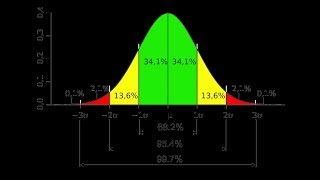
Hello all, my name is Krishna and welcome to my YouTube channel. Today in this particular video I'm going to discuss about what is the step-by-step transition towards the data science domain. Now if you are working in some other domain guys let it be whether you are from IT background or nonIT background. So if you are interested into data science domain, what are the basic steps that you need to follow? So first of all I would like to start with you need to know the programming language called as Python. Okay. So, Python programming language is one of the best programming language in this current uh in 2019. It has even overcome uh JavaScript which was pretty much famous in 2018. So, Python because of machine learning and deep learning libraries, right? This is becoming much more famous. I'm not saying that if you are from Java background, you cannot do machine learning with Java. But just understand guys, Python has a whole bunch of libraries, you know, and these all libraries are like open source. Even Java is open source but they do not support that many libraries. So suppose for implementing a machine learning algorithm in Python you may take 20 lines of code whereas in Java or.net you may take more than 200 lines of code. So it is always necessary that you start learning Python and you have to learn in you have try to understand each and every libraries in Python how it works. The next thing that is very very important is maths. Now maths when I say I'm basically talking about linear algebra, differential calculus because these all this all and matrix multiplication also. So these all techniques in maths are very very important because the whole machine learning and deep learning is working because of this. Okay, it is using linear algebra within them. It is using lot of matrix multiplication and apart from that it is also using some of the differential equations or you can also basically say calculus. Okay. Apart from that there are also some other things like uklidian distance many other concepts which I would like to include that into statistics. Now the third part that I would like to suggest you is that you have to start taking statistics seriously. Now when I say statistics seriously what does that mean? In ninth and 10th standard uh when you are in your high school days or in your 11th and 12th at that time you may have probably gone through statistics. You have seen some of the important techniques like mean, median, mode, right? And you may also have heard about normal distribution, standard normal distribution, what is gshian distribution, all these kind of terms. Now is the time if you want to switch to data science domain, you need to understand that how and why it is required with respect to the data that you have, right? Because every machine learning algorithm you'll be applying on data to do some kind of prediction. Now you need to understand why the statistics is useful what with the help of statistics what you can derive from that data and you have to learn in that particular manner itself. [snorts] So after learning Python you need to have the knowledge of maths you need to know statistics and definitely you need to have that tendency to learn more. As I said in my previous video also learning is a continuous process guys. It will not just happen in one or two days. It will be a continuous process. Sometime you will feel low you'll have low confidence but don't give up at that time guys because when I also started initially everything was just flying on top of my head right so I took that time you know I I made sure that I was learning things I was learning things slowly okay I was not making it too fast and harsh on my mind whatever I was able to understand I was trying to do it now after this what you have to do is that after learning Python maths and statistics all these are basically libraries you'll be seeing different different libraries which will be able to implement some statistical tools on that particular data right so or statistical analysis on that particular data next thing is that you need to participate in Kaggle competitions now when I say Kaggle competition guys it is not like you have to make a four to five teams initially for the learning thing go and search for different kind of data set with respect to different different machine learning or deep learning problems right you have to go into the Kaggle competition take out that data try to apply and this I'm telling with respect to machine learning initially. So suppose you want to perform any machine learning algorithm on the data set try to take this particular data set and try to see whatever you have learned in this particular techniques what what are you able to apply on that particular data right and initially I know because whenever when I participated in the first Kaggle competition guys just to come into a top 100 rank I strived for one month you know when I was knowing Python maths statistics I have even completed one project in my previous company Even though I took one month because the type of data set that you have for the Kaggle competition it is very very complex you will be following each and every pipeline remember pipeline when I say pipeline you'll be having feature engineering pipeline feature selection pipeline model creation pipeline model deployment pipeline I'm not worried about model deployment right now because Kaggle is basically a competition but when you see with respect to this particular data set you will be having feature engineering pipeline how to handle missing values. How to handle imbalanced data set? Now, initially I had no clue about that how to fix it, you know, because there are lot of imbalanced data set. There are lot of different kind of missing values. How to handle those scenario? Then what I did is that I followed different you know uh Kaggle Grandmaster kernels. Whenever you see in the Kaggle competition there will be an option of something called as kernel and some people will be uploading their whole code how they have basically implemented. I downloaded that. I saw how they basically implemented. I then came I I was then able to understand why this kind of statistics is basically applied over there. Okay, let me just give you a very simple example. Suppose I have some missing values. What should I replace with? Should I delete the row? Should I replace the value with something else? This is one of the scenario. How do I find out? I have to do this statistical analysis. And that is also called as exploratory data analysis, EDA. Exploratory data analysis. very important. This particular technique is basically applied in that in machine learning algorithm. You'll be seeing that Python, maths and statistics will be influenced. It will be applied a lot to do the prediction for the future data set. And just understand this Kaggle is actually helping you to get the free data set. You don't have to be dependent on any other data set altogether because they have such a complex data set. you know they have such a complex data set that whichever pipeline you want to work in depth you will get all those kind of scenarios I'm very very happy that in my first k in my first kaggle competition what I what I did is that usually kaggle competition usually takes for 3 months time they give 3 months or 2 months time you know and remember if you are able to come into the top 50th rank right that that basically means that you have done something you have understood the feature engineering feature selection model creation you are able to get that highest accuracy when compared to so many people participating in that camel competition right and one more thing guys whichever domain you are currently working in don't think that that domain will never come into use when you are switching towards data science let me just give you a very good example I had one of my friend who was working in HR domain and this is just three years back when he was working in HR domain he made a switch to data science after learning all these things. Now just imagine what was the first project that he he did he created an application based on AI to recruit people right and for that you need some domain knowledge and that particular person was having some HR domain knowledge and he knew how the hiring process usually works. So understand guys whichever domain you are in whether you are in finance whether you are in IT whether you are in support whether you are in HR whatever domain it may be that domain is always useful whenever you are switching towards the data science domain just understand that whenever tomorrow you're switching to a company and that particular company requires a kind of project which is very very important and that domain knowledge you basically have so you will basically be able to apply your knowledge to solve solve that particular problem. Right? So this is how you should basically go move towards your step- by-step transition towards data science. Make sure you do these things and make sure you remember why you are doing these things. Why? That should be the question. Why? How? You know suppose I say that okay I want to replace this nan value with the mean of that column. But why? that time you'll be seeing you'll be drawing some kind of distribution from that particular data and then if that particular data follows some distribution then you may go with mean median or mode I'm just giving you a perfect example a small small example and there are various different scenarios all you have to go is that take this data set go to the kernels if you are not getting any idea how to solve this problem see many people have put some of the example in the kernels you download that and try to solve it by yourself and then you'll understand how it is done I'm I'm not saying that within one day you'll become perfect. It will take many days and that is a continuous learning process. First first Kaggle competition you may take one or two months but when you apply for the second Kaggle competition you will be requiring less number number of days and I promise you that if you have followed the first Kaggle competition perfectly. So this was all about this particular video guys. Make sure you subscribe the channel. I hope I'm inspiring you. I'll also be uploading a lot of videos let it be in deep learning, machine learning. I'll try to give you as much knowledge as much as possible from my side. And please do subscribe the channel, share with all your friends, whoever require this kind of help. I'll see you all in the next video. Have a great day ahead. Thank you.
Original Description
In this video you will understand what steps you need to follow for Transition your career towards Data Science.
Exclusive AI & Ml E-Degree with Projects, Exams and Certification!
AI and ML E-degree- http://bit.ly/34gCwfW
Mighty Data Science Bundle - http://bit.ly/37p3jbL
Use Coupon KNBF20" to get Extra 20% Off Now!!
Connect with me here:
Twitter: https://twitter.com/Krishnaik06
Facebook: https://www.facebook.com/krishnaik06
instagram: https://www.instagram.com/krishnaik06
Subscribe my unboxing Channel
https://www.youtube.com/channel/UCjWY5hREA6FFYrthD0rZNIw
Below are the various playlist created on ML,Data Science and Deep Learning. Please subscribe and support the channel. Happy Learning!
Deep Learning Playlist: https://www.youtube.com/watch?v=DKSZHN7jftI&list=PLZoTAELRMXVPGU70ZGsckrMdr0FteeRUi
Data Science Projects playlist: https://www.youtube.com/watch?v=5Txi0nHIe0o&list=PLZoTAELRMXVNUcr7osiU7CCm8hcaqSzGw
NLP playlist: https://www.youtube.com/watch?v=6ZVf1jnEKGI&list=PLZoTAELRMXVMdJ5sqbCK2LiM0HhQVWNzm
Statistics Playlist: https://www.youtube.com/watch?v=GGZfVeZs_v4&list=PLZoTAELRMXVMhVyr3Ri9IQ-t5QPBtxzJO
Feature Engineering playlist: https://www.youtube.com/watch?v=NgoLMsaZ4HU&list=PLZoTAELRMXVPwYGE2PXD3x0bfKnR0cJjN
Computer Vision playlist: https://www.youtube.com/watch?v=mT34_yu5pbg&list=PLZoTAELRMXVOIBRx0andphYJ7iakSg3Lk
Data Science Interview Question playlist: https://www.youtube.com/watch?v=820Qr4BH0YM&list=PLZoTAELRMXVPkl7oRvzyNnyj1HS4wt2K-
You can buy my book on Finance with Machine Learning and Deep Learning from the below url
amazon url: https://www.amazon.in/Hands-Python-Finance-implementing-strategies/dp/1789346371/ref=sr_1_1?keywords=krish+naik&qid=1560943725&s=gateway&sr=8-1
🙏🙏🙏🙏🙏🙏🙏🙏
YOU JUST NEED TO DO
3 THINGS to support my channel
LIKE
SHARE
&
SUBSCRIBE
TO MY YOUTUBE CHANNEL
Watch on YouTube ↗
(saves to browser)
Sign in to unlock AI tutor explanation · ⚡30
Playlist
Uploads from Krish Naik · Krish Naik · 0 of 60
← Previous
Next →
1
 2
2
 3
3
 4
4
 5
5
 6
6
 7
7
 8
8
 9
9
 10
10
 11
11
 12
12
 13
13
 14
14
 15
15
 16
16
 17
17
 18
18
 19
19
 20
20
 21
21
 22
22
 23
23
 24
24
 25
25
 26
26
 27
27
 28
28
 29
29
 30
30
 31
31
 32
32
 33
33
 34
34
 35
35
 36
36
 37
37
 38
38
 39
39
 40
40
 41
41
 42
42
 43
43
 44
44
 45
45
 46
46
 47
47
 48
48
 49
49
 50
50
 51
51
 52
52
 53
53
 54
54
 55
55
 56
56
 57
57
 58
58
 59
59
 60
60

Natural Language Processing|Stemming
Krish Naik
Natural Language Processing|BagofWords
Krish Naik
Gaussian distribution or Normal Distribution in statisctics
Krish Naik
Natural Language Processing|TF-IDF for Machine Learning| Text Prerocessing
Krish Naik
Log Normal Distribution in Statistics
Krish Naik
Covariance in Statistics
Krish Naik
Confusion matrix, Precision, Recall| Data Science Interview questions
Krish Naik
Tutorial 44-Balanced vs Imbalanced Dataset and how to handle Imbalanced Dataset
Krish Naik
Implementing a Spam classifier in python| Natural Language Processing
Krish Naik
Tutorial 11-Exploratory Data Analysis(EDA) of Titanic dataset
Krish Naik
Face Recognition using open CV and VGG 16 Transfer Learning
Krish Naik
Pedestrian Detection using OpenCV from Videos
Krish Naik
Face and Eye Detection from Videos using HAAR Cascade Classifier
Krish Naik
Reading, Writing and Displaying images with Opencv| OpenCV Tutorial
Krish Naik
OpenCV Installation | OpenCV tutorial
Krish Naik
Face and Eye Detection from Images using HAAR Cascade Classifier
Krish Naik
Car Detection using HAAR Cascade and Opencv from Videos.
Krish Naik
Using OpenFace for Face recognition in Keras
Krish Naik
OpenPose Tutorial with Tensorflow
Krish Naik
Multiple Linear Regression using python and sklearn
Krish Naik
Dimensional Reduction| Principal Component Analysis
Krish Naik
Movie Recommender System using Python
Krish Naik
TPR,FPR,FNR,TNR, Confusion Matrix
Krish Naik
Precision, Recall and F1-Score
Krish Naik
Artificial Neural Network for Customer's Exit Prediction from Bank
Krish Naik
GridSearchCV- Select the best hyperparameter for any Classification Model
Krish Naik
RandomizedSearchCV- Select the best hyperparameter for any Classification Model
Krish Naik
K Nearest Neighbor classification with Intuition and practical solution
Krish Naik
K Means Clustering Intuition
Krish Naik
Create custom Alexa Skill- Lambda function- Part2
Krish Naik
Hierarchical Clustering intuition
Krish Naik
Implement Transfer Learning with a generic Code Template
Krish Naik
Gender Classifier and Age Estimator using Resnet Convolution Neural Network
Krish Naik
Unlock Your Application With Your Face using OpenCV
Krish Naik
Draw rectangle from webcam and sketch process it on a live feed
Krish Naik
Complete Life Cycle of a Data Science Project
Krish Naik
How we can apply Machine Learning in Finance
Krish Naik
Deep Learning in Medical Science
Krish Naik
How to switch your career to Data Science.
Krish Naik
Linear Regression Mathematical Intuition
Krish Naik
Handle Categorical features using Python
Krish Naik
Machine Learning Algorithm- Which one to choose for your Problem?
Krish Naik
DBSCAN Clustering Easily Explained with Implementation
Krish Naik
Curse of Dimensionality Easily explained| Machine Learning
Krish Naik
Feature Selection Techniques Easily Explained | Machine Learning
Krish Naik
Tutorial 29-R square and Adjusted R square Clearly Explained| Machine Learning
Krish Naik
Cross Validation using sklearn and python | Machine Learning
Krish Naik
Handling Missing Data Easily Explained| Machine Learning
Krish Naik
Deploy Machine Learning Model using Flask
Krish Naik
Deployment of Deep Learning Model using Flask
Krish Naik
How to Visualize Multiple Linear Regression in python
Krish Naik
K Nearest Neighbour Easily Explained with Implementation
Krish Naik
Predicting Heart Disease using Machine Learning
Krish Naik
Predicting Lungs Disease using Deep Learning
Krish Naik
Stock Sentiment Analysis using News Headlines
Krish Naik
Random Forest(Bootstrap Aggregation) Easily Explained
Krish Naik
Voting Classifier(Hard Voting and Soft Voting Classifier)
Krish Naik
Credit Card Fraud Detection using Machine Learning from Kaggle
Krish Naik
Hyperparameter Optimization for Xgboost
Krish Naik
Tutorial 45-Handling imbalanced Dataset using python- Part 1
Krish Naik
More on: Data Literacy
View skill →






Related Reads
📰
📰
📰
📰
Formula Solver: Step-by-Step Math & Science Help
Medium · AI
Independence you can't prove — so price it
Dev.to · Colin Easton
Asyncio for I/O-Heavy Pipelines: aiohttp, asyncpg, Rate Limiting, Backpressure
Dev.to · Gowtham Potureddi
I Switched to a New Python Library — Here’s Why I’m Not Going Back
Medium · Data Science
🎓
Tutor Explanation
 DeepCamp AI