How Much do Designers Charge?
Skills:
LLM Foundations60%
Key Takeaways
The video discusses how much designers charge, covering topics such as hourly billing, day rates, and fixed project fees, with Matthew Encina sharing his experience and rates as a freelancer. The video also explores the pros and cons of different pricing models and provides tips for freelancers to establish their rates and manage their finances.
Full Transcript
What's up everyone? Welcome to Freelance Fridays, the very first episode. And Freelance Fridays is where we're going to demystify and answer your questions about freelancing. I am your host, Matthew Incena. I'm a creative director here at Blind in the Future. And today's subject is everyone's favorite topic. What is that topic? Well, we are talking about money. That's right, money. More specifically, I get this question asked a lot. How much should I be charging for my services? I get this asked a lot for whatever reason. This is not something that we learn in school. Nobody really tells us. You kind of have to ask around and feel it out. But today, I'm going to share you the rates that I pay freelancers all the time, as well as the rates that I was charging when I was still freelancing. Before we get to that, if you want to connect with me, reach out. I am Matthew and Cena both on Twitter, Instagram, and Facebook. And a little caveat, everything I'm going to be teaching you guys today is relative to your skills, the market, and the cost of living. So, even though I'm going to be giving you guys some real figures, take this with a grain of salt. At the end of the day, at the end of this episode, I'm going to be giving you guys some additional resources so that you can triangulate your information and make your best decision on this. Okay, so I know what a lot of you are wondering right now. You're asking, "Matthew, what the heck do you know about freelancing? You're a freaking creative director, dude. You're not in my shoes." Well, for prior to me being a creative director, I spent seven years freelancing on and off, both in print and in the motion design industry. After that, the following eight years, I've been hiring freelancers. So, I've been on both sides of the fence. I kind of know what to expect in terms of rate, expectations, skill levels, and that's what I'm hoping to illuminate for you guys today. So, just a little bit back a little bit of a background on me. When I first started freelancing back when I was I think 21 years old or 20 years old, I was working doing magazine layouts for a punk magazine called Scratch Magazine. And then I did some logo designs along the way. And uh for many of those freelance years, I was a motion designer. So, I I spent a lot of time in different fields uh jumping around for those seven years of freelancing. And just as a frame of reference, this is what I got paid uh because it was super early in my career for magazine layouts. I got paid $200 per spread. So for this particular engagement with this client, every spread that I designed for them, I got 200 bucks. So the more I picked up, the more uh money I would get. It was pretty good for me back when I was 20 years old. As a motion designer, my last day rate was $600 a day. I had been working in the motion design industry for several years at that point and I reached a certain level of u seniority there. And I was charging by the day with overtime on top of that. So that was my motion design rate. And then as a logo designer, I did some work for a couple of friends, a couple of clients, and my rate was a flat rate of $5,000 where I would just deliver a logo. we'd establish a couple of rounds of revision and go through that process. So, I got paid all kinds of different ways and I'm going to be teaching you guys some of that today. So, let's talk about the different kinds of uh ways that you could get paid. The first one, you can bill hourly. Hourly is good in case you don't know how long it's going to take for a task uh to do. So, that's good. that's in your favor if you're still unsure of what it would take to create something. If you have no gut reaction for how long uh it's going to take you to do any particular task, the bad part of it is as soon as you get good, as soon as you get efficient at what you do, you get penalized for being efficient. All of a sudden, if you're working really fast and you do something that used to take you 10 hours cuz you were slow and now it just takes you one hour, why should you get paid less? And that's why hourly billing is not really the preferred way to go, but it is a way to start. Next way, day rate. This is what I was doing in the motion design industry. Again, this is very common uh out there. The good thing about it is you are guaranteed uh an amount every single day. Every time that you are booked, if I'm booked for a week, uh that's five days, I get $3,000. That's locked. That's set. That's fantastic. bad thing about it, if you're not careful, you're going to end up doing a lot of unpaid overtime, unless you let your employer know ahead of time that you have an overtime rate. So, for me, when I was freelancing, for the longest time, I didn't have any overtime. And then there was a couple of situations where I was working at a couple studios and I was working in excess of 12, 13, 14 hours and I couldn't take it anymore. or at least I wanted to feel like I was appreciative because actually I was very happy to do the work. I was happy to make the work look amazing but at the same time I I wanted to be I wanted to be compensated for that. So I got smart listening to a lot of my peers and I established an overtime rate. So uh after a while I started talking to studios and said after 10 hours I'm going to charge time and a half per hour and once it exceeds 12 hours it's going to be two times two times my rate. any holiday work is going to be two times my rate. The reason why I did that is one, I wanted to be compensated, but two, actually, I didn't want to work overtime. I didn't want to work weekends, and I didn't want to work holidays. I wanted those to be my own. So, I had some kind of ridiculous day rate in there, which would have been $1,200. And most of the time, they'd be like, "Oh, you know what? We don't want to pay Matthew this amount of money. It's too much money. He's going to have the weekend off." So, that's one of the reasons why I have those in place. So, if you're working day rate, make sure that you note overtime just to be fair. And I know a regular day in most countries is 8 hours a day. I let that fluff a little bit because I know some projects is give or take. That's why I said up to 10 hours and then after that I would charge an hourly rate. Lastly, the last way that you can charge on this list is by project. This is fantastic because this is a fixed rate just like my logo design projects back in the day where I was charging $5,000 for a logo and this was more than a decade ago. It's great because it allows you to be very flexible. Maybe it only takes me an hour to design the logo and I still collect the total $5,000. That's fantastic. But this is great for the client because they know that there's a fixed fee based off of deliverables and a certain amount of rounds of revisions. where this is bad. If you're not careful, you can get into unlimited revision cycles. So, that's dangerous. I didn't do that right away when I was freelancing. So, some things would go into the 10th round of revision. I'm like, "Oh my gosh, why am I spending so much time on this thing?" Like, am I even making money anymore? Am am I just making minimum wage? If I were to break it all down, I probably was not making a whole lot of money. So, be very careful if you're doing project rates. Make sure you are very clear about the deliverables uh the rounds of revisions and what you both of you are expecting and you put that in a so a scope of work document to outline everything. Okay. The only thing that's not on here is something we talked about a few days ago with uh Jonathan Stark, which is valuebased pricing. I've never seen a freelancer use valuebased pricing uh in the freelance world. Maybe it works. I've never seen anyone do it. So, I know it might sound a little contradictory from our uh stream a few days ago, but I wanted to bring that up and acknowledge it. Valuebased pricing works if you are talking to a decision maker, a seuite person, and you are able to positive positively impact their business and you're able to deliver value. As a freelancer, usually that is not the case. As a freelancer, you are a hired gun for a very specific task. So, that's why it doesn't really work in this situation. I just wanted to acknowledge it for you guys. Okay, so you might be looking at this and you might be wondering what do you look for and expect in your freelancers. And I broke it down like this. Again, take everything with a grain of salt. This is mostly based off of the motion design industry, but it's very common across other industries here in LA and New York. So, I'm going to give you these rates. So, what I would normally pay a junior designer is an average of about $200 a day. Sometimes it's less, sometimes it's more. So, that's the rates that they would be getting. As you move up as a mid-range designer, I'd be paying an average about $400 for that designer. Sometimes it goes up to 500, sometimes it goes down to 300. It just depends. And then lastly on this list, a senior designer would make about $600 plus per day. Right? So these are things that I just wanted to note for you. And I'll break each down each of these down for you guys so you understand a little bit more clearly. So what do I expect from a junior designer, junior editor, junior uh colorist, whatever, junior anything. This is kind of the standard here. These are my expectations. They know the software very very well, right? They are trained. They know the ins and outs of that program. They understand design principles or editing principles, story principles, whatever I'm hiring them for. They understand the principles that are relevant to that industry. They have a strong portfolio. They have at least five examples in there that show some consistency and uh know uh examples in there that they know what they're talking about, that they have a deep understanding of whatever industry they're applying for. Uh for junior designers or junior editors, whatever it is, it's okay if it's their first job. Obviously, I prefer if there's some previous experience like an internship or something like that, but it's totally okay if they demonstrate everything above that this is their first job. I'm willing to take a chance on them because the cost is relatively inexpensive to the job. Next, moving up. Now, we're talking about mid-range designers. My expectations is everything uh as before plus. They should be very fast at execution and iterations. I probably just have to tell them something once at the beginning of the day and by the end of the day, it's completely done. So that's the difference between a junior designer where a junior designer might take a little bit of time, few days to process something, a mid-range designer, they'll probably take a day or day and a half, probably half the time because they become so efficient at the program. So not only can they execute very quickly, they can also iterate very quickly. Uh mid-range designers, they have previous experience, so they have a little bit of a track record of freelancing and working at other places. And what I expect is that they always hit deadlines. For junior designers, if they miss it a little bit, that's kind of okay. There's a bit of a safety net when it comes to a junior designer because I expect that and it reflects in their rate. For mid-range designers, I expect a little bit more since they've been out in the field. They know what it's like to be responsible for tasks. I expect them to be hitting deadlines. So, that's mid-range designers. Now, we're moving on up to senior designers. So everything that we discussed for the junior and mid-range designer plus now I expect them to be an excellent problem solver and can troubleshoot technical issues. So for instance if we're working on a 3D project and all of a sudden a render that was taking 2 minutes for a still frame all of a sudden is taking 20 minutes in animation that person can debug that file and understand what's wrong. they have a process, a way of breaking down and troubleshooting how to fix that. If it's on the print end, maybe they're looking at the color and for taking something to print and all of a sudden the color looks way off, they can look at the color settings, talk to the printer and understand how to troubleshoot and fix those errors. That's what I expect out of senior people. Lastly, for that, I expect seniors to know multiple software and plugins. So they're they don't just know Photoshop or they don't just know After Effects. They know a multitude of things where they've developed a very strong core T- skill in one thing. Let's say it's 3D modeling for instance. And they've developed a lot of secondary and tertiary skills where it's like lighting, animation, rendering. Those are things that I expect from a senior designer, animator, editor, whatever. And the reason why I expect that is because with these senior guys, I usually bring them in. They have a core strength that I know they can do, but I can make them more responsible for several other things. So, they add a lot of value to the team. Instead of me hiring three people, I could hire one person that can do all of their jobs. So, that's the difference between a senior um from a mid-range to a junior person. And then I added one more on here just so you guys have a frame of reference for art directors or leads like the the titles are different per the industry, but somebody who basically works directly with me, the creative director, and can take off the management off of my plate. I pay them about $800 to $1,000, if not more, per day. It sounds like a lot of money, but they relieve so much stress from me. They are pretty much my right-hand man or woman when it comes to running these projects. I just have to tell them one thing, I walk away and they manage the team, they manage the project. Uh sometimes they even talk to the client. So that's the reason why I pay them so much money is because they are taking a lot of responsibility, high value responsibilities off my plate. What that allows me to do is take on more projects. Now, I could sit back, be very objective, and manage two, three, four, five projects instead of just focusing on the one because I'm so hands-on. So, that's why I pay this person so much money. And it allows us to scale as a business, allows us to do more projects than what I would normally be focused on if I was doing all the management on that project. So, for this art director lead, uh, another thing that I expect them to do is they can establish workflow protocols and structures. So, what I'm looking for is can they set up a workflow folder structure um and anything technical so that the team can work within that. They set up the templates. They set up basically how everyone's going to work. I don't even have to look at the folder structure. Everything just works because this lead, this person installed that process into our system. So, often I will bring a lead here to to do that for me. Before I used to be very hands-on. Now I let them do it and I tell them you know I don't care how you do it as long as the team has a unified way uniform way of working and everybody is clear about what shots they're responsible for uh what the notes are for them every day and uh where they should be saving and exporting stuff. Uh some other things that sometimes they have is a deep technical uh knowledge base. So beyond the senior person, they bring that over here, but they might be able to recommend other software or tools that we could be using in the studio. So one person that I work with all the time, his name is John Robson. I hire him as a lead. He comes in maybe a couple times a year and we work on 3D projects and then he will say, "You know what? I know what we can do to make this faster. We should buy this software over here because it renders 10 times as fast as what you guys are currently using." So he brings that to the table. He brings a lot of value to the table because now he's adding value. He's saving us money. Excuse me. He's saving us time and he's making things run even more smoothly than I could have done if I was running it myself. So, shout out to John Robson and all of the leads that I hire all the time. And then lastly, one thing that I expect from my art directors or leads, they can translate client feedback. Normally that's my job, but they could take that client feedback and feed it back to the team. They could translate that into something actionable. When the client says, you know, I want things to be more energetic. I want it to be more upbeat. They can then turn around to the team and say, you know what, we need the edit to be a little bit more fast-paced. Let's add two or three more cuts here. The camera can be a little bit more dynamic. We can add some rotating here and there. And they could make it very actionable. So, I could work with them very directly about what it's going to take to address client feedback where I don't expect that from anybody else. I don't expect that from the junior, mid-range, or seniors. I expect that from my leads. So, you remember how I said at the beginning of this talk that all of the rates, all the information I'm giving you is very relative to the market, cost of living, and your skills. Right now, we've been mostly talking about skills and the LA market, but if we go back to my slide, all the rates I just gave you right now in San Francisco, they pay one and a half to two times those rates. I know some of you might be looking at this and be like, "Wow, LA, New York, you guys are already making tons and tons of money, but cost of living is very high here." In San Francisco, it's the same thing. There is a high demand over there. There's a lot of tech companies. There's lots of money, but the cost of living is so expensive. That's why these rates are very, very high. If you're very smart, what you might do is figure out a way to work offsite in a cheaper market and charge the rates of the very expensive markets. So, if you're really smart, you could take advantage of that. But that will be saved for another episode, which I want to talk about off-site freelancing. Today, I just want to be focusing on rates, right? So the key thing again walk away it's really about the demand like everybody is talented there's so many talented people across the globe uh cinema designer animator here can be just as good as somewhere back in Southeast Asia but the demand has to meet that talent in order for us to determine how high of a rate we can command right and that's what I said at the beginning of this everything. This is my caveat. It's relative to scales, market, and cost of living. So, we can keep unpacking this as we get through this. And I'm going to give a couple more resources at the end to have you guys do your own investigation. So, if I I wanted to put this on a scale just so that you guys can maybe look at this in a different perspective. So, if you're looking at these markets, if you're competing on a global scale, meaning you're complete competing with everybody in the world, what happens? you could only charge a very low rate. So if you're working on Fiverr, who's competing there? Not only everybody here in the Western market, but in Southeast Asia, in Africa, in Europe, Eastern Europe, now you have all this fluctuation because that's a race to the bottom. You're complete competing with everyone where somebody's uh rate in Eastern Europe might be really low because you know what, the cost of living is low. So why would you want to compete against them? you could only command a very low rate because it's it's just a race to the cheapest price possible. On the other side of the scale, if you want to command much much higher dollars, you either have to enter markets where there's very high demand for your skills. That's where there is little competition and you're not competing with everyone across the globe. So instead of swimming in the kitty pool with everyone, go swim out in the ocean where there's tons and tons of big fish for you to land. Okay. Now, let's look at this same skill in terms of skills. So, if you're just a generalist and you can do a lot of a little bit of everything, there's lots of competition. There's a lot of people who can do a lot of everything. I know a little Photoshop. I know a little Illustrator. I know a little bit of Premiere. Yeah, I'm a generalist. And that's okay. And some people uh can still charge a high amount for general uh being a generalist. And I'll talk about that soon. But on the other side of this, if you are a specialist, if you are one of three people that does this in the LA market or whatever market you're in, there is very little competition and you could charge a whole lot of money. So, for example, here in the LA market, there's only a few animators that I can call on that I know of that are great at particle simulations that can deliver. And there's only maybe I can count them on one hand that I could trust that I could call up and say, "Hey, I really need your help on this because you're the only one that I know that could figure this out." So they can command a very high rate because they're the only person that does that and I know that. Um, so just going back on the generalist side because I do hire a lot of generalists that command a high day rate, 600 plus. And the reason why I bring I hire them is because they still have a core skill. I hired them at one point for something. Let's say if it was just for animation and they were amazing at it. Over the years they've grown. They've learned rendering and lighting and modeling and like they learned a lot of extra secondary skills. So if we're looking at that T- scale, core T scale that Chris talks about all the time. They have one skill that's very very deep and they have a bunch of tertiary skills that are getting deeper over the years because they keep learning and learning and adding value to the team, adding value to themselves as a freelancer because now they have tons of skills that they were highly skilled at. Make sense? All right. And as I'm getting to the end of this, this is something that I lifted from Joy Corman's book. Uh I forget what it's called. I think it's freelance manifesto. And I saw this slide and I thought that this was so powerful. When you guys are freelancing, this is the most important thing. Reliability. 100% reliability. The people I keep bringing back are the most reliable people, the trustworthy people. Meaning I could assign them something and say, "Hey, I need this by tomorrow." end of day, can you do it? When they say yes, they deliver on time and they repeat that they have consistent reliability, consistent success in the task that I'm giving them. So, that's the number one thing that most people look for. Is this person reliable? Because I'm spending a whole lot of money on this freelancer. I only have one shot and a tight schedule and I don't want to go back to the client and ask for more time and money. That's very painful to go through and you never want to put a company or studio through that just because you want to get really good at understanding what it's going to take for you to complete a task and to be smart about telling uh your supervisors how long something might take and confirming those things so that you become very reliable. The other things on this list, if we go back to the graph in terms of talent, obviously that's very powerful and personality. Both both of those things are equal on the scale and I agree with that. You have to be just as talented as you are a good person. If you're talented and a shitty person, I'm not going to hire you. If you're a good person, but you're not very talented, I'm not going to hire you. You have to be equal parts both. Like Chris says, the portfolio gets you the interview. Your attitude gets you in the door, right? Or gets you the job rather. Sorry, I totally botched that. And then I think just to be funny, Joey added these other things. Hygiene is important. I think it's important. Nobody likes to work with the slob. If you're leaving stuff on your desk, if you're working in house, or if your files are sloppy, if you're not naming things properly, if you're saving stuff in the wrong place, that will drive people like me mad, upset, and I would never hire you again. If you have bad file hygiene, if you don't follow the rules, if you don't say places, if you don't save files in the right uh way, order name and place, you're out, man. I'm never hiring you again. And then the smallest thing on here is the rate. You know why? Because these rates, a lot of them are quite standard per the market. So if I look at somebody's portfolio and I understand this person is senior, they have a big list of experience. I know they can command a high day rate. happy to pay them $500, $600, $700. So, that's the least important thing to me. The most important thing is, are they reliable? Do they have talent? And are they a cool person to work with? Okay, I did a lot of talking right now. I'm going to drink some water. And oh my gosh, what time is it? It's already 4:26. Is that right? Was I talking that long? 26 minutes straight. Oh my gosh. Maybe we have to do a little bit longer on this episode. Let's open it up. Uh, what questions do we have out there? Yeah, Matthew, there's a there's actually a lot of good questions. Um, where do you want to start? Do you want to start with freelancers that already have clients or do you want to start with Yeah, I don't want to talk about how do you get clients on this episode. That will be a separate episode. No, that's that's fine with me. So, one of the questions I have is uh how do you see red flags and clients? If I'm a freelancer, what are some things I should be looking out for so I don't uh get hired by by the wrong company? I think you just ask uh you ask what the process might look like. So some red flags would be if they don't have a clear process, if they're unsure of what they want. Those are things that might be a little bit scary. That could also be an opportunity for you to jump in and say, you know what, I've done this a million times before. I have a really good way for us to tackle this. How does this sound? And then you set the standards for the process. You know what? To do this logo, I think we're going to need three rounds of revisions and probably four weeks to do that. Is that something you can commit to? It's probably going to cost about anywhere from $5 to $10,000. Is that okay? So, you can command that at that point. But if you're asking questions of a client, like, what do you want? What are you hoping to accomplish? What is it that you're looking for in a partner? How do you know how you're going to make your decision on who to work with? All of these questions that you might be having, if they don't have clear answers, those are potential red flags because you know what? They probably don't know what they want. If they don't know what they want, run for the hills or just get really good at facilitation. Okay, that was a that's a good answer. I have one. Yeah, go ahead. Um, is there a a basic formula to get started in developing a rate? Yeah, like I was showing in here, if you look at the different scales that I have in terms of where you fall, right? Are you a junior? If you look at the expectations here, are you a mid-range person? Are you a senior? I would start there. Again, it's relative to your market. So, I would ask your peers around in the market that you are going to be working at. So, once you have have established, let's say I am a junior uh animator. I'm just fresh out of school. Maybe I barely have a year under my belt. I still have a lot to learn and I need to get faster. So, uh, in order for me to grow my rate, I need to do more things like the mid-range designer or like the the senior designer, I need to get faster. I need to get more skilled, and I need to become more reliable, right? So, those are ways that you can start to climb up uh when you're looking to raise your rates. When you're looking to establish your initial rates, again, I would start low if that's where your skill level is at. And then think about all of your expenses. So, this is all relative to uh cost of living. If you live in LA and you're charging minimum wage, it's going to be pretty challenging to live here in LA cuz rent is so high. Cost of living is so high. Avocado toast is $12. That is ridiculous, right? You know what I mean? So, like you just got it's all really relative and you have to be smart about what your expenses are versus what you could potentially make. So, those things have to balance out. So, when you're looking at your rate, make sure your costs are covered. Make sure you're saving a little bit of that, probably 20, 30%. Saving, and this is for California in the United States. Uh, saving 30% for your quarterly taxes that you pay four times a year, every time on the 15th. And then on top of that, you have your fund money, whatever you want to take away, whatever you want to save. And then hopefully there's a little bit of profit there that you could pocket, put aside, or reinvest back in yourself. So hopefully that was helpful for you. I know I was just rambling. No, it's it's good. It's very helpful. And um what about uh this is kind of relevant for taxes like start thinking of uh write offs and do you have any examples? Yes. So uh again this is very dependent on where you live uh and what your region or state or country allows. So, I will just talk specifically about California. And I'm not a CPA, so don't take my rules as a set in stone. Again, look this up. But, uh, as a freelancer, what did I write off? I wrote off things like my studio space, my apartment, uh, anything that my freelance business touches, I wrote off a percentage of that. uh my car, my mileage, my gas, auto insurance, any of the utilities. So, electricity, internet, cable, all those things are part of my business, right? So, in the creative industry, you can have things like reference or inspiration or things that are going to help enrich your job. So, these are things like media, books, movies, video games, all that stuff. You can write it off. You could also write off things like equipment like your laptops, your TVs, your video game systems if it's helping you do your job better. You know, you can get a little creative. Again, don't take my advice fully. Talk to a CPA. But there's a lot of things you can write off if you if you can justify a way that your creative business touches it. Okay. And just a side note, make sure you document everything. Uh I believe that the government for taxes for um your car um noting the actual mileage is what they prefer, right? There's a lot of specifics. I don't want to get into that on here, but yeah, it's very important to document stuff. If possible, open up a separate uh business account and credit card uh for that so that you could charge everything onto that and all of your expenses are going to be clean. You have your personal card or account and then your business account and everything on there. you know, you could write off and then you just hand that to your CPA at the end of the year. They'll write off whatever they can for you and then you'll get a nice chunk of change back at the end of the year. Okay. Um uh switching gears a little bit, a question I have that we that we got was how do you network on social media? You know, trying to get some clients on social media. Yeah, I already have a video for that. It's called networking online. So, it's probably about 20 videos ago. You could take a look at that. uh if that keeps popping up later that we can do a whole episode of that in terms of freelance. So, let's let's table that. But whoever is asking that, make sure to look at that video. It's called networking online and I show you guys how to do that through LinkedIn, through DMing on Instagram, email, so on and so forth. No, that works. And then, um I guess a kind of a broad one is one what's one single piece of advice that you got when you were starting out that really helped you? Uh it was uh something that I became self-aware of and I just realized myself. I think other people showed me this but they never told me this piece of advice explicitly. Be curious. Be curious about everything. And the reason why I say that is I had the privilege of freelancing at a lot of different studios, blind being one of them, where I got to sit down next to some very senior people, people who are so smart and amazing at what they do. I always leaned over and said, "Hey, that's an amazing animation. How the heck did you do that?" And just being curious about them. And they would feel so obliged, like, "Wow, you're taking interest in what I'm doing. Let me show you. It's real easy. You do this. You use this plugin." And then click the click. It's done. I was like, "Fudge, that's amazing. That's so cool." And then I got better. I grew. And that person felt good because they felt like they're teaching some uh something to me. And they felt uh fantastic because somebody else was interested to them. And that's how I learned all the things I've learned over the years is just because I approach everything very curiously. And I'm I'm not just a guy who's going to put on my headphones and and put on my shutters and not talk to you all day, right? Because I'm not going to grow that way. Rather, I was trying to be very personable, very friendly, and try and connect with people, whoever I worked with, whether that was online or sitting right next to me. I really tried to take advantage of that. I always feel like I'm bothering someone if I do that, though. I think it there's a time and place. Like, if you're just walking up to somebody uh unprompted, there there's a time and place. There's some social nuances that I think you could master in order to feel that out. But really, if you're leaning over and say like, "Hey, that's so interesting. Is it can you take some time to show me that?" versus, "Hey, can you show me that trick? Can you show me that trick again? I want to do it over here. It's so demanding versus sit down and really be curious about the other person. Um, so I think there's a way to approach that. It's the tone, the style in which you deliver something versus just making the ask. For me, I never just straight up made the ask. I was just curious like, man, how did you do that? And it was a more of a rhetorical question. I just I really was so curious. I didn't expect them to give me the tutorial, the 10 steps it's going to take. they just ended up doing that because they felt like uh I was genuinely being curious. Okay. Um uh one of the questions I saw is how do you get on the radar of big companies? Is it just about making one really good piece of content that you can attach yourself to or is it is it more complicated than that? I think Chris has said this probably a million times now on the channel. I wish we had this as a sound bite that I could pull up. But if you want to work at a particular company, you look at their portfolio. You look at that yours and see the differences. There's a gap there, right, between your portfolio and theirs. Make your portfolio look like theirs and then that's it. See the differences, close the gap and then make a portfolio that looks like theirs. Because if you're reaching out to me and I have a project that is in the blind style or kind of in the stuff that we do, it's very easy for me to look at your work and then figure out where to plug and play you. If I have to make a lot of assumptions about some of the skills or the style or things that you do, it's probably not a good fit. I have to use a lot more imagination where I'm a very busy guy. I just need the right I need to take this block and put it in the square hole. I need this circular block and put it in the circular hole. Right? That's that's how I think that's how I plug and play when I'm building my freelance teams. Do you want to take one more or do you want to to wrap things up today? You know what? Let's take one more. Okay. And then and then let's wrap it up because I know we want to keep these shows really tight. Yeah. Um what is your advice for when you bring on somebody else? When do you when is it appropriate to bring on somebody else to your team when you're getting so much work? That's exactly when when I have so much work and I don't want to do it myself, I will bring on somebody. Where where we make profit, where we grow is if me being one of the smarter or like not smarter, sorry, that's the wrong word. one one of the people that can definitely guide the client and guide the team. Like the more I could utilize that skill versus doing like on the box work or micromanaging people, the more valuable our company can be, the more valuable I become and the more profit we could bring in. Like I said earlier, um the reason why I like to hire freelancers is because I could scale my time. I could grow my time. So instead of me focusing on one project, so so tight, I'm going to hire very smart leads, some um couple of senior people to do my job. So I don't have to worry about it. I just have to check in once a week and say, "Hey, how's our progress on this? Is the client happy?" And then I'm just the liazison between the client and my lead or my my team. So allows me to scale, allows us to uh make more money. Um, of course I'm we're spending a lot of money on these freelancer obviously, but o overall the more jobs I can run, the more profitable we are because we get we get profit from five different jobs instead of one job. That's why I hire freelancers. Cool. No. Yeah, we are done. We are we are we are wrapping up. So, let's go back to my slides. I just want to give you guys some additional resources. So, uh, I know I gave you guys a bunch of information that is relative to our market, the LA market, mostly the motion design market, but there are a couple other things that you could look up. You could look up the freelancers bible, which has tons of information about freelancing. The link is in the description. Uh, the AIGA pricing model. So, those are things. There's information there also in the description. Freelance Manifesto. This is by Joey Corman. If you're in the motion design industry, this is this is a great book. He kind of goes through the process all the way from uh getting a client or getting the attention of a studio all the way up to what you need to make that a successful freelance relationship. And the last one is burn your portfolio. There's a whole section in here about pricing strategies. All of those links are in the description below. So, like I said, take my information I gave you with a grain of salt. Everything is relative. Triangulate your information. As with anything, look at a couple different sources and make your own decisions. So, that is pretty much it. Thank you so much for joining us on the first episode of Freelance Fridays. I hope to be doing this every Friday or every other Friday. Keep in touch on uh online and check out the future page. I will keep posting up new episodes as they come. If there's anything that I did not uh answer today, make sure you put it in the comments section below. If you have thoughts or questions for future episodes, go ahead and drop them in there. And as always, don't forget to like, subscribe, and share this video if you found it helpful because this is very helpful to us. All right. Thank you everyone. Good job, MATTHEW. GOOD JOB. HE scared me. He really scared me. I just want to tell everybody on Monday at uh 11:00 a.m. if we are able to do this, I'm going to launch a new series called Last Week in Design, we're going to talk about Nike. We're going to talk about Uber. We're going to talk about what else are we going to talk about? We're going to talk about awards. Do they matter anymore? Are they still relevant? You guys tune in on Monday. See you guys later. Peace. All right. 11 California time. [Music]
Original Description
In this first installment of Freelance Fridays, Matthew Encina walks you through the rates he pays freelancers. Find out how much designers charge. Learn the pros and cons of the different styles of charging: hourly billing, day rates, and fixed project fees.
Connect with Matthew:
@matthewencina (twitter & Instagram)
matthewencina.com
#freelance #rates #design
#futurfreelancefridays
–
Additional Freelance Resources:
AIGA: https://www.aiga.org/pricing-models
The Freelance Manifesto (Motion designers): https://amzn.to/2QAQ53A
Freelancers Bible: https://amzn.to/2NF9lOL
Burn your Portfolio: https://amzn.to/2NgtD1t
--
1:16 Matthew's Social
1:24 Caveat
1:46 Background on Matthew
2:53 Matthew's Personal Rates
3:55 Different Forms of Rates
8:54 Rates for Jr, Mid, and Sr.
19:35 Markets & Skills
25:39 Q&A Starts
–
🚀 Futur Accelerator
The step-by-step blueprint and coaching program designed to get your creative business off the ground:
https://thefutur.com/accelerator
🥇 Futur Pro
The professional creative community designed to grow your personal brand, your business, and your network:
https://thefutur.com/pro
✍️ Other Courses, Templates, and Tools:
https://thefutur.com/shop
🎙 The Futur Podcast:
https://thefutur.com/podcast
Recommended books, tools, music, resources, typefaces & more:
https://thefutur.com/recommendations
Music by Epidemic Sound:
http://share.epidemicsound.com/thefutur
Shorts Playlist:
https://www.youtube.com/@thefutur/shorts
We love getting your letters. Send them here:
The Futur c/o Chris Do
1702 Olympic Blvd.
Santa Monica, CA 90404
*By making a purchase through any of our affiliate links, we receive a very small commission at no extra cost to you. This helps us on our mission to provide quality education to you. Thank you.
—
Host– Chris Do
Cinematography– Aaron Szekely, Mark Contreras
Live Editor– Erica Pead
Editor– Stewart Schuster, Mark Contreras, Aaron Szekely
Futur Theme Music – Adam Sanborne http://www.adamsanborne.com
Typefac
Watch on YouTube ↗
(saves to browser)
Sign in to unlock AI tutor explanation · ⚡30
Playlist
Uploads from The Futur · The Futur · 0 of 60
← Previous
Next →
1
 2
2
 3
3
 4
4
 5
5
 6
6
 7
7
 8
8
 9
9
 10
10
 11
11
 12
12
 13
13
 14
14
 15
15
 16
16
 17
17
 18
18
 19
19
 20
20
 21
21
 22
22
 23
23
 24
24
 25
25
 26
26
 27
27
 28
28
 29
29
 30
30
 31
31
 32
32
 33
33
 34
34
 35
35
 36
36
 37
37
 38
38
 39
39
 40
40
 41
41
 42
42
 43
43
 44
44
 45
45
 46
46
 47
47
 48
48
 49
49
 50
50
 51
51
 52
52
 53
53
 54
54
 55
55
 56
56
 57
57
 58
58
 59
59
 60
60

The Importance of Keeping a Journal—Track everything. Big Changes Start Small 📞 The Futur Pro Group
The Futur
🔴 How to Handle Bad Client Calls | The Futur Live
The Futur
What do companies look for in a design portfolio? How do you show passion?
The Futur
🔴 What Does it Mean To Be a Self Taught Graphic Designer? The Futur Live w/ Ben Burns & Chris Do
The Futur
How Your Beliefs and Behavior Define Your Personal Brand
The Futur
How do designers create solutions for business goals? How can I best empathize with my client?
The Futur
🔴 Logo Design Process— Live feat. Spartan Logo Design Challenge
The Futur
Is strategy for creatives who can't design? Is there too much hype around strategy? Pt. 1/3
The Futur
Is strategy HOPE for creatives who want to play a more important role with the Client? part 2/3
The Futur
Blair Enns Interview | Author of "Win Without Pitching Manifesto" 🎙 The Futur Podcast w/ Chris Do
The Futur
Design Strategy: Hope or Hype — The conclusion 3/3 | How do we market our creative services?
The Futur
🔴 Customer Service for Creatives - Live | Advice For Dealing With Difficult Clients
The Futur
Branding Identity Design w/ Yo Santosa 😊😂 AIGA LA Hecho en LA speaker series
The Futur
What is User Experience Design? What is the difference between UX Design and UI Design in 2018?
The Futur
Weighting Type | Art Center type & lettering professor, Nils Lindstrom, breaks it down for The Futur
The Futur
What Does It Mean To Be Passionate? Chris Do Explains | Motivational Video for Designers & Creatives
The Futur
🔴 Spartan Logo Design Challenge pt. 2— Recap and Critique Live!
The Futur
Never Too Late Or Old To Get Started In Design: CSUN portfolio review
The Futur
How to Deal with Defeat— Losing a Million Dollar Job (Pt.1) | Chris Do and Blind proposal postmortem
The Futur
Lettering 01 Course: Design Master Nils Lindstrom | Learn Typography From A Master Letterform Artist
The Futur
Tell your Brand Story. Increase your value exponentially 📈 Chris Do LIVE @ NAB 2017 in Las Vegas
The Futur
Amateur Mistakes That Experts Don't Make — Dealing w/ Defeat (pt. 2) Losing a $1 Million Proposal
The Futur
Trust Experts To Do Their Job— Dealing w/ Defeat (pt. 3) Losing a $1 Million Proposal
The Futur
Designer as Entrepreneur, Going Beyond Design: CSUN Portfolio review
The Futur
How & Why To Use Layer Masks vs Multiply? Adobe Photoshop Tutorial | Perfect grunge design texture!
The Futur
🔴 Year One of Growing Our Design Studio. How I Got Work & Built Relationships
The Futur
How To Make Your Type Look Distressed and Add Texture PSD Tutorial
The Futur
Motion Design Graduate Portfolio Review - Tips For Presenting Design Work During An Interview
The Futur
🔴 How to Qualify Design Clients & Position Your Work - AMA with Chris Do | Live
The Futur
Stop Selling. Start Closing. How To Win More Jobs Without Pitching
The Futur
Surfacing Unspoken Objections— No time to whine about a loss— The Conclusion pt. 4
The Futur
Win More Clients — Build Empathy to Earn Trust
The Futur
🔴 What is Strategy and How Do You Sell It? AMA w/ Chris Do live stream
The Futur
How Does Pitching Work When Trying To Get Work From Advertising Agencies?
The Futur
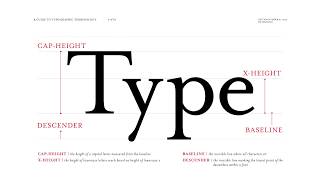
Typographic Terminology A to Z: Our list of typography terms that every designer should know.
The Futur
How To Run A Creative Business: In-depth breakdown w/ Melinda Livsey
The Futur
Creatively Recalculating | Overcoming The Fears of Being Creative - Von Glitschka
The Futur
Reinventing Creativity - An Evening With Von Glitschka Vector Logo Design
The Futur
🔴 RAW: First Client Meeting— What should you do? AMA w/ Chris Do
The Futur
Goal Setting and How To Achieve Your Goals (4 minutes)
The Futur
Day in the Life of a Designer - Digital Creative Director Ben Burns
The Futur
🔴 How To Get More Sales— Selling Through Curiosity
The Futur
Can You Charge To Diagnose A Creative Problem?
The Futur
🔴 Shift In Design Thinking and Problem Solving For Creatives
The Futur
🔴 RAW: Spartan Logo Design Winner Announcement & Design Critique
The Futur
Overcome Fears, Insecurity, Feeling Overwhelmed & Start Posting on Social Media
The Futur
How To Charge More For A Logo— Deep Dive ep. 4
The Futur
Document and Show Your Creative Process— Here's How in 3 Minutes
The Futur
🔴 The Importance of Being Perceived as Being Helpful
The Futur
🔴 How to Overcome Price Objections— AMA Marathon
The Futur
How Will Customers Find You— Build Awareness by Informing or Inspiring
The Futur
🔴 Mentorship - How To Find A Great Mentor
The Futur
Grow Your Business— Have Clear Goals Ep. 5
The Futur
Life Inside a Design Studio: Blind Ep 01
The Futur
Day In The Life Of A Designer - 24 Hours With Creative Director Greg Gunn
The Futur
Feeling Overwhelmed— Information Overload ep. 6 w/ Melinda Livsey
The Futur
🔴 RAW: Logo Pricing Challenges Roleplay & Selling Design W/ Social Proof | Live Stream
The Futur
Motivation, Focus & Grind - 7 Days Till Delivery
The Futur
How To Respond To A RFP (Request for Proposal)? What Should You Include In Your Proposal?
The Futur
How To Build A Social Media Following— Get Started
The Futur
More on: LLM Foundations
View skill →








![Run Any AI LOCALLY for FREE Forever! [100% Beginner Tutorial]](https://i.ytimg.com/vi/8GFPZRgtEn8/mqdefault.jpg)
Related Reads
Chapters (8)
1:16
Matthew's Social
1:24
Caveat
1:46
Background on Matthew
2:53
Matthew's Personal Rates
3:55
Different Forms of Rates
8:54
Rates for Jr, Mid, and Sr.
19:35
Markets & Skills
25:39
Q&A Starts
🎓
Tutor Explanation

 DeepCamp AI