Obama on the state of the world: the extended Vox conversation
Key Takeaways
President Obama discusses US foreign policy, international relations, and global security with Vox Executive Editor Matthew Yglesias, covering topics such as realism vs idealism, the Middle East, China, terrorism, and foreign aid, with a focus on balancing ideals with realism and promoting reforms, and the US's role in maintaining international norms and human rights
Full Transcript
[Music] This is a really sort of big picture question, but over the years I've heard a number of different members of your team refer to your kind of philosophy in foreign affairs as realism. Uh, is that a is that a term you would use? You know, traditionally, uh, a lot of American foreign policy has been divided into the realist camp and the idealist camp. And you know, so if you're an idealist, you're like Woodro Wilson and you're out there with the League of Nations and imagining everybody holding hands and singing Kumbaya and imposing these uh wonderful rules that everybody's abiding by. Uh if you're a realist, then you know, you're supporting dictators who happen to be our friends and you you're you're cutting deals and uh solely pursuing uh the self-interest of our country as narrowly defined. I just don't think that that uh describes what a smart foreign policy should be. Um I think it is realistic for us to want to use diplomacy for uh setting up a rules-based system wherever we can understanding that it's not always going to work. If we have arms treaties in place, it doesn't mean that you don't have a stray like North Korea that may try to do its own thing. But, you know, you've reduced the number of problems that you have in the security uh and defense challenges that you face uh if you can create those norms. And you know, one of the great things about American foreign policy in the postWorld War II era was we did a pretty good job with that. It wasn't perfect, but you know, the UN and the IMF and you know, a whole host of uh treaties and and uh rules and norms that were established uh really helped to stabilize the world in ways that it wouldn't otherwise be. Um, now I also think that if um if we were just resorting to that and we didn't have a realistic view that there bad people out there who are trying to do us harm and we've got to have the strongest military in the world and we occasionally have to twist the arms of countries that wouldn't do what uh we need them to do if it weren't for, you know, the the various economic or diplomatic or in some cases military uh leverage that we had. you know, if we didn't have that dose of realism, we wouldn't get anything done either. So, what what I what I do think is uh accurate in describing my foreign policy is a strong belief that we don't have military solutions to every problem in the 21st century. We don't have a peer in terms of uh a state that's going to attack us and bait us. You know, the closest we have obviously is Russia with its uh nuclear arsenal, but generally speaking, they can't project the way we can around the world. China can't either. We spend more on our military than the next 10 countries combined. You know, the biggest challenge that we have right now is disorder, uh failed states, uh asymmetric threats from terrorist organizations. And what I've been trying to do is to make sure that over the course of the last six years and hopefully the next two, we just have more tools in our toolkit to deal with the actual problems that we have now and that we can project into the future rather than just constantly relying on uh the same tools that we used when we were dealing with uh Germany and Japan in World War II. uh ending two wars uh was important not because I was under any illusions that that would mean we wouldn't have any terrorist threat. It does mean though that by not having 180,000 people in Iraq and Afghanistan, we can then more strategically deploy with a smaller footprint, special forces, uh, trainers partnering that allows us to get at uh, the actual problem and then frees us up to be able to send a team to prevent Ebola, to double down on our investments in things like cyber security, to look at the new threats and opportunities that are out there. Uh and and that I think has been the the real uh challenge over the last uh 6 to 8 years. So in the Middle East where we're still very much engaged despite you know the the draw down from Iraq. Uh the Clinton administration had a policy they called dual containment of Iraq and Iran. Uh the Bush administration had an idea about preventative war and an idea about kind of roll back and democracy promotion. under your administration, the country is still very involved in that region, but I don't think we have as clear a sense of what is the sort of strategic goal of that engagement. Well, you know, partly it's because of the nature uh of what's happened in the Middle East. You know, I came in with some very clear theories about uh what my goals were going to be, right? We were going to end the war in Iraq. We're going to prevent Iran from getting a nuclear weapon, trying diplomacy first. uh we were going to try to uh promote uh increased uh economic development uh in the Muslim countries to deal with this demographic bulge that was uh coming into play. We were going to promote Palestinian Israeli peace talks. Um so there were all kinds of theories uh and then the Arab Spring happened that I don't recall uh all the wise men in Washington u anticipating this uh so this has been this huge tumultuous change and shift and so we've had to adapt uh you know even as it's happening in real time to some huge changes uh in these societies. uh but if you look at the basic goals that I've set making sure that we are uh maintaining pressure on terrorist organizations so that they have limited capacity to carry out large-scale attacks on the west increasing our uh partnering and cooperation with countries uh to deal with that terrorist threat continuing to prevent Iran from obtaining a nuclear weapon and using the tool of sanctions to see if we get uh a diplomatic breakthrough there uh and continuing to try to move um you know the Israeli Palestinian relationship into a better place uh while at the same time helping the region as a whole uh integrate itself more effectively into the world economy so that there's more opportunity. Yeah, those basic goals still uh still hold true. you what people I think rightly have been concerned about is is that the the forces of disorder, sectarianism, you know, most uh tragically in Syria uh but uh lingering elements of that in Iraq as well, the incapacity of Israelis and Palestinians to get uh get together and the continued erosion of basic state functions in places like Yemen. mean that um you know there's more to worry about there than uh than there might have been in the under the old order. You know, we're kind of going through a a passage that is hard and difficult, but we're managing it in a way that makes sure that Americans are safe and that our interests uh are secured. And if we can make progress in uh restoring uh a functioning multi- sectarian Iraqi government and uh we're able to get a diplomatic breakthrough with Iran, then we have the basis, I think, for a movement towards greater stability. But this is going to be a generational challenge in the Muslim world and in the Middle East that not only the United States, but everybody's going to have to deal with. And we're going to have to have some humility in um recognizing that uh we don't have the option of simply invading every country where disorder breaks out and that uh to some degree the people of these countries are going to have to um you know find uh their own way. You we can help them but we can't do it for them. It seems to me on that point that members of your administration often seem acutely aware of sort of the idea of limits to American power, maybe to a greater extent than they always feel comfortable articulating publicly. Is it is it difficult to say in the political and media system that there are things you can't really do? Well, American leadership in part comes out of our can do spirit. We're the largest, most powerful country on earth. Uh, as I said previously in speeches, when problems happen, they don't call Beijing, they don't call Moscow, they call us. We embrace that responsibility. The the question, I think, is how that leadership is exercised. My administration is very aggressive and internationalist in waiting in and taking on and trying to solve problems. Where the issue of limits comes in is u what resources do we devote that are going to be effective in solving the problem. you know, in Iraq when ISIL arises, you know, if you think you have no constraints, no limits, then I have the authority as commander-in-chief to send back 200,000 Americans to reoccupy Iraq. I think that'd be terrible for the country. I don't think it'd be productive for Iraq. We could have what we've learned in Iraq is you can keep a lid on those sectarian issues as long as we've got the greatest military on earth uh uh there on the ground. Uh but as soon as we leave, which at some point we would, we'd have the same problems again. So what I said was Iraqis have to show us that they are prepared to put together a functioning government that the Shia majority is prepared to reach out to the Kurds and the and the Sunnis and that they're uh credibly willing to fight on the ground and if they do those things then we can help and we're going to have a 60 nation coalition to do it. If you look at that strategy yes it acknowledges limits. It acknowledges that it's a bad idea for us after 13 years of war to take over a country again. But that doesn't mean we're not engaged and it doesn't mean that we're not leading. And and so I think the real challenge for uh for the country, not just during my presidency, but in future presidencies, is recognizing that um leading does not always mean occupying. that the temptation to think that there's a quick fix to these problems is usually a temptation to be resisted and that American leadership means wherever possible leveraging uh other countries other resources where we're the lead partner because we have capabilities that other folks don't have. Um but that way there's some burden sharing and there's some ownership uh for outcomes and many of these problems don't get solved in a year or two years or 3 years. I mean the Shia Sunni split in the Middle East right now is one that uh has been playing itself out over centuries. We have the opportunity, I think, to lessen those tensions and to lift up voices that are uh less prone to exploit those sectarian divides. But, you know, we're not going to eliminate that stuff overnight. The trend towards uh you know, extremism among a small segment of uh uh Muslim youth in the region. Um, you know, that's a trend that's been building up over a period of time in part because of broader demographic problems and economic problems in the region. Part of it partly because of a perverted ideology that's been hypercharged through the internet. You know, it's it's winning the hearts and minds of that cohort back. Uh, you know, that's a multi-year project. And so, in the meantime, you um you take the victories where you can. you you make things a little bit better rather than a little bit worse. And that's not a that's in no way a concession to uh this idea that America's withdrawing or you know there's not much we can do. It's just a realistic assessment of uh how the world works. So you you seem to resist the the realist label earlier, but when you talked about your goals in the Middle East, you seem very concerned about disorder and you didn't mention anything like democracy or human rights. And the countries you talked about partnering with, it's places like Egypt where they came to power in a military coup, Saudi Arabia with public beheadings, Bahrain where during the Arab Spring, you know, they were beating non-violent demonstrators, repressing that very violently. Do you have any concerns about the sort of long-term sustainability of those kind of partnerships? Well, but this is a perfect example, Matt, of of where the division between realism and idealism kind of breaks down. I think any realist worth their salt would say that a society that consistently ignores human rights and the dignity of its citizens at some point's going to be unstable and not a great partner. uh and so it's not just the right thing to do but it's also very much in our interest to promote reforms throughout the Middle East. Now um you know the fact that we have to make you know real time decisions about who are we partnering with and how perfectly are they abiding by our ideals and are there times where we've got to uh mute some of our criticism in order to get some stuff done. Are there times where we have an opportunity to press forward? that doesn't uh negate the importance of us speaking out on these issues. As I said during the State of the Union speech and as I've said in every speech that I've made in the Middle East or anywhere else in the world, uh it just means that uh you we got to do more than one thing at a time. you know, we need a a strong bilateral relationship with China to achieve a bunch of uh international goals like climate change that uh are of great national security importance to us and uh billions of other people. Um that doesn't mean it's not smart for us to also speak out about uh censorship and political prisoners in China. We have to do both those things and there are going to be some times where they come a little more to the four uh than at other times and the same is true in the Middle East and elsewhere. But I am a firm believer that uh particularly in this modern internet age the the capacity of the old style authoritarian government uh to sustain itself uh and uh to thrive. you know, just is is going to continue to weaken. It's going to continue to crumble that model. Uh and that uh my argument to any partner that we have is that you are better off if you've got a strong civil society and you've got uh democratic legitimacy and you are respectful of human rights. That's how you're going to attract businesses. That's how you're going to have a strong workforce. That's how ultimately you've got a more durable um not just economy but also political system. But in those conversations, I'm also going to acknowledge that for a country that say has no experience in uh in democracy or has no functioning civil society or where uh the most organized factions are intolerant uh you know religious sects, you know, progress is going to be happening in steps as opposed to uh in one big leap. And uh and that's uh I think the the goal of any good foreign policy is having a vision and aspirations and ideals but also recognizing the world as it is where it is and figuring out how do you tack to the point where things are better than they were before. That doesn't mean perfect. It just means better. And the trajectory of this planet overall is one towards less violence, more tolerance, um less strife, less poverty. Uh you I said this before and I think um some folks here in Washington were like, "Ah, he's ignoring the chaos and all the terrible stuff that's happening." Of course, I'm not ignoring it. I'm I'm dealing with it every day. That's what I wake up to each morning. I get a a thick book full of uh death, destruction, strife, and chaos. That's that's uh that's what I take with my my morning tea. Sometimes overstates the sort of level of alarm people should have about terrorism and and this kind of chaos as opposed to a longer term problem of climate change and epidemic disease. Absolutely. And you know, I I don't blame the media for that. You know what's the famous saying about uh local newscast, right? If it if it uh if it bleeds, it leads, right? You show crime stories and you show fires because that's what folks watch. It's all about ratings and the the problems of terrorism and dysfunction and and chaos uh along with plane crashes and a few other things. That's that's the equivalent when it comes to covering international affairs. There's just not going to be a lot of interest uh in a headline story that we have cut uh infant mortality, you know, by really significant amounts over the last 20 years or that uh extreme poverty has been slashed. Uh or that, you know, there's been enormous progress with a program we set up when I first came into office to help poor farmers. uh increased productivity and yields. It's not a sexy story. Um and climate change is one that is happening at such a broad scale and such a complex system that it's a hard story for uh I think the media to tell on a day-to-day basis. Look, the the point is this. My first job is to protect the American people. It is entirely legitimate for uh the American people to be deeply concerned when you've got a bunch of uh violent vicious zealots uh who behead people or randomly shoot uh a bunch of folks uh in a in a deli in Paris. uh and we devote enormous resources to that and it is right and appropriate for us to be vigilant and aggressive in trying to deal with that the same way that a big city mayor's got to cut the crime rate down uh if he wants that city to thrive. But we also have to attend to a lot of other issues and we got to make sure that we're right sizing uh our approach. uh so that what we do isn't counterproductive. I would argue that our invasion of Iraq was counterproductive to the goal of keeping uh our country safe and despite the incredible valor of uh you know our troops and you and I'm in awe of them every single day when I work with them. uh you know the strategy that was crafted in Washington didn't always match up with the actual threats that were out there. We need to make sure that we're doing uh the right things and doing those well uh so that we can also deal with future threats like cyber security or climate change or different parts of the world where there are huge opportunities uh but you know before I came into office we had neglected for quite some time Asia Pacific being a perfect example or our own backyard the western hemisphere where there's been real progress in Latin America and we've got the opportunity to strengthen uh our relationships, but there are also some big problems like Central America where with a relatively modest investment, we could really be making a difference and and uh making ourselves safer. So, there's been this idea of a pivot to Asia and what does that mean to you in specific terms? A transfer of hard military resources, a transfer of sort of time on your agenda in the National Security Council. Is it something you really managed to pull off or does the Middle East really still have us kind of sucked in? Uh, I think it means all the above. Look, Asia is the fastest growing region in the world, the most populous region in the world, and you've got the largest country in the world, China, that has undergone this incredible dramatic transformation over the last several decades. and how well America does economically from a security perspective is going to be linked to our relationship to that region. And so we've said a we've got to make sure that we've got a constructive relationship with China, one that is hard-headed enough to make sure they're not taking advantage of us, but also sends a message to them that um you know, we can create a win-win situation as opposed to uh a pure competition that could be dangerous. In order to do that, China, you've got to step up and help us underwrite these global rules that in fact help to facilitate your rise. Uh things like uh uh free trade rules that are uh fair and you know, maritime rules that don't allow large countries to bully small ones. So that's one big piece of it. A second big piece of it is making sure that our allies like Japan and South Korea feel confident that we're always going to be there and that our presence is uh not one that over time waines because they're looking at a really big neighbor next door and they want to make sure that uh if America is their key partner that America is going to stand with them through thick and thin. Then you've got all these uh smaller countries or uh countries that are developing and coming into their own in the South Pac uh Southeast Asia. What we see there is this enormous hunger for engagement from America. They want to do more business with us. They want to have more defense cooperation with us. And what we've been able to do over the last 6 years is to systematically build this uh set of relationships, strengthen uh trading platforms, strengthen uh security cooperation, you know, everything from uh you know, how we deal with disaster relief uh so that if something like what happened in the Philippines happens again, other countries uh can work more robustly and we're building resilience uh to uh how we're dealing with uh deforestation. All these things uh are areas where we've made enormous investment and uh there have been significant payoffs. So you mentioned the Philippines and earlier the idea that there are sort of big gains potentially to be made by giving some assistance to Central America. And does it really make sense to have so much of America's foreign aid going to a country like Israel that's quite wealthy when there are these other democratic allies in other regions of the world that seem maybe more in need of assistance? Well, our relationship with Israel in many ways is unique. Um it's our strongest ally in the region. uh our people-to-people ties are uh unmatched and partly because of world history uh the vulnerabilities of um a Jewish population in the midst of a really hostile neighborhood uh creates a special obligation for us to to help them. I think the more interesting question is if you look at our foreign assistance as a tool in our national security portfolio as opposed to charity. Then you combined our defense budget overall with our diplomatic budget and our foreign assistance budget. And in that mix, there's a lot more we should be doing when it comes to helping Honduras and Guatemala build a effective criminal justice system, effective police uh and economic development that creates jobs. So, you're saying it would make sense to reallocate those resources? Well, and and part of the challenge here is just uh public awareness. you know, time and time again when they do surveys and they ask people, you know, what proportion of the federal budget is spent on foreign aid, they'll say, you know, 25%. Uh that they're pretty sure that all their hard-earned money that they're paying in taxes is somehow going to other folks. And if we can say, you know, right now it's varies between one and 2% depending on how you define it. if we were to make some strategic investments uh in in in countries that really could use our help, we would then not have to deploy our military as often uh and we would be in a better position to uh work with other countries to stamp out uh violent extremism, then I think people could be persuaded by that argument. uh but we haven't traditionally talked about it in those terms. Uh it's one of the things that I'd like to do over these next couple of years is is to try to try to erase this very sharp line between our military efforts in national security and our diplomatic and foreign assistance efforts because in this environment today we've got to think of it all as one piece. So the the transformation and sort of growing prosperity in in China is really, you know, probably the biggest story of the times we're living through. And it's something that it seems to me causes a a lot of anxiety to a lot of Americans. Um, you know, we've been having our own economic struggles, but also from a geopolitical standpoint. It's a country with a very different political system, very different values. Is this something that you think people should regard as alarming? No, we shouldn't be. we shouldn't alarm it. In fact, we should welcome uh China's peaceful rise. Um partly just from a ethical perspective uh you know to see hundreds of millions of people rise out of dire poverty and be able to feed their children and have a decent home, that's a good thing and and and we should encourage it. Um, in addition, uh, a China that is disorderly is a big problem because there are a lot of Chinese in the world and you know that's that's if if they're not doing well and if if they're unstable uh that's uh very dangerous uh for for the region where Americans I think have a legitimate reason to be concerned is that in part this rise has taken place on the backs of an international system in which China wasn't carrying its own weight or following it the rules of the road and we were and in some cases uh we got the short end of the stick. This is part of the debate that we're having right now in terms of the Trans-Pacific Partnership that the the trade deal that uh you know we've been negotiating. There are a lot of people who look at the last 20 years and say why would we want another trade deal that hasn't been good for American workers. It it it it allowed outsourcing of American companies, locating jobs in low-wage uh China, then selling it back to Walmart. And yes, we got cheaper sneakers, but we also lost all our jobs. And my argument is twofold. Number one, uh, precisely because that horse is out of the barn. The issue we're trying to, uh, uh, deal with right now is can we make for a higher bar on labor, on environmental standards, etc. in that region and write a set of rules where it's fair because right now it's not fair. And if you if you if you want to improve it, that means we need a new trading regime. We can't just rely on the old one cuz the old one isn't working for us. But the second reason it's important is because the countries we're negotiating with are the same countries that China's trying to negotiate with. If we don't write the rules out there, China's going to write the rules. and the geopolitical implications of China uh writing the rules for trade or maritime law or any kind of commercial activity almost inevitably means that uh we will be cut out or we will be deeply disadvantaged. Our businesses will be disadvantaged. Our workers will be disadvantaged. Um, so when I hear when I talk to labor organizations, I say right now, uh, we've been hugely disadvantaged. Why would we want to maintain the status quo? If we can organize a new trade deal in which a country like Vietnam for the first time recognizes labor rights and those are enforcable, that's a big deal. It it doesn't mean that we're still not going to uh see wage differentials between us and them, but they're already selling here for the most part. And what we have the opportunity to do is to set uh long-term trends uh that keep us in the game in a place that we've got to be. So why is it you think you haven't been able to persuade your friends in the labor movement of that? I mean, they presumably look at these issues pretty closely. They know the interests of their members. Well, look, uh I think the the story, the narrative, the experience that people have seen um over the last 20 years, you know, that's uh that's a real experience. You know, that's not something we deny. That's why during the State of the Union address, I was very explicit. I said, look, not every trade deal has lived up to the hype and uh there are real gaps in the current trading regime. That means that there are a whole lot of Toyotas sold here and almost no Fords or Chryslers sold in Japan. But what I say to them is if in fact the the current situation disadvantages us, why would we want to stick with the current situation? Now sometimes the response will be well um what you're doing isn't enough. what we need to do is to have uh union rec recognition in Vietnam or we need Japan to completely open its markets and not have any barriers whatsoever. Uh and we need that immediately. And I say to them, well, I can't get that for you. But what I can do is make the current situation better for American workers and American businesses that are trying to export there. I can open up more markets than we have open right now uh so that American farmers can sell their goods there. Better is is better. It's not it's not perfect. Um so uh but you know those experiences that arose over the last 20 years, those aren't easily forgotten and the burden of proof is on us then to be very transparent and explicit in terms of what it is that we're trying to accomplish. Um it's it's similar to the challenge we've got on the Iran negotiations. Uh and and maybe I'll I'll close with with that point because that's been uh an issue of great interest. People are right to be suspicious of Iran. Iran has sponsored state terrorism. It has uh consistently at the highest levels uh made deplorable anti-Israeli uh statements. Uh it uh is uh repressive to its own people. And there is clear and unavoidable evidence that in the past they have tried to develop a nuclear weapons program uh and tried to hide it from view. So that's a given and and it's understandable why people are concerned uh both here and around the world. But what I've also said is that the deal that we've struck, this interim deal brought about by the tough sanctions regime that we put together offers us our best opportunity to solve the problem of a nuclear Iran without resort to military force. Iran is negotiating seriously for the first time and they have made so far real concessions in the negotiations. We have been able to freeze the program for the f uh first time and in fact roll back some elements of its program like its stockpiles of uh ultra highlyenriched uh uranium. for us to give an additional two to three months to exhaust all possibilities of a diplomatic resolution when nobody denies, including our intelligence agencies and Mossad and others, nobody denies that. Right now, Iran really is abiding by the terms of our agreement. So, we're not losing ground. They're not uh surreptitiously developing a weapon while we talk. uh for us to give 2 3 months to figure that out makes sense. Now you know same thing with the labor with respect to trade. They're going to be some folks who are going to be skeptical and their impulse is going to be well let's pile on some more sanctions and let's squeeze them a little bit more and any deal that you're going to strike they're going to they're going to cheat and um you know we can't trust them and it's going to be a bad deal. I I get all that. But my message is we have to test the proposition. And if in fact a deal is struck, then it's going to be a deal that everybody around the world is going to be able to look at and everybody's going to be able to determine does this in fact prevent Iran from getting a nuclear weapon. And if the answer is yes, then it's a good deal. And if the answer is uh no, then it's not a deal that I'm interested in striking. Um there may be some technical arguments in part because uh there there are some who who will only be satisfied with the Iranian regime being replaced. Uh they that they don't even like the idea of Iran having any nuclear technology or nuclear knowhow. In your first campaign, there was talk of the idea that you might hold direct negotiations with countries like that, which which Well, no, but we have had direct negotiations. That's exactly what we're doing. And and the we're now testing the proposition. And and the question then, Matt, uh is going to be whether or not Iran can say yes to the world community that has determined this is uh a fair approach that gives Iran the ability to reenter the international community and verify that it's not pursuing a nuclear weapon. But this is another example of the overall point that I was making at the start. Um so, you know, it's a good way to to summarize. We can't guarantee that the forces inside of Iran take what should be seen as a good deal for Iran. We can't guarantee that they make a rational decision uh any more than we can guarantee that Russia and Mr. Putin make rational decisions uh about something like Ukraine. uh we've got to guard against uh uh their efforts uh militarily. Any aggression that they may show, we've got to meet uh uh firmly and forcefully. But we've also got to see whether things like diplomacy, things like economic sanctions, things like international pressure and international norms will in fact make a difference. And our successes will happen in fits and starts. And sometimes there's going to be a breakthrough and sometimes um you'll just modestly make things a little bit better. And sometimes the play you run doesn't work and you've got to have a plan B and a plan C. But the overall trajectory, the overall goal is uh a world in which America continues to lead. um that we're pushing in the direction of more security, more international norms and rules, more human rights, more free speech, um you know, less religious intolerance, and you know, those efforts over time add up. Um, and and I'm confident that uh that there's a way for us to maintain our idealism, be hard-headed in assessing what's out there, uh, confronting the dangers that, uh, we face without exaggerating them. Um, and America, I'm pretty certain, is going to be the indispensable nation for, um, for the remainder of this century, just what just like it was the last one. All right. Thanks so much. Thank you. Appreciate it. [Music]
Original Description
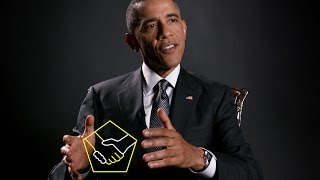
President Obama talks with Vox Executive Editor Matthew Yglesias about war, peace, the Middle East, China, terrorism, foreign aid, and more.
Read the extended interview with President Obama and nerd out with all the charts and graphs you could ever want at http://vox.com/obama.
Subscribe to our channel! http://goo.gl/0bsAjO
Vox helps you cut through the noise and understand what's really driving the events in the headlines.
Check out our full video catalog: http://goo.gl/IZONyE
Follow Vox on Twitter: http://goo.gl/XFrZ5H
Or on Facebook: http://goo.gl/U2g06o
Watch on YouTube ↗
(saves to browser)
Sign in to unlock AI tutor explanation · ⚡30
Playlist
Uploads from Vox · Vox · 55 of 60
1
 2
2
 3
3
 4
4
 5
5
 6
6
 7
7
 8
8
 9
9
 10
10
 11
11
 12
12
 13
13
 14
14
 15
15
 16
16
 17
17
 18
18
 19
19
 20
20
 21
21
 22
22
 23
23
 24
24
 25
25
 26
26
 27
27
 28
28
 29
29
 30
30
 31
31
 32
32
 33
33
 34
34
 35
35
 36
36
 37
37
 38
38
 39
39
 40
40
 41
41
 42
42
 43
43
 44
44
 45
45
 46
46
 47
47
 48
48
 49
49
 50
50
 51
51
 52
52
 53
53
 54
54
 ▶
▶
 56
56
 57
57
 58
58
 59
59
 60
60

11 mind-blowing facts about American health care dysfunction
Vox
What it's like living in a country ravaged by Ebola
Vox
The protests in Hong Kong, explained in 2 minutes
Vox
The most important chart of 2014, explained in under a minute
Vox
Dylan McDermott is the Nicolas Cage of television
Vox
Why recording the police is so important
Vox
Why you should get a flu shot every year
Vox
What's the smallest thing the human eye can see?
Vox
What will determine the 2014 midterms, explained in 8 bits
Vox
Do political ads on TV actually work?
Vox
Let's be calm and keep Ebola in perspective
Vox
Why an Ebola travel ban is a bad idea
Vox
The fascinating process of human decomposition
Vox
The 2014 midterm elections: 5 big takeaways
Vox
Personhood lost the midterms, but pro-life is winning the war
Vox
The huge new threat to Obamacare, explained in 2 minutes
Vox
Why do people run the marathon? I ran one to find out.
Vox
How we landed on a comet 300 million miles away
Vox
Basic income, explained
Vox
How silkworms make silk
Vox
Obama's executive action on immigration, explained in 2 minutes
Vox
Why it's so rare for police to be prosecuted for killing civilians
Vox
The better way to board an airplane
Vox
11 reasons we should all move to Sweden
Vox
Why even Jon Stewart couldn’t joke about the Eric Garner case
Vox
Why gas prices are so low right now
Vox
Discovery's "Eaten Alive" fact-checked by an actual snake scientist
Vox
One sentence that proves the American torture program was a national disgrace
Vox
The Grand Canyon filling with fog – and why – in 60 seconds
Vox
2014, explained in 4 minutes
Vox
The math of being a Lyft driver
Vox
Why the Cuba embargo should end
Vox
A visual tour of the world's CO2 emissions
Vox
What does the Bible say about the first Christmas?
Vox
11 fascinating bills from other currencies
Vox
7 ways the world is getting better
Vox
Third parties are the underpants gnomes of American politics
Vox
Charlie Hebdo’s most famous cartoons, translated and explained
Vox
The emotional roller-coaster of gas prices
Vox
The myth of race, debunked in 3 minutes
Vox
Watch the world's first lab-grown human muscle flex
Vox
Hints and details from the Avengers trailer
Vox
The Oscars' horrible lack of diversity, explained in 2 minutes
Vox
Obama's 2015 State of the Union, in 4 minutes
Vox
The 6 most important sentences from Obama's State of the Union
Vox
Meet the enormous boats that carry your stuff
Vox
The problem with American Sniper, explained
Vox
9 facts about medical errors you should know before entering a hospital
Vox
Believe it or not, flying is safer than ever
Vox
Welcome to Vox
Vox
Obama on why income inequality has skyrocketed
Vox
Obama on why he’s such a polarizing president
Vox
Obama on the goal of his foreign policy
Vox
Obama on what most Americans get wrong about foreign aid
Vox
Obama on the state of the world: the extended Vox conversation
Vox
Obama on American politics and economy: the extended Vox conversation
Vox
The origins of the anti-vaccine movement
Vox
Boko Haram and the crisis in Nigeria, explained
Vox
The anatomy of Taylor Swift’s “Style”
Vox
The myth of the "supermale" and the extra Y chromosome
Vox
More on: Persuasive Writing
View skill →






Related AI Lessons
⚡
⚡
⚡
⚡
5 Copywriting Tricks Hidden Inside Warren Buffett’s Shareholder Letters
Medium · Programming
I Thought Everyone Had Better Ideas Than Me. Then I Learned How Writers Actually Think.
Medium · AI
How to Write Persuasive Content That Builds Trust and Boosts Sales
Medium · SEO
6 Copywriting Formulas That Silently Print Money
Medium · Programming
🎓
Tutor Explanation
 DeepCamp AI