Why Athletes Owe a ‘Jock Tax’ Wherever They Go | EP 298 | The Hustle Daily Show
Key Takeaways
The Hustle Daily Show discusses the 'Jock Tax', a tax charged on athletes for working in a state, and its implications on remote workers, with topics including taxation, professional sports, and accounting.
Full Transcript
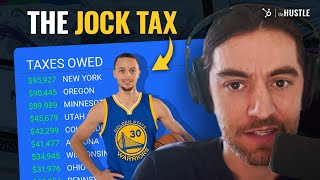
I'm Zachary Crockett and I'm Mark Dent you're listening to a special edition of The Hustle Daily Show ordinarily in this podcast we fill you in on the latest in business and Tech news today we're going to do something a little different Mark talked to former legislators athletes and CPAs to get to the bottom of how professional athletes pay taxes what he found out is pretty nuts and by the way if you're a remote worker some of this might also apply to you so Mark every year when I do my taxes there's this question that trips me up it's basically some iteration of did you perform work in more than one state and it kind of always makes me think twice yeah I mean most of us do work in other states maybe we send some emails during a vacation in Arizona join a few Zoom meetings during a conference in Boston or maybe a confession maybe I've recorded a podcast in a different way sometimes yeah and and you know if it's just a few things here and there it doesn't really seem like a big deal like the IRS isn't going to come knocking on our door every time we do something somewhere else but it does make me wonder like what about people like professional athletes who are on the road half the year playing in dozens of different states they have to pay taxes in almost every single state that they play in what are you serious yes so like think about the NFL when the the chiefs were just in the Super Bowl in Arizona when the Eagles were at the Super Bowl in Arizona they have to pay wage taxes for that state they're called jock taxes and for a few decades now athletes have been waging a war against them why don't you just tell us what a jock tax is in simple terms yeah it's essentially a tax that's charged on somebody athletes for working in a state it's charged on their way Ages which is you know whatever they make for that day and it's it's the same amount percentage-wise that that state would charge anyone who works there whether they reside or or visit or whatever ah gosh so if I'm paying a jock tax in California if state tax is nine percent the Jax tax will be nine percent yes exactly and it would be the highest income earner tax because a lot of states of course have you know different percentage levels but whatever that highest range is that is what the athletes would pay sure so as we said we all do a little work occasionally in other states or cities you know if you're a nurse practitioner a graphic designer you might be doing something somewhere else what makes athletes a particularly unique case well for one thing as I was talking about highest income earners they are among the very highest of income earners in this country who make you know millions of dollars a year and they're very easy to track their schedules are public you know Philadelphia knows when the New York Knicks are coming to town it's it's right there for for months in advance yeah there's there's no disputing it when there's HD video of you that was broadcast on you know Fox Sports or something exactly it's like the easiest potential tax case to win so do we know anything about the origins of these taxes so it's it's kind of murky like the exact Origins but like at least by the 80s maybe even by the late 70s California had been charging athletes to pay tax when when they played in in their states Wisconsin and Ohio had some taxes around that same time too but they didn't really become like nationally known or really a big deal until Michael Jordan came to the uh the Great Western Forum in Inglewood and defeated the Lakers in the NBA Finals wow so as as many other things in sports they started with Michael Jordan yeah it's it's one of his other legacies that I think is probably the least discussed and what happened was she California had been doing this but people in Illinois kind of got wind of it and I spoke to this guy who was a state senator a freshman state senator at the time in Illinois still trying to make a name for himself John kohlerton he's gone on at least as he tells me to pass or to be the sponsor of the most legislation that's ever been passed in Illinois which I think is either a great honor depending on your Viewpoint or like dude what depending on your viewpoint but anyway he heard about this somehow maybe it was a news story he couldn't exactly remember but he just thought like well if they're taxing Michael Jordan but we're not taxing Magic Johnson like that's not fair so he came up with this bill and it you know passed very easily in the Illinois legislature and it was kind of deemed in the Press Michael Jordan's Revenge wow okay so this freshman senator from Illinois he basically read in a newspaper that California had charged Michael Jordan who traveled from Chicago Chicago ten thousand dollars just for three nights of work in California in these jock taxes and he says this is extremely unfair that it's just levied on this one athlete let's expand this and make something out of it and it was a purely reciprocal law because they would only charge visiting athletes if they hailed from a state who charged Illinois athletes there so it was actually it wasn't really truly it wasn't that much of this like cash grab it was more like well some of these other states are already taking part in this cash grab if you will if you want to call it that so we're gonna take back what we believe is ours and that was essentially the the spirit of it things then evolved to say the least things evolved okay so let's talk about how they did evolve how did jock taxes spread from there so once word got out not only about Californians but you know about Illinois other states they just thought it seemed like a good idea too like this was like an era late 80s early 90s when states were facing spiraling deficits and there was you know within like the kind of hyper wonky governmental sphere there was these things called like Boutique government where you'd want to find ways to earn Revenue that didn't involve raising taxes on the majority of residents because that was not popular nor is it ever and there was also just the extreme increase in professional athletes salaries so where you had for instance in like you know we we came up with this great graph Zach that you put together in in 1979 Rod Carew was the highest paid baseball player at eight hundred thousand dollars which is about three million in today's dollars but you know 10 years later the highest MLB player was paid roughly triple that and and then it just kept on going and going so there was a lot more money to get back cities and states both dug in they they just saw it as like we need this money like I mean Philadelphia where I used to live in the early 90s was just like on the verge of bankruptcy and it avoided bankruptcy in no small part because it found a lot of these kind of clever ways to to tax people yeah it really is kind of astonishing to look at athlete's salaries over time on that note you know you brought a broad crew making 800 000 in 1979 a rod 33 million by 2009. I'd say that's safe to say that that outpaces the rate of inflation and they're talking now like I think in the future not to get too off topic but like I mean we're gonna see maybe in the even fairly new future that an athlete could make 100 million a year it's not unreasonable and now today these job taxes are so prevalent that your average athlete is filing out 10 to 15 tax returns per year and as super agent Lee Steinberg once said it's an accounting nightmare I'm sure it is that sounds that does not sound fun for anyone involved so let's let's break down how these things work what you just mentioned is you know a crapload of paperwork but when you actually look at the formula behind this it's really not that complicated yeah it's really it makes sense for sure so what happens is that players you know who are in the major leagues or who are in the NBA Etc they often just get paid like the rest of us you know they get a check every two weeks maybe every month whatever it might be but you know we see like you know for example Stephen Curry who who makes you know somewhere along the lines of 37 million a year that 37 million essentially gets broken out into what is known as Duty days and for NBA players that might be something like maybe 100 to 150 it's for the NFL it's 150 it's 180 Plus for Major League Baseball and and these are days that are considered where you're playing a game or like participating in some like True Team activity not just if you're going and lifting weights on your own or something like that and so to get the tax what these states and cities do is they'll take that yearly salary like 37 million for instance in the case of Stephen Curry and whatever days that they were in in the State playing a game or maybe they showed up a day early and they had like a shoot around so maybe it's like maybe Steph Curry went to New York for two days so then you would take the yearly salary times those two Duty days divided by the total you know 120 or 130 Duty days or whatever it is and then you just multiply that by the state income tax rate okay yeah so so then to like give a little bit more sort of detail to that equation well let's talk a little bit more about Stephen Curry so in the 2018-2019 season he did play two games in New York I guess maybe one against the Knicks one against the Nets blah blah blah and so New York has a 6.85 percent state tax for high income earners like Curry and a 3.65 in the city so for those two games he ended up being taxed ninety five thousand dollars jeez okay yeah this Curry breakdown is pretty astonishing when you look at it I mean you know 37.4 million during the 2018-2019 season and you can you can sort of break down all these jock taxes he paid he paid of that 37 million he paid 945 000 in jock taxes and God I don't even know how many this is like at least 15 different states here listed out like 95 000 in New York for two games 90 000 in Oregon for two games 89 000 in Minnesota for two games it just goes on and on Colorado two games 42 000. North Carolina just for one game 25 Grand in taxes yeah one game in Ontario 246 000 though because they got that big 15 checks right that is astonishing okay so if I'm a pro athlete I I kind of do not want to go play in Canada yeah the Advent of of the Canadian basketball teams R.I.P the Vancouver Grizzlies and the current Toronto Raptors has definitely led to an extra headache for the ideas okay getting traded to the Raptors is not a good thing yeah okay so given all the money that's taken out of the paycheck for these Jack taxes some cities and states it sounds like have maybe taken this a little bit too far and courted some pushback they've been overzealous to some of them uh Tennessee most infamously I I don't know how they ever thought that they'd be able to like get away with this but they charged a flat tax of two and a half thousand dollars per game to visiting NHL and NBA players with like the sort of like really defined purpose to improve their Arenas so it was kind of a tax you know a flat tax yeah that's gonna raise eyebrows to begin with but then it was for this one specific purpose that the rest of the taxes you know that's not how it works right in the rest of the state and so you know for Steph Curry two and a half K per game whatever as we just went through that guy has to pay a lot of money yeah in in other places but there are NBA players who make the league minimum of 458 thousand dollars at the time back in 2009 yeah and it's not a whole lot higher than that now but like that would exceed the amount of money they made for a day so they paid more in taxes than they made to play that game in ridiculous and what became of that it it was really unpopular and it was repealed in 2014 after pressure from NHL and NBA players unions and the other kind of Infamous jock tax is Cleveland and we were talking about that Duty day formula earlier so rather than like this the the key there right for like an NFL team or something like that or an NFL player is that the you divide the number of games that you're playing in that City divided by roughly 100 or 150 right so it's a it's a pretty large denominator so Cleveland instead of doing that Duty day formula they did it based on games played so in the NFL you only play around 20 games per year if you include the preseason so instead of saying one divided by 100 or 150 it was one divided by 20. yikes and and so you owed a lot more there was a football player named Hunter hillenmeyer who I interviewed who just he he wasn't making a ton of money early in his career or at least relatively speaking and he realized that he owed five thousand dollars for a single pre-season game and in the NFL the paychecks are are kind of a balanced in an odd way where in the preseason you don't really get paid your full salary and so that week he only made like a thousand dollars and yet he had to pay five thousand to Cleveland and so him and another NFL player named Jeff Saturday filed a lawsuit they won uh Cleveland had the reform its jock tax to do the duty days like everyone else okay it sounds hear you talk it sounds like athletes to test these if we all hate our taxes but athletes in particular really hate these dock taxes it also sounds like you know outside of these extreme cases states and cities don't really benefit either so who who exactly loves these taxes who are they really benefiting basically nobody except for a couple of parties which I will get to but first so why why nobody it's it's like so remember when Illinois first started to do this it was it was it really was Michael Jordan's revenge and it was reciprocal and it was just like we just want to get back what you know what you guys have kind of taken away to these other states but once everybody started doing that it essentially became an entirely reciprocal where every state that has a state income tax has a job tax now and so what what's interesting is that states don't want to double tax their athletes that could lead to a lot of legal red tape so that means when someone from the Chicago Bulls plays the Los Angeles Lakers they only owe those taxes to California and those two days of work that they normally would have paid in taxes to Illinois Illinois says don't worry about it we're going to give you a tax credit so Illinois doesn't get that money right and so then when California players come and and play in Illinois okay Illinois can can charge those players but that just means it's a complete wash it ends up where these states that for the most part have the same tax rate that they just have to go through a lot harder work a lot more complicated work to get the same amount of money that they would have anyways with a couple of exceptions it's basically doing a lot of work to get the same amount of money for the sole purpose of sort of making it look perfect on paper yeah and the it's it's one of those things where because everybody is in the game nobody can leave like colerton that state senator from Illinois told me unless all the states ended it at the same time it would be difficult for any one state to unilaterally disarm and the the main I'd say maybe not the main reason but one of the top reasons why these taxes have kind of kept going on for you know 30 plus years now are California and New York they have they are of course huge states with a lot of pull just generally speaking but they charge High income earners greater than 10 percent taxes that's a much higher uh state income tax rate than almost everyone else so when their players go to Illinois it's not just a complete swap right those Lakers Los Angeles Lakers will have to pay a tax to Illinois but because Illinois's tax rate is only like I don't know I think five percent give or take then the Los Angeles Lakers have to pay the rest like that other extra five percent to equal the 10 to California so California does make money off of all this and so does New York but these other states that all have about the same tax rates it's just it's just a wash gotcha okay so high tax states maybe are benefiting from this every one of them they're benefiting and and they're yeah they're kind of driving it to say the least yeah and and California we had in there in in 2015 they made 103 million off Major League Baseball from jock taxes 58 million from the NFL Etc just you know a lot of money okay well as a California resident that does not surprise me okay so at this point you might be wondering if you're listening to this you know this is all very interesting but I am not a professional athlete I don't earn 37 million dollars a year at the end of the day who cares if you are one of those people there is kind of a strange connection here to remote work just broadly remote work as you sort of explore at mark yeah so jog tax is just like the fun nickname for this but it's really just tax and Philadelphia is a good example of this because when they started to Levy their jock tax they also started to Levy these same taxes against like doctors and dentists and lawyers and other well-paid professionals who were visiting the city whether it was for like a conference or maybe they like you know were out in the suburbs and came in for the day or whatever and that's just to say that on the books in every state and in most cities are that if you come in and you do work then you owe tax there are 41 states in the U.S that charge income tax and around half require visitors to pay income tax if they work for just a single day in that state okay even if you're not a pro athlete even if you're not a pro athlete the difference like we were saying earlier is that states tend to not bother with you know someone who's like a nurse practitioner or an engine engineer or something like that but you know they can bother with athletes because they're high profile but that said it just with more people working remotely and States also wanting to earn money like there's a little bit of fear that they are maybe losing income taxes from Big employers you know who let their workers go off and work somewhere else and so they may start cracking down like at least like on like the really big companies of the world and say they won't go up to like individual employees but they could tell those employers hey you need to withhold like you need to tell us exactly where your employees are working and withhold properly which could lead to some headaches for that'll filter down to us regular regular workers so so as you said the IRS usually doesn't really care about this but yeah as we move toward a a more remote work environment a pretty substantial swath of the white collar Workforce is now remote post pandemic world people might start caring a little bit more I mean if if you're a big employer in California who has 10 000 employees let's say and 6 000 are living in other states working elsewhere filing taxes in their home States California's not getting that money yeah exactly and you know Jared walczak who who works for the tax Foundation which is like a big Think Tank and he said you know hey states are getting more serious about this and that's one reason why we should consider reform of some of these tax laws but secondly he just said that like people don't want to be out here quote unquote breaking the law and if if you don't file a tax return if you've worked in a certain state for a couple days that's technically what you're doing and it's just silly to have people in that situation so to sort of counter these fears this group called The Mobile Workforce Coalition which I assume sort of has the interest of remote workers in mind they have pushed for Congress to pass Federal legislation actually that would create a 30-day grace period for visiting workers in other states so this is sort of a conversation that's coming into the public Consciousness and there already is some pushback against these potential applications more broadly to remote workers yeah and that bill has some bipartisan support but it's it's also one of those bills that in some form it has been presented to Congress since 2012. so for 10 11 years now and it has not passed it has not even really gained any traction despite again having that bipartisan support part of that reason according to Jared walzek at the the tax Foundation are a couple of those States I mentioned to you earlier New York and California they like things how they are I'm sure they do Mark what surprised you most reporting this story I think it was when you really dug into this you could find out that just how much of a wash like this this whole thing was like I I think when I went into this I just was like okay The Jock tax like it must be good for you know at least some parties there must be a real reason for it but but there just really isn't you know the athletes aren't better off for it Most states aren't better off for it either and it's just one of those things that has just continued and continued because as that state senator from Illinois John kohlerton had told me like you can't be the first one to disarm you know you can't be the first one to stand down all right that's gonna do it for us today thanks for tuning in to the hustle Daily Show we're a proud part of the HubSpot podcast Network our editor today was Robert Hartwig and our executive producer is Darren Clark we've got a lot more Tech and business coverage for you and our newsletter if you're not subscribed go get yourself signed up at the hustle dot Co slash email that's the hustle dot Co slash email we'll catch you all tomorrow [Music] [Applause]
Original Description
Professional athletes owe major tax bills every time they work in another state. If you’re a remote employee, you might, too.
Zachary Crockett and Mark Dent (Writer at The Hustle) take a closer look at the lucrative world of athlete taxes, who’s benefitting from them, and how remote workers may come into play.
🎙️Want more from The Hustle Daily Show? Download the podcast: https://link.chtbl.com/rO18AhSP
We’re on social media!
📲 TikTok: https://www.tiktok.com/@thdspod
📲 Instagram: https://www.instagram.com/thdspod/
About the Show
A daily dose of irreverent, offbeat, and informative takes on business & tech news. Hosted by Zachary Crockett, Juliet Bennett Rylah, Jacob Cohen, and Rob Litterst from The Hustle.
Watch on YouTube ↗
(saves to browser)
Sign in to unlock AI tutor explanation · ⚡30
Playlist
Uploads from The Hustle · The Hustle · 44 of 60
1
 2
2
 3
3
 4
4
 5
5
 6
6
 7
7
 8
8
 9
9
 10
10
 11
11
 12
12
 13
13
 14
14
 15
15
 16
16
 17
17
 18
18
 19
19
 20
20
 21
21
 22
22
 23
23
 24
24
 25
25
 26
26
 27
27
 28
28
 29
29
 30
30
 31
31
 32
32
 33
33
 34
34
 35
35
 36
36
 37
37
 38
38
 39
39
 40
40
 41
41
 42
42
 43
43
 ▶
▶
 45
45
 46
46
 47
47
 48
48
 49
49
 50
50
 51
51
 52
52
 53
53
 54
54
 55
55
 56
56
 57
57
 58
58
 59
59
 60
60
How Spirit Halloween Became A $500m Pop-Up Business
The Hustle
On This Day In History: Microsoft Invested $240M in Young Mark Zuckerberg
The Hustle
Why Introverts Make Great Leaders
The Hustle
The Economics of Pumpkin Patches | Hustlenomics
The Hustle
TikTok’s Surprising Response To Its Copycats
The Hustle
On This Day In History: Facebook Renames Itself Meta
The Hustle
On This Day In History: Bitcoin Was Introduced
The Hustle
How Billionaire Ray Dalio Helped Launch McDonald's Chicken Nuggets
The Hustle
Back in 2001: Fastest Commercial Aircraft Resumes Flying
The Hustle
16 Years Ago: Sony Released The PlayStation 3
The Hustle
50 Years Ago: The Dow Jones Crosses 1,000
The Hustle
Billionaire Ray Dalio On Why Banks Won’t Store Bitcoin
The Hustle
Minecraft Is The Best-Selling Video Game In History
The Hustle
Why Most Gas Stations Don't Make Money From Selling Gas | Hustlenomics
The Hustle
The Polaroid Camera Revolutionized Photography
The Hustle
Ford's Model A Debuted In 1927
The Hustle
The Economics Of The $2 Billion Christmas Tree Industry | Hustlenomics
The Hustle
Stanford Tops Best Startup Schools List
The Hustle
This Robotics Startup Makes Sci-Fi Movies Look Real
The Hustle
How The US Government Saved These Car Brands From Dying
The Hustle
Amazon's New Delivery Drone Is Coming
The Hustle
Is The Plant-Based Meat Market Cooling Down?
The Hustle
Talk To Animals With Machines?
The Hustle
Utah Cookie Wars Heat Up
The Hustle
Is Our Current Housing Market WORSE Than The 2000s Housing Crash? with Morgan Housel
The Hustle
The WWE Is Smashing The Stock Market
The Hustle
Frozen Coffee Founder's Tips For Locking Down Investors
The Hustle
Esports Hot Streak Is Slowing Down
The Hustle
Kid Entrepreneurs Are Making Millions Selling Slime
The Hustle
Why Your Zillow Zestimate Is Wrong
The Hustle
Why AI & ChatGPT Are Getting Sued
The Hustle
Driverless Car Problems In San Francisco
The Hustle
How The Housing Market Is Pushing Out Low-Income Earners, with Morgan Housel
The Hustle
Livestream Shopping Is Huge Business In China
The Hustle
The Climate Cost of Private Jets: Will Celebs Like Taylor Swift Pay Up?
The Hustle
Why It's So Hard To Buy A House Right Now
The Hustle
Barney is Back in Business | Episode 263 | The Hustle Daily Show Podcast
The Hustle
The Secret To How Gas Stations Make Money
The Hustle
Is Ebay’s Short Renaissance Over? | EP 267 | The Hustle Daily Show Podcast
The Hustle
Will First Time Home Buyers Regret Their Pandemic Purchase? with Morgan Housel
The Hustle
The Business of Air Max | EP 287 | The Hustle Daily Show Podcast
The Hustle
What's Going On with Fractional Housing? | EP 292 | The Hustle Daily Show Podcast
The Hustle
How the Housing Market Screws You, according to Morgan Housel
The Hustle
Why Athletes Owe a ‘Jock Tax’ Wherever They Go | EP 298 | The Hustle Daily Show
The Hustle
The Economics of Dating | EP 302 | The Hustle Daily Show
The Hustle
How Insecurity Can Set You Up for Financial Success, with Morgan Housel | The Hustle Daily Show
The Hustle
Breaking Down Taco Bell’s Innovation Kitchen | EP 305 | The Hustle Daily Show
The Hustle
SoulCycle's Attempt To Make You Less Lonely
The Hustle
The Race to Automate Human Birth | EP 312 | The Hustle Daily Show
The Hustle
AI Wants to Be Your Dog’s New BFF
The Hustle
DNA Test Kits: A Controversial Crime-Solving Tool
The Hustle
Why Hollywood Writers Are Going on Strike | EP 315 | The Hustle Daily Show
The Hustle
Why Salvador Dalí is the Most Faked Artist in the World | The Hustle
The Hustle
Salvador Dalí "Detective" Spots Real vs. Fake Art
The Hustle
A New Credit Card That Rewards Wellness | EP 322 | The Hustle Daily Show
The Hustle
Why Do 2m Shopping Carts Go Missing Every Year?
The Hustle
Salvador "Dalí Detective" Spots Fake vs. Real Dalí Artwork
The Hustle
Ray Dalio On Inflation, the Impending Recession, and McDonald's McNuggets
The Hustle
The Economics of Vending Machines | Hustlenomics
The Hustle
Morgan Housel On the Housing Market's Downward Spiral
The Hustle
Related Reads
📰
📰
📰
📰
Nobody Asked About My GPA. Everyone Asked About Production.
Medium · AI
What Happened After Companies Rushed Into AI?
Medium · AI
The Fairies That Fooled Sherlock Holmes: What a 1917 Photo Hoax Teaches Us About Deepfakes
Medium · AI
Everyone Talks About AI. But Do You Know Where You’re Going?
Medium · Data Science
🎓
Tutor Explanation

 DeepCamp AI