What Is Amazon EC2? Virtual Servers in the Cloud Explained
Skills:
AI Workflow Automation80%
Key Takeaways
Amazon EC2 is a virtual machine that can be launched in minutes, allowing users to choose their operating system, CPU power, memory, and storage, and is used to power the backend API of a photo sharing app, handling uploads and application logic while staying protected behind a security group and private subnet. The tutorial covers the basics of EC2, including instance types, Amazon Machine Images (AMIs), and security groups.
Full Transcript
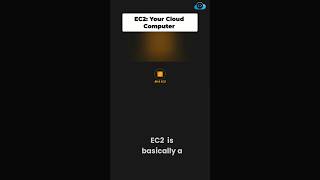
PC2 is basically a virtual machine, a server you can launch in minutes. You can choose the operating system, the CPU power, the memory, and even attach storage to it. It's like renting a computer from AWS that you control completely. In our photo sharing app, the EC2 instance will run our backend API. This is the part of the app that handles things like uploading photos, processing application logic, and talking to the database. So, whenever someone uses our app, the request eventually reaches our EC2 server, which does the actual work. When launching EC2, you pick two important things. One, the instance type. This decides how powerful your server is. For example, T2 micro for tiny workloads. T3 medium for lightweight apps. M5 large if you need more power. Two, the AMI stands for Amazon machine image. It's like the template for your server. You can choose Amazon Linux, Ubuntu, Windows, or even a custom image you built yourself. Every EC2 instance has a security group. Think of it like a firewall that controls what traffic can come in and go out of your server. For example, we'll configure the EC2 instance to accept traffic only from our load balancer, not directly from the internet. This is why EC2 instances are usually placed in a private subnet.
Original Description
Amazon EC2 is a virtual machine you can launch in minutes — pick your OS, CPU, memory, and storage. In this short, see how EC2 powers the backend API of a real photo sharing app, handling uploads and application logic while staying protected behind a security group and private subnet.
Full tutorial: https://youtu.be/7eP8U2CnKdA
#AmazonEC2 #AWS #CloudComputing #VirtualMachine #EC2Tutorial #AWSTutorial #DevOps #CloudServer #ServerlessVsEC2 #AWSBeginner #CloudInfrastructure #BackendDevelopment #CloudNative #AWSAMI #SecurityGroups
Watch on YouTube ↗
(saves to browser)
Sign in to unlock AI tutor explanation · ⚡30
Playlist
Playlist UUSWj8mqQCcrcBlXPi4ThRDQ · KodeKloud · 23 of 50
1
 2
2
 3
3
 4
4
 5
5
 6
6
 7
7
 8
8
 9
9
 10
10
 11
11
 12
12
 13
13
 14
14
 15
15
 16
16
 17
17
 18
18
 19
19
 20
20
 21
21
 22
22
 ▶
▶
 24
24
 25
25
 26
26
 27
27
 28
28
 29
29
 30
30
 31
31
 32
32
 33
33
 34
34
![Every DevOps Engineer Should Know AIOps [FREE LABs]](https://i.ytimg.com/vi/SUAHtdDBeps/mqdefault.jpg) 35
35
 36
36
 37
37
 38
38
 39
39
 40
40
 41
41
 42
42
 43
43
 44
44
 45
45
 46
46
 47
47
 48
48
 49
49
 50
50

Azure DevOps Engineer Exam: Question 11
KodeKloud
AWS AI Practitioner Question 21: Speech to Text
KodeKloud
How Minikube Sets Up a Kubernetes Cluster in Minutes
KodeKloud
How to Verify Your Minikube Kubernetes Cluster is Running
KodeKloud
🔐 AZ-400 Exam Prep | Question 12 of 50
KodeKloud
Generate SSH Keys in 10 Seconds (Windows, Mac & Linux)
KodeKloud
Why You Should Use Kubernetes Deployments Instead of Just Pods
KodeKloud
What Are Kubernetes Services and Why Do You Need Them?
KodeKloud
KodeKloud Cohorts Check-in #3: Kubestronaut & AWS AI Practitioner 2026
KodeKloud
AWS AI Practitioner Question 23
KodeKloud
Azure DevOps Engineer Exam: Question 13
KodeKloud
How Kubernetes Services Work Across Multiple Nodes
KodeKloud
Deploying a Multi-Tier App on Kubernetes
KodeKloud
Docker vs Kubernetes – What's the Difference and Why It Matters
KodeKloud
AWS AI Practitioner Question 22
KodeKloud
Azure DevOps Engineer Exam: Question 14
KodeKloud
AWS AI Practitioner Question 24
KodeKloud
Azure DevOps Engineer Exam: Question 16
KodeKloud
AWS AI Practitioner Question 25
KodeKloud
What Is Amazon S3? Simple Cloud Storage Explained in 60 Seconds
KodeKloud
Azure DevOps Engineer Exam: Question 17
KodeKloud
AWS Lambda Explained for Beginners
KodeKloud
What Is Amazon EC2? Virtual Servers in the Cloud Explained
KodeKloud
Azure DevOps Engineer Exam: Question 18
KodeKloud
AWS AI Practitioner Question 26
KodeKloud
What Is AWS Load Balancer?
KodeKloud
What Are Large Language Models?
KodeKloud
AWS IAM Explained in 60 Seconds
KodeKloud
What Is AWS Secrets Manager?
KodeKloud
What Are AWS IAM Roles?
KodeKloud
What Is AWS KMS? (Key Management Service)
KodeKloud
Azure DevOps Engineer Exam: Question 19
KodeKloud
AWS AI Practitioner Question 29
KodeKloud
Every DevOps Engineer Should Know AIOps [FREE LABs]
KodeKloud
AWS RDS Explained in 90 seconds
KodeKloud
What Is AWS VPC?
KodeKloud
What Is Amazon CloudWatch?
KodeKloud
Elastic Block Store Explained under 1 minute
KodeKloud
AWS AI Practitioner Question 30
KodeKloud
Cloud Computing vs Traditional IT: The Key Difference Explained
KodeKloud
Azure DevOps Engineer Exam: Question 20
KodeKloud
3 Cloud Deployment Models Simplified
KodeKloud
What Is an AWS IAM Policy?
KodeKloud
What Is AWS MFA? ( Multi-Factor Authentication Explained )
KodeKloud
AWS IAM Roles Explained
KodeKloud
Azure DevOps Engineer Exam: Question 21
KodeKloud
AWS AI Practitioner Question 31
KodeKloud
AI Agents for Beginners – Part 1 (Free Labs)
KodeKloud
Azure DevOps Engineer Exam: Question 22
KodeKloud
AWS AI Practitioner Question 33
KodeKloud
More on: AI Workflow Automation
View skill →









Related Reads
📰
📰
📰
📰
HTTP Status Code Reference – All 1xx–5xx Codes with Descriptions & Use Cases
Dev.to · Dev Nestio
CodeIgniter 4 vs Laravel — When to Choose Which (From a Dev Who Uses Both)
Dev.to · sunakshi Thakur
The Only Git Commands You Actually Need — 47 Patterns for Daily Work
Dev.to · The AI producer
Common Next.js Errors (and How I Solved Them)
Dev.to · gary killen
🎓
Tutor Explanation

 DeepCamp AI