What Are Kubernetes Services and Why Do You Need Them?
Key Takeaways
Kubernetes Services provide a stable endpoint for pods to communicate with each other and expose applications to external users, solving the issue of changing pod IPs, with examples of web server and redis service deployments
Full Transcript
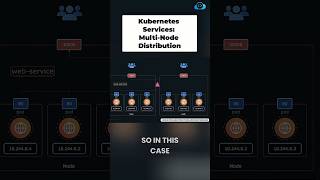
That's where a service comes in. Let's now talk about services in Kubernetes. So we have two sets of applications deployed on our cluster. A web server and a radius server. So Kubernetes assigns a unique IP address to each pod in the cluster. The web server in this case has the IP 10.244.0.2 and the pod has the 10.244.0.11. These are the IP addresses assigned to pods in a Kubernetes cluster. So there's an internal network formed and all the pods have internal IP addresses with which they can kind of communicate with each other. So in our example, the web server needs to access the reddish service. So here's the code of our web server and what do you think would be the address that the web server should put here to connect to the radius service? The Reddis pod has an IP address. Now, can the web server address the Reddis service using its IP address? Now, it can technically, but it shouldn't because this IP is for each pod and it is bound to change if the pod were to crash or restart for some reason. So, you don't really want to kind of tie down the IP address into code, of course. So, that's where a service comes in. So, a service enables communication between applications within a Kubernetes cluster. So think of a service as a proxy or a load balancer although it technically is not in a traditional sense and it provides an endpoint for other services to connect to. This case we create a service named radius DB and now the web application can refer to the service with the name radis DB. Now similarly to expose the web service outside to the external users you would create another service for the web server. We will call it the web service. So a service enables connectivity between applications within the cluster as well as to expose applications outside the cluster to end users.
Original Description
Pod IPs in Kubernetes change every time a pod restarts — so hardcoding them into your app is a recipe for disaster. Kubernetes Services solve this by providing a stable endpoint (like redis-db) that other pods can reliably connect to. Services also expose your app to external users.
Full tutorial: https://youtu.be/XuSQU5Grv1g
#Kubernetes #KubernetesServices #DevOps #K8s #KubernetesForBeginners #CloudNative #ContainerOrchestration #LearnKubernetes #KubernetesNetworking #ServiceDiscovery #KubernetesPods #DevOpsShorts #TechShorts #CloudComputing #PlatformEngineering #SRE #KubernetesTutorial #Microservices #DevOpsTips #LoadBalancer
Watch on YouTube ↗
(saves to browser)
Sign in to unlock AI tutor explanation · ⚡30
Playlist
Playlist UUSWj8mqQCcrcBlXPi4ThRDQ · KodeKloud · 8 of 50
1
 2
2
 3
3
 4
4
 5
5
 6
6
 7
7
 ▶
▶
 9
9
 10
10
 11
11
 12
12
 13
13
 14
14
 15
15
 16
16
 17
17
 18
18
 19
19
 20
20
 21
21
 22
22
 23
23
 24
24
 25
25
 26
26
 27
27
 28
28
 29
29
 30
30
 31
31
 32
32
 33
33
 34
34
![Every DevOps Engineer Should Know AIOps [FREE LABs]](https://i.ytimg.com/vi/SUAHtdDBeps/mqdefault.jpg) 35
35
 36
36
 37
37
 38
38
 39
39
 40
40
 41
41
 42
42
 43
43
 44
44
 45
45
 46
46
 47
47
 48
48
 49
49
 50
50

Azure DevOps Engineer Exam: Question 11
KodeKloud
AWS AI Practitioner Question 21: Speech to Text
KodeKloud
How Minikube Sets Up a Kubernetes Cluster in Minutes
KodeKloud
How to Verify Your Minikube Kubernetes Cluster is Running
KodeKloud
🔐 AZ-400 Exam Prep | Question 12 of 50
KodeKloud
Generate SSH Keys in 10 Seconds (Windows, Mac & Linux)
KodeKloud
Why You Should Use Kubernetes Deployments Instead of Just Pods
KodeKloud
What Are Kubernetes Services and Why Do You Need Them?
KodeKloud
KodeKloud Cohorts Check-in #3: Kubestronaut & AWS AI Practitioner 2026
KodeKloud
AWS AI Practitioner Question 23
KodeKloud
Azure DevOps Engineer Exam: Question 13
KodeKloud
How Kubernetes Services Work Across Multiple Nodes
KodeKloud
Deploying a Multi-Tier App on Kubernetes
KodeKloud
Docker vs Kubernetes – What's the Difference and Why It Matters
KodeKloud
AWS AI Practitioner Question 22
KodeKloud
Azure DevOps Engineer Exam: Question 14
KodeKloud
AWS AI Practitioner Question 24
KodeKloud
Azure DevOps Engineer Exam: Question 16
KodeKloud
AWS AI Practitioner Question 25
KodeKloud
What Is Amazon S3? Simple Cloud Storage Explained in 60 Seconds
KodeKloud
Azure DevOps Engineer Exam: Question 17
KodeKloud
AWS Lambda Explained for Beginners
KodeKloud
What Is Amazon EC2? Virtual Servers in the Cloud Explained
KodeKloud
Azure DevOps Engineer Exam: Question 18
KodeKloud
AWS AI Practitioner Question 26
KodeKloud
What Is AWS Load Balancer?
KodeKloud
What Are Large Language Models?
KodeKloud
AWS IAM Explained in 60 Seconds
KodeKloud
What Is AWS Secrets Manager?
KodeKloud
What Are AWS IAM Roles?
KodeKloud
What Is AWS KMS? (Key Management Service)
KodeKloud
Azure DevOps Engineer Exam: Question 19
KodeKloud
AWS AI Practitioner Question 29
KodeKloud
Every DevOps Engineer Should Know AIOps [FREE LABs]
KodeKloud
AWS RDS Explained in 90 seconds
KodeKloud
What Is AWS VPC?
KodeKloud
What Is Amazon CloudWatch?
KodeKloud
Elastic Block Store Explained under 1 minute
KodeKloud
AWS AI Practitioner Question 30
KodeKloud
Cloud Computing vs Traditional IT: The Key Difference Explained
KodeKloud
Azure DevOps Engineer Exam: Question 20
KodeKloud
3 Cloud Deployment Models Simplified
KodeKloud
What Is an AWS IAM Policy?
KodeKloud
What Is AWS MFA? ( Multi-Factor Authentication Explained )
KodeKloud
AWS IAM Roles Explained
KodeKloud
Azure DevOps Engineer Exam: Question 21
KodeKloud
AWS AI Practitioner Question 31
KodeKloud
AI Agents for Beginners – Part 1 (Free Labs)
KodeKloud
Azure DevOps Engineer Exam: Question 22
KodeKloud
AWS AI Practitioner Question 33
KodeKloud
More on: Systems Design Basics
View skill →







Related Reads
📰
📰
📰
📰
What Is an MCP Registry? (And the NxM Problem It Solves)
Dev.to · Sahajmeet Kaur
Built a suite of client-side dev tools to fix the "production data" privacy gap
Dev.to · Rayan Ahmad
5 Best BrowserStack Alternatives to Optimize Your Testing Infrastructure
Medium · DevOps
️ The Lifecycle Symphony: A Senior SRE’s Deep Dive into Init and Sidecar Containers
Medium · DevOps
🎓
Tutor Explanation

 DeepCamp AI