Docker vs Kubernetes – What's the Difference and Why It Matters
Key Takeaways
This video covers the basics of Docker and Kubernetes, demonstrating how to containerize an application using Docker and scale it up using Kubernetes.
Full Transcript
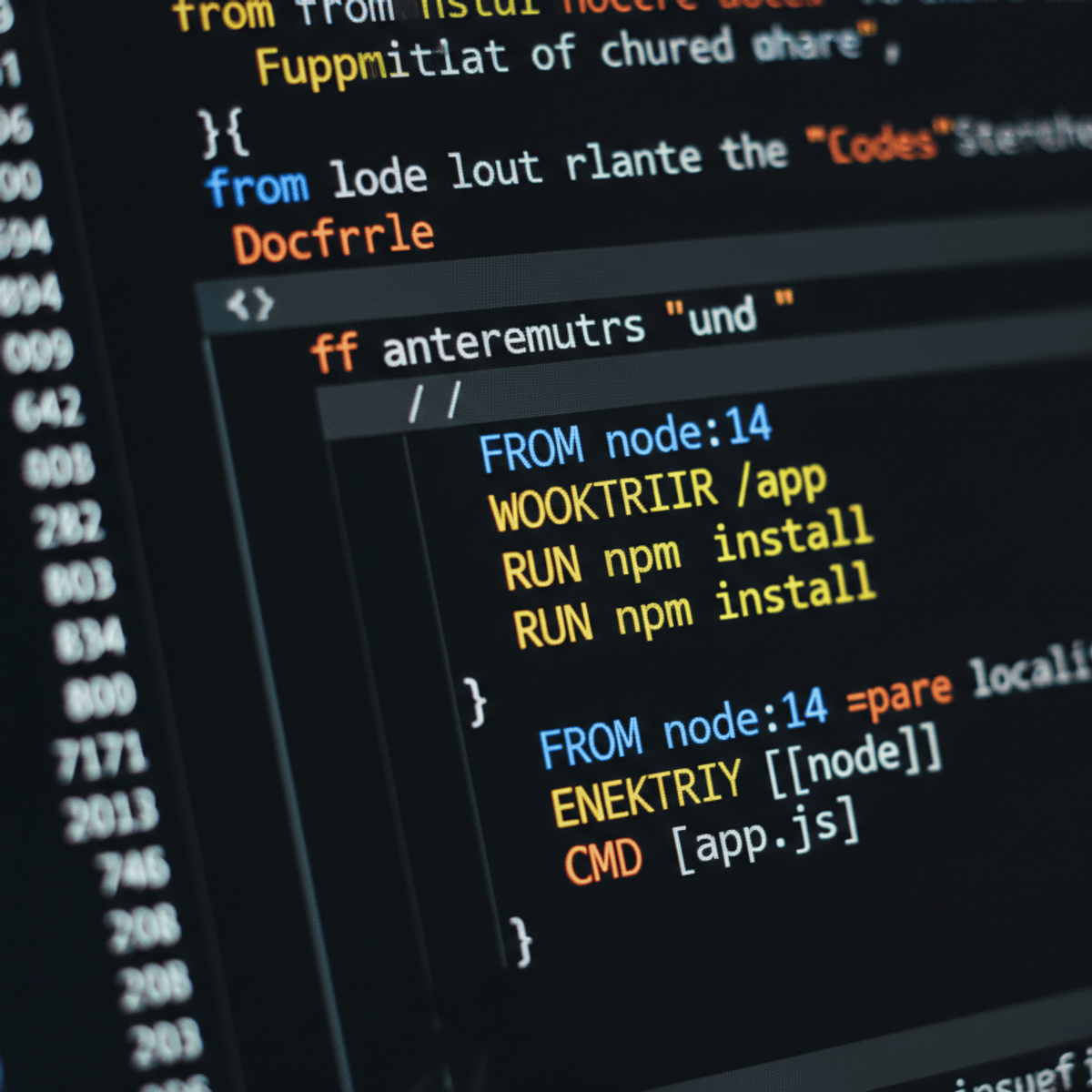
One of the most popular tools to containerize applications and run containers is docker. So here we have our application code. Then we have the requirements.txt file which has all the dependencies that are required for the application. In our case, it's just the flask dependency. And we now build a docker file to package the application with its dependencies into a docker container. So the first line here creates an image from the python base image and then sets the right working directory. then copies the requirements.txt file to the working directory and then installs the dependencies and this is where you could add any other dependency to it and then copies the application code into the image and finally defines the command to run the application using the cmd instruction. Now by running the docker build command we build an image and by running the docker run command we run one instance of our application. So that was a quick introduction to containers and docker. If you are new to Docker, I would recommend checking out our free Docker for beginners course on CodeCloud using the link given here. You'll learn with hands-on labs using our interactive learning environment by working on real systems that's exclusive to you. So what is Kubernetes? With Docker, you are able to run a single instance of an application using the Docker run command, which is great. Running an application has never been so easy before. With Kubernetes, using the Kubernetes CLI known as cubectl, you can run a thousand instance of the same application with a single command. Kubernetes can scale it up to 2,000 with another command. Kubernetes can even be configured to do these automatically so that instances and the infrastructure itself can scale up and down based on user load. Kubernetes can upgrade these 2,000 instances of application in a rolling fashion, one at a time, with a single command. And if something goes wrong, it can help you roll back these images with a single command. Kubernetes can help you test new features of your application by only upgrading a percentage of these instances through AB testing methods. Now, don't worry about the command line tool for now. We will take a closer look at it very soon. With Kubernetes, you're also able to define the expected state of your application. For example, you're able to define that your application consists of four different services. The web server must have three instances running. The payment service to have two. There should be a ready service with three instances running and a database service to which these services connect to. And you're able to define these in code. Kubernetes will ensure that the state that you have defined in these files for your application is maintained at all times.
Original Description
Docker makes it easy to containerize and run a single instance of your app — but Kubernetes takes it to another level. With one command, Kubernetes can spin up 1000 instances, auto-scale based on load, perform rolling updates, and roll back instantly if something breaks. This short covers the core difference every DevOps engineer needs to know.
Full tutorial: https://youtu.be/XuSQU5Grv1g
#Kubernetes #Docker #DevOps #K8s #KubernetesForBeginners #DockerTutorial #ContainerOrchestration #CloudNative #LearnKubernetes #DockerVsKubernetes #Microservices #RollingUpdate #AutoScaling #CloudComputing #PlatformEngineering #SRE #TechShorts #DevOpsShorts #KubernetesTutorial #DevOpsTips
Watch on YouTube ↗
(saves to browser)
Sign in to unlock AI tutor explanation · ⚡30
Playlist
Playlist UUSWj8mqQCcrcBlXPi4ThRDQ · KodeKloud · 14 of 50
1
 2
2
 3
3
 4
4
 5
5
 6
6
 7
7
 8
8
 9
9
 10
10
 11
11
 12
12
 13
13
 ▶
▶
 15
15
 16
16
 17
17
 18
18
 19
19
 20
20
 21
21
 22
22
 23
23
 24
24
 25
25
 26
26
 27
27
 28
28
 29
29
 30
30
 31
31
 32
32
 33
33
 34
34
![Every DevOps Engineer Should Know AIOps [FREE LABs]](https://i.ytimg.com/vi/SUAHtdDBeps/mqdefault.jpg) 35
35
 36
36
 37
37
 38
38
 39
39
 40
40
 41
41
 42
42
 43
43
 44
44
 45
45
 46
46
 47
47
 48
48
 49
49
 50
50

Azure DevOps Engineer Exam: Question 11
KodeKloud
AWS AI Practitioner Question 21: Speech to Text
KodeKloud
How Minikube Sets Up a Kubernetes Cluster in Minutes
KodeKloud
How to Verify Your Minikube Kubernetes Cluster is Running
KodeKloud
🔐 AZ-400 Exam Prep | Question 12 of 50
KodeKloud
Generate SSH Keys in 10 Seconds (Windows, Mac & Linux)
KodeKloud
Why You Should Use Kubernetes Deployments Instead of Just Pods
KodeKloud
What Are Kubernetes Services and Why Do You Need Them?
KodeKloud
KodeKloud Cohorts Check-in #3: Kubestronaut & AWS AI Practitioner 2026
KodeKloud
AWS AI Practitioner Question 23
KodeKloud
Azure DevOps Engineer Exam: Question 13
KodeKloud
How Kubernetes Services Work Across Multiple Nodes
KodeKloud
Deploying a Multi-Tier App on Kubernetes
KodeKloud
Docker vs Kubernetes – What's the Difference and Why It Matters
KodeKloud
AWS AI Practitioner Question 22
KodeKloud
Azure DevOps Engineer Exam: Question 14
KodeKloud
AWS AI Practitioner Question 24
KodeKloud
Azure DevOps Engineer Exam: Question 16
KodeKloud
AWS AI Practitioner Question 25
KodeKloud
What Is Amazon S3? Simple Cloud Storage Explained in 60 Seconds
KodeKloud
Azure DevOps Engineer Exam: Question 17
KodeKloud
AWS Lambda Explained for Beginners
KodeKloud
What Is Amazon EC2? Virtual Servers in the Cloud Explained
KodeKloud
Azure DevOps Engineer Exam: Question 18
KodeKloud
AWS AI Practitioner Question 26
KodeKloud
What Is AWS Load Balancer?
KodeKloud
What Are Large Language Models?
KodeKloud
AWS IAM Explained in 60 Seconds
KodeKloud
What Is AWS Secrets Manager?
KodeKloud
What Are AWS IAM Roles?
KodeKloud
What Is AWS KMS? (Key Management Service)
KodeKloud
Azure DevOps Engineer Exam: Question 19
KodeKloud
AWS AI Practitioner Question 29
KodeKloud
Every DevOps Engineer Should Know AIOps [FREE LABs]
KodeKloud
AWS RDS Explained in 90 seconds
KodeKloud
What Is AWS VPC?
KodeKloud
What Is Amazon CloudWatch?
KodeKloud
Elastic Block Store Explained under 1 minute
KodeKloud
AWS AI Practitioner Question 30
KodeKloud
Cloud Computing vs Traditional IT: The Key Difference Explained
KodeKloud
Azure DevOps Engineer Exam: Question 20
KodeKloud
3 Cloud Deployment Models Simplified
KodeKloud
What Is an AWS IAM Policy?
KodeKloud
What Is AWS MFA? ( Multi-Factor Authentication Explained )
KodeKloud
AWS IAM Roles Explained
KodeKloud
Azure DevOps Engineer Exam: Question 21
KodeKloud
AWS AI Practitioner Question 31
KodeKloud
AI Agents for Beginners – Part 1 (Free Labs)
KodeKloud
Azure DevOps Engineer Exam: Question 22
KodeKloud
AWS AI Practitioner Question 33
KodeKloud
More on: Docker & Containers
View skill →




Related AI Lessons
⚡
⚡
⚡
⚡
5 Best BrowserStack Alternatives to Optimize Your Testing Infrastructure
Medium · DevOps
`wrangler dev --remote` silently writes to your production KV namespace — here's the fix
Dev.to · 강해수
Qwen 3.6 27B Is the Local Dev Sweet Spot — Here's Why
Dev.to · Carter May
Deploying Spring Petclinic Microservices with Docker Compose: An End-to-End DevOps Deployment Experience
Dev.to · Nice Nwogu
🎓
Tutor Explanation
 DeepCamp AI