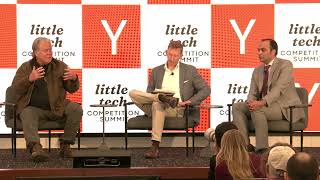
Y Combinator Little Tech Competition Summit - Washington, DC
Key Takeaways
Y Combinator's Little Tech Competition Summit in Washington, DC, focuses on promoting entrepreneurship and innovation, with discussions on antitrust enforcement, competition policy, and the impact of big tech on the market. The summit features various speakers, including Jonathan Caner, who emphasizes the need for strong antitrust enforcement and creating avenues for new startups to emerge.
Full Transcript
Good morning. Thank you and welcome to the Little Tech Competition Summit. Um, you know, many of you uh came to last year's event that was sort of the precursor for this called Remedy Fest and it was Y Combinator's first uh public policy event in Washington and it was really exciting because we made some uh made some news. That event was all about kind of skating to where the puck was going. Uh so it was sort of pre premised on the idea that you know in the USV Google trial uh there were there was a likelihood that Google was going to lose that case and we also had a speaker then Senator JD Vance uh who said among other things that his his favorite member of the Biden administration was Lena Khan and so six months later uh when uh the Google verdict came out uh lots of reporters called me and said what should the remedy be and I said go back and watch the conference that we had six months ago. Uh and uh of course uh then Senator Vance uh was put on the ticket and everybody was scrambling to understand what does this guy think about uh tech policy and were was pulling up the footage of that event. So really excited that uh you're here. Three years ago I met Gary Tan just a few blocks from here in Washington DC. were part of a representative from startups and midsize technology companies that were advocating for legislation that was aimed at curbing big tech's most egregious forms of self-deing. Uh this was uh we were in a meeting with Tim Woo at the White House and that was where I first heard Gary coin the phrase little tech. Thanks Luther. Sorry. Hey guys. Uh I'm Gary Tan. Uh although we made a valiant effort to pass legislation uh to protect and fair and open markets for little tech, we fell short. It might be tempting now as large language models dominate headlines to think everything is fine in the tech world, but significant work remains. In fact, the explosive growth of AI services has made it even more urgent to establish clear rules to ensure little tech has a fighting chance. As I told the US Senate Antitrust Subcommittee yesterday, policymakers must act decisively to restore conditions that allow innovation to flourish, protect consumers, and ensure America remains a global technology leader. So today, we aim to restore the optimism in technology and what's possible. The anti- big tech tech lash cannot become an anti- tech back uh backlash. If you're in policy and you live in Washington, you've probably noticed that there's an AI conference basically every day. And this is not that. Um yes, AI is going to come up. Um you know, we're going to have some cheeky slides that uh uh are sort of a shout out to uh some of the exciting technology that AI has provided. But today is about something bigger. It's about building a political coalition needed to support little tech, finding a path amidst populism and techno optimism uh between monopoly, anti- monopoly, and abundance. Um it's about harnessing the bipartisan realignment, recognizing we can't leave America's future in the hands of one or two gatekeepers. We have to restore pluralism and make America truly competitive again. Oh, I think that's it. So, oh, sorry. Go ahead. Uh, we sincerely thank you all for being here today. Now, let's move on to our fireside chat. All right. All right. If I can invite to the stage um uh we're going to have a fireside chat with um uh Jonathan Caner. It's the exit interview with Jonathan Caner and Brody Mullen. So Brody Mullins is a Pulitzer Prizewinning investigative reporter and author renowned for his extensive coverage of the intersection between business and politics. In May 2024, he published the must purchase Wolves of K Street. Absolutely must read purchase and read that book. It's outstanding. Offering an in-depth look at the rise of corporate lobbying in Washington through the lens of three political dynasties. Mull Mullen's journalism has earned him prestigious awards such as George Pulk award uh ever Dirkson awards and distinguished reporting for Congress and of course Poller. Um, and of course, Jonathan Caner, the former assistant attorney general for antitrust at the DOJ, was confirmed, uh, uh, November of 2021. Uh, throughout his career, uh, Mr. Caner has been a leading advocate for strong and meaningful antitrust enforcement and competition policy. He's been a partner, uh, in the Washington DC Washington DC offices of two national law firms and was founder of a boutique antitrust firm dedicated to promoting antitrust enforcement. Uh he began his career as an attorney for the Federal Trade Commission's Bureau of Competition and earned his JD from uh uh Washington University St. Louis and his BA from uh Sunni Albany. Please uh give a warm welcome to Jonathan Brody. [Applause] So, I was hoping AI would give me a full head of hair, but uh alas, we have You got a cooler picture than mine, though. I need to get one of those. Very cool. Uh well, thank you for having us. Um I think we're have a brief conversation uh about uh little tech and how to protect little tech. And I want to start off by asking you um during your time uh at DOJ, what are things that you did the best that helped the little tech industry? Yeah, I think the best thing we can do is make big tech compete harder and provide more avenues for opportunities for um little tech companies and all tech companies to compete. So we brought um you know uh righteous um and principled cases against Google, Apple, but we also um brought cases involving United Healthcare uh involving real estate algorithms, a wide range of areas where I truly believe we can we need disruption and innovation coming from new sources. And I think we want to do is we want to create avenues for um new startups, new businesses, new companies to emerge and go public. I want the Mag 7 to be the Mag 17 team. Uh if you had another year or if you were Gail Slater, what would you be doing right now on this front? Um we'd be fighting and winning our cases, which I hope they're going to continue doing for us. Um because I think uh they're strong and they're principled. Um I think there's a lot um we need to do um in the tech space. Uh I think there's a lot we need to do in the healthc care space. Uh agriculture and defense. I think those are the areas of the economy that um strike me as as the most concentrated and um necessitating the most um work from a competition perspective. And what do you think the next big case will be or the next big area? Um maybe you know too much to answer that question. Yeah. Well, I I'll speak, you know, um based as a as a private citizen now, um based on my observations, but I think we listen, we we brought a number of gamechanging cases, whether it's uh ticket master or Apple or Google, um the United case, um the Real Page case, the Visa case. I think we are we need to see those through, right? I It's important to launch the cases, but it's just as important to litigate them and win. um and really force um change that looks forward. Um and so I think there's a lot of work to do there. Um and then I think the if I were looking ahead, I think healthc care is the area that um where I see the most surface area for interest in antitrust. You've talked before about resources in terms of fighting big tech, but if if DOJ goes after healthcare, how do you think you get the resources to prosecute those cases against an industry that has just as much money as tech? I think it's a it's a um there are a few different dimensions to this. First is prioritization. Um, and so, uh, part of the job that I had to do was determine how are we going to take our scarce resources and invest them wisely on behalf of our client, which is the public. And we picked the biggest cases in the biggest industries that have the greatest impact on as on the greatest number of people. Um, and so just case selection alone uh, and how you manage your cases is really one way to manage to do that. Second is um and I want to talk a little bit about government efficiency because it's something that's coming up quite a bit. Uh I will tell you this um I ran the antitrust division for over three years. Um each year we ran it at zero cost to the taxpayer and with a budget surplus. Um we did it solely based on Hartscott Rodino merger filings. We ran it within our means, but we did it um ambitiously and we did it efficiently and we did it with a sense of direction and purpose and that allowed us to use our resources and we worked really hard and we did it with fewer people than the antitrust division had in 1979. Let me say though that we are still incredibly understaffed. We uh the antitrust division is still incredibly underststaffed and they need more resources in order to take on the world's largest monopolies because this is a a little tech conference and obviously um a lot of the great um innovators that Y cominator um helps uh incubate. I will say that I think we need to look to technology um in order to be more efficient. Um I think there's a lot we can do particularly on discovery uh data analysis using um the new exciting tools that are coming out uh that are based on AI and other uh innovations in order to keep pace um with the litigation workload. Um back to little tech how can little tech be protected right now during the AI revolution. So my view is that um antitrust is most important at the times of major um technological transformation and change. Uh it is to me not surprising that um the heyday of the AT&T antitrust case we saw the emergence of IBM. At the heyday of the IBM antitrust activity, we saw the emergence of Microsoft. During the heyday of the Microsoft um antitrust case, we saw the emergence of the internet and Google. Um when uh incumbents who are large and have these massive platforms feel threatened by new technological changes, they often invest not in innovation but in business practices designed to increase moes and make it harder for others to compete. Uh my view is that is when antitrust is most important. Uh it's most important to make sure that we're protecting um the next uh opportunity uh for disruption, paradigm shifts particularly in technology and network industries. And so my view is that um this is the most important time and as we think not just about the cases we're bringing but the remedies uh that we're going to ask for in an antitrust case, it's absolutely critical that we look ahead to where the market is going and craft remedies and cases to make sure that the next um technological change and shift is protected. Um some Republicans would say that it's not the government's job to meddle in the marketplace to protect an industry. What would you say to that? Um, antitrust is not a regulation. It's law enforcement. Um, and we need lines on the road. Um, you can't have competition without competitors and you can't have market uh markets without participants. And so antitrust is about making sure that we have um the the the excitement, the motivation that flows from rivalry um to uh to force us to motivate us to be better as a society. it it is a um surgical tool against the backdrop of an otherwise you know hatchet-like regulation. And I think uh what I hear a lot from folks right of center as well as left of center is that um that if you can um have strong antitrust enforcement uh it many instances will mitigate if not eliminate the need for invasive regulation. Uh so Donald Trump and his some of his administration officials sort of talk the talk on big tech but then on inauguration day we all saw the big tech CEOs uh at the inauguration. What did you make of that? It was I I it was concerning um bone chilling not just because of the weather. Um it was it was frightening. Right. I think you know we talk about antitrust uh and corporate power um because we want a just economy one that creates opportunity and freedom but corporate power can lead to political power and I think we've seen um you know seeing those you know CEOs and um you know in the ratunda um not just um there but you know front and center um I think you know speaks volumes about the degree of of power that companies have. Um I think um average citizens should have um as much if not more to say um than you know large CEOs of big companies. Uh and I think if we want a democracy, we need to make sure that everyone has the opportunity to participate. And if um it it's quite a strong statement to see all these people outside freezing um and um while um you know the people who uh run these big companies who have a lot to gain from government policy inside cozy and warm. Um and in his first two months in office, what signs have you seen out of the FTC or DOJ that are positive or negative in terms of moving this agenda forward? Yeah, I mean I listen I think you know by and large directionally I I remain very optimistic about the trajectory of antitrust enforcement. Um in part for the reasons we discussed which is that antitrust is about lines on the road. It's about um you know basic rules that uh are important for markets to function. It's about law enforcement rather than regulation. Um I I think we have seen a transition from an ideology um that um viewed uh antitrust enforcement with hostility over the last few um administrations to one that has a is more in line with what I believe where I believe the public resides which is that um holding big companies to account through antitrust enforcement uh when necessary um is a valuable and important tool and one that people care about. So, I remain cautiously optimistic. Um, but I I also am mindful that, you know, each um leader of their agency, whether it's Assistant Attorney General Slater or Chair Ferguson, will need to do it their way uh in the with their vision um and chart their own path. But I I think it's largely my hope is going to be largely cons um uh consistent in terms of the trajectory even if even if they do it in their own way with their own priorities and and along those lines what did you think of the administration's proposal on Google remedies? So uh we made a very strong proposal um and the new administration largely maintained most of the core principles of that proposal. Um there were some tweaks um but I I you talked a lot about the importance of AI. They they backtracked a little bit. They backtracked a little bit which I was a little bit disappointed to see but um but ultimately um they have to you know make their own assessments and do what they believe is correct. I do um firmly believe however that um whatever remedies a court imposses in an antitrust case including that specific case need to think about um creating opportunities for competition in AI and to make sure that query based um search which is likely you know if you think about where query based um search competitors are going to come from where the new advertising threats they're likely to come from companies that are building on AI stacks and keeping uh the lanes of competition open for those companies is really important. Uh you mentioned Andrew Ferguson uh last week or the week before he was quoted in um Axios is telling a bunch of bankers uh this is not the Bush administration. What do you think he meant by that? Well, I think um there's a sense and incorrect incorrectly in my view that antitrust is a is a switch that flips on and off depending on who's in power. Um, and it's just not, it doesn't neatly divide along party lines the way perhaps some people think. Um, and and I will say that in my experience when I was in office, uh, I found a lot of support um, from folks um, who are right of center and I also found disagreement from folks who are left of center from time to time. Uh, it just doesn't neatly divide along party lines. I think if you take a step back and you look at where the country is today, where the law is today, where lawmakers are today, where stakeholders are today in terms of the um the broader public, in terms of the entrepreneurial community, there's a lot of support for vigorous antitrust enforcement because it is seen as um a lifeline uh for competition, entrepreneurial opportunity, growth at a time when we desperately need that and it's seen as a pathway for innovation. You've also talked the about the lack of trust in experts uh these days. You gave an important speech I think last fall about that topic. Is there anything specific that can be done? Are we seeing any progress in that regard? There's a great book called The Wolves of K Street. Um I recommend everybody read it. Uh and uh but but yes, I think um you know, we need to distinguish between expertise and advocacy. And um I think um I crave expertise. I think it's extremely important. Uh, but companies have done, and Brody, you probably know more about this than maybe anybody on the planet, uh, have done too much to co-opt and capture academia and expert voices in ways that distort, um, the legitimate and free exchange of ideas uh, in the search of truth. And I think we need to do a much better job. and I delivered a speech which was effectively a call to action telling um the industry that it is going to lose credibility um permanently uh unless it gets its act together and I think it's now or never. Uh I think we have about a minute left, a little less than a minute. Um so in that time if done over since this is an exit interview, what's one thing you would have done better and one thing you would have changed? Um, so you know, when I when I look out ahead, I I I see all the things I wanted to do that we couldn't. Um, I think there's a lot more to do in healthcare. Um, and um um so uh you know, I wish we could have we could have gone faster. I wish we could have gone faster in in rebuilding our technology stack. Um we got um some money to do that. We worked quickly, but uh there's a lot more to do. Um, and what was the other question? What what we could have, uh, what do you think the biggest mistake you made was? Oh, uh, uh, I feel like I used to always say when I was in office that, um, there'll be time enough for counting when the deal ending's done. And I feel like the dealing just finished, so I'm going to I'm going to wait and um um regroup on that later. All right. Yeah. Uh, well, thank you very much. Okay. Thank you. There we go. I think we're on uh on There you go. So, one element, one element of last year's uh event was uh putting founders first and really talking about uh the YC founder community. And so, uh today we're going to have lots of exciting demos and talks by uh folks who have gone through the Y cominator program. Now, just to give you a quick little blurb about YC if you're not familiar, uh it's been in existence for 20 years and it was really the original accelerator. Uh so the way it works is um you apply. If you and I have a cool idea for a tech company or you and a friend have a cool idea for a tech company, you apply. There's about a 1% acceptance rate. So this is really the cream of the crop. And uh when you get in, you're required to move to San Francisco. uh you get about half million dollars in funding, you have up about 10% equity, and you're sort of chiseled into uh this incredible founder, lots of mentoring, lots of helping do your product market fit. And so we're going to uh be hearing from founders who've gone through the program both years ago and uh folks who have gone through very recently uh to uh sort of exhibit some of the uh exciting technology that's being created um by Y Combinator founders. And I'm really excited to introduce our first founder, Daniel Vega. He's the co-founder and chief technology officer of uh inversion semiconductor. Uh and uh it's a company that's really specializing in advanced semiconductor technologies. Uh it he plays a key role in overseeing the uh development innovation of inversions products and technologies. And prior to inversion uh Vega gained extensive experience in the semiconductor industry uh contributing to various technical advancements. I think uh when you hear his talk, you'll understand how it fits into today's theme and little tech and competition. Please welcome to the stage Dave Vega. [Applause] All right, let's see. There we go. Cool. Slideshow. Cool. How's everyone doing? Um, thank you for Luther for having me here in the YC team. Um, you know, in terms of little tech, I'm as little as you can be. I just finished the winter 25 batch. Um, just finished fundraising as well. And now I'm out here talking about some pretty cool stuff. And, you know, the focus for what we're doing at Inversion Semiconductor comes down to the need uh to develop advanced manufacturing capabilities here in the United States uh for semiconductor specifically. So today I'll be talking about the difference between potato chips and semiconductor chips and that'll become a lot more clear as we go on. So we live in an exciting time in the world where rocks can talk. Now u this has been a pretty new development. Uh we've done a whole lot of work in the last 50 odd years to develop large language models to mimic pretty much what humans have been able to do in terms of speaking and whatnot. Some of the bigger players in the space are Jensen Hong from Nvidia who is designing the most advanced chips uh to be able to do this. But he's not the only one. You also have Andrew Feldman from Cerebras who's betting on largecale chips to be able to do advanced you know LM models and whatnot. And there's a whole host of companies um who are doing advanced compute from your startups like etched, cerebrous, light matter and cy quantum uh to more of your traditional high-tech companies like Nvidia, AWS, Google, Apple and ARM and more of your traditional semiconductor uh companies like Qualcomm, Intel, Texas Instruments, AMD and Micron. Semiconductors touch all aspects of life. Um here is just some of the companies that use advanced semiconductors. Um you know I'm sure you recognize some of these um or you use some of their services in the past. Um and semiconductors while being a about half a trillion dollar market accounts for about $1.5 trillion in economic impact per year. Pretty impressive stuff. However, here in the United States, we do design the most advanced semiconductors, but still to this day, we produce 0% of the most advanced chips and then we'll get into you know why uh why that occurred. So before that, let's get into you know the semiconductor space. And a good analogy is to put it in terms of a wrapper. So if you were at the start of the early LLM craze, you knew that there was a whole lot of uh critique for new startups coming out that oh you're just the rapper of chat GPT. And using that analogy, we can break it down to how the industry is uh set up. So your YC backed startup is a just a wrapper. Uh but OpenAI is just an Nvidia wrapper which is just a TSMC wrapper which is just an ASML wrapper and so on and so forth. It's a very good analogy to understand the semiconductor space. uh but it is very simplified. So if we want to look at it in a more complex way um it looks like this uh where research and development goes into informing electronic design and those designs get developed into advanced chips. And how does that compare globally? Um like this where we here in the United States develop and design the chips but we don't make them. A lot of the technology that we developed over the last 50 odd years um has left um and gone to other places um and that may be changing in and how that dynamic plays around the world. The United States has great capabil capabilities in a lot of other tools um especially with our partners. Uh but what we don't have capabilities in is advanced lithography tools. uh lithography tools are the tools that are used uh to make the most advanced chips. Uh so EUV is the most advanced uh method that we have uh to make these chips and we use very small light to make very small patterns. Um so this is an ASML machine um that produces these a lot of this technology was developed here in the United States but has now left uh to the Netherlands. Uh that was the timeline and sort of you know effort that we put into it. We poured in about $4 billion dollars and we haven't seen the returns from that. So where did it all go? Pretty much this is how it happened and it it came down to analysts and people trying to cut you know savings and and and costs where they could and send it out elsewhere. And that's still happening today where you have companies like Global Foundaries who are taking large amounts of subsidies and divesting it outward. U so what are we doing here at semic sorry inversion semiconductor? Well, we're going head-to-head against ASML. We're developing new lithographic machines and we're doing so by using particle accelerators uh to target the most advanced nodes. So, I'm sure if you were on Twitter, you heard all about um this and that, you know, different nations are using large scale particle accelerators. While this system may or may not work, uh we're more interested in something that is a whole lot more compact and a whole lot more sustainable, which is why we're building these compact accelerators that were able to reach the same speeds as your traditional accelerators in a distance of about a meter. And we're doing that work with Lauren's Berkeley National Lab. So some of the remedies I propose is industrial policy where we are working with advanced uh chip designers and startups. You know bring that to the labs and developing new technologies to eventually produce uh the United States semiconductor manufacturing company. And if I had to leave with a couple of bullet points, um those are my subscriptions to what I think would make a healthy space. But other than that, thank you and thank you for listening to me. [Applause] Thank you, Daniel. There we go. So today we have our uh first uh dual fireside conversation and if I can welcome to the stage uh Doha Mcki uh Mike Davis and uh and Sear Anenti uh Seagra you please sit in the middle and uh uh do you can sit however you want to do it. Doha Mcki became the first uh acting attorney general for the DOJ's antitrust division on December 21st, 2024, overseeing 650,000 uh profess 650 professionals. Since joining in 2015, she's led investigations in healthcare, rail, and aviation and serve in roles including assistant um chief and special counselor for labor. She has twice received the assistant attorney general's award of distinction and testified before Congress on labor market competition. Um, previously she was an associate at an international law firm in New York. She holds a BA from Duke, a JD from Pin Law, and MB MBE in bioeththics from pin medicine. Sigar Andetti is the host of Breaking Points. Uh, Sagar is a journalist and uh, political commentator best known as a co-host of Breaking Points with Crystal Ball. Previously, he was a White House correspondent for the Daily Caller and co-hosted Rising on the Hill. He holds degrees from George Washington and Georgetown University. Mike Davis is the former chief counsel for nominations to Senate Judiciary Chairman Chuck uh Chuck Rasley. He's the founder and president of the Article 3 Project, which defends constitutionalist judges and the rule of law. He also leads the Internet Accountability Project, advocating against big tech overreach, uh, the unsilenced majority, opposing cancel culture, and MRD law, providing legal counsel and crisis counseling services. Davis played a key role in confirming Justice Brett Kavanaaugh on a record number of circuit judges during President Trump's first two years. He served in all three branches of government, worked as a civil litigator, and led the outside support team for Justice Neil Gorsuch's confirmation. a native of De Mo Iowa. He earned his BA and JD from University of Iowa. And today's panel or conversation is wither realignment. Uh it's we're going to be examining how recent moves by the Trump administration uh including the March 29th firing of the Democratic FTC commissioners are reshaping the antitrust landscape. Um it should be a fascinating conversation. Please give it up for our panel. Thanks uh Luther for the kind introduction and uh for all the other people in the audience, we're going to try and make this actually a little bit entertaining, shall we? And actually maybe make some news or at least very much get into it. And so uh since we don't have a lot of time, Mike, I thought I would start with you uh basically on the topic that has dominated Washington conversation on antitrust now for years, whether this whole populist left and right thing is real. And so considering now that we're in the first few days of the first few months of the Trump administration, uh, as Luther mentioned, the firing of some of those FTC commissioners, what can you assess right now of the reality of some sort of horseshoe theory of antirust, the populist left and right whenever whenever it comes to protecting small business and going after big tech, or do you think that this is a issue that can be dominated totally by one party where success will happen? What do you think? I really think there's a bipartisan coalition on antirust and you're seeing the uh populist left and populist right come together on this. I started the internet accountability project five years ago and I was the first uh we were the first group on the right to take on a big tech. Oh, Rachel Board's here. Hello. Uh she helped me start that. I didn't even see her there. But um we we started this and when when Rachel and I were out there, we were mocked and ridiculed because we took on Google, Amazon, Facebook, and Apple from the right. Um Ra Rachel was kind of the guinea pig. We'd throw out there and do the media and she would just get torched. Um but she she's tough as hell, of course. And so we just kept going at it. They they laughed at us 5 years ago. And now we have uh the Trump and Biden administration bringing antirust lawsuits against uh the trillion dollar big tech monopolists like Google on search and on their advertising online advertising monopoly and we're winning these lawsuits. Uh Doha worked for Jonathan Caner. I think we shocked Jonathan Caner and Lena Khan, especially when crazy Mike Davis endorsed their nominations. Uh they're like, "What the hell is going on here? This uh what what's the what's the move?" But no, it's there's very much a bipartisan consensus and it's growing. Uh you know, the the Republicans are finally waking up. I think what was the gateway drug for Republicans, for conservatives, was the censor censorship, right? I think Republicans are generally of the mindset that big is not bad. Um, you know, I there are a lot of Republicans there's there there is never an antitrust violation in the hundred years of the antitrust laws. I think when we saw these big trillion dollar big tech platforms have gatekeeping power over information and commerce and they were able to use that gatekeeping power to censor, silence, deplatform and cancel conservatives and others with whom they disagree. I think that's when Republicans started to wake up. Yeah, I I agree with that. Doa, what what's your assessment now having been through, you know, the first couple of months of the Trump administration? And do you think that the left and the right can share the same goals in break up of big tech even if we're getting there in different ways? Yeah. So, I mean, it's not surprising. I agree totally with Mike that there is um something going on on the left and on the right. And I can say that um having spent 10 years at the Justice Department, including as counsel to Donald Trump's first head of the antitrust division, Min Delerim, and then as Jonathan Caner's principal deputy before ultimately leading the place myself. Um I think this is real. Um I think there is a durable concern and um as Mike noted, I think our friends on the right come to this from concern about um deplatforming, censorship and so forth. And I think our friends on the left come to this um largely uh you know from events that have roots in the financial crisis. And I do think that there was a passing of the torch so to speak from Trump one to the Biden administration right they filed um the Google search uh antitrust monopolization case. Um again I was there for the tech review. I remember how groundbreaking that was. Then we tried it and then we filed cases against Apple and another case against Google. um seeking breakups of those monopolies but also other kinds of monopolies that affect the tech ecosystem. You know, I I think that um we are watching uh what's happening in the first months of the Trump administration. Um and what I see is um some factionalism on the right that looks mighty familiar for those of us who um experienced um you know some similar elements on the left, right? Like there are um two parties. It's the duopoly of our time and it brings together um different coalitions and so we saw folks who were very um comfortable with the neoliberal orthodoxy that had set uh in place for maybe 50 years or so in Washington. Um and we did things a little bit differently at the DOJ and again I see this on the right as well. I think there are um wonderful antitrust agency heads for example who see the problem right like they see the issue of oligarchy of entrenched corporate power not just in big tech but in um pharmaceuticals and agriculture right and other things that really matter for the participation of the American people and our market economy um but there are also um some folks who um maybe don't want government at all have deep concerns about the administrative state and again I I see this having come from an administration that had some, you know, similar factions, right? Um or a similar form of factionalism. Yeah, totally makes sense. Mike, let's talk about the firing of these FTC commissioners. Uh do you think that this is like a Trump admin play to consolidate power to more furtherly aggre you know, aggressive push against big tech? Is it what Doha's alluding to, which is more of a big business, Wall Street Journal style uh thing to plate them? How do you view that action? And how do you think that that's going to uh work in terms of some sort of bipartisan push in order to reign in big tech? Well, I had a big role in helping Andrew Ferguson get selected by President Trump to be the FTC chair and Gail Slater to be the uh assistant attorney general for the antitrust division and Mark Meadow uh for the FTC commissioner. I had no role in the firings and I didn't know they were coming. I think it was uh I don't know what the I don't know what the play was. I I think it was frankly a stupid move and it should not have happened. Interesting. Do what do you think? What do you think that what what kind of message does that send to people like you? You know, I'm I'm a private citizen now, right? Um and I I was very So speak your mind. Yeah. I um was excited to see what the Trump administration would do on issues of corporate power that matter like tech, like agriculture, etc. And I think that the firings, you know, setting aside what anyone might think about the Supreme Court president, Humphrey's executive, um I think there are plurality of views out there. Um even if you wanted to overturn Supreme Court president for almost a hundred years that has said, you know, there's only four cause removal. Um, it makes it harder to take on, I think, the very good targets that the the president himself identified when he nominated folks like Mark and Gail and Andrew um to their very important roles. And so, like, we're seeing that already. Just yesterday, the FTC's general counsel um advised that there should be an administrative stay in the PBM case, right? Again, conservatives are um aligned with folks on the left in terms of um concern over uh PBMs that make life-saving medicines more expensive for people across the country. And so, again, this is that that dissonance. And again, I I say this having some sympathy because we've experienced versions of this from the left. Yeah, I think Mike, that's one I want to drill into here for the audience is these tensions in the coalition which are difficult to explain if you're just looking at it from the outside. So you've also been, you know, I would say somebody who's endorsed like some aggressive movement by the Trump administration, certainly in ends that, you know, you think uh are justifiable, but with that type of let's say pugnacious uh fighting attitude, which is fine uh whenever you're doing that, how do you think that that will then affect if the Trump administration takes that and you know, as you said, perhaps pursues a stupid move? Will it destroy like future cooperation? So, as somebody who's navigating these waters of supporting the administration, also trying to preserve some sort of bipartisan consensus, how do you think that that's going to play out? Uh, I don't. So, whoever advised the president to fire these FTC commissioners may have a different motive. Maybe they're trying to destroy this bipartisan effort to hold big tech accountable. Maybe they are doing Google, Apple, Facebook, or Amazon's bidding. Who knows? Um but it was it was a dumb move. Look, the president my position is that is Humphrey's executive is clearly wrong. The president is the head of the executive branch. He is he has the executive power under article 2 and you can't divide that power among commissioners on a multi- head commission. So I think the president has the legal uh right to fire whoever the hell he wants in the executive branch. And uh that that's my legal position. My policy and political position was this was a stupid move again because why would you want to damage the bipartisan coalition? I I always say this about President Biden. I was his biggest opponent on everything except for his bipartisan antirust law enforcement. I think that's the one thing that he did very well with Lena Khan and Jonathan Cancer and Doha over there. She continued from the Trump to the Biden administration. And it requires that bipartisan coalition to take on the biggest monopolist in the world, Google, Amazon, Facebook, and Apple. If you did not have that bipartisan commission, we would not have been able to bring these antirust lawsuits and and win them, right? And so that's why I started the Internet Accountability Project. That's why Rachel and I took so much grief. I grew up with red hair. I I really don't care if I'm getting punched in the face. Um if I'm not getting punched in the face, I really don't know what's happening. And so I I go out of my way to get punched in the face, but um Rachel, I I feel I feel sorry for Rachel. She's much more attractive and she was getting punched in the face every day when we started this thing. So I apologize to you for that, Rachel, as the sacrificial lamb. But um it it requires a bipartisan coalition to to take on these these tech companies. And look, I think this is a I think by firing these FTC commissioners, I don't I don't think President Trump was making a conscious decision to break up the the what he started. He's the one who brought these antirust lawsuits in the first term. I think that uh I think that that some people who have ulterior motives motives may have uh gotten to him at with with the wrong angle on this. And so it's going to take it's going to the bipartisan coalition is not dead. I will make damn sure that doesn't happen. Uh, and we will fix this and move on. D, let's talk about mechanically the future of some of these cases. How does some of this executive action and these fights within the Trump coalition actually affect the success of future cases or not even ongoing cases and potential future cases that might be able to be brought forward. Totally. So, there's nothing harder than taking on trillion dollar companies um as a lawyer, right? There are lots of hard things we did at the Justice Department from spoofing cases to um terrorism cases and things like that. But um you know going up against opponents that have the resources and power of sovereigns, right, and sometimes exceeding sovereigns in some cases um really takes um a very serious commitment. And having the support, right, like sort of whole of government support to do that is very very important. If you think that there are factional forces that may undercut that effort, um that you know your job may be threatened, right, if you pick the big fights, that can cause some people um to tense up. We were fortunate, right, because we did not care, right, when we were governing. Um and I I see that there are bold um leaders who are committed to those fights that um we picked and they're going to pick their own fights, right? they're going to um bring other kinds of monopolization cases that I think will be very important for us to see. Um but again, I I suspect there will be clash and when you have those clashes, it is very important to have a backbone of steel, right? and and go the distance and see that there are public trials um that are, you know, um attendable, viewable by the American public, um that there is a real accounting, that there are um that there's real accountability, right, for these companies. I think I think that's something I think that the American people want. It's about getting there. And so, Mike, you know, we have to navigate if we do want to get to some lease like that a lot of these coalitional factions. So you're alluding to bad advice and some of these other things. It's very clear that there's a big war inside of the administration. So I mean a lot of the people in this room may be involved in some of those fights, you know, behind the scenes. What's the advice that you can give left and right in order to bolster the faction that does want to take on big tech? I think you need to be persistent and dog it and remember what you're up against. You're up against a$4 trillion dollar big tech monopouist who have a lot of lawyers. They have a lot of lobbyists. They have a lot of advertising money. They are very good at this game. They want to do everything they can to protect their monopolies and they will crush people in their way. And so what I what I say to conservatives is to make them understand this is not, you know, Marxist big big government stuff. This is antitrust. These are century old antitrust laws. The the Sherman Act, the Clayton Act, they've been on the books for over 100 years. And these are law enforcement tools, right? They are targeted law enforcement tools. These uh the antitrust laws are the opposite of regulation. You saw Facebook spending money calling for regulation because of course if you're a trillion dollar monopolist, you can afford regulations. Those are a rounding air for for a trillion dollar company. But if you're a startup company, those regulations are an entry barrier. And Facebook knows that. That's why they're calling for them, right? So if you target the anti anti-competitive tumors on the free market, I always said the free market requires a functioning market. And when you have trillion dollar big tech monopolists crushing competition, you no longer have a functioning market. You no longer have a free market. So if you target those tumors, that helps the entire market, right? That that that helps all the startup competitors. It's not regulation. It's the opposite of regulation. And so that's the ar those are the arguments I make to conservatives and I just make them constantly and doggedly for the last five years along with Rachel and you know we ultimately won. Absolutely. So Tohok can you give some advice now you're a private citizen. What was it like on the inside when you're taking on you know multi-t trillion dollar market cap and a building bigger than this that's just full of one group of DC lawyers not to mention all lawyers across the country. What is that like not only at a psychological level but navigating the coalitions which is what a lot of uh people in the conservative movement are finding now that they're actually in government and having the knife fights around this. Yeah. I think that um when you are governing you have to remember that you are responsible for governing for the entire American people. Um you have to talk to the entire American people and recognize that most like the ordinary person cannot vindicate their economic liberty. And that's how I view some of these tech fights. like this is an economic liberty problem. And so for all, you know, all of us who were in um my front office, we were constantly thinking about, you know, who is the core American that is harmed, right? Like um in JetBlue Spirit, for example, we were thinking about the person who couldn't otherwise get home um to see a loved one to attend a graduation without um Spirit's low fars. When we were thinking about the Google search trial strategy, we were thinking about um the average person going to the internet and visiting an access point so they could get information and make choices for themselves about how they wanted to live their lives, right? when we were thinking about um other cases that I won't call out, we were thinking about developers, right, who in many cases had better and more interesting products that they could have brought to market and one on the merits but for other entrenched monopolies. And so I think keeping at the forefront of your brain the American people is a really powerful um motivator to do the right things for the right reasons. And it actually informs better trial strategies because it turns out generalist judges can you know make heads or tails of facts. They can apply the law. But you know helping them understand the stakes and the stakes could not be higher here um is the most important thing you can do when you're on the inside. And so on that telling, who cares if there are folks who um may be um you know shilling or um may be captured right by big powerful entrenched interests like that's been true since the beginning of time, right? But you have to have vision and focus and a real sense of mission. Yeah, I think I really want to end on that note because ultimately this organization is built on empowering startups. And so when we think about, you know, the future of the US economy and uh what the big tech companies always tell us is that they're our golden, you know, our golden goose. Like look at all the amount of growth uh that has come from them. They're the ones that are responsible. Uh but I think they often ignore like where not only they came from but the ability to achieve that sometime in the future. And so, Mike, when you're talking now potentially to some of the builders in the audience or the people who want to empower the builders, how are they supposed to think about antirust policy when they're actively both trying to build something and navigate the very platforms that are either oppressing them or that they may have to sell to earlier than they may not want to. I mean, these big tech platforms are bad for competition. They're bad for innovation. They stifle uh they stifle our economy. Uh they they stifle the the startup economy. They stifled small and mid-size companies. Let me just give you an example. I don't know if you guys saw this news story yesterday that Google intentionally makes its search worse for its users so it can give the users more of its ads. Yeah. Right. The only reason they can do that is because they have like a 95% market share, right? Because Google search it. It's like Kleenex. If you how do you go search on the internet? You Google it, right? And uh remember when they said if you if you don't like Google build your own. Okay. Well, Microsoft, not a small company, spent5 billion dollars trying to create a competitor to Google search and it's called Bang. Uh a lot of you guys are young out here in the audience. Have you ever heard of Bang? Google it. Probably only as a joke. Doha, same question to you. Um, look for the startup uh the startups for the folks who have an innovative spirit. I mean, I I just think that it rhymes with just core notions of American ingenuity. And I would say that antitrust is here for you. Um, you should take interest in the politics and the policy. Um, because ultimately, um, my vision is not, um, you know, to be prescriptive. I don't think anyone who is very serious about antitrust wants to, um, meet out like certain outcomes. Um whether you are a trillion dollar company like you know the Microsofts of the world or um you are someone in your garage like I grew up in North Carolina right like I want it to be easy for someone to create a search engine in their garage in North Carolina right and to offer something that's differentiated or is a wholesale competitor and like that's what this is about right the core of antitrust is dispersion of economic opportunity and making sure that people actually can win on their merits, right? We don't punish success in this country, but there are rules of market participation. And I just think it's a travesty that we as a country that um you know, again, invented internet search, invented flight, like so many American so many wonderful things that the entire world enjoys were created or researched and like funded in the United States. And to lose that, right, to lose our edge is just it's like unspeakably sad to me, right? And so that's what antitrust is about. I think that's really well said. It's also you made a good call there to be interested in politics. I remember I was in San Francisco maybe eight years ago. Uh there was some tech founder there. He's multi- whatever billionaire net worth and he was laughing at me and he was like, I don't care about Washington at all. I was like, well, they're going to care about you. And I saw him on Congress not that long ago. So uh y
Original Description
Builders, thinkers, legislators, and regulators are gathered in DC to make sure there can be more startups in the world, giving consumers real choice.
Watch on YouTube ↗
(saves to browser)
Sign in to unlock AI tutor explanation · ⚡30
Playlist
Uploads from YC Root Access · YC Root Access · 46 of 60
1
 2
2
 3
3
 4
4
 5
5
 6
6
 7
7
 8
8
 9
9
 10
10
 11
11
 12
12
 13
13
 14
14
 15
15
 16
16
 17
17
 18
18
 19
19
 20
20
 21
21
 22
22
 23
23
 24
24
 25
25
 26
26
 27
27
 28
28
 29
29
 30
30
 31
31
 32
32
 33
33
 34
34
 35
35
 36
36
 37
37
 38
38
 39
39
 40
40
 41
41
 42
42
 43
43
 44
44
 45
45
 ▶
▶
 47
47
 48
48
 49
49
 50
50
 51
51
 52
52
 53
53
 54
54
 55
55
 56
56
 57
57
 58
58
 59
59
 60
60

Lecture 1 - How to Start a Startup (Sam Altman, Dustin Moskovitz)
YC Root Access
Lecture 2 - Team and Execution (Sam Altman)
YC Root Access
Lecture 3 - Before the Startup (Paul Graham)
YC Root Access
Lecture 4 - Building Product, Talking to Users, and Growing (Adora Cheung)
YC Root Access
Lecture 5 - Competition is for Losers (Peter Thiel)
YC Root Access
Lecture 6 - Growth (Alex Schultz)
YC Root Access
Lecture 7 - How to Build Products Users Love (Kevin Hale)
YC Root Access
Lecture 8 - How to Get Started, Doing Things that Don't Scale, Press
YC Root Access
Lecture 9 - How to Raise Money (Marc Andreessen, Ron Conway, Parker Conrad)
YC Root Access
Lecture 10 - Culture (Brian Chesky, Alfred Lin)
YC Root Access
Lecture 11 - Hiring and Culture, Part 2 (Patrick and John Collison, Ben Silbermann)
YC Root Access
Lecture 12 - Building for the Enterprise (Aaron Levie)
YC Root Access
Lecture 13 - How to be a Great Founder (Reid Hoffman)
YC Root Access
Lecture 14 - How to Operate (Keith Rabois)
YC Root Access
Lecture 15 - How to Manage (Ben Horowitz)
YC Root Access
Lecture 16 - How to Run a User Interview (Emmett Shear)
YC Root Access
Lecture 17 - How to Design Hardware Products (Hosain Rahman)
YC Root Access
Lecture 18 - Legal and Accounting Basics for Startups (Kirsty Nathoo, Carolynn Levy)
YC Root Access
Lecture 19 - Sales and Marketing; How to Talk to Investors (Tyler Bosmeny; YC Partners)
YC Root Access
Lecture 20 - Later-stage Advice (Sam Altman)
YC Root Access
YC's Summer 2022 Startup Job Expo - Pitches from 30 YC founders & find your next startup
YC Root Access
AMA with YC: Job Searching During an Economic Downturn (Event Summary)
YC Root Access
YC Startup Job Hunt Bootcamp, September 14, 2022
YC Root Access
YC Startup Talks: Understanding Equity with Jordan Gonen, CEO & Co-founder of Compound
YC Root Access
YC Tech Talks: Climate Tech with Charge Robotics (S21), Wright Electric (W17) and Impossible Mining
YC Root Access
YC Women in Tech: Breaking Into Product
YC Root Access
YC Ultimate Job Guide: Startup Stages
YC Root Access
Becoming a founding engineer at a YC startup
YC Root Access
3 tips for finding a job on YC's Work at a Startup
YC Root Access
YC Tech Talks: Defi and Scalability with Nemil at Coinbase (S12)
YC Root Access
YC Tech Talks: Designing Game Characters with Deep Learning, from Cory Li at Spellbrush (W18)
YC Root Access
YC Tech Talks: Designing from Day One: Artists as Founders with Multiverse (S20)
YC Root Access
YC Tech Talks: MMOs in the Instagram Era: Highrise (S18)
YC Root Access
Becoming a founding engineer at a YC startup - Finley short
YC Root Access
Why become a product engineer? -- with Volley (YC W18) & Luminai (YC S20)
YC Root Access
Y Combinator Go-To-Market Jobs Expo, 2022
YC Root Access
Fireside Chat with Tanay Tandon of Athelas
YC Root Access
Fireside Chat with Ivana Djuretic of Asher Bio
YC Root Access
The Past and Future of YC Bio
YC Root Access
What VCs Look for When Investing in Bio and Healthcare
YC Root Access
Finding your next role: Tips from YC's Talent team
YC Root Access
YC Startup Talks: Startup Equity with Compound (YC S19)
YC Root Access
YC Tech Talks: Machine Learning
YC Root Access
FTC Chair Lina Khan at Y Combinator
YC Root Access
AI, Startups, & Competition: Shaping California’s Tech Future
YC Root Access
Y Combinator Little Tech Competition Summit - Washington, DC
YC Root Access
The Exit Interview with Jonathan Kanter
YC Root Access
Founder Demo: Daniel Vega, Co-Founder & CTO of Inversion Semiconductor
YC Root Access
Wither Realignment?
YC Root Access
Founder Demo: Cyril Gorrla, Co-founder & CEO of CTGT
YC Root Access
Founder Demo: Newsha Ghaeli, Co-founder & President of Biobot Analytics
YC Root Access
Fireside with FTC Chairman Andrew Ferguson
YC Root Access
Fireside with Boom Founder & CEO Blake Scholl
YC Root Access
Founder Demo: AJ Forsythe & Jordan Barnes of Coop
YC Root Access
Are Techno Optimism and Populism Incompatible?
YC Root Access
Founder Demo: Trevor Mckendrick, Co-founder & CEO of Seis
YC Root Access
Founder Demo: Matt Bolous, Head of Policy & Safety of Imbue
YC Root Access
Fireside with Teresa Ribiera, EVP, European Commission for Clean, Just & Competitive Transition
YC Root Access
Fireside with Epic Games Founder & CEO Tim Sweeney
YC Root Access
Fireside with Former FTC Chair Lina Khan
YC Root Access
More on: Startup Basics
View skill →








Related Reads
📰
📰
📰
📰
Kenya court says restructuring alone cannot justify layoffs, raising startup risks
TechCabal
Left unsaid
Seth Godin's Blog
Everyone Wants to Be a Founder. Almost No One Asks Why.
Medium · Startup
Standard Chartered Foundation, Enterprise Development Centre, and Village Capital Announce Top 11 Finalists for Women in Tech Accelerator Nigeria (Cycle 7)
Techpoint Africa
🎓
Tutor Explanation
 DeepCamp AI