How to Learn Machine Learning (2024)
Key Takeaways
The video provides a comprehensive guide on how to learn machine learning in 2024, covering the ideal starting point, essential ML fundamentals, specialized skills, and critical resources to support learning. It highlights the importance of machine learning in today's job market and its potential for career growth and transformation of industries.
Full Transcript
hi there welcome to 365 data science today we're exploring how to master machine learning in 2024 by the end of this video you'll be able to create the best learning path for your background and knowledge whether that's 3 months full-time or 6 to 12 months part-time you'll learn about the ideal starting point for your journey essential ml fundamentals specialized skills and you'll find out where you can access critical resources to support your learning but first let's talk about why you should learn machine learning in 2024 machine learning is more than a technological Trend it's a Cornerstone of Aid driven Innovation across all sectors the future of jobs report 2023 highlights an expected 40% growth in demand for AI and machine learning Specialists that means over a million new jobs even non-traditional roles are integrating ml skills with 30% of data engineer job postings in our 2024 research requiring ml expertise this surge is not just about more jobs it's about transforming Industries and enhancing how we work and solve problems learning machine learning is now an investment in a futureproof career sounds like a valuable skill right but it's not always easy to know where to start this video is your road map covering everything you need to know to get into this field so let's explore this Dynamic field together but before we get started please like subscribe and hit the notification Bell for more educational content now let's answer an important question you might be asking can I learn machine learning on my own definitely anyone with curiosity and a commitment to learning can Master machine learning independently here are a few ways to get started there are so many online courses and tutorials nowadays choose structured courses from platforms that blend Theory with Hands-On projects check out relevant books in research there are lots of textbooks available online also keep up to date with the latest research through books and scholarly papers try your hand at some projects you can get practical experience and Community Support by working on Hands-On projects using real data sets then try engaging in discussions and problem solving on Specialized ml forums if you have any speciic specific questions or just want to find some like-minded people on our 365 data science platform you'll find courses and projects that cover everything from the fundamentals to the most advanced machine learning techniques whether you're enhancing your ability to make datadriven decisions or driving strategic Innovations in your field the path is clear and well supported for those eager to explore the time it takes to learn machine learning varies with your background and how much time you dedicate if you're starting from scratch with a full-time commitment you could build foundational skills in as little as 3 months for those balancing learning with other responsibilities expect to spend about 6 to 12 months on foundational skills now let's get to the specifics of how to get started with machine learning embarking on your machine Learning Journey Begins With understanding your background and goals start by assessing your knowledge in critical areas like statistics math and programming these form the backbone of everything you're going to do from now on from there identify your motivation for learning machine learning are you looking for career growth to enhance your skills or just learning for personal interest take a look at what you already know and what you hope to achieve you may need to strengthen some of our foundational skills like programming or statistical analysis remember at this point introspection is really important because it helps you understand which areas you need to work on most and which ml features will be most beneficial for your future goals now let's move on to your machine Learning Foundation the basics a strong Foundation is essential for any successful Learning Journey start with descriptive statistics to understand data summarization techniques then explore probability Theory and statistical inference these are the the foundation for understanding machine learning models in math focus on linear algebra and calculus which are vital for developing and optimizing algorithms on the programming front Python and R are your go-to languages python is particularly popular for its extensive libraries like pandas numpy and scikit learn these tools will help you manipulate data create visualizations and build your first machine learning models now once you've mastered the basic bics it's time to specialize let's discuss machine learning skills the specifics with a solid foundation you're ready to explore more specific machine learning skills here are some topics you might need to focus on first make sure you understand the different types of machine learning learn the distinctions between supervised unsupervised and reinforcement learning then focus on data pre-processing understand the importance of cleaning normalizing and splitting data into training validation and testing sets to ensure your models reliability next think about feature engineering learn how to extract select and transform features to improve model performance now take a look at bias variance tradeoff explore the concepts of bias variance underfitting and overfitting to understand model performance and predictability then get a deeper understanding of machine learning by exploring Advanced algorithms and techniques linear and logistic regression are essential for basic prediction and classification tasks decision trees and random forests are ideal for handling nonlinear data patterns neural networks and deep learning are all about architecture and activation functions to tackle complex problems support Vector machines svm are a robust framework for classification and regression tasks Ensemble me methods include techniques like gradient boosting for improved model performance and finally your last step in your ml Journey should be model evaluation and deployment learn to apply key metrics like accuracy precision recall and F1 score understand model deployment strategies and the importance of continuous monitoring and updating for real world applications okay now that you know what you need to know for ML here here are resources and next steps our 365 data science platform offers a wide array of resources to support your journey we offer diverse learning materials from introductory courses to Advanced tutorials flashcards and infographics to suit your learning style explore coding templates to practice your skills and take our practice exams to gauge your progress and for more insights our blog articles and machine learning tutorials are a treasure Trove of knowledge now that that you have your road map start your ml Learning Journey today the journey to mastering machine learning is challenging but you can achieve proficiency and Beyond with the right mindset and resources remember every expert started somewhere and with 365 data science you're never alone join our community share your progress and let's grow together in this exciting field thank you for joining us in exploring the world of machine learning in 2024 like subscribe and hit the notification Bell for more educational content from 365 data science until next time happy learning
Original Description
👉🏻 Sign up for Our Complete Data Science Training with 57% OFF: https://bit.ly/4fQkq8s
In this video, we'll show you how to learn machine learning in 2024, no matter your background. Whether you aim to master machine learning in 3 months with full-time effort or take a part-time approach over 6 to 12 months, we have you covered.
Discover essential machine learning (ML) fundamentals, specialized skills, and valuable resources to help you succeed. With a predicted 40% growth in demand for AI and machine learning specialists by 2024, now is the perfect time to invest in a future-proof career.
Resources: https://365datascience.com/resources-center/
Learn the key steps, including mastering statistics, linear algebra, and Python programming, which are the foundation for creating powerful ML models. Also explore the differences between supervised and unsupervised learning, neural networks, decision trees, and more. Additionally, we cover the importance of data preprocessing, feature engineering, and model evaluation using metrics like accuracy, precision, and F1 score.
By the end of this video, you'll have a clear roadmap to kickstart your machine learning journey, with tips on books, online courses, and hands-on projects to enhance your practical knowledge.
Start learning today with our curated courses and resources, and join the growing ML community!
Check out our Ultimate Data Science Career Guide here: https://bit.ly/4jiF3gK
► Consider hitting the SUBSCRIBE button if you LIKE the content:
/ @365datascience
►VISIT our website: https://bit.ly/365ds
🤝 Connect with us
LinkedIn: https://www.linkedin.com/school/365datascience/
Instagram: https://www.instagram.com/365datascience/
Facebook: https://www.facebook.com/365DataScience/
365 Data Science is an online educational career website that offers the incredible opportunity to find your way into the data science world no matter your previous knowledge and experience. We have prepared numerous co
Watch on YouTube ↗
(saves to browser)
Sign in to unlock AI tutor explanation · ⚡30
Playlist
Uploads from 365 Data Science · 365 Data Science · 0 of 60
← Previous
Next →
1
 2
2
 3
3
 4
4
 5
5
 6
6
 7
7
 8
8
 9
9
 10
10
 11
11
 12
12
 13
13
![INDEX and MATCH application of the two functions separately and combined [Advanced Excel]](https://i.ytimg.com/vi/9vrIFfMdYng/mqdefault.jpg) 14
14
![INDIRECT Excel Function: How it works and when to use it [Advanced Excel]](https://i.ytimg.com/vi/kDkS8rNCoBM/mqdefault.jpg) 15
15
![VLOOKUP and MATCH another useful functions combination [Advanced Excel]](https://i.ytimg.com/vi/2435x9FV6qY/mqdefault.jpg) 16
16
![VLOOKUP COLUMN and ROW - Handle large data tables with ease [Advanced Excel]](https://i.ytimg.com/vi/ToUaAqevy9E/mqdefault.jpg) 17
17
![The ELIF keyword [Python Fundamentals]](https://i.ytimg.com/vi/h3Vi9mtw2Jo/mqdefault.jpg) 18
18
 19
19
 20
20
 21
21
 22
22
 23
23
 24
24
 25
25
 26
26
 27
27
 28
28
 29
29
 30
30
 31
31
 32
32
 33
33
 34
34
 35
35
 36
36
 37
37
 38
38
 39
39
 40
40
 41
41
 42
42
 43
43
 44
44
 45
45
 46
46
 47
47
 48
48
 49
49
 50
50
 51
51
 52
52
 53
53
 54
54
 55
55
 56
56
 57
57
 58
58
 59
59
 60
60

Population vs Sample
365 Data Science
Data Science & Statistics: Levels of measurement
365 Data Science
Statistics Tutorials: Mean, median and mode
365 Data Science
Skewness
365 Data Science
What is a distribution?
365 Data Science
The Normal Distribution
365 Data Science
Central limit theorem
365 Data Science
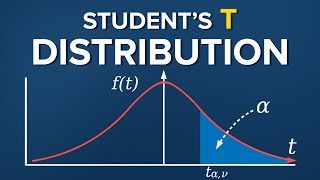
Student's T Distribution
365 Data Science
Type I error vs Type II error
365 Data Science
Hypothesis testing. Null vs alternative
365 Data Science
The linear regression model
365 Data Science
Simple linear regression model. Geometrical representation
365 Data Science
INDEX and MATCH application of the two functions separately and combined [Advanced Excel]
365 Data Science
INDIRECT Excel Function: How it works and when to use it [Advanced Excel]
365 Data Science
VLOOKUP and MATCH another useful functions combination [Advanced Excel]
365 Data Science
VLOOKUP COLUMN and ROW - Handle large data tables with ease [Advanced Excel]
365 Data Science
The ELIF keyword [Python Fundamentals]
365 Data Science
Working with Tuples in Python
365 Data Science
Database Terminology - A Beginners Guide
365 Data Science
Relational Database Essentials
365 Data Science
Database vs Spreadsheet - Advantages and Disadvantages
365 Data Science
Conditional Statements and Loops
365 Data Science
Backpropagation – The Math Behind Optimization
365 Data Science
Monte Carlo: Forecasting Stock Prices Part I
365 Data Science
Monte Carlo: Forecasting Stock Prices Part II
365 Data Science
Monte Carlo: Forecasting Stock Prices Part III
365 Data Science
365 Data Science Online Program
365 Data Science
Data frames - Creating a data frame
365 Data Science
Data Science & Statistics: Slicing a matrix in R
365 Data Science
Data frames in R - Exporting data in R
365 Data Science
Data frames in R - Transforming data PART II
365 Data Science
Data Frames in R - Subsetting a data frame
365 Data Science
Data Science & Statistics: Matrix arithmetic in R
365 Data Science
Data Science & Statistics: Indexing an element from a matrix
365 Data Science
Data Frames in R - Extending a data frame
365 Data Science
Data Science & Statistics: Creating a matrix in R FASTER
365 Data Science
Data Science & Statistics: Creating a Matrix in R
365 Data Science
Data frames - Importing data in R
365 Data Science
Data frames in R - Getting a sense of your data
365 Data Science
Data frames in R - Transforming data PART I
365 Data Science
Data frames in R - Import a CSV in R
365 Data Science
Data Science & Statistics: Matrix operations in R
365 Data Science
Data Science & Statistics: Matrix recycling in R
365 Data Science
Tableau vs Excel: When to use Tableau and when to use Excel
365 Data Science
Download Tableau: Learn how to download Tableau Public
365 Data Science
Connecting data sources: Useful tips when connecting data sources to Tableau
365 Data Science
The Tableau interface: See how to navigate through the Tableau interface
365 Data Science
Tableau data visualization: Create your first Tableau visualization!
365 Data Science
Duplicating sheets: This is how to duplicate a sheet in Tableau
365 Data Science
Build a table in Tableau: The steps needed to create a simple table in Tableau
365 Data Science
Custom fields in Tableau: Using Tableau operators to create custom fields
365 Data Science
Custom fields in Tableau: Add calculations to tables through custom fields
365 Data Science
Totals in Tableau: Learn how to display subtotals and totals in Tableau
365 Data Science
Gross Margin calculation in Tableau
365 Data Science
What is a filter in Tableau: Set up a filter in Tableau to specify the data you want to show
365 Data Science
Joins in Tableau: Inner, outer, left, or a right join in Tableau
365 Data Science
Building a Tableau dashboard: Three types of charts you want to have in a Tableau dashboard
365 Data Science
Creating great looking charts in Tableau: Real life Exercise on charts in Tableau
365 Data Science
Joins in Tableau: Choose the correct join type
365 Data Science
How to make a data check in Tableau: A quick data check is better than no data check
365 Data Science
More on: ML Maths Basics
View skill →



Related Reads
📰
📰
📰
📰
Ledoit–Wolf Shrinkage: When “Almost Right” Is Better Than “Exactly Wrong”
Medium · Machine Learning
When sentiment analysis becomes a Triage Tool, not a Truth Machine
Medium · Machine Learning
The Coding Bias: Why Healthcare AI Fails Outside the Lab
Medium · Machine Learning
The Coding Bias: Why Healthcare AI Fails Outside the Lab
Medium · Deep Learning
🎓
Tutor Explanation

 DeepCamp AI