Eyes tell all: How to tell that an AI generated a face?
Key Takeaways
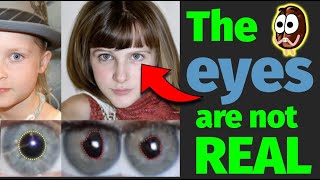
The video discusses a research paper titled "Eyes Tell All: Irregular Pupil Shapes Reveal GAN-generated Faces" which highlights the limitations of Generative Adversarial Networks (GANs) in generating realistic pupil shapes, and proposes a method to detect GAN-generated faces based on this feature. The video also discusses the implications and limitations of this paper, including the potential for future GANs to circumvent this detection method and the importance of considering diverse datasets t
Full Transcript
hi there we need to talk about gan generated faces after we spotted this paper beautifully entitled i still all ah when did paper titles become this sketchy i personally do not have any trouble with making research sexy as long as there is no all you need in titles anymore as you have already guessed this paper is highlighting that gan generated images at least with style gun too do not render the pupil accurately enough and therefore one can build a gan generated face detector upon this feature miss coffee bean saw this paper received an enormous amount of attention on twitter with reactions ranging from dismissing the importance of this pupil feature because the next gan generation will fix this problem anyway to cases of surprise that gans did not capture this human feature so what are the implications of this paper that highlights the pupil feature in particular and more generally how to tell gan generated images apart from real ones this is what we will discuss in this ai coffee break hey do you have your coffee ready because now we begin this paper here highlights a problem in gan generated phases gan stands for generative adversarial networks if you want a refresher of how gans work to produce images check out our previous high level explanation about this so the authors investigate how gans failed to generate circular or analytically shaped pupils for human eyes therefore the authors propose a method to automatically estimate the shape of pupils and determine if it is human-like enough since gans tend to generate weird pupil shapes this should automatically detect whether the depicted person is real or generated by again but miss coffeebean sees here two categories of problems let's go to problem number one the paper is framed like gans in general have this property of generating weirdly shaped pupils but if we look closely into the experimental section we see that the authors have quantitatively estimated this property only with style gun 2. so to generalize to gan generated in general is a bit of a sneaky exaggeration do not get us wrong here it is absolutely the case that many other gans have the same problems with pure pills too at least when we zoom in a lot from his coffee bean the pupil problem is not even that strong in this case which is strange because the authors reportedly used exactly the same cool website this person does not exist.com do check it out to retrieve some style gan two generations in any case gan generation quality is not there yet where details are rendered well just look at the eyebrows and eyelashes too these little details are easy to overlook if these gan generated images are used in settings where pictures are not looked at in full detail for example in bot accounts on social media where the profile picture is so tiny anyway so understandably there is need for an automatic bot checker as the authors propose but the argument of using this pupil detector widely grows weaker because style gun 2 won't be nvidia's last generation of gans ever and other parties are training powerful gans too especially since gan generated face detection is an arms race now that the defenders know of this pupil feature the attackers will do their best to make the right generations in the next version circumventing automatic gun generated face detectors so what we can learn from this paper so far is that when zooming in and looking at the tiny details we see problems in gang generations it's not really news that tiny coherent structure is hard to enforce look at the details of hair everything about the eyes teeth or tongue or lips for example miss coffee bean should we write the paper now lips tell it all i'm just kidding but coherent structure over larger distances is even harder especially for elements with highest diversity in the images in the training set we argue that pupils would be the first ones to be fixed in gang generation really because that feature occurs in most of the phases but structures spanning longer distances in the image that are only exhibited by a subset of the data is far more problematic just look at the background that is highly diverse in the training data and should be diverse in the generations too it seldomly makes sense unless it's uniform like where is this person even situated or look at the ears for example which are not often featured both in images because of the lateral angle or hair covering them up this picture was generated by style gun 2 2 and look how the ear lobes are at different heights but sure all these problems are not that easy for automatic detection with handcrafted features like the pupils are a funny side note the problem with the style gun generating bad pupils is weird perhaps unexpected but it's well known that neural networks tend to pay attention to very weird tiny features like tiny details between animal species when it comes to their fur structure while being sloppy on more obvious features for humans like learning that dogs usually have for legs they surprise us negatively as much as positively personally i was astonished when learning that neural nets even pay attention to visual chirality being able to tell whether an image has been mirrored or not by judging from things that are statistically more often encountered in one mirror ring than in the other like buttons on men's shirts for more check out our video now let's get to the problem number two of this method the authors acknowledge that detecting how elliptical a pupil is could discriminate against people who just happen to have not circular pupils the authors come with no real suggestion here to circumvent the problem and say that it is an infrequent phenomenon and abnormal pupils were not found in the real images of the datasets they used consisting of professional photographs that this dataset doesn't contain any abnormal pupils does not mean anything to miss coffee bean since this could be due to any kind of selection bias therefore she would like to stress the warning here not to use only an ipupil normality checker if at all otherwise imagine people being told sorry we don't allow you to create your tinder account because our anti-gann ai tells us that you have robot shaped pupils bye so what to conclude that humans given enough image resolution and knowing where to look for errors can still know if an image is gang generated or not but the gan that is making detection humanly impossible is not really that far away from now so we need automatic methods that detect those a method based on strangely shaped pupils is useful for now for style gun 2 and its likes but is short-lived like so many things in machine learning what miss coffee bean likes about this paper is that it puts things into perspective for non-machine learning experts let us know what you think about the paper in the comments and do not forget to like and subscribe [Music]
Original Description
Are you afraid you cannot tell Deepfakes apart from real images? What if we told you that there is a way to know whether a face was generated by an AI (at least for now, lol 🤖) ?
Today we comment on the paper “Eyes Tell All: Irregular Pupil Shapes Reveal GAN-generated Faces.”
We discuss the pupil quality of GAN generations. And more generally about cues on how to tell GAN-generated images apart from real ones.
➡️ AI Coffee Break Merch! 🛍️ https://aicoffeebreak.creator-spring.com/
📺 GAN explained: https://youtu.be/_qB4B6ttXk8
📺 Visual Chirality (mirrored or not): https://youtu.be/rbg1Mdo2LZM
Paper:
📜 Guo, Hui, Shu Hu, Xin Wang, Ming-Ching Chang, and Siwei Lyu. "Eyes Tell All: Irregular Pupil Shapes Reveal GAN-generated Faces." arXiv preprint arXiv:2109.00162 (2021). https://arxiv.org/abs/2109.00162
📎 Flickr-Faces-HQ Dataset (FFHQ) https://github.com/NVlabs/ffhq-dataset
📎 Browse faces generated by StyleGAN2: https://thispersondoesnotexist.com/
Outline:
00:00 Eyes tell all
01:57 Are all GANs affected?
03:47 Where to look for errors?
06:03 Bias
Thanks to our Patrons who support us in Tier 2, 3, 4: 🙏
donor, Dres. Trost GbR, Yannik Schneider
▀▀▀▀▀▀▀▀▀▀▀▀▀▀▀▀▀▀▀▀▀▀▀▀▀▀
🔥 Optionally, pay us a coffee to help with our Coffee Bean production! ☕
Patreon: https://www.patreon.com/AICoffeeBreak
Ko-fi: https://ko-fi.com/aicoffeebreak
▀▀▀▀▀▀▀▀▀▀▀▀▀▀▀▀▀▀▀▀▀▀▀▀▀▀
🔗 Links:
AICoffeeBreakQuiz: https://www.youtube.com/c/AICoffeeBreak/community
Twitter: https://twitter.com/AICoffeeBreak
Reddit: https://www.reddit.com/r/AICoffeeBreak/
YouTube: https://www.youtube.com/AICoffeeBreak
#AICoffeeBreak #MsCoffeeBean #MachineLearning #AI #research
Watch on YouTube ↗
(saves to browser)
Sign in to unlock AI tutor explanation · ⚡30
Playlist
Uploads from AI Coffee Break with Letitia · AI Coffee Break with Letitia · 54 of 60
1
 2
2
 3
3
 4
4
 5
5
 6
6
 7
7
 8
8
 9
9
 10
10
 11
11
 12
12
 13
13
 14
14
 15
15
 16
16
 17
17
 18
18
 19
19
 20
20
 21
21
 22
22
 23
23
 24
24
 25
25
 26
26
 27
27
 28
28
 29
29
 30
30
 31
31
![[RANT] Adversarial attack on OpenAI’s CLIP? Are we the fools or the foolers?](https://i.ytimg.com/vi/xqdHfLrevuo/mqdefault.jpg) 32
32
 33
33
 34
34
 35
35
 36
36
 37
37
 38
38
![How cross-modal are vision and language models really? 👀 Seeing past words. [Own work]](https://i.ytimg.com/vi/ytxnTwHfWls/mqdefault.jpg) 39
39
 40
40
 41
41
 42
42
 43
43
 44
44
 45
45
 46
46
 47
47
 48
48
 49
49
 50
50
 51
51
 52
52
 53
53
 ▶
▶
 55
55
 56
56
 57
57
 58
58
 59
59
 60
60

AI Coffee Break - Channel Trailer
AI Coffee Break with Letitia
How to check if a neural network has learned a specific phenomenon?
AI Coffee Break with Letitia
A brief history of the Transformer architecture in NLP
AI Coffee Break with Letitia
Our paper at CVPR 2020 - MUL Workshop and ACL 2020 - ALVR Workshop
AI Coffee Break with Letitia
The Transformer neural network architecture EXPLAINED. “Attention is all you need”
AI Coffee Break with Letitia
Transformer combining Vision and Language? ViLBERT - NLP meets Computer Vision
AI Coffee Break with Letitia
Pre-training of BERT-based Transformer architectures explained – language and vision!
AI Coffee Break with Letitia
GPT-3 explained with examples. Possibilities, and implications.
AI Coffee Break with Letitia
Adversarial Machine Learning explained! | With examples.
AI Coffee Break with Letitia
BERTology meets Biology | Solving biological problems with Transformers
AI Coffee Break with Letitia
Can a neural network tell if an image is mirrored? – Visual Chirality
AI Coffee Break with Letitia
The ultimate intro to Graph Neural Networks. Maybe.
AI Coffee Break with Letitia
Can language models understand? Bender and Koller argument.
AI Coffee Break with Letitia
GANs explained | Generative Adversarial Networks video with showcase!
AI Coffee Break with Letitia
What nobody tells you about MULTIMODAL Machine Learning! 🙊 THE definition.
AI Coffee Break with Letitia
Multimodal Machine Learning models do not work. Here is why. Part 1/2 – The SYMPTOMS
AI Coffee Break with Letitia
Why Multimodal Machine Learning models do not work. Part 2/2 – The CAUSES
AI Coffee Break with Letitia
An image is worth 16x16 words: ViT | Vision Transformer explained
AI Coffee Break with Letitia
AI understanding language!? A roadmap to natural language understanding.
AI Coffee Break with Letitia
"What Can We Do to Improve Peer Review in NLP?" 👀
AI Coffee Break with Letitia
The curse of dimensionality. Or is it a blessing?
AI Coffee Break with Letitia
PCA explained with intuition, a little math and code
AI Coffee Break with Letitia
Data-efficient Image Transformers EXPLAINED! Facebook AI's DeiT paper
AI Coffee Break with Letitia
OpenAI's DALL-E explained. How GPT-3 creates images from descriptions.
AI Coffee Break with Letitia
Leaking training data from GPT-2. How is this possible?
AI Coffee Break with Letitia
OpenAI’s CLIP explained! | Examples, links to code and pretrained model
AI Coffee Break with Letitia
Transformers can do both images and text. Here is why.
AI Coffee Break with Letitia
UMAP explained | The best dimensionality reduction?
AI Coffee Break with Letitia
NVIDIA Jarvis (now NVIDIA Riva) meets Ms. Coffee Bean
AI Coffee Break with Letitia
Transformer in Transformer: Paper explained and visualized | TNT
AI Coffee Break with Letitia
[RANT] Adversarial attack on OpenAI’s CLIP? Are we the fools or the foolers?
AI Coffee Break with Letitia
Pattern Exploiting Training explained! | PET, iPET, ADAPET
AI Coffee Break with Letitia
Deep Learning for Symbolic Mathematics!? | Paper EXPLAINED
AI Coffee Break with Letitia
FNet: Mixing Tokens with Fourier Transforms – Paper Explained
AI Coffee Break with Letitia
Are Pre-trained Convolutions Better than Pre-trained Transformers? – Paper Explained
AI Coffee Break with Letitia
"Please Commit More Blatant Academic Fraud" – A fellow PhD student's response.
AI Coffee Break with Letitia
Scaling Vision Transformers? How much data can a transformer get? #Shorts
AI Coffee Break with Letitia
How cross-modal are vision and language models really? 👀 Seeing past words. [Own work]
AI Coffee Break with Letitia
Charformer: Fast Character Transformers via Gradient-based Subword Tokenization +Tokenizer explained
AI Coffee Break with Letitia
Positional embeddings in transformers EXPLAINED | Demystifying positional encodings.
AI Coffee Break with Letitia
Adding vs. concatenating positional embeddings & Learned positional encodings
AI Coffee Break with Letitia
Self-Attention with Relative Position Representations – Paper explained
AI Coffee Break with Letitia
Saddle points vs. local minima in high dimensional spaces | ❓ #AICoffeeBreakQuiz #Shorts
AI Coffee Break with Letitia
What is the model identifiability problem? | Explained in 60 seconds! | ❓ #AICoffeeBreakQuiz #Shorts
AI Coffee Break with Letitia
Data leakage during data preparation? | Using AntiPatterns to avoid MLOps Mistakes
AI Coffee Break with Letitia
Is today's AI smarter than YOU? #Shorts
AI Coffee Break with Letitia
Convolution vs Cross-Correlation. How most CNNs do not compute convolutions. | ❓ #Shorts
AI Coffee Break with Letitia
Why do we care about cross-correlations vs convolutions | ❓ #AICoffeeBreakQuiz #Shorts
AI Coffee Break with Letitia
The convolution is not shift invariant. | Invariance vs Equivariance | ❓ #AICoffeeBreakQuiz #Shorts
AI Coffee Break with Letitia
How to increase the receptive field in CNNs? | #AICoffeeBreakQuiz #Shorts
AI Coffee Break with Letitia
What is tokenization and how does it work? Tokenizers explained.
AI Coffee Break with Letitia
Foundation Models | On the opportunities and risks of calling pre-trained models “Foundation Models”
AI Coffee Break with Letitia
How modern search engines work – Vector databases explained! | Weaviate open-source
AI Coffee Break with Letitia
Eyes tell all: How to tell that an AI generated a face?
AI Coffee Break with Letitia
Swin Transformer paper animated and explained
AI Coffee Break with Letitia
Data BAD | What Will it Take to Fix Benchmarking for NLU?
AI Coffee Break with Letitia
SimVLM explained | What the paper doesn’t tell you
AI Coffee Break with Letitia
Generalization – Interpolation – Extrapolation in Machine Learning: Which is it now!?
AI Coffee Break with Letitia
Do Transformers process sequences of FIXED or of VARIABLE length? | #AICoffeeBreakQuiz
AI Coffee Break with Letitia
The efficiency misnomer | Size does not matter | What does the number of parameters mean in a model?
AI Coffee Break with Letitia
More on: Reading ML Papers
View skill →







Related Reads
📰
📰
📰
📰
I Spent Weeks Looking for a Research Gap Before I Realized I Was Searching the Wrong Way
Medium · AI
ICMI 2026 Reviews [D]
Reddit r/MachineLearning
Workshop submission for main conference paper under review [D]
Reddit r/MachineLearning
Kept context-switching between arxiv, OpenReview, GitHub, and HuggingFace for every paper, so I built this. Chrome extension + website with everything inline, plus citation graph + SPECTER2 neighbors. 3M papers, free, feedback welcome [P]
Reddit r/MachineLearning
Chapters (4)
Eyes tell all
1:57
Are all GANs affected?
3:47
Where to look for errors?
6:03
Bias
🎓
Tutor Explanation

 DeepCamp AI