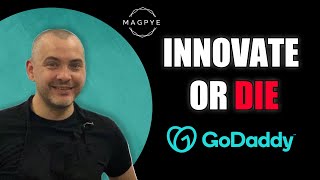
You Have To Adapt Your Business To Survive: Chris Fryer - Magpye: PEP Talk S3 E4
Key Takeaways
Chris Fryer, founder of Magpye, discusses adapting business strategies to survive and grow, utilizing tools like GoDaddy and crowdfunding platforms, and emphasizing the importance of flexibility and community building in the face of changing market conditions and economic difficulties.
Full Transcript
this week on pep talk what about magpie the vegan pie shop i'm chris fryer and i'm the founder and owner of magpie please tell me you're using would you like a slice of the pie in the marketing museum no but i'm gonna write that down you can have that one for free when the first lockdown hit in march 2020 we started offering just local deliveries through the website you know we really built up and i think what we learned from that was the ability to take a quick decision if we hadn't have taken that decision and we might have been looking at maybe magpie going on the back burner and maybe taking jobs for that spell because it was a very difficult economic time our mission is to help 10 million people start and grow a business in pep talk we interview industry leading experts from around the world who share actionable know-how and life lessons that's why we're excited to team up with godaddy to power pep talk i have been using godaddy for years and would promote them on this podcast even if they didn't sponsor us you can use their free website builder and start your online business at no cost for example you don't need lots of money to start a business if you leverage the tools at the purposeful project and godaddy godaddy even help with naming a business check out the links in the podcast notes below to connect to godaddy tools welcome to the podcast chris pastor we can start off by you telling the audience a little bit about yourself hi so i'm chris fryer and i'm the the founder and owner of magpie um a company producing fully vegan pies which um i founded together with my wife about two and a half years ago now um and yeah whether we're looking to grow we've grown considerably already am i looking to grow even more over the coming years so we're going to talk today about not only how you built this business and what you've learned but perhaps how people can thrive and adapt in difficult times and i i feel and i know you feel the same way that this this the difficult times aren't behind us yet people still need to be adapting and innovating so i'd like to get into that a little bit and your learnings on how to how to adapt and thrive in these difficult times but before we get into that perhaps you could tell the audience how you started this business what was the beginning it was a bit of a career change really for for myself i'm my wife um i was for about 15 years prior to makapai i was actually a computer science teacher and my wife was a medical secretary and we've been through you know some issues in our personal life with family bereavements and and we were just both ready for for an absolutely a clean start um and gave it a bit of a bit of thought and spotted a gap initially in the local market we weren't even thinking about national or anything more than just our local area and for some some quality vegan street food options when we were out and about on weekends at local events and markets and we were struggling to find you know the same sort of classic comfort foods or exciting street foods which were available to to non-vegans and we thought it was a a real gap it sounded like fun um and we decided to launch um magpie as initially i'm serving pie and mash and from a converted street food trailer and that's where we started and things have have changed along along the way over the last two and a half years due to some circumstances in our control and some out of our control and was it a very quick transition from say being a teacher to to starting the business or did you plan a lot of it out how how did that that switch happen initially um i went part-time so it would have been you know a bit of a cliff edge going from full-time um professional job into something which i really had no experience um or knowledge of so it would have been a bit of a cliffhanger so initially um i dropped my teaching hours to like about three days a week i used the extra time not to go out and start trading but to plan to develop products to research and to refurbish a horse box trailer to make it suitable to sell the pie mash that we were planning out of so there was a transition period of around a year um before we i think before we even sold one part took us nine or ten months to get to that point wow nine or ten months to sell your first pie i guess exactly you know the lemonade stand image of an entrepreneur is perhaps a little bit wrong you don't just put up a box in the street and start selling it i guess there's probably a lot of regulations and rules you have to follow as well right absolutely yeah we part of why we did it we wanted to do something new and you know we wanted to have a lot to learn and we found that to have that in front of us and sort of a clean page and to be really exciting so what was you know vital i think was developing the product because we do we do some product development obviously still now but without that time and without the pressure of having to meet certain sales figures to to pay the business costs and all of all those things that come with it we really had the time to develop products which were strong enough to launch with and i thought that was vital now i know you've been working on a crowdfunding campaign i'd like to talk about that in a minute as well and just understand how you prep for a crowdfunding campaign and what's involved but but just finishing off the starting of the business i always think for a lot of our listeners to understand how to get going i love this insight the nine ten months of planning and having the idea i guess going part time initially and then off course quitting but structurally in the business how did you fund it did you fund it from your savings did you raise investment at that point or how did you how did you do it we funded it initially from some some savings obviously we're not talking we weren't talking about putting not even tens of thousands in we tried to keep costs down and the biggest um thing that you can put in i think is your time um and some hard work into it and initially like for for around the first year you don't really see much back from that you know you think i'm putting a large amount of hours large amount of hard work into this and and you've got to sort of have that vision to see that at some point which you know you might have that fully planned or you might you might not but you've got to have the vision that at some point that that work will turn into something and so crowdfunding how did you decide what platform to go with and tell us what you've learned in that process well the reason why we looked at crowdfunding so we're in our sort of third year now um so we've had steady growth we've had um but pretty much 100 growth year on year um so we're in a small production unit and we've reached a point um whether it'll be difficult to grow the turnover much more especially with what we do make and pies and the level up on the equipment that we've got so the sort of the the next stage of equipment that we would need to produce bigger volumes you're getting into you know quite highly priced industrial um level equipment so the options were look for maybe an individual um investor and we felt that maybe they if you know if we gave some equity to an individual investor one person coming in and investing quite a lot that they would potentially then want quite a lot of say maybe a lot of influence i mean they might want to have things done in their own way um whereas crowdfunding maybe 100 people 200 people looking at the business seeing promise and seeing that they could get a return on a smaller investment allow us to continue to to develop in the way that that we see that we would want to um then maybe the next stage further down the line once we've got production and got the turnover of is that a look for bigger investors and who can who can take it to the next stage which will require a whole other layer of expertise yeah to make total sense again i don't want the listeners to miss this up this this point which i think is crucial that sometimes in in the need to raise money for businesses like yours which can be huge capital requirements for business like yours that actually getting your customers as your almost your investors creates almost some some loyalty community and that community can help you grow right yeah we've we've built up a community quite a large community um of customers um we have i think being a vegan business gets people's passion up who are into that and they'll they'll approach us and they'll want to talk about our business and they'll say what their ideas might be for how we could grow it and you can always take that so we're hoping when we do launch the crowdfunding um campaign that some of those people will will be interested in investing and getting on board in a more formal way and technically how do you build a community technically how are you doing is it via emails is it via events i think it's a combination of those things i think in the early days for us certainly the first year to year and a half it was social media and so the classic um social media platforms that people use instagram facebook twitter and it's where we initially um started to build a following um certainly in the local area um once the pandemic set in and we switched from you know being a local company and we transitioned quite quickly to having a website and becoming a more national company we then looked at building up a mail and list a contact list um which quite quickly grew so people who just registered an interest on the website people who bought um and which now so we've now got multiple channels and then further down the line i started looking at platforms like linkedin as well as the the more um you know wide social media platforms and we feel it's important have a presence on all of those all of those platforms rather than just narrowly focus and say am i going to be an instagram business or i think it's good it's good to have a presence on all of them as well as your own mailing list and did you do things like you know hashtag vegans and then click through to other people talking about vegan related subjects and comment and engage absolutely absolutely um like i said because it's a it's an area which people can get passionate about and i've noticed the last year the environmentalism and sustainability aspects of feeding a lot more there's a lot of crossover and into the into the vegan world and so yeah getting involved in campaigns we're a palm oil free company so we've we've been involved a lot in um talking to people about that online and offline and all these things help to raise awareness of what we do and how it can feed into those um agendas now which crowdfunding platform did you launch on now when we broadcast this podcast it might be your crowdfunding campaign has launched so we'll put the links down below so people can support contribute and also see what happened so but what platform did you decide to go for and why west we're still in the stages of choosing so so there are a number of platforms and which all have different strengths and weaknesses and where in the final processes now i think in the next within the next few weeks we'll have chosen a platform yeah but it's it's not straightforward um like i said you've got to fully consider the the pros cons um of each platform which want to be more suitable for your business because different businesses you know might um prefer different platforms depending on their needs well exactly you've got platforms like kickstarter for example which you know people can literally buy your product in advance you don't need to give up equity and then you've got platforms like cedars or crowd cube where you're actually selling equity in your business yeah and so um those are the decisions you're trying to make now is that we are i think i think we're going to go down we are going to go down the road of selling equity um so it's the two we're mainly living our sea doesn't crowd cube so i think it's it's which which one we go down we're in the final along with we've taken on some consultancy because we think it's such a big step it's important to get some outside advice on it so along with the the consultants that we're working with that's the decision that we're about to make i i do like also kickstarter type models because you don't have to sell equity and your you know those people can become your customers they buy your product in advance right and i think again for a niche like like vegan products that could work quite well as well but but you it's not something you consider do you think equity is the right decision for you at this stage yeah i think the stage we're at i think maybe if we were at an earlier stage or if we would sort of pre-launch pre-revenue maybe we would have looked at kickstarter more i think the stage where are we what we want to get from a crowdfunder is we want to be able to build capacity in the business to grow a lot you know we want to be able to get to the next stage but we also want the capacity already built in to get to the stage beyond that in terms of what we invest in the production unit and in the sales and then just logistics one of the difficult things i think from a crowdfunding equity crowdfunding perspective that people face is you go to these platforms perhaps assuming that they're going to bring all the investors to the table but in fact you need to go to the table often with a lead investor or two right yeah exactly yeah that's one of the things we've been speaking about is how to market this investment and what sort of budget what sort of tactics that we're going to use to market market the crowdfunder um we know it's not just a case of pressing the button to go live on on cd and the money watch the money roll in from it you know it's a big commitment for people and we really need to get out and inform people about what we do who we are and why it would be a good idea for them to invest please tell me you're using would you like a slice of the pie in the marketing material no but i'm going to write that down you can have that one for free i just want to take a moment to thank our sponsor taylor brands for supporting this podcast and entrepreneurs taylor brands are aligned with our mission to help you start and grow a business and already empower millions of customers around the world to kickstart their business with their ai driven one-stop shop for aspiring small business owners with everything you need to jump start your business such as a logo maker business mailbox online and physical business cards printed merchandise social media tools and so much more to find out more about taylor brands and how they can help you click the link below and get 40 off your first order using the code pep now let's get back to the podcast now i think the adapting of thriving in difficult economic times is a really interesting subject that a lot of people do feel and you mentioned just a moment ago about i guess your pivot into the online world um how do you see your sort of business being future-proofed what what's what's your strategy around around innovating in these in these uncertain times so whether the when the first lockdown hit in march 2020 what we did really well um we didn't i'd registered a domain um prior to that but i haven't built a website despite my background as a computer science teacher and so you know as soon as it became clear what was going to happen over the we didn't know how long but we knew what was going to happen pretty much at the end of march and built a website we started offering just local delivery through the website and over the next year you know we really built up it was a new business really compared to the street food business we'd initially planned um and i think what we learned from that was that flexibility and the confidence and the ability to take a quick decision you might not always get it right you know we've got to be prepared that sometimes we've done this that it might be a mistake but making a quick decision getting into a gap in the market or an opportunity in the market was vital and we did that and if we hadn't have taken that decision and had the confidence to go forward with it we might have been looking at um maybe magpie going on the back burner and maybe taking jobs for that spell um rather than building it up because it was a very difficult economic time well thank you for not doing that and uh and pushing through and innovating was it difficult to build a website i mean you mentioned there you were of course you're an arts and science teacher it didn't jump in my mind that that would necessarily give you the ability to build an ecommerce site is is this something you learn on the spot how did you figure out how to do that it's i registered a domain with um with godaddy and the first point was i logged into that i noticed that they had a free trial of a website an e-commerce shop builder um and i started playing around with it within about half a day i built what i thought was a pretty professional looking website and the e-commerce side of it which i know from my experience as a as a computer computer science teacher can take a while to build in a while to get right it was all provided so within half a day i built something that i thought was you know going to work um we give it a test now ourselves and within a week we start taking orders and did you have to change the whole delivery logistics i mean suddenly perhaps you need motorbikes right you need a delivery system how did you handle that bit initially so initially i was out doing deliveries which during the last first lockdown was a bit of a dream really because um there was barely anything on the roads um as things progressed we found that maybe that wasn't a good model doing local local deliveries and doing it ourselves and i remember i had family members helping to deliver the pies as well as the traffic came back onto the roads we moved away from that and back into events and getting into wholesale business more business to business transactions um to avoid those logistical problems because it's you can't you can use other platforms or we could have hired a delivery driver but it wasn't the model that we wanted to go down we didn't think necessarily for what we do selling you know baked goods that that would have been a good model so what suited us at one point within a few months didn't suit us so it's about having the flexibility i think what we did well was remain adaptable remain flexible and be prepared to try things i think it's really fascinating a lot of people would have got trapped into that local manual delivery system and especially if you said you know you enjoyed it and you're actually seeing your customers aren't you you're actually connecting to your customers in the real world and what and having an interaction with them did you tell them when you were making deliveries that you were the founder did you you just act like a delivery driver acted like a delivery driver yeah but like you say especially during those tough which were really tough times for everyone when you look back now and it was nice to be able to to bring people something nice to their door and see their smiles and have a little chat and some people might not have had much social contact to told you what was going on especially some famous tick tockers for example who made their whole business about their hand delivering products and they film it all and and that's actually made people want to buy from them even more um it's they're higher value items but but i really actually do rate that whole direct contact with your customer piece but i also think it's very smart what you did where you said you analyzed it and said well let's let's go more the i guess the b2b route right where you have partners that will do that fulfillment for you exactly so was that like trade show type type things how did you get into the b2b side when we start we started off um mainly like local farmers markets um vegan events so being part of the vegan business community we're invited and we can find vegan festivals not just in the area where we're based but all around the country and there's a sort of a ready-made vegan audience there to buy our products um as times progressed and i think veganism has gone a lot more mainstream and i think we've moved away from the specialist vegan events back into um more mainstream events because i think people are a lot more open to trying hard products than even they were two or three years ago which seems a short time but things have changed a lot well the editor of this podcast is a vegan and we researched you before we did the podcast and he's a big fan of your product so it's you're clearly reaching that demographic and i think that that's creating almost like a tribe this is something i think people can learn from now of course it perhaps is easier when you're focused on something like a vegan niche but i think generally it's a really good strategy to have a very clear focus and know who your customer is and niche down in the way that you have have you found any challenges with that i mean of course that community equally could uh could quickly turn on you if if you if you make a mistake right so um but how have you felt about that side of it we felt we're based in newcastle um at times it feels like there's i think like i said i think it's changing even in the last six months i think we've noticed a massive change but at times it's felt like there's only a limited number of you know vegan customers in the area and that's one of the reasons that we we started doing some national and postal delivery is to to reach out across the country but yeah i think especially when we when we started out or even even even about a year ago it felt like in the local area um reasonably small city newcastle and that there was only limited amount of vegans and there was only um so many places you could you could go or sell them but i think that's changing and like i say what we what we did to combat that was cast the net across the whole country and go into a national delivery model which we still do now i also found it interesting um when when reading your different products how you've again you've done this blend i guess of like vegan steak and ale and uh chicken leek and bacon uh pies and so um i remember only the brand one of my favorite brands have got themselves a little bit into trouble because it looked like a milk carton and the eu told them they had to change it and they fought back but i guess blending uh what what is a a real world you know meat product into the title of your vegan products is what what's the strategy there is that to make people feel like they're still having that but surely the whole point of being a vegan is you don't want that exactly and just because somebody has chosen to become vegan or even if somebody's just chosen to maybe become a little bit more plant-based and you know they might still eat some meat products they might still eat dairy products a lot of people are doing things like meat-free mondays or they're just aiming to cut down on meat products and we thought initially when we started out with the street as a street food company the aim was to provide you know sort of comfort food so you know night a nice pie with some mashed potato with some gravy um because we found you know as long-standing vegans ourselves and that that was something missing from the from the market and these sort of classic dishes um which can take you back to you know your youth they can take you back to family meals that you had many years ago and or just food that you used to enjoy and it seems a shame just because you want to go more plant-based or become vegetarian or vegan that you would miss out and you'd have to change completely and think you know i could never have a steak and nail pie again or i can never have a chicken leaf bacon pie again so we thought it's an important experience especially maybe for people who are transitioning towards a more plant-based diet to to provide things which are familiar and comforting and that they recognize rather than entirely new products makes total sense it's an it's a branding strategy isn't it i think that's the elongation of the brand into the names of the actual products and and i i i couldn't i think it's such a clever way to do it i guess there's always that um that issue with with people that have it's quite a big spread as to why people are perhaps a vegan right so there might be people that that so don't just don't believe they should ever eat again so even if the words um seem like you're still promoting the concept of me but uh but i really like it and i can guarantee you every single one of our listeners having heard what you're talking about there have left already and have gone to make themselves one of your pies with some mash i know why that's what i want to do right now so um thanks for conjuring up that image but i guess just to end the podcast and i wanted to ask if you had to start it all over again what would you do differently in your business i think one of the key things um and you know the economic events of the last couple of years have without doubt influenced us on this i think if we could do it again i think we would have got maybe a team in place earlier um rather than taking everything on ourselves because there's a bit of turbulence in the economy and things are a bit unpredictable and we lack the confidence at an earlier stage to to bring in some expertise to hire a team maybe to use external agencies i think if we'd done that at an earlier stage um our growth could have been more rapid and we might have been potentially looking for the crowdfunding um that we're looking for now at an earlier stage i think it's a good point people i guess are nervous when they start a business to hire people that feels like additional cost doesn't it and a bit of a burden yeah but i have found also similar to you that if you actually hire someone it can actually push you to grow the business quicker and they can help you grow the business quicker so being brave on that front is good advice actually i think for a lot of people um it's actually harder to do a business without help we found that and it might not even be looking at hiring a team and getting a team in place even just you know using some there's a great organization that we um liaise with in the northeast called um food and drink northeast it doesn't cost anything if you want to do more formal consultancy with them you can and they have all sorts of options and just being able to chat to somebody like that which because of the lockdowns we had in the social um restrictions i think it stopped us being able to reach out to people like that at an earlier stage well well done and excited for us to all see your journey unfold we'll put the links to your business down below and i'm off for lunch to have a garlic mushroom pie made by you thank you very much thanks for having me thank you for listening to our podcast today and i hope you got value from it please feel free to follow us on any of our social media channels and if you have any questions about business ask us we will help you again we want to thank our sponsor godaddy for supporting this podcast from naming your business and buying a domain name to building a website for free godaddy has you covered godaddy provides us entrepreneurs all the help and tools we need to grow a business online you're not alone entrepreneurs see you in the next one
Original Description
Chris Fryer and his wife Sarah founded the plant-powered pie company in 2018 on the banks of the River Tyne from their converted horsebox. The couple were getting tired of their careers; Chris was a full-time teacher, while Sarah was a medical secretary. After a year of experimenting with different flavours and recipes in their kitchen, the Fryers launched Magpye - a vegan pie company specialising in comfort food.
Topics:
0:00 - Intro
1:45 - How he started Magpye
5:14 - Initial funding
6:30 - Crowdfunding
8:02 - Building a community
14:36 - Pivoting in difficult times
18:57 - How they targeted vegans (market strategy)
24:20 - Building a team
Chris Fryer:
https://magpye.co.uk/
Powered By GoDaddy UK:
https://www.godaddy.com/en-uk
Sponsored By Tailor Brands:
https://tailorbrands.go2cloud.org/SH5U
📚 FOR MORE HELP START HERE: https://purposefulproject.com
Watch on YouTube ↗
(saves to browser)
Sign in to unlock AI tutor explanation · ⚡30
Playlist
Uploads from HelpBnk · HelpBnk · 46 of 60
1
 2
2
 3
3
 4
4
 5
5
 6
6
 7
7
 8
8
 9
9
 10
10
 11
11
 12
12
 13
13
 14
14
 15
15
 16
16
 17
17
 18
18
 19
19
 20
20
 21
21
 22
22
 23
23
 24
24
 25
25
 26
26
 27
27
 28
28
 29
29
 30
30
 31
31
 32
32
 33
33
 34
34
 35
35
 36
36
 37
37
 38
38
 39
39
 40
40
 41
41
 42
42
 43
43
 44
44
 45
45
 ▶
▶
 47
47
 48
48
 49
49
 50
50
 51
51
 52
52
 53
53
 54
54
 55
55
 56
56
 57
57
 58
58
 59
59
 60
60

S2 #18 James Uffindell | The Purposeful Project Podcast
HelpBnk
S2 #20 Liz Johnson | The Purposeful Project Podcast
HelpBnk
Meet one of Hong Kong's leading Fintech experts + insights on how the HK startup eco-system works!
HelpBnk
Meet the founder of Asia's first funding ecosystem designed to inspire female entrepreneurs!
HelpBnk
Meet the Co-Founder and CEO of Hong Kong's biggest startup platform and community builder!
HelpBnk
Meet the head of strategy for a leading open innovation platform that empowers technology startups
HelpBnk
The rise of technology which has revolutionised in the property sector!
HelpBnk
S2 #22 James Davidson | The Purposeful Project Podcast
HelpBnk
Gymshark founder Ben Francis talks Side Hustles and how to build a billion dollar company!
HelpBnk
S2 #24 Graham Hobson | The Purposeful Project Podcast
HelpBnk
"I quit Facebook to do this instead!" S2 #25 Shara Tochia | The Purposeful Project Podcast
HelpBnk
"How to get 10,000,000 users per month" S2 #26 Justine Roberts | The Purposeful Project Podcast
HelpBnk
Why this multi-millionaire is helping others learn business for free!
HelpBnk
S2 #27 Victor Lugger | The Purposeful Project Podcast
HelpBnk
The story of Reebok and how it started - S2 #28 Joe Foster | The Purposeful Project Podcast
HelpBnk
S2 #30 Michael Krayenhoff | The Purposeful Project Podcast
HelpBnk
How To Build A 6 Figure Business
HelpBnk
How To Pitch To A Brand
HelpBnk
How To Build Your Personal Brand
HelpBnk
How To Work With Influencers
HelpBnk
How Can PR Catapult Your Business
HelpBnk
How To Make Legals Simple
HelpBnk
How To Raise your First Investment Round
HelpBnk
How To Budget Like A Boss
HelpBnk
How To Build A Team And Culture
HelpBnk
How To Get Your First 6 Figure Client
HelpBnk
How To Build Brand Partnerships
HelpBnk
How To Build An Engaged Community
HelpBnk
How to grow an e-commerce business and increase sales
HelpBnk
HOW TO SMASH BLACK FRIDAY AND CYBER MONDAY
HelpBnk
HOW TO BUY, SELL AND CREATE NFT'S
HelpBnk
How to Startup a business for free! We help you get going and build a business of your dreams!
HelpBnk
What You Should Know About Crowdfunding
HelpBnk
Get Help To Start Your Business in 2022
HelpBnk
How To Make The Switch From Founder To CEO
HelpBnk
How To Register A Trademark
HelpBnk
How To Grow Your Business On Instagram With Successful Entrepreneurs!
HelpBnk
How To Grow Your Retail Business
HelpBnk
How To Grow Your Business On Linkedin With Successful Entrepreneurs!
HelpBnk
How to grow your business on TikTok with successful entrepreneurs!
HelpBnk
Sarah Willingham: Why You Should Make Yourself Redundant To Be Successful | PEP TALK - S3 EP 1
HelpBnk
Reebok Founder: How We Built A Brand That Beat Nike - Joe Foster | PEP TALK - S3 EP 2
HelpBnk
How To Build A Successful Online Community
HelpBnk
When is the right time to seek investment for your business? Rachel Kettlewell: PEP TALK S3 E3
HelpBnk
Personal Brand VS Company Brand
HelpBnk
You Have To Adapt Your Business To Survive: Chris Fryer - Magpye: PEP Talk S3 E4
HelpBnk
The £1 Bet That Turned Into A Billion-Dollar Company: John Roberts | Unicorn Podcast E2
HelpBnk
Meals With Max: 2 Million Followers In 18 Months | PEP Talk - S3 EP 5
HelpBnk
How To Grow Your Side Hustle (And When To Take It Full Time)
HelpBnk
Tailor Brands Co-Founder/CEO: Why You Have To Fail To Succeed - Yali Saar | PEP Talk S3 EP6
HelpBnk
How To Make Money On YouTube
HelpBnk
From Dancing On Ice To Esports with Purpose - Connor Ball and Oliver Weingarten | PEP Talk S3 E7
HelpBnk
Successful Female Founders Give Advice to Young Entrepreneurs #WomenInBusiness
HelpBnk
How To Grow Your Business On Twitter
HelpBnk
Ending Food Poverty While Stopping Food Waste - Free My Meal Founder Hayley Steere | PEP Talk S2 E8
HelpBnk
How To Grow Your Business On Facebook
HelpBnk
Why Branding Is The Key To A Successful Business - Aarti Parmer | PEP Talk S2 E9
HelpBnk
How To Launch Your Business (The Right Way) - Fills Founder Anna Priadka | PEP Talk S2 E10
HelpBnk
How do you raise money to start a business? Find out in the latest podcast on our channel now 🚀
HelpBnk
Watch these 22 minutes if you want to be a millionaire in 2022…
HelpBnk
More on: Startup Basics
View skill →






Related Reads
📰
📰
📰
📰
95% of AI Pilots Fail and Uber Just Showed Us Exactly Why.
Medium · Startup
The price-anchor split nobody called out in the late-2025 Juejin roundups
Dev.to AI
Nicole Junkermann: The next AI race won’t be about intelligence. It’ll be about understanding.
Medium · AI
AI Search Optimization in 2026: Why Florida Businesses Can’t Ignore the Shift
Medium · AI
Chapters (8)
Intro
1:45
How he started Magpye
5:14
Initial funding
6:30
Crowdfunding
8:02
Building a community
14:36
Pivoting in difficult times
18:57
How they targeted vegans (market strategy)
24:20
Building a team
🎓
Tutor Explanation

 DeepCamp AI