This Scientist Is Racing Extinction To Discover New Species of Arachnids
Key Takeaways
Lauren Esposito's arachnology research involves discovering new species of arachnids, using tools like leaf litter sifters, vegetation beaters, and pooters, to collect and study specimens in their natural habitats.
Full Transcript
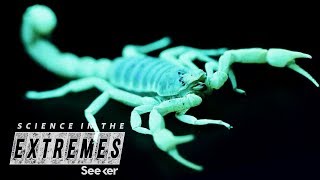
I think one of the most common reactions that I get when I tell people that I've discovered new species is that are surprised that there are new species left to be discovered that's the male of the new species that's the first male we got no way yeah what we're doing is looking under every Rock every log every debris on the ground so you really have to like put yourself into the shoes of an arachnid and imagine if I was on an arachnid where would I be hiding I'm definitely not in the lab all the time that's really a stereotype that's inaccurate I think the stereotype that I'd like to imagine myself in a little bit more is like Indiana Jones sort of situation exploring the unknown and trying to discover something new I am scared of snakes legit I don't even want to admit that right now I'm really scared of mosquitoes and I'm scared of birds flying out of the bushes away [Music] there's moments when I'm in the field that I don't feel like it's the most glamorous job when I haven't showered and I run out of water and I just want to go home and watch some Netflix hello it's the end of my first day out in the field but I'm already pretty tired hot and sweaty hello it's Lauren just got back from my morning of collecting and it was hot and sweaty as you at the end of the day is something I really love doing and that's everything arachnids are both diurnal and nocturnal and arachnids are often what we call cryptic species which means that they're trying to blend in and so that makes them really hard to see and so we do have a number of tools that we also bring along with us when we go out into the field one of those is a leaf litter sifter will you shake all the leaves around and at the bottom is a funnel that collects all of the little leaf particles and lots of insects and arachnids and even some other weird things like amphipods which are kind of crustacean we also bring a vegetation beater or a beat sheet which is kind of like a white kites that you hold under vegetation as you knock against a stick or something against the vegetation and and spiders and insects like rain down sometimes anserine down into your shirts too which is not the most fun then you use a pooter which is like a mouth vacuum to suck all the insects and arachnids up and collect them into a vial I want to get like a logo screen-printed on my fanny pack that says just poot it would be good right as soon as you get back to the base camp and start looking at what you've collected you may notice that you've collected all the same few species which is a sign of a disturbed forest or you've collected a lot of different species which is a sign of a healthy horse this is some of the stuff that we collected over the last two weeks it might not look like a ton but in each of those little baggies there's anywhere from two to a few hundred or maybe even a couple thousand specimens once night completely falls we'll take out our ultraviolet lamps and start looking for scorpions will work till one o'clock in the morning or so and then try to get some sleep you know I think that my research stems from a need that I have as an individual to understand the biodiversity of the world somewhere between 30 and 50 percent of the arachnid species on earth are only known to science what I've made sort of my personal life's mission is to try to document the remaining 50 percent and what that requires is a lot of like on-the-ground hard work and also back in the lab work in the microscope and in the genetics lab this one is a new species it's like the whip cream on top of the ice cream sundae and we found it the first day and this one's an adult female which means it's a really valuable specimen we can actually use it for describing the species formally and I don't know I couldn't be more happy we're losing species at a rate that's higher than the rate we're discovering species and unless we understand what's out there it's impossible to understand how to protect it and how to conserve it so for me I feel a fundamental duty to the earth really to document and improve our knowledge of species on the planet [Music] in this next episode see firsthand the deadly risks the volcanologist takes when examining in erupting volcano thanks for watching and be sure to subscribe to seeker [Music]
Original Description
Lauren Esposito is essentially the Indiana Jones of arachnology. Experience her process for discovering new species first-hand on this trip to Penang in Malaysia.
Experience intense, unique, and sometimes dangerous moments with scientists working in the field, as they explain first-hand the kinds of risks they take to find answers. There's so much more to being a scientist than being stuck in a lab. Watch every Friday for new episodes of Science in the Extremes.
These Scientists Chase Volcanic Eruptions Because We’re So Bad at Predicting Them https://www.youtube.com/watch?v=IJl4PnR4mf0&index=6&list=PL6uC-XGZC7X78bfEdFHiVU5ox0h9-OZnu
Read More
The World's Most Venomous Scorpion Caught on Camera in Strike Mode
https://www.seeker.com/earth/the-worlds-most-venomous-scorpion-caught-on-camera-in-strike-mode
“With the aid of high-speed cameras, researchers have identified a wide variety of strike modes in half a dozen scorpion species. The death stalker had the fastest lunge of all, with its venomous stinger snapping over its head like a whip at 130 centimeters (51 inches) per second.”
Eco-Friendly Technique Spins Super-Strong Artificial Spider Silk
https://www.seeker.com/tech/materials/eco-friendly-technique-spins-synthetic-spider-silk-from-water
“Cambridge researchers have developed a non-toxic method for producing ultra-thin — and very strong — fiber for use in traditional clothing, medical devices, and even shrapnel-resistant military apparel. The new technique can produce synthetic spider silk at room temperature using only water and naturally occurring substances. Chemists and material science researchers have been intensely interested in spider silk for several decades. It really is one of nature's miracle substances with certain strains of spider silk having greater tensile strength than steel.”
____________________
Seeker inspires us to see the world through the lens of science and evokes a sense of curiosity, optimism and adventure.
Visit the Seeker we
Watch on YouTube ↗
(saves to browser)
Sign in to unlock AI tutor explanation · ⚡30
Playlist
Playlist UUzWQYUVCpZqtN93H8RR44Qw · Seeker · 23 of 60
1
 2
2
 3
3
 4
4
 5
5
 6
6
 7
7
 8
8
 9
9
 10
10
 11
11
 12
12
 13
13
 14
14
 15
15
 16
16
 17
17
 18
18
 19
19
 20
20
 21
21
 22
22
 ▶
▶
 24
24
 25
25
 26
26
 27
27
 28
28
 29
29
 30
30
 31
31
 32
32
 33
33
 34
34
 35
35
 36
36
 37
37
 38
38
 39
39
 40
40
 41
41
 42
42
 43
43
 44
44
 45
45
 46
46
 47
47
 48
48
 49
49
 50
50
 51
51
 52
52
 53
53
 54
54
 55
55
 56
56
 57
57
 58
58
 59
59
 60
60

This Neurobiologist Swims With Great White Sharks to Study Fear
Seeker
Do You Have ADHD or Are You Just Tired?
Seeker
How Close Are We to Curing HIV/AIDS?
Seeker
Is The Great Barrier Reef Actually Dead?
Seeker
We Could Harvest Electricity from Human Tears, This Is How It Works
Seeker
Zombie Cells Are Hiding in Your Body, Could Killing Them Stop Aging?
Seeker
Battling Antarctic Ice Storms to Study the Secrets of Subzero Survival
Seeker
We’re Hardwired to Be Jealous, But Why?
Seeker
How Close Are We to Resurrecting Extinct Species?
Seeker
Antioxidants: Superfood or Super-hyped?
Seeker
The Sneaky, Underwater Sex Life of the Goby Fish
Seeker
How Scientists See Through Walls Using Particles From Space
Seeker
Interstellar Cannibals Are Eating Their Way Through Our Universe
Seeker
Here’s What It Would Take for Helicopters to Be as Big as Planes
Seeker
These Scientists Chase Volcanic Eruptions Because We’re So Bad at Predicting Them
Seeker
Do SpaceX’s Reusable Rockets Actually Make Space Travel Cheaper?
Seeker
How Close Are We to Replacing Humans With Robots?
Seeker
Is Happiness Actually Contagious?
Seeker
How Orchid Bees Get Tricked Into Having Sex With Flowers
Seeker
Watching YouTube Isn’t Helping You Wind Down, It’s Ruining Your Sleep
Seeker
Could Ice Volcanoes Harbor Alien Life?
Seeker
Without These Engineering Tricks Spacecraft Would Die Out There
Seeker
This Scientist Is Racing Extinction To Discover New Species of Arachnids
Seeker
Seeker Live Interview With Scorpion Expert!
Seeker
How Close Are We to Farming Human Body Parts?
Seeker
There’s No Such Thing As ‘Earthquake Weather’...Right?
Seeker
Gifting Body Parts For Sex: How Nursery Web Spiders Seduce a Mate
Seeker
You Love a Good Deal More Than the Actual Stuff You Buy, Here’s Why
Seeker
TV Shows Are Changing Your Political Opinions Without You Knowing It
Seeker
Is There a Limit to How Small Life Can Get?
Seeker
Floating Cities: Research Lab of the Future or Crazy Pipe Dream?
Seeker
Not Even Death Can Stop These Frogs From Procreating. Wait...What?
Seeker
This Space Suburb Could Hold Secrets About the Origin of the Solar System
Seeker
Space Is Dangerous! Just Look at What It Does to Astronauts’ Brains…
Seeker
The Ozone Layer Was Doomed Until a Handful of Scientists Stood Up to Power
Seeker
Can You Really Blame Your Bad Mood on Seasonal Affective Disorder?
Seeker
Sealing Off Genitals: The Bizarre Story of Rat Sex
Seeker
We Could Live in Caves on the Moon, Here’s Everything You Need to Know
Seeker
The Sun Is Going to Die, This Is What Happens Next
Seeker
Sleep Can Repair Your Brain, But Only If You’re Doing It Right
Seeker
Typing vs. Handwriting: Which Is Better for Your Memory?
Seeker
Female Hyenas Control Their Sex Lives with a Pseudopenis
Seeker
Pluto’s Mysterious Atmosphere Could Help Us Fix Global Warming
Seeker
Scientists Put the Brain of a Worm Into a Robot… and It MOVED
Seeker
When U.S. Nuclear Missiles Were Controlled By Floppy Disks
Seeker
Foam Orgies: The Dangerous Sex Life of Tree Frogs
Seeker
There’s a New Form of Matter in Town: EXCITONIUM!
Seeker
You Think You Know What Meat Is... But You Have No Idea (Part 1 of 3)
Seeker
Fast Radio Bursts Probably Aren’t Aliens, BUT We Haven’t Ruled It Out
Seeker
Genital Plugs: How These Spiders Trap Their Lovers
Seeker
The Dark Energy Survey Revealed New Origins of Stars in Our Galaxy
Seeker
Could Lab-Grown Meat Make Eating Human O.K.? (Part 2 of 3)
Seeker
Why Severe Winter STILL Doesn’t Disprove Global Warming
Seeker
Einstein’s Brain Was Stolen and Chopped Up Into Tiny Pieces...For Science?!
Seeker
Two-Foot Penis Bones: How Walruses Stay Erect in Freezing Water
Seeker
Scientists Claim They Made Time Go Backwards...But Did They?
Seeker
Could We Evolve to Not Eat Meat? (Part 3 of 3)
Seeker
Will We Ever Be Able to Travel Through a Wormhole?
Seeker
This NASA Mission Uses Cold War Planes to Map the World's Largest Island
Seeker
Making Love Not War: The Wild Sexual World of Bonobos
Seeker
More on: Research Methods
View skill →








Related Reads
📰
📰
📰
📰
I Spent Weeks Looking for a Research Gap Before I Realized I Was Searching the Wrong Way
Medium · AI
ICMI 2026 Reviews [D]
Reddit r/MachineLearning
Workshop submission for main conference paper under review [D]
Reddit r/MachineLearning
Kept context-switching between arxiv, OpenReview, GitHub, and HuggingFace for every paper, so I built this. Chrome extension + website with everything inline, plus citation graph + SPECTER2 neighbors. 3M papers, free, feedback welcome [P]
Reddit r/MachineLearning
🎓
Tutor Explanation

 DeepCamp AI