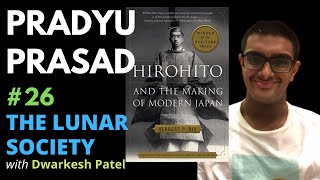
Pradyu Prasad - Imperial Japan, the God Emperor, and Militarization in the Modern World
Key Takeaways
The video discusses the book 'Hirohito and the Making of Modern Japan' by Herbert P. Bix, focusing on Hirohito's role in World War II, Japan's militarization, and industrialization, as well as the implications for AI safety and international relations.
Full Transcript
thing with the US is a lot of its economic potential is put into stopped by by stupid regulations, zoning, nuclear regulations and you know the the thing is once you have Bobs dropping across London be very obvious that these things have to go it's these sort of things are a luxury belief for vested countries no elected leader is going to listen to some is going to listen to the people who are currently harming American or British or German industrial cap capacity they're going say, uh, it sucks about the pollution, but we got a war to win. But I also joke to my friends that that that that among our circle, I'm the best at evaluating talent cuz all my Twitter mutuals end up getting famous. [Music] Okay. Today I had the pleasure of speaking with Pradumna Prasad about the book Hirohito and the making of modern Japan by Herbert P. Vixs. Pradu is an incredibly smart young guy. He has a blog and a podcast called Brennan Goods which you can find at breengoods.suffstack.com. Cool. Right. Today I have the pleasure of speaking with uh Pratumna Prasad um who is who recently graduated high school in Singapore and now he just received an emergent ventures grant very recently to continue work on his um great podcast and blog. Excellent. Excellent. So yeah, you you got the emerging venture grant. What are your plans? What are what are you doing? Uh what I'm going to do with it, I at the moment I'm working on a bunch of stuff on reserve currencies. It was it has been an obsession of mine for a very long time. So uh it's all the all the reading is going to end up in writing at some point. Uh on the longer term, I want to have a blog where I can answer every single economic history question or economics question I don't know the answer to and nobody else has the answer to, I can answer it here. So, uh pretty much going to be a mini encyclopedia of questions I am interested in. Excellent. Excellent. Okay. Yeah, I'm looking forward to what to produce. And for the time being today we're discussing uh this book you recommended to me uh Hirohito and the making of modern Japan by Herbert Pix. Um and so just to give a little bit of context well actually so let's just say who Hiito was right he was the Japanese emperor. Um he was the he was the third emperor after the after after I mean third emperor after the maji restoration. He was the first one to see Japan as an international power. He was the first and last one to handle it as an international power. And yeah, Hitohito was a guy responsible for a lot of stuff that happened in East Asia across the mid uh 20th century, right? Including, by the way, World War II, right? So, he was a Japanese emperor during World War II. And there's uh there's a big controversy around Hirohito because um he he was in charge of Japan during the time that Japan invaded China and committed all the atrocities that we know uh we know happened there um including the raping and he was also the Japanese emperor during World War II during Pearl Harbor obviously. So the book takes a very critical stance on Hirohito. It claims that Hirohito could have um stopped or at least uh in many ways dulled these atrocities. He had that authority. Um the opposite view I guess which is the conventional view is that Hirohito was kind of a constitutional monarch much like a British monarch and that he didn't really have the authority to intervene in politics and then to the extent that he did he did his utmost to like lessen the impacts of the war for example by surrendering in 1945. U so now what were your overall impressions of the book? of how well he did defending the ceases that Hirohito should have been tried as a war criminal. Yeah. No, I think I think the book sort of goes like a synthesis of these two. It says that Hirohito was a constitutional monarch, but he was a constitutional monarch because he chose to be a constitutional monarch. So yeah, he he it in theory on paper he couldn't do it. It's it's it's one of those things where Japanese constitutional law wasn't very well done. I mean it for any uh anocracy constitutional law isn't well done and much more so for Japan but uh Hiroito could have done something he did not he chose to be a constitutional monarch. So anyways the book was was well written towards the end poorly written towards the the start. I think there the difference between a collection of events and a biography is a story and there was no story at the start. So I think that work could have been much improved. But I also think that um it's very hard to find people who read through original language sources in this case Japanese and to small a very small extent Chinese and English and then put it into English. But I think uh the author deserves a lot of commendation for that. Okay. Excellent. Yeah. Yeah. So I I I agree the most interesting part about the beginning and I agree was pretty dull. Um was uh the author talking about how much the Hirohito was influenced by his grandfather Maji. Um so you know like Magi was the emperor during the time where Japan rapidly rapidly rapidly industrialized and kind of became a went from being a kind of like a a semicolonized power to becoming a colonial power itself. uh you know h having colonies in Korea and Taiwan under Miji. Um so it's very interesting you know I I I have uh friends who kind of think that u I have one friend who thinks that many of the differences you see between countries can be explained largely by genetic differences and I I think one of the strongest like counterarguments to that is just like how different [ __ ] Japan has been over like the last 150 years like how many different evolutions it's gone through and whenever you see these stories of rapid industrialization it's just very like you you can kind of understand how it can happen over many hundreds of years, how it happens in the case of Japan during the major restoration so fast. It it kind of sts me. So I know you've been doing a lot of reading on Chinese industrialization as well as well as like uh industrialization and many rapid industrialization many other East Asian countries. Can you explain what happened during the major restoration like how did they get everything up and running so fast? Right. The main difference between the pre-1868 Japan which was the called the Tokuga Shogunate and the Miji uh and the Maji era was that Japan had a lot more centralized power. There was one king running the place instead of feudal lords all over. Japan was a lot more open to the rest of the world. You know there was the death penalty for for Japanese who interacted outside of Japan during the talk. Very very uh brutal in today's words. And um Japan basically allow did what what would be called the holy utility of industrialization. It had open labor markets, government investment and basically allowed foreign capital to come in. And so you across East Asia and and and across parts of Africa like Botswana and to a smaller extent South Africa and Nigeria, the best way to get rich historically for countries when they're already other uh rich countries is to uh take all capitals from the from the rich countries, copy their their innovations and uh use all their knowledge on how to get rich to get rich yourself and then start to slowly push away on their hedgeimonyy. and the results of it are somewhat mixed. The the US did okayish well, Japan didn't do well and we're seeing it with China now. Uh is there any particular reason it happened first in Japan as far as the East Asian countries go? I mean, okay, that is I'm not a I'm not a very good um source on this because I try to avoid the the historic graphy of this because it's it's it's full of too many uh details. historians haven't done a very good job of it. But my take on it is that uh I think it's very much elite dependent as in the uh first is that the Japanese elite didn't have as much of a rent seeeking class as the Chinese elite did. You know in in China because the country was so big they they invented a whole bureaucracy to administer it. The problem was you end up leaving too much power to the people in between you and the uh general public. So they they ended up being sort of uh the barriers to modernizing and opening up. But uh in Japan that was less so. The second thing is Japan already had a small tradition of worshiping the emperor's god and became politically convenient for the shogunet to now reemerge. They actually had a small civil war and the it so happened and this just an an accident of luck that the winners of the civil war happened to be the ones who wanted to open up and make Japan great again. So uh one part is that the second thing is being a small island nation really um makes you see the realities of life much. One explanation provides small countries would have have better economic policy than large countries is that if you're a small country the um the realities of life are very often more in your face. So when Japanese elites saw the uh saw the American ships coming, they're like, "Whoops, you know, we can't we can't afford to be irrational anymore about it and they were forced to modernize." Compare that to a lot to a lot of East Asia where they either could live in their own alternate reality. For example, Indian kings and and theqing dynasty in China, you know, the Japanese were just forced to deal with reality a lot faster. Yeah. Yeah. Yeah. No, that makes a lot of sense. Um, yeah, I also read on your recommendation Lee Konu's uh biography and though this is not the book we're discussing now. So, but just to just to tie it with this, it was really interesting to read him just go over all the different issues Singapore had to deal with at when it got started like you know the fact that it had hostile neighbors. the fact that basically it was going to lose like 25% of its GDP once the British left uh with their you naval bases and there's something about the fact that you're just like on an island I you know open to any sort of open to all the elements basically that I guess concentrates the mind right exactly a very underrated measure of leader competence is how close to reality are you and you see it like to skip to 2022 today right you saw over the last two years where leaders were more in touch with reality, responded faster to COVID, got better vaccines, uh, tightened up faster but also opened up faster. So basically the the the the Japanese elite in the 1860s was a lot more in touch with reality than other countries. And so they knew they were forced to to open up. And the next part of it was they they they opened up and they and they and and they opened up quick they got American uh industries to come set up in Japan and they basically a lot of the history of of of of economic development is also the history of intellectual piracy. They just just uh had had what is euphemistically called force technology transfers so they could learn how to make all the cool gadgets that the Americans had. And by around the 1910s and 1920s they got rich enough to project their power onto the rest of East Asia. By 1905 they fought a war with Russia and then in you know in 1950 around the same time they they invaded China and then later they invade China again. They just didn't deal with the sudden transitions being a power that is coerced by the Americans by to a power coercing other countries. right now. Um I mean there's a way you can view this where I don't know if you have that kind of transition happen slowly in a country. You can have norms evolve from um I I don't know how to put this in a way that's not uh derogatory but norms that are very kind of brutish and very much geared towards like uh traditional norms of war which is like you destroy the enemy, you pillage and you loot. Uh which is like which might make sense if you can like loot a village, right? when you're talking about the capacity of you modernist of war and you can do that to like millions of people that can become extremely brutal and I don't know it seems like in the west once industrialization happened there was like enough time for things to simmer down before these countries were introduced to the worst weapons and I you could argue that the world wars are counterex example but even still um on the on the um on the eastern theaters uh the sorry I mean the the western theater uh the there were there just weren't the kind of atrocities that you saw the Japanese uh make in the Pacific theater and in China. So like one of the downsides of rapid industrialization is your cultural norms don't catch up to your technology and so you have like almost these these people who have like uh very very traditional norms around war with very modern weapons and it gets pretty scary. Hannah Gur of Scholar Stage is a very good essay on honor culture versus respect versus justice. I'm I'm paraphrasing here. But overall less industrialized societies have strong patriarchal cultures because uh for better or worse it's the men who who end up doing the work and they got more of the respect and there's a lot of debate and literature about this but that's more or less my understanding of it. Right. So you you're right that the norms don't catch up but I think you're wrong that even in the west the norms didn't catch up for a long time right think of colonialism only very very few people in the house of commons thought they should impeach Juan Hastings for his atrocities in East India through the through the East India company so obvious so it's it's not only in Japan that that norms didn't catch up it's almost everywhere that norms didn't catch up norms take a lot lot of time to catch up and in Japan well the First thing is that the Japan you see today is mostly is is artificial in the sense that it is it is an artifact of America of the of the Americans jumping in and putting a gun to the Japanese cabinet and saying you better uh accept the constitution remake and some parts of the Japanese left really liked it some parts didn't and but it they basically forged a coalition of of of only people who who liked it and old people and people from the old regime who willing to accept the new reality. So norms can change quick but they but when they do they change with the battle of a gun not by some internal organ. Ask your question of why was there so much atrocity? You you were correct in saying that norms in change but I also think that public choice theory is what explains a lot of uh Japanese war crimes across the uh 1900s I mean the entire early 20th century. Right. the my entire understanding of the book was that it could have been written by any public choice theorist and been and would have ended ended up the same. So let's think of it this way. The Japanese army was powerful historically from the 1860s. They fought a war in 1905. They were always scared the Soviet Union after when after it was formed was going to invade them as historical vengeance also because it was just a lot better run than the tallest Russia. But the problem was the depression hit and then the army and navy got mad that that their spending was cut. So they just kept inventing problems in East Asia for them to have their budget increased and uh some part of inventing problems involve in uh involves lying about them. All all all large bureaucracies exaggerate their problems. But the army took the more extreme step of creating problems itself and then like they're like uh we created this mess and we need money to solve it or else you're going to die and then the Japanese government was weak enough to give them money and uh got down into World War II. Yeah. So let me just um let me just like fill in the details for the audience. So in 1931 um in in a Japanese controlled Manuria, the Japanese military stages a sort of attack on uh one of their railroads if I if I remember correctly and it's like pretty obvious it's staged by the military. It's not even that big of a attack um or sorry it's staged by the Japanese military and it it doesn't cause major damage but the military then uses it as justification to invade um the rest of China without permission from the emperor or the rest of the civilian government. But yeah, so basically what you have and then so public source here comes in because you have like these political factions in Japan who are like trying to control Japanese policy not in the best interest of Japan itself but because of what they're uh what is in the best interest of themselves as a faction. Um, in fact, I interviewed Richard Hania recently on my podcast and as you know, he has a book out called public choice public choice Syria and the illusion of grand strategy where he makes exactly this point where he's he's arguing that the unitary actor model does not apply to nation states uh because they're very influenced by these sorts of um factions and individuals and special interest groups like for example the military in um uh the military and then specifically the imperial way faction in Japan. But so there's many examples of this where like um army officers just like kill the prime minister at one point in I think it was 1936 and but when they go to trial they just say yeah we did this for because we're like loyal to the emperor and the prime minister was you know he he wasn't nationalistic enough and they get like very light sentences. Um so you you you know it's called the government by assassination uh what the government was like at this time. I agree a few things here right the first thing is that Japan had a very unique constitutional model as far as it could be called a constitutional model which is it was just ad hoc as you know a big problem in people's understanding of history is that they don't they just don't realize that a lot of times big events are just some guy deciding things and so a lot of these things end up exactly as you would expect some guy who end up deciding them and so the big problem here is that well the way the the the Japanese constitution was designed was that the civilian government more I mean elected by by men with property I don't remember the exact details they had control only over every part of the government except the military and most countries like in the US you have a requirement that uh all defense secretaries should not have served in the military or if they have served there there has to be some some I think a fivey year or sevenyear gap to ensure that you have civilian control on the military Right. Secretaries can't have served in the uh No, no. You have to have a a fiveyear gap or something and and if you don't meet that gap, you have to get a waiver from Congress. Okay. Yeah. Okay. I didn't know that. Yeah. Okay. So, that's to maintain civilian control on the military. And a a lot of countries don't do very well on that, right? To go on sort of a tangent, Pakistan is is one of those places where you have very poor civilian control on the military. The military just keeps like doing stuff. the government is forced to react to it than then in most western democracies it's the other way around. The crazy blessing does something and the military is like whoops now we're now we're in this war and we got to deal with it. In Japan the problem was your army ministers were were well part of the army. They weren't representing the civilian government. They were representing the the the army. Give an example. It's a it's a funny thing. the Indian ambassador. So in the 1960s, India was having a was was having high tensions with with China which which ended up in a war in 1962. I think it was VK man who was India's ambassador to China and you know VK man came and told Nezu you know this happened that happened Chinese want this and Chinese want that and Nezu asks him quite annoyed are are you our ambassador to them or are you their ambassador to us and it's it's the it's the same problem with the army minister being part of the army is he representing the civilian government or the or the army nobody knows and that led to a sort of elite capture of the civilian government by the army. There's another great book I I I forgot the title, but it was discussed on on on China talk a lot. Um it basically explains that the army took control of the entire civilian government. Basically said you got to prepare for total war. Why? Because we said so. And they basic and uh they reorganized the functions of government a lot to um to achieve this objective. Yeah. Yeah. Um there's a there's like a pretty well-known quote about the Pakistani military which can be applied equally as well to Japan in this era which is that in most countries the government has a military in Pakistan and I guess in this case Japan the the the military has a government right so that's what's playing into here and now know the the claim of the author is that at various points where the military's power is growing and it's doing more and more audacious things it's like directly contradicting the will of the civilian government the civilian government says is like, "Hey, what are you doing like invading these other parts of China? Like, you know, stop this." And the the military leaders are just like, "Yeah, [ __ ] it. We're we're going in." And so at this point the um um Bixs is like the author he's like um the emperor who because like he has a unique role here where he has such moral authority because the army is claiming to like in the US it's not like if there was um if there is a sort of like military coup the um assuming the president's not in favor of it the government the army military is not going to be like we're doing this in the name of the president right uh whereas in Japan it was like we for the glory of the emperor and the empire where you know we're going to invade. So the Vix is like, "Yeah, he could have just been like, "Yeah, this is not in my name." Right? And he doesn't do that. He he issues like these very mild, if at all, condemnations um whenever these kinds of things happen. And so they keep escalating and escalating um and so yeah. Yeah. So a few things about that, right? So a lot of it um there's a question in in way thinking about history is how much of it is contingent on uh you know structural forces and how much of it is contingent on actual people and foreign policy is one of the three places of history where things are contingent on actual people and one of those actual people was Hirohito the problem with Hirohito was that even as a child he was very mildmannered uh his tutors described him as you know he wouldn't win win any debates was a very good public speaker and the the Japanese government and Japanese state very different than Japanese government very concerned that the public support for the emperor was going down. So they went to so they went to to England to learn how England did it and the problem was that Hito was not the the right person for this job because the job demanded a little closer to what a modern-day politician's job demands. a lot of public opinion formation, a lot of um how do I put it dealing with various factions inside and um you know uh lying to a lot of people and keeping and and keeping them quiet but he was just not politically swave enough to do it and that was the the clear problem here was that he didn't even if he understood he didn't he didn't understand clearly the level of impact he had and and and he had this personal team's mindset of I we probably linked to this had this this this personal team's mindset of like ah it's not worth it but then you know that's what led to his his downfall in the end to what extent was Hirohito responsible for this my my answer is um it depends on your definition of responsible could he have stopped it probably could he have lessened it definitely could he have led to have it have lesser have it have a less stupid direction of the of the war, right? One of my biggest beliefs is that the entirety of Japanese military strategy across uh the World War was completely stupid. They were shooting themselves in the head. I'm I'm going to go on a rant here if that's fine with you. Yeah, please do. Okay. So, b So, basically, Japan was really really scared of a war with the Soviet Union for obvious reasons. They're their largest neighbor and and they were get and and and they were getting richer richer under Lenin and Stalin because you know uh transformations of agriculture to industry has made every single country richer. Okay. The problem was Japan was smaller with lesser people and obviously they would have lesser ammunition and military power during a war. So Japanese war planning said okay we're going to plan for the war with the Soviet Union. Naturally, if you're going to plan for a war with the Soviet Union, you should plan for the war with the Soviet Union. You should not plan for a war with China or with the Philippines or with America or with Malaya, right? But what they did in the 1930s was they said, "Oh, we have this and public choice problems forced them into into entering um uh China." And so, you know, the the Japanese army wanted to be relevant. The Japanese Navy wanted to be relevant. They just kept like nudging provoking the the Chinese into attacking them. So what the original plan was we will use our assets in Manuria to fight the Soviet Union and we need Kore and we need Manuria because to protect our assets in Korea a sort of a early 20th century version of domino theory and then they they did that. So sorry for the audience. Manuria is this region in China and like the the northeast in the northeast of China. Yeah. Yeah. It's very rich in iron and minerals and so on. And the initial plan was that they would use their resources in Manuria for doing it. But why did they want to use their resources in Manuria in general? The answer is that uh Japanese uh military planners saw this um the model they built their government was the government did the entire thing including trade policy and everything was imperial Germany. The problem was Imperial Germany lost World War I. So they did this entire sort of like selfreflection period. Why did they lose World War I? The answer was Imperial Germany really never had the resources to win World War I. They're blocked by the by the British and so on. Right? So their answer was we're going to get Manuria and we're going to use it so any future wars we don't we don't lose it. Finally, uh if you don't want to lose any future wars, a good way of not losing wars is to not get into ones you can't win. And so, but they didn't do that. They just walked into Japan. That was mistake number one. The problem with walking into into into into China in the 1930s, I said Japan earlier, my bad. Problem with with walking into China in the 1930s is that it's a it's a war that pisses off a lot of people, right? So, here of modern Japan mentions it. The Americans were quite outraged by it because it was the uh what would be called the neutral China principle. all colonial powers would be completely fair in in in using Chinese resources for their own industrialization. You know, a a very morally poor thing to say, but that that's how morality was back then, right? Whatever. Okay. And so the point was this pissed off the the the Americans and the British and the French and and you know that it's it's useful to have powerful friends especially when when your end goal is world domination, right? So they did that and then the problem is you can't really uh China doesn't have much oil. Japan doesn't have much oil and all their oil was imported from the US. All the atrocities in China led to very bad publicity in the in the US. You know American public opinion on China especially because the answer historically for garments has been don't piss off don't piss off the church too much and Japanese governments didn't know about that because well they were their version of the church. But the Japanese atrocities in East China led to American mission missionaries in China going to America and reporting it to the American public. The American public got very outraged by it. So by the 1930s you had this sort of like mini movement among the more religious people saying we should not have American resources in uh involved in the Japanese pillage of China. And so there was a lot of domestic pressure on the American end trying to stop them. So, Japan. So, mistake number two was pissing off the Americans, right? The problem with pissing off the the Americans almost all the time is that almost all of Japanese oil imports came from America, right? Saudi Arabia wasn't a thing back then. So, all of all of Japanese oil imports came from America. Like it's like 97% or something like that. Yeah. Yeah. Like almost literally. Yeah. in in the in the high 90s and they and it's not like wanted to make um synthetic oil but that didn't didn't work very well. The history of oil of like countries thinking they can they can make their own oil. It's kind of funny because Deng Xiaoing almost like 30 or 40 40 years after this thing told his cabinet that China would finance its industrialization because it had some oil plans and it kind of didn't work out because you know it takes a lot of resources to make oil which China didn't have and Japan doesn't didn't have it at that point of time. Anyways, that aside that that aside aside, you basically had mistake number uh two was pissing off the the US and soito you know to what extent was the emperor responsible for this. I don't here's where I will put my structural hat on and and tell you that was not prepared to deal with these challenges. The first thing was no country had ever dealt with total war before in East Asia. Right? Wars used to happen in East Asia obviously, but they were sort of like the European wars before World War I. You send a few people to fight and you fight, you could lose. Well, it sucks. But you never mobilize your your entire economy. The very new type of war which he wasn't didn't know of. He you you could model it. But the guy wasn't kind of smart, you know, he he wasn't the the sharpest tool in the in the in the shed. So, he really wasn't prepared to model this this sort of war. Huh. I mean, wasn't the typing rebellion like one of the deadliest things in history or something like that? Seems like a civil war, but it's a it's a civil war, but the difference between a conventional war and and a civil war is that in a conventional war, the the the typing rebellion didn't have much organization. There was just people going and killing each other. There was no ammunition factory that said this month we're going to make x,000 guns because the soldiers need needed fighting. Compare that to World War II where you know you had the couldn't you had a bunch of lots of economic planning in the in the US very successfully managed to say we have to make these many guns and these many bombs to fight the German and Japanese right but that sort of thing was very underdeveloped in a a very different aside a big problem with having your um in in in not having high level manufacturing like America had with automobiles is that you don't in wartime what is useful is being able to coordinate large amounts of resources to their desired purpose. And people like people make the joke that uh that Amazon and Walmart essentially planned economies and it's only half a joke because in World War II when the US needed central planning, it it didn't it didn't it didn't go to the Department of Commerce. It went to it went to Ford and GM and said we have uh like like a five times bigger version of you and we need your managers to run this cuz you you're the only people who know how to but Japan didn't have that sort of experience. the the Japanese planning board you know it talks about there were various problems supplies didn't come and and like is he responsible for this and he didn't in the end the the emp is responsible but but also because the guy couldn't do it he didn't have the tools to do it and the reasons for that are much deeper than hiito himself it's that if you read through the first part of the book didn't have much of an education in in economics or science or or I mean science to a small extent because uh it was considered a noble subject or uh engineering right if you if you ask him a question which the answer to which I learned in seventh grade how do you expect irrelevant he probably wouldn't know it he he wouldn't be able to think to model through those things so the problem was no economy was prepared for total war because it never done it before but Japan was the first country to say yeah let's do it and they paid the price for Yeah. Yeah. Okay. So, you bring up the you're bringing up Pissing Up America. I think God So, we we picked this war before the Ukraine, we picked this book before the Ukraine thing happened, but people have been making this analogy, so we might as well talk about it. So, as you know that people have been making this analogy between Ukraine today, the situation Ukraine today and know what was happening with China and Japan um before World War II. So, the idea is that uh what happened with uh Japan was they were they invaded China. They did all these atrocities. They invaded different parts of Indochina. Um and this was stop America. So America embargoed um iron, steel, copper and most importantly oil uh exports to Japan. They froze uh their assets in the US which basically prevented it from buying oil. And the Japanese war machine required oil. So then basically Japan decided um we're going to have to invade other parts of Indochina to get this oil. But to do that, we're going to need to um we're going to need to invade uh America's sphere of influence at places like uh the Philippines. And to do that, we're going to first need to disable uh America's ability to wage war in the Pacific. And to do that, we're going to add a bumper harbor. So the analogy goes that what we're doing with Russia is similar in the sense that we're you know ju just as Japan invaded China and we responded uh the US responded back then um Russia has invaded Ukraine and we're responding very strongly with sanctions now and maybe Russia feels like it's going to become backed up in a corner and therefore it decides to launch like a conventional attack against I don't know NATO headquarters in Europe or something and from there you have an all-out war. So what do you think of this what do you think of this analogy? Do you think it's uh valid or they'd be very stupid to do that, but historically Putin's actions have have been more stupider. So you got you got modeling through your national actor model. To what extent does the analogy apply? Uh to much less extent. The first thing is Russia can okay actually it does apply but but in a different way. Uh a lot Russia is dependent on the western world in not in terms of oil. they have a lot of better themselves. But in terms of things like you know dentist shops have shut down because the clouds and [ __ ] and the sort of stuff you need to do to make fillings are made in Germany and the and the US they very depend on on the sort of like highly specialized small scale things and you can't find that outside outside the west. So yeah are they going to have another war? I are they going to escalate it base rate say is very low. I'm going to go with slightly higher than a base rate. Very low but small possibility. So does the analogy apply? Probably not. Uh Japan was a was a was a militant country in the sense that the you don't see the level of elite capture you had in Japan today in Russia, right? It's it just didn't exist back then exist as it as it is now. So that's your first problem. The second problem is Russia wants Ukraine and it knows through historical experience right know was your KGB left colonel he he knows that uh what are the costs of a protracted uh level of t of military tension with the US and it's very very obvious to anyone watching here right now that if the EU decides to rearm and the US continues just continues its current level of armament I am not predicting a a level of arament towards the 1980s, right? Uh they will overpower Russia in every single margin. So will he do that? I don't think so. But I think the the main objective right now for Western pause maker should be get Putin to save face and back out without, you know, pushing into a corner. Are they going to push push him into a corner? I I don't think so. It's going to be very bad for people living in Russia now. But so far, he's not as stupid as to go and invade uh Poland or Estonia or literally go to the Netherlands and kill the NATO secretary general. That'd be that would suck a lot because um well, it's World War II. I'm stuck in Singapore sort of halfway between the east and the and the and the west. Sucks for me. But I doubt the the analogy applies because they're not captured enough by the military for the uh rest of the government to care. Yeah. I mean, as far as uh the stupidity goes, you could continue the metaphor by saying that it was very stupid of Japan. People were saying this back then. I think I think Hirohito said it himself, right? Which was um like listen, the the US has like a much higher GDP per capita. It even has a higher population. So, um, that the idea that we're going to be able to win a war against them is, uh, you know, it's very stupid. And even if you like plan out everything like we're going to have this offensive that in a few months we're going to capture all these islands in the Pacific and we're going to destroy their Pacific fleet. Um, even then it's like it it was just such a it was such a daring scheme. Like what I don't know what it would have taken for the whole scheme to work, but you know, so like I don't know. I don't I don't think we should underestimate the stupidity of uh nation states. I was doing some work on this last week. Uh allied GDP uh was almost always greater than axis G uh GDP for the entire of the war not counting colonies of either and for majority of the war the allies were had a GDP twice that of the Axis powers. So they were very very stupid. It would be like, how do I how what's a good analogy here? It would be like Denmark going to war with UK. Like maybe you will uh maybe you'll capture a bit of Scotland, but I swear to God once the UK starts rearming, there's no way you could quit, right? So, you know, reading this because, you know, I was looking at the same numbers earlier today or not the same but those kinds of numbers uh where like at the time Japan had in 1935 it had a GDP per capita that was like almost a tenth of the US's and you know I was thinking about this and I was thinking about in the future like let's say it wasn't a tenth actually I'm not sure where where you got your numbers from but I have a book I open called the world two it's around 40% yeah US was 5,800 something Japan was 2700 something that sounds way more reasonable. Um, yeah. Okay, that makes sense. Uh, but and then it also had a bigger population, right? So, it's a total bigger total. Yeah. Yeah. It's easily that bandage here. Yeah. Yeah. So, I was thinking about this um like with the potential that in the future if there's a conflict between the US and China um you know like the analogy is like oh we have we have a bigger current military like we spend way more on the military now than China does. But if it has a higher industrial capacity, if it has a higher GDP, um maybe in like a year or like a couple months of conflict, all all the stuff you have so far is kind of useless or you know like it doesn't matter as much as your capacity as the India as I'm sorry as as the US had uh during the World War II just like produce more stuff. Yeah. No, I agree. So to what extent would like that thing the first thing is that in a short-term conflict you would have the US outmatch in in in like every single thing, right? Not because of the US but it's US plus EU. And thing is it's so if you told somebody in 1922 that a 100 years later the EU is like what we call Europe today is disarmed they would laugh at you. This historically not the norm for for European countries to not spend illogical amounts of their economy on defense right because like they they fight a lot and now they they're fighting a lot again. It's a conflict proven continent. So basically I find that very u like the moment you attack the US you are also uh more or less attacking with or without NATO a lot of countries dependent on the US. So uh a lot of those countries so in a short-term conflict you would obviously be depending on only American defense because they're only power ready to wage war in like 15 minutes time. But in a 15 month span you would uh no other grouping of countries can match what the west has now just because the west is technologically superior. So maybe in the time span of like six months to 12 months you would see a lot of Chinese advances but in the time span of uh 12 months plus it would be very quick for the west to rearm and you know because the west doesn't sense of competency about about wars all the wars that they fought are in the Middle East very far away right so it's uh the moment it starts hitting you right the moment you have bombs flying on their head you're it becomes a lot more real to people. So, uh there's no question that you would have a similar scenario. Uh UK plus EU, so US plus EU GDP is like 31 trillion and China plus Russia GD is is like 40 trillion maybe. I don't know. I'm just I'm just ballparking numbers here, but China plus Russia GDP is like maybe 30 trillion. I can guarantee you this 40 trillion is a lot more productive than this 30 trillion because a lot of it is just you know for all the chaos that the American economy goes through the chaos makes it more productive. So you're going to have you you have a lot less ghost cities and a lot less corruption on on this end of the uh new cold war. Yeah. Yeah. I I guess one concern is um I don't know how true this is. I just heard from like the zeitgeist is the idea that we we don't have the industrial capacity that we used to. So the GDP is higher but it's uh the industrial capacity we we've shipped elsewhere. Um I don't know how true that is. Um I I I I think that is industrial capacity is overrated. Please it's 2022. First thing being right a lot of initial war is going to be very high tech. You got to have underwater drones and like what is an underwater drone? It's it's it's exactly what it sounds like. It's an autonomous vehicle that's underwater. It's like a you you take a drone that can swim. Okay. What it sounds like, right? You have drones and you have a a lot of satellite target like the satellites targeted for you and then you bomb them using the the the satellite imagery, right? Initially in the war, human intelligence is going to be very important. And now there have been some pretty embarrassing parts for the US on this. Like in 2015 there was a China hack the Chinese hack of the DHS employee database which is very embarrassing because yeah and then you know a a lot of CIA access in China mysteriously disappeared in the years after that. So uh sucks but I also think that the industrial capacity argument goes like this. You know America's outsourced manufacturing to China. if you have a war with China, they're not going to sell it to us and they won't be able to do it. And my answer is uh this sort of like the story where you know the two guys running and there's there's a pair and and only one guy has to outrun the the other. The first thing is the nice part of of being the largest consumer for your for your largest trading partner is if you cut your tabs off will hurt you a little. It's going to hurt them a lot. where they going to get the resources to start to to to reindustrialize again right the Chinese stateun uh economy is not known for its efficiency okay the second thing is if we need to if the west needs to they can absolutely always rearm very very quickly that it is it is it is it will be painful right your software engineers who spend maybe 40% of their time working will be forced to work in some stupid factory that uh makes javelins. But regardless of the annoyance of it, it will it will happen. Okay. Finally, Dan Wang has the best critique of this. He says that cut apps don't don't win wars and he's right about it. Some conductors win wars and the US has the nice advantage of being the only and largest ally of Taiwan. And you know thing with the US is a lot of its economic potential is put into is stopped by by stupid regulations, zoning, nuclear regulations and you know there there's a whole Twitter universe dedicated to exposing them. I don't spend time on those. The thing is once you get into the once you have Bobs dropping across London it'll be very obvious that these things have to go. So you know it's these sort of things are a luxury belief for vested countries. They can believe in it because yeah sucks these guys couldn't get a house in New York but it's not materially harming us in a way that that it's obvious to us now. I want to start becoming obvious you know no elected leader is going to listen to some is going to listen to the people who are currently harming American or British or German industrial cap capacity. they're going to say, uh, sucks about the pollution, but we got to war to win. So, it's it's it's it's going to rearm very very quick. And we one of the reasons I'm very optimistic about the future is that we we have a lot of spare capacity left like this because of stupid rules. And well once we start removing those stupid rules you you it's just rocket take off and you know it's I'm I'm being animated because it is going to be very animated like that people fundamentally underate the benefit of like liberalish democracy which that you can change very quick and not blow up while while doing it. A good historical example is that America had a lot of mess ups early in World War II. Right. So there so during the phony war the phony war was this uh sort of like lull in 19 in the 1939 or 40 can't remember in in Europe where was they were sort of fighting but they sort of were sort of like a fail. This was called the phony war for that reason and American the Congress didn't want America to get involved in because they were isolationists and they good reasons right and FDR wanted to but once it became clear that American interests in Britain were going to be harmed by it even the most isolationist Congress members changed their mind because of overwhelming public support. So it is going to happen and the thing is people just um they're they're they're right to assume that uh the US doesn't have industrial capacity but they're wrong to assume that it will never have industrial capacity. Yeah. I hope you're right. I hope you're right. I know I'm right. That's that's okay. I know I'm right. That's okay. So you brought up earlier that you know we look at the failures of uh we look at the failures of uh you know American military and western military in the Middle East and but you know but we weren't as seriously invested because it it didn't directly threaten us. Um but I mean speaking in the Middle East um you like our our occupation in Japan like Japan was a country with 100 million people. It had a very serious and very like a very um like very propaganda uh prop, you know, like just supremely convinced public uh that was like supremely hardcore about the uh ideology of the uh imperial way and stuff like that. and you know this public um you it didn't take that much at all for you know the western uh the the western occupation to be able to put in a liberal democratic constitution and basically just like turn around the entire trajectory of the country and whereas if you look at countries that are way weaker like you know um Afghanistan has like like one 1,000th of the GDP of America or something like that and we can't we can't occupy it right so like what was it about Japan or about our milit military at the time that made it such a successful occupation. You could say, of course, one major factor is that we had Hirohito was somebody debuted in such a almost as a deity. You had him basically surrendering and cooperating and that counts for a lot. Um but and that also explains why he wasn't tried as a war criminal afterwards. But yeah. Yeah. Yeah. But is there anything else like why was the occupation in Japan so successful? Okay. I I I've thought a lot about this. There's a great book in this called Embracing Defeat which you should read because it's about the exact thing. It's what Japan after World War II and how the Americans did. So why was Japan a lot more successful than Afghanistan? The first thing is um stability is sort of like Lindy, you know, once once you have stability under the the relative stability against under the imperial government, they just change the people at the top. Okay. You can't really compare it to Afghanistan because there was there was chaos before, chaos after. You you weren't solving the the root terms of chaos. It's like you have ethnic tensions in Japan. The thing was there was a lot of uh stability. People were really tired of the war. After when Hirohito had his uh surrender address, the concern among imperial household the the imperial household was that there would be protest ahead of the um outside the uh palace. The problem was I mean like that was the most in their view that was the the optimal end that people would be angry with them that they were at the end of the war. Thing was there were no protests. A few people were were were happy because the war ended. A few people were sad that that they lost. But the the Japanese public in gzel had a very very difficult war. Fun fact, Japanese GDP per capita in 1937 was only achieved b
Original Description
Today I talk to Pradyu Prasad (blogger and podcaster) about the book "Hirohito and the Making of Modern Japan" by Herbert P. Bix. We also discuss militarization, industrial capacity, current events, and blogging.
Episode website + Transcript: https://www.dwarkeshpatel.com/p/pradyu-prasad
Apple Podcasts: https://apple.co/3KxwZaO
Spotify: https://spoti.fi/3KGplej
Follow me on Twitter to be notified of future content: https://twitter.com/dwarkesh_sp
Get the Book: https://www.amazon.com/Hirohito-Making-Modern-Japan-Herbert/dp/0060931302
Follow Pradyu's Blog: https://brettongoods.substack.com/
Follow Pradyu on Twitter: https://twitter.com/PradyuPrasad
TIMESTAMPS:
Intro 0:00:00
Pradyu 0:00:42
Hirohito and Introduction to the Book 0:02:42
Meiji Restoration and Japan's Rapd Industrialization 0:06:22
Industrialization and Traditional Military Norms 0:11:54
Alternate Causes for Japanese Atrocities 0:15:33
Richard Hanania's Public Choice Theory in Imperial Japan 0:17:46
Hirohito's Relationship with the Military 0:22:17
Rant on Japanese Strategy 0:25:16
Modern Parallel to Russia/Ukraine 0:33:53
Economics of War and Western War Capacity 0:39:05
Elements of Effective Occupation 0:48:57
Ideological Fervor in WW2 Japan 0:56:36
Cynicism on Elites 1:00:08
The Legend of Godlike Hirohito 1:01:12
Postwar Japanese Economy 1:07:30
Blogging and Podcasting 1:14:06
Spooky 1:21:48
Outro 1:39:15
Watch on YouTube ↗
(saves to browser)
Sign in to unlock AI tutor explanation · ⚡30
Playlist
Uploads from Dwarkesh Patel · Dwarkesh Patel · 17 of 60
1
 2
2
 3
3
 4
4
 5
5
 6
6
 7
7
 8
8
 9
9
 10
10
 11
11
 12
12
 13
13
 14
14
 15
15
 16
16
 ▶
▶
 18
18
 19
19
 20
20
 21
21
 22
22
 23
23
 24
24
 25
25
 26
26
 27
27
 28
28
 29
29
 30
30
 31
31
 32
32
 33
33
 34
34
 35
35
 36
36
 37
37
 38
38
 39
39
 40
40
 41
41
 42
42
 43
43
 44
44
 45
45
 46
46
 47
47
 48
48
 49
49
 50
50
 51
51
 52
52
 53
53
 54
54
 55
55
 56
56
 57
57
 58
58
 59
59
 60
60

Rubik's Cube Encryption Demo
Dwarkesh Patel
Bryan Caplan - Nurturing Orphaned Ideas, Education, and UBI
Dwarkesh Patel
Matjaž Leonardis - Science, Identity and Probability
Dwarkesh Patel
Robin Hanson - The Long View and The Elephant in the Brain
Dwarkesh Patel
Caleb Watney - America's Innovation Engine
Dwarkesh Patel
Alex Tabarrok - Prizes, Prices, and Public Goods
Dwarkesh Patel
Scott Young - Ultralearning, The MIT Challenge
Dwarkesh Patel
Scott Aaronson - Quantum Computing, Complexity, and Creativity
Dwarkesh Patel
Uncle Bob - The Long Reach of Code, Automating Programming, and Developing Coding Talent
Dwarkesh Patel
Michael Huemer - Anarchy, Capitalism, and Progress
Dwarkesh Patel
Sarah Fitz-Claridge - Taking Children Seriously | The Lunar Society #15
Dwarkesh Patel
Byrne Hobart - Optionality, Stagnation, and Secret Societies
Dwarkesh Patel
David Deutsch - AI, America, Fun, & Bayes
Dwarkesh Patel
Bryan Caplan - Labor Econ, Poverty, & Mental Illness
Dwarkesh Patel
Jimmy Soni - Peter Thiel, Elon Musk, and the Paypal Mafia
Dwarkesh Patel
Razib Khan - Genomics, Intelligence, and The Church of Science
Dwarkesh Patel
Pradyu Prasad - Imperial Japan, the God Emperor, and Militarization in the Modern World
Dwarkesh Patel
Manifold Markets Founder - Predictions Markets & Revolutionizing Governance
Dwarkesh Patel
Ananyo Bhattacharya - John von Neumann, Jewish Genius, and Nuclear War
Dwarkesh Patel
Agustin Lebron - Trading, Crypto, and Adverse Selection
Dwarkesh Patel
Sam Bankman-Fried - Crypto, FTX, Altruism, & Leadership
Dwarkesh Patel
Alexander Mikaberidze - Napoleon, War, Progress, and Global Order
Dwarkesh Patel
Sam Bankman-Fried On FOCUS
Dwarkesh Patel
Sam Bankman-Fried on GREAT FOUNDERS
Dwarkesh Patel
$30 BILLION Opportunity Ignored by Sam Bankman-Fried Competitors
Dwarkesh Patel
Fin Moorhouse - Longtermism, Space, & Entrepreneurship
Dwarkesh Patel
Joseph Carlsmith - Utopia, AI, & Infinite Ethics
Dwarkesh Patel
Will MacAskill - Longtermism, Effective Altruism, History, & Technology
Dwarkesh Patel
Steve Hsu - Intelligence, Embryo Selection, & The Future of Humanity
Dwarkesh Patel
Austin Vernon - Energy Superabundance, Starship Missiles, & Finding Alpha
Dwarkesh Patel
Charles C. Mann - Americas Before Columbus & Scientific Wizardry
Dwarkesh Patel
Tyler Cowen - Why Society Will Collapse & Why Sex is Pessimistic
Dwarkesh Patel
Bryan Caplan - Feminists, Billionaires, and Demagogues
Dwarkesh Patel
Brian Potter - Future of Construction, Ugly Modernism, & Environmental Review
Dwarkesh Patel
Kenneth T. Jackson - Robert Moses, Hero of New York?
Dwarkesh Patel
Edward Glaeser - Cities, Terrorism, Housing, & Remote Work
Dwarkesh Patel
Byrne Hobart - FTX, Drugs, Twitter, Taiwan, & Monasticism
Dwarkesh Patel
Nadia Asparouhova — Tech elites, democracy, open source, & philanthropy
Dwarkesh Patel
Bethany McLean — Enron, FTX, 2008, Musk, frauds, & visionaries
Dwarkesh Patel
Holden Karnofsky — History's most important century
Dwarkesh Patel
$30m Grant to OpenAI?
Dwarkesh Patel
Does GPT Have Holden Worried?
Dwarkesh Patel
Lars Doucet — Progress, poverty, Georgism, & why rent is too damn high
Dwarkesh Patel
Deep Learning Changes Everything
Dwarkesh Patel
Garett Jones — Immigration, national IQ, & less democracy
Dwarkesh Patel
Marc Andreessen — AI, crypto, 1000 Elon Musks, regrets, vulnerabilities, & managerial revolution
Dwarkesh Patel
Why You Shouldn't Start A Startup
Dwarkesh Patel
The Future Of Venture Capital
Dwarkesh Patel
The Crucial Skill For A Startup Founder
Dwarkesh Patel
Brett Harrison — FTX US former president speaks out
Dwarkesh Patel
Nat Friedman (Github CEO) — Reading ancient scrolls, open source, & AI
Dwarkesh Patel
Ilya Sutskever (OpenAI Chief Scientist) — Why next-token prediction could surpass human intelligence
Dwarkesh Patel
Impact of Taiwan Invasion on AI
Dwarkesh Patel
Reliability is Bottleneck on AI - OpenAI Founder
Dwarkesh Patel
Next Token Prediction SOLVES AI Says OpenAI Founder
Dwarkesh Patel
Harmful Uses of GPT - OpenAI Founder
Dwarkesh Patel
Why OpenAI Founder Thinks AI Is Near
Dwarkesh Patel
AI will help us achieve enlightenment - OpenAI Founder
Dwarkesh Patel
Eliezer Yudkowsky — Why AI will kill us, aligning LLMs, nature of intelligence, SciFi, & rationality
Dwarkesh Patel
Richard Rhodes — The making of the atomic bomb
Dwarkesh Patel
More on: AI Alignment Basics
View skill →





🎓
Tutor Explanation

 DeepCamp AI