Learn how ChatGPT and DeepSeek models work: How Transformer LLMs Work [Free Course]
Key Takeaways
This video course teaches how Transformer LLMs work, covering the modern Transformer architecture, tokenizers, embeddings, and mixture-of-expert models, with a focus on ChatGPT and DeepSeek models.
Full Transcript
I'm delighted to introduce how Transformer alums work built with Jay Alma and Martin honas the authors of the beautifully illustrated book Hands-On lunch language models Jay is director of engineering fellow at coher and Martin is senior clinical data scientist at the Netherlands Comprehensive Cancer Institute in this course you learn at a deep technical level about the inner workings of how the Transformer Network architecture the P alms works this is the architecture that revolutionize generative AI in fact the GPT in chat GPT stands for generative pre-train Transformer so you build an intuition on how L's process text and you also work with code examples to illustrate the key components of the transform architecture so what you learn is things like what's an attention mechanism and different flavors like self attention and what is a KV cache and so on and if these terms don't yet make sense to you they will after this School the original Transformer was introduced in the 2017 paper attention is all you need by Ashish vaswani and others as a highly scalable model for machine translation TOS variants of this architecture Now power most of today's OMS from open AI anthropic Google coher and meta in 2018 Jay pioneered the efforts of explaining the Transformer architecture in a well-known article The Illustrated Transformer Jay created these wonderful visualizations of the Transformer that help many people understand how it works he also Illustrated other models like gpd2 Bert and staple diffusion thank you Andrew it's great to be here Martin and I think that illustrating complex Concepts such as Transformers creates a fun and easy learning process in our book we worked on an updated version of The Illustrated Transformer as well as describing how to prompt use and train with Hands-On coding examples and we're excited to share some of those ideas with you thank you Jay and Andrew in this course you will see an overview of how language models evolved into the Transformer architecture focusing on language representation you will see early representations where large sparse vectors simply Mark the presence of a word to the smaller dense contextual embeddings that represent the meaning of a word in the context of the sentences they are in you will also learn the meaning of this mysterious and much overused word embedding you will then explore how llm inputs are broken down into tokens which represent words word pieces before they are sent to the language model there are several popular tokenizers and you will see how they differ you will also learn how llms map each token to an embedding Vector you'll then take a closer look at the components of the llm architecture and learn how decoder only llms generate outputs you will learn the details of the Transformer block and how it has evolved in the years since the original paper was released you'll explore an implementation of recent models in the huging face Transformers library and after finishing this course you understand how LMS work in great depth and you have intuitions to help how you approach building applications with LMS I hope you enjoy the course [Music]
Original Description
Enroll for free now: https://bit.ly/4aRnn7Z
Github Repo: https://github.com/HandsOnLLM/Hands-On-Large-Language-Models
We're ecstatic to bring you "How Transformer LLMs Work" -- a free course with ~90 minutes of video, code, and crisp visuals and animations that explain the modern Transformer architecture, tokenizers, embeddings, and mixture-of-expert models.
@MaartenGrootendorst and I have developed a lot of the visual language over the last several years (tens of thousands of iterations for hundreds of figures) for the book. This was informed by many incredible colleagues at Cohere, C4AI, and the open source and open science ML community. But to have an opportunity to collaborate with the legendary Andrew Ng and the team at @Deeplearningai we took them to the next level with animations and a concise narrative meant to enable technical learners to pick up an ML paper and understand the architecture description.
In this course, you'll learn how a transformer network architecture that powers LLMs works. You'll build the intuition of how LLMs process text and work with code examples that illustrate the key components of the transformer architecture.
Key topics covered in this course include:
The evolution of how language has been represented numerically, from the Bag-of-Words model through Word2Vec embeddings to the transformer architecture that captures word meanings in full context.
How LLM inputs are broken down into tokens, which represent words or pieces before they are sent to the language model.
The details of a transformer and the three main stages, consisting of tokenization and embedding, the stack of transformer blocks, and the language model head.
The details of the transformer block, including attention, which calculates relevance scores followed by the feedforward layer, which incorporates stored information learned in training.
How cached calculations make transformers faster, how the transformer block has evolved over the years since the original p
Watch on YouTube ↗
(saves to browser)
Sign in to unlock AI tutor explanation · ⚡30
Playlist
Uploads from Jay Alammar · Jay Alammar · 38 of 38
← Previous
Next →
1
 2
2
 3
3
 4
4
 5
5
 6
6
 7
7
![The Unreasonable Effectiveness of RNNs (Article and Visualization Commentary) [2015 article]](https://i.ytimg.com/vi/o9LEWynwr6g/mqdefault.jpg) 8
8
 9
9
![Up and Down the Ladder of Abstraction [interactive article by Bret Victor, 2011]](https://i.ytimg.com/vi/1S6zFOzee78/mqdefault.jpg) 10
10
 11
11
 12
12
 13
13
 14
14
 15
15
 16
16
 17
17
 18
18
 19
19
 20
20
 21
21
 22
22
 23
23
 24
24
 25
25
 26
26
 27
27
 28
28
 29
29
 30
30
 31
31
 32
32
 33
33
 34
34
 35
35
 36
36
 37
37
 ▶
▶
![Learn how ChatGPT and DeepSeek models work: How Transformer LLMs Work [Free Course]](https://img.youtube.com/vi/k1ILy23t89E/mqdefault.jpg)
Jay's Visual Intro to AI
Jay Alammar
Making Money from AI by Predicting Sales - Jay's Intro to AI Part 2
Jay Alammar
How GPT3 Works - Easily Explained with Animations
Jay Alammar
The Narrated Transformer Language Model
Jay Alammar
My Visualization Tools (my Apple Keynote setup for visualizations and animations)
Jay Alammar
Explainable AI Cheat Sheet - Five Key Categories
Jay Alammar
The Unreasonable Effectiveness of RNNs (Article and Visualization Commentary) [2015 article]
Jay Alammar
Neural Activations & Dataset Examples
Jay Alammar
Up and Down the Ladder of Abstraction [interactive article by Bret Victor, 2011]
Jay Alammar
Probing Classifiers: A Gentle Intro (Explainable AI for Deep Learning)
Jay Alammar
Inspecting Neural Networks with CCA - A Gentle Intro (Explainable AI for Deep Learning)
Jay Alammar
Language Processing with BERT: The 3 Minute Intro (Deep learning for NLP)
Jay Alammar
Behavioral Testing of ML Models (Unit tests for machine learning)
Jay Alammar
Favorite AI/ML Books: Intro to ML with Python (Book Review)
Jay Alammar
Favorite Python Books: Effective Python
Jay Alammar
Favorite Stats Books: Seven Pillars of Statistical Wisdom
Jay Alammar
Understanding Animal Languages - Seeing Voices 2
Jay Alammar
How digital assistants like Siri work #shorts
Jay Alammar
Writing Code in Jupyter Notebooks #shorts
Jay Alammar
Experience Grounds Language: Improving language models beyond the world of text
Jay Alammar
pandas for data science in python #shorts
Jay Alammar
The Illustrated Retrieval Transformer
Jay Alammar
AI Image Generation is MIND BLOWING! #shorts
Jay Alammar
A Generalist Agent (Gato) - DeepMind's single model learns 600 tasks
Jay Alammar
The Illustrated Word2vec - A Gentle Intro to Word Embeddings in Machine Learning
Jay Alammar
AI Art Explained: How AI Generates Images (Stable Diffusion, Midjourney, and DALLE)
Jay Alammar
What is Generative AI? 4 Important Things to Know (about ChatGPT, MidJourney, Cohere & future AIs)
Jay Alammar
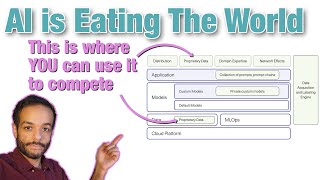
AI is Eating The World - This is Where YOU Can Use it to Compete (AI Product Moats)
Jay Alammar
What is LangChain? Where does it fit with LLMs like ChatGPT and Cohere? #shorts
Jay Alammar
Are language models with more parameters better? #shorts #chatgpt
Jay Alammar
How to manage LLM prompts with tools like LangChain #languagemodels #chatgpt
Jay Alammar
What is Llama Index? how does it help in building LLM applications? #languagemodels #chatgpt
Jay Alammar
prompt chains are important for building large language model applications
Jay Alammar
ChatGPT has Never Seen a SINGLE Word (Despite Reading Most of The Internet). Meet LLM Tokenizers.
Jay Alammar
What makes LLM tokenizers different from each other? GPT4 vs. FlanT5 Vs. Starcoder Vs. BERT and more
Jay Alammar
Building LLM Agents with Tool Use
Jay Alammar
SWE-Bench authors reflect on the state of LLM agents at Neurips 2024
Jay Alammar
Learn how ChatGPT and DeepSeek models work: How Transformer LLMs Work [Free Course]
Jay Alammar
More on: LLM Foundations
View skill →






![Run Any AI LOCALLY for FREE Forever! [100% Beginner Tutorial]](https://i.ytimg.com/vi/8GFPZRgtEn8/mqdefault.jpg)


Related Reads
📰
📰
📰
📰
How I Stopped Fighting Hallucinations in LLM Data Extraction
Dev.to · zhongqiyue
Anthropic’s Claude Sonnet 5 Is “Near-Opus Intelligence” For All Plans via @sejournal, @martinibuster
Search Engine Journal
Understanding How LLMs Work: From Text to Tokens, Embeddings, Transformers, and Predictions
Dev.to · Klinsmann R
How ChatGPT Understands Your Questions: A Beginner-Friendly Guide
Dev.to · Shreyas Rasaikar
🎓
Tutor Explanation

 DeepCamp AI