
SPSS: Apply & Evaluate Cluster Analysis Techniques
Skills:
Unsupervised Learning90%
Key Takeaways
Apply and evaluate cluster analysis techniques using SPSS
Original Description
This foundational course equips learners with the conceptual knowledge and practical skills needed to perform cluster analysis—an essential unsupervised machine learning technique—using SPSS. Through a blend of theoretical exploration and hands-on implementation, learners will define, differentiate, apply, and evaluate key clustering methodologies, including hierarchical methods, k-means clustering, and Two-Step cluster analysis.
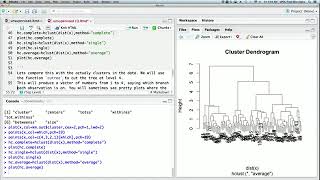
In Module 1, learners will examine the fundamental concepts of cluster analysis, understand how different clustering algorithms work, and explore their respective strengths through illustrative examples and comparisons. Emphasis is placed on developing the ability to identify appropriate use cases and interpret clustering structures such as dendrograms and scree plots.
In Module 2, learners will implement clustering techniques in SPSS, including preprocessing strategies such as listwise and pairwise deletion. The module emphasizes analyzing and evaluating clustering outputs, understanding statistical model criteria (e.g., BIC/AIC), and using diagnostic tools like the silhouette coefficient for validating cluster quality.
By the end of this course, learners will be able to apply clustering techniques to real-world datasets, analyze results critically, and make informed decisions in data segmentation tasks using SPSS.
Watch on External: Coursera ↗
(saves to browser)
Sign in to unlock AI tutor explanation · ⚡30
More on: Unsupervised Learning
View skill →





Related Reads
📰
📰
📰
📰
Code Challenge of the Day — Reverse word order (easy)
Dev.to · I Want To Learn Programming
Kaggle Titanic: Improving Survival Prediction with Random Forest Age Imputation
Dev.to · kito2718
Kaggle Titanic: Cabin Feature Engineering (Is It Really Effective?)
Dev.to · kito2718
Stop Measuring AI By Parameter Count. Here’s What Actually Matters
Forbes Innovation
🎓
Tutor Explanation
 DeepCamp AI