Simulating and understanding phase change | Guest video by Vilas Winstein
Skills:
ML Maths Basics60%
Deriving the Boltzmann formula, defining temperature, and simulating liquid/vapor.
@SpectralCollective has the second part: https://youtu.be/yEcysu5xZH0
You can play with a simulation of this model here: https://vilas.us/simulations/liquidvapor/
These lessons are funded directly by viewers: https://3b1b.co/support
Home page: https://www.3blue1brown.com
Notes from Vilas:
1) This open problem is to prove the ergodicity of the deterministic dynamical systems that are used to model the molecule-level physics. A good example of such a dynamical system is the box with particles evolving according to Newton's laws with elastic collisions, like in the video.
2) This video assumes that all probability distributions are discrete, which is the case in the simulations. But one can also set up this formalism for systems with continuous state spaces. Again, a good example is particles in a box, which are not restricted to a lattice, which is only used for visualization purposes in this video.
3) Strictly speaking, these "derivatives" don't make sense since in our simulations the energy can only take on a discrete set of values. But a derivative is the right way to think about this, and is the correct notion in a limiting sense.
4) The factor of -T in the definition of the chemical potential is sort of a historical leftover, but including it has the convenient side effect of allowing the same Boltzmann formula to hold, with an energy function that depends on the chemical potential as well. It should also be noted that temperature must equalize in any situation where the chemical potential equalizes, since it is impossible for systems to exchange molecules without also exchanging energy.
5) This algorithm, where we only choose one pixel at a time, is called Glauber dynamics. There are multiple ways to parallelize it, but the method chosen in this video is to only update each pixel with a low probability at each call of the compute shader, to avoid (frequently) updating two nei
Watch on YouTube ↗
(saves to browser)
Sign in to unlock AI tutor explanation · ⚡30
Playlist
Uploads from 3Blue1Brown · 3Blue1Brown · 0 of 60
← Previous
Next →
1
 2
2
 3
3
 4
4
 5
5
 6
6
 7
7
 8
8
 9
9
 10
10
 11
11
 12
12
 13
13
 14
14
 15
15
 16
16
 17
17
 18
18
 19
19
 20
20
 21
21
 22
22
 23
23
 24
24
 25
25
 26
26
 27
27
 28
28
 29
29
 30
30
 31
31
 32
32
 33
33
 34
34
 35
35
 36
36
 37
37
 38
38
 39
39
 40
40
 41
41
 42
42
 43
43
 44
44
 45
45
 46
46
 47
47
 48
48
 49
49
 50
50
 51
51
 52
52
 53
53
 54
54
 55
55
 56
56
 57
57
 58
58
 59
59
 60
60

e to the pi i, a nontraditional take (old version)
3Blue1Brown
Euler's Formula Poem
3Blue1Brown
Euler's Formula and Graph Duality
3Blue1Brown
What does it feel like to invent math?
3Blue1Brown
How to count to 1000 on two hands
3Blue1Brown
Music And Measure Theory
3Blue1Brown
Fractal charm: Space filling curves
3Blue1Brown
The Brachistochrone, with Steven Strogatz
3Blue1Brown
Snell's law proof using springs
3Blue1Brown
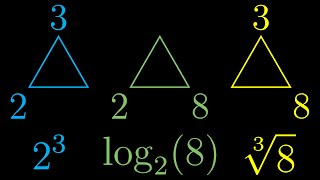
Triangle of Power
3Blue1Brown
Essence of linear algebra preview
3Blue1Brown
Vectors | Chapter 1, Essence of linear algebra
3Blue1Brown
Linear combinations, span, and basis vectors | Chapter 2, Essence of linear algebra
3Blue1Brown
Linear transformations and matrices | Chapter 3, Essence of linear algebra
3Blue1Brown
Matrix multiplication as composition | Chapter 4, Essence of linear algebra
3Blue1Brown
Three-dimensional linear transformations | Chapter 5, Essence of linear algebra
3Blue1Brown
The determinant | Chapter 6, Essence of linear algebra
3Blue1Brown
Inverse matrices, column space and null space | Chapter 7, Essence of linear algebra
3Blue1Brown
Nonsquare matrices as transformations between dimensions | Chapter 8, Essence of linear algebra
3Blue1Brown
Dot products and duality | Chapter 9, Essence of linear algebra
3Blue1Brown
Cross products in the light of linear transformations | Chapter 11, Essence of linear algebra
3Blue1Brown
Cross products | Chapter 10, Essence of linear algebra
3Blue1Brown
Change of basis | Chapter 13, Essence of linear algebra
3Blue1Brown
Eigenvectors and eigenvalues | Chapter 14, Essence of linear algebra
3Blue1Brown
Abstract vector spaces | Chapter 16, Essence of linear algebra
3Blue1Brown
Who cares about topology? (Old version)
3Blue1Brown
3blue1brown channel trailer
3Blue1Brown
Binary, Hanoi and Sierpinski, part 1
3Blue1Brown
Binary, Hanoi, and Sierpinski, part 2
3Blue1Brown
But what is the Riemann zeta function? Visualizing analytic continuation
3Blue1Brown
Tattoos on Math
3Blue1Brown
Fractals are typically not self-similar
3Blue1Brown
Euler's formula with introductory group theory
3Blue1Brown
The essence of calculus
3Blue1Brown
The paradox of the derivative | Chapter 2, Essence of calculus
3Blue1Brown
Derivative formulas through geometry | Chapter 3, Essence of calculus
3Blue1Brown
Visualizing the chain rule and product rule | Chapter 4, Essence of calculus
3Blue1Brown
What's so special about Euler's number e? | Chapter 5, Essence of calculus
3Blue1Brown
Implicit differentiation, what's going on here? | Chapter 6, Essence of calculus
3Blue1Brown
Limits, L'Hôpital's rule, and epsilon delta definitions | Chapter 7, Essence of calculus
3Blue1Brown
Integration and the fundamental theorem of calculus | Chapter 8, Essence of calculus
3Blue1Brown
What does area have to do with slope? | Chapter 9, Essence of calculus
3Blue1Brown
Higher order derivatives | Chapter 10, Essence of calculus
3Blue1Brown
Taylor series | Chapter 11, Essence of calculus
3Blue1Brown
Pi hiding in prime regularities
3Blue1Brown
All possible pythagorean triples, visualized
3Blue1Brown
But how does bitcoin actually work?
3Blue1Brown
How secure is 256 bit security?
3Blue1Brown
Hilbert's Curve: Is infinite math useful?
3Blue1Brown
Thinking outside the 10-dimensional box
3Blue1Brown
Some light quantum mechanics (with minutephysics)
3Blue1Brown
But what is a neural network? | Deep learning chapter 1
3Blue1Brown
Gradient descent, how neural networks learn | Deep Learning Chapter 2
3Blue1Brown
Backpropagation, intuitively | Deep Learning Chapter 3
3Blue1Brown
Backpropagation calculus | Deep Learning Chapter 4
3Blue1Brown
The hardest problem on the hardest test
3Blue1Brown
Q&A #2 + Net Neutrality Nuance
3Blue1Brown
Why this puzzle is impossible
3Blue1Brown
But what is the Fourier Transform? A visual introduction.
3Blue1Brown
The more general uncertainty principle, regarding Fourier transforms
3Blue1Brown
More on: ML Maths Basics
View skill →





Related AI Lessons
⚡
⚡
⚡
⚡
The AI Wake-Up Call: Why Millions of Workers Are Being Replaced — And How You Can Stay Ahead
Medium · AI
The 2026 Skills Gap is Here: How to Future-Proof Your Career (Without Spending a Fortune)
Medium · AI
The Next Decade of AI: What the World Will Actually Look Like by 2036
Medium · AI
Structure, Not Prophecy
Medium · AI
🎓
Tutor Explanation

 DeepCamp AI