Seeker Live Interview With Scorpion Expert!
Key Takeaways
Expert discusses scorpion behavior and biology in a live interview
Full Transcript
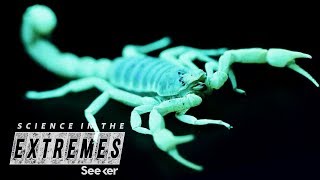
Hello everybody and welcome to the Seeker live stream. I'm Trace Dominguez and I'm here with the curator of archaeology at the California Academy of Sciences, Lauren Espazito. Hello. Hello. Did I say archaeology? I meant arachnology. There you go. Wow. Messed it up right in the beginning. That looks bad. Glad Glad we got that out of the way. Yeah. At least that that's the only mistake that I'm going to make today. That's the same mistake Google makes whenever I type arachnology. Do they really? They like try and auto correct your job. Yep. They're like, "Nope, that's not your job." They own YouTube, though, so maybe I shouldn't call him a jerk while we're live on YouTube. I don't know. Anyway, so we're here at the California Academy of Sciences. It's in San Francisco. And we're here because of Science in the Extremes, which is a show that we have here on Seeker, where we profile scientists who are going to the extremes to kind of get their science. So, I guess in this case, I'll sort of let you explain what it is that you do. Well, I'm an arachnologist, uh, which means that I study spiders and scorpions and things with eight legs that live on land. And I'm really a biodiversity scientist. So, I go out into the undiscovered parts of the world trying to discover what's out there. Yeah. Like new species and just like beautiful bugs from all over the world. Exactly. That's really cool. New species and beautiful bugs. I like it. Those are not mutually exclusive. That's true. Yeah, that's very true. We do have um you were just in Malaysia, correct? I was in Malaysia. Yeah, it was great. Wow, that sounds really awesome. We actually have a clip of that. Uh so we can see what she found. This is some of the stuff that we collected over the last two weeks. It might not look like a ton, but in each of those little baggies, there's anywhere from from two to a few hundred or maybe even a couple thousand specimens. Uh is a new species. We're pretty excited. It's like the whipped cream on top of the ice cream sundae. We found it the first day and this one's an adult female, which means it's a really valuable specimen. We can actually use it for describing the species formally. And I don't know, I couldn't be more happy. That is so cool. So, how many species did you discover on your Malaysia trip? Well, the real answer is it's hard to say. Uh we definitely discovered a new species of scorpion and and the reason that we knew that is because I had brought in my postoc with me Stephanie Lauria and she's the world's expert on this group of scorpions. Uh they live in Southeast Asia. We call them the ghost scorpions. And because I had the world's expert on ghost scorpions with me when we found a new species of ghost scorpion, we were able to say with like a pretty high degree of certainty that it was a new species. But we brought back a ton of spiders and tons of scorpions and other kinds of arachnids. And so there's probably a lot of other new species in that material, but it's going to take more time for us to look at it, send it out to experts to be reviewed before we can say for certain. Yeah. So, how long does it take to find out if something is a new species? That's a good question. I, you know, it it kind of depends on how fast we are at getting our job done, but on average, uh, in a sample like this where we've we've collected thousands of specimens, it will take about a year to fully process and identify all of it. Oh, wow. Yeah. Do you go on another field like expedition during that time or was it is it Wow. So you're constantly kind of bringing in new specimens that then we can determine what species they are and and what we can learn from them. Yeah, it's it's like a constant cycle. So So because this is a natural history museum, we have this huge collection of specimens from all over the world that really represent a library of life on life on Earth, if if I can call it that. That's cool. and and so and they also represent like a a time and a place. So so because there was a collecting event like we know when they were all collected we can go back in time and say okay in in 1900 what was here and then in 1950 what was here and now in 2017 what was here and so it really allows us to look back through time and see how things change. Yeah. But it's certainly a process and and it's it's ongoing at all times. Yeah. I I think that's really interesting because you mentioned earlier you're a biodiversity scientist also. She has some scorpions here. I don't know if you guys can see them in the cameras. Um, we're going to handle them later. So, I'm nervous about it a little bit. A little nervous, but this is going to be good. Um, but I was going to say you're So, you're as a biodiversity scientist, that timeline is really important. You can kind of see if the biodiversity, you know, changes over time, right? Yeah. And I think, you know, it's important to say like first, what is a biodiversity scientist? Maybe because that word biodiversity is kind of like packed a packed word. Yeah. And what it really means is all of the species on Earth of anything, right? So I really study all of the species on Earth of scorpions. Um but but a biodiversity scientist typically specializes like in a niche. So there's right next door to my office is a ant biodiversity scientist and on the other side is a fly biodiversity scientist. And so we were actually all three of us together in Malaysia. Wow. Wow. And so you're all collecting specimens and if the fly scientist finds a cool scorpion, are they like, "Yo, Lauren, come here. Check this out. Check out the scorpion." Yeah. They're like, I guess they can't like call you. Well, we actually had walkie-talkies, which was awesome. Awesome. Um, and they would they're like, "Uh, I found a scorpion. I don't want to pick it up. Maybe you should come and get it." That's what I would be doing. Yeah. I'm not But sometimes they do pick it up. Oh, man. Oh. Like carefully with a with a vial or something. They don't want to touch it. Yeah, same as you. Yeah. Well, I do want to touch it. I'm just nervous about it. Um, you can do it. I'm excited, too. Just want to be clear. So, are any of the scorpions that we have here new? So, actually, no. All the ones that we have here are known species. Um, one of the things about discovering new species like this ghost scorpion is that those specimens become incredibly valuable. And so we want to try to preserve them to the best that we're able to so they can be studied for all of eternity. Right? So I think it's one of the really cool things about discovering a new species is that you designate this thing called a type specimen. And what that means is you like the scientist who discovered the new species gets to say this individual scorpion represents that new species for all eternity. And if any scientist ever in the future has some confusion about what the person was thinking when they discovered the new species, they can go back and find that exact specimen in a museum somewhere and look at it and see whether it's wow what they thought it was or not. That is cool. That's a lot of power like in the scientific community. That's a lot of power. And so knowing that it's a new species, I mean I think personally when I think of new species I'm like cool. You get to name it something. you get to like you get the record in in the history books that says, "Oh, so and so found this species, but at the same time like that's also you're defining the future of this whole species based on one individual." Yeah. Which I mean that's just a little mind-blowing. It is. So like this new one, the ghost scorpion, we found six specimens total. We were searching for two weeks and we found six. So those six are really valuable. Yeah. And uh I know in the video, which we're going to get to uh a little clip of in again later, um you mentioned that it's a large like a female adult. Yeah. So, well, we the first one we found was an adult female and then we we did find two other adults and three sub adults or juvenile young ones. And so, what's the what's the power of an adult female versus an adult male? And why is which one would you want in your collection? I mean, obviously, you'd want as many as you could, but Right. Why the adult female? Well, you know, for arachnids, typically what people use as the type specimen, that one specimen is a male specimen. And that's because the males have sexual characteristics that people use when they describe the new species. And so in spiders and scorpions, males tend to have the most different characteristics. Um, and so people traditionally use males as the type. Um, although I'll say like we've discovered, some people estimate we've discovered like 50% of all spiders on Earth. So there's still 50% of the species out there left to be discovered. And of those 50%, something like 95% of them are only known from a single individual specimen. Wow. So we don't even know like what both genders look like, right? Um, but but the the most common is that if you find a male, the male becomes the type. Oh, okay. Interesting. That's very cool. Um, so we also uh are going to have Q&A. So make sure you tweet at us. You can tweet at us at Seeker. You can also tweet at me Trace Dominguez for those. Um, you can even leave them in the comments below the stream and we'll see them. We've got our associate producer Anna over here combing the comments and feeding them to me. So she'll be working on that and we'll be taking your questions really shortly. Let's watch the trailer to Science in the Extreme so you guys can see exactly uh what show we're talking about. You want to be there when everyone else is running away. The only way to do that is to go into the field and experience real fear. My stress level in a flight is typically high. We don't even know what we're going to expect. It's a sense of duty. It's a sense of curiosity. And it's a sense of wonder. Okay, and we're back. Uh, again, I'm Trace with Seeker. This is Lauren Espazito with the California Academy of Sciences. She's the chief curator of Arachnology. And um again, tweet us your questions if you have any. We're going to get to that. Uh today, this science in the Extreme episode is going to come out at 11 a.m. Pacific time. So, in not not too long now, about 20 minutes. Um and we're going to be here talking about spiders and scorpions and handling them, and it's going to be really cool. Uh until then, so again, tweet your questions. Um, when it comes to what you do, it seems like like your office is great and you've got a lab and you've got lots of different like pieces of scientific equipment, but it doesn't seem like you spend as much time in the lab as the stereotype would have scientists do. Can you talk a bit about that? Like, yeah, I would say, you know, my job as curator is is perhaps slightly unusual for the type of science that I do. I'm really a biologist. So, so perhaps I spend a bit more time out in the field than than my counterparts at a university, but I don't know if that if that's exactly true. I think many biologists spend a lot of time out in the field, especially biologists that are studying things that are that are living out somewhere or they're out discovering them or they're out trying to understand their evolution or their ecology. They spend a lot of time out in the field and and that revelation was actually something that led me to make the decision to become a biologist. When I first realized that being a biologist and choosing that as a career included spending a lot of time outdoors and a lot of time adventuring, I was like, "Oh, that's what I want to do." Like I love doing that kind of stuff. So yeah, it was really like a dream come true sort of job for me. Yeah, this is this is the most they let us out most of the time. We're mostly stuck in dark rooms making videos. So this is great. It's very nice. It's kind of pretty well lit, I guess. Mostly I mean better than some things, I guess. So when it comes to that stereotype when when you're going out in the field, how long does that take to plan? Like what is your day like when you when you're out there? You know, these trips can take really a long time to plan. Particularly making sure that we're following all the rules and regulations of the countries and the places that we're visiting. So we always make sure that we're in contact with their uh department of like fish and wildlife or their department of parks or whatever the the counterparts to our own interior department. Yeah. Exactly. All of their governmental offices that regulate h how specimens or animals can be or plants can be studied in their natural environment in that country and just figuring out that information can be quite timeconuming and then applying for those permits can also be quite timeconuming because it's a bureaucratic sort of situation and so that's like really not like independent of us it just is dependent on the country and I've had some scenarios like um when I visited Cuba for example that took years to Wow. So, we were applying in that permit process for years and years before we could ever actually visit the country. And then once you've made it through that first major hurdle and you're able to to move on to the next step of like planning the actual trip, like that's also timeconuming because you're try you're communicating with with colleagues there in the country or people who have visited, trying to find out what the best spots are, trying to find out like where you can stay, where you can camp. um if there's any good guides in the region that really know their stuff or or maybe there's local counterparts that you can work with. And so all of that's like incredibly timeconuming, but eventually you get through it all. You plan a great trip. It's kind of like planning any big trip, right? Sure. Sure. Yeah. You do all your homework. Uh and then when you get there, that's when the fun really starts. And so, well, first you lug all this luggage because we have all this equipment that we use whenever we go to the field. So, we have to travel not light. Yeah. And and once we get there and all our luggage makes it too, hopefully um hopefully. Sometimes it doesn't, sometimes it doesn't. Uh then we we head out into the field, we usually will spend like a couple of days in the city getting all of our permits in order, head out into the field, and and then the typical day starts early. We get up like 6:00 a.m., get breakfast. Um you got to start with a good breakfast, right? That's right. Yeah. Every day is better with a with a good breakfast. And then we head out into the field and and spend the most of the day hiking around just hiking and looking at looking under logs, uh raking up leaf litter on the ground, um looking in trees, and using a variety of traps and tools that we bring with us to try to look for arachnids. Yeah. So, we spend most of the day out and then usually break like late afternoon when it's really hot, have dinner, and then head out into the field again at night because we're studying nocturnal animals. So, these animals are active at night and that's the best time to find a lot of them. Yeah. And on that note then, have you ever gotten bitten or stung or gotten sick or anything like that from working out there? Because it would seem like, I mean, if you're out in the field like that, you know, stuff's going to happen. That's a great question. And I do work a lot in the tropics. Um, I think, you know, the first question often people ask are, "Have you ever been stung by a scorpion?" And I have to say, like, no. I've never been stung by a scorpion. And I'm not worried about the scorpions and the spiders because I know how to handle them. I know how to collect them. Um I know how to avoid getting bitten or stung to the best of my ability. I exercise caution, but the things that I'm most worried about are the things that like I I can't really see or control. And that's mosquitoes. Mosquitoes are like the number one fear for me. So I I like cover myself in deed. Every time I go out into the field, I coat all my clothes in de I like I'm like crazy about the deed. I feel like sometimes I put so much deed on that I can taste it when I eat my food and that's really gross. But I'm really worried about mosquitoes for sure. Yeah. Yeah. And it's because I have gotten sick. I've gotten dang fever. Wa was terrible. I really don't recommend it. It's really unpleasant. Noted. Noted. I had that on my list. It's also really terrible when you're trying to work and you have like a short amount of time to work and you have dangay fever. It's really really unpleasant. Um and that's transmitted by mosquitoes. So, thus the de I've learned my lessons. I also once was climbing around in a cave in Puerto Rico. No, actually I was in the Dominican Republic. Caribbean, they're all great. Um, and I was climbing in a cave and the cave was full of bat guano, which is something I look for surprisingly. Like I'm like, "Okay, we found a cave. It's full of bats. It's got so much bat poop in it. It's disgusting. It must be perfect for arachnids." So, if you think about it, bat poop is like treasure for insects. Sure. Insects love it. Like cockroaches are all up in that bat poop. It's like really rich. Yeah. It's a party. It's a party. A poop party. And you know what eats cockroaches? Arachnids. I did. So, if there's cockroaches, there's definitely going to be arachnids. And if there's bat poop, there's definitely going to be cockroaches. So, it's like, you know, deductive. One thing leads to another. So anyways, I was in this cave and we were crawling through like a tiny tunnel and then that tunnel opened up into a bigger cavern and that cavern was like kneedeep bat poop, really gross. And I left. We actually we were in several caves and on my flight home from the Dominican Republic, I started having like breathing trouble and I was like, "Oh, I know what this is." And it turned out that I had contracted a a fungus called hystoppplasmosis. And it's actually a fungus that's not something that like wants to attack humans, but it's something that lives in batcaves. And when you breathe it in, you breathe the spores in, your lungs are like basically a batcave. They're like humid, dark, and so it just like starts going to town, growing inside your lungs. And your body can combat it naturally unless you're like immuno deficient. Sure. But it's really unpleasant. Oh, I bet. Not good at all. I don't recommend that. I definitely cross that one off my list too. Pistoplasmosis. Jeez. I mean, and the show is science in the extreme. So, this is definitely like extreme environments to go and find these these species. So, uh I have a question from the internets. Um I don't know how to pronounce your first name. I think it's Atul Gabriel. And that is why are spiders and scorpions in the same category? Well, that's a really great question. Um, so spiders and scorpions are united in that they both have eight pairs of legs. Um, and they also both have two principal body segments. Uh, uh, what's called a sephiloththorax and an abdomen. And the sephiloththorax is the head. And the abdomen is like the body. Um, they all have chisery, which are their mouth parts, their chewing mouth parts. And they all have a structure called palps or petty palps, which are in scorpions, they're the claws. And in spiders are actually surprisingly the reproductive structures. Oh, interesting. And if you ever see like a little spider that looks like he has boxing gloves up by the front of his face, those boxing gloves are the palps and they use them to transfer sperm. Oh, cool. So, if they've got boxing gloves, it's a male. Yeah. No boxing gloves, it's a female. Just looks like an extra little leg. We should uh write that down for another one of our shows that we do on Seeker called Wild Sex, which is all about like sex in the animal kingdom. use a lot of a lot of insects do really weird stuff are really weird. Well, we should hook you up with Matt the producer of wild sex because that's a great show. It's really castration traumatic insemination. Yeah. Like we got we did uh recently we did one on the praying mantis and the cannibalism and the purpose behind it where do you know Karen Bondar? She's she does she has a book that's basically about this. So, right. I'm familiar with her but I can't say I know her. Know her, but no other. Yeah, she's great. She lives in Canada, so we don't see her, but she works with us on that show. So, make sure you check that out. Seek her as well. Um, are my producers pointing at me? But I don't know what it is. You want me to turn this around? Oh, because na na's on the back. Can you see Na Na? Tell us a little bit about this uh this insect we have in front of us or this arachnid rather. So, this is Na. He's our lab mascot. Um, and what na is is actually a different group of arachnid. Um, segue from our last question. And, uh, this is a a group called sometimes called a whip spider, sometimes called a tailless whip scorpion. Yeah. And na na is really cool and humongous. He's pretty big. They get quite large. And he is, you can see they're called whip spiders because they have these elongated legs that that are actually should be a walking leg, but in whip spiders they've turn they basically use them as an antenna. So they have these long nerves that extend all the way through this leg and and they have all kinds of sensory organs that they use for smelling and tasting and and they're really cool for a few reasons. This is this is why he's our mascot. One, they're harmless. Oh. So he looks pretty ferocious. He's got these big claws, which are the petty pelps I was talking about. And they use them kind of like a preying mantis. So they they're raptorial. So they'll open them up and use them to crush prey towards them. But they can't use them outward. Like they have no outward force in those. So they're not for attacking as much as pulling. Yeah. They're more for like like snapping things up rather than like pushing things away. So their only real defense is being fast. So he's he'll run. Yeah. He moves pretty quick. He moves pretty quick when he wants to. And these things, they live in they live mostly in the tropics, but you can find them uh like in the southern part of the United States. And um other things I really love about these guys is that the males fight by just opening their their palps, their petty pelps, and like measuring up to see who's got a bigger petty palp. Palp measuring. Palp measuring. Yeah. And also the the moms uh are really good moms, the females, they take care of their young. So they'll lay eggs and they glue the eggs onto their abdomen in like kind of a pouch and once the babies hatch they stay around the mom. So first they'll live on her back for for like a month and then they'll slowly move off but she'll stay in contact in contact with them with her whips. So she'll like reach out and stroke them to check in on their pherommones and see like how they're doing. Yeah. And so I feel like they're like they look terrifying but they're really quite cuddly. Yeah. I mean, they na na looks terrifying, but now that I know all that, he he also looks really nice. I kind of do want to touch na na. Is that is that possible? I feel like you should definitely hold na na. Okay, this is going to be weird. He's like, nah, nah, bro. Not into it. He's like, um, I want to live on my log and I know who you are. Come on, man. is cold and uh oh, let me move my cards. I'll do this and see if N will come over here. Oh my gosh. Hi, Na N. So, like as you hold him, you'll see like he starts moving those first legs around and he's like basically smelling your hand like that's so cool. Like any normal pet. Can you guys see that? I hope you guys can see this cuz I'm like freaking out a little bit, but I'm also super intrigued. And they have really poor eyesight. He just has these two little rudimentary eyes on top of his head. You can kind of see them for sensing light. And when I was talking about the cave earlier, going out in search of the cockroaches in the cave, this is actually what I was looking for. I was looking for this group of arachnids with spiders. Oh. Because they love living in bat caves. So this is a bat poop fan right here. Huge bat poop fan. Cool. Way to go. Na na. Whatever it takes, man. And this species in particular is from Tanzania. Um, so he's an African species. actually lives in in not a very wet tropical environment, but more of a dry tropical environment. Mhm. That's super cool. He's he's kind of like curling his little Yeah. Look, let's show show everybody what he's doing over here. So, he's doing all kinds of cool stuff. Um, but he's kind of curled up a little bit and he's just chilling. Just chilling out. He's sniffing me with those those uh what are they? Antenna or they're really legs. legs. They're legs, but they're modified legs. Okay. So, we call them We call them his his whips. His whips. Yeah. He was smelling me before, but now he just seems to be hanging out. I think we're friends now. I think, you know, your hands actually pretty warm. My hands were cold. Um, so now he's down. So, now he's like, "Oh, this feels good. It's kind of cold in my office. It's like winter, you know." Yeah. Cool. All right, let's take another question from the internet while I hang out with Na Na. Um, Chris Evans asks, "Is it normal for a scorpion in certain situations to kill itself or uh because Chris says he witnessed a scorpion seeming to sting itself multiple times was fighting with another scorpion at the time. So maybe some kind of interaction there." Um, that is really not normal. Yeah. So I don't know what what answer that question for you. Observing. Um, I have I have seen that sometimes when scorpions are killed, like if people throw them in alcohol, for example. Oh, that scorpion's trying to get away over there. He is. Um, the unnamed tiny one that's dollar for reference. So, they'll start just stinging kind of wildly. And some some people describe it as them stinging themselves, but they're really not. They're just kind of like moving their Yeah. But it might and it might appear like it's stinging itself, but that'd be pretty unusual for it to sting itself. Yeah. When it comes to like scorpions, there are different obviously some are ven or poisonous, some are not. Some are venomous. Venomous and some are not. So what's the potency of that? Is there like a kind of continuum of of venomousness for arachnids? That's a great question. There sorry that's a question from uh Phil and John and Yhakusa and Meredith Malnik. So that's a I think you know often people are really intrigued about how venomous scorpions are and the truth is that that you can really separate all scorpions into two main groups. There's a group of scorpions called the boothids um which are the more venomous group of scorpions and then there's all the other scorpions. Okay. So, booth scorpions are the only ones that really make venoms that act on the nervous system of mammals, which is humans. Yeah. And so, those are the ones that are dangerous to us. Got it. All other scorpions also have venom, but the venom acts on the nervous system of insects only. So, they're only making venoms for their prey, whereas booth scorpions are making venoms for their predators, too, to try to defend themselves. Sure. And so, those are the ones. Yeah. You want to grab a run for my He's really going to town. Maybe he's jealous. I think I'm hanging out with Na Na. He's like, "Oh, maybe he wants some spotlight." So So this guy actually is a part of that non booth group. Yeah. Size difference there. So he's totally harmless. He makes no venom that would act on my nervous system even if he was to sting me. And His stinger is also so tiny that I don't think that it that his sting is long enough to penetrate my skin. Like it's so short that it like couldn't even pierce my skin. And that's that's actually the truth of most spiders and and not most scorpions, but many scorpions. Like they just don't have a long enough stinger or fang to even get through the skin of a human because that's not what what the goal of that structure is, right? It's for eating, not for stinging people. Yeah. Wow, that's so cool. It's so tiny and flat. Yeah, it's really flat. These guys live in crevices like underneath bark or in like the cracks of a rotting log or or even in like um a rock like under a rock or in between rocks and and so people call them like a flat bark scorpion. Mhm. Which is kind of confusing. I don't like common names because it's easy to get things confused. Sure. There's also a bark scorpion which is in that really venomous group and we actually have those. Yeah. Like down in Arizona and Texas we get bark scorpions and and there like it's not it won't be deadly to an adult human but it would be really painful like a wasp sting. Sure. Ouch. So the episode is actually going to go live in just a few minutes. Oh my god. That doesn't mean you have to leave. You can hang out and continue like asking questions and stuff. We'll try and get to some more. Um, in the episode, which again you can see on Seeker in like two minutes. Um, you use something called a pter. A pter. What? I got a pooter. Can you talk a little bit about when you're collecting these specimens? Um, you were saying you're kind of raking leaves and in the episode you'll see you kind of use a a large cloth that you described as like a kitelike uh kind of cloth and you're knocking branches and and collecting specimens that you're just kind of knocking off of the foliage. Yeah. Um, but you also use the pter. So, can you tell us a bit about this strange? Well, this is my custommade pter. Um, it's not my design, but I make it. And basically what it is is it's this hard plastic part, and in between the plastic part and the tubing is a little screen, like a fine mesh screen, like you would use in a pipe or something. And the way it works is it's a mouth vacuum. Um, and so that's really great for not damaging specimens that are really tiny. So like if you pick them up and they're super tiny, like you'd squish them. Yeah. But they're really valuable. like we're really trying to discover new species. So, we don't want squished specimens, right? And so, the way it works is you just put the the hose end in your mouth and you point the hard plastic end at something and you inhale and it gets trapped between the screen and and the end and it allows you to pick something up that's delicate. Sure. Without damaging, crushing it or or messing with its, you know, very fragile exoskeleton. Yeah. Or like knocking a leg off or something, you know. Yeah. So, it's like less about protection from getting bit, cuz again, these things probably aren't going to bite me, and more about making sure I don't do damage to that individual. Yeah. Wow. That's actually really ingenious. And a simple system, too, because if you're out in the field, you don't always want to like, you know, and like turn on some kind of electrical thing that you would have to either charge or bring batteries for. This is right. And we carry so much gear, to be honest. Like the lighter the better. Yeah. That's so great. What a what a smart little And you said it's not your design. So this is something that other arachnologists also use. Yeah, arachnologists and entomologists all use pters often. Um this is kind of this this design is I think something favored by the arachnology community because you can just suck it in and then put your thumb over the end so you can look closely at what it is that you just picked up and like really see if it's something interesting and then you can blow it into a container to take it away. Yeah, makes sense. Is that how you got this little guy? No. So, I don't I don't use this for things like this size. I I would just pick this guy up with my hands like I'm doing now. Yeah. Um and so like usually the way we found this is we were like ripping apart a log and found him in there and picked him up. Yeah. And then we also got another specimen over here which uh this one's got its own little camera angle which is really cool. And we have a question from Aaron Barlo an Alien X and they would like to know why some glow in black light. Well, and that's that's very apt for this guy. Actually, all scorpions flues under a UV light or a black light. Yeah. Um and like I can show you what that looks like. So, this is going to be That's cool. And this is this other one um that I showed you before, the tiny one, the flat one, is a specimen from Malaysia that we just collected on this expedition that we were on. Um, and this other one, this bigger, lighter colored one, is a desert hairy scorpion that I collected uh outside of Phoenix a couple months ago. Yeah. And he flueses, but all scorpions fluores no matter what the color is, invisible light. They flues with UV light. And wow, that is cool. We don't really know what the function of that is. Like it might just be a byproduct of how their exoskeleton forms, but it's a pigment embedded in the exoskeleton. Interesting. Is that something that they can detect at all or They can see UV light just like they can see all all waves of light. Sure. Uh, and and I think particularly because there's more UV present at night, especially when the moon is big, than there is visible light spectrum, many things that are nocturnal can see a lot of UV color much better than humans can because we're our eyes are really attuned to like the daylight rather than nightlight and nighttime. Yeah. Yeah. Yeah. Yeah. That's great. Um, again, you can check out the full episode. Um, we do have another clip to show you. So, why don't we roll that? Like for most scorpions, we don't even know basic natural history information. We don't know when they breed. We don't know how long they live. We don't know how many babies they have and they give like birth. And so the fact that we don't know any of this stuff and they're going like some of these species are going extinct and they'll go extinct before anybody ever notices or ever even knew that they existed in the first place is sad but also an opportunity for us to to change that to to figure out what they're doing and and how what an important role they are playing. All right, so we're going to wrap things up pretty soon here. We've got time for a few more questions. Um, but I'd like to talk a little bit more about what we do and don't know about scorpions and sort of how you got into studying them. Um, because you know, kids say, "I want to be, you know, astronaut when I grow up." And that's a big thing for STEM and scientists, but when it comes to arachnology, that's not always the top of the list for everybody. So, how did you get into into this? Like, what got you excited? Yeah, I think, you know, myself included, I wasn't like, I want to be an arachnologist when I was a kid. I think I I don't always remember what I said I wanted to be, but I do remember in the sixth grade I had to do a paper saying what I wanted to be when I grow up. And I was like really struggling with it. And I talked to my mom about it and I was like so upset because I couldn't think of what I wanted to be and like everybody else knew what they wanted to be. And my and my we were like talking about the things I like and I came up with a paper that said I either wanted to be a hobo or a rocket scientist. I mean that's That's actually what I wrote and I turned it into my teacher and and I like explained all the reasons why I wanted to be one of those things like hobo. Like I'm really into traveling and like love trains. Love trains. Wanted to see the world on a really low budget. Yeah. I love handkerchiefs. Um I think I was a hobo for Halloween maybe. Yeah. And um rocket scientists like cuz I like really liked science. I knew I liked science. Um, I liked all sorts of science, but that was like something that seemed so outlandish it was worth writing in a paper. Yeah. I guess I was kind of cheeky. I mean, that sounds It seems like I've known you for a little while now. I feel like now my job is kind of exactly like what the in between of a rocket scientist and a hobo is. Like I get to travel all the time for work and I'm like seeing the world and hiking around and often really like sweaty and dirty and handkerchiefing. And I do I do wear a handkerchief. Um, and I'm a scientist and so I think I actually like won. Yeah, it sounds like the class project. It does sound like you did. I'd like to go back, find the other kids and say like, "Oh, I want it to be this." And now, you know, see if they measure up. Probably don't. But I was definitely like really into science, which is what I got this trophy back here, right? I don't know if y'all have been seeing this on the stream and wondering what what's this back here. I've never shown anyone this trophy, but I was really excited about it. And I got this trip because I cuz I was um raising pigeons as a kid and I did I actually did my first grade science fair project about pigeon genetics and I did like these punit squares of mandelian inheritance of colors and I like actually like put pairs together and predicted what the baby's colors were going to be and then like me like assessed that over time and that's what happened like then and you got a trophy. No, I didn't get a trophy. You didn't get a trophy. I got second place in the science fair. Sure. And I didn't even get like sweep stakes. Yeah. I don't even think they believe that I really did the project, but I did get this trophy for my pigeon. That's pretty cool. So, I feel like that was a win. Yeah, it's a nice trophy. Like now I'm getting the recognition. It's not like a participation trophy. This is like I want a trophy for my pigeon. For my pigeon. How beautiful it was. Yeah. It says right here, first place junior West Texas Pigeon Association. Yeah, that's pretty great right there. I think I was the only kid in the competition. So, wonder whether you get a trophy with a giant pigeon on it because it was about pigeons. I mean, yeah, but just one more thing. You know, my pigeon did run away, which is why I also made this sticker on it that says cruiser come home. It was tragedy. Okay, we're going to wrap up here pretty quick with that story to end on. But, uh, I do want to see the scorpion in black light one more time. So, UV light. So, if you could That's just so cool. It's pretty It's pretty amazing. That one looks dangerous, but it's actually not. They just look scary. I mean, it would hurt if it stung you. It's got It's a pretty big scorpion, so the stinger is like the size of a thumbtack, and if it jammed it in your thumb, like that would hurt. Yeah. But it doesn't have any venom that would affect our nervous system. So it would just kind of feel like getting your finger pricricked with a thumbtack and then having salt rubbed in. Ouch. Still ouch. Definitely an ouch, but not like a not deadly. Like you need to get to the hospital immediately. Kind of ouch. I do have one, I guess, last question for me. When you shine the UV light on there, uh, he starts moving around. Is it because he can see it or he can kind of feel what's going on? That's kind of neat. He can definitely see it. So be, you know, like it's bright in here. So already he's kind of like gh I need to get into a hiding spot, but then when I shine this even brighter, like this is a highintensity flashlight. When I shine this really high intensity flashlight on him, he's like, "Oh my god, I need to flee immediately and find somewhere to sleep cuz I'm nocturnal." Yeah. And then one last question. A bunch of you have asked this, and I know that you're gonna really like this one. So who's this? Well, this lovely lady over here is a actually um now deceased arachnologist, but she was one of the first women arachnologists and her name is Harriet Exelin Friselle. Yeah. Uh and she studied spiders. She's amazing. And and she actually like donated her life savings to fund arachnology research. Um but she stipulated in her will that her portrait be hung in the office of the curator of arachnology, which is me. So, I get to look at Harriet every day and I feel like she like keeps me on task. Yeah. Like those days when I'm like, I can't. I just need to like do some Facebook. She's like, no. She's right there. Right there. Yeah. That's great. Get back to work. That's so great. All right. Well, we're going to wrap it up here. If you have more questions for uh for Lauren, you can find her. You You have a Twitter? I do have a Twitter. So, you can tweet at her and ask her questions. You It's CAS_raknology. Cool. You can also science ask me uh questions if you have sciency questions or want us to do more of these kind of live events. You can tweet at us at seeker. You can tweet at me trace Dominguez. Um please watch science in the extreme so you can see more about Lauren Esposito and her experiences. You can find it right here on the YouTube channel. There's a link in the description below the video. We have made it as easy as possible. Literally just go down there and click on it. You're going to like the episode. It's really great. Um again, we have also got all these other shows like Wild Sex. You can watch myself and Amy and Julian host our episodes as well on Seeker. Uh and we've got spacecrafts where we make papier-mâché planets and throw stuff at them and it's really it's really fun. It's we're trying to make Seeker your go-to place for science. So, let us know what you think of that and let us know how you feel about all of this awesome new stuff that we're making and we will see you next time. Thank you so much for watching. Bye. Thanks again for coming and talking to us. My pleasure.
Original Description
Seeker's Trace Dominguez interviewed Curator of Arachnology, Lauren Esposito, from California Academy of Sciences. They interacted with some live scorpions and answered questions from viewers!
Watch our new episode:
This Scientist Is Racing Extinction to Discover New Species of Arachnids -
https://www.youtube.com/watch?v=sdFCK5UaRcc&feature=youtu.be
Jump to a section:
06:15 What is a type specimen?
07:41 What’s the difference between male and female specimens when describing a new species?
08:32 How many spiders on Earth do we know about?
11:00 How much time do you spend in the lab vs. in the field?
12:15 What does it take to plan a field excursion?
14:11 What’s a typical day in the field like?
15:10 Have you ever been stung by a scorpion?
15:30 Have you ever gotten an illness from your travels and treks?
16:45 What’s so great about bat poop?
18:32 Why are scorpions and spiders in the same category?
20:21 Meet Nae Nae the whip spider
24:57 Is scorpion suicide a thing?
26:04 How potent is scorpion venom?
27:09 Who's sitting by the dollar bill?
29:03 What’s a pooter?
31:44 Why do some scorpions glow in UV light?
33:30 How much do we know about scorpions?
34:32 What did you want to be when you grew up? How did you get into arachnology?
38:04 What would it feel like to get stung by a desert hairy scorpion?
39:10 Who’s in that painting?
Read More
Lauren’s Lab
http://espositola.wixsite.com/research
California Academy of Sciences
https://www.calacademy.org/
All About Scorpions: National Geographic
https://www.nationalgeographic.com/animals/invertebrates/group/scorpions/
Visit the Seeker website
https://www.seeker.com/videos
Subscribe now! http://www.youtube.com/subscription_c...
Seeker on Twitter http://twitter.com/seeker
Trace Dominguez on Twitter https://twitter.com/tracedominguez
Seeker on Facebook https://www.facebook.com/SeekerMedia/
Seeker http://www.seeker.com/
Special thanks to California Academy of Sciences for helping with this live vi
Watch on YouTube ↗
(saves to browser)
Sign in to unlock AI tutor explanation · ⚡30
Playlist
Playlist UUzWQYUVCpZqtN93H8RR44Qw · Seeker · 24 of 60
1
 2
2
 3
3
 4
4
 5
5
 6
6
 7
7
 8
8
 9
9
 10
10
 11
11
 12
12
 13
13
 14
14
 15
15
 16
16
 17
17
 18
18
 19
19
 20
20
 21
21
 22
22
 23
23
 ▶
▶
 25
25
 26
26
 27
27
 28
28
 29
29
 30
30
 31
31
 32
32
 33
33
 34
34
 35
35
 36
36
 37
37
 38
38
 39
39
 40
40
 41
41
 42
42
 43
43
 44
44
 45
45
 46
46
 47
47
 48
48
 49
49
 50
50
 51
51
 52
52
 53
53
 54
54
 55
55
 56
56
 57
57
 58
58
 59
59
 60
60

This Neurobiologist Swims With Great White Sharks to Study Fear
Seeker
Do You Have ADHD or Are You Just Tired?
Seeker
How Close Are We to Curing HIV/AIDS?
Seeker
Is The Great Barrier Reef Actually Dead?
Seeker
We Could Harvest Electricity from Human Tears, This Is How It Works
Seeker
Zombie Cells Are Hiding in Your Body, Could Killing Them Stop Aging?
Seeker
Battling Antarctic Ice Storms to Study the Secrets of Subzero Survival
Seeker
We’re Hardwired to Be Jealous, But Why?
Seeker
How Close Are We to Resurrecting Extinct Species?
Seeker
Antioxidants: Superfood or Super-hyped?
Seeker
The Sneaky, Underwater Sex Life of the Goby Fish
Seeker
How Scientists See Through Walls Using Particles From Space
Seeker
Interstellar Cannibals Are Eating Their Way Through Our Universe
Seeker
Here’s What It Would Take for Helicopters to Be as Big as Planes
Seeker
These Scientists Chase Volcanic Eruptions Because We’re So Bad at Predicting Them
Seeker
Do SpaceX’s Reusable Rockets Actually Make Space Travel Cheaper?
Seeker
How Close Are We to Replacing Humans With Robots?
Seeker
Is Happiness Actually Contagious?
Seeker
How Orchid Bees Get Tricked Into Having Sex With Flowers
Seeker
Watching YouTube Isn’t Helping You Wind Down, It’s Ruining Your Sleep
Seeker
Could Ice Volcanoes Harbor Alien Life?
Seeker
Without These Engineering Tricks Spacecraft Would Die Out There
Seeker
This Scientist Is Racing Extinction To Discover New Species of Arachnids
Seeker
Seeker Live Interview With Scorpion Expert!
Seeker
How Close Are We to Farming Human Body Parts?
Seeker
There’s No Such Thing As ‘Earthquake Weather’...Right?
Seeker
Gifting Body Parts For Sex: How Nursery Web Spiders Seduce a Mate
Seeker
You Love a Good Deal More Than the Actual Stuff You Buy, Here’s Why
Seeker
TV Shows Are Changing Your Political Opinions Without You Knowing It
Seeker
Is There a Limit to How Small Life Can Get?
Seeker
Floating Cities: Research Lab of the Future or Crazy Pipe Dream?
Seeker
Not Even Death Can Stop These Frogs From Procreating. Wait...What?
Seeker
This Space Suburb Could Hold Secrets About the Origin of the Solar System
Seeker
Space Is Dangerous! Just Look at What It Does to Astronauts’ Brains…
Seeker
The Ozone Layer Was Doomed Until a Handful of Scientists Stood Up to Power
Seeker
Can You Really Blame Your Bad Mood on Seasonal Affective Disorder?
Seeker
Sealing Off Genitals: The Bizarre Story of Rat Sex
Seeker
We Could Live in Caves on the Moon, Here’s Everything You Need to Know
Seeker
The Sun Is Going to Die, This Is What Happens Next
Seeker
Sleep Can Repair Your Brain, But Only If You’re Doing It Right
Seeker
Typing vs. Handwriting: Which Is Better for Your Memory?
Seeker
Female Hyenas Control Their Sex Lives with a Pseudopenis
Seeker
Pluto’s Mysterious Atmosphere Could Help Us Fix Global Warming
Seeker
Scientists Put the Brain of a Worm Into a Robot… and It MOVED
Seeker
When U.S. Nuclear Missiles Were Controlled By Floppy Disks
Seeker
Foam Orgies: The Dangerous Sex Life of Tree Frogs
Seeker
There’s a New Form of Matter in Town: EXCITONIUM!
Seeker
You Think You Know What Meat Is... But You Have No Idea (Part 1 of 3)
Seeker
Fast Radio Bursts Probably Aren’t Aliens, BUT We Haven’t Ruled It Out
Seeker
Genital Plugs: How These Spiders Trap Their Lovers
Seeker
The Dark Energy Survey Revealed New Origins of Stars in Our Galaxy
Seeker
Could Lab-Grown Meat Make Eating Human O.K.? (Part 2 of 3)
Seeker
Why Severe Winter STILL Doesn’t Disprove Global Warming
Seeker
Einstein’s Brain Was Stolen and Chopped Up Into Tiny Pieces...For Science?!
Seeker
Two-Foot Penis Bones: How Walruses Stay Erect in Freezing Water
Seeker
Scientists Claim They Made Time Go Backwards...But Did They?
Seeker
Could We Evolve to Not Eat Meat? (Part 3 of 3)
Seeker
Will We Ever Be Able to Travel Through a Wormhole?
Seeker
This NASA Mission Uses Cold War Planes to Map the World's Largest Island
Seeker
Making Love Not War: The Wild Sexual World of Bonobos
Seeker
Related Reads
📰
📰
📰
📰
A lightweight workflow for keeping up with AI conference papers
Dev.to · Daniel
Why CitedEvidence Believes Great Researchers Read Less Than You Think
Medium · AI
How to Write a Literature Review That Actually Argues Something
Medium · Machine Learning
I Built a Personal Paper Engine to Stop Losing Research Papers
Dev.to · Ethan
Chapters (20)
6:15
What is a type specimen?
7:41
What’s the difference between male and female specimens when describing a new sp
8:32
How many spiders on Earth do we know about?
11:00
How much time do you spend in the lab vs. in the field?
12:15
What does it take to plan a field excursion?
14:11
What’s a typical day in the field like?
15:10
Have you ever been stung by a scorpion?
15:30
Have you ever gotten an illness from your travels and treks?
16:45
What’s so great about bat poop?
18:32
Why are scorpions and spiders in the same category?
20:21
Meet Nae Nae the whip spider
24:57
Is scorpion suicide a thing?
26:04
How potent is scorpion venom?
27:09
Who's sitting by the dollar bill?
29:03
What’s a pooter?
31:44
Why do some scorpions glow in UV light?
33:30
How much do we know about scorpions?
34:32
What did you want to be when you grew up? How did you get into arachnology?
38:04
What would it feel like to get stung by a desert hairy scorpion?
39:10
Who’s in that painting?
🎓
Tutor Explanation

 DeepCamp AI