PyTorch Docathon 2025 Kickoff
Key Takeaways
Kickoff event for PyTorch Docathon 2025, a community-driven documentation enhancement project
Full Transcript
[Music] [Music] Hey, hey, hey. [Music] Hello and welcome to the Docathon kickoff video. We'll be sharing the information you need to know to this year's PieTorch Docathon. I'm Elena, a documentation engineer in the PyTorch team. I'm Ivan, another documentation engineer in the PyTorch team. And I'm Satlana, a doc engineer as well. We're excited to have you join us in improving the documentation for PyTorch and its related libraries. Community involvement in open source is essential for the health and longevity of the project. We can't do it without you. This time around, we'll be focusing on two main repositories, the PyTorch PyTorch repo and the PyTorch tutorials repo. In addition, we have some libraries that will also be part of this event. The docathon will start on June 3rd and run for two weeks. The final pull request should be submitted by June 15th at 5:00 p.m. Pacific time. Issues will be posted on GitHub and participants are expected to assign an issue to themselves and submit a PR within a couple of days for review. The issues are categorized into three levels of difficulty, easy, medium, and advanced. If this is your first time contributing to PyTorch, we recommend starting with an issue at the easy level. Before submitting your first PR, you will need to fill out the contributor license agreement or CLA which will pop up before you submit your first PR. You'll also need to review the code of conduct which can be found on the docathon issues in the particular repos on GitHub. All participants need to abide by the code of conduct. We'll also be using Discord for communication during the event in addition to comments on the PRs. This will allow us to stay connected and work together more effectively. We'll also have a kickoff event on the Discord on June 3rd at 10:00 a.m. Pacific. So, be sure to join us there for a live kickoff event and Q&A session. To make things more exciting, we'll be keeping track of contributions with the leaderboard. Top contributors will be recognized for their efforts, so bring your best work. Next, I'll hand it over to Ivan to talk more about PyTorch tutorials. Hi, we've seen a lot of good work done in past Docathons in the tutorials repo. So, we figured it would be a good idea to bring it back for this Docathon. I'm just going to go over how to do contributions for this reple. Head over to the PyTorch tutorials reple, find the issue labeled Docathon H12025. This issue contains information you need to know on how to pick an issue and submit it. You should focus on issues with the Docathon H1 2025 label as issues without this label will not be considered for this Dockathon. Each issue has a difficulty label as my colleague Alena mentioned. And if this is the first time, we suggest picking an issue with a lower difficulty. Once you find an issue, assign it to yourself by adding an assigned tome comment and that is slash assigned to me. If the issue is already assigned, move on to another. Once you have successfully assigned yourself, get working on the issue as soon as possible and get your PR in. Once you send in a PR, someone from the PyTorch team will review it. Please respond to any feedback you get in a timely manner in a timely manner. Please only take on two issues at a time. We'll unassign extras if you have more than two or if we do not see any activity on an issue in a while. I will now hand over to Fedlana to talk about the PyTorch PyTorch repo. Thanks, Simon. I will share how you can tribute to the main PyTorch rep during the Docathon. This time we are focusing on moving our docs from restructured text to MIS flavored markdown. We've heard it's tricky to write in restructured text. So we are switching to make it easier. We'll still use sphinx and mism markdown uh lets us keep sphinx features we need such as autod do and auto summary. This task might seem simple but p passing pytor doc test can be quite challenging. We ask you to submit one pr at a time to keep it manageable for it and feel free to use lms to help with this work. Apart from RST Migration, we have a number of issues in our regular backlog uh that you can check out. Look for issues with the Dakathon H1 2025 label. We'll accept full request until June uh 15 at uh 5:00 p.m. Pacific time. Uh after that, we'll take a couple of days to tally points and announce the winners in a blog post. Um, and of course there will be both digital and physical swag for the winners, including PyTorch conference tickets. Make sure you join our Discord server so you can communicate with us and ask questions as needed. Thank you so much for contributing to PyTorch
Original Description
The 2025 PyTorch Docathon starts soon! Tune in live to watch the kickoff on June 3rd at 10 AM PT.
Join the PyTorch Community (unofficial) Discord channel: https://discord.gg/XQAqChqd
How to Participate: https://github.com/pytorch/pytorch/issues/153952
This is a hackathon-style event aimed at enhancing PyTorch documentation with the support of the community. Documentation is a vital component of any technology, and by refining it, we can simplify the onboarding process for new users, help them effectively utilize PyTorch’s features, and ultimately speed up the transition from research to production in machine learning.
Unlike many open source projects that require deep knowledge of the codebase and previous contributions to join hackathon events, the Docathon is tailored for newcomers. While we expect participants to be familiar with Python, and have basic knowledge of PyTorch and machine learning, there are tasks related to website issues that don’t even require that level of expertise.
Learn more and RSVP: https://pytorch.org/blog/docathon-2025/
Watch on YouTube ↗
(saves to browser)
Sign in to unlock AI tutor explanation · ⚡30
Playlist
Uploads from PyTorch · PyTorch · 0 of 60
← Previous
Next →
1
 2
2
 3
3
 4
4
 5
5
 6
6
 7
7
 8
8
 9
9
 10
10
 11
11
 12
12
 13
13
 14
14
 15
15
 16
16
 17
17
 18
18
 19
19
 20
20
 21
21
 22
22
 23
23
 24
24
 25
25
 26
26
 27
27
 28
28
 29
29
 30
30
 31
31
 32
32
 33
33
 34
34
 35
35
 36
36
 37
37
 38
38
 39
39
 40
40
 41
41
 42
42
 43
43
 44
44
 45
45
 46
46
 47
47
 48
48
 49
49
 50
50
 51
51
 52
52
 53
53
 54
54
 55
55
 56
56
 57
57
 58
58
 59
59
 60
60

What is PyTorch?
PyTorch
PyTorch Tutorial: A Quick Preview
PyTorch
PyTorch Summer Hackathon 2019
PyTorch
Tips and Tricks on Hacking with PyTorch: A Quick Tutorial by Brad Heintz
PyTorch
PyTorch 1.2 and PyTorch Hub: A Quick Introduction by Soumith Chintala and Ailing Zhang
PyTorch
Torchtext 0.4 with Supervised Learning Datasets: A Quick Introduction by George Zhang
PyTorch
Torchaudio 0.3 with Kaldi Compatibility, New Transforms: A Quick Introduction by Jason Lian
PyTorch
Torchvision 0.4 with Support for Video: A Quick Introduction by Francisco Massa
PyTorch
Introduction to Machine Learning for Developers at F8 2019
PyTorch
Powered by PyTorch at F8 2019
PyTorch
Developing and Scaling AI Experiences at Facebook with PyTorch at F8 2019
PyTorch
New Approaches to Image and Video Reconstruction Using Deep Learning at Facebook at F8 2019
PyTorch
PyTorch Developer Conference 2018: Recap
PyTorch
PyTorch Developer Conference 2018: Keynote & Deep Dive
PyTorch
PyTorch Developer Conference 2018: Production & Research Sessions
PyTorch
PyTorch Developer Conference 2018: Cloud & Academia Sessions
PyTorch
PyTorch Developer Conference 2018: Enterprise, Education, & Future of AI Panel
PyTorch
PyTorch Developer Conference 2019 | Full Livestream
PyTorch
PyTorch Developer Conference 2019: Recap
PyTorch
PyTorch Developer Conference Keynote - Mike Schroepfer
PyTorch
What’s new in PyTorch 1.3 - Lin Qiao
PyTorch
PyTorch Front-End Features: Named Tensors and Type Promotion - Gregory Chanan
PyTorch
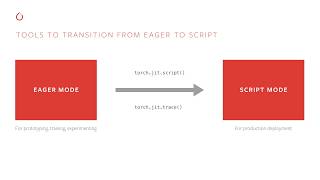
Research to Production: PyTorch JIT/TorchScript Updates - Michael Suo
PyTorch
Quantization - Dmytro Dzhulgakov
PyTorch
PyTorch ONNX Export Support - Lara Haidar, Microsoft
PyTorch
Apex - Michael Carilli, NVIDIA
PyTorch
Dataloader Design for PyTorch - Tongzhou Wang, MIT
PyTorch
Linear Algebra in PyTorch - Vishwak Srinivasan, CMU
PyTorch
PyTorch Mobile - David Reiss
PyTorch
Model Interpretability with Captum - Narine Kokhilkyan
PyTorch
Detectron2 - Next Gen Object Detection Library - Yuxin Wu
PyTorch
Speech Extensions to Fairseq - Dmytro Okhonko
PyTorch
PyTorch on Google Cloud TPUs - Google, Salesforce, Facebook
PyTorch
PyTorch Summer Hackathon Winners - Joe Spisak, Sebastien Arnold, Tristan Deleu
PyTorch
PyTorch in Robotics - Yisong Yue, Caltech
PyTorch
StanfordNLP - Yuhao Zhang, Stanford
PyTorch
Sotabench for Reproducible Research - Robert Stojnic, Papers with Code
PyTorch
Collaborative Natural Language Inference - Sasha Rush, Cornell
PyTorch
Privacy Preserving AI - Andrew Trask, OpenMined
PyTorch
CrypTen - Laurens van der Maaten
PyTorch
PyTorch at Uber - Sidney Zhang, Uber
PyTorch
PyTorch at Tesla - Andrej Karpathy, Tesla
PyTorch
PyTorch at Microsoft - Saurabh Tiwary, Microsoft
PyTorch
PyTorch at Dolby Labs - Vivek Kumar, Dolby Labs
PyTorch
PyTorch Developer Conference 2019 - Panel Discussion
PyTorch
Using deep learning and PyTorch to power next gen aircraft at Caltech
PyTorch
Named Tensors, Model Quantization, and the Latest PyTorch Features - Part 1
PyTorch
TorchScript and PyTorch JIT | Deep Dive
PyTorch
Announcing the PyTorch Global Summer Hackathon 2020
PyTorch
Opening Up the Black Box: Model Understanding with Captum and PyTorch
PyTorch
PyTorch Mobile Runtime for Android
PyTorch
Torchvision in 5 minutes
PyTorch
3D Deep Learning with PyTorch3D
PyTorch
What is Torchtext?
PyTorch
TorchAudio: A Quick Intro
PyTorch
PyTorch Mobile Runtime for iOS
PyTorch
PySlowFast: Deep learning with Video
PyTorch
PyTorch Pruning | How it's Made by Michela Paganini
PyTorch
Measuring Fairness in Machine Learning Systems
PyTorch
PyTorch for Hackathons
PyTorch
Related Reads
📰
📰
📰
📰
Head-level attention fusion trims compute
Dev.to · Papers Mache
Mastering Statistics for Machine Learning: From Core Fundamentals to Advanced Concepts
Medium · Machine Learning
Mastering Statistics for Machine Learning: From Core Fundamentals to Advanced Concepts
Medium · Deep Learning
Mastering Statistics for Machine Learning: From Core Fundamentals to Advanced Concepts
Medium · LLM
🎓
Tutor Explanation
 DeepCamp AI