Fully local multi-agent systems with LangGraph
Skills:
Agent Foundations90%Multi-Agent Systems90%Tool Use & Function Calling80%Autonomous Workflows80%
Following the release of OpenAI's new Agents SDK, we've seen a lot of interest in multi-agent workflows. Here, we discuss two different approaches for multi-agent systems - swarm and supervisor - and showcase two different LangGraph packages that make it easy to implement these approaches. We show that both can be run locally with Qwen2.5-14b (via Ollama), which excels at tool-calling. We also show LangGraph Studio and LangSmith traces to provide debugging and observability into these systems.
LangGraph-swarm:
https://github.com/langchain-ai/langgraph-swarm-py
LangGraph-supervisor:
https://github.com/langchain-ai/langgraph-supervisor-py
Video notes:
https://mirror-feeling-d80.notion.site/Fully-Local-Multi-Agent-1b5808527b178066bde0ed981b27998c?pvs=4
Chaters:
00:00 - Introduction to Multi-Agent Systems and Open Eye SDK
00:30 - Demo: Flight and Hotel Booking Multi-Agent System
01:10 - Running Locally with Qwen models
02:00 - What is an Agent? (Tool Calling in a Loop)
03:00 - Finding Local Models for Agent Development
04:00 - Berkeley Function Calling Leaderboard and Qwen Models
05:00 - Why Multi-Agent Systems Matter
06:00 - Supervisor vs. Swarm Architecture Explained
07:15 - Trade-offs Between Different Multi-Agent Approaches
08:00 - Building Multi-Agent Systems in a Notebook
09:00 - Understanding the Agent Implementation
10:00 - Setting up the Supervisor Architecture
11:00 - Tracing and Visualization with LangSmith
12:00 - Choosing the Right Local Models for Your Agents
12:45 - Conclusion and Final Thoughts
Watch on YouTube ↗
(saves to browser)
Sign in to unlock AI tutor explanation · ⚡30
Playlist
Uploads from LangChain · LangChain · 0 of 60
← Previous
Next →
1
 2
2
 3
3
 4
4
 5
5
 6
6
 7
7
 8
8
 9
9
 10
10
 11
11
 12
12
 13
13
 14
14
 15
15
 16
16
 17
17
 18
18
 19
19
 20
20
 21
21
 22
22
 23
23
 24
24
 25
25
 26
26
 27
27
 28
28
 29
29
 30
30
 31
31
 32
32
 33
33
 34
34
 35
35
 36
36
 37
37
 38
38
 39
39
 40
40
 41
41
 42
42
 43
43
 44
44
 45
45
 46
46
 47
47
 48
48
 49
49
 50
50
 51
51
 52
52
 53
53
 54
54
 55
55
 56
56
 57
57
 58
58
 59
59
 60
60

Chat With Your Documents Using LangChain + JavaScript
LangChain
LangChain SQL Webinar
LangChain
LangChain "OpenAI functions" Webinar
LangChain
LangSmith Launch
LangChain
LangChain x Pinecone: Supercharging Llama-2 with RAG
LangChain
LangChain Expression Language
LangChain
Building LLM applications with LangChain with Lance
LangChain
Benchmarking Question/Answering Over CSV Data
LangChain
LangChain "RAG Evaluation" Webinar
LangChain
Fine-tuning in Your Voice Webinar
LangChain
Tabular Data Retrieval
LangChain
Building an LLM Application with Audio by AssemblyAI
LangChain
Superagent Deepdive Webinar
LangChain
Lessons from Deploying LLMs with LangSmith
LangChain
Shortwave Assistant Deepdive Webinar
LangChain
Cognitive Architectures for Language Agents
LangChain
Effectively Building with LLMs in the Browser with Jacob
LangChain
Data Privacy for LLMs
LangChain
"Theory of Mind" Webinar with Plastic Labs
LangChain
LangChain Templates
LangChain
Using Natural Language to Query Postgres with Jacob
LangChain
Building a Research Assistant from Scratch
LangChain
Benchmarking RAG over LangChain Docs
LangChain
Skeleton-of-Thought: Building a New Template from Scratch
LangChain
Benchmarking Methods for Semi-Structured RAG
LangChain
LangSmith Highlights: Getting Started
LangChain
LangSmith Highlights: Debugging
LangChain
LangSmith Highlights: Datasets
LangChain
LangSmith Highlights: Evaluation
LangChain
LangSmith Highlights: Human Annotation
LangChain
LangSmith Highlights: Monitoring
LangChain
LangSmith Highlights: Hub
LangChain
SQL Research Assistant
LangChain
Getting Started with Multi-Modal LLMs
LangChain
Build a Full Stack RAG App With TypeScript
LangChain
Auto-Prompt Builder (with Hosted LangServe)
LangChain
LangChain v0.1.0 Launch: Introduction
LangChain
LangChain v0.1.0 Launch: Observability
LangChain
LangChain v0.1.0 Launch: Integrations
LangChain
LangChain v0.1.0 Launch: Composability
LangChain
LangChain v0.1.0 Launch: Streaming
LangChain
LangChain v0.1.0 Launch: Output Parsing
LangChain
LangChain v0.1.0 Launch: Retrieval
LangChain
LangChain v0.1.0 Launch: Agents
LangChain
Build and Deploy a RAG app with Pinecone Serverless
LangChain
Hosted LangServe + LangChain Templates
LangChain
LangGraph: Intro
LangChain
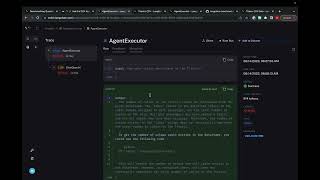
LangGraph: Agent Executor
LangChain
LangGraph: Chat Agent Executor
LangChain
LangGraph: Human-in-the-Loop
LangChain
LangGraph: Dynamically Returning a Tool Output Directly
LangChain
LangGraph: Respond in a Specific Format
LangChain
LangGraph: Managing Agent Steps
LangChain
LangGraph: Force-Calling a Tool
LangChain
LangGraph: Multi-Agent Workflows
LangChain
Streaming Events: Introducing a new `stream_events` method
LangChain
Building a web RAG chatbot: using LangChain, Exa (prev. Metaphor), LangSmith, and Hosted Langserve
LangChain
OpenGPTs
LangChain
Open Source RAG with Nomic's New Embedding Model (and ChromaDB and Ollama)
LangChain
LangGraph: Persistence
LangChain
More on: Agent Foundations
View skill →




Related AI Lessons
Chapters (15)
Introduction to Multi-Agent Systems and Open Eye SDK
0:30
Demo: Flight and Hotel Booking Multi-Agent System
1:10
Running Locally with Qwen models
2:00
What is an Agent? (Tool Calling in a Loop)
3:00
Finding Local Models for Agent Development
4:00
Berkeley Function Calling Leaderboard and Qwen Models
5:00
Why Multi-Agent Systems Matter
6:00
Supervisor vs. Swarm Architecture Explained
7:15
Trade-offs Between Different Multi-Agent Approaches
8:00
Building Multi-Agent Systems in a Notebook
9:00
Understanding the Agent Implementation
10:00
Setting up the Supervisor Architecture
11:00
Tracing and Visualization with LangSmith
12:00
Choosing the Right Local Models for Your Agents
12:45
Conclusion and Final Thoughts
🎓
Tutor Explanation
 DeepCamp AI