Environments and Benchmarks for Cybersecurity Agents - Andy Zhang, Stanford University
Environments and Benchmarks for Cybersecurity Agents - Andy Zhang, Stanford University
AI agents are poised to significantly reshape cybersecurity, for both attackers and defenders. To responsibly harness this potential, we need rigorous benchmarks and environments that capture the complexity of real-world systems, provide meaningful measurements, and track the progress of agents over time. In this talk, we will outline desiderata for cybersecurity agent benchmarks and environments. We will begin with Cybench, which evaluates offensive capabilities using 40 professional-level Capture the Flag (CTF) tasks, introducing innovations such as verifiable tasks, first-solve time as a metric linked to real-world expertise, and log-linear difficulty scaling. Then, we introduce BountyBench, the first framework to evaluate both offensive and defensive AI cyber-capabilities directly on evolving real-world systems. BountyBench instantiates 25 complex, production-like environments—complete with servers, databases, and large codebases—and ties evaluation to the vulnerability lifecycle across three task types: Detect, Exploit, and Patch. By grounding tasks in 40 real bug bounties with monetary values ($10–$30,485), BountyBench quantifies AI agent impact in real dollar terms, and highlights asymmetries between attack and defense. We situate this work within broader analyses of frontier AI’s impact on cybersecurity, emphasizing the need for more benchmarks and environments.
Watch on YouTube ↗
(saves to browser)
Sign in to unlock AI tutor explanation · ⚡30
Playlist
Uploads from PyTorch · PyTorch · 0 of 60
← Previous
Next →
1
 2
2
 3
3
 4
4
 5
5
 6
6
 7
7
 8
8
 9
9
 10
10
 11
11
 12
12
 13
13
 14
14
 15
15
 16
16
 17
17
 18
18
 19
19
 20
20
 21
21
 22
22
 23
23
 24
24
 25
25
 26
26
 27
27
 28
28
 29
29
 30
30
 31
31
 32
32
 33
33
 34
34
 35
35
 36
36
 37
37
 38
38
 39
39
 40
40
 41
41
 42
42
 43
43
 44
44
 45
45
 46
46
 47
47
 48
48
 49
49
 50
50
 51
51
 52
52
 53
53
 54
54
 55
55
 56
56
 57
57
 58
58
 59
59
 60
60

What is PyTorch?
PyTorch
PyTorch Tutorial: A Quick Preview
PyTorch
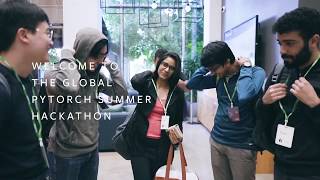
PyTorch Summer Hackathon 2019
PyTorch
Tips and Tricks on Hacking with PyTorch: A Quick Tutorial by Brad Heintz
PyTorch
PyTorch 1.2 and PyTorch Hub: A Quick Introduction by Soumith Chintala and Ailing Zhang
PyTorch
Torchtext 0.4 with Supervised Learning Datasets: A Quick Introduction by George Zhang
PyTorch
Torchaudio 0.3 with Kaldi Compatibility, New Transforms: A Quick Introduction by Jason Lian
PyTorch
Torchvision 0.4 with Support for Video: A Quick Introduction by Francisco Massa
PyTorch
Introduction to Machine Learning for Developers at F8 2019
PyTorch
Powered by PyTorch at F8 2019
PyTorch
Developing and Scaling AI Experiences at Facebook with PyTorch at F8 2019
PyTorch
New Approaches to Image and Video Reconstruction Using Deep Learning at Facebook at F8 2019
PyTorch
PyTorch Developer Conference 2018: Recap
PyTorch
PyTorch Developer Conference 2018: Keynote & Deep Dive
PyTorch
PyTorch Developer Conference 2018: Production & Research Sessions
PyTorch
PyTorch Developer Conference 2018: Cloud & Academia Sessions
PyTorch
PyTorch Developer Conference 2018: Enterprise, Education, & Future of AI Panel
PyTorch
PyTorch Developer Conference 2019 | Full Livestream
PyTorch
PyTorch Developer Conference 2019: Recap
PyTorch
PyTorch Developer Conference Keynote - Mike Schroepfer
PyTorch
What’s new in PyTorch 1.3 - Lin Qiao
PyTorch
PyTorch Front-End Features: Named Tensors and Type Promotion - Gregory Chanan
PyTorch
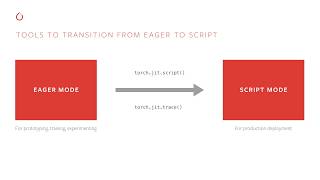
Research to Production: PyTorch JIT/TorchScript Updates - Michael Suo
PyTorch
Quantization - Dmytro Dzhulgakov
PyTorch
PyTorch ONNX Export Support - Lara Haidar, Microsoft
PyTorch
Apex - Michael Carilli, NVIDIA
PyTorch
Dataloader Design for PyTorch - Tongzhou Wang, MIT
PyTorch
Linear Algebra in PyTorch - Vishwak Srinivasan, CMU
PyTorch
PyTorch Mobile - David Reiss
PyTorch
Model Interpretability with Captum - Narine Kokhilkyan
PyTorch
Detectron2 - Next Gen Object Detection Library - Yuxin Wu
PyTorch
Speech Extensions to Fairseq - Dmytro Okhonko
PyTorch
PyTorch on Google Cloud TPUs - Google, Salesforce, Facebook
PyTorch
PyTorch Summer Hackathon Winners - Joe Spisak, Sebastien Arnold, Tristan Deleu
PyTorch
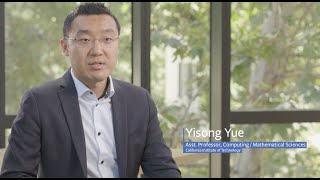
PyTorch in Robotics - Yisong Yue, Caltech
PyTorch
StanfordNLP - Yuhao Zhang, Stanford
PyTorch
Sotabench for Reproducible Research - Robert Stojnic, Papers with Code
PyTorch
Collaborative Natural Language Inference - Sasha Rush, Cornell
PyTorch
Privacy Preserving AI - Andrew Trask, OpenMined
PyTorch
CrypTen - Laurens van der Maaten
PyTorch
PyTorch at Uber - Sidney Zhang, Uber
PyTorch
PyTorch at Tesla - Andrej Karpathy, Tesla
PyTorch
PyTorch at Microsoft - Saurabh Tiwary, Microsoft
PyTorch
PyTorch at Dolby Labs - Vivek Kumar, Dolby Labs
PyTorch
PyTorch Developer Conference 2019 - Panel Discussion
PyTorch
Using deep learning and PyTorch to power next gen aircraft at Caltech
PyTorch
Named Tensors, Model Quantization, and the Latest PyTorch Features - Part 1
PyTorch
TorchScript and PyTorch JIT | Deep Dive
PyTorch
Announcing the PyTorch Global Summer Hackathon 2020
PyTorch
Opening Up the Black Box: Model Understanding with Captum and PyTorch
PyTorch
PyTorch Mobile Runtime for Android
PyTorch
Torchvision in 5 minutes
PyTorch
3D Deep Learning with PyTorch3D
PyTorch
What is Torchtext?
PyTorch
TorchAudio: A Quick Intro
PyTorch
PyTorch Mobile Runtime for iOS
PyTorch
PySlowFast: Deep learning with Video
PyTorch
PyTorch Pruning | How it's Made by Michela Paganini
PyTorch
Measuring Fairness in Machine Learning Systems
PyTorch
PyTorch for Hackathons
PyTorch
Related AI Lessons
⚡
⚡
⚡
⚡
How to secure your macOS games
Dev.to · GuardingPearSoftware
The Hidden Risk in Emergency Evacuation Plans Nobody Talks About
Medium · Cybersecurity
3 Key Takeaways on Why Cybersecurity Product Management Matters More Than Ever
Medium · Cybersecurity
The Coding Challenge That Came for Your development Directory: Anatomy of a Job Interview Infostealer
Dev.to · Alex Chen
🎓
Tutor Explanation
 DeepCamp AI