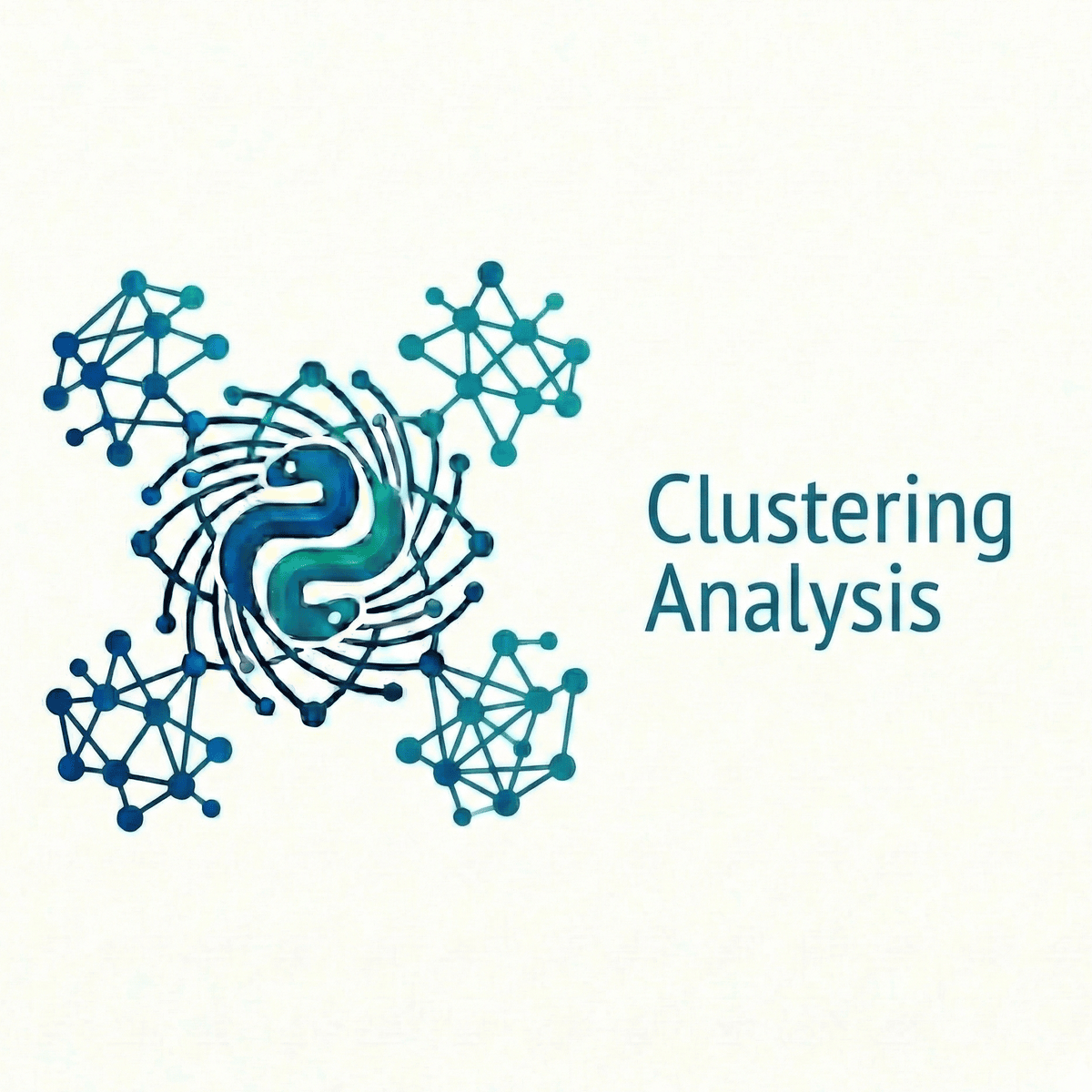
Clustering Analysis
The "Clustering Analysis" course introduces students to the fundamental concepts of unsupervised learning, focusing on clustering and dimension reduction techniques. Participants will explore various clustering methods, including partitioning, hierarchical, density-based, and grid-based clustering. Additionally, students will learn about Principal Component Analysis (PCA) for dimension reduction. Through interactive tutorials and practical case studies, students will gain hands-on experience in applying clustering and dimension reduction techniques to diverse datasets.
By the end of this course, students will be able to:
1. Understand the principles and significance of unsupervised learning, particularly clustering and dimension reduction.
2. Grasp the concepts and applications of partitioning, hierarchical, density-based, and grid-based clustering methods.
3. Explore the mathematical foundations of clustering algorithms to comprehend their workings.
4. Apply clustering techniques to diverse datasets for pattern discovery and data exploration.
5. Comprehend the concept of dimension reduction and its importance in reducing feature space complexity.
6. Implement Principal Component Analysis (PCA) for dimension reduction and interpret the reduced feature space.
7. Evaluate clustering results and dimension reduction effectiveness using appropriate performance metrics.
8. Apply clustering and dimension reduction techniques in real-world case studies to derive meaningful insights.
Throughout the course, students will actively engage in tutorials and case studies, strengthening their clustering analysis and dimension reduction skills and gaining practical experience in applying these techniques to diverse datasets. By achieving the learning objectives, participants will be well-equipped to excel in unsupervised learning tasks and make informed decisions using clustering and dimension reduction techniques.
What You'll Learn
Clustering analysis and dimension reduction techniques for unsupervised learning
Watch on External: Coursera ↗
(saves to browser)
Sign in to unlock AI tutor explanation · ⚡30
More on: Unsupervised Learning
View skill →






Related AI Lessons
⚡
⚡
⚡
⚡
The Nervous System of the Telco: Unlocking the Real-Time Power of the Network Element Interfaces…
Medium · Data Science
Enhanced RFM Analysis for Customer Segmentation using K-Prototypes
Medium · Machine Learning
One Survey Asked Rich People Ten Times More Often Than Poor People.
Medium · Data Science
Beyond the Credit Score: What 1.3 Million Loans Reveal About Who Actually Repays
Medium · Data Science
🎓
Tutor Explanation

 DeepCamp AI