Beyond Exact Match Anchor Text To Next Generation Link Signals - Whiteboard Friday
Key Takeaways
The video explores next-generation link signals beyond exact match anchor text, discussing the devaluation of exact match anchor text by search engines
Full Transcript
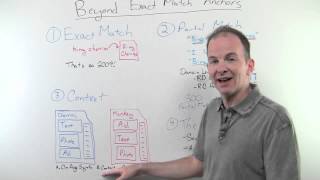
Howdy, SEO. Welcome to another edition of Whiteboard Friday. My name is Cyrus. I do SEO here at SEO. This week, I want to talk about anchor text. Every week I get emails, I'm sure you do too, from web masters asking for a link and they always want that exact match anchor text for the specific term they're trying to rank for. It's a good practice. It works well. Uh but things are changing in the SEO world. In the old days, if you wanted to rank for something, your your tactic was very simple. Uh if your target keyword was Bing cherries, you just tried to get as many exact match anchor text that said Bing cherries as possible to your website. But those of you who've been practicing SEO for a long time noticed something, you know, about a year and a half ago or so that this method didn't work as well as it used to. If you got too many exact match anchor text, it could actually hurt you. Um, that's why I say that's such a 2009 tactic. Now, with the with um Google Panda update, we're talking about a whole other other realm of ranking signals such as engagement metrics, social signals, but we don't want to forget these link signals because even if exact match isn't the end all beall, there's still a lot of information that Google and other search engines are getting from these from these link signals. That's what we want to talk about today. Now, one of the most overlooked type of anchor text links is the partial match. And I'm in love with partial match. I I really quit going for these a long time ago. Now, it's all about partial match. And people sort of misunderstand what partial match is. The technical definition of partial match is any anchor text that contains at least one of your keyword phrases. So, if your keyword phrase was Bing cherries, uh these would all count as partial match anchor text. Bing are the best cherries. I love cherries. Bing is awesome. Yeah, it's probably not what they're talking about, but it's still technically partial match anchor text. Now, if you're a fan of the 2011 ranking factors that SEO Mods did, we'll link to it in the uh text below. We took a look, one of the factors we looked at was the power of partial match anchor text versus exact match anchor text. Now on general if you look at the root domain metrics uh the p the correlation between the number of exact match anchor text was 0.17 all things being equal the power of partial match anchor text was 0.25 significantly more power and more correlation between the number of partial match anchor text and exact match anchor text. So, all things being equal, it seems like people rank higher just a little bit, if they have more partial match as opposed to these exact match that everybody's always going for. This is how I'd like to explain it. If you gave me a choice, if you could say, I could have any 300 links I want, but they have to be 300 partial match anchor text or 300 exact match anchor text. A lot of web masters would go for this, thinking that's the best policy. Statistically though, this is your best choice. This is going to contain some of your exact matches, but you're going to have such a bigger broadtail uh longtail queries that you can rank for. You're going to get more traffic. You're going to rank better for your targeted keywords. And this method is futurep proof as Google deemphasizes these exact matches. This is going to take you forward in the long run. Those links are going to have a lot longer long-term value and it's just going to give you a better natural looking link profile. Other link signals. How do you make these links links count if you're if you're not getting the exact match anchor text? What are other context signals that Google could be could be looking at? Well, first of all, they're going to be looking at the on page signals of the page that's giving you the link. If you're trying to rank rank for Bing cherries, you want the title tag of that cherry title tag of that page to be cherries. Uh there's an article Rand wrote a couple years ago, the perfectly optimized page. Uh that all those onpage signals, those are what you want on the page linking to you. The the title tag, the H1 headers, uh keyword usage, alt text in the photo, those are all signals to Google that this page is about Bing Cherries. It's linking to you. You're more likely to interpret that as this link is about Bing Cherries. um context. Google is getting s increasingly more sophisticated at being able to do block analysis and determine what the page is about. So if you have a section of ads, Google can kind of tell that that's a section of ads. You have a link in that section of ads probably not going to count for very much. Same same on the sidebar. If you have a link about being cherries on a page about monkeys and it's hidden in this link of text, well, the the context and the placement of that link, Google says that's probably not about cherries. It looks like a looks kind of like a paid ad and that's not going to count for very much. So, context on page signals, all those traditional onpage optimization, those things that you would want on your own page, you want to look for from the link. Google is spending a lot of money to learn how to understand pages, to learn context. The days of the dumb search engine are kind of leaving us behind. Google's getting better and better at figuring out what these pages are about. Uh if you read Google patents, um which a lot of us like to do, SEO by the seas, great blog to read. We they're seeing patents such as sentiment analysis, such as in uh online reviews. Google Google will actually try to figure out if that review is a positive review or a negative review. So, even if you get the link, if there are words around that like Joe's Pizza sucks, well, that may that may not be in the future as good a link as Joe's Pizza is awesome. Now, this is all theory. We don't have the data and the facts to back this up, but the patents tell us this is where the future is going. Author profiling, the author tags that Google is using. They might be asking, is this person an authority? If Rand Fishkin links to you with anchor text about SEO, Google may in the future decide Ran Fishkin is an expert about SEO, that link is so much more important than Joe Schmo SEO because they know his author. They know his author profile. In the end, this system was easy to gain. Exact match profiles very easy to gain. That's why it went away. In the future, it's much harder to gain. You have search engines are becoming sophisticatedly more like human beings. And so when we look at these pages, we have to be human as SEOs. We have to judge these pages like a human. We have to write them like a human. We have to link like a human. And the higher quality you do that, the longer your strategy is going to work. And anchor text, linking signals, they're all going to work for you. That's all. Thank you very much.
Original Description
We're starting to see evidence that exact match anchor text is starting to be devalued by search engines, and expect this trend to continue. With this latest development, is it time to give up on link building? Not at all! Recognizing the link signals search engines collect can help you make the most out of your links.
Check out the blog post for the full video transcription: http://www.seomoz.org/blog/beyond-exact-match-anchor-text-to-next-generation-link-signals-whiteboard-friday
Watch on YouTube ↗
(saves to browser)
Sign in to unlock AI tutor explanation · ⚡30
Playlist
Uploads from Moz · Moz · 32 of 60
1
 2
2
 3
3
 4
4
 5
5
 6
6
 7
7
 8
8
 9
9
 10
10
 11
11
 12
12
 13
13
 14
14
 15
15
 16
16
 17
17
 18
18
 19
19
 20
20
 21
21
 22
22
 23
23
 24
24
 25
25
 26
26
 27
27
 28
28
 29
29
 30
30
 31
31
 ▶
▶
 33
33
 34
34
 35
35
 36
36
 37
37
 38
38
 39
39
 40
40
 41
41
 42
42
 43
43
 44
44
 45
45
 46
46
 47
47
 48
48
 49
49
 50
50
 51
51
 52
52
 53
53
 54
54
 55
55
 56
56
 57
57
 58
58
 59
59
 60
60

The Moz YouTube Contest
Moz
Age of Site and Old Links - Whiteboard Friday
Moz
Creative Ways to Get Links from a Reluctant Target - Whiteboard Friday
Moz
Interlinking Your Sites - Whiteboard Friday
Moz
International SEO: Where to Host and How to Target - Whiteboard Friday
Moz
When Keyword Targeting Gets Tough - Whiteboard Friday Live
Moz
How SEOmoz Increased Our Twitter Followers by 250% - Whiteboard Friday
Moz
Outreach for Linkbuilding with Tom Critchlow - Whiteboard Friday
Moz
Preventing Link-Based Penalties - Whiteboard Friday
Moz
Top 5 SEO Questions from Customers - Whiteboard Friday
Moz
Which Link Metrics Should I Use? Part 2 of 2 - Whiteboard Friday
Moz
Correlation Data for SEO and Social Media Analysis - Part 1 - Whiteboard Friday
Moz
Correlation Data for SEO and Social Media Analysis - Part 2 - Whiteboard Friday
Moz
SEO Link Analysis Pitfalls - Whiteboard Friday
Moz
Cross-Domain Canonical the New 301 Redirect? - Whiteboard Friday
Moz
SEOmoz Google Analytics Setup - Whiteboard Friday
Moz
Competitive Link Analysis Tips Using Open Site Explorer - Whiteboard Friday
Moz
Mobile SEO Tips For Everyone - Filmed on an iPad 2 - Whiteboard Friday
Moz
Project Management Tips for Marketing Teams - Whiteboard Friday
Moz
Duane Forrester from Bing Talks Social, Schema, and Honey Badger - Whiteboard Friday
Moz
How Google's Panda Update Changed SEO Best Practices Forever - Whiteboard Friday
Moz
SEO Interview Questions - Whiteboard Friday Moz
Moz
Google's Negative Ranking Factors - Whiteboard Friday
Moz
Is External Linking Good For SEO? - Whiteboard Friday
Moz
Mixing Viral Content With Business Content - Whiteboard Friday
Moz
Replicate Google's Panda Questionnaire - Whiteboard Friday
Moz
Tactics for Early Adopter Marketers on Google Plus - Whiteboard Friday
Moz
What is Google's PageRank Good For? - Whiteboard Friday
Moz
Article Marketing: Mostly A Scam - Whiteboard Friday
Moz
Statistics for SEO: Don't Make These Mistakes - Whiteboard Friday
Moz
An SEO Checklist for New Sites - Whiteboard Friday - Search Engine Optimization
Moz
Beyond Exact Match Anchor Text To Next Generation Link Signals - Whiteboard Friday
Moz
Keyword Metrics for SEO (And Driving Actions from Data) - Whiteboard Friday
Moz
Local SEO Checklist for New Sites - Whiteboard Friday
Moz
Title Tags - Is 70 Characters the Best Practice? - Whiteboard Friday
Moz
Google Hides Search Referral Data with New SSL Implementation - Emergency Whiteboard Friday
Moz
How Big is Your Long Tail? - Whiteboard Friday
Moz
Keyword Swing - SEOmoz YouTube Contest Winner
Moz
Retargeting Through Affiliates - SEOmoz YouTube Contest Winner
Moz
The Perfect Social Media Metadata For Wordpress - SEOmoz YouTube Contest Winner
Moz
The PR Funnel - SEOmoz YouTube Contest Winner
Moz
Developing a User-Centric Content Strategy for Effective Content Marketing - Moz Contest Winner
Moz
Black Hat vs White Hat SEO - SEOmoz YouTube Contest Winner
Moz
Video SEO Tip for Google Plus - SEOmoz YouTube Contest Winner
Moz
Content Marketing: The Good, the Bad and the Ugly - Moz YouTube Contest Winner
Moz
eCommerce SEO - Moz YouTube Contest Winner
Moz
Ten Painless Tactics To Earn Attention On Twitter - Whiteboard Friday
Moz
Mozcation Milwaukee 2012 Tom Snyder Part 2
Moz
The Big Picture of CRO - Rand Fishkin - Moz
Moz
Portsmouth Mozcation Walter Elly Part 1
Moz
Consultant Vendor Relationships - Whiteboard+
Moz
Structured Social Sharing Formula - Whiteboard Friday
Moz
4 Content Marketing Focused Tips for Growing Your Followers & Fans - Whiteboard Friday
Moz
Top Ten Twitter Tactics Part 2 - Whiteboard Friday
Moz
Whiteboard Friday on Google's Penguin Update
Moz
Agile Marketing - Whiteboard Friday Moz
Moz
Improving Social & Subscription Calls to Action - Whiteboard Friday
Moz
Eight Link Building Tips - Whiteboard Friday
Moz
Consultant Vendor Relationships - Whiteboard Friday
Moz
Smarter Internal Linking - Whiteboard Friday
Moz
Related Reads
📰
📰
📰
📰
Your Pipeline Is 28.8h Behind: Catching Travel Sentiment Leads with Pulsebit
Dev.to · Pulsebit News Sentiment API
Affordable SEO Services: Why Smart Businesses Invest in Long-Term Growth
Medium · SEO
Real Estate Lead Conversion Optimization: The Data Integrity Gap That Kills Your ROI
Dev.to AI
How to Optimize Your Website for AI Search Engines and Google AI Overviews in 2026
Medium · SEO
🎓
Tutor Explanation

 DeepCamp AI