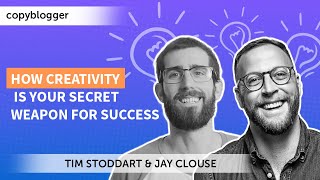
Jay Clouse: How Creativity is Your Secret Weapon for Success
Skills:
Startup Basics80%Product Strategy70%Product Metrics60%AI Product Management50%Project Management Foundations50%
Key Takeaways
Jay Clouse discusses how creativity is a secret weapon for success, sharing his experiences as a writer, podcaster, and community manager, and providing insights on entrepreneurship, membership sites, and community building.
Full Transcript
this episode of the copyblogger podcast is brought to you by digital commerce partners every online business needs traffic but the wrong traffic is worthless and if you're paying for traffic that doesn't convert it's worse than worthless what you need are qualified prospects primed to purchase your digital products and services digital commerce partners offers a strategic approach to traffic that helps your business win big since 2006 copyblogger founder brian clark has been teaching creative content marketing and effective seo and we've practiced what we preached building an eight-figure bootstrapped software online education and hosting business now you're the one with the great digital products maybe an online course virtual community or a sas product and you've got a tried and true sales funnel that converts the right people into customers well it's time to fill that funnel not with any old traffic you need your type of people and our strategic content marketing process will bring them to you new customers are the lifeblood of your digital business and yet it's the quality of your products and services that will ultimately determine your level of success with digital commerce as your partner the return on investment will be clear your existing offers will be more profitable and you can focus on developing new products and growing your brand we build profitable digital commerce products and businesses for ourselves and those we work with for us providing content marketing and seo services to clients was the last step not the first as the agency production arm of content marketing pioneer copy blogger digital commerce partners works with you to deliver the prospects you need to succeed let's explore how we can help your business win to learn more simply go to digitalcommerce.com that's digitalcommerce.com hello and welcome to the copyblogger podcast my name is tim stoddart thank you so much for joining me in today's episode we speak with the founder of creative elements j klaus jay is a writer a podcaster and a community manager in jay's podcast creative elements he explores how remarkable creators found creative independence through narrative interviews jay dives into the nitty-gritty of how the world's best creators make a living from their art and creativity in this episode we talk about how jay works with entrepreneurs and how he uses creativity as a secret weapon that gives them a distinct advantage we also go back and forth in a fun brainstorm session to try to find a title for one of my products it was a really fun exercise and i think you'll enjoy it lastly we talk about jay's framework for managing a successful membership site jay is the manager of the smart passive income membership and his advice to me was so helpful that i immediately took advantage and applied it to our own membership site copy blogger pro i love this chat jay is super kind down to earth it was a great conversation and i know you'll love it as well so please help me welcome jay klaus jay what's up man thank you so much for joining me on my podcast i'm really looking forward to our chat what's up tim we have roughly the same microphone but you have like the better version yeah but what you have like this stand drives me crazy because i can never get it to like point directionally at me and so i'm like too animated when i talk you know what i mean and i always feel like i have to be really really mindful of it and plus it takes up like half my screen i gotta i gotta up my setup a little bit flip it you just gotta insert the yeah the shock mount so it's you got the boom effect right now people are like make sure you get tim's audio yeah totally man cool well thanks so much for joining me i i we were talking a little bit before we started recording like i feel like i know you um we're in a lot of the same internet circles sort of speak and i've been following your work for a while so i'm really looking forward to it yeah man likewise twitter is a cool place in that way uh because it's fun we've never chatted one-on-one like this but we can drop on and it's just like i don't feel like i have to have on any errors or anything i know tim knows me we can hang out we can have a good time yeah cool all right well let's rock and roll i start my podcast with the same question every time the background photo of your twitter bio speaking of twitter i want you to tell me about it and tell me what it means to you man i have messed with this are we can we cuss on this oh yeah so much um because i just don't think it needs to be like anything um so right now what it is is just like some brush strokes in different colors that are the brand colors of the brand that i had an agency help me with for all of my writing in my workshops my podcast and things like that um it's just called a pattern i love patterns now that i know what patterns are in branding speak and uh it pulls things together but also like it just looks nice without being distracting or having a ton of text you don't worry about like resizing on things because it's just it's just a pattern it's like your shirt can go infinitely well you mentioned your brand um i mean i'll just come out and say it like you've built a real great portfolio of work that you've created over the years um you're a great writer you're a great podcaster i don't know if if you're a designer and one thing that i always notice about your website is the design of it so whoever did it did a great job um i like to just open these really conversationally like what got you in to the idea of generating content online got you into the idea of like of serving an audience and and building a business that way because your brand is um i don't like to use the word professional so much because i think like there's times where being unprofessional is actually what you're going for right but it's it's just clean and polished and it's clear that you've put so much work into it man so i want to hear about it dude that means a lot thank you um i have because the people i like to know and talk to and help are creative people and they have like pretty discerning taste and design is such a uh it's such a big important factor in the way that we trust things or believe in things or follow things like any any brand we align with as people we kind of like there's uh there's like it rubs off on you in such a way where if you identify with this or you associate with this it's going to have some sort of reflection on you so people creative people in particular i think are really mindful of that whether it's conscious or subconscious and so they're just very discerning in what they align with and it has to look and feel good and it has to be aligned with them so i'm not a designer i really wish i was this that is like the one skill set that i just badly badly badly wish that i possessed but um i just realized that if my things look legitimate like i literally just think does this look legit and if it looks legit then it will back up what i'm saying which i think is usually pretty good like if my if you listen to the podcast if you read what i write generally people are like that's pretty good and now if you pair that with it just looking legitimate i think it's a winning package and that's pretty much what i go for i did implement the brand on the website myself which is great but you know it all started really in 2017 in january i was working a job at a healthcare startup and i was not feeling it [Laughter] i had like just gotten out of this other business that i had helped start and we went through accelerator and we sold it and it's like woohoo we win but you know there was like this identity issue where in that company i was a co-founder uh like the number two guy and then when it was over i was nothing unless i started something which i didn't know what i wanted to start i didn't want to start another software platform um taking a job as a product manager like i had the skill set but there's just something about when you run your own thing you have more access to anybody and anything that you want because there's just this undeniable like invisible hierarchy of who you can talk to based on like what you do and it sucks but i wasn't feeling the job so i was working with a creative coach named chris mcallister and he helped me identify that i had this very limiting belief that i was not creative that i was just like an operational um awesome guy that can take ideas and make them real but i don't have any ideas of my own and once i identified that i realized okay sucks to believe that how can i stop believing that and the answer was writing every day so i started writing every day and that was the start of it that is such an interesting concept because that goes perfectly into what i was hoping to talk about next you have this concept of creativity around your brand and man i think about the word creativity a lot because it's one of those words that means like everything and also means nothing at the same time you know and so and so i i think when we hear creativity we think of art right we think of maybe drawing or painting or or i don't know just a a creative um outlet in some some kind of art but creativity is so much more than that like it took me some time to realize that i'm also a creative person but i am a terrible designer i'm a pretty good writer i like to think um but creativity has manifested itself for me in a way that isn't typically thought of as you know that narrow definition and so i really think it's cool how you're you're taking this concept and expanding it where like you said it's a limiting belief and creativity can mean anything that you think it can i've i've expressed my creativity in systems really like i'm a good executive um i'm really good at creating workflows and processes and systems the the book god i've mentioned this book on my podcast so many times i'm sure people are sick of hearing about it but it's called the e-myth by michael gerber and just this idea that you can take something that is a skill and create processes and systems around it to like scale something that traditionally is unscalable it really just gets like my creative brain flowing and so that weird almost idiosyncratic skill set has turned into this whole way for me to be able to express my creativity in a way that like i said wouldn't traditionally be thought of so i think that's like a statement even more than a question but i want to hear how how that statement would would would bounce off of you i definitely think about creativity more aligned with problem solving these days than i do with like visual artistry which is where i think a lot of us unfortunately the way that we're we're raised we associate creativity with visual artistry and some people have that and it's amazing and that becomes a big part of their identity and i think historically a lot of people who have visual artistry as their identity as a creative for whatever the reason they were very guarded about that and it made it feel inaccessible to people who weren't visual creatives but these days and when i'm at my best i i think i'm one of the most creative people that i know because i can quickly be dropped into a situation with limited information in the need for an outcome and come up with the outcome and it's going to be pretty good you know and to me that's like a very creative act to be able to take limited information some hard constraints which is usually deadlines and like business objectives and be like okay based on that here's the path forward and i feel like that's like where i'm at my best and i think that is inherently very very creative even though you don't really see it it's like making something that didn't exist before with a small amount of inputs i think that's creativity i think that is such a great definition of it like creativity is problem solving that's something that in my company we talk about all the time where you know i don't want to get like on my soapbox here but i think you're right our the school let's just call it the education system really programs us for like following spec right where in order to succeed in today's world the true skill is just to be able to look at something that is abstract and figure out what to do you know and so we always say uh in in my agency like use your brain that's just the thing that we say all the time use your brain and you know i think i'm getting a little bit meta here but like that act of creativity is nothing more than just using your brain like what do i have to do here what is the next step what is the sequence of events that i need to take in order to solve this problem yeah it's it's connecting it's connecting the inputs it's like i have all these data points what's the way to arrange them to get to what we're trying to do or achieve or solve i think that's you know what creativity is i had a guest on creative elements talk about creativity as the combination of something that is novel and valuable and i do like that i like that a lot because you elaborate what that means it means that uh it's something that has some level of uniqueness to it but there's also value to it like you can make something that is completely uh unique but if there's no value to it how creative is it really uh and vice versa if you make something that is valuable but is not unique like it's kind of like the the build a better mousetrap thing it's like that paper clip create it yeah it's like it's not that creative either so i like that definition because i do believe that especially for creators who want to make a living with their art and creativity you have to create value for other people like uh the starving artist thing isn't really something to aspire to in my opinion because like are you starving because the thing that you're making doesn't provide any value to somebody else or you're not putting it in a position where the people who would find it valuable are actually able to find it have it interact with it and that's on you um i think that combination of novel and valuable is really good but the other thing that i've learned a lot about creativity is novel has a limit where we actually like things to have some familiarity to them that's why anything on top 40 radio like kind of sounds like something else in a way because it's comfortable it's familiar we feel like oh this is new and exciting it's like interrupting the pattern a little bit but there's enough pattern matching for our brains to say i know this is going and i like that uh there's this really great example from a book called hitmakers by derrick yeah i wanna say yeah it's just the same pattern over and over again in like some different way yeah he talked about um spotify's discover weekly and when discover weekly was first released the idea of the product was that it would be all new songs to you and it had like immediate success and then they realized [ __ ] there's a bug here actually discover weekly is showing people some songs they've heard before so they turned that off and made it so it was totally new songs things that you'd never heard before and it got less popular immediately because people believed when there were songs under they had heard before and had enjoyed that spotify must really know something about me you know there's like a little bit of familiarity there and i think about that all the time because it's like you can't go you can't over index and do things completely uniquely and just like create your own vocabulary for every single thing that you're doing because it's too far and it won't stick and it's it's asking a lot of the person receiving wow um geez let me almost chew on that for a second because i totally agree very insightful like it's almost like being so abstract is like a cop-out of creativity right because no one can tell you that you're not creative because nobody did this before sort of thing but at the same time where is the actual um connection to life and to value into humanity if you're creating something that is so unique that it has that it's worthless and so cool like what a great way to um to translate that into something that we can all relate to and i was thinking about it myself like wow i have my discover weekly thing but if every once in a while a song doesn't pop up that i don't recognize it's almost like the rest of the songs have no sort of connective tissue to me and i think like why why would i like this this doesn't make any sense you know so you need almost like a bridge between what you know and what you don't know yeah i think and there's this this point of like being too uh novel or being too unique i'm deeply ambivalent about it because what i've seen over the last couple years is there's a lot of value to be had if you name something if you have a concept that you apply a memorable name to think about like cohort based courses right now cbc's the maybe clark is so good at this it's actually nuts he's always like really good at having like a catchy little name for some concept that we all know about you know but he just has a way to define it and when it makes sense it becomes perpetuated and usually attributed to the person who named it which is just amazing but then also that drives people to create new names for the same concept which just kind of waters things down and creates just a million frameworks out of the same framework so i'm very like ambivalent about this because i strive to do this naming thing i want to do it i feel like i've kind of hit gold recently with this idea of creative independence because i can tie it to the idea of financial independence as a foil and say like here's why this is different but i don't see other people talking about it in that way and so i'm looking at that and i'm saying this is great now this is a lens that i can apply to certain things to change the way people talk and i can perpetuate that in my writing that can be perpetuated by the people who talk about it it'll be attributed to me that can become a platform for a talk a book or whatever and there's a lot of value in that but if you go too far um seth godin was the first guest i had on my podcast and he talked about there was a book he wrote i forget the name of it probably because this is a problem for him he invented too much language he was just like i was out of control i created too many things and it was just too much because there is a limit there it's like you can't just continuously invent new language and not build equity behind it to just have a new thing certainly and i'm experiencing that myself i'll give you a little bit of an example i believe i'm trying not to explain too much of it i'm a believer in in service businesses for entrepreneurs that like want to just get started i think that it's too uh it's too tempting for somebody that wants to build their own business and think like okay i'm gonna right away create a product that has like a million leverage because we all love using that word these days you know and i'm like the best place to start is as a freelancer and then i wrote this whole scheme to basically be a freelancer be like a a glorified freelancer where you start hiring some contractors have an agency be a ceo and then eventually what i've done is like your agency becomes its own production company because you can almost like hire yourself to build other assets for you and it's worked really well for me and so i've been trying to figure out like how do i name this concept how do i gotta name it yeah like how do i define this process that i've put together where you're you're no longer an agency you're no longer answering a million emails and being bogged down by client uh emails all the time and and people always a demand for your time you're out of the system and now your agency is like your asset slash production company and so i've been going back and forth so many times with uh turn your agency into an asset or turn your agency into a production company and neither of them have stuck and it's like driving me [ __ ] crazy because like i wanted to work so bad so that i can i could put my name on on a new um on a new theory or system that like i've created you know what about this see this is where like my creativity kicks in and this is what i'd love to jam on what about uh productized agency sure and i thought about that a lot um i don't know if you know brian cassell yes yes yeah yeah he he's got that um as well but i think with productized agency what i think of at least is that you have one service that you've more or less like repeated over and over again so that that one particular thing is uh so easily repeated that it becomes like a product whereas it's not like the service itself that i'm duplicating but it's the system which makes an agency scalable which is like really hard like that's always the problem with agencies is that you don't scale them and you're working like 70 hours a week and then you get burned out and you're like this entrepreneurship thing isn't for me and so like the system that i generated scales an agency so that you can actually take a step back away from it and apply the agency itself like like an asset you know i mean you can apply this media asset that you have to other things and i just we're jamming a little bit here which isn't what i usually do on my podcast but i've had a difficult time um defining that that process yeah i don't know i'm playing around with other ideas like from hours to asset or that's cool i don't know this is what if you don't stop me i'll jam on this for like literally the next 20 minutes because hey man shoot me an email because i need help but it needs to be short it needs to be like yeah it needs to be probably like three words or less agreed all right let me move on from here you mentioned making a living uh when you were talking about creativity and you mentioned making a living from creativity i think it's so important to make that distinction because i worry sometimes that in this world of like endless content people think that if i just make content eventually i'll make money from it and that's very rarely the case you have to really like be able to apply some some business skills and execute on them so where do we go if if i come to you i say like hey i'm striving to be a more creative person i want to start creating things like how would i turn that into an actual into a way to make a living well i do agree with you if you do want to be self-employed for that journey freelancing and services are the best place to start it's just the fastest way to make a livable wage that there is um so that's number one but lately what i've been jamming on is i i've always been worried that my podcast my writing would shame people into feeling like they had to be self-employed to be creatively fulfilled and like reach their creative independence and i don't think that's necessarily true because when you are getting started if you are putting financial pressure on the things that you make it's going to change the decisions that you make you're like by design removing some of the independence you have because you're beholden to needing to make whatever the amount of money you need to make is to pay your bills so i tell people more often like i think probably the faster path quite frankly and probably the better path is to do it on the side of a job and like make the things you want to make without compromise in the way you want to make them because to like really stand out your work has to have such a you like a eunice to it an essence of you to it that's different because otherwise you're going to be looking around at everyone else and saying that looks like that's working how do i model what i want to do after that because that looks like that's working and i think that subtly undermines your ability to like really build what you can long term because it's not that novel and it's not really you and you'll probably get burned out on doing it because it's not you i feel like it's probably better to take all financial pressure off of your creativity if that's where you want to make a living so you can do that to its fullest until that's starting to generate some income because you see some genuine aligned opportunities and then you feel the pressure of like i can't do both these things anymore i'm going to flip over to mind full time and then you have like a better base to start from totally agree with you man it's always really refreshing to hear people say that i am weary anytime i see quit your job it's a terrible suggestion like why would anybody quit their job unless they at least i don't know i suppose there are instances where it's like you got to burn the ships right and i get that but at the same time i think the likelihood of the likelihood of success is greater if you give yourself a runway for failure because you need to learn how to do stuff and if every single thing you do has urgency and or like a demand of success behind it then eventually you mentioned seth godin right there's a real seth godin concept then that's just a race to the bottom because then you're constantly scrambling for sales and the only thing you can do to differentiate yourself is just to be cheaper and cheaper and cheaper and you know there's amazon and you will never beat them at being the cheapest and and being the most commoditized a lot of people it's really refreshing to hear that i think a lot of people quit their job to create a job for themselves like it's a job it's not it's not really what they thought they're going to get into you know um so even freelancing when people want to get started freelancing i tell them like start on the side build a portfolio figure out what you like build some buffer for yourself because if you burn the ships and say i'm going to freelance there's a pretty big lead period to okay now i need to socialize that i need to have conversations those need to turn into productive conversations i need to get a contract i need to do the work then i'm going to get paid that could be like three months so like start that clock when you don't have the pressure wait until you're generating some sort of income so that you can at least you know say even if this isn't the level of income that i want on my own i have something to build from i'm not starting from zero and i'm not just straight burning cash for the first x number of days weeks or months there are some people that thrive under that pressure and that's like what drives them and if that's you okay you probably know that about yourself if that's not you like be cautious yeah great advice all right i also want to talk to you about membership sites this is actually one of the things that i was most excited to talk to you about because i think especially with covid the idea membership sites seem like a really easy plug-and-play way to monetize a brand right let's say you have a blog you have a podcast you're starting to get some followers like okay how do i make money here i know membership site the problem is that like they're very hard they're way harder than people give them credit for i've learned this through doing copyblogger pro it's really the first membership site that i've done and i've made a lot of mistakes and i've definitely gotten much better at it to the point where i feel like we have a premier product now um but you have been doing this work for some time and i think you have a lot more insight as to what it takes to um to what's the word delight members as opposed to just you know have them come in pay for two months and then and then be out which is usually what happens in like this revolving door of membership sites so what what do you think has been like your secret sauce to that um well first off excuse me let me take a step back please say the membership site that like you are are managing and how that came together so people have some context sure i lead the community experience team at smart passive income um companies started by pat flynn in 2008 it was grown when he acquired matt gartland's agency in 2015 i want to say um we made a huge effort towards making community central to our business model in 2020 especially this year 2021 and that's a paid community first and foremost but we also started doing our own cohort based courses which we call boot camps and we moved all of our course communities into one single community off of facebook this year as well and i feel like i've learned a lot through the last year plus of doing it that some of the stuff i got lucky early on like i joined the team because i had built a 100 person community through like basically on the back of a recurring 12-week program it was a mastermind program it's 12 weeks long people who went through it i put them into a slack channel and over time there were a hundred people on a slack channel and they were really cool uh like morally and ethically aligned people that got along really well i think i got to that point because i spent a lot of time uh organizing startup weekend events here in columbus so like i was very experienced in real world community and that's what made me able to do online community okay even before i had like articulated why certain things work yeah so last year has been a lot of like articulating here are things that i've learned and why they work and what i was wrong about and what i would do instead and i think it comes down to three things first one being a very clear purpose for why the community exists and what you're going to get out of it because what a lot of people do is they fail right off the bat because they they see this excitement of like oh i can have recurring revenue by saying i'm gonna have a community they put it up they make a digital space they send an email people sign up but they don't really make clear what the point is and what you're gonna get out of it so everyone who joins has their own story they've told themselves as to what the value this is going to be and you as the creator don't know what those stories are so you don't even know how to succeed with those people if you're really really clear up front you apply a filter so everyone coming in has the same understanding and you know how you can succeed from there the second thing is onboarding you need to make a very clear comfortable easy to understand experience for now that i know what the purpose of this is how do i start experiencing that and how quickly can you make me believe that i've made the right choice it comes down to i think introducing people to each other so they feel comfortable in the space they need to know like literally how to make use of the membership and they need to feel seen and appreciated and um like they're on the path to achieving that purpose or transformation they talked about and the third thing is the experience needs to be what i call gratifying we all love instant gratification that's like not a total new word but people try to measure engagement like how many topics are being posted how many comments are being posted and what you really want is are people glad that they're spending time here when they do like it's hard to track that metrics that's what you're trying to achieve is are people glad that when they put effort into being a part of this membership that they see a return on that and that happens in big and small moments the the biggest failure i see people make is they have an introductions channel which is great you should have an introductions channel making an introduce or making an introduction to yourself is a pretty both time intensive and vulnerable action to take to say these are a bunch of strangers i'm going to take 10 to 15 minutes to craft this long written response introducing you to me and put myself out there for acceptance or not and people don't reject people necessarily but what they don't do is like see them and respond to them in every moment that goes by after i vulnerably say here i am do you accept me and if i don't get like the open arms yes and here's what we want to know about you it's not a good experience and i'll probably not come back you touched on all three of the things that i think i screwed up when i got and like i am really really not kidding man so i'm gonna go through these one of the coolest things about having a podcast and and i'm sorry you what time do you have to say it was 10 40 right yeah yeah you got 20 minutes yeah cool one of the coolest things about having a podcast people think the podcasts are great businesses they're really not they're very difficult to monetize and you need like millions of followers if you actually want to do it the podcast for me has been basically like a personal mastermind of just figuring out what smart people do and then taking their ideas right so copyblogger's got a big email list and we get a pretty good amount of signups so making the initial sale was and continues to be consistent and like reliable however i approached it with the same way i thought to myself of course they want to be a part of the coffee blogger community like why wouldn't they want to be you know without actually giving like a real clear distinction of this is the person you are now this is the person that you're going to be when you're in the community and and truly defining that i think the biggest mistake that i made um and this is is very measurable because our our refund requests went down so drastically is that people were introduced to the community well they they pay and then they get introduced and they say to themselves like okay now what right like we got 14 courses we got three different groups like masterminds coaching sessions like where the hell do you start and all i had to do was so simple but but so important was take a day create a eight to nine minute onboarding video that says like go here go here when you go here do this when you go here this is what you want to do and just spoon feed to people yeah what they should expect and how they should expect to experience it that's the question that they ask it's now what like how many times can you answer the question now what until they have experienced the magic of what you're promising here you basically want to spoon feed them and answer now what until they're like oh yeah it's happening yeah this is so helpful for me um and then you you talked about introduce people to each other that seems so obvious now that you say it but before you say it it seems something i wouldn't naturally think of because why would you join a community unless you weren't interested in meeting each other but it makes me think like you know the school dance right like i was the worst awkward shy kid still am you know like i feel weird doing podcasts even to this day and if you put me in a room with a bunch of people i'm just gonna stand in the corner so yeah people sign up for the membership because they think to themselves like maybe i can be part of something but it's the same thing as walking into a room with a bunch of people totally like my national inclination is to stand in the corner so how do you like mediate those introductions or you look for somebody that you know like i think about the meetups that you go to locally any all the time you probably you know you have a very specific reason for going you know the time and place and you expect that there will be other people there that you want to meet but it's still kind of awkward so you go across town across town you open the doors and you immediately look around like who do i know here so i have that blanket of safety right now um the difference is in online community people don't necessarily realize when you've opened the door and when you're uncomfortable it's a lot easier to leave it's like instant um so you know when you host events locally what you usually do is you if you're holding the event you keep an eye open for people who look uncomfortable and you yourself go say hello it's great to meet you tell me about you and when they tell you something about them you say you got to meet this person because you have like the the knowledge of the room and who's there and who's going to have a good experience for meeting each other and the the creator the curator the community manager that person becomes that like brain of the community that knows where those connections need to be made based on what someone tells you they're looking for and they'll probably tell you that in their introduction and if they don't tell you that in their introduction it's a very easy layup to respond and say what are you looking to get out of this community and now the community the conversation is continuing and they're telling you how you can succeed and who they should meet sure yeah they're giving you the answer they're telling you exactly what to do you just have to listen and of course they would do that because they're paying you to be there they want they want success too but so often where it's like all right fend for yourself figure it out and that's pretty confronting and also there are a million things competing for attention at any given time and if i have the question of now what and my phone lights up now i'm texting somebody and i forgot what i'm doing over here in your community that's so helpful okay and then this third thing you said measure gratification you also mentioned that it's a difficult thing to measure but you're obviously sophisticated in this how have you been attempting to do that super difficult um because you know it makes some intuitive sense that engagement metrics like number of posts number of comments would have some sort of signal as to whether people were enjoying their time there because why would i log in if i wasn't enjoying my time but what i see a lot of hap what i see happen a lot of times in communities is the people who join them they have made a commitment to themselves as they say i'm going to try and to them trying is like this completionist task of i gotta read everything that's posted i've gotta comment i've got to make an effort they might not even be enjoying that activity it might feel like another thing on their to-do list it might actually be kind of stressful for them uh think about like your classic reddit lurker they love reddit they're on there all the time they are completely missed in all engagement metrics but they're enjoying it so how do you measure that and honestly i think the easiest way is just to ask people do a periodic survey ask people anonymously like are you enjoying this experience uh when they churn send an email asking them why they left have conversations with these people what we found at spi as the community grew were beyond 500 members now that's a lot of people and some people want to have like just making a couple of close friends that they can talk to regularly makes all the difference so we started doing masterminds our human heard you mentioned masterminds we hand pick and put together masterminds four times per year and a lot of people engage with their mastermind group and that's it which on one hand sucks because we've seen like the literal engagement metrics dip over time but you know what else dipped was churned by a lot and so that's a good measure like churn retention those are great measures of gratification because if they're not enjoying it they're going to leave super interesting though that there's different ideas of what people think is a of what people ideal i would say this what people are seeing as a success in a community that they belong to right just because they're not engaging doesn't necessarily mean they're not getting some out of it just because they are engaging doesn't mean that they are you know because i totally hear what you're saying that first two weeks like okay i spent my money i'm committed to this i really want to do something and so you know ding ding ding comment comment comment post post post but those metrics can be very um misleading into what the underlying tone of the engagement and responsiveness is totally yep um and i've only learned that because i feel like we also did not do a great job of declaring our purpose when we first started and so we've been playing catch-up trying to understand why do people join because they joined a bunch of different reasons and we could either retroactively say this is what this community is for and if you have different expectations you can leave or you can try to identify what do people want and let's try to win with as many people as we can that are here um and for better for worse that's what we've tried to do yeah but it's taken a lot of experimentation a lot of conversations and we don't always get it right and you know what i'll say i i we'll land on this man you've been so cool jay like i'm really really enjoying this thank you but i also think that people um don't appreciate the daily commitment it takes to continuously keep people engaged within a membership within a community i went into it thinking that like okay because like i said i really love automations and systems and processes like i really really thrive with that so i went into this thinking like how can i leverage software as much as possible but people can just kind of sniff that out they have like a [ __ ] sniffer and if you're not there um being present more or less they can really feel it and so i underestimated the daily presence required to to be there and be a leader of the membership and uh it's it's it's been a grind i think a lot of the another reason why these five-by-nine membership sites fail is because people don't appreciate that like barely showing up and that's something that if you're thinking about starting a membership you should really think about and take seriously um i have suddenly like a very strong hunger to create a membership around this work i'm doing now around creative independence and the creatives that i talk to and impact with my writing my podcast but i'm just thinking through so many scenarios like how do i make this so this doesn't become its own job where i'm just expected to be here answering questions all the time that's like the membership that i don't want to create i want the personal connection with people but i want expectations to be set appropriately i want it to be something i look forward to doing and not something that feels like i have to tend to it constantly and a really like two levers i think you have to play with are pricing for one expectations obviously but also uh like the form of value because you could have a membership where you say definitively the form of value here is connected with each other and connecting with me and it's that access that you're getting or you could say actually the value here is additional or different content stuff you already like but in a different way and the expectation isn't jay's here answering my questions the expectation is jay's giving me something that most subscribers aren't getting and i think that's probably the path that i'll go down but i'm just turning this over in my mind quite a bit because i do want the personal connection with people but i've experienced in the past like the feeling of the community needs me and expects me and i don't want to be there right now we're in really similar wavelengths i've been thinking a lot with with the agency stuff my my site is called agency clarity and i i created my first course it was very difficult it took me like a year and a half really i'm not a good product designer um and of course the next step is all right you have the product how do you give that one level up where you can go more in depth with these lessons that i put together but i'm in the same spot like i don't want to be on the hook to the point where i think that what i feel i shouldn't say i think well i feel like it's a burden rather than a privilege and i think people really really should consider that before they dive in because once you're in and once you take people's yearly subscription you know like you either got to give it back and they're going to be pissed off or you got to keep going yeah it's it's a commitment man so yeah that's funny all right jay what a pleasure um like i said i feel like i've been getting to know you over the last year but to have the opportunity to sit and speak to you and learn from you has been really great thank you likewise man great to meet you thanks for having me yeah i'll be in columbus um sometime within the next couple months so so we'll get together before we sign off all right so what do we got we got jclouse.com that's your creative elements website um can find you on twitter we can find you at smartpassiveincome.com as well any other shout outs you want to give i would just say if you're listening to this you like podcasts listen to creative elements i think you'll like it excellent all of that will be on the show notes if you have any questions you can reach out to me on twitter you can reach out to jay on twitter jay it's a pleasure man thank you once again we'll do it again thanks man later
Original Description
In today’s episode, we speak with the founder of Creative Elements, Jay Clouse.
Jay is a writer, a podcaster. and a community manager.
Jay’s podcast, Creative Elements, explores how remarkable creators found creative independence. Through narrative interviews, Jay dives into the nitty-gritty of how the world's best creators make a living from their art and creativity.
In this episode, we talk about how Jay works with entrepreneurs and how he uses creativity as a secret weapon that gives them a distinct advantage.
We also go back and forth in a brainstorm session to try and find a title for one of my products, which was a fun exercise.
Lastly, we talk about Jay’s framework for managing a successful membership site. Jay is the manager of the Smart Passive Income membership, and his advice to me was so helpful that I immediately took advantage and applied it to our own membership site, Copyblogger Pro.
I loved this chat and I know you will too. Please help me welcome Jay Clouse.
Playlist
Uploads from Copyblogger · Copyblogger · 21 of 60
1
 2
2
 3
3
 4
4
 5
5
 6
6
 7
7
 8
8
 9
9
 10
10
 11
11
 12
12
 13
13
 14
14
 15
15
 16
16
 17
17
 18
18
 19
19
 20
20
 ▶
▶
 22
22
 23
23
 24
24
 25
25
 26
26
 27
27
 28
28
 29
29
 30
30
 31
31
 32
32
 33
33
 34
34
 35
35
 36
36
 37
37
 38
38
 39
39
 40
40
 41
41
 42
42
 43
43
 44
44
 45
45
 46
46
 47
47
 48
48
 49
49
 50
50
 51
51
 52
52
 53
53
 54
54
 55
55
 56
56
 57
57
 58
58
 59
59
 60
60

Content Marketing: How to Build an Audience that Builds Your Business
Copyblogger
Authority Rainmaker 2015 Whiteboard Promo
Copyblogger
Highlights from Authority Intensive 2014
Copyblogger
Copyblogger - A/B Testing (or Split-Testing) - Content Marketing Glossary
Copyblogger
Copyblogger - Email Marketing - Content Marketing Glossary
Copyblogger
Copyblogger - Cornerstone Content - Content Marketing Glossary
Copyblogger
Copyblogger - Content Marketing - Content Marketing Glossary
Copyblogger
Copyblogger - Infographic - Content Marketing Glossary
Copyblogger
Copyblogger - Podcast - Content Marketing Glossary
Copyblogger
Copyblogger - SEO - Content Marketing Glossary
Copyblogger
Copyblogger - Landing Page - Content Marketing Glossary
Copyblogger
Copyblogger - Digital Commerce - Content Marketing Glossary
Copyblogger
Copyblogger - Membership Site - Content Marketing Glossary
Copyblogger
Copyblogger - USP - Content Marketing Glossary
Copyblogger
Copyblogger - Marketing Automation - Content Marketing Glossary
Copyblogger
Avoiding Random Acts of Content Marketing w/ Pamela Wilson
Copyblogger
How Crypto is Reshaping Content Entrepreneurship
Copyblogger
How Curiosity and a Low Point in Life Helped Create a Global Podcast with Bilal Zaidi
Copyblogger
How to Use Leverage to Grow Your Business at Massive Scale with Eric Jorgenson
Copyblogger
Pat Walls: Using SEO to Build Start Story into a Worldwide Brand
Copyblogger
Jay Clouse: How Creativity is Your Secret Weapon for Success
Copyblogger
Creator Coins: The Risks, the Rewards and the Possibilities
Copyblogger
How to Get Clients, Close Deals, and Get Contracts Signed
Copyblogger
Khe Hy: Do you need help learning to say “no” in your work-life?
Copyblogger
How to Build Referral Programs + The “Outlier Algorithm”
Copyblogger
How ConvertKit Went From $1.5k to $100k MMR in 12 Months
Copyblogger
On Storytelling And Conflict
Copyblogger
Did Substack Nuke Your Email List?
Copyblogger
The Choice to Be Remarkable
Copyblogger
Behind The Scenes
Copyblogger
Ed Latimore: How To Make Time Work For You
Copyblogger
How to Make Thousands On A 1k Person Email List
Copyblogger
A Brilliant Way To Automate Ad Sales
Copyblogger
Lexi Grant: Can You Sell Your 5-Figure Biz?
Copyblogger
The 10k Formula: How Growth Tools is Helping Entrepreneurs Reach the Milestone
Copyblogger
(Real) Strategies For Paid Communities
Copyblogger
(Step By Step) How To Analyze Your Competition’s SEO
Copyblogger
Concrete Steps For Overcoming Fear Of Failure As A Writer
Copyblogger
F*ck College: Here’s How To (Really) Learn To Write
Copyblogger
How to Automate Your Agency
Copyblogger
Your Success Is NOT Based On Luck
Copyblogger
Rather Than Being Helpful, Be Valuable
Copyblogger
How To Handle Your First Recession
Copyblogger
Nine Growth Hacks From The Motley Fool
Copyblogger
How Ali Ladha Used Unique Pricing Strategies to Get More Clients
Copyblogger
From 0 to 150k+ Subscribers In 7 Months
Copyblogger
Hidden Businesses Crushing It On YouTube and Insta
Copyblogger
This Ecomm Site Breaks All The Rules And Still Wins Big
Copyblogger
This Model Should Not Work… But It Does
Copyblogger
Opportunity Is Everywhere
Copyblogger
How To (Actually) Grow Your Newsletter: The Growth Assassin Behind Codie Sanchez and Milk Road
Copyblogger
“It’s Not Ten Thousand Hours, It’s Ten Thousand Iterations”
Copyblogger
Good Decision, Bad Consequences
Copyblogger
How to Be Perfect (...Not)
Copyblogger
The Most Influential Writer You’ve Never Heard Of
Copyblogger
Looking Into The Darkness As A Creator
Copyblogger
She Has Three OnlyFans Identities
Copyblogger
Danny Miranda: On Storytelling, Newsletters, and Growing A Podcast
Copyblogger
How To Avoid Getting Burned By AI-Gen Content Creation
Copyblogger
Thoughts On Podcasting, Newsletter Ads, (And $3k+ Per Mo. On 15k Subs)
Copyblogger
More on: Startup Basics
View skill →





Related Reads
📰
📰
📰
📰
Scaling Through the Storm: Building Chargeback and Fraud Operations That Don’t Kill Margin
Medium · Startup
South Africa’s Bank Zero breaks even as partnerships fuel growth
TechCabal
Your Investor CRM Is a Google Sheet, and It’s Quietly Losing You Deals
Medium · Startup
The Startup That Solved a Problem Nobody Thought Was Important
Medium · Startup
🎓
Tutor Explanation

 DeepCamp AI