How to Study Effectively with Flash Cards - College Info Geek
Skills:
AI Productivity Tools50%
Key Takeaways
Creates flash card study system using 8 techniques
Full Transcript
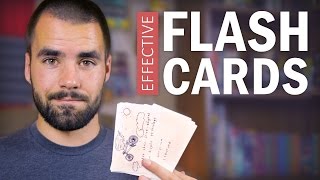
this is a flashcard more specifically it's a bad flashcard and by the end of this video you're gonna understand exactly why because today we are talking about how to make effective flashcards and how to study them more efficiently now flashcards are an incredibly powerful learning tool because they promote active recall the process of actively retrieving memories out of your brain which is one of the most efficient learning strategies there are but flashcards are tools made by human beings and as you probably know things made by humans come in varying degrees of quality for example my girlfriend's art versus my art however when we go into the making of a thing with the best practices in mind we can come out with a better product and in today's video I'm gonna give you eight specific rules for both making better flashcards and for studying them more effectively now for the purposes of this video I figured I would need some flashcards of my own to use as examples so I've gone ahead and issued myself a challenge and that is to learn and memorize the entire periodic table of elements because believe it or not I actually never took chemistry in high school and a really busy schedule with other classes at the time and just never got to it so I've gone ahead and started making some flashcards which I will be using in the course of this challenge and we're gonna use these to demonstrate the elements of good flashcards but first we have to start with a more general tip which is to simply make your own flashcards I know a lot of people like to share their flashcards with their friends and for people who study flashcards on computers or on apps there are entire online communities where you can upload and download pre-made decks and I think these have their uses in certain cases but in most cases it's gonna be much more effective for you to make your own flashcards one of the most integral and important parts of learning is the process of in taking information and really wrangling with it on your own and creating your own words and your own forms out of that information that's gonna build really strong neural pathways and those are gonna be unique from the neural pathways of somebody else and if you just take pre-made cards made by somebody else that you didn't have to do any work to create you're denying yourself that entire part of learning process so now that you know the importance of making your cards yourself let's get into the actual nitty-gritty of what makes a card good and the first tip I've got for you is to add pictures to your cards and to mix them up with words now in cognitive psychology there's a principle called the picture superiority effect which describes how people remember images and pictures much better than they do words and from an evolutionary standpoint this makes sense written language is just a system of arbitrary symbols that people made up and when we look at things on a grand scale it really hasn't been around for all that long plus our brains are adapted to be very sensitive to imagery the locations of food the animals they'll think your food the animals that will take your food but it'll still completely mess you up etc by adding pictures to your flash cards you can make them a lot more memorable and personally I like to do this by drawing on my flash cards but you can also just print out pictures from the internet and glue them on or if you're using an app or a computerized flash card program a lot of them will allow you to easily import pictures but you can take this one step further by making sure those pictures are next to words in 1985 there's a study done in Canada that showed that descriptive sentences added next to pictures made those pictures much easier for people to recall now if you take a look at my chemistry flashcards here you might think they look a little bit weird but that's actually on purpose because they're demonstrated the third tip I've got for you which is to use mnemonic devices on your flashcards now a mnemonic device is really anything that helps you create associations between pieces of information in your mind a classic one is the acronym Rosie Biff which helps you remember the order of the colors in the visible light spectrum but it can really be anything and I'm using associative imagery on my flashcards for example my flash card for magnesium has a Magnemite asking for more goulash which is a completely ridiculous picture but it helps me remember the association between mg and magnesium because Magnemite sounds like magnesium and more goulash is a good way to remember mg now the more weird and crazy and wacky these pictures are the more easily you're gonna remember them and remember you're making your flashcards for yourself so it doesn't matter what anyone else thinks of them or whether or not those associations would work for someone else it's just for you so the next two tips have got for you guys really go hand in hand and the first one is to have only one question or fact on each one of your flashcards now doing this is going to help you avoid what are called illusions of competence basically our brains can really easily confuse recognition with recall when you recognize something you're basically affirming to yourself that yes I've seen this or I've been exposed to it before but recall is different recall is actively retrieving something out of memory without again being exposed to it and our brains can really confuse these things if we're not careful so here's an example say you're taking a history of flight class because obviously airplanes are off and now you're studying for a test where you need to know some information about the first airplane the Wright Flyer so you make yourself a flashcard you put the first airplane on the front but then on the back you put several different facts and here's where you can run into trouble because later on and you're studying and you see first airplane you might remember that it flew in 1903 you might remember that it was called the Wright Flyer and you might even remember that it flew four times but maybe you forgot that it used a sprocket chain drive to drive the propellers and then you turn it over and you say to yourself oh yeah I do remember that and then you put it aside so by making four individual cards for each of these facts you're guaranteeing that you're getting each one either right or wrong and that's gonna help you to study the ones you got wrong more efficiently and avoid those illusions of competence now on a related note we have the fifth tip here which is to break complex concepts or questions down into simpler questions and you can run into a lot of situations like this one where say you're trying to learn the different groupings of elements on the periodic table and there's lots them there's two alkali metals the transition metals there's the noble gases so maybe you go and make a flash card like this where all these groupings are a different color and you have to name all of them well once again this is a bad flash card because maybe you know some of those groupings maybe you know all but one but that one grouping you didn't know there's gonna be an illusion of competence and you're gonna think that you knew it just by looking at the listing on the back so instead make flashcards like this that only highlight one of those groupings and make sure that you know it before putting that flashcard aside so now that you guys know some of the best practices for making your flashcards it's now time to move over and how to study them and I've got three really important tips in this section of the video for you guys starting with the first one which is to say your answers out loud when you're studying your flashcards and this is kind of just a way to mentally commit to your answer before you actually look at the back of the card which helps you again avoid those illusions of competence it helps you make sure that you're not recognizing the answer and mistaking that recognition for recall make sure that you actually know the answer now the second tip here is to make sure you study your cards from both sides and this is a way of creating a neural pathways in your brain that work in both directions so that way if you're asked either side of a question you'll be able to trace that neural pathway back to the answer for example if you only studied the chemical symbol de and you knew that it stood for beryllium but then you were later on asked what's the chemical symbol for beryllium you might not be able to get back be if you didn't study the cards in both directions so make sure you do and lastly guys my final tip for you here is to realize that flashcards are not a silver bullet they're just one method of reviewing material and they are situational they're just like say a bow and arrow right you wouldn't use a bow and arrow in every single situation you wouldn't use it up close no matter how good of a Hanzo player you think you are and flashcards are the exact same way you have to know the right situations to use them in a lot of information ties into an overall visual hierarchy or an organization and with flashcards you kind of lose that for instance the periodic table is a really really powerful visual tool and if you were to say try to memorize all the atomic numbers the elements with flashcards you'd really be doing your brain a disservice because learning the periodic table and all the visual representations and and relationships is much more effective also make sure that you're learning before you're reviewing because flashcards often aren't the best tool for teaching you the underlying concepts which may help you learn facts much more efficiently so those are my eight tips for improving the way that you make and study flashcards and right now you might be thinking to yourself wait a minute Tom skip something and yes I did because there is one additional incredibly effective technique for learning and studying that goes hand in hand with flashcards and that is spaced repetition but that's such a complex topic and I really want to dig deep into it and teach you guys the science behind it and how to use it effectively both on paper and with apps so that is gonna be the subject of next week's video until then guys thank you so much for watching and if you've got additional tips about flashcards I would love to hear them down in the comments below also if you enjoyed this video and you found it helpful give it a like to support this channel and you want to get new videos on being a more effective student every single week you can click that big red subscribe button right down there if you want to get a free copy of my book on earning better grades you can click the picture of the book right there and if you missed last week's video it was on having a more productive summer so check it out right there to find the full article for this video with lots of links and resources and cool extra details right over there and if you want to connect with me go out into the forest and tune into one of those creepy number stations and listen my lips don't actually do that
Original Description
Today, we'll look at 8 techniques for both making and studying your flash cards more effectively.
📺 Watch this video ad-free on Nebula: https://nebula.tv/videos/thomas-frank-yt-how-to-study-effectively-with-flash-cards-college-info-geek
🛠 COURSES AND RESOURCES:
Notion channel - https://www.youtube.com/c/ThomasFrankExplains
Free Notion templates - https://thomasjfrank.com/templates/
Learn Notion - https://thomasjfrank.com/fundamentals
Productivity and Habits courses - https://thomasjfrank.com/courses/
📃 ARTICLE VERSION:
http://collegeinfogeek.com/flash-card-study-tips/
🐦 SOCIAL STUFF:
Instagram ➔ https://instagram.com/tomfrankly
Twitter ➔ https://twitter.com/tomfrankly
Music Channel ➔ https://www.youtube.com/channel/UCmqK2G-3AL_WP5KffH_wqAA
Spotify Study Playlist ➔ https://open.spotify.com/user/thomasfrank09/playlist/4ETfiRPHVmUFLF6q0g8Fux?si=IPfx3dAgQ1SIUwhh5YEQMQ
👐 BUSINESS:
Please contact my agent at thomasfrank@standard.tv
Music:
Welcome to HorrorLand - Kevin MacLeod (incompetech.com)
Nola - Broke for Free (http://brokeforfree.com/)
Licensed under Creative Commons: By Attribution 3.0 License - http://creativecommons.org/licenses/by/3.0/
💰 I'm fortunate enough to work with great sponsors who support my work, so I don't use Patreon or any other crowdfunding service. However, if you'd like to support a worthy cause, consider donating to help more children get access to a high-quality education: https://fundraise.pencilsofpromise.org/fundraiser/1489730
Watch on YouTube ↗
(saves to browser)
Sign in to unlock AI tutor explanation · ⚡30
Playlist
Uploads from Thomas Frank · Thomas Frank · 60 of 60
← Previous
Next →
1
 2
2
 3
3
 4
4
 5
5
 6
6
 7
7
 8
8
 9
9
 10
10
 11
11
 12
12
 13
13
 14
14
 15
15
 16
16
 17
17
 18
18
 19
19
 20
20
 21
21
 22
22
 23
23
 24
24
 25
25
 26
26
 27
27
 28
28
 29
29
 30
30
 31
31
 32
32
 33
33
 34
34
 35
35
 36
36
 37
37
 38
38
 39
39
 40
40
 41
41
 42
42
 43
43
 44
44
 45
45
 46
46
 47
47
 48
48
 49
49
 50
50
 51
51
 52
52
 53
53
 54
54
 55
55
 56
56
 57
57
 58
58
 59
59
 ▶
▶
How to Build a Personal Website in Less Than 10 Minutes
Thomas Frank
Gaining Momentum: A 4-Step Process for Starting Every Day Productively - College Info Geek
Thomas Frank
Is College Worth It? Use the Tony Hawk Method to Find Out. - College Info Geek
Thomas Frank
How to Use HabitRPG (now Habitica) to Build Strong Habits and Motivation - College Info Geek
Thomas Frank
How to Take Notes in Class: The 5 Best Methods - College Info Geek
Thomas Frank
Should You Take Notes on Paper or on a Computer? - College Info Geek
Thomas Frank
Studying Well Requires Intellectual Combat - College Info Geek
Thomas Frank
Do You Actually Need to Read Your Textbooks? - College Info Geek
Thomas Frank
How to Read Your Textbooks More Efficiently - College Info Geek
Thomas Frank
2,500 SUBSCRIBERS! (And a Book Progress Update)
Thomas Frank
10 Steps to Earning Awesome Grades (While Studying Less)
Thomas Frank
How to Study Effectively: 8 Advanced Tips - College Info Geek
Thomas Frank
My 3-Tier Planning System for Getting Stuff Done - College Info Geek
Thomas Frank
How to Graduate on Time - College Info Geek
Thomas Frank
The Impossible List: My Favorite Goal-Tracking Tool - College Info Geek
Thomas Frank
5 Ways to Build Focus and Concentration - College Info Geek
Thomas Frank
3 Books Every Student Should Read - College Info Geek
Thomas Frank
Your Brain is a Library of "Stuff That Works" - College Info Geek
Thomas Frank
My Video Gear and Filming Process - 10,000 Subscriber Bonus!
Thomas Frank
How to Beat Test Anxiety and Take on Exams Without Stress
Thomas Frank
Accelerated Japanese Learning Challenge: Preview! - College Info Geek
Thomas Frank
10 Ways to Avoid Making Stupid Mistakes on Exams - College Info Geek
Thomas Frank
Should You Change Answers on Multiple-Choice Exams? - College Info Geek
Thomas Frank
10 Japanese Learning Resources - Accelerated Japanese Challenge Day 1
Thomas Frank
Rapid Learning with Sentence Lists - Accelerated Japanese Challenge Day 5
Thomas Frank
Failure and Silver Linings - Accelerated Japanese Challenge Day 10
Thomas Frank
How to Deal with Student Burnout - College Info Geek
Thomas Frank
Class Schedule Advice: Dropping a Course - College Info Geek
Thomas Frank
Self-Discipline Advice from a Roman Emperor - College Info Geek
Thomas Frank
How I Organize My Notes, Homework, and School Files - College Info Geek
Thomas Frank
When You Just CAN'T Motivate Yourself to Study, Consider This - College Info Geek
Thomas Frank
Sleep Schedules vs. Staying Up Late - College Info Geek
Thomas Frank
10 Study Tips for Earning an A on Your Next Exam - College Info Geek
Thomas Frank
How to Start a New Semester or School Year the Right Way - College Info Geek
Thomas Frank
20 Useful Websites Every Student Should Know About - College Info Geek
Thomas Frank
What's in My Backpack? - College Info Geek
Thomas Frank
Let's Give People More Feedback and Appreciation for Their Work.
Thomas Frank
5 Lessons from "The Power of Habit" by Charles Duhigg
Thomas Frank
The Science Behind Reading Speed - College Info Geek
Thomas Frank
iPhone Setup for MAXIMUM PRODUCTIVITY - College Info Geek
Thomas Frank
Do Speed Reading Apps & Techniques Really Work? - College Info Geek
Thomas Frank
How to Focus Your Priorities and Narrow Down Your Interests - College Info Geek
Thomas Frank
How to Study and Do Homework in a Time Crunch - College Info Geek
Thomas Frank
My Custom Video Editing & Gaming PC - 2015 (100K Subscriber Bonus!)
Thomas Frank
15 Writing Apps to Help You Write Papers and Essays Faster - College Info Geek
Thomas Frank
A Brain Hack (of sorts) for Exams and Tests - College Info Geek
Thomas Frank
How to Make a Final Exam Study Schedule - College Info Geek
Thomas Frank
How to Bounce Back from Failure - College Info Geek
Thomas Frank
How to Take Faster Notes - College Info Geek
Thomas Frank
My YouTube Story
Thomas Frank
Can Music Help You Study More Effectively? - College Info Geek
Thomas Frank
Brain-Enhancing Music and Binaural Beats: Do They Work? - College Info Geek
Thomas Frank
Should You Ever Skip Class? - College Info Geek
Thomas Frank
How I Use My Calendar Efficiently - College Info Geek
Thomas Frank
Why You Shouldn't Tell People About Your Goals - College Info Geek
Thomas Frank
How to Get to Bed on Time and Stop Losing Sleep - College Info Geek
Thomas Frank
5 Lessons from "The Productivity Project" by Chris Bailey
Thomas Frank
How to Find Your Most Productive Time of the Day - College Info Geek
Thomas Frank
6 Ways to Have a Productive Summer Break - College Info Geek
Thomas Frank
How to Study Effectively with Flash Cards - College Info Geek
Thomas Frank
More on: AI Productivity Tools
View skill →






Related Reads
📰
📰
📰
📰
A Builder’s Map of Open-Source Tools for Shipping AI Agents
Medium · LLM
HarnessX: When the Harness Starts Learning From Its Own Runs
Medium · AI
Pushing My Own Boundaries: Using AI to Start the Day Already Briefed
Dev.to · Jens Reynders
Stop Letting AI Agents Raw-Dog Your Filesystem: Building SafeMCP
Dev.to · wyndev
🎓
Tutor Explanation

 DeepCamp AI