How to Overclock a NVIDIA GPU
Key Takeaways
The video demonstrates how to overclock a NVIDIA GPU using MSI Afterburner software, allowing users to enhance their graphics card's performance by adjusting settings such as power limit, temperature limits, core clock, and memory clock. The tutorial covers the basics of overclocking, including monitoring temperature and speed, and provides tips for tweaking settings to achieve optimal performance without damaging the graphics card.
Full Transcript
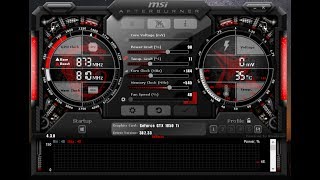
hey guys welcome back to another video in today's video I'm going to be talking about overclocking a graphics card um so for those of you that don't know overclocking is pretty much just changing the settings on your graphics card to enhance performance and to get the most out of your Hardware um by default your graphics cards are sent to you at stock performance meaning that they're not at 100% and that they're running at about 60 or 65% of what their top performance could be so what we're going to do today is we're going to play around with a few settings on our graphics cards and really see if we can get it up to 100% and uh working at its full potential um so the first thing we need to do if we're going to overclock our graphics card is we have to download a certain software um now this software is actually made by um the Nvidia graphics card company so it's completely safe to use um and it's called MSI After Burner so what we're going to do is we're just going to head over to the website up here MSI msi.com /page afterburner and I'll link that down below you're going to find the downloads tab right here we're going to click downloads and then all we're going to do is simply click on download After Burner so we'll do that wait for it to download and there we go so we'll just click on that and all we have to do is double click on thise file here to run the installation wizard so we'll just wait a second for this to pop up um yeah give me a second all right there we go we're just going to click yes allow it to make changes and then simply go through the installation process so we go to the afterburner setup Wizard and then we accept and continue through here now I've actually already installed this on my computer so I'm not going to do this um but go ahead you don't need this Riva tuner statistics server you don't have to check that if you want to you can uh download it but it's not necessary okay so once you've downloaded that what we're going to do now is we're going to open up the program so I've got mine on my desktop here I'm just going to double click it and again just accept and we'll wait a second and you see we have this MSI afterburner um that pops up now yours might look a little bit different depending on what version you've got um but it's all very similar okay so you may see your sliders are going to be set to different settings based on what your graphics card is um but I'll go through what each of these are going to do so the first thing we want to if we're going to overclock our graphics card is we have to set the power limit to 100% this is going to allow us to draw in the most electricity um so that we can do the most with our card so I have set mine up to 100 here um and now the temperature limits so this is completely dependent on what type of graphics card you have for me I feel comfortable uh letting mine run up to 83 although graphics cards are able to usually run about 105 as the hottest um temperature you don't want to run that for very long but if it's running for a little bit when it's starting up a program or something that's fine so I'm just going to leave my temperature limit here at 83 you could feel three feel free to uh move that up if you would like okay now the core clock so a lot of people think if you want to run your graphics card like a lot faster you're going to have to bump this core clock up a ton that is absolutely not true the core clock you can see I've already have mine overclocked here at plus 122 um that's different than the factory default which would be plus zero obviously um so you see I've only bumped mine up a tiny bit um so depending on what graphics card you have you can just put it up a little bit and it is going to give a drastic difference so don't you don't have to throw your slider all the way up here to a th000 at the Max uh as you can see I only did mine at about what 150 or something like that so I'll leave that there um now the memory clock this one you can push a little bit further um for my GPU it's recommended to only go up to 550 so I'm going to leave it at 488 like this and yeah now the fan setting um you just want to leave this on auto you can set it manually if you'd like but Auto is probably the best thing so that it's automatically going to adjust depending on how fast um and how much your graphics card is really doing so once you're done go ahead and click the check mark and there you go you saved your settings and now in this program you're able to actually monitor um the temperature and the speed that your graphics card is running at so if you want to test um how fast it's going to run and how hot it's going to get you can go ahead and run a game so if you have some graphics intensive games and yeah okay so the thing you're going to want to watch out for when you're testing your graphics card is right here the temperature um now the biggest killer of graphics cards and if you hear of people blowing up their graphics cards it's because of the temperature so really that's why I've set my temperature limit to 83 um because anything past that running at a long period of times can be dangerous to your graphics card so if you notice that when you're running a game you've got your core clock all the way up your memory clock all the way up and your temperature is running really high like past 90° C you're going to want to tweak it so that your temperature doesn't run as High um that's the biggest difficulty with uh overclocking is you really want to watch the temperature and you may notice that by simply putting your core clock down maybe even 10 MHz um or up a little bit the temperature could change drastically so really watch that um yeah and then other than that you really just have to play around with your card and figure out which settings are going to give you the best ones for example my card here I'm using a GeForce 1050 TI uh it's a mini 4 GB of dedicated video memory um I don't want to push it too hard because it's not a very expensive graphics card it's about $180 so it's not a super high-end one um and you can see down here it says what the graphics card is and the driver version so I'm just going to leave it at this this for my overclocking but with yours you may want to tweak it move it up and down a little bit and see how much more performance you can get out of it um so yeah really overclocking um it is slightly dangerous depending on how far you're going to move these sliders but by just tweaking them a little bit and moving them up a bit and continuously testing and watching the temperature you're not going to do any damage to your card and you're not going to affect any of the components in your computer um so that's been a basic tutorial on how to overclock your graphics card um if you want a more advanced tutorial really talking about um more overclocking let me know in the comments below um and if you like the video please like And subscribe and I will see you again in another one
Original Description
Hey guys, I today's video I talk about how to overclock a GPU. You may want to do this to boost the performance of your graphics card and get it's full potential. When you buy a graphics card it is set to factory defaults meaning it is not running at peak performance. By following the instructions in the video you can increase the performance of your GPU and get the most out of your hardware.
MSI-Afterburner: https://www.msi.com/page/afterburner
As always please LIKE and SUBSCRIBE for daily content.
Watch on YouTube ↗
(saves to browser)
Sign in to unlock AI tutor explanation · ⚡30
Playlist
Uploads from Tech With Tim · Tech With Tim · 12 of 60
1
 2
2
 3
3
 4
4
 5
5
 6
6
 7
7
 8
8
 9
9
 10
10
 11
11
 ▶
▶
 13
13
 14
14
 15
15
 16
16
 17
17
 18
18
 19
19
 20
20
 21
21
 22
22
 23
23
 24
24
 25
25
 26
26
 27
27
 28
28
 29
29
 30
30
 31
31
 32
32
 33
33
 34
34
 35
35
 36
36
 37
37
 38
38
 39
39
 40
40
 41
41
 42
42
 43
43
 44
44
 45
45
 46
46
 47
47
 48
48
 49
49
 50
50
 51
51
![How to Fade Your Screen in Pygame [CODE IN DESCRIPTION]](https://i.ytimg.com/vi/H2r2N7D56Uw/mqdefault.jpg) 52
52
![How to Create a Button in Pygame [CODE IN DESCRIPTION]](https://i.ytimg.com/vi/4_9twnEduFA/mqdefault.jpg) 53
53
 54
54
 55
55
 56
56
 57
57
 58
58
 59
59
 60
60

A* Path Finding Algorithm(Visualization)
Tech With Tim
Python Programming Tutorial #1 - Variables and Data Types
Tech With Tim
Python Programming Tutorial #2 - Basic Operators and Input
Tech With Tim
Python Programming Tutorial #3 - Conditions
Tech With Tim
Python Programming Tutorial #4 - IF/ELIF/ELSE
Tech With Tim
Python Programming Tutorial #5 - Chained Conditionals and Nested Statements
Tech With Tim
Python Programming Tutorial #6 - For Loops
Tech With Tim
Python Programming Tutorial #7 - While Loops
Tech With Tim
Python Programming Tutorial #8 - Lists and Tuples
Tech With Tim
Python Programming Tutorial #9 - Iteration by Item (For Loops Continued...)
Tech With Tim
Python Programming Tutorial #10 - String Methods
Tech With Tim
How to Overclock a NVIDIA GPU
Tech With Tim
Python Programming Tutorial #11 - Slice Operator
Tech With Tim
Python Programming Tutorial #12 - Functions
Tech With Tim
Python Programming Tutorial #13 - How to Read a Text File
Tech With Tim
Python Programming Tutorial #14 - Writing to a Text File
Tech With Tim
Python Programming Tutorial #15 - Using .count() and .find()
Tech With Tim
Python Programming Tutorial #16 - Introduction to Modular Programming
Tech With Tim
Python Programming Tutorial #17 - Optional Parameters
Tech With Tim
Python Programming Tutorial #18 - Try and Except (Python Error Handling)
Tech With Tim
Python Programming Tutorial #19 - Global vs Local Variables
Tech With Tim
Python Programming Tutorial #20 - Classes and Objects
Tech With Tim
Cool VBS Script to Prank Your Friends!
Tech With Tim
How to Overclock an AMD GPU
Tech With Tim
Best GPU'S For Mining Ethereum (2018)
Tech With Tim
Recursion and Memoization Tutorial Python
Tech With Tim
Ethereum Mining Rig - Hardware Guide
Tech With Tim
Pygame Tutorial #1 - Basic Movement and Key Presses
Tech With Tim
How to Install Pygame (Windows 8/10)
Tech With Tim
How to Trade Your Cryptocurrency (Bitcoin, Ethereum etc.) For Cash!
Tech With Tim
How to Mine Ethereum 2018 - WORKING (Super-Easy)
Tech With Tim
Microphone Comparison - $10 Mic vs $150 Mic (Blue Yeti USB)
Tech With Tim
Pygame Tutorial #2 - Jumping and Boundaries
Tech With Tim
Pygame Tutorial #3 - Character Animation & Sprites
Tech With Tim
Pygame Tutorial #4 - Optimization & OOP
Tech With Tim
OBS Studio Tutorial - Best OBS Settings
Tech With Tim
Linear Search Algorithm - Python Example and Code
Tech With Tim
Make Any Mic Sound AMAZING! (WITH OBS)
Tech With Tim
Binary Search Algorithm - Python Example & Code
Tech With Tim
Pygame Tutorial #5 - Projectiles
Tech With Tim
Pygame Game - Mini Golf
Tech With Tim
Pygame Tutorial - Projectile Motion (Part 1)
Tech With Tim
Pygame Tutorial - Projectile Motion (Part 2)
Tech With Tim
Pygame Tutorial #6 - Enemies
Tech With Tim
Pygame Tutorial #7 - Collision and Hit Boxes
Tech With Tim
Pygame Tutorial #8 - Scoring and Health Bars
Tech With Tim
Cloud Mining vs. Hardware Mining - 2018
Tech With Tim
How to Install Pygame on Mac OSX (Fast-Simple)
Tech With Tim
Pygame Tutorial #9 - Sound Effects, Music & More Collision
Tech With Tim
Pygame Tutorial #10 - Finishing Touches & Next Steps
Tech With Tim
How to Fade Your Screen in Pygame [CODE IN DESCRIPTION]
Tech With Tim
How to Create a Button in Pygame [CODE IN DESCRIPTION]
Tech With Tim
Pygame Side-Scroller Tutorial #1 - Scrolling Background/Character Movement
Tech With Tim
Pygame Side-Scroller Tutorial #2 - Random Object Generation
Tech With Tim
Pygame Side-Scroller Tutorial #3 - Collision
Tech With Tim
Pygame Side-Scroller Tutorial #4 - Scoring and End Screen
Tech With Tim
How to Create A Message Box in Python - Tkinter
Tech With Tim
Is Ethereum Mining Still Profitable - Is It Worth It (April 2018)
Tech With Tim
How to Run MAC OSX on a WINDOWS PC (Clover Boot-loader)
Tech With Tim
Programming Problem #1 - Alphabet Soup (Beginner/Novice)
Tech With Tim
Related AI Lessons
⚡
⚡
⚡
⚡
When AI Asks for More Electricity Than a Country Can Imagine
Medium · AI
You Are Not Behind. The World Is.
Medium · AI
Career choice with the advent of AI - pure Computer Science or learn software with a background of core engineering area
Dev.to AI
The AI Hype Cycle: Calm Before the Next Breakthrough?
Medium · Programming
🎓
Tutor Explanation

 DeepCamp AI