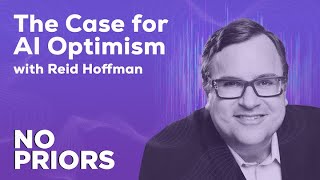
No Priors Ep. 45 | With Reid Hoffman
Key Takeaways
Reid Hoffman discusses AI safety, innovation, and regulation, emphasizing the importance of a nuanced approach to AI development and governance, while also highlighting the potential benefits of AI in transforming human capabilities and creating new opportunities.
Full Transcript
hi listeners and welcome to another episode of no priors this week we're joined by my longtime friend and partner Reed Hoffman he needs no introduction as co-founder of PayPal LinkedIn and non flection AI as well as Microsoft board member and former open AI founding board member he's a prolific author podcaster and political activist and he's also one of my favorite technology optimists big picture thinkers and supporter of people and Founders wel welcome Reed thanks for doing this great to be here and love what you guys are doing and you know long time uh friends and partners with both of you so this is awesome we will start with a small question which is what is your view on the state of AI today what do we need more of and less of well um I mean the obvious thing about AI that everyone probably listening to this podcast already agrees with is that it's somewhere between the largest you know Tech transformation of our lifetime and perhaps the largest tech transformation of of of human history one of the things I use to describe it is like steam engine of the mind so just like the steam engine gave us physical Powers you know kind of superpowers of you know construction and transport and Manufacturing and a bunch of other things this will give us a whole bunch of mental superpowers it's both the amplification of humanity um which is part of what the impromptu book was gesturing towards and also there will be some places where we will create you know kind of um uh substitution uh replacement of work in various ways and obviously we'll get into some depth on that but I think that's the the the macro picture and then with that of course there's tons of things that are current status and current needs and you know I think everyone tends to a little bit over predict like how quickly things like Everything Will Change next year and that's not going to happen um but then they tend to underpredict you know 10 20 years um in some ways in terms of how the transitions although the you know obviously because just like all Technologies the doomsayers come out first um whether it's the printing press electricity everything else is like this is the end of the world you can go back and you can find that this is the end of the world in each of these things you know the printing press was described as as degrading human capabilities through cognition and spreading misinformation um as as an example and um but you know what I'd say that probably as an Arc the thing that I would want to see more of in the and that's part of the reason why I did impromptu the way I did in the creation theorization and the design of what we're doing on artificial intelligence is more in the kind of um symbiotic uh amplification Loop we tend to as technologists say well I'm going to have autonomous vehicles and they're going to drive separately which I think is a good thing in that case uh because I think you know you don't need an amplification Loop you just need uh effective Logistics you know safety uh you know save the 40,000 deaths that we currently have in in human D driven vehicles and so forth go into depth on that if that's useful but like like the fact is there's going to be a whole bunch of things that are actually going to be better with people plus um AI that plus is a thing to focus on and I think we haven't nearly as much and that's of course part of the reason I wrote impromptu do you have a favorite example of where you you already see like the amplification Loop you're talking about or Ai and humans working collaboratively together so a friend of mine's kid first started with exposure to gbd4 and was like yeah I'm going to do sonas whatever whatever like I don't care wait how old is this kid for context 15 okay you know bright kid um you know really interested in organic chemistry and realized that she could place um P you know scientific papers in gbd4 and say explain this to me I'm a 15-year-old right and already like the entire world opens up to and I learned something from that because I was like oh yeah there's occasionally these really complicated papers that I'm looking at going I don't have the two hours that try to decode hey I can do what she's doing that's smart right and so that exists Today part of the the thing that I try to tell the various concerned pessimists that say well you know is my job you know to uh limit what the large tech companies are doing with artificial intelligence well actually in fact we have a line of sight to a medical assistant on every smartphone that's 5 billion smartphones in the world um and you know much less than a billion people have access to doctors you have a line of sight to a tutor on every subject for every age group for everybody your actually job is to get that five billion access to all of that right this example of of being able to use it as a tutor today if you just apply it a little bit in amazing ways for everybody right uh who has access access being the key thing that I would suggest governments are should be working on um uh is you know Stellar I've been I've been working in technology now for about 20 years and um this is the biggest potential impact of global health and Global Equity that I've seen and yet there it's also the biggest immediate Doris I've seen and it feels like the foundation for that Doris was laid uh many years ago what why do you think that exists or what do you think caused so much almost negative sentiment or pessimism or call for regulation so early by a number of people in the AI Community well in the AI Community I think a lot of it is very well-meaning um but but conceptually flawed frequently and there's a couple different arcs you can go into it maybe one of the most common arcs especially that gets to the you know so-called x- rrisk people since we're talking about the people who refer themselves as doomers P10 doomers or whatever one of the things I find most amusing is people say first sentence totally agree with this very strong Insight human beings are very bad at making predictions and instincts off existential curves then they go and then my prediction is and you're like well wait a minute you should take your first sentence seriously right uh because for example what they do is they go well we have an exponential in increase in compute um it's increase in cognitive functions so then I'm going to hand wve a little bit and say that's an increase in IQ we're going to have super intelligence and then this is what's going to happen and you're like well it's unclear like for example if the increase in cognitive functions is actually more like an increase in Sant um a various ways than the super intelligence you're describing by the way gbd4 is already super intelligent relative to a number of of human capabilities is actually not that alarming go play with gbd4 it's not alarming it's actually enhancing and amplifying in various ways and I think that that kind of thing of going um you know I I I I come to an observation exponential curve and I go oh right and I'm trying to be helpful and and by the way of course the calls for regulation are hey I shouldn't solo make this decision because I'm a tech Creator I should get you know broader sense of society and the representative of society involved in this not realizing of course all you're really doing is calling for panic for example when I um talked to some of the authors of the six-month pause letter uh I was like well what what did you think was going to happen and they're like well we just hoped everyone was going to pause I'm like okay I thought I was going to need to talk to you about how Tech development works but let's talk about Humanity first because I think you misunderstand Humanity right like that's not what's going to happen you don't send up a flare and say everyone should pause for 6 months oh look 8 billion people paused on your theory of the universe the UN would be a highly functioning organization that we would all use for a whole bunch of things it doesn't work yeah I um one of the things that is sort of surprising to me is um how clearly laid out like the variations of Doomer scenario are and how little um color there is in the optimistic scenarios right and so this is one of the reasons I think you've been a really um important like positive voice on the ways in which Humanity will be pushed forward by Ai and collaboration because as you said both of you said it's entirely predictable that there will be some sort of panic around every new transformational technology going back to like because of the Advent of the telephone no one will ever leave their home again um yes ex so I I think it's it's very um and this is a around news Cycles as well it's very easy to amplify um a negative scenario also because the um I think the set of fiction that actually inspires lots of technologists uh is much more um dystopian in sci-fi than uh than utopian because there's no conflict yeah well especially in the video right there there is some stuff in written that's pretty good um you know Ian Banks etc etc but the but the video is always like person versus machine and you know the machine has to play the conflict evil role and and one of the things in 2019 I went and talked to all the ca people saying look you're damaging Humanity with all these stories you should put the machine also on the positive category it could be person plus good machine against Bad machine that's fine but like have some understanding that there's a there's a good role that there's a potentially good role for this and like when you look at all these Technologies there's a ton of this is one of the reasons why I didn't I didn't sign the 22w statement of you know AI should be treated as an existential risk along with climate change pandemic Etc because the mistake and a bunch of people I treasure sign this this this this letter Sam Alman you know Mustafa Suman Etc and and this 22w statement and the reason is is because unlike other things climate change pandemic Etc a they don't have anything in the positive column when you get to pandemic maybe the only way to solve pandemic is AI a certain help for climate is AI it's net I think strongly in the positive column it it isn't to say that it might not add some existential risk characteristics to the overall portfolio but your portfolio is improved within it relative to reduction of it and and the reason I think that everybody um that a lot of people and this is one of the things that I think you know given or doing here is the critics think they're virtuous because they go oh there's this there's this danger that we should we should trumpet and you're like well actually in fact you may be doing more harm then you're doing good in your attempt to be virtuous because by trumpeting the negativity you're not shaping where we could be in positive and so my challenge to the critics is say you have to be articulating where we should be going to and what we should be doing and then we can navigate around them now I also don't think that the that the like the oh all technology is just great we don't need to think about safety at all that's booville right of course like it's like look you can clearly do things dumbly with technology there's a bunch of stuff around viruses that people like by not being careful on all Earth can be really dumb about or genetic manipulation you're like no no no you have to be you have to be intelligent and careful about it but going to a future that is so much better than the present that's the goal and that's there and if you're not articulating that that's possible that how you think your your critiques or risks could help navigate to getting there then actually in fact you're being destructive versus constructive and I think part of the reason why people do this is they go oh I know that I'm just being good when I articulate this fear and this risk and you're like actually no You' got a conceptual mistake you're actually maybe even being bad right so so how to get to the good future is actually the hard work so do the hard work consider the opportunity cost of um of all the good that uh we we think AI might do in the in the short and long term um one one more thought on this in terms of more the short term what is your advice for the many uh people increasingly in white color jobs who are concerned about AI replacing them for various reasons in the medium and long term I'm actually pretty positive and counter a lot of a lot of very smart AI thinkers that go oh my God we may have rampant unemployment and a bunch of other stuff and and and this is one of the medium-term ones that I actually really respect and think is going to be super cuz you know steam engine steam engine the Mind steam engine you know helping create capitals and else had huge uh human consequences of transformation of society um that's important to navigate that's uh as important here and in part because the speed of transformation will be a lot faster you know you have five billion smartphones um your ability you know in commuted devices and the internet your ability to have that transformation hit is at a much more intense and focus wave and you know call it you know mid-level white collar jobs um including some upper level white color jobs are one of the ones that are going to get transformed first and most most ferociously and so I think first the advice to the to the folks which is start playing with AI use it as amplification you got to learn it I understand you may say hey look I'm 40 50 I've got my nice experienced position I'm comfy I do not want my Society changed look the the person who was driving the the horse and buggy Carriage felt the the same way the Lite Weavers felt the same way you know it's like no no this is you got to you got to R Trot out your learning and your some curiosity it doesn't have to be perfect you don't have to be the a student you just have to be engaged in learning the tool some the same way you were learning Excel for doing your accounting thing and so forth and just you know learn some on it now here is the good news the good news is and it's a general Arc and this is one of the things I was trying to do with impromptu and I'm going to do some more writing on this next year is that anything that AI creates as a challenge AI can also be part of the solution because you go well okay so it's going to displace a whole bunch of customer service people yep all right so what can you build for customer service people that can help them figure out what other jobs they might be able to do how they might find those jobs how they might learn those jobs how they might do those jobs and let's make sure those AI tools are built too so so to help with the transition on people you say well okay there's a whole bunch of paper filing and accountants or or or form Management in marketing groups you know kind of doing stuff and that's all going to be much less human effort relative to the amount of work that's going on those people how do they learn new jobs now part of the thing that I think is the reason I'm more optimistic over time the transition I pay a lot of attention to but optimistic what the Target because of course the exponential people tend to say well no no but then they're just going to be better than all humans and humans you know can't be doing anything um I actually think that if if you take that these are kind of these progressing adding a whole bunch of tasks we we learn and adapt to other things and so when you say to an individual Let's help with the transitions of the individuals to finding other kinds of things and by the way the other thing is it's like let's use as a parallel truck driving so you know Aurora is obviously trying to do the completely autonomous truck well if every truck manufacturer in the world um basically uh started manufacturing AV trucks tomorrow right it'll be 10 years before more than half of the trucks on the road are AV trucks right that gives you time to adjust that gives you time to make this work and I think that there is more time for adjustment than the usual like you know five alarm fire you know ringing the Bell both for the individuals and for organizations and for society to do and so it's like look let's navigate into it and be paying attention to and planning and trying to create it but once again AI can be part of the solution yeah I guess I guess speaking of career transitions you've had I think one of the most impressive careers in Silicon Valley um you know you were you you started a company that was an early social networking company in the 90s you were at PayPal as a uh initially board member senior person there you started LinkedIn which is one of the most important social products in the world and sort of productivity tools you ran Greylock The Venture fund um and uh so you you've had this amazing career Arc and usually once people hit your moment in time they kind of say okay I'm done and you know they move to the you know Tahiti or whatever it is wherever people Park their boats um instead you've decided to start um inflection which recently releases chapot P um which is you know focused on empathetic chatbots and human interaction and everything else can you tell us more about your decision and not only like why start this specific company but why even do anything at this point well um I'm not very good at being bored um uh I hate boredom cocktail parties or waiting in line and so that's part of it the other thing of course is how do we lead meaningful lives it's because we leave the world in a much better place than we found it um and we um you can work at any level of scale I think it's very honorable to say hey I'm working at my local senior community for me you know obviously blit scaling and master the scale podcast and all the rest of the stuff you know scale is my particular thing I just have no idea when I'll retire um and and I don't really have that much of an interest in Yachts I do have an interest in getting to teiti at some point I've heard about it it sounds kind of an interesting place to visit yeah it's uh in the middle of the ocean in case you don't know much about it I have heard it's very relaxing yeah yeah some have said um so you started inflection and uh can you tell us a little bit about how that came about and the focus of the company so uh Mustafa suan and Karen siman uh were talking about this amazing transformation that's going to transform all Industries going to affect every different kind of path where language and cognition plays a role in society like everyone everyone on the planet is going to have a medical assistant if if we can just get them access to a even a friend's smartphone and there all this stuff's going to happen and you say well what exactly is going to be happening with AI in 10 years from now and all three of us can essay predictions and all three of us are going probably look foolish in two years and whatever prediction we make today right in terms of how this works that's the nature of the game we go okay startups you're trying to go well things that would would would live as massive interesting independent companies developing a product and so one of the things we came to was every individual will have a personal intelligence a pie that's for them right that's for Sarah that's for elad that's for Reed and helps you navigate whatever the particular version of your life is right so we were talking about me a little earlier it's like well I try to do these scale things but you know other people you know volunteer the senior centers are but what's the thing that's useful to them and we said well actually in fact like something that is kind of a tool companion that that reflects off whatever thing that you're particularly grappling with it can range from how do I fix my my my flat tire to I had this kind of challenging conversation with a friend and I want to debug it or I'm trying to think about like what I should do next in in my work or something else and have a have something that that can be there for you and yes it's it has elements of a therapist but it's not a therapist right because it's it's actually deeply knowledgeable in the world and it's not supposed to be just reflecting the you know Eli tell me the thing that you were most troubled about in your relationship with your mother it's hey I'm I'm here to to provide a lens to the world and to help you and like for example unlike the movie her where it's like no talk to me don't go to the world it's like if you show up and say oh you're my only friend pie it's like oh we should help you get other friends let's talk about the importance of friendship and and people you can talk to and maybe there's some people you could talk to about it because it's it's helping you with the world and of course then when you begin to design it you think well what would be the right thing for a lot of the people in the world it may not it's probably nothing's probably for everybody but it's like well something that's compassionate kind something that has a kind of a point of view so it doesn't just like reflect like if you show up and say I'm a white supremacist and I think race X is evil it doesn't go oh I'm with you I agree it goes no well really you should think about that right like it's much better to be compassionate and to realize that we're all humans you know and kind of work you through that so it has a point of view in how it's it's it's operating but with a view of helping you and amplifying you as a as a way of doing it and then bringing you know the enormous set of resources that I that these that this kind of um amazing large scale language models can bring in that and that we said okay that product should exist um it'll be one of the fix points at you know X years in the future and we see that clearly so we're going to be building towards it and as far as I can tell I mean you know you guys are both uh highly active a uh AI investors I think you know on that path we're the ones you know who are most like of the serious teams were the ones who are dedicated to that path uh versus other paths how have you seen um people use the product so far in terms of other typical types of interactions is it reflecting this original intention like how do you view user Behavior relative to the product um I think we're getting that I mean you know just like the surprise I I kind of shared with the gbd4 which like wow that's an amazing use case that it's great like um actually one of the uh one of the people people at at Greylock as a new parent and one of the things she came up to tell me about was oh my God it's giving me great like how do I navigate you know all the things that's I'm a first-time parent and like what are the things I should do what should I pay attention to you know which which which things should I like read more about which things should I really obsess about which things do I not need to worry about and it's just like it's it's there like when I go oh I encounter this and I can ask right now and it helps me right now that's awesome it's the thing that's us useful to you and so there's just a whole stack of them and and part of the reason I was using uh like the flat tire example is cuz I had personally conceptualize Pi en entirely conceptually it's like you know how do I help navigate my my my path through human society whether it's work and the people I'm talking to or friends well someone went up to p and said okay how do I fix my flat tire right and helped it was the interactions with piie that got Meed to uh update my my recommendation everyone to experiment with AI because it's like look don't just go try to do something like well okay I'm sitting in front of gbd before I'm going to write a sonnet right like because I haven't written a sonnet and write sonnet and and I've seen them and blah great don't go ahead and do that there's nothing to say don't do that but my recommendation to people is and as this gets to the the white collar work thing um that that you raised earlier Sarah as well he like no no try it with something that matters to you right like like that you may not expect it to get a good answer and by the way sometimes you won't these things are not perfect in all kinds of ways sometimes you go well that was kind of lame and useless like when I first got access to gbd4 um uh you know months before it was publicly accessed because I was on the open AI board I sat down and said uh how can I readed Hoffman make money through investing in artificial intelligence because I just wanted to try it and it was useless it was it was the classic MBA like I don't understand anything about investing and I'm going to write something that sounds really smart like you're going to study markets and address large Tams and you're going to know which technological transformation and then you're going to go find teams that are doing that and you're it's like no that's not the way in this technology investing thing works I understand how you might teach it it in you know if you're not knowledgeable at a seemingly smart NBA course but it's not how it works you'll find some of the answers are not useful to you but you'll find other of them are Reed I don't know we're just following the steps it seems to be going pretty well so far well for example it can be useful when you say hey I'm an associate and you go um what's all of this stuff where should I focus my due diligence actually in fact giving you a summary on that stuff for an associate can actually be very useful it's which things is it useful for is the key thing to start experimenting on because um some of the stuff it's great and some of the stuff it's like not so much and I I think you have a really key embedded Point here what you mentioned earlier which is it's um who's it relevant for and that's very personalized in terms of the specific context of the individual um one thing related to that that you mentioned was that you wanted it to have an opinionated perspective you know you wanted to come with some pre uh pre-existing framework or pre-thought out perspective on the world and I think the the racism one is actually a very cogent one given a lot of what's happening in the world today relative to universities and the perception of them in terms of you know are they doing the right thing or not relative to anti-Semitism or race or other things many of the people who actually work on AI ethics come out of these institutions that are now being viewed increasingly as potentially biased how do you think about where that perspective should come from and who should actually decide what the right perspective is because you you look at for example Falcon in the UAE is an open source llm and I think one of the reasons they're doing it is because they don't necessarily want the Western perspective to be you know thrust on every single AI model and it's a very specific Western perspective so I'm just curious how you think about the ethical and moral Frameworks they should be applied to Ai and who should determine it which perhaps is an even more important question well um the thing that I think is very much Baseline is I think you should be the developers and we'll get to the full answer to your question the developers should be honest open and transparent about what they're designing to and one of the things that frequently a lot of Silicon Valley people say which I think is booville is that that technology is value neutral right I actually think u values are embedded in it in various ways and I don't think that's a bad thing I just think it's it's like one of the reasons why I love The Economist is one of my is one of my uh favorite magazines or the Atlantic um is because they they don't go we're value neutral they go here are our values right and here's what we're trying to do and hold us accountable to the the the way that we are articulating uh what we're trying to say um and it gives you a much more intelligent perspective and I think that that's what uh technology companies should be doing I think that's what um uh you know AI company should be doing and I think the you know kind of AI agents and whatnot is a way of doing it and so I think that's what's most important now ultimately um you start with like when you're doing startups or initial products and there's a field of at least some Choice um I think it's it's the developers of the products I think it's the companies being transparent open about things we're doing X for this reason like this is this is why we're doing it and I think one of the things that is technology companies one of the challenges of course is they become more ubiquitous and important across all of society EG uh shaping our Collective mindsets whether it's search or you know social networks or you know kind of uh you know video networks or other kinds of things as ways of doing this this does have Society level impact and so there's responsibility to not just the individual as a participant customer but society as a customer and how do you navigate that and I think that's important across all these things and I think that's important as we begin to get the AI stuff to scale and you could say it's important to have a a certain amount of diversity and and participation in that for set of options and perhaps limitations because if you say hey I'm I'm going to create an AI That's going to enable terrorists around the world was like well we don't think that's a good idea right and we're going to do something about that um or for example you know a stunning failure on a question we're going to create an AI that helps helps people articulate and advocate for genocide you're like uh no that is clearly bad genocide against any human category any is terrible and evil full stop and so I think you know there's a dialogue within Society about that um I do think that one of the things that you know is an uncomfortable truth is that you know we go oh AI is shaping everything and so everyone wants to put hands on it in order to shape it and yet technology is built by small groups of people doing things and you just can't have ai built by un committee right it just doesn't exist and it's one of the things that academics mostly don't understand because they've never most of them not all of course but most have never built anything don't really understand how these organization Works don't understand how technology development Works they think that if you just kind of write an essay then a technology piece will come out of it and you're like that's not how it works you have to understand that and understand how technology is built um in various ways in order to make that happen and then you have to try to shape it that's part of the reason why that productive dialogue about like not you guys are evil because you up on this bias case for this blah blah blah blah blah lead the lead lead lead the lead the Witch Hunt that's not useful it's like well actually in fact your stuff on race is not good here's some ways you could make it better and here's some benchmarks that you could do in order to to avoid and I'm going to and by the way if after I say that you're not listening to me and you're not making it better in some way then fine I'll I'll I'll I'll go to the streets with it right because we should be better on bias and race and all the rest one of the things that um you said that really resonates with me is the idea that you're going to like technology products they take a point of view they're built in a certain way by a relatively small group of people and the way you govern them if they have impact on society is you interact with those people right and then you hold that group accountable I think one of the challenges is uh I feel like a big driver of the current narrative is well like because we didn't regulate and control social media companies that ended up being Publishers that surfaced or drove certain points of view we need to get that right with AI very early I think the challenge is like that's true in many parts of society right may maybe it is uncomfortable because it is a set of people that are going to have outsized influence on society by the basic of building the thing like there's not really a way around that right all you can do is interact with them and govern the thing and I think we should also expect to see that more around um Academia or I I would ask for it yeah and I think it's a good thought on Academia I mean look one of the things that people don't understand is the only way you make progress with technology and get to it is you deploy you learn you iterate and so you're going to have errors U there's no way to not have any errors I mean I would love it to have zero bias erors and in terms of the AI regulation yeah I've heard the same thing it's like oh my God we made this total mistake cuz we we allowed the social networks to go without regulation and you know I think that the um the problem is you don't really know the shape that you need to navigate it in until you begin to see it and so um like I I went to the UK AI Summit um this a safety and Innovation Summit at the beginning of November it was a very good Summit the the the the British government I think you know triggered a whole bunch of stuff to to kind of go in the right way but one of the dumbass things that I heard the summit was and this time we will not allow Innovation before we regulate like well that's dumb on several levels one we've already innovated two there's no way to do that none of us know how to do that right um and what's more generally speaking regulation is enshrining the past against the future and if you look at every industry that goes really int and regulation it's it's it slows down intensely on Innovation and if you say well that's what we should be doing in AI it's like look I think you are categorically wrong and harming Humanity think about it let's try to get to the medical assistant for everybody I guess speaking of benefits um how do you think about the areas of AI where there's a biggest sort of um startup available opportunities because often when you look at these technology waves there's a set of value that goes to incumbents you know it's somebody who already owns a workflow for a SAS tool or whatever they just layer on AI versus things that are Greenfield where suddenly you can do something new and exciting maybe that'd be something like Harvey for legal or other areas Are there specific areas that you are um most excited about or keenly looking for companies to exist in or you know alternatively they could be big areas for startup Innovation there's areas that I think are underdone that I would really like to see cyber security with AI you know I think it would be very good to have that relative Society um I think that the notion of um you know how do we make these transitions for the waler workers is I think something that you know I would like to see more of um uh I think you you know the reason we don't is because it's not the best Economic Opportunity um possibly and so people are all focused on the best econ opportunity and by the way is an entrepreneur and as investor who resembles that remark right I I'm sympathetic um but the um but you know like how do we get those things as well but I think there's just just just tons like I literally come up with a new um AI thing that I think about oh I could I could help get that co-created like every week um and I I just had the the kind of the the resources to do it it would be like spawning new things yeah and then I guess related to that I think you were really forward looking in terms of AI as a very important area of technology and I remember going to an event you organized I think it was like eight years ago or something where it was like a small group discussion of AI in the future and things like that as you look forward in the next generation of AI so say we go from GPT 4 to GPT 5 Are there specific technological leaps that you anticipate happening even with that single increment or how do you think about the both pace of innovation but also the big shifts that are about to happen from a technology perspective over the next you know 12 24 months so I think there's two things at least and I think there's going to be much more so like always like part of the Delight the reason the three of us do this is we learned things that we just hadn't thought about and those really bright entrepreneurs come to us and we're like oh that's really great and because you know the thousands of people inating through the networkers right one is we're going to get a lot more robust and capable on all the language model Transformations so you know whether it's a coding assistant a legal assistant a medical assistant uh a meeting notaker a you know an amplification of of of slideshows through toome or or workflow with Kota or any of this other stuff that's all going to get just better right the second thing is is the the part of the superpowers of these things because it's a scale compute thing is breadth so like how does the protein folding lead to drug drug Discovery or you know or other things like that like things that are very broad space in this will also get special purpose tools um that will be uh I think magnificent I don't know if the result for the special purpose tools will be in a year or two but the intensity of the work and the beginning of it there will be there will be you know gold and platinum from that um kind of over time and I think that's over short time like small in years but we'll begin to see it over the next year or two and I think those the the one level scale you know cuz that's you know the 10x gbd4 gbd 5 the one level scale um will unlock some of that stuff uh and that's part of it now I'm certain that there's other things that two years now we look back and say oh yeah that was that was maybe even now in N obvious but something I missed in that answer by the way I'd be curious your guys answer to that what would what would what would you guys say to that two-year gbd4 to gbd 5 yeah I mean I think there's going to be three steps in uh or three areas of capability Improvement I think one is going to be um to your point on Baseline models both in terms of broadening the knowledge base as well as the increase in the ability around chain of logic or the ability to think or you know do simple uh thinking so I think there's there's one thing all around that and how much better these capabilities get and you see that for example between gpt3 or 3.5 and four where you had big steps UPS in in medical knowledge and understanding legal understanding Etc and you can do things on gp4 that you just can't on GPT 3.5 or equivalent models and I think we'll somewhat see a step up in other functionality for other fields with that um as well as sort of that chaino logic I think a second is just augmentation of these things augmentation may include forms of memory so you can actually loop back in a more um reasonable way to sort of chain chain uh logic or chain actions augmentation maybe things like rag or the ability to augment other types of information or data sets in um and so I think we're going to see a lot of capabilities around that and obviously there's a big debate right now in terms of fine-tuning versus just increased context windows and prompt engineering and how things play off from each other and how that impacts generalizability but I think we'll make a lot of progress on those sorts of things and then third is I think we'll make a lot of progress in bespoke models for specific application areas and that may be um biotech to your point or specific you know protein folding or it could be uh materials or robotics or could be all sorts of things but I think everybody's moving more to sort of end end to end both reinforcement learning but more like um sort of a deep learning approaches and some places where they hadn't applied them as deeply before and they're using more heris like self-driving would be an example of that and it feels like the whole world is flipping to this more modern based approach instead of architectures uh and then maybe I'd actually throw in the last thing which is I think there will be some experimentation with new architectures and the question is besides Transformers um and the question is will they matter and I you know I don't know so those would be kind of my four 12 to 24 month uh predictions but they may be incorrect to your point on predicting this stuff I think the new architectures there's a bunch of stuff that I've been trying to work with on this but I don't think new architectures will be one to two years that would be surprised if it was yeah because you need to scale them right so yeah yeah I think the um uh all of this is clearly going to be wrong for all of us that's not a judgment on both of you it's it's three given I the two of us are going to get it right so I don't know exactly okay you two are going get it right fine fine just me I'll be um have conviction Sarah yeah yeah well here conviction conviction conviction is making making decisions based on those beliefs and plowing ahead well uh and all seeking the truth but not knowing you're going to be totally sure so um I don't it depends on what you describe as a new architecture right I I think that there's a lot of experimentation around um new attention mechanisms right now and that you know credit to Ashish and Nikki and Nome and the whole Transformers team originally and everybody who's worked on scaling it up but that actually hasn't been that interesting of an area for a while and I think there's much more um interest in that uh I I think the biggest Labs um are enthusiastic about code and validation for code and some sort of um uh you know self-reinforcing feedback loop of improvement um which I I think like there are obvious reasons to be optimistic about I I think this isn't quite like just advancement of GPT 4 to five but I'm an investor in mistr and uh the efficiency that you get of being able to do the same reasoning at much smaller scales um be gets more applications right and I think that also like you you just get much more experimentation in that case and um I'm I'm pretty excited about like when you when you take away that barrier to entry for application developers you're going to get so much more experimentation because they can go take that the cost of integration and workflow and domain understanding and put all the energy there right so kind of what Reed said about like all of these workflows are going to get a lot better and they're going to get a lot broader like companies like Harvey like you need to go collect very specific data if you want to um increase the sophistication of the legal tasks you're doing you may or may not believe that this falls in the path of core reasoning but one of the things I'm really excited about is um the democratization of like content creation and creativity in general that has been so dramatic this year and I'm constantly surprised by what what like he Jen and Pika are doing in terms of um oh okay we can get avatars to walk around and take actions now we can do we have much better controllability around video and I think for anybody who's worked on a social network as both of you have like if you can create those new content types like you get so much more expression um Reed mentioned like uh and a lot of you and I have talked about this but like the categories that make me most excited about impact on society like Education and healthc Care are two of the areas that have been most resistant to like society's Fay to get it to be better for cheaper but I think the one other that I would mention here if we talk about code generation is all right today you know um software is built by very small groups of people they're often in Silicon Valley sometimes they're in Paris but um if you can enable more people to build software that is useful I think that will dramatically change society so I'm excited about that piece but like we're we're just GNA be wrong so I I I have conviction that like none of these predictions are exactly right yeah I I think uh Sarah Spar one other thing which is is in the mention of of mistol or Mistral I never know how to say it because I can't do the French accent is um mist is that oh my God Arthur I'm so sorry I feel good about it um is uh I do think that there's a lot of questions right now about um uh inference versus cost and what infrastructure to use and there's all these folks doing everything from sort of like stripe for um open- source apis for these different models on through to different hosting Solutions and everything else and I think in two years there'll be sort of a clear Fallout of what are the set of approaches and how do you do it and what's the cheapest inference platform and you know I think there'll be a lot of work done in terms of just basic ability to use these models at um uh High uh scalability and low cost at you know across the board and so I think that's another big shift where people are still kind of figuring things out right now but I think it'll be pretty solved in two years like what s's bring up in terms of creativity I think that part of it is we're going to have a number of superpowers that we don't currently Envision and part of it is like for example one of the you know slogans that I've I've um borrowed from Kevin Scott at Microsoft is the the most significant programming language in the next few years is going to turn into English and then of course rapidly followed by Chinese because the broad use of the language and being able to create things computational artifacts code Etc I mean you know even today someone can go to these AI agents and code up a website where they wouldn't have been able to code up a website before and that's part of the reason I'm optimistic about about there being a symbiotic relationship you know uh people plus the AIS um because I think there's that sort of of of Direction you know part of the thing to do is to say don't try to say no no I want to stay I want to keep the present exactly as it is um it's what future should we be making um and you know you can say hey there's a danger over here like as we go to this let's try to avoid that that's totally good but like it's where it's where should we be going what should we be doing is is the most important context for all of that is there anything we didn't cover that you wanted to talk about well obviously we'll probably do this again and I think that the there's just a ton but the way the technology is created is a small group that that does something bold takes a risk and makes it happen and most people outside of the tech industry don't really fully understand that and so we need to help them understand that's going on but also to have the dialogue about like look raise your considerations and so forth but but frankly as as the cars get steered only the people in the car really have their hand on the steering wheel um so you you have to have a dialogue just like you're driving down the road and navigating with other cars and so forth about what you're doing as opposed to you know we will all decide this is what's going to happen because you know you know maybe this is top of mine from the EU act stuff which you know always makes me think that they're trying to hold on to the past so ferociously that they're just completely willing to sacrifice the future anyway when they have such an opportunity to given like they actually have you know great talent in Europe working on AI now yeah no exactly um okay well we take no paid sponsors for this program but legitimately you should read improptu drink uh y3k AI Coke and listen to No priors Reed thank you so much for doing this um and until next time thanks for joining us always great to see you guys find us on Twitter at no prior pod subscribe to our YouTube channel if you want to see our faces follow the show on Apple podcast Spotify or wherever you listen that way you get a new episode every week and sign up for emails or find transcripts for every episode at no- pri.com
Original Description
AI doomerism and calls to regulate the emerging technology is at a fever pitch but today’s guest, Reid Hoffman is a vocal AI optimist who views slowing down innovation as anti-humanistic. Reid needs no introduction, he’s the co-founder of PayPal, Linkedin, and most recently Inflection AI which is building empathetic AI companions. He is also a board member at Microsoft and former board member at OpenAI. On this week’s episode, Reid joins Sarah and Elad to talk about the historical case for an optimistic outlook on emerging technology like AI, advice for workers who fear AI may replace them, and why it’s impossible to regulate before you innovate. Plus, some predictions.
Aside from his storied experience in technology, Reid is an author, podcaster, and political activist. Most recently, he co-authors a book with GPT 4 called Impromptu: Amplifying Our Humanity Through AI.
00:00 Reid Hoffman’s birdseye view on the state of AI
03:37 AI and human collaboration in workflows
5:23 What’s causing AI doomerism
12:28 Advice for whitecollar workers
16:45 Why Reid isn’t retiring
18:25 How Inflection started
22:06 Surprising ways people are using Inflection
25:34 Western bias and AI ethics
30:58 Structural challenges in governing AI
33:15 Most exciting whitespace in AI
35:00 GPT 5 and Innovations coming in the next two years
44:00 What future should we be building?
Watch on YouTube ↗
(saves to browser)
Sign in to unlock AI tutor explanation · ⚡30
Playlist
Uploads from No Priors: AI, Machine Learning, Tech, & Startups · No Priors: AI, Machine Learning, Tech, & Startups · 46 of 60
1
 2
2
 3
3
 4
4
 5
5
 6
6
 7
7
 8
8
 9
9
 10
10
 11
11
 12
12
 13
13
 14
14
 15
15
 16
16
 17
17
 18
18
 19
19
 20
20
 21
21
 22
22
 23
23
 24
24
 25
25
 26
26
 27
27
 28
28
 29
29
 30
30
 31
31
 32
32
 33
33
 34
34
 35
35
 36
36
 37
37
 38
38
 39
39
 40
40
 41
41
 42
42
 43
43
 44
44
 45
45
 ▶
▶
 47
47
 48
48
 49
49
 50
50
 51
51
 52
52
 53
53
 54
54
 55
55
 56
56
 57
57
 58
58
 59
59
 60
60

No Priors Ep. 13 | With Jensen Huang, Founder & CEO of NVIDIA
No Priors: AI, Machine Learning, Tech, & Startups
No Priors Ep. 8 | With Neeva’s Sridhar Ramaswamy
No Priors: AI, Machine Learning, Tech, & Startups
No Priors Ep. 7 | With Stanford Professor Dr. Percy Liang
No Priors: AI, Machine Learning, Tech, & Startups
No Priors Ep. 1 | With Noam Brown, Research Scientist at Meta
No Priors: AI, Machine Learning, Tech, & Startups
No Priors Ep. 9 | With Perplexity AI’s Aravind Srinivas and Denis Yarats
No Priors: AI, Machine Learning, Tech, & Startups
No Priors Ep. 10 | With Copilot's Chief Architect and founder of Minion.AI Alex Graveley
No Priors: AI, Machine Learning, Tech, & Startups
No Priors Ep. 11 | With Matei Zaharia, CTO of Databricks
No Priors: AI, Machine Learning, Tech, & Startups
No Priors Ep. 12 | With Noam Shazeer
No Priors: AI, Machine Learning, Tech, & Startups
No Priors Ep. 14 | With Sarah Guo and Elad Gil
No Priors: AI, Machine Learning, Tech, & Startups
No Priors Ep. 2 | With Runway ML’s Cristobal Valenzuela
No Priors: AI, Machine Learning, Tech, & Startups
No Priors Ep. 3 | With Stability AI’s Emad Mostaque
No Priors: AI, Machine Learning, Tech, & Startups
No Priors Ep. 15 | With Kelvin Guu, Staff Research Scientist, Google Brain
No Priors: AI, Machine Learning, Tech, & Startups
No Priors Ep. 4 | With Zipline’s Keller Rinaudo Cliffton
No Priors: AI, Machine Learning, Tech, & Startups
No Priors Ep. 16 | With Mustafa Suleyman, Founder of DeepMind and Inflection
No Priors: AI, Machine Learning, Tech, & Startups
No Priors Ep. 17 | With Karan Singhal
No Priors: AI, Machine Learning, Tech, & Startups
No Priors Ep. 5 | With Huggingface’s Clem Delangue
No Priors: AI, Machine Learning, Tech, & Startups
No Priors Ep. 6 | With Daphne Koller from Insitro
No Priors: AI, Machine Learning, Tech, & Startups
No Priors Ep. 18 | With Kevin Scott, CTO of Microsoft
No Priors: AI, Machine Learning, Tech, & Startups
No Priors Ep. 19 | With Anduril CEO Brian Schimpf
No Priors: AI, Machine Learning, Tech, & Startups
No Priors Ep. 20 | With Sarah Guo and Elad Gil
No Priors: AI, Machine Learning, Tech, & Startups
No Priors Ep. 21 | With Datadog Co-founder/CEO Olivier Pomel
No Priors: AI, Machine Learning, Tech, & Startups
No Priors Ep. 22 | With Instacart CEO Fidji Simo
No Priors: AI, Machine Learning, Tech, & Startups
No Priors Ep. 23 | With Snowflake's CEO Frank Slootman
No Priors: AI, Machine Learning, Tech, & Startups
No Priors Ep. 24 | With Devi Parikh from Meta
No Priors: AI, Machine Learning, Tech, & Startups
No Priors Ep. 25 | With Palantir's CTO Shyam Sankar
No Priors: AI, Machine Learning, Tech, & Startups
No Priors Ep. 26 | With Weights & Biases CEO Lukas Biewald
No Priors: AI, Machine Learning, Tech, & Startups
No Priors Ep. 27 | With Sarah Guo & Elad Gil
No Priors: AI, Machine Learning, Tech, & Startups
No Priors Ep. 28 | With Khan Academy’s Creator Sal Khan
No Priors: AI, Machine Learning, Tech, & Startups
No Priors Ep. 28 | With Khan Academy’s Creator Sal Khan (Japanese Version)
No Priors: AI, Machine Learning, Tech, & Startups
No Priors Ep. 29 | With Inceptive CEO Jakob Uszkoreit
No Priors: AI, Machine Learning, Tech, & Startups
No Priors Ep. 30 | With Vercel CEO Guillermo Rauch
No Priors: AI, Machine Learning, Tech, & Startups
No Priors Ep. 31 | With Cerebras CEO Andrew Feldman
No Priors: AI, Machine Learning, Tech, & Startups
No Priors Ep. 32 | With NEAR’s Illia Polosukhin
No Priors: AI, Machine Learning, Tech, & Startups
No Priors Ep. 33 | With Replit's CEO & Co-Founder Amjad Masad
No Priors: AI, Machine Learning, Tech, & Startups
No Priors Ep. 34 | With Ginkgo Bioworks Co-Founder and CEO Jason Kelly
No Priors: AI, Machine Learning, Tech, & Startups
No Priors Ep. 35 | With Sarah Guo and Elad Gil
No Priors: AI, Machine Learning, Tech, & Startups
No Priors Ep. 36 | With Hubspot's Co-Founder Brian Halligan
No Priors: AI, Machine Learning, Tech, & Startups
No Priors Ep. 37 | With Kawal Gandhi
No Priors: AI, Machine Learning, Tech, & Startups
No Priors Ep. 38 | With Material Security Co-Founder Ryan Noon
No Priors: AI, Machine Learning, Tech, & Startups
No Priors Ep. 39 | With OpenAI Co-Founder & Chief Scientist Ilya Sutskever
No Priors: AI, Machine Learning, Tech, & Startups
No Priors Ep. 40 | With Arthur Mensch, CEO Mistral AI
No Priors: AI, Machine Learning, Tech, & Startups
No Priors Ep. 41 | With Imbue Co-Founders Kanjun Qiu and Josh Albrecht
No Priors: AI, Machine Learning, Tech, & Startups
No Priors Ep. 42 | With Sarah Guo and Elad Gil
No Priors: AI, Machine Learning, Tech, & Startups
No Priors Ep. 43 | With Clara Shih, CEO of Salesforce AI
No Priors: AI, Machine Learning, Tech, & Startups
No Priors Ep. 44 | With Former Square CEO Alyssa Henry
No Priors: AI, Machine Learning, Tech, & Startups
No Priors Ep. 45 | With Reid Hoffman
No Priors: AI, Machine Learning, Tech, & Startups
No Priors Ep. 46 | Best of 2023 with Sarah Guo and Elad Gil
No Priors: AI, Machine Learning, Tech, & Startups
No Priors Ep. 47 | With Sourcegraph CTO Beyang Liu
No Priors: AI, Machine Learning, Tech, & Startups
No Priors Ep. 48 | With Covariant CEO Peter Chen
No Priors: AI, Machine Learning, Tech, & Startups
No Priors Ep. 49 | With Shopify VP of Core Product Glen Coates
No Priors: AI, Machine Learning, Tech, & Startups
No Priors Ep. 50 | With Stripe Head of Information Emily Glassberg Sands
No Priors: AI, Machine Learning, Tech, & Startups
No Priors Ep. 51 | With Notion CEO Ivan Zhao
No Priors: AI, Machine Learning, Tech, & Startups
No Priors Ep. 52 | With Pinecone CEO Edo Liberty
No Priors: AI, Machine Learning, Tech, & Startups
No Priors Ep. 53 | With AMD CTO Mark Papermaster
No Priors: AI, Machine Learning, Tech, & Startups
No Priors Ep. 54 | With Sarah Guo & Elad Gil
No Priors: AI, Machine Learning, Tech, & Startups
No Priors Ep. 55 | With Figma CEO Dylan Field
No Priors: AI, Machine Learning, Tech, & Startups
No Priors Ep 56 | With Baseten CEO and Co-Founder Tuhin Srivastava
No Priors: AI, Machine Learning, Tech, & Startups
No Priors Ep. 57 | With LangChain CEO and Co-Founder Harrison Chase
No Priors: AI, Machine Learning, Tech, & Startups
No Priors Ep. 58 | The argument for humanoid robots with Brett Adcock from Figure
No Priors: AI, Machine Learning, Tech, & Startups
No Priors Ep. 59 | With Sarah Guo & Elad Gil
No Priors: AI, Machine Learning, Tech, & Startups
More on: AI Ethics & Policy
View skill →






Related AI Lessons
⚡
⚡
⚡
⚡
The Dark Side of AI: What We Lose When We Stop Thinking
Medium · AI
AI Security Isn't a Product. It's an Engineering Discipline.
Dev.to AI
Why Solving Legal AI's Context Problem Is Harder Than You Think
Forbes Innovation
How Can We Truly Protect Information Privacy in the Age of Artificial Intelligence?
Medium · Machine Learning
Chapters (12)
Reid Hoffman’s birdseye view on the state of AI
3:37
AI and human collaboration in workflows
5:23
What’s causing AI doomerism
12:28
Advice for whitecollar workers
16:45
Why Reid isn’t retiring
18:25
How Inflection started
22:06
Surprising ways people are using Inflection
25:34
Western bias and AI ethics
30:58
Structural challenges in governing AI
33:15
Most exciting whitespace in AI
35:00
GPT 5 and Innovations coming in the next two years
44:00
What future should we be building?
🎓
Tutor Explanation

 DeepCamp AI