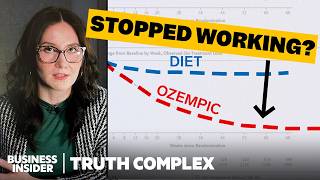
You're Being Lied To About Ozempic | Truth Complex | Business Insider
Key Takeaways
The video discusses the controversy surrounding Ozempic and similar medications, highlighting the effectiveness of GLP1 drugs for weight loss, potential side effects, and the pharmaceutical industry's role in regulating these medications. It also touches on the complexity of weight loss, the impact of biological mechanisms, and the need to address underlying problems such as the food system and sedentary lifestyles.
Full Transcript
in just a few years OIC has become a household name and a cultural phenomenon glp1 drugs are everywhere and already 1 in8 us adults have tried them the Danish company that makes OIC is worth more than the Coca-Cola company and McDonald's combined look online and you'll see comments about OIC face hair loss severe stomach problems and dangerous side effects and then a moment later you'll see a report that it could help with fertility or treating Alzheimer's or even shopping addiction and it's not just weight loss drugs we been lied to about weight loss itself for years now how much do we know about glp1 drugs and are we being told the full truth about them I've spent the last few months diving into the research and even tried to get some glp1 medication myself to see what's really going on here at this point I spent a lot of time on social media digesting what the discourse is out there about this medication one of the pieces of misinformation I'm seeing over and over again is this idea that these drugs are brand new that they're not well studied and that they're not well understood it's not studied for this you know there's no studies on what it does to a body without diabetes there is no research no research on a person that is not diagnosed with type 2 diabetes so we know that this line that they are untested or not understood is just not true they've been studied a lot for both safety and efficacy for both diabetes and weight loss thousands of people have been studied in clinical trials specifically for obesity but not for diabetes the new phenomenon is that OIC is a household name and it became a household name because of its weight loss effects however it's part of a class of drugs that have been used for decades to help people with type 2 diabetes regulate their blood sugar and just in that regard it's been a huge medical breakthrough I think we could probably critique that on its own in that our society is so weight obsessed that none of these diabetes treatments were a household name even though a million and a half people die of it each year but as soon as it started making celebrities skinny all of us were talking about it that's probably worth unpacking but that's more than we will have time to do here so when noo started testing these drugs as an obesity treatment the outcome of those trials suggested that these are the most effective weight loss drugs ever so the main ingredient in OIC is semaglutide it's part of a class of drugs called glp1 receptor Agonist which basically just means they mimic a hormone that naturally occurs in your body called glp1 semaglutide is in both OIC and wovi but wovi is the one that's FDA approved for weight loss if these medications are paired with a healthy diet and exercise people who are on semaglutide lost on average 15% of their body weight the people who were just dieting and exercising lost on average 2.4% of their body weight a newer drug made by Eli ly called tepati did even better in its clinical trials with people losing an average of 20% of their body weight and So based on that data we started to have all this very hyped news coverage about how these drugs were a game changer and a blockbuster and how maybe obesity would be cured forever which honestly is kind of a bizarre framing even from the very first studies there were people who were not responding to these drugs yes it's a really big deal that 86% of people in a trial lost a significant amount of weight however that means 14% of people didn't despite all this talk about Miracle drugs the figures are basically the same for both semaglutide and tepati roughly one in 10 people don't lose significant weight while on this medication and are what's called nonresponders I really wanted to speak to someone who went through this so I put a survey up on bi's social media channels and that's how I found Erica it's working for other people like why isn't it working for me and my body chemistry but I'm I'm mad it didn't work but then it just I accept it and I just got to find another way to lose the weight Erica says her doctor didn't warn her that these drugs don't work for everybody like many of us most of her information came mainly from media coverage when you set these drugs up as a miracle or a magic pill you're also setting people up for massive disappointment if they had high hopes of weight loss and then these drugs don't work for them there is one more thing that a lot of coverage has missed real life is not the same as a clinical trial since those first trials and all that news coverage there's been more data about what real world usage looks like a 2023 study followed people on semaglutide for 52 weeks and those people lost an average of 4.4% of their body weight so we went from 15% down to 4% which is a dramatic difference most of the early coverage of these drugs used the numbers from the clinical trials which makes sense because it was the first time these drugs were studied the subsequent real world usage impacts have not gotten as much press coverage and that definitely feeds into an inflated sense of how revolutionary these drugs could be certainly they are a really big deal they're more effective than prior drugs but there are limitations the other thing that I think might be getting lost here is that weight loss from these drugs will have a plateau which is similar to diet to exercise and even to bariatric surgery at some point every weight loss intervention plateaus there's this popular conception that losing weight is the hard part and maintaining weight loss should be easy what we know is that it's actually the opposite right the the maintenance of weight loss is actually the hardest part you wouldn't want a drug that allows you to lose unlimited amounts of weight that would be dangerous for one and then you'd have to go off of it when you reached your goal weight and then you would just start to climb back up again and it would be this constant yo-yo however that doesn't stop people from talking about this Plateau like it's some sort of betrayal of the drug or some sort of failure of this medication all evidence points to needing to keep taking these drugs to keep benefiting from them which is interesting because we have study data showing that most people don't keep taking them one study looked at thousands of people with gp1 prescriptions and found that about half of them stopped taking it after a year and 70% of them stopped taking it at the 2-year Mark and another study found that after stopping the medication people regained on average 2/3 of the weight that they'd lost this is perhaps another big reason to dial down the hype machine on these medications yes they are a big breakthrough medically but if people don't want to be on them then the impact of the drugs will be much lower than were predicted in the flurry of news coverage we had to begin with a lot of people hear that this is a long-term potentially lifelong medication and they see big Pharma dollar signs the cynic in all of us sort of wakes up and says what a win for big Pharma it's true that it is a win for big Pharma they're probably going to make a ton of money on this and there is absolutely no denying that I understand why people are mistrusting a pharmaceutical companies and the media coverage around them at this point we've seen some very irresponsible reporting I think it's really important to be cleare eyed about the role of big pharmaceutical companies in our society with just a quick Google you could see that Nova Nordisk has paid fines after being accused of shady sales tactics they've faced criticism for spending loads of money whining and dining doctors and that they've gotten in trouble with Regulators in multiple countries more famously Nova nordes along with other drug makers faced massive criticism for high insulin prices nowadays insulin is less profitable than it once was but the potential profits of weight loss drugs remain astronomical and make no mistake Nova Nordisk will be cashing in on these drugs and already is at one point the company's valuation was bigger than the entire GDP of Denmark understandably some people who don't trust big Pharma or simply don't have access to these drugs are turning to natural alternatives let's talk a little bit more about Nature's OIC Nature's OIC Nature's OIC Nature's OIC Nature's OIC you'll find people presenting berberine peppermint tea green tea vitamin B12 high fiber diets high protein diets all of these things as being natural alternatives to taking OIC there are certain foods that can increase the amount of gp1 hormone that your body makes the part where they get it wrong is that that doesn't necessarily equate to weight loss which appears to be the goal of many people consuming this content the level of gp1 production that diets can provide is nowhere near what you can achieve with prescription medications these interventions are leading to superprof physiological level of glp1 as opposed to kind of modest changes in your diet or some supplement that you could take these are just orders of magnitude different and and you're not going to see anywhere near the same effects but between influencer nutritionists and supplement grifters we're seeing tremendous amounts of misinformation online about how effective a glp1 boosting diet can be these foods and vitamins are generally less risky than a serious prescription drug but they're almost definitely less effective as well this is another subject of intensive news coverage where I think we just need to turn the hype dial down a little bit and look at what the research actually tells us I also think people pay a lot of attention to side effects of these drugs because we've had plenty of examples of prescription drugs coming onto the market and a side effect no one knew about ends up being very serious particularly for weight loss drugs the most common side effects of these medications are gastrointestinal things like nausea vomiting and diarrhea these can seem a little bit trivial just like tummy trouble or whatever but they can be quite serious extended periods of vomiting or diarrhea can leave you dangerously dehydrated it's even been reported that one woman died while taking these drugs after months of gastrointestinal issues including severe vomiting and abdominal pain besides the GI issues the FDA label for these drugs includes a number of other warnings some of which are for very serious conditions so if we just pull up the label now there's what's called a blackbox warning about the risk of thyroid se- cell tumors the warning label mentions findings in rodents but a gp1 researcher I spoke to said that the thyroid in rodents and humans is quite different so those findings probably aren't relevant sometimes by putting a warning label on because of initial good intentions you can cause more harm but by scaring away people who otherwise might be willing to take this medicine and benefit from the medicine while the link between glp1 medication and thyroid cancer has been hard to establish the link between obesity and thyroid cancer is much clearer one study found that for every fiveo increase in BMI the risk of thyroid cancer increases by 30% there's also another category on this label called warnings and precautions and it includes acute pancreatitis acute gallbladder disease hypoglycemia acute kidney injury hypers sensitivity reactions diabetic retinopathy heart rate increase and suicidal behavior and ideation the label here just says monitor for depression or Suicidal Thoughts discontinue wovi if symptoms develop that's not very reassuring to me this is an ongoing an evolving thing but the weight of evidence so far suggests that these drugs alone are not going to cause you to have Suicidal Thoughts it is not uncommon for drugs to have very intimidating if not downright scary looking FDA warning labels it's important to remember that things listed on these labels are potential risks rather than guaranteed results which actually does seem to get lost in the shuffle a bit on social media most of the more serious side effects of glp1 drugs are on the rare side most people who take these medications will not get pancreatitis sometimes people wonder why a drug could be approved it has so many alarming side effects but it's really not uncommon if you look at metformin a very popular diabetes medication it has a warning for potentially fatal lactic acidosis if you look at the label for ibuprofen it has a warning about potential increased risk of stroke these things are calculated in the context of being sick if you take these drugs and don't have a medical need for them your risk calculation is different and you are putting yourself at greater risk of harm your neighbor who is interested in taking this medicine to lose 10 p so they can get into a size eight dress for Uncle Harry's wedding uh they weren't studied in a clinical trial but besides what's on the label which is scary enough on its own there's all these rumors on social media about a whole other category of effects that are mostly cosmetic things like OIC face or hair loss and it's not just hair loss there's been a ton of concern about how much muscle people lose while taking glp1 drugs however whenever you lose weight even if it's just through diet and exercise you do tend to lose some lean muscle one one thing that's often forgotten in this whole conversation is that weight loss itself can have some very serious side effects particularly Rapid or Extreme Weight Loss even losing weight fast through diet has been linked to hair loss muscle loss depression gallstones all side effects that overlap with the side effects of OIC so it's really hard to tell where one ends and the other begins personally I think this is just another example of how the conversation around OIC has just gotten really weird people seem to want there to be a punishment for taking a vanity drug and almost gleefully report this idea that your face or your hair or whatever would would fail you when you've taken a step to make your body look nicer at least that's the perception and to be sure some people have taken OIC as a vanity drug these drugs became a household name because celebrities were touting them for weight loss and in many cases already thin celebrities were touting their weight loss benefits so we've talked about the bad but there are also some really interesting positive effects that these drugs potentially have not only do they make you crave less food they make you desire different usually healthier food there's a physiological response that causes some people to be more preoccupied with food than others people I talk to who have been suffering from food noise say the drug feels like a switch is being flipped in their brains people have now reported other Cravings going away too like the urge to online shop these drugs could help with all kinds of conditions Alzheimer's Parkinson's alcohol addiction and other types of addiction depression there's even anecdotal reports of OIC babies which are people whose fertility improved while they were on these drugs all these things aren't so much side effects as they are potentially brand new indications for the drugs brand new conditions that they could treat glp1 drugs have a really unusually high number of potential new indications about one in8 Americans have already tried gp1 medications and this explosion of Interest has led to something we've never quite seen before one of the strangest elements of this rush for everyone to try semaglutide is that it put the drug in shortage and when drugs are on the official FDA shortage list compounding pharmacies can make their own versions compounded versions of these drugs are not FDA approved or reviewed and because these pharmacies are regulated at the state level there's no data available for how many people are taking compounded gp1s in an environment this confusing it becomes easier to take advantage of people I spoke to a researcher who purposefully ordered compounded semaglutide from Shady online sellers just to see what he would get we looked at um the online pharmacies that were no prescription and were highest ranked in search results so these were some of the websites that you know consumers will see first of the six drugs that he ordered three never came at all they were total scams so they took the three prescriptions that they actually received and put the drugs to the test and what they found was evidence of contamination and improper amounts of the active ingredients semaglutide the FDA has also issued a warning about some Compounders using semaglutide salt which is generally used only for research and is not approved for use in humans so for consumers the most important thing is to understand that when you Source it from a no prescription online pharmacy there's a lot of risks either fraud uh incorrect product or again you're not getting a product that is medically uh necessary for you or appropriate for you offering no prescription versions of prescription drugs is illegal but there's also what feels like a tital wave of Buzzy online Health startups who can temporarily sell compounded semaglutide totally legally I actually went through the process of being prescribed compounded semaglutide I went through an online pharmacy where all I had to do was fill out a survey and then do a video tella Health visit with a doctor to be prescribed these drugs I went through this process for reporting purposes to see how easy it would be to get these drugs and it turns out it was pretty easy which depending how much you value drug regulation could be kind of concerning there was sort of no question that I was going to get these drugs from the second the call started it was a given I don't know why but I thought he might challenge me and say like ah these are some pretty heavy duty side effects are you sure you want to take these drugs to lose a small amount of weight but he didn't and the doctor that I spoke to in that process did not give any indication that I would need to stay on these drugs to maintain the weight loss I'm not saying all this to fearmonger about compounding pharmacies but it is kind of wild how little we know about how many people are taking drugs from compounding phes when we do know that they come with a higher degree of risk however there is one considerable upside and that's that for some people compounding pharmacies offer a cheap version of these drugs in my case a month supply of semaglutide cost $250 the list price for OIC in the United States is almost $1,000 for a month supply for wovi it's $1,349 those are shocking price tags you can find economists estimating that glp1 medications will add $1 trillion in healthcare spending to the US then we have other economists estimating that it's actually somewhere between 20% and 50% of that and it's not really possible to know who's right or wrong because the actual prices paid to drug makers are secret and that's one of the many Oddities of the American Healthcare System is that no one knows exactly what drug makers actually make from selling their drugs it's considered proprietary information at the end of the day a lot of people seem to want it to be true that these drugs could actually save Health Care Systems money that we spend so much on treating obesity and related conditions that these drugs could actually be a net Money Saver and while that might eventually happen especially if the cost of these drugs goes down that is a very r bare feet for a drug to pull off the most important thing to remember is that if you see estimates of how much a certain drug is going to cost us Healthcare systems or how much obesity costs America in general remember that these are really rough estimates and that's important because the stigma that people with obesity face is often couched in this idea that they're a tremendous financial burden to the Healthcare System I have seen countless comments saying why do you need OIC if you can just eat healthier why do you need to take these drugs what you're looking for is willpower it simply doesn't make sense to talk about OIC as being the easy way out the easy way out implies there's another way out and for a lot of people they're just isn't what these medicines have taught us is that a huge number of people living with obesity they were restricting their calories they were following diets they were exercising and it just didn't work for them even though they really wanted it to work and now we have something that helps them and guess what they're losing weight we've been lied to about weight loss for a long time and we're only just starting to figure it out the reality is that we both as a culture and the medical community have been significantly underplaying how difficult it is to lose weight and especially how difficult it is to maintain weight loss we have a ton of data on this at this point and we know that drastic weight loss is exceedingly rare and is usually temporary over time we've also learned that exercise is not nearly as big of a factor in weight loss as people tend to suggest it's has many benefits and is still important for overall health but burning more calories is not a guaranteed path to weight loss many Studies have shown at this point that even in the best of circumstances where we're combining diet exercise and Behavioral Counseling people tend to only lose 5 to 10% of their body weight then after that your body fights back when you lose weight your body starts to release hormones that increase appetite and reduce feelings of fullness so there's actually a biological mechanism encouraging people to eat more as weight is lost studies on people who've lost quite a lot of weight have found that they burn fewer calories than scientists expected even when you account for the fact that their bodies are smaller and they're carrying less weight around if you lose um you know roughly 20 pounds or so and you're maintaining that 20 pound weight loss you're probably burning about 250 calories per day less than you were before you lost the weight uh and we've known that for a very long time the advice doctors gave for years was that all it takes is small tweaks to your lifestyle swap your bag of chips for an apple or take the stairs you can still find all kinds of advice like that online and it's actually frankly bizarre that after Decades of research supporting the idea that this is a very complex issue so many people insist on acting like it's easy it is understandable to have anxiety about medicating millions of people for what's seen as a wider societal issue and some people say this is a Band-Aid on a bigger problem um those bigger problems being things like like our food system or our sedentary Lifestyles and yes there would likely be tremendous social benefit to addressing those very complex systemic problems but for now we have a relatively safe and effective drug that can give people another tool to manage their health in the meantime so maybe it's a Band-Aid but sometimes you just need a [Music] Band-Aid if you want to see the sources I used for this video check out the link in the video description and for more truth complex subscribe to Business Insider
Original Description
Ozempic and similar medications are highly in-demand and yet remain deeply controversial. Online conversations about them are often full of misinformation — and echo decades of flawed teachings on weight management. So what do we get wrong when we talk about this new wave of weight-loss medications? A lot, it turns out.
Business Insider Producer Elizabeth McCauley dives into the scientific literature and talks to experts to find out the truth.
If you want to check out the sources for this video, we made a reading list for you: https://docs.google.com/document/d/1JGSiAPWBnVaHPnevwgi7EW-BkR12jAkIs2Rh4Kvxg84/edit?usp=sharing
00:00 - Intro
00:46 - “An Untested Drug”
03:11 - “Curing” Obesity
06:23 - Big Pharma
08:30 - Side Effects
13:54 - Copycat Drugs
17:50 - “The Easy Way Out”
------------------------------------------------------
#ozempic #weightloss #businessinsider
MORE BUSINESS INSIDER VIDEOS:
You're Being Lied To About Ocean Plastic | Truth Complex | Business Insider
https://www.youtube.com/watch?v=IglBJ62Sv3Q
The Rise And Fall of Limos | Business Insider Explains | Business Insider
https://www.youtube.com/watch?v=FzpjHINVsIs
Is It Time To Change The Supreme Court And Can It Happen? | Business Insider Explains
https://www.youtube.com/watch?v=Bgj4Fw-6kWA
Business Insider tells you all you need to know about business, finance, tech, retail, and more.
Visit our homepage for the top stories of the day: https://www.businessinsider.com
Business Insider on Facebook: https://www.facebook.com/businessinsider Business Insider on Instagram: https://www.instagram.com/insiderbusiness Business Insider on Twitter: https://www.twitter.com/businessinsider
Business Insider on Snapchat: https://www.snapchat.com/discover/Business_Insider/5319643143
Business Insider on TikTok: https://www.tiktok.com/@businessinsider
Watch on YouTube ↗
(saves to browser)
Sign in to unlock AI tutor explanation · ⚡30
Playlist
Uploads from Business Insider · Business Insider · 55 of 60
1
 2
2
 3
3
 4
4
 5
5
 6
6
 7
7
 8
8
 9
9
 10
10
 11
11
 12
12
 13
13
 14
14
 15
15
 16
16
 17
17
 18
18
 19
19
 20
20
 21
21
 22
22
 23
23
 24
24
 25
25
 26
26
 27
27
 28
28
 29
29
 30
30
 31
31
 32
32
 33
33
 34
34
 35
35
 36
36
 37
37
 38
38
 39
39
 40
40
 41
41
 42
42
 43
43
 44
44
 45
45
 46
46
 47
47
 48
48
 49
49
 50
50
 51
51
 52
52
 53
53
 54
54
 ▶
▶
 56
56
 57
57
 58
58
 59
59
 60
60

Here’s why JFK airport throws away 120 pounds of food daily. #Airport #Agriculture #Travel
Business Insider
Where Melinda French Gates Spends Her Billions | Business Insider Explains | Business Insider
Business Insider
Here’s how the US can catch up to Germany in #recycling efforts. #environment #sustainability
Business Insider
The hardest part of the process is tuning the gong. #music #thailand #instrument
Business Insider
Here's what we know about Tesla's new self-driving taxi, the Cybercab. #cybercab #tesla #elonmusk
Business Insider
This factory gives new life to used hotel soap. #Hotels #Recycling #Sustainability
Business Insider
Tequila And Mezcal's Newest Rival Is Over 2,000 Years Old | Still Standing | Business Insider
Business Insider
10 Ways To Turn Trash Into Cash
Business Insider
Navigate The Path To Innovation With An AI Roadmap | Business Insider
Business Insider
Last year, this company sold 3 million #luxury #ice cubes to #Michelin restaurants.
Business Insider
These gongs can sell for up to $33,000 USD. #craft #gongs #instrument
Business Insider
Baby food emerged in the 1920s and was ultra-processed from the get go. #baby #food #processedfood
Business Insider
Here’s how the Michigan scrap yard processes millions of tons of #aluminum. #recycling #landfill
Business Insider
3,000 #NorthKorean soldiers were confirmed to be training at Russian #military bases. #Russia
Business Insider
This 300-pound block of #ice is going to be turned into #luxury ice cubes.
Business Insider
Only 10 states in the country have laws that incentivize recycling with money. #recycle #plastic #ny
Business Insider
Here’s how this entrepreneur crushes glass bottles back into sand. #Recycling #Sand #Glass
Business Insider
Our problem with #sugar starts earlier than you might think. #ultraprocessed #babyfood
Business Insider
Gongs have become commonplace in Western civilization. #instrument #gong #orchestra
Business Insider
This former bartender had customers begging him to sell them his #luxury ice cubes. #nyc #food
Business Insider
How Halloween Candy Gets To The Grocery Store | Big Business
Business Insider
Mars Wrigley, the company that makes M&Ms, prepares for #Halloween every day. #snickers #candy
Business Insider
Experts largely agree that 70% of US #food for babies and toddlers is #ultraprocessed. #gerber
Business Insider
The US pushed #aluminum scrap #recycling during the world wars. #history
Business Insider
Using real indigo is just one element that can raise the price of Japanese #denim. #japan #fashion
Business Insider
How Elon Musk is Reshaping American Politics As 2024 Elections Heat Up | Business Insider
Business Insider
Is It Time To Change The Supreme Court And Can It Happen? | Business Insider Explains
Business Insider
No one is claiming, building, and fortifying outposts quite like #China. #southchinasea #politics
Business Insider
Have you noticed baby foods are getting sweeter every year? #babyfood #sugar #toddler
Business Insider
The famous #Momotaro brand charges $2,000 for its hand-dyed denim. #fashion #japan
Business Insider
Here's how early voting statistics have shifted compared to the 2020 #election. #politics #vote
Business Insider
This is how future army culinary specialists are trained. #army #cooking #armyfood
Business Insider
Sonic the Hedgehog movies have grossed over $700M at the box office. #videogames #hollywood
Business Insider
Physical intelligence #robots can fold your laundry and put your eggs in a carton. #jeffbezos #tech
Business Insider
How millions of used tires are revived in Nigeria. #Nigeria #recycle #tires
Business Insider
How Qatar Airways Prepares 200,000 Meals From Scratch Every Day | Big Business | Business Insider
Business Insider
Markets are up, but #stocks may face a rougher road ahead. #elections #trump
Business Insider
#Trump's win shouldn't have surprised anyone following the markets. #election #finance
Business Insider
#China's island building has caused an ecological disaster. #coralreefs #oceans
Business Insider
Here's how #ElonMusk's business empire could benefit from a #Trump presidency.
Business Insider
The Rise And Fall of Limos | Business Insider Explains | Business Insider
Business Insider
How does #Ticketmaster keep getting away with this? #concert #music
Business Insider
A garbage truck's worth of #plastic doesn't actually enter the ocean every minute. #pollution
Business Insider
#Pulque isn't nearly as popular as tequila or Mezcal due to false rumors. #alcohol #mexico
Business Insider
#Trump vowed to rescind #Biden's executive order on #AI.
Business Insider
The #SouthChinaSea is bristling with artificial islands and egos. #china #worldnews
Business Insider
If the #ozempic shortage ends, people might actually lose access to their prescriptions. #fda
Business Insider
Why Professional Colored Pencils Cost 14 Times More Than Crayola | So Expensive | Business Insider
Business Insider
The Rise And Fall Of 17 American Industries
Business Insider
#China island-building is partly about control. #southchinasea #worldpolitics
Business Insider
What #lunch looks like for #cadets at West Point. #military #veteransday
Business Insider
Pablo has to cut the agave plant at just the right age to make #pulque. #mexico #mezcal
Business Insider
How sea sponges are harvested in #Greece. #deepsea #spongediving
Business Insider
Here's what the ultra-rich are #investing in to live longer. #longevity #billionaire
Business Insider
You're Being Lied To About Ozempic | Truth Complex | Business Insider
Business Insider
Here’s how #China went from having no #navy to having the world’s second-largest. #military
Business Insider
The #beer industry spread rumors about #pulque, damaging its popularity. #alcohol
Business Insider
Some brands price these colored pencil sets for over $500. #crayola #fabercastell #art
Business Insider
Reflective metal mirrors used to be for kings and queens. #artisan #metalwork #handcrafted
Business Insider
Not all pigments are created equal. #coloredpencils #art #fabercastell
Business Insider
More on: Staying Current in AI
View skill →







Related Reads
📰
📰
📰
📰
Amazon returns to the bond market for at least $25bn to fund its AI build-out
The Next Web AI
Frustrating Patchwork Of State-Level AI Laws Is Forcing AI Makers Into Devising Jurisdictionally Compliant Chatbot Models
Forbes Innovation
Coinbase Just Dumped OpenAI and Anthropic for Chinese AI Models and Cut Costs in Half
Medium · AI
“Have You Used Your Brain?” A Childhood Question Every AI Leader Should Answer
Medium · AI
Chapters (7)
Intro
0:46
“An Untested Drug”
3:11
“Curing” Obesity
6:23
Big Pharma
8:30
Side Effects
13:54
Copycat Drugs
17:50
“The Easy Way Out”
🎓
Tutor Explanation

 DeepCamp AI