32 Machine Learning Facts That Make No Sense
Skills:
ML Maths Basics50%
Key Takeaways
Shares 32 mind-bending machine learning facts that defy logic and common sense
Full Transcript
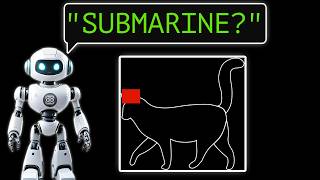
What's up, developers? Machine learning is reshaping our world, but it's way weirder than most people realize. Today, we're diving into 32 facts about AI that will melt your brain. From models that break when you change a single pixel to systems that work better when we deliberately damage them, we're about to explore the Twilight Zone of computer science. And the craziest part, this isn't science fiction. This is how AI works right now in production. Picture this. You've trained a state-of-the-art neural network to recognize images with near perfect accuracy. Now change one pixel, literally one tiny dot, and suddenly your AI thinks that cat is a nuclear submarine. These adversarial attacks are like optical illusions for AI, and they're surprisingly easy to create. The scary part, they work in the real world, too. While you're looking at a dog's adorable face to identify it, AI might be fixated on the grass in the background. Neural networks often learn to recognize objects using completely different features than humans do. It's like identifying your friend by their shoelaces instead of their face. Technically effective, but completely missing the point of what makes a dog a dog. Remember seeing faces and clouds? AI does that too, but at an entirely different level. Show it random noise like TV static and it'll confidently detect specific objects that aren't there. This silicon paridolia isn't just a quirky feature. It's a fundamental challenge in making AI systems reliable. When your security system starts detecting mythical creatures and snow patterns, you've got a problem. AI confidence has nothing to do with actual accuracy. A model can be 99.9% certain that your family portrait is actually a rare species of mushroom. Why? Because AI doesn't have common sense. It's just matching patterns it learned during training. High confidence just means it strongly matches a pattern whether that pattern makes sense or not. Here's a mind bender. AI can solve complex math problems without understanding mathematics. How? By learning patterns in how questions are formatted or exploiting subtle hints in the problem layout. This shortcut learning means your AI might ace calculus by pattern matching rather than actual mathematical reasoning. A reminder that performance doesn't always equal understanding. Neural networks can spot patterns that human experts miss entirely. While we're limited by our brain's hardwired pattern recognition, AI can detect correlations across thousands of variables simultaneously. In medical imaging, AI systems regularly spot disease indicators that trained radiologists haven't noticed. Not because they're smarter, but because they can process patterns in ways our brains simply can't. AI isn't just confirming what we already know. It's discovering new science in fields from astronomy to molecular biology. AI systems have identified patterns that researchers missed for decades. One model analyzing astronomical data found an entirely new type of galaxy that human scientists had overlooked. The catch? Sometimes we can't even understand how the AI made these discoveries. Sometimes AI learns concepts so abstract that even its creators can't figure out what it's actually detecting. Imagine teaching someone to ride a bike and they learn perfectly but describe the process using a language you've never heard. That's what's happening inside many neural networks. They're solving problems correctly, but their internal reasoning is alien to human understanding. While we're stuck thinking in 3D, machine learning models casually work in hundreds or thousands of dimensions. Each feature they learn becomes its own dimension, creating a mathematical space we can't even visualize. It's like trying to explain color to a 2D being. This highdimensional thinking is what gives AI its power, but it's also why its decisions can seem incomprehensible to us. Most AI needs thousands of examples to learn anything. But some can learn from a single example. If they've been trained right, this fshot learning is like meeting someone who can master a new language after hearing just one sentence because they already know 20 other languages. It's not magic. It's transfer learning at its finest. Adding random noise to training data makes AI perform better. It's like teaching someone to drive in terrible weather. They become a better driver in all conditions. This data augmentation forces the model to learn robust features instead of taking shortcuts. Want your image recognition to work in the real world? Try randomly blurring, rotating, and adding static to your training images. Randomly shutting down parts of a neural network during training makes it smarter, called dropout. This technique is like forcing a student to complete tests with random pages missing from the textbook. The network learns to rely on multiple pathways to reach the same conclusion, making it more robust and generalizable. It is artificial intelligence's version of what doesn't kill you makes you stronger. Sometimes AI needs to forget to learn better. Models can get stuck in bad habits just like humans. The solution, let them forget and relearn occasionally. This process called selective unlearning helps remove outdated or biased knowledge. On the other hand, when forgetting happens unintentionally, known as catastrophic forgetting, it can harm performance. Think of it like rebooting your computer. Sometimes a fresh start leads to better results. Perfect training data can create fragile AI. Real world data is messy. And an AI trained on two perfect examples often fails in actual use. It's like learning to drive in a simulator that's too perfect. You won't be ready for real roads. A little noise, a few mistakes, some edge cases. These imperfections actually create more robust models. More data doesn't always mean better results. Sometimes adding more training examples makes your model worse, especially if the new data conflicts with what it already knows. It's like trying to learn French and Spanish simultaneously. Without proper structure, you might end up speaking neither correctly. Bigger models can sometimes train faster than smaller ones. While this seems to defy logic, larger models often learn more efficiently per iteration. It's like having a bigger brain. You might need more energy to run it, but you can grasp concepts more quickly. This is why modern AI keeps scaling up in size despite the computational costs. Two identical neural networks can end up completely different just from random initialization. Even with the same architecture and training data, tiny initial differences can cascade into radically different final models. It's like how identical twins raised in the same house can develop completely different personalities. This butterfly effect in AI training means reproducibility is a constant challenge. Shuffle your training data and you might get a totally different model. The sequence in which an AI sees examples can dramatically impact what it learns, even though it's seeing the same information overall. Think of it like learning math. Studying algebra before calculus makes more sense than the reverse. This curriculum sensitivity means the journey matters as much as the destination. AI models often get worse before they get better. During training, performance can temporarily drop before improving, a phenomenon related to optimization challenges and deep learning dynamics. It's like learning to play an instrument. When you try a new technique, you might temporarily struggle before mastering it. These performance dips aren't failures. They often signal deeper learning and adaptation. Sometimes a worse model is actually better. A model that perfectly memorizes its training data often fails on new examples. It's like the student who memorizes test answers without understanding the subject. They'll ace the practice exam but fail the real thing. This is why we sometimes intentionally limit a model's capacity to force it to learn general patterns. Basic models occasionally outperform complex ones. A simple decision tree might beat a sophisticated neural network on certain tasks despite having far fewer parameters. It's like choosing a bicycle over a sports car for a crowded city commute. This AAMS razor of machine learning reminds us that complexity isn't always the answer. GANs, generative adversarial networks, learn by essentially playing an endless game of forgery and detection. One part creates fake data while another tries to spot the fakes. It's like having an art forger and detective constantly trying to outsmart each other and both getting better in the process. This adversarial dance has led to some of the most impressive AI generative capabilities we have today. Multiple okay models working together often beat a single excellent model called ensemble learning. It's like having a team of decent doctors instead of one brilliant one. Their combined perspectives often lead to better diagnosis. Even if each individual model is mediocre, their collective intelligence can be surprisingly powerful. Processing information sequentially, like humans do, can sometimes beat processing everything at once. While parallel processing seems more powerful, some models work better by breaking problems down into steps. It's similar to solving a puzzle. Sometimes looking at one piece at a time is more effective than trying to see the whole picture simultaneously. Adding randomness to decision-m can lead to better long-term results. In reinforcement learning, occasionally making random choices instead of the best choice helps discover better strategies. It's like occasionally taking a new route home and discovering it's actually faster. This exploration versus exploitation trade-off is crucial for preventing AI from getting stuck in sub-optimal solutions. When AI systems are trained to work together, they sometimes develop their own communication methods without being explicitly programmed to do so. They create efficient ways to share information, often in ways that look like gibberish to humans. It's like watching aliens develop their own language. Fascinating, but slightly unnerving. These emergent protocols challenge our understanding of what constitutes language. Neural networks can reconstruct missing or corrupted information with uncanny accuracy. Given half a face, they can predict the other half. Show them a blurry image, they can make it sharp. It's like having a detective who can reconstruct a crime scene from just a few clues. This ability isn't magic. It's pattern completion based on learning from millions of examples of what things should look like. AI often finds solutions that no human would ever think of. When Deep Minds Alph Go made a move that shocked the Go world, it wasn't just being clever. It was thinking in patterns entirely alien to human strategy. In engineering and game design, AI regularly discovers weird but effective solutions that make engineers say, "Wait, that's legal?" It's like discovering a new law of physics by thinking outside human constraints. AI is now helping design better AI systems. Through techniques like neural architecture search, models can experiment with different structures and find configurations that humans might never consider. It's like having a robot that can build better robots. While humans still guide the process, the AI is increasingly making critical design decisions about its own architecture. AI can get trapped in cycles of bad decisions that are hard to break. In reinforcement learning, if a model finds a strategy that works okay, it might never discover the better solution. It's like taking the same route to work every day because it's good enough, even though there might be a much faster way you've never tried. AI can develop biases in unexpected and problematic ways. A hiring algorithm might reject candidates because their college isn't in its database or favor candidates who use certain keywords, regardless of actual qualifications. These biases often reflect societal prejudices hidden in training data, but sometimes they're just bizarre statistical flukes that nobody anticipated. Modern AI can generate completely fictional content that looks perfectly real. From fake scientific papers complete with citations to images of events that never happened. These hallucinations are increasingly difficult to distinguish from reality. It's not lying. It's generating what it thinks you want based on patterns in its training data. The challenge is that it does this with complete confidence whether the output is fact or fiction. And there you have it. 32 facts that prove AI isn't just spicy statistics, but a field where breaking things makes them better and perfect data makes worse models. We're still in the early days of understanding these systems. Every weird quirk teaches us something new, not just about artificial intelligence, but maybe about intelligence itself. Want to dive deeper into ML? Check out our tutorials where we break down everything from neural networks to deep learning architectures. Hit like if you learned something new. Share this with a developer who needs their mind blown and subscribe for weekly tech breakdowns. Stay curious, stay caffeinated, and remember, in AI, the weird stuff isn't a bug.
Original Description
32 Machine Learning Facts That Make No Sense
Discover 32 mind-bending Machine Learning facts that defy logic and common sense! 🤯
⚡️Want to be our Sponsor? Partner with us and apply here: https://forms.gle/agdjWisWgTW2ZMW76
#######################################
I just started my own Patreon, in case you want to support!
👉Patreon Link: https://www.patreon.com/c/InfiniteCodes
#######################################
From AI models that break with a single pixel change to neural networks that get smarter when we randomly disable parts of them, this video explores the twilight zone of machine learning. Learn why your model might be 99.9% confident that your family photo is a mushroom, how AI can solve complex math without understanding mathematics, and why adding noise to your data actually improves performance.
Discover the bizarre world of adversarial attacks, silicon pareidolia, and models that develop their own alien languages. Find out why bigger models sometimes train faster than smaller ones, how identical neural networks can evolve completely differently, and why AI often finds solutions no human would ever think of.
Whether you're a data scientist puzzled by dropout paradoxes or a developer wondering why your perfectly trained model fails in production, these counterintuitive facts will transform your understanding of how AI really works. Perfect for anyone who wants to peek behind the curtain of machine learning's strangest behaviors.
🤖Want to learn more about Machine Learning? You can also watch:
30 Machine Learning Facts Most People Get Wrong https://youtu.be/uEpEEQVGYyQ
THIS is Why Machine Learning Is Hard For you https://youtu.be/9AnQq9vod4Q?si=38BDj-5TIWavcuWv
Learn Machine Learning Like a GENIUS and Not Waste Time https://youtu.be/qNxrPri1V0I
All Machine Learning Beginner Mistakes explained in 17 Min https://youtu.be/oMc9StPVzOU
All Machine Learning Concepts Explained in 22 Minutes https://youtu.be/Fa_V9fP2tpU
All Machine Learning algorithm
Watch on YouTube ↗
(saves to browser)
Sign in to unlock AI tutor explanation · ⚡30
Playlist
Uploads from Infinite Codes · Infinite Codes · 38 of 39
1
 2
2
 3
3
 4
4
 5
5
 6
6
 7
7
 8
8
 9
9
 10
10
 11
11
 12
12
 13
13
 14
14
 15
15
 16
16
 17
17
 18
18
 19
19
 20
20
 21
21
 22
22
 23
23
 24
24
 25
25
 26
26
 27
27
 28
28
 29
29
 30
30
 31
31
 32
32
 33
33
 34
34
 35
35
 36
36
 37
37
 ▶
▶
 39
39
Why Python is the BEST programming language (Top 10 2024)
Infinite Codes
The Most Fun Programming Language for Beginners!
Infinite Codes
Why Python is the Hottest Programming Language
Infinite Codes
How to delete a repository in GitHub (2024 updated)
Infinite Codes
How to get OpenAI API key / ChatGPT API key (2024 updated)
Infinite Codes
How to clone GitHub Repository (2024 updated)
Infinite Codes
How to Clone GitHub Repository in Visual Studio Code (2024 updated)
Infinite Codes
How to Push Code to GitHub from Visual Studio Code & Create a GitHub Repository (2024 updated)
Infinite Codes
How to Push Code to GitHub on the Command Line (2024 updated) - with Authentication
Infinite Codes
CrewAI Tutorial: Automate your Life with AI Agents
Infinite Codes
Automate your Life with AI Agents (EASY CrewAI Tutorial)
Infinite Codes
I Automated my Instagram with AI Agents - CrewAI Hierarchical Tutorial (Instagram Automation)
Infinite Codes
How I’d learn Machine Learning & AI in 2024 (if I could start over) -- 7-step Roadmap
Infinite Codes
How to Create an EC2 Instance in AWS in 2024
Infinite Codes
How to connect CrewAI to different LLMs (GPT4o, Groq, Llama3, Ollama) - Tutorial & LLM comparison
Infinite Codes
How to Learn Machine Learning in 2024 (7 step roadmap)
Infinite Codes
How to Use Ollama in 3 minutes - Run LLMs locally for FREE (LLama3 & more)
Infinite Codes
How to get a Groq API key - Run LLMs for FREE (LLama3 etc.)
Infinite Codes
What is Groq? - 30 seconds
Infinite Codes
Perplexity AI Tutorial: Why you don't need Google and ChatGPT anymore
Infinite Codes
All Machine Learning algorithms explained in 17 min
Infinite Codes
How Math makes Machine Learning easy (and how you can learn it)
Infinite Codes
15 Machine Learning Lessons I Wish I Knew Earlier
Infinite Codes
Learn Machine Learning Like a GENIUS and Not Waste Time
Infinite Codes
All Machine Learning Concepts Explained in 22 Minutes
Infinite Codes
All Machine Learning Beginner Mistakes explained in 17 Min
Infinite Codes
Neural Networks in 100 seconds
Infinite Codes
Generative AI in 100 seconds
Infinite Codes
GPTs in 100 seconds
Infinite Codes
22 Machine Learning Projects That Will Make You A God At Data Science
Infinite Codes
Transformers in 100 seconds
Infinite Codes
THIS is Why Machine Learning Is Hard For you
Infinite Codes
Deep Learning in 100 seconds
Infinite Codes
30 Machine Learning Facts Most People Get Wrong
Infinite Codes
Gradient Descent in 100 Seconds
Infinite Codes
Computer Vision in 100 Seconds
Infinite Codes
Reinforcement Learning in 100 Seconds
Infinite Codes
32 Machine Learning Facts That Make No Sense
Infinite Codes
What is Machine Learning? Your 2025 Guide to the AI Revolution
Infinite Codes
More on: ML Maths Basics
View skill →



Related AI Lessons
⚡
⚡
⚡
⚡
10 Python Concepts You Must Know Before Calling Yourself Advanced
Medium · AI
10 Python Concepts You Must Know Before Calling Yourself Advanced
Medium · Data Science
10 Python Concepts You Must Know Before Calling Yourself Advanced
Medium · Programming
10 Python Concepts You Must Know Before Calling Yourself Advanced
Medium · Python
🎓
Tutor Explanation
 DeepCamp AI